Jian
Type species Jian changmaensis
- Lived
- 121 to 113 million years ago, Early Cretaceous
- Diet
- Carnivore
- Group
- Theropods, Dromaeosauridae
- Found in
- China
- Named by
- Zhou et al. 2026
Where its fossils were found
The evidence
Today

115 million years ago
Habitat
Its remains were buried in lake mud in what is now northwestern China. Other dinosaurs recorded from the Xiagou Formation include Xiongguanlong, Beishanlong and Archaeoceratops.
Field notes
About Jian
What it was like
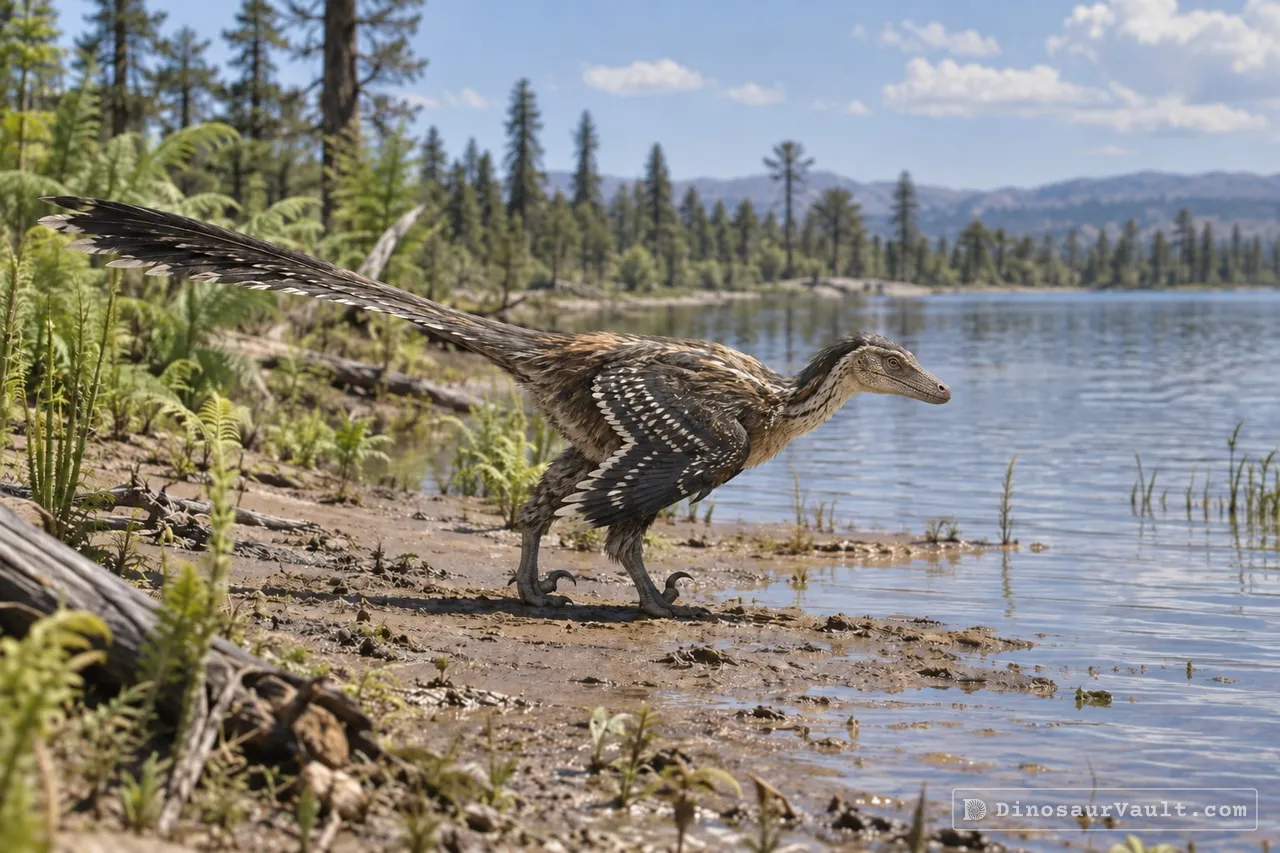
Jian was a small hunter, a relative of Microraptor. It is known from a shoulder and part of a front leg. It probably had feathers, like its relatives, although none are preserved with its bones.
Its world
It lived in the Early Cretaceous in what is now northwestern China. Its bones come from the Xiagou Formation, where it shared the land with the early tyrannosaur relative Xiongguanlong, the ostrich-like Beishanlong and the small horned Archaeoceratops.
How it was found
Zhou and colleagues named it in 2026. The type species is Jian changmaensis.
Field gallery
More views of Jian
Scenes reconstructed from the available fossil evidence.
Lived alongside
Found in the same rock formations
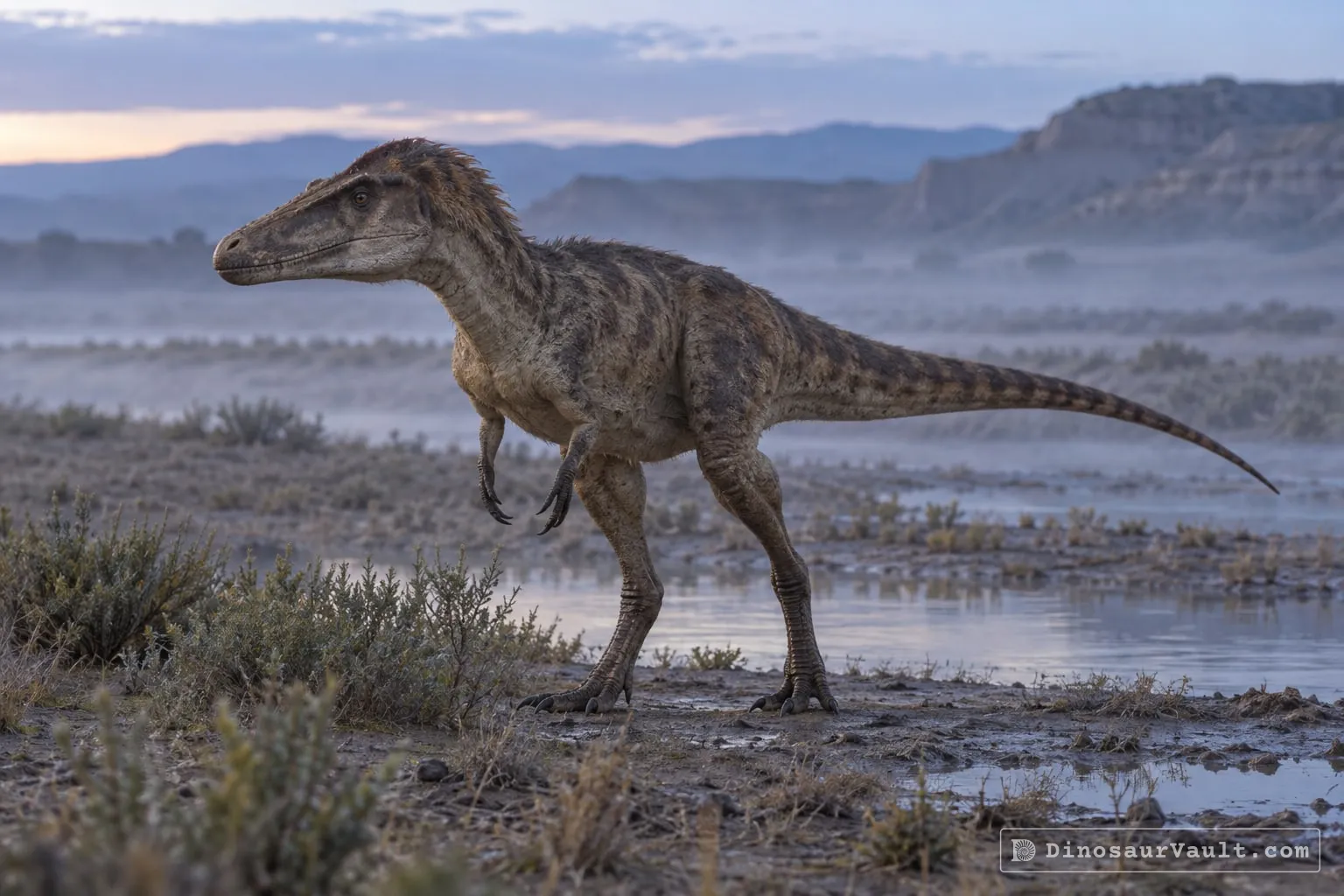
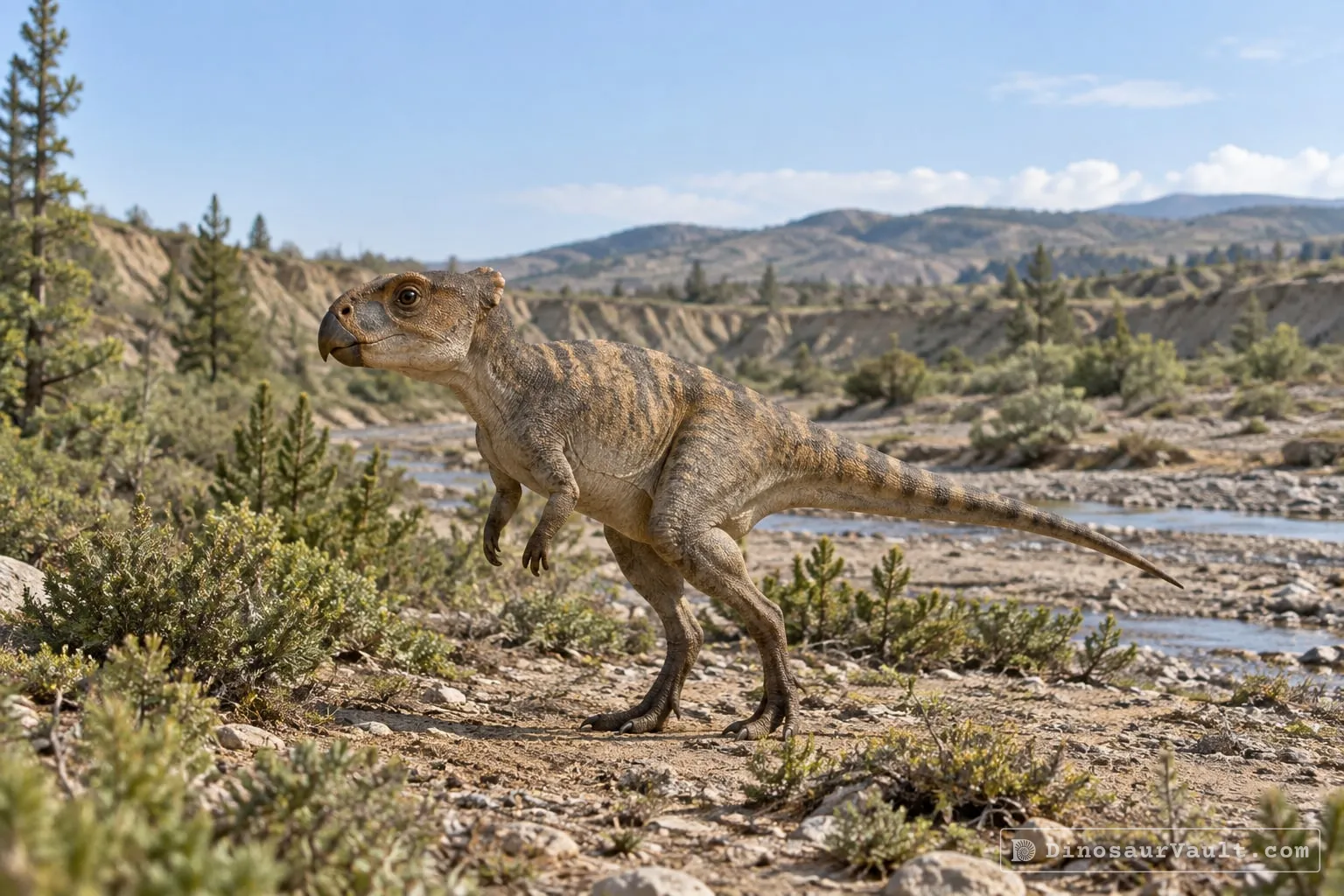
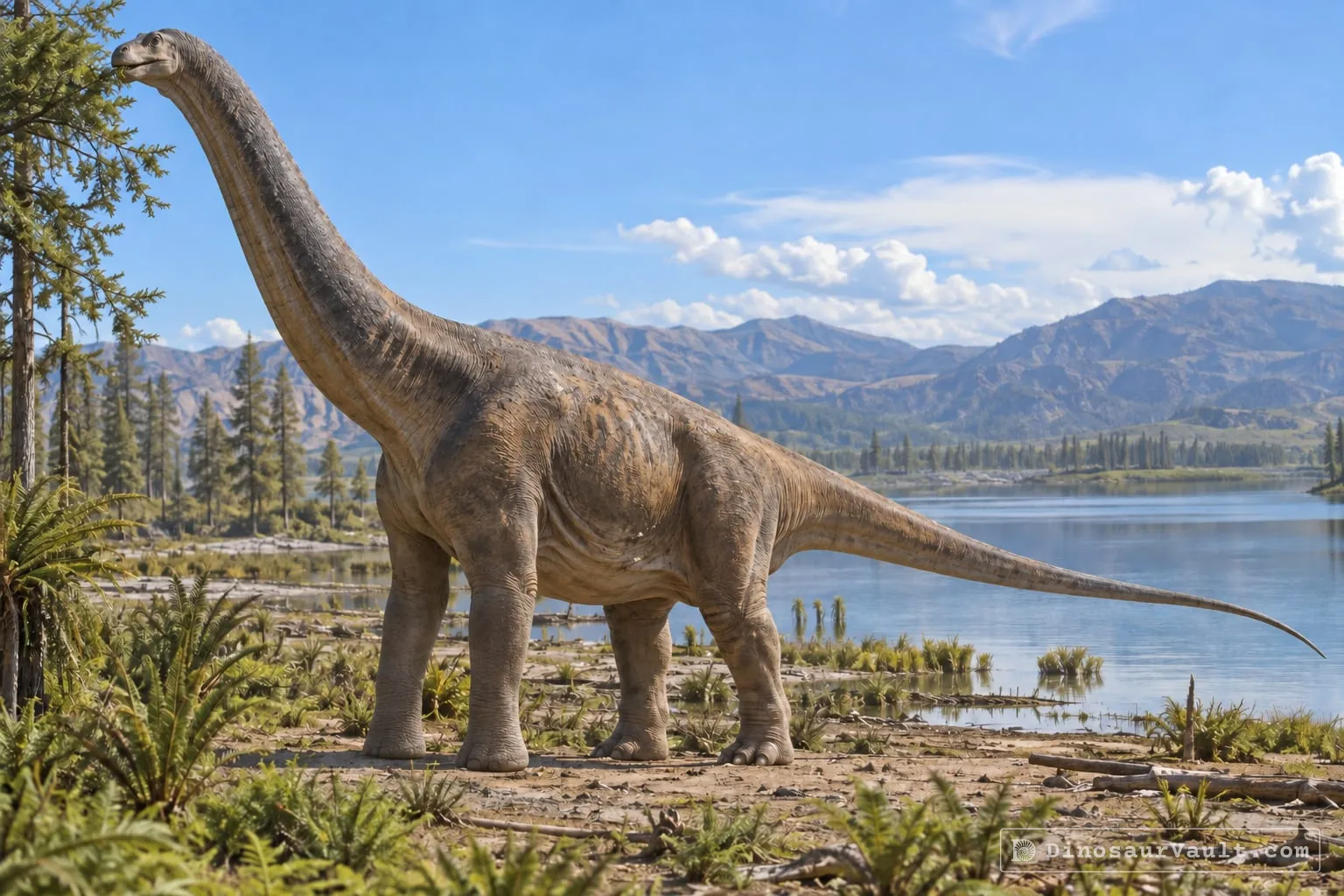
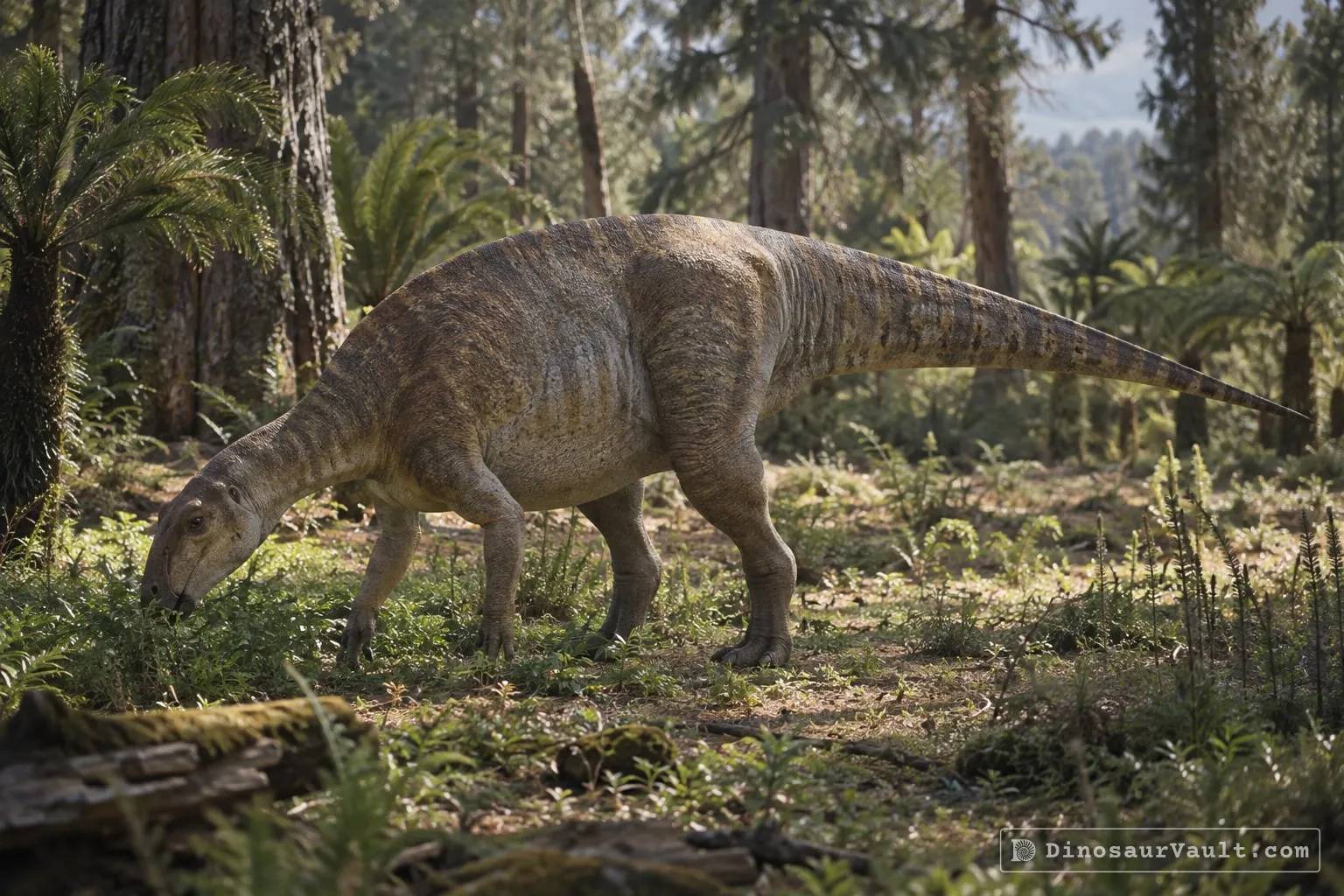
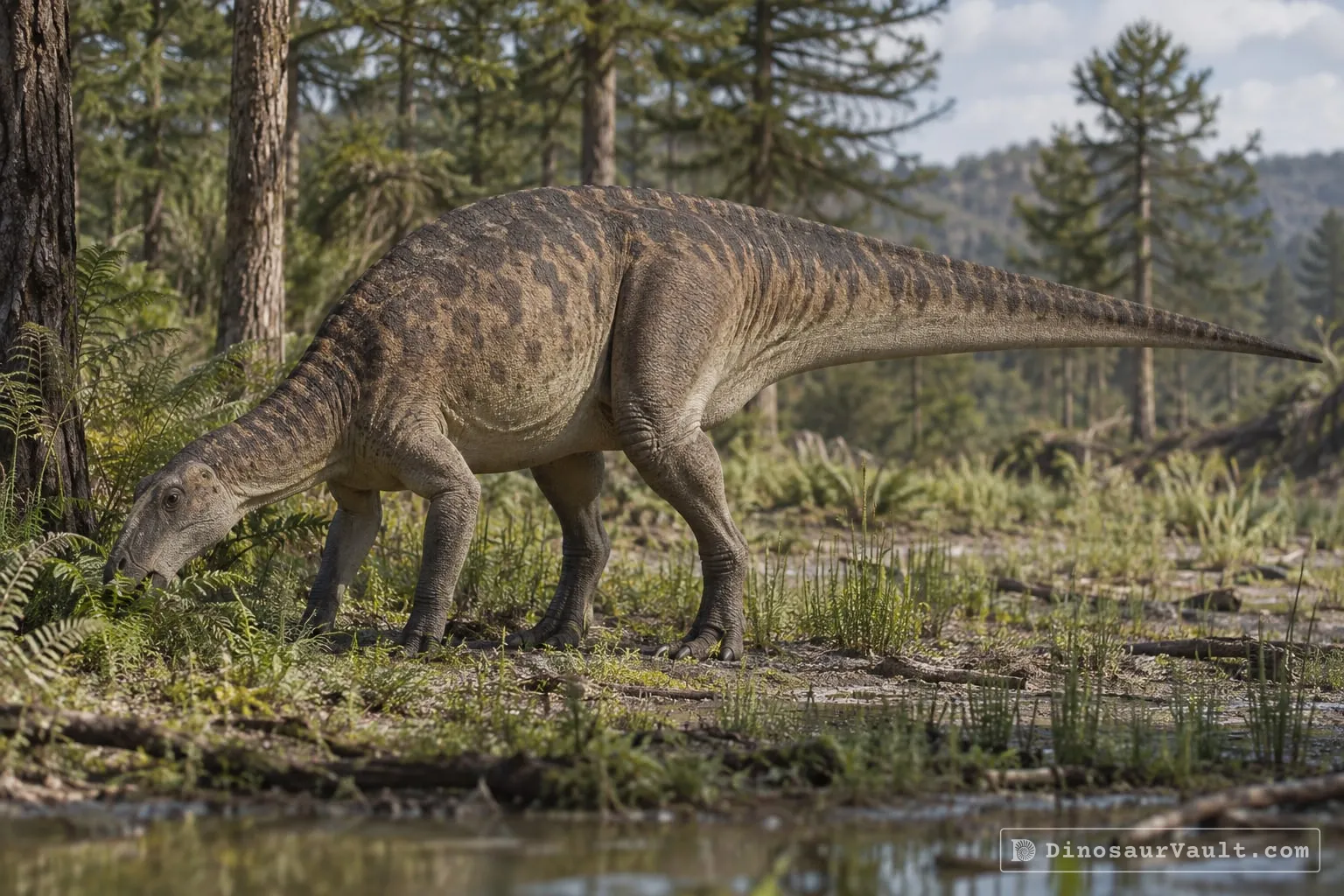
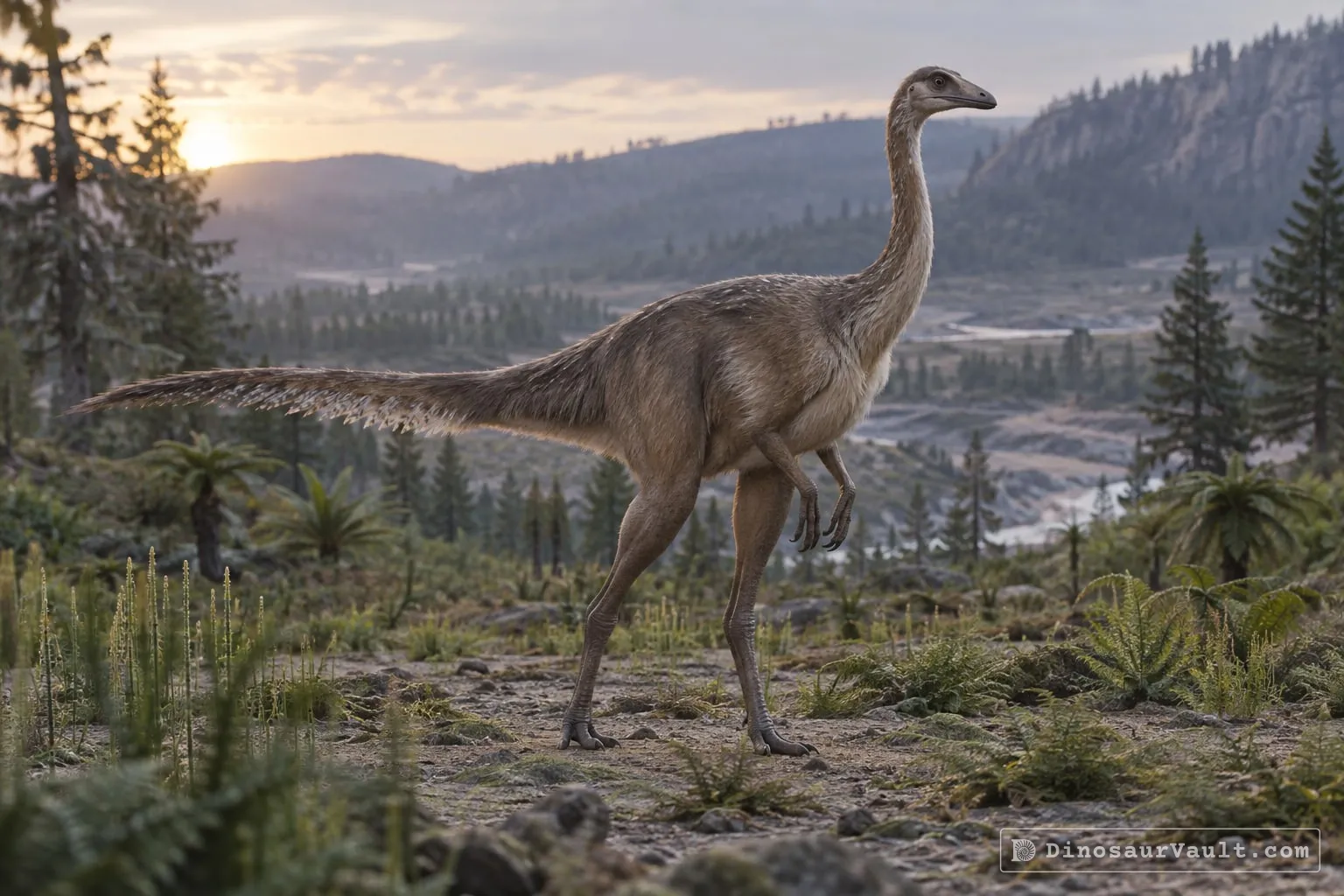
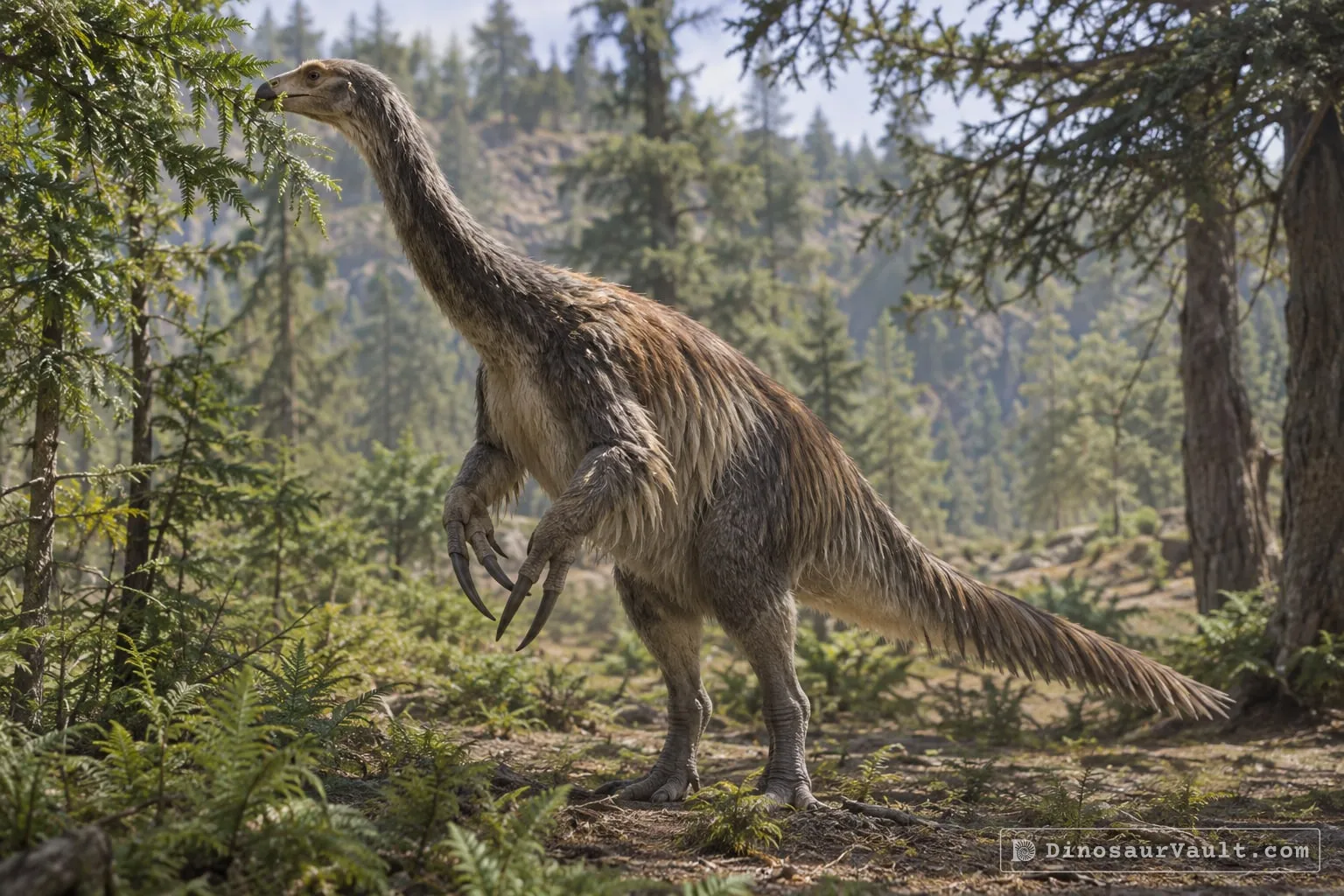


A rock formation can hold fossils laid down millions of years apart, so not every animal here met Jian.
The evidence
The science behind Jian
Which parts of the picture come from its own bones, and which come from its relatives.
From its own fossils
- The known fossil preserves the left shoulder, upper arm and forearm bones together. The lower end of the radius is crushed and the end of the ulna is broken.
- Its coracoid, a shoulder bone, is relatively long, and the rounded joint surfaces at the elbow end of the upper arm bone are well developed toward the front.
- The radius is much narrower than the ulna, which bows gently backward. Scans reveal hollow spaces inside the forearm bones and a distinctive opening near the elbow end of the radius.
Borrowed from relatives
- Its missing head, neck, body, hips, upper legs and the base of its tail are restored by comparison with Microraptor, while its own shoulder and arm bones set the shape of the forequarters.
- Feathers are inferred from Microraptor, whose fossils preserve downy body feathers and long feathers on the arms.
Still unknown
- Whether its arms carried long wing feathers. No quill knobs are clear on the ulna, but such small bumps are easy to miss.
- Its closest relative. In the naming study it falls in an unresolved group with other microraptorines.
- Its head shape and diet, and whether it could fly or glide.
Discovery timeline
- 2002Close relativeHWANG et al.
- 2003Close relativeXu et al.
- 2014Close relativePei et al.
- 2026Named itZhou et al.
Key papers
The research behind what we know of Jian
Close relative
Described new Microraptor skeletons preserving the neck, ribs, hips and leg bones, parts that are missing from Jian.
New Specimens of Microraptor zhaoianus (Theropoda: Dromaeosauridae) from Northeastern China. American Museum Novitates 3381: 1-44
Read the paper : New Specimens of Microraptor zhaoianus (Theropoda: Dromaeosauridae) from Northeastern China (opens in a new tab)Close relative
Described long feathers on the arms and legs of Microraptor, a close relative used to interpret Jian's possible feather covering.
Four-winged dinosaurs from China. Nature 421: 335-340
Read the paper : Four-winged dinosaurs from China (opens in a new tab)Close relative
Described a Microraptor specimen with a partly shattered skull and a long, shallow lower jaw that deepens toward the back.
A New Specimen ofMicroraptor(Theropoda: Dromaeosauridae) from the Lower Cretaceous of Western Liaoning, China. American Museum Novitates 3821: 1-28
Read the paper : A New Specimen ofMicroraptor(Theropoda: Dromaeosauridae) from the Lower Cretaceous of Western Liaoning, China (opens in a new tab)Named it
Described a shoulder and partial arm belonging to a new relative of Microraptor, with a long coracoid and distinctive upper arm and forearm anatomy.
First Non-Avian Theropod (Dromaeosauridae, Microraptorinae) from the Bird-Bearing Lower Cretaceous Xiagou Formation of the Changma Basin, Gansu Province, Northwestern China. Annals of Carnegie Museum 92: 89-110
Read the paper : First Non-Avian Theropod (Dromaeosauridae, Microraptorinae) from the Bird-Bearing Lower Cretaceous Xiagou Formation of the Changma Basin, Gansu Province, Northwestern China (opens in a new tab)
Close relatives
Other members of Dromaeosauridae


Sources: Wikidata