Beishanlong
"northern mountain dragon"
- Lived
- 121 to 113 million years ago, Early Cretaceous
- Diet
- Omnivore
- Group
- Theropods
- Found in
- China
- Named by
- Makovicky et al. 2010
Where its fossils were found
The evidence
Today

115 million years ago
Habitat
Its bones were buried in gray mud in a moist landscape in China. Dinosaurs from its region include Xiongguanlong, Suzhousaurus and Archaeoceratops.
Field notes
About Beishanlong
What it was like
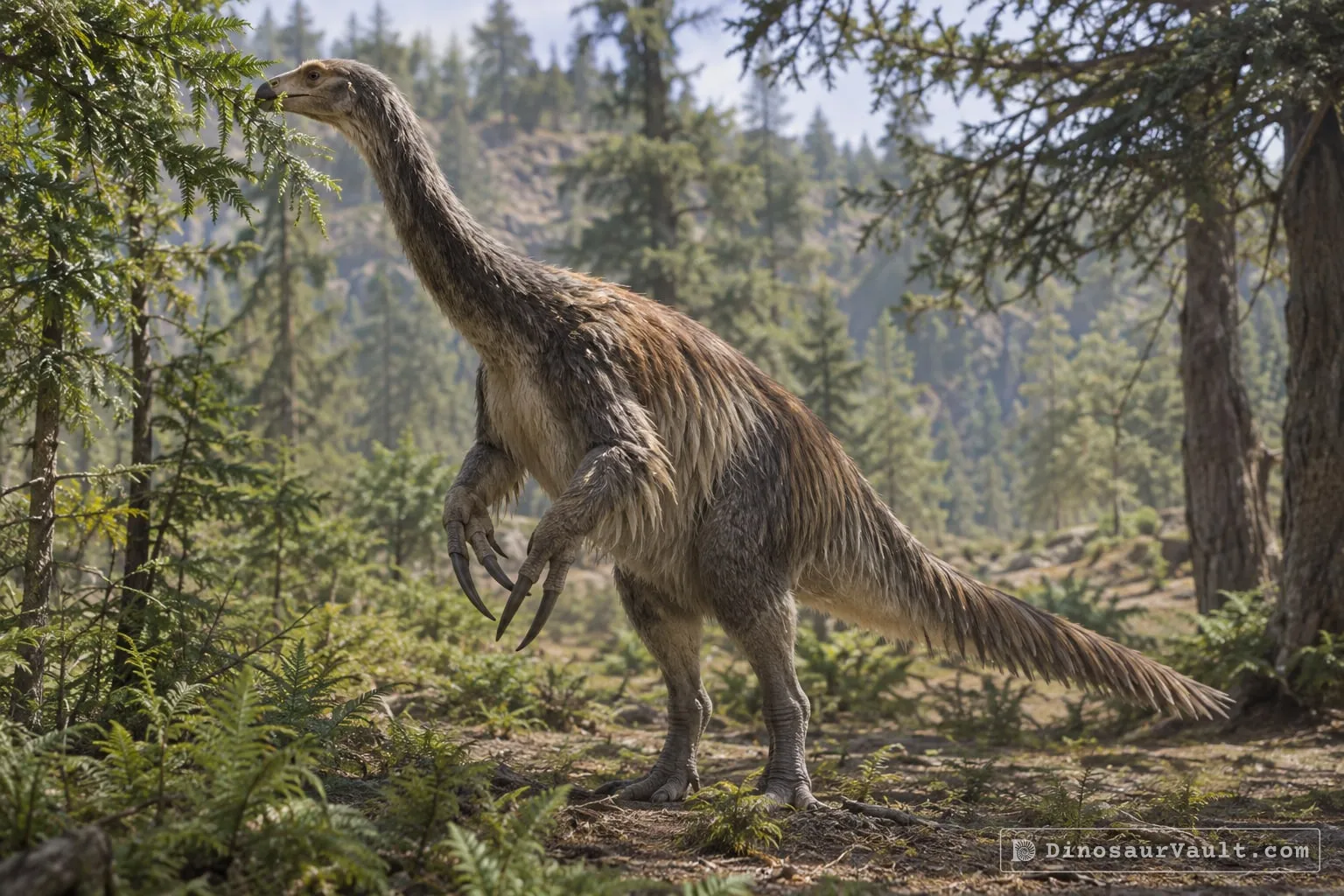
Beishanlong was a large ostrich-like dinosaur, much bigger than most of its relatives. It had long arms with big claws, and it probably had a toothless beak.
Its world
It lived in the Early Cretaceous in what is now northwestern China. Its bones come from the Xiagou Formation, where it shared the land with the early tyrannosaur relative Xiongguanlong and the early horned Archaeoceratops.
How it was found
Makovicky and colleagues named Beishanlong in 2010, from a single find.
Field gallery
More views of Beishanlong
Scenes reconstructed from the available fossil evidence.
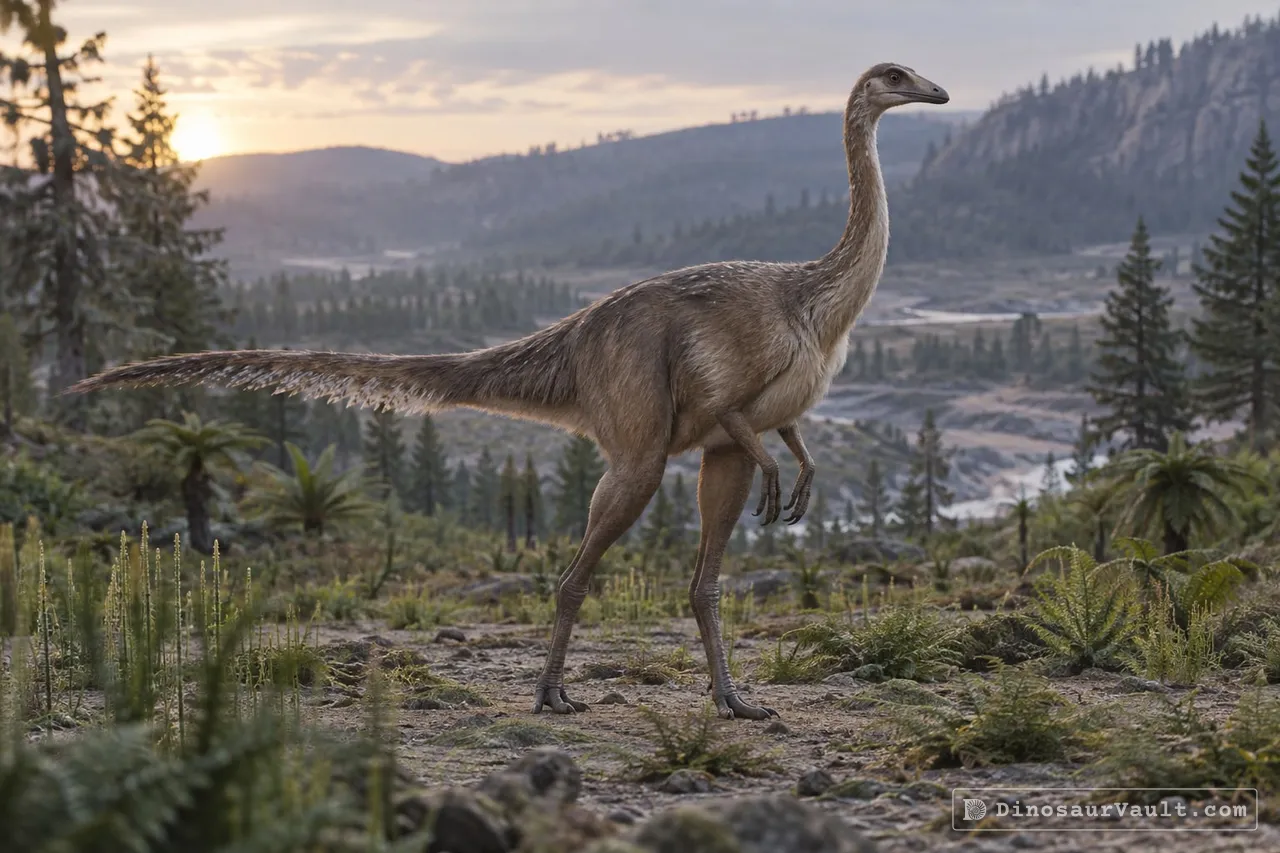
1 of 3
Lived alongside
Found in the same rock formations
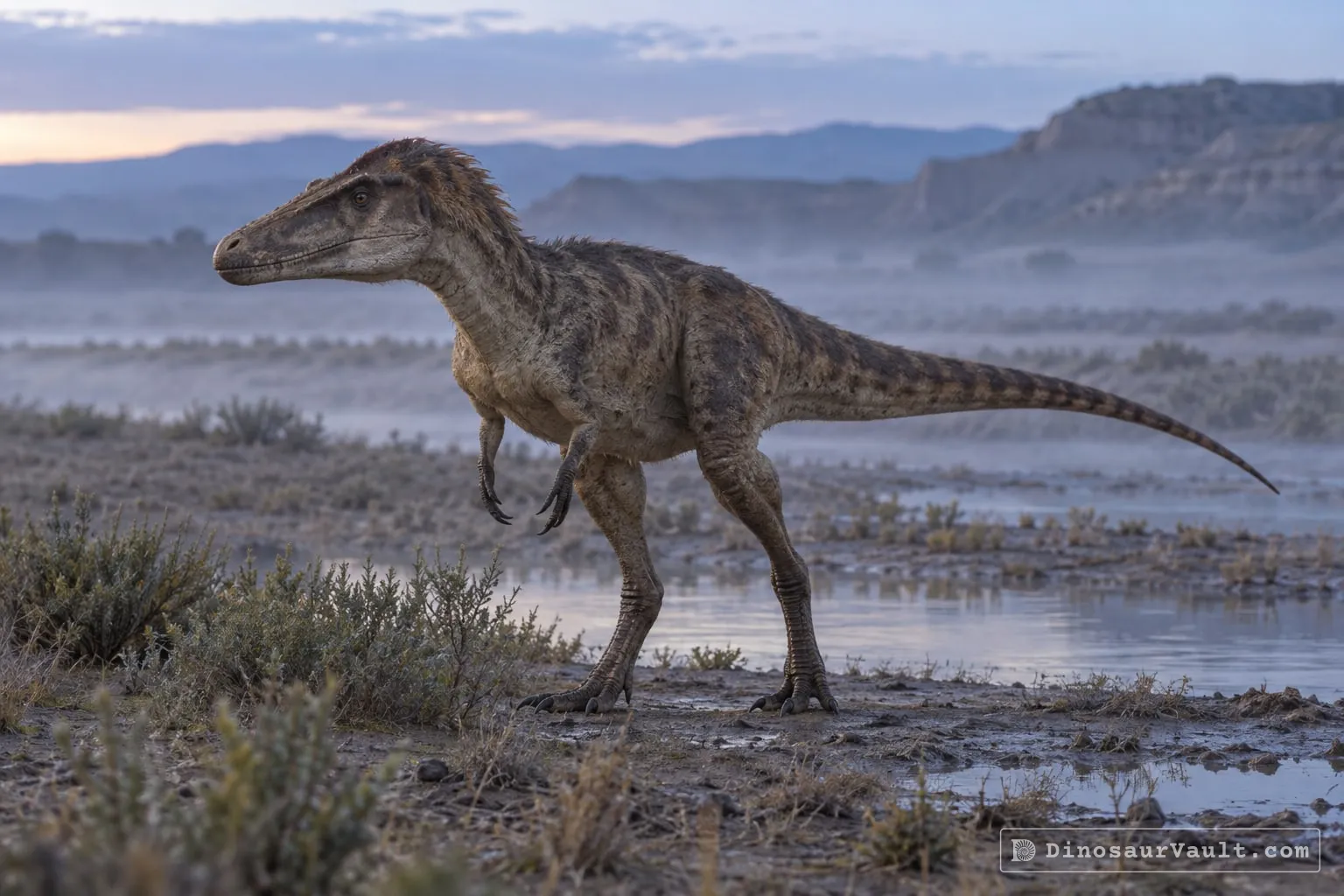
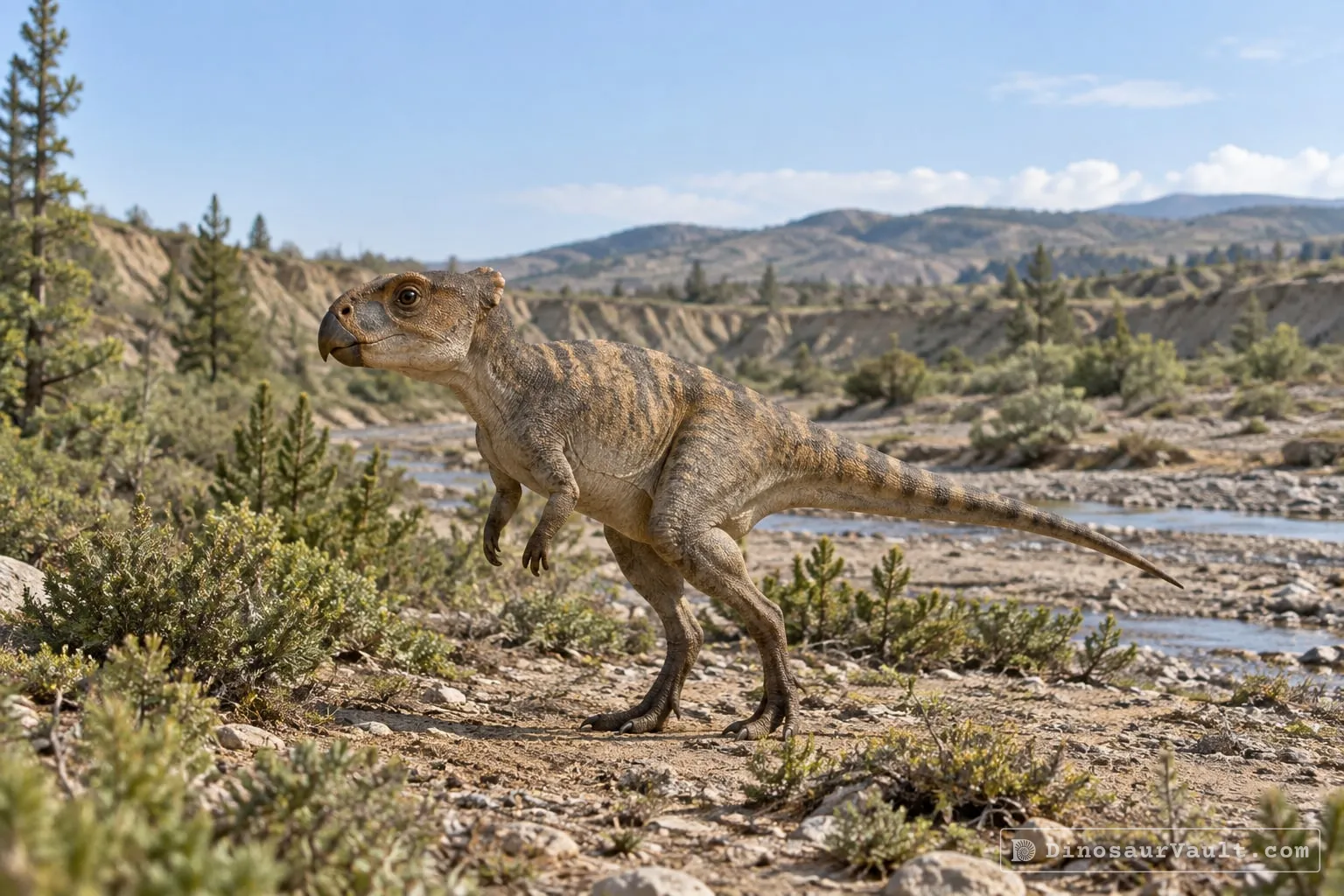
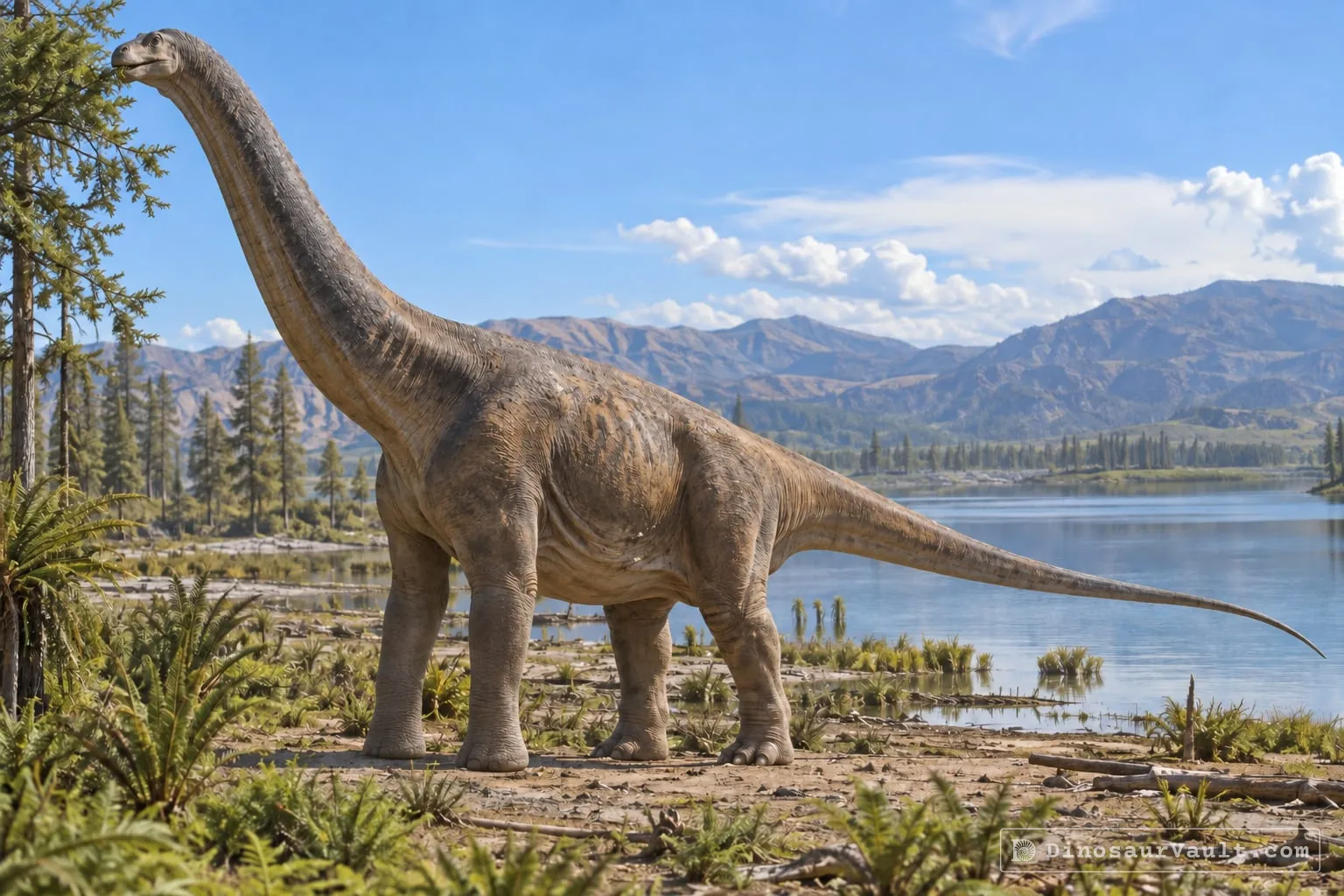
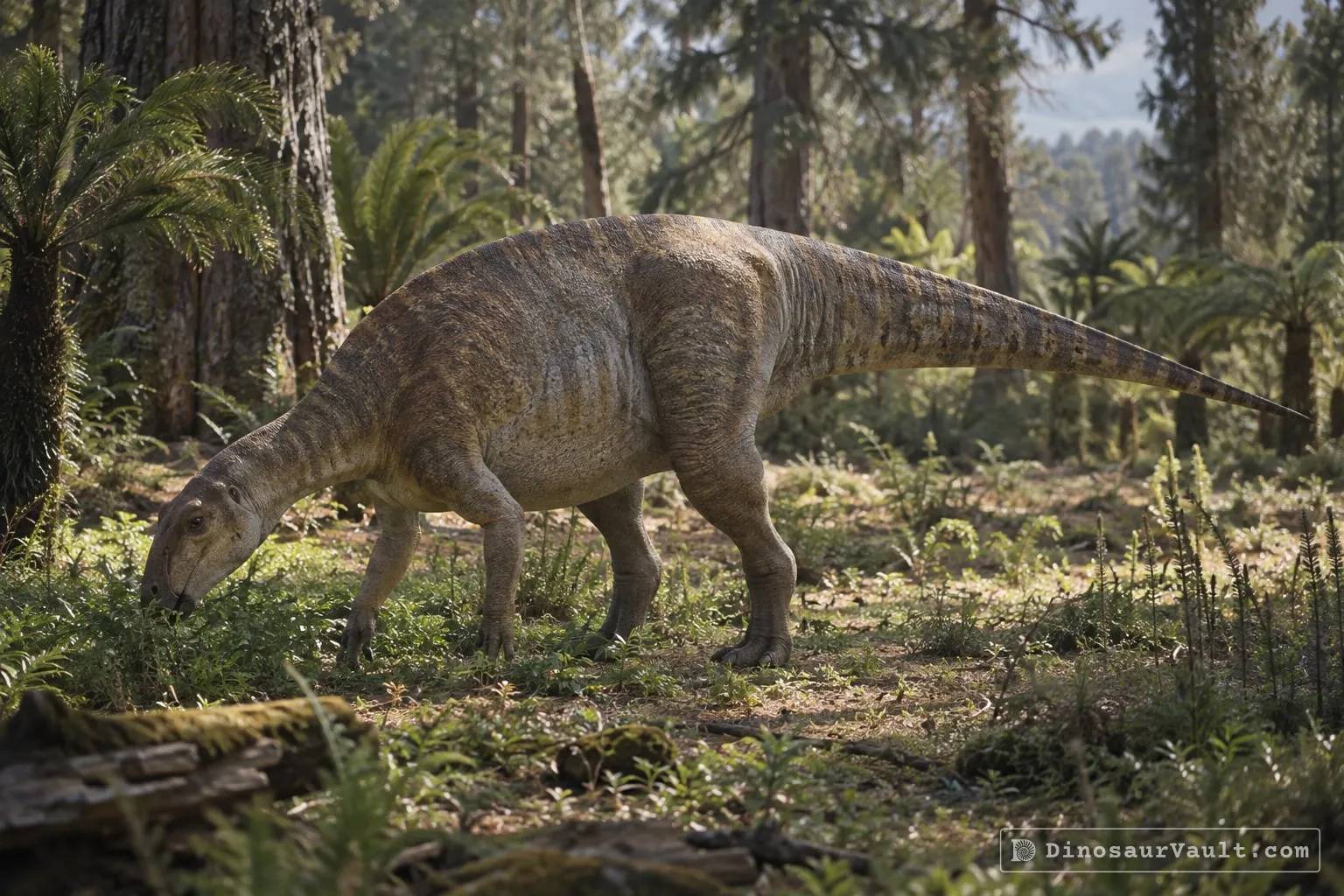
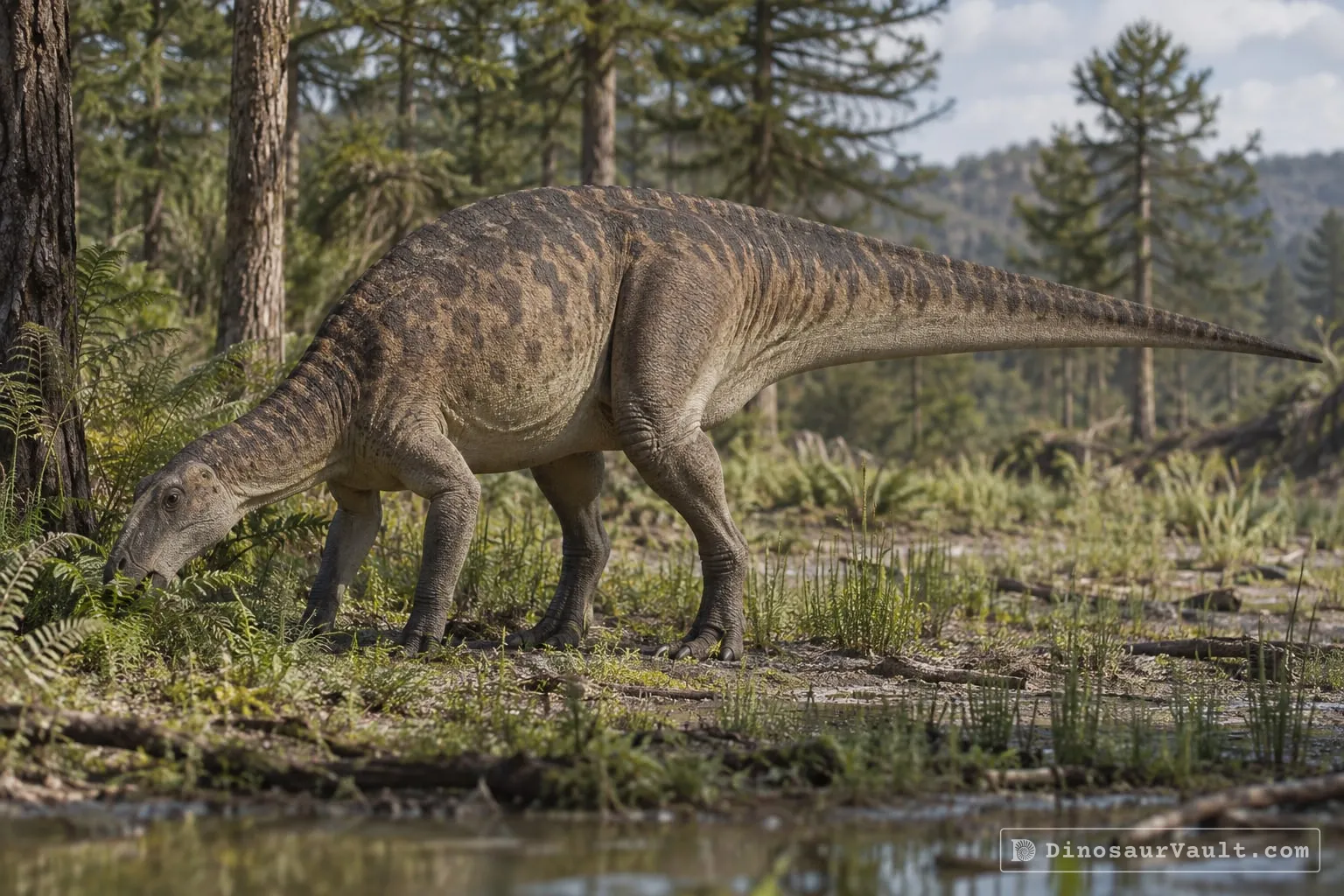
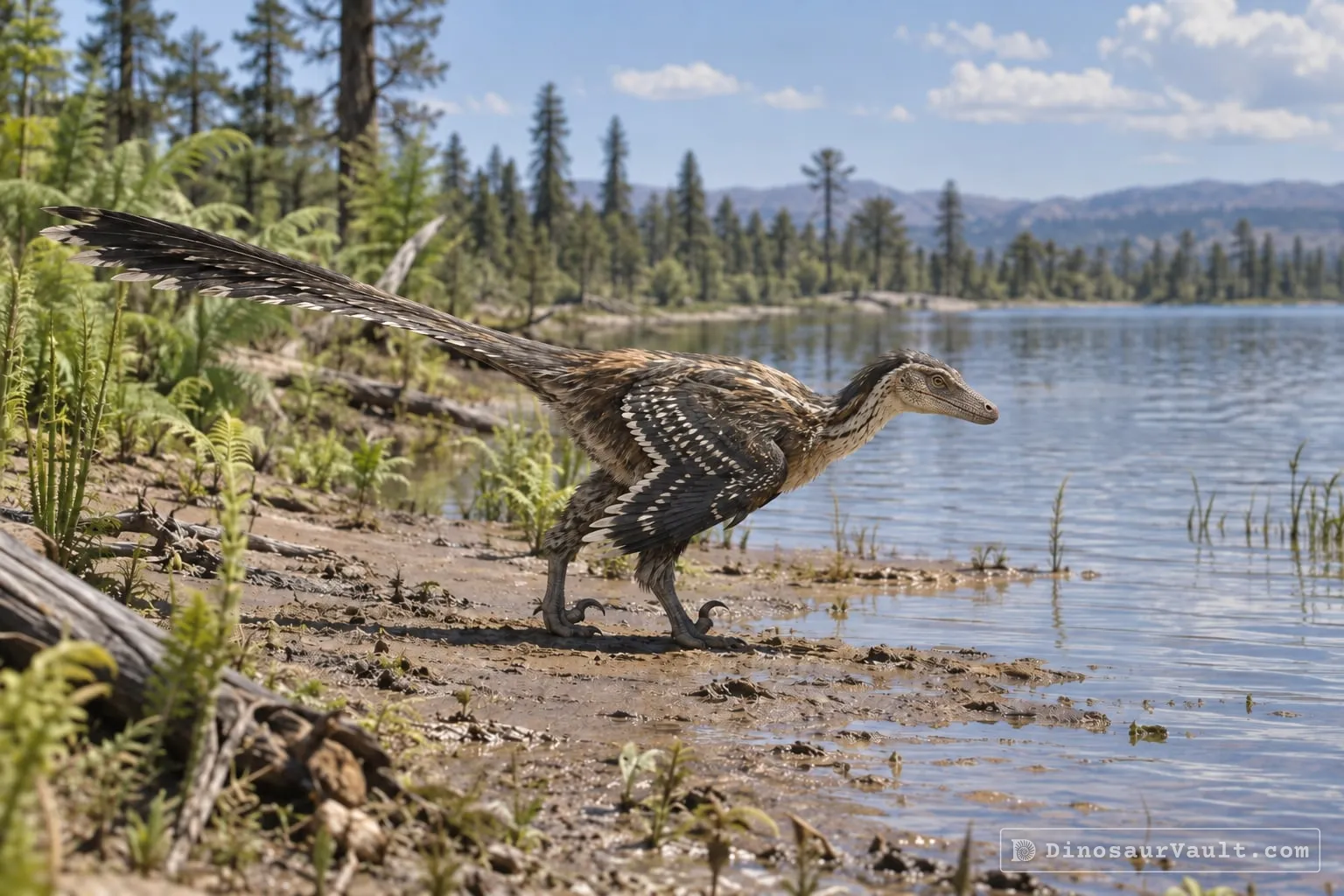


A rock formation can hold fossils laid down millions of years apart, so not every animal here met Beishanlong.
The evidence
The science behind Beishanlong
Which parts of the picture come from its own bones, and which come from its relatives.
From its own fossils
- A partial skeleton preserves shoulder bones, long arms, hand claws, leg bones and parts of the tail.
- The thumb claw curves more strongly than the other hand claws.
- Growth rings inside a lower leg bone show that the large animal was still growing when it died.
Borrowed from relatives
- The missing head is restored by comparison with other ostrich-like dinosaurs such as Harpymimus and Garudimimus.
- A feather covering is inferred from Ornithomimus, whose fossils preserve feathers.
Still unknown
- The shape of its skull and whether it had teeth.
- Its feather pattern and color.
- How large a fully grown adult became.
Discovery timeline
- 2010Named itMakovicky et al.
- 2012Close relativeZelenitsky et al.
- 2014Close relativeLee et al.
Key papers
The research behind what we know of Beishanlong
Named it
Described a large ostrich-like dinosaur from a partial skeleton and used growth rings to show that it was still growing.
A giant ornithomimosaur from the Early Cretaceous of China. Proceedings of the Royal Society B: Biological Sciences 277: 191-198
No link available
Close relative
Found a feather covering in young and adult Ornithomimus, with winglike feathers on the arms of older animals.
Feathered Non-Avian Dinosaurs from North America Provide Insight into Wing Origins. Science 338: 510-514
Read the paper : Feathered Non-Avian Dinosaurs from North America Provide Insight into Wing Origins (opens in a new tab)Close relative
Nearly complete Deinocheirus skeletons revealed a giant ostrich-like dinosaur with a broad bill, a humped back and a mixed diet.
Resolving the long-standing enigmas of a giant ornithomimosaur Deinocheirus mirificus. Nature 515: 257-260
Read the paper : Resolving the long-standing enigmas of a giant ornithomimosaur Deinocheirus mirificus (opens in a new tab)
Close relatives
Other members of Ornithomimosauria


Sources: Wikidata