Jainosaurus
"Jain's lizard"
- Lived
- 72 to 66 million years ago, Late Cretaceous
- Diet
- Herbivore
- Group
- Sauropods
- Found in
- India
- Named by
- Hunt et al. 1995
Where its fossils were found
The evidence
Today

70 million years ago
Habitat
It lived on a seasonally dry river plain with shallow channels and pools. The Lameta Formation also contains Isisaurus, Rajasaurus and Indosuchus.
Field notes
About Jainosaurus
What it was like
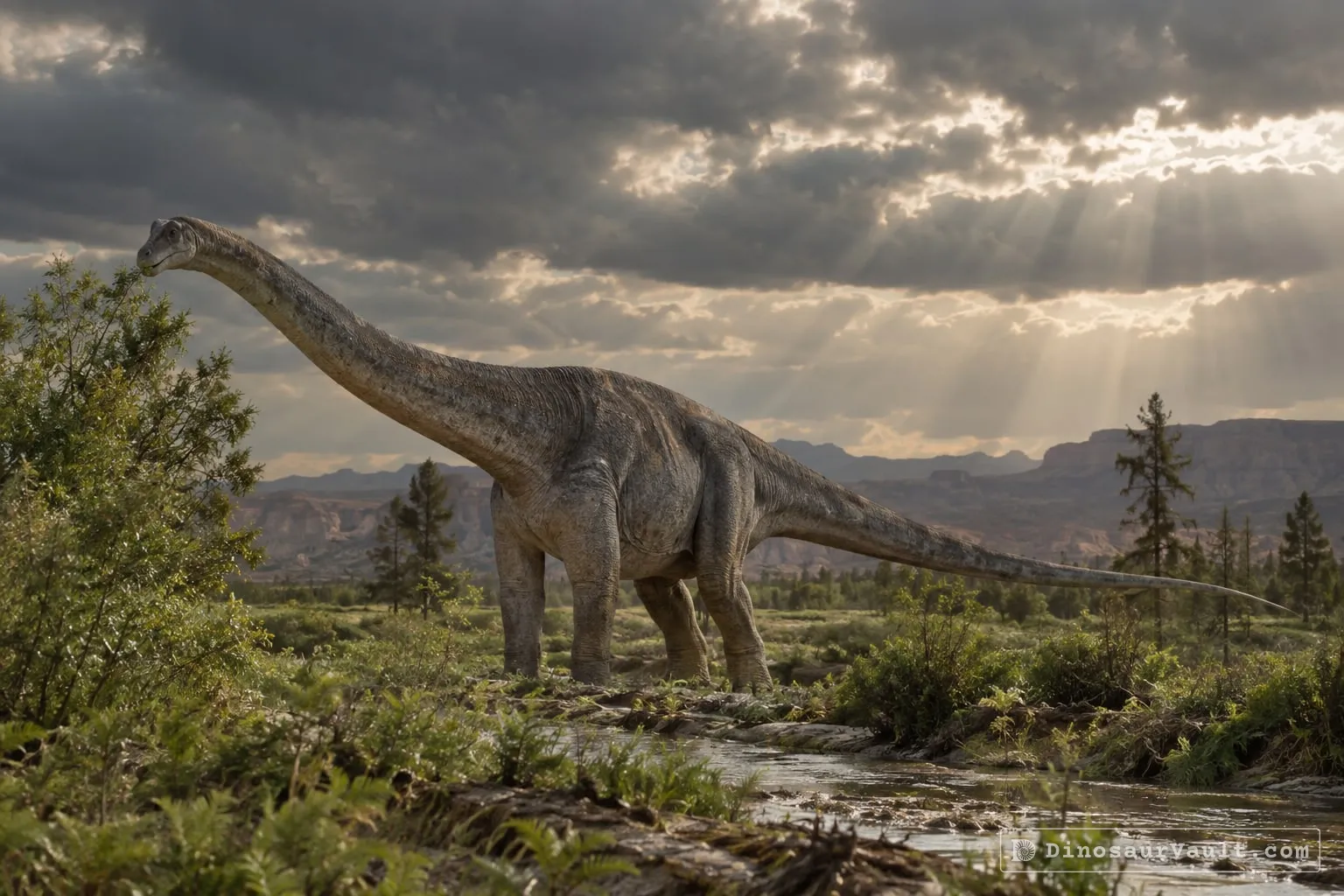
Jainosaurus was a titanosaur, a long-necked plant eater. It is known from a braincase and some limb and back bones, so its exact size is uncertain, but it was a large animal.
Its world
It lived about 72 to 66 million years ago, at the end of the Late Cretaceous, in what is now India. Its bones come from the Lameta Formation, where it shared the land with the titanosaur Isisaurus and the horned predator Rajasaurus.
How it was found
Its bones were first described as a species of Antarctosaurus. Hunt and colleagues gave it its own genus in 1995, naming it after an Indian paleontologist.
Field gallery
More views of Jainosaurus
Scenes reconstructed from the available fossil evidence.
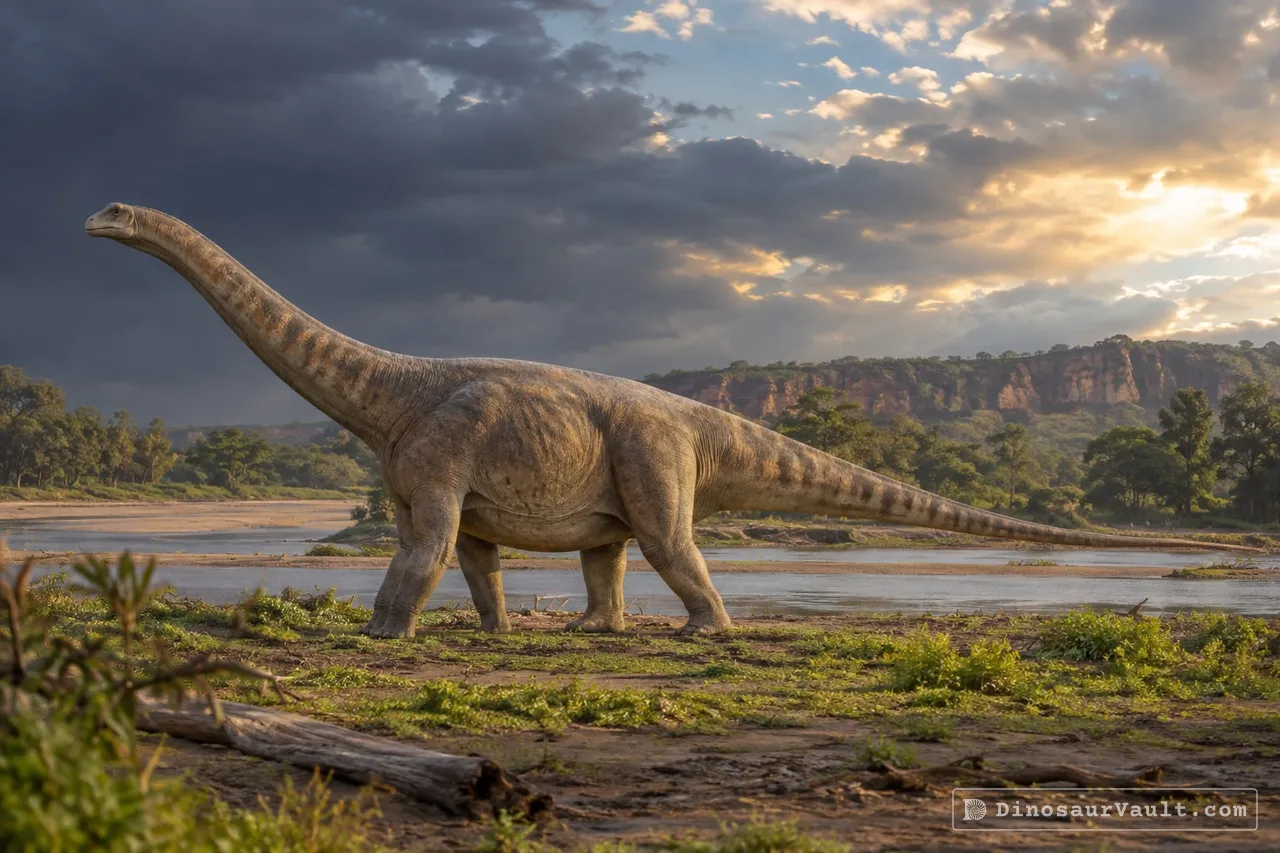
1 of 3
Lived alongside
Found in the same rock formations
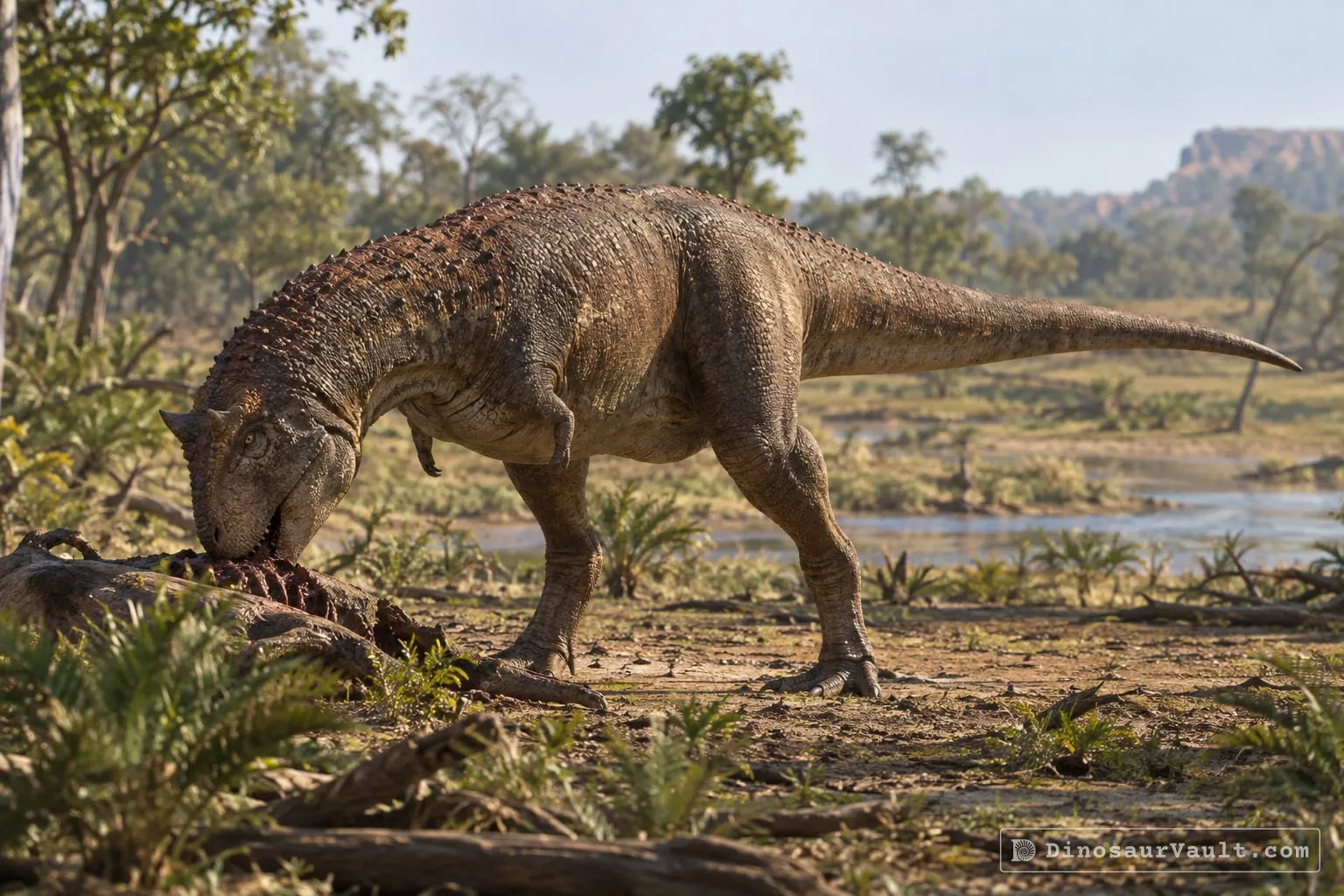
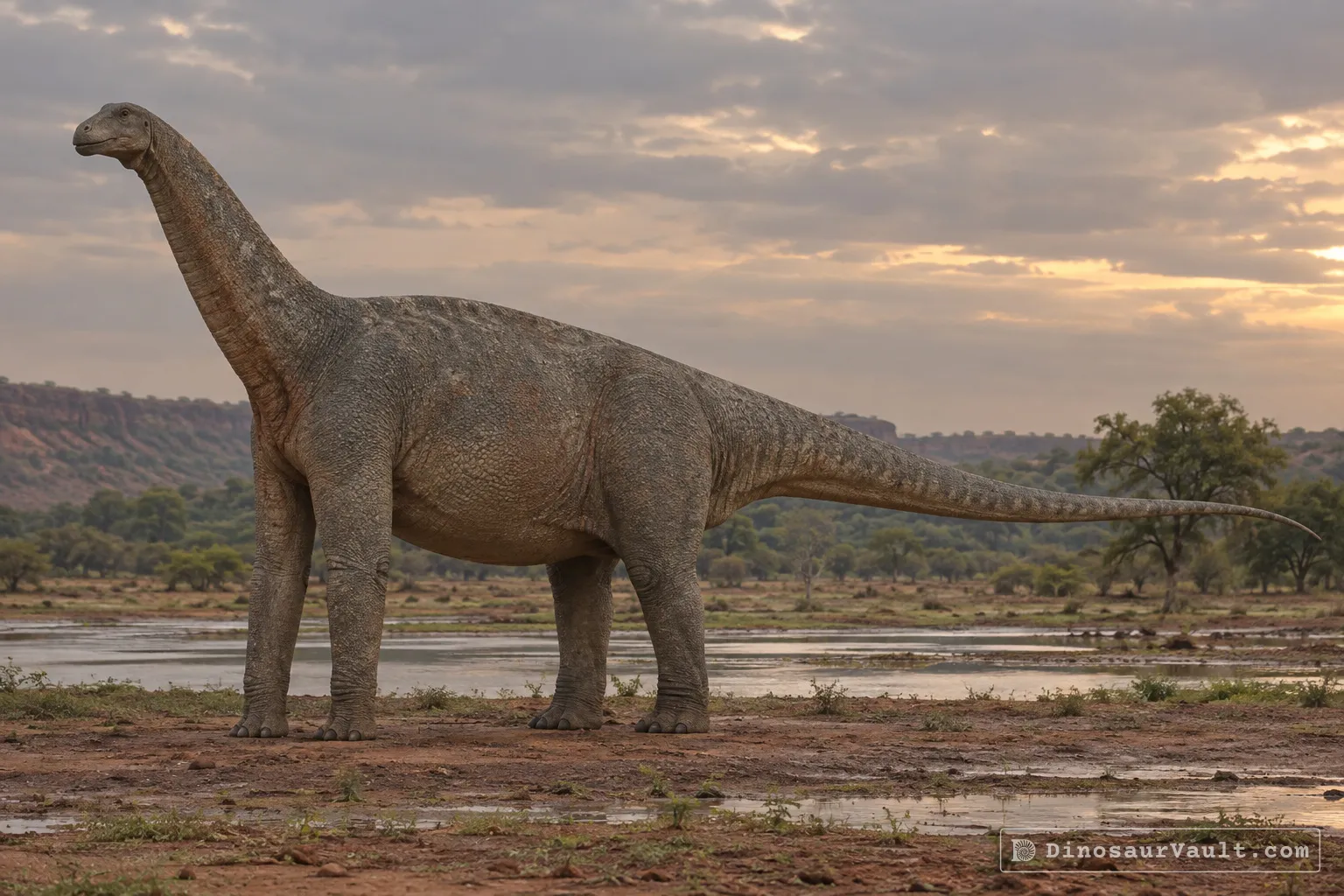
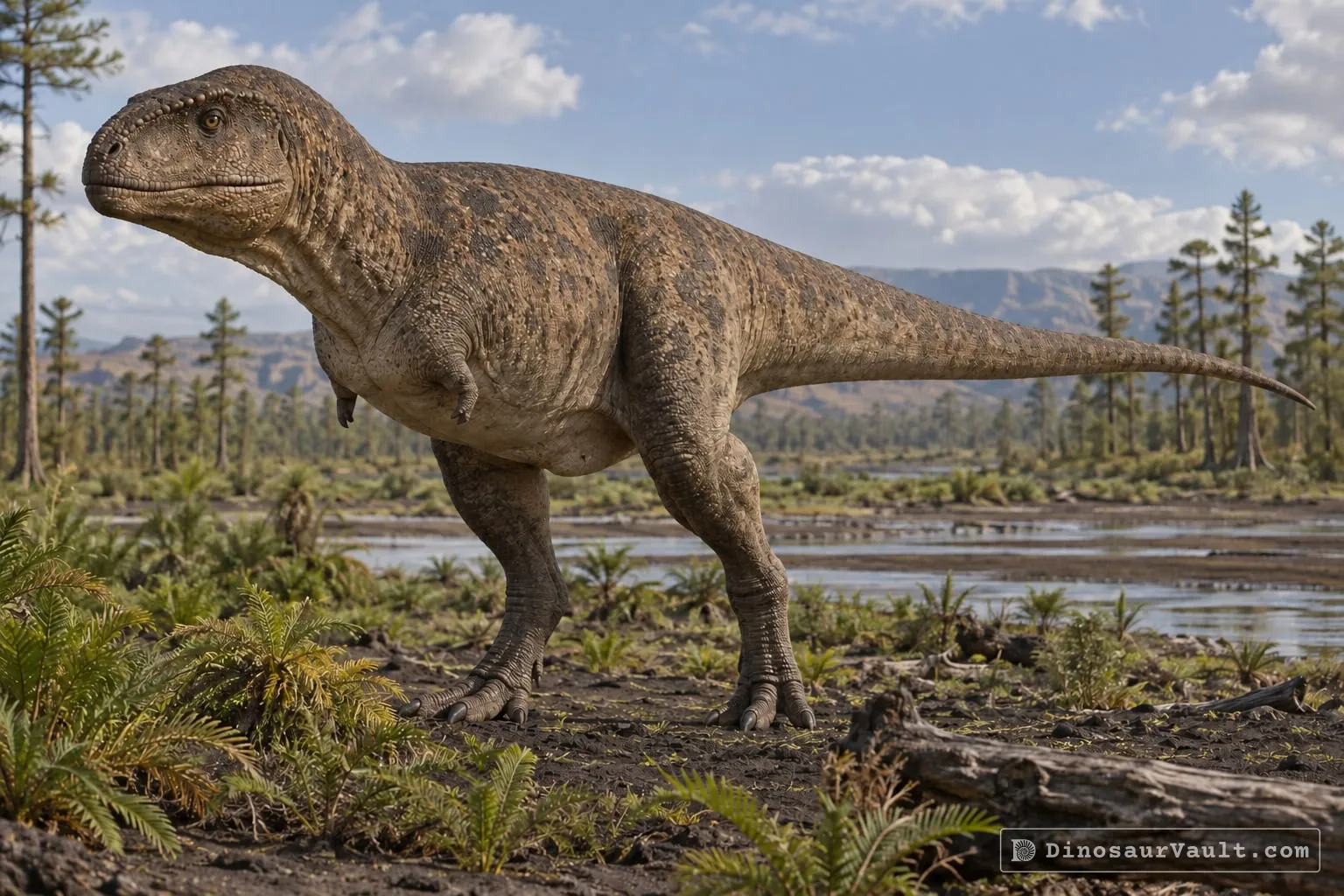
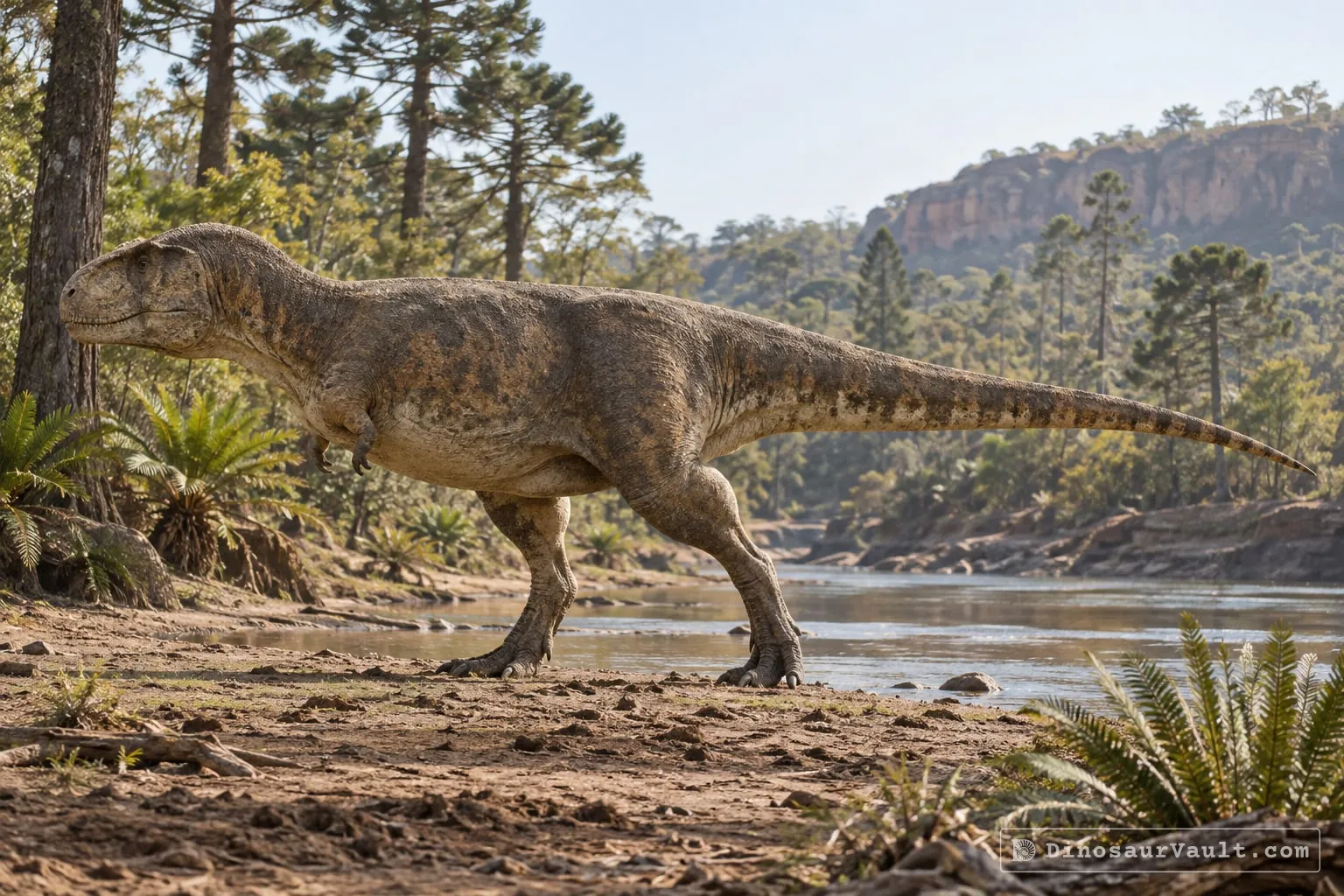
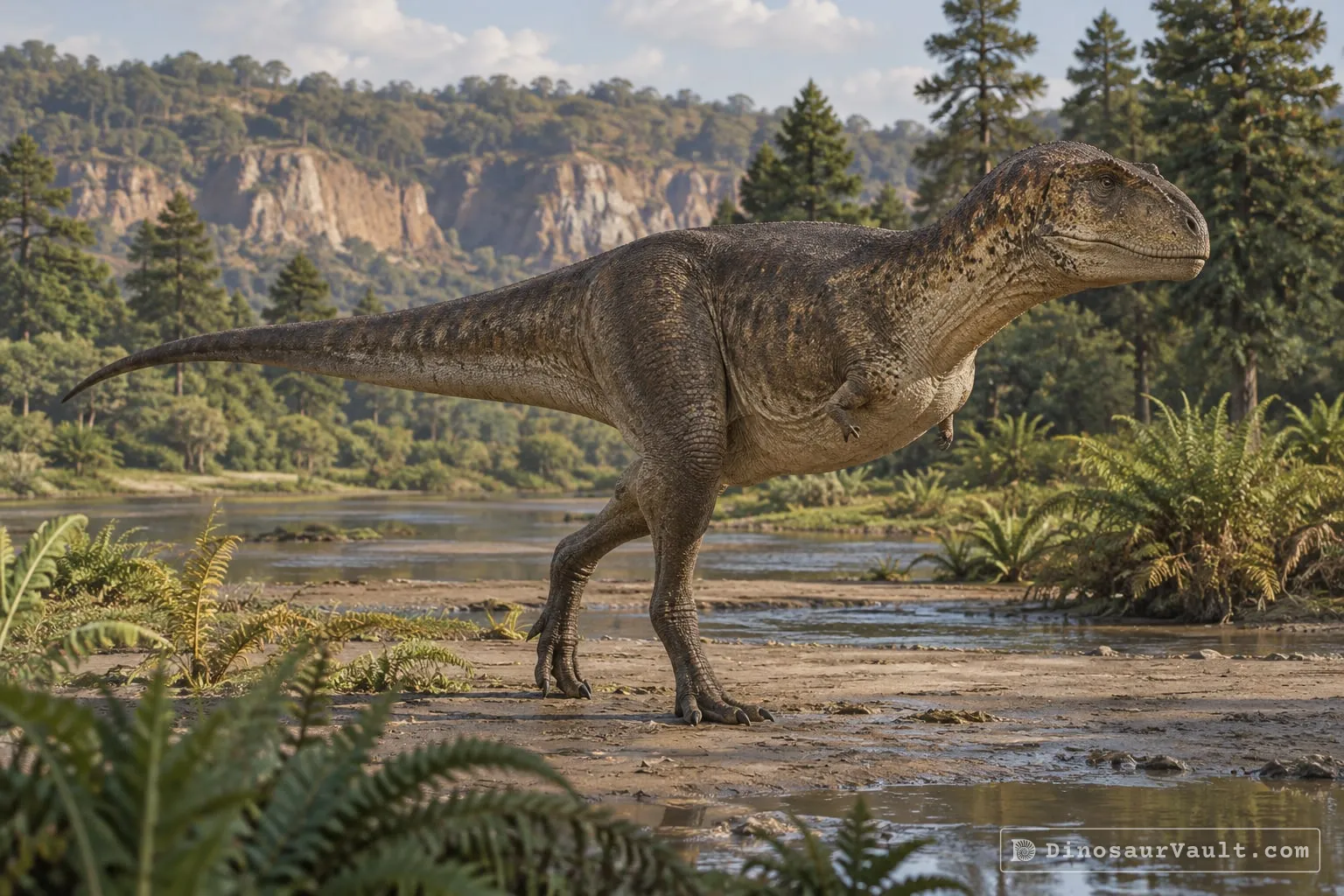
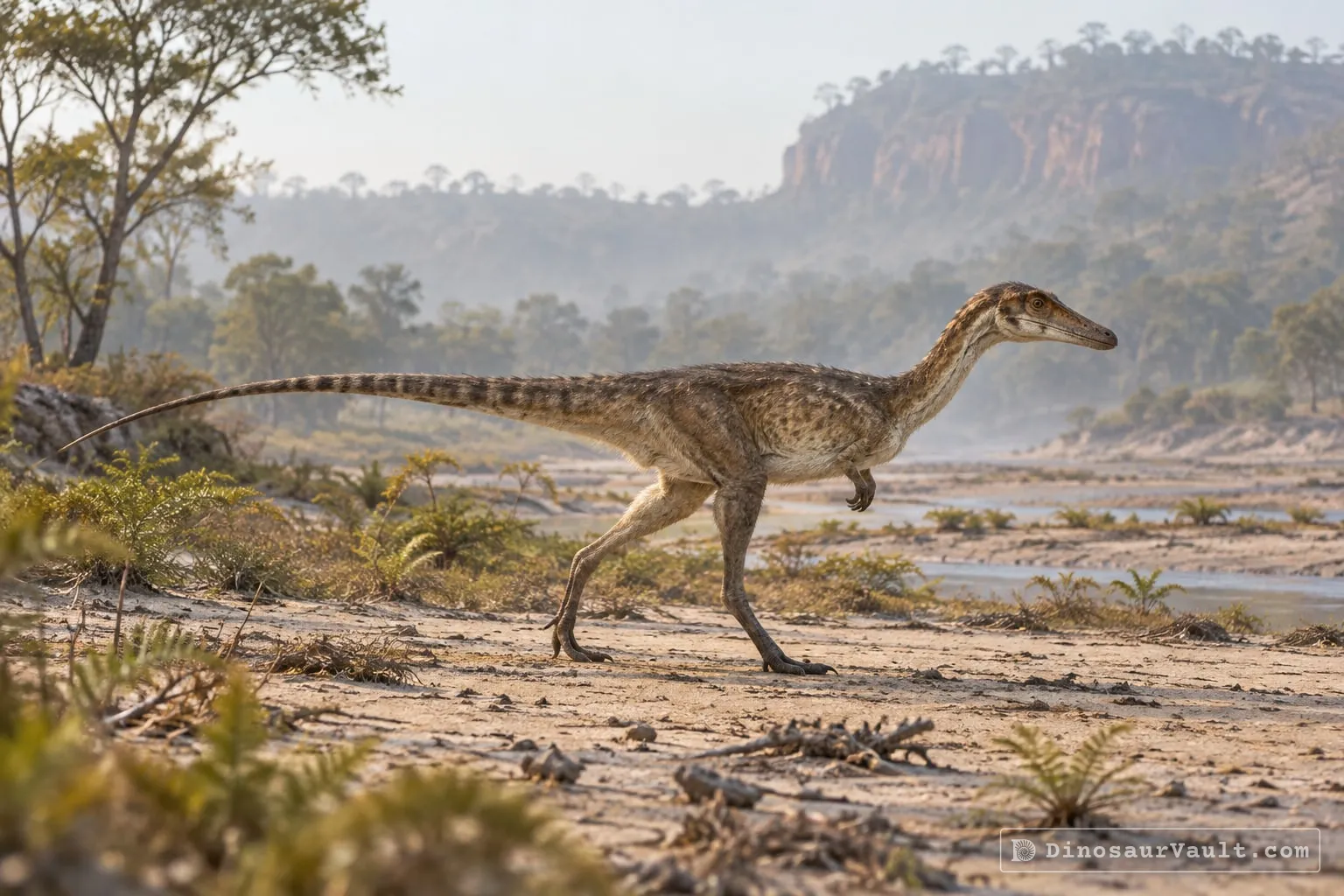
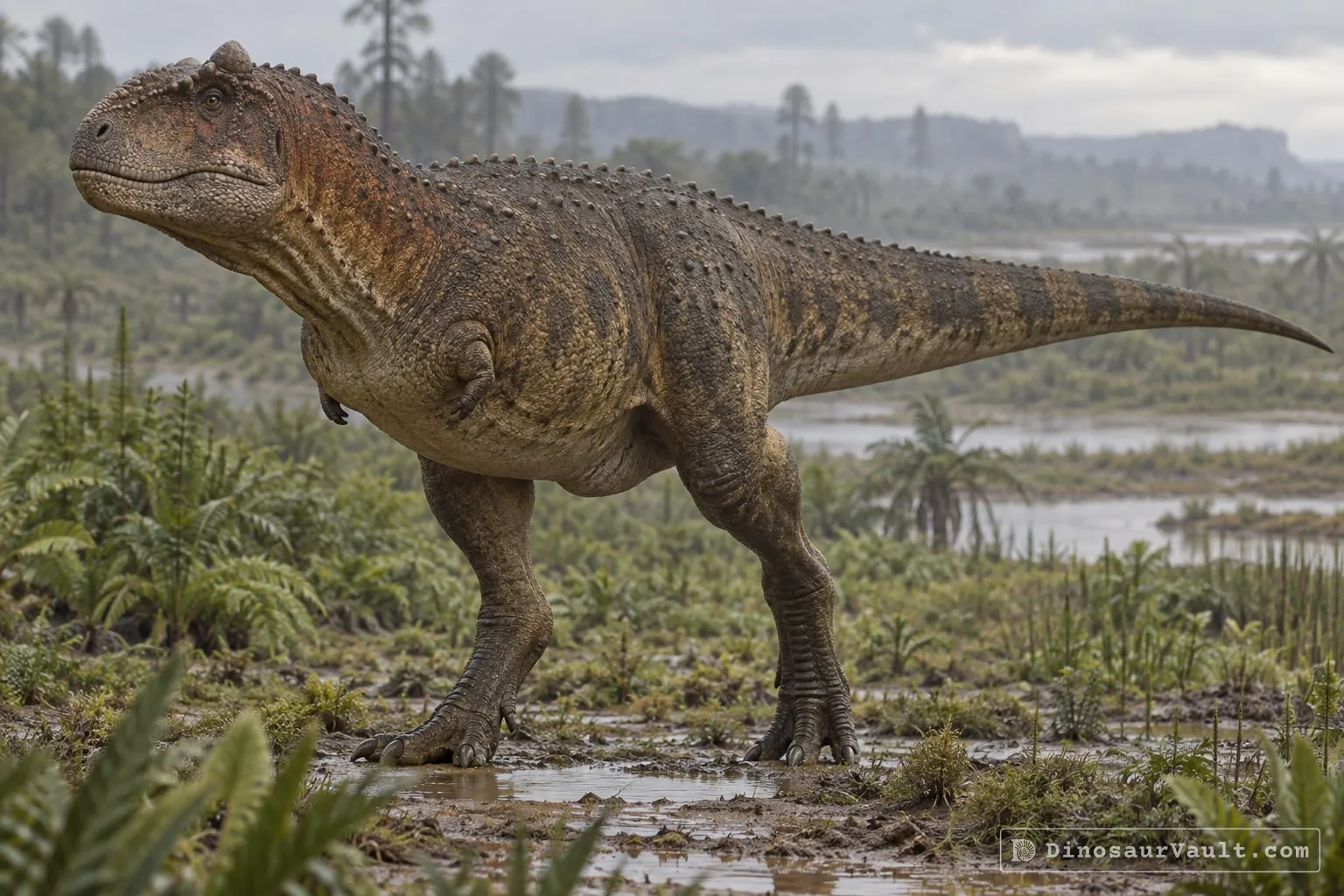


A rock formation can hold fossils laid down millions of years apart, so not every animal here met Jainosaurus.
The evidence
The science behind Jainosaurus
Which parts of the picture come from its own bones, and which come from its relatives.
From its own fossils
- The defining fossil is the braincase and adjoining skull roof, with distinctive ridges and projections around the brain cavity.
- Shoulder bones, front limb bones and ribs have been tentatively assigned to Jainosaurus.
Borrowed from relatives
- Tapuiasaurus provides a guide to the missing snout, jaws and neck.
- Reduced front toes in Epachthosaurus, Opisthocoelicaudia and Alamosaurus guide the restoration of its front feet.
Still unknown
- Which scattered body bones belong to the same species as the original braincase.
- Its complete head shape and body proportions.
- Its skin, color and exact toe arrangement.
Discovery timeline
- 1995Named itHunt et al.
- 2011New findWILSON, BARRETT & CARRANO
- 2011Close relativeZaher et al.
- 2016Close relativeGonzález Riga et al.
Key papers
The research behind what we know of Jainosaurus
Named it
Gave the Indian species formerly assigned to Antarctosaurus its own genus name, Jainosaurus.
The global sauropod fossil record. Aspects of Sauropod Paleobiology. GAIA 10: 261-279
No link available
New find
Used archival records to establish that a partial skeleton was associated and tentatively assigned it to Jainosaurus septentrionalis.
An associated partial skeleton of Jainosaurus cf. septentrionalis (Dinosauria: Sauropoda) from the Late Cretaceous of Chhota Simla, Central India. Palaeontology 54: 981-998
Read the paper : An associated partial skeleton of Jainosaurus cf. septentrionalis (Dinosauria: Sauropoda) from the Late Cretaceous of Chhota Simla, Central India (opens in a new tab)Close relative
Described the skull of Tapuiasaurus, a titanosaur with a long, low snout that helps restore the missing heads of related animals.
A Complete Skull of an Early Cretaceous Sauropod and the Evolution of Advanced Titanosaurians. PLoS ONE 6: e16663
Read the paper : A Complete Skull of an Early Cretaceous Sauropod and the Evolution of Advanced Titanosaurians (opens in a new tab)Close relative
Compared titanosaur feet and traced changes in their toes and claws, providing a guide to restoring missing feet.
A gigantic new dinosaur from Argentina and the evolution of the sauropod hind foot. Scientific Reports 6
Read the paper : A gigantic new dinosaur from Argentina and the evolution of the sauropod hind foot (opens in a new tab)
Close relatives
Other members of Lithostrotia


Sources: Wikidata