Bustingorrytitan
"Bustingorry's titan"
Type species Bustingorrytitan shiva
- Lived
- 110 to 106 million years ago, Early Cretaceous
- Diet
- Herbivore
- Group
- Sauropods
- Found in
- Argentina
- Named by
- Simón and Salgado 2023
Where its fossils were found
The evidence
Today

110 million years ago
Habitat
River plains in what is now Argentina. Its Huincul Formation world included Argentinosaurus, Mapusaurus and Meraxes.
Field notes
About Bustingorrytitan
What it was like
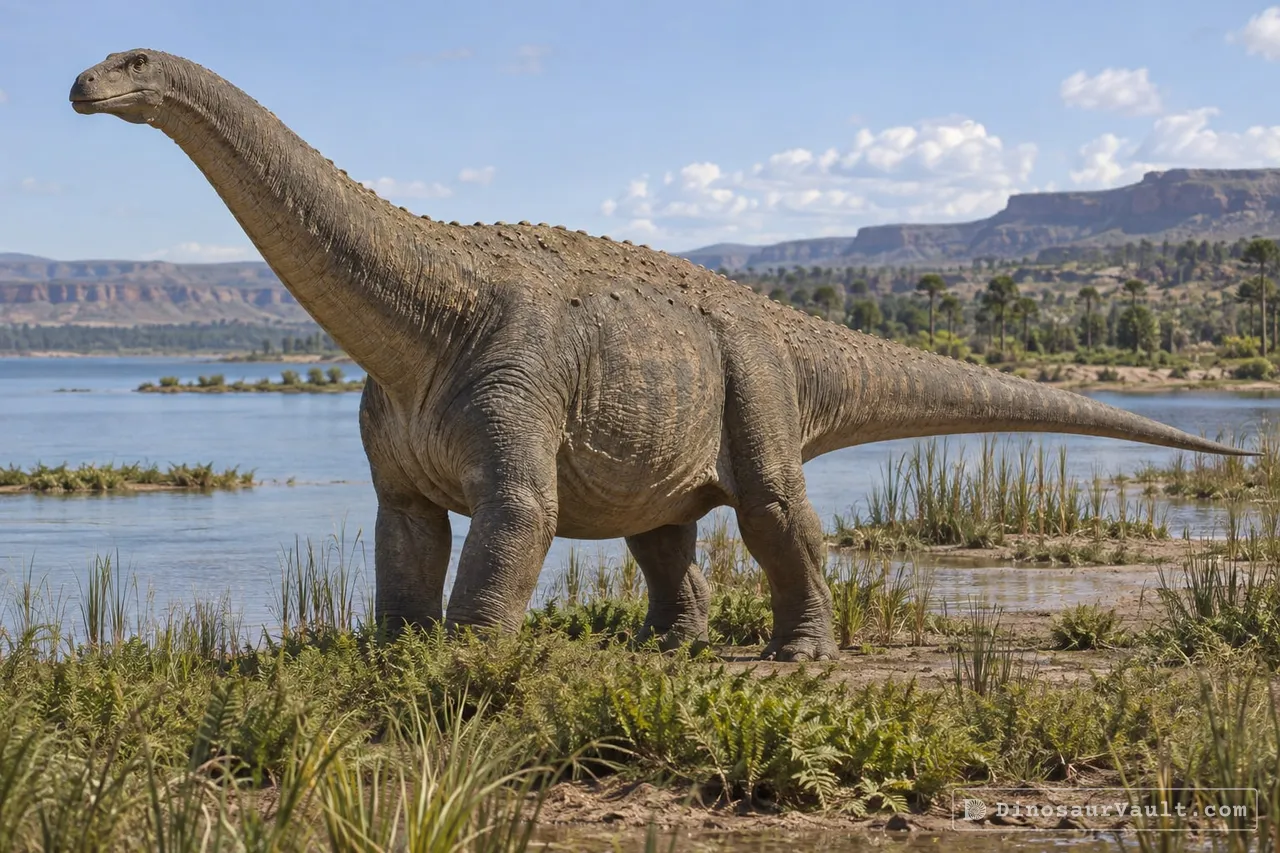
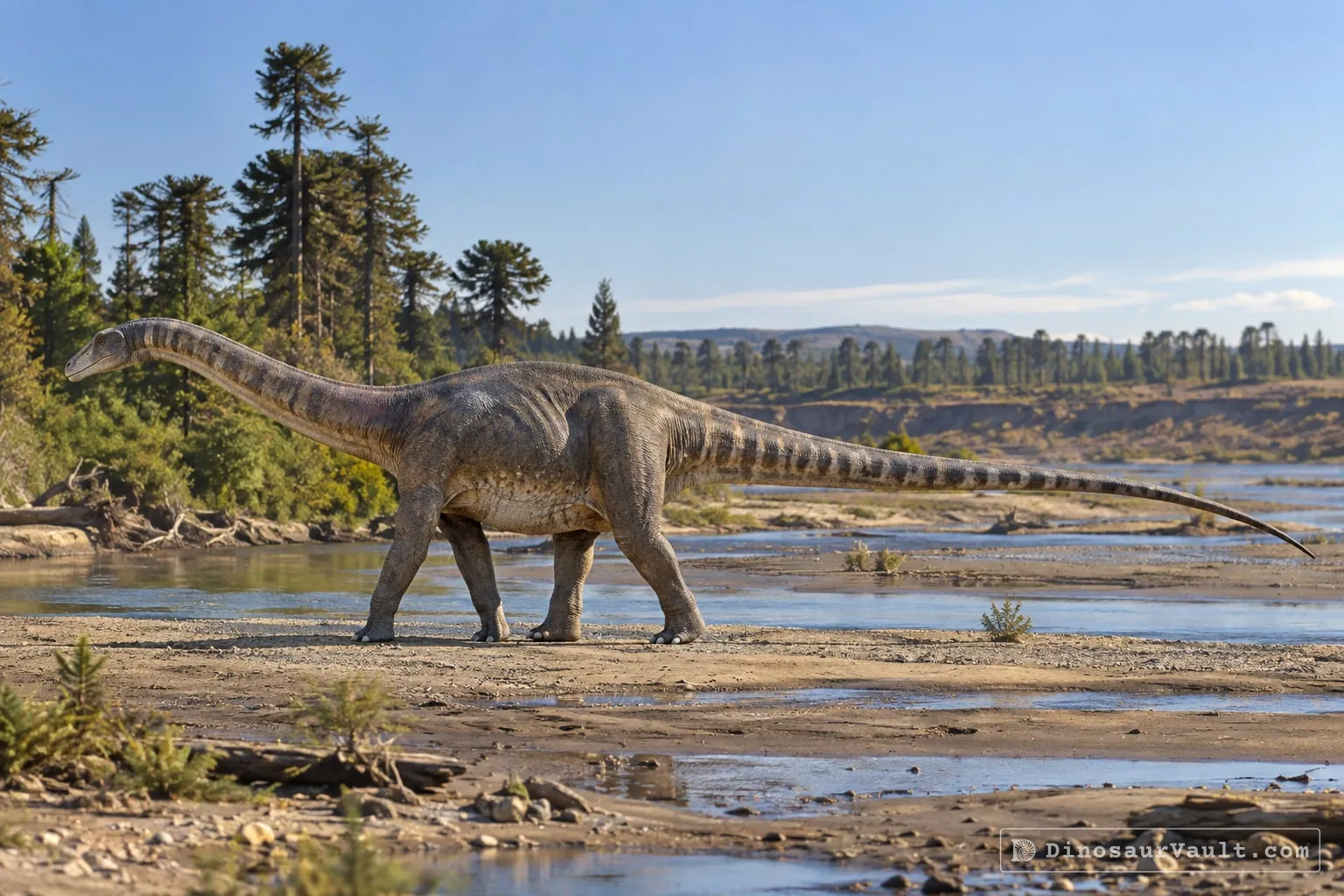
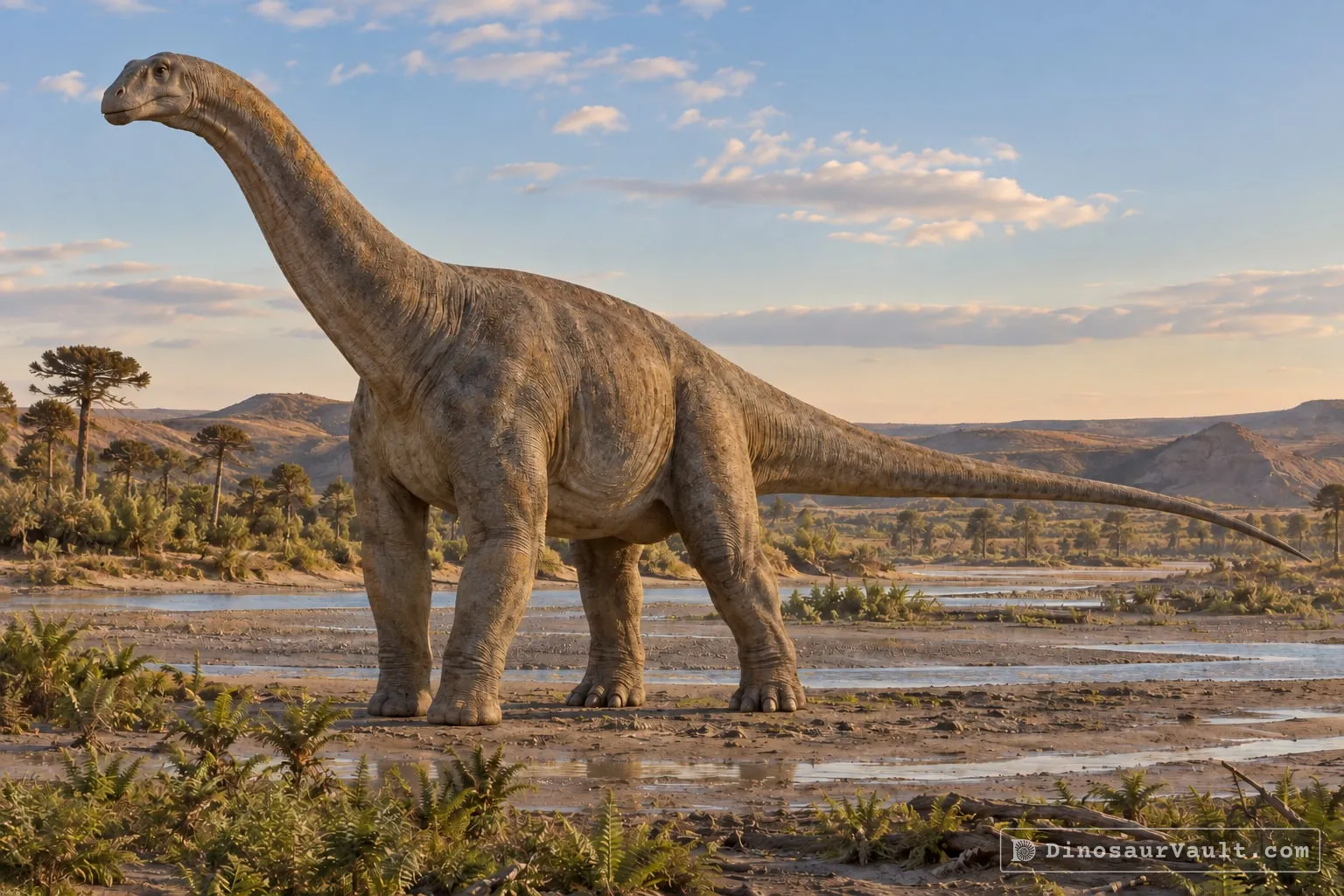
Bustingorrytitan was a large titanosaur, a long-necked plant eater. It is known from a partial skeleton with bones of the back, tail and limbs.
Its world
It lived about 110 to 106 million years ago, in the Cretaceous, in what is now Argentina. Its bones come from the Huincul Formation, home to the giant titanosaur Argentinosaurus and the predators Mapusaurus, Meraxes and Skorpiovenator.
How it was found
Simón and Salgado named it in 2023. The type species is Bustingorrytitan shiva. The name honors the family that owns the land where it was found.
Field gallery
More views of Bustingorrytitan
Scenes reconstructed from the available fossil evidence.
Lived alongside
Found in the same rock formations
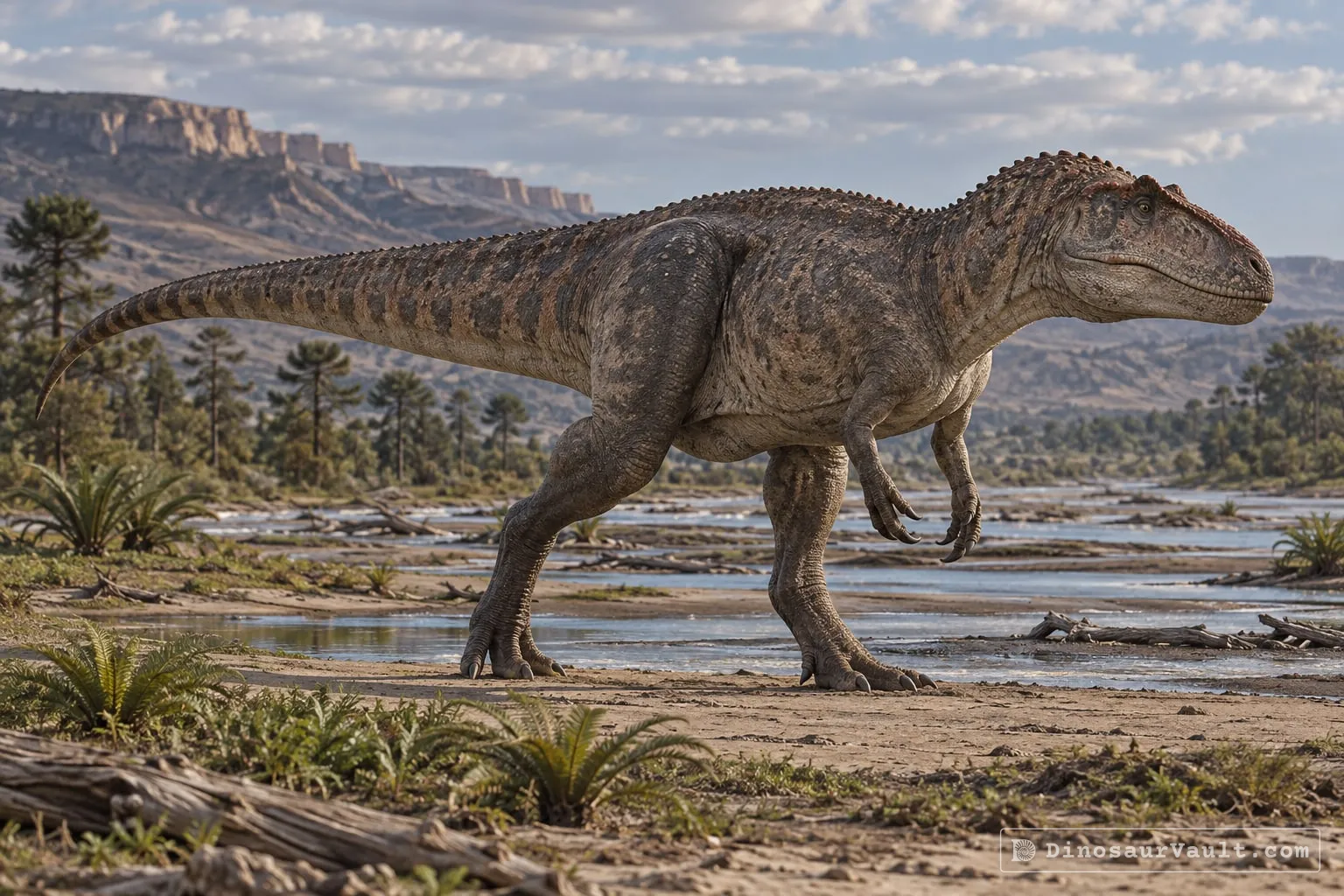
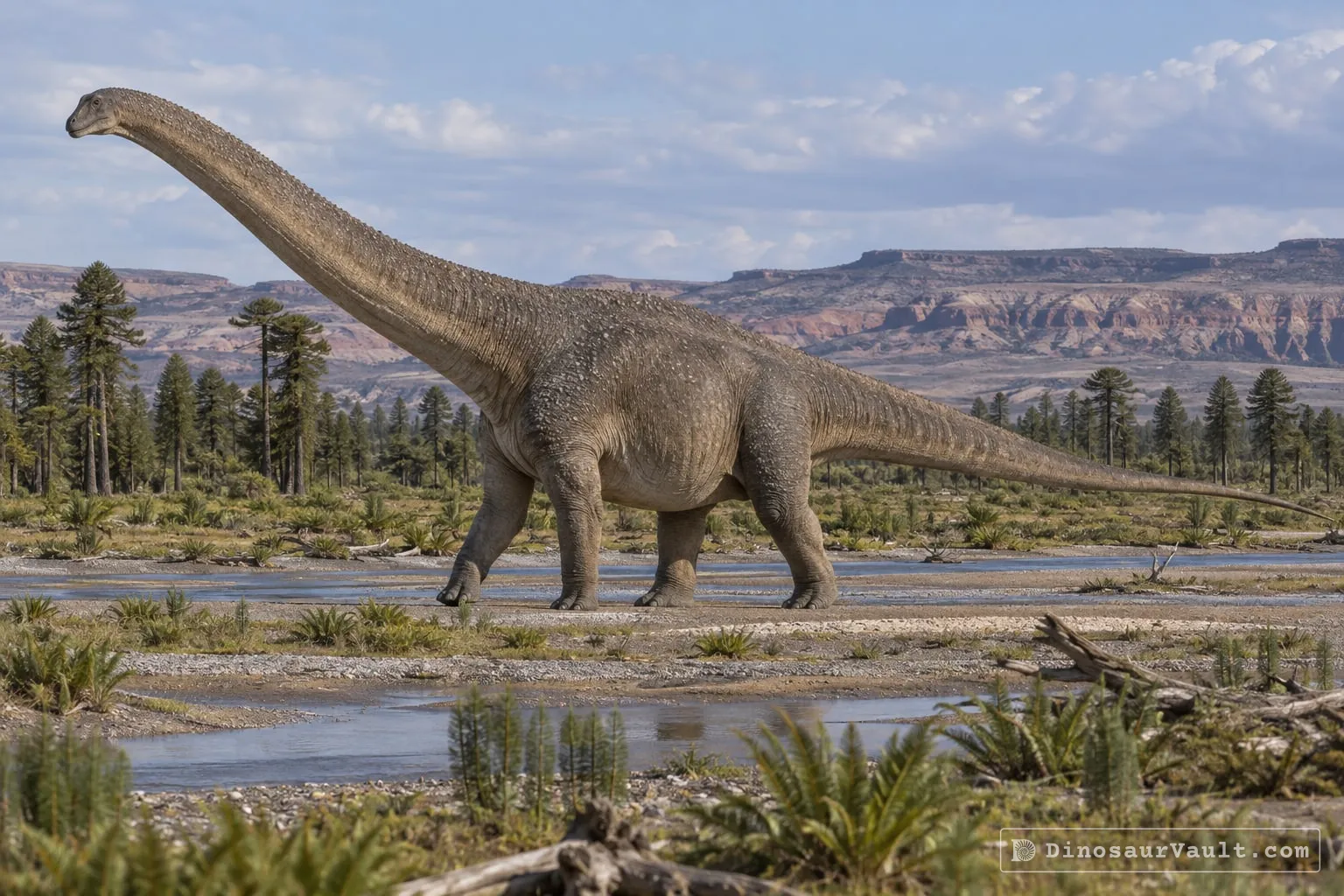
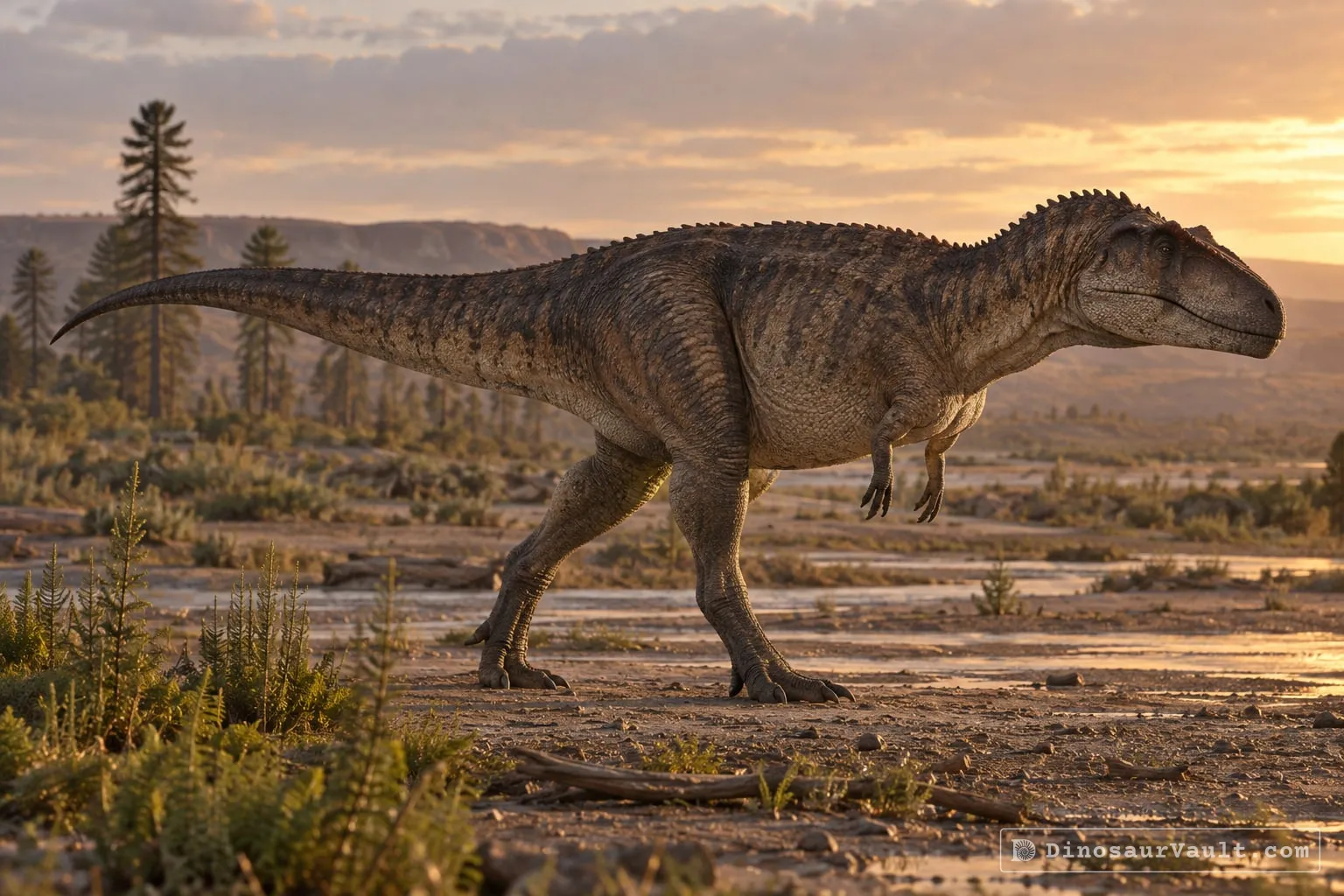
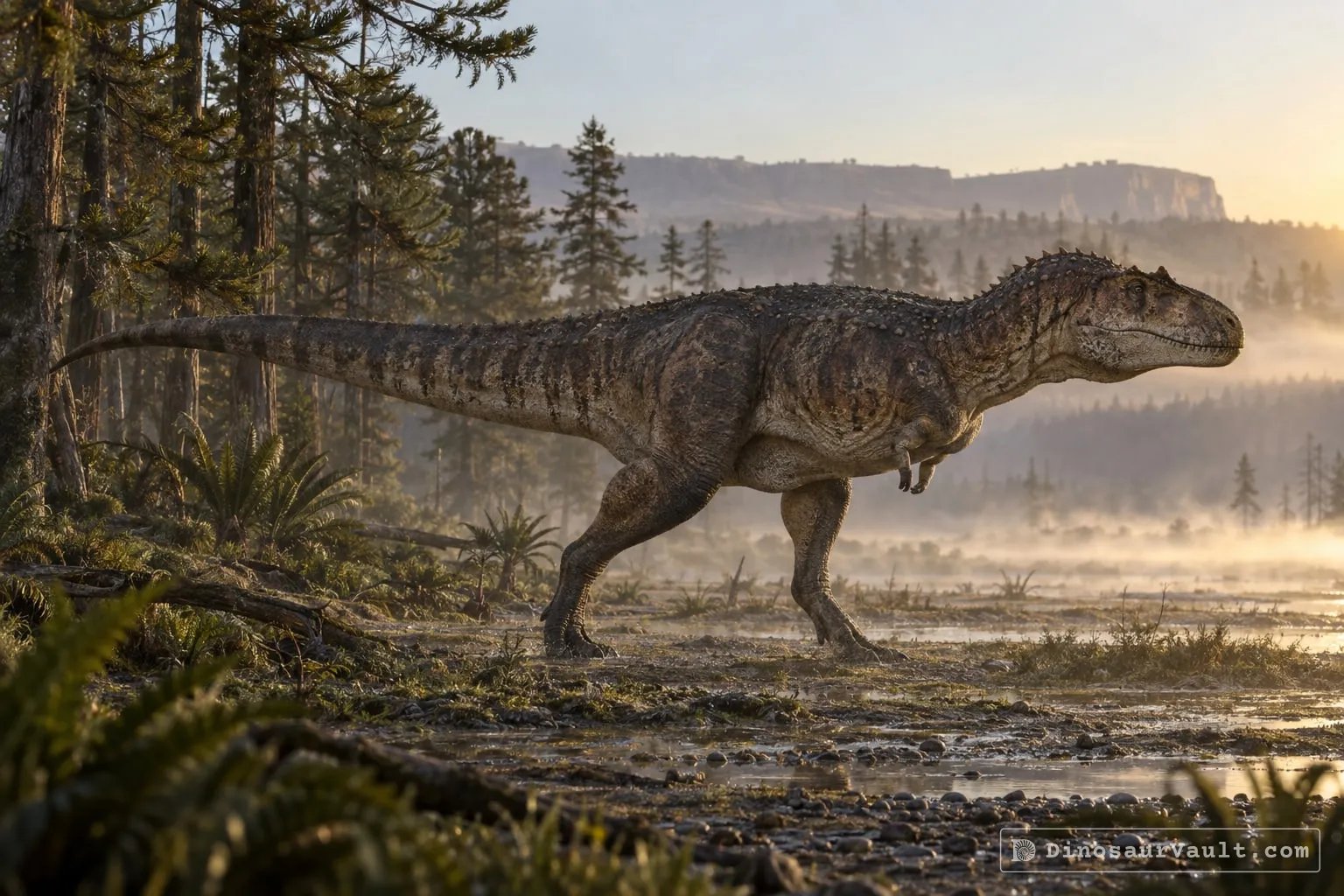
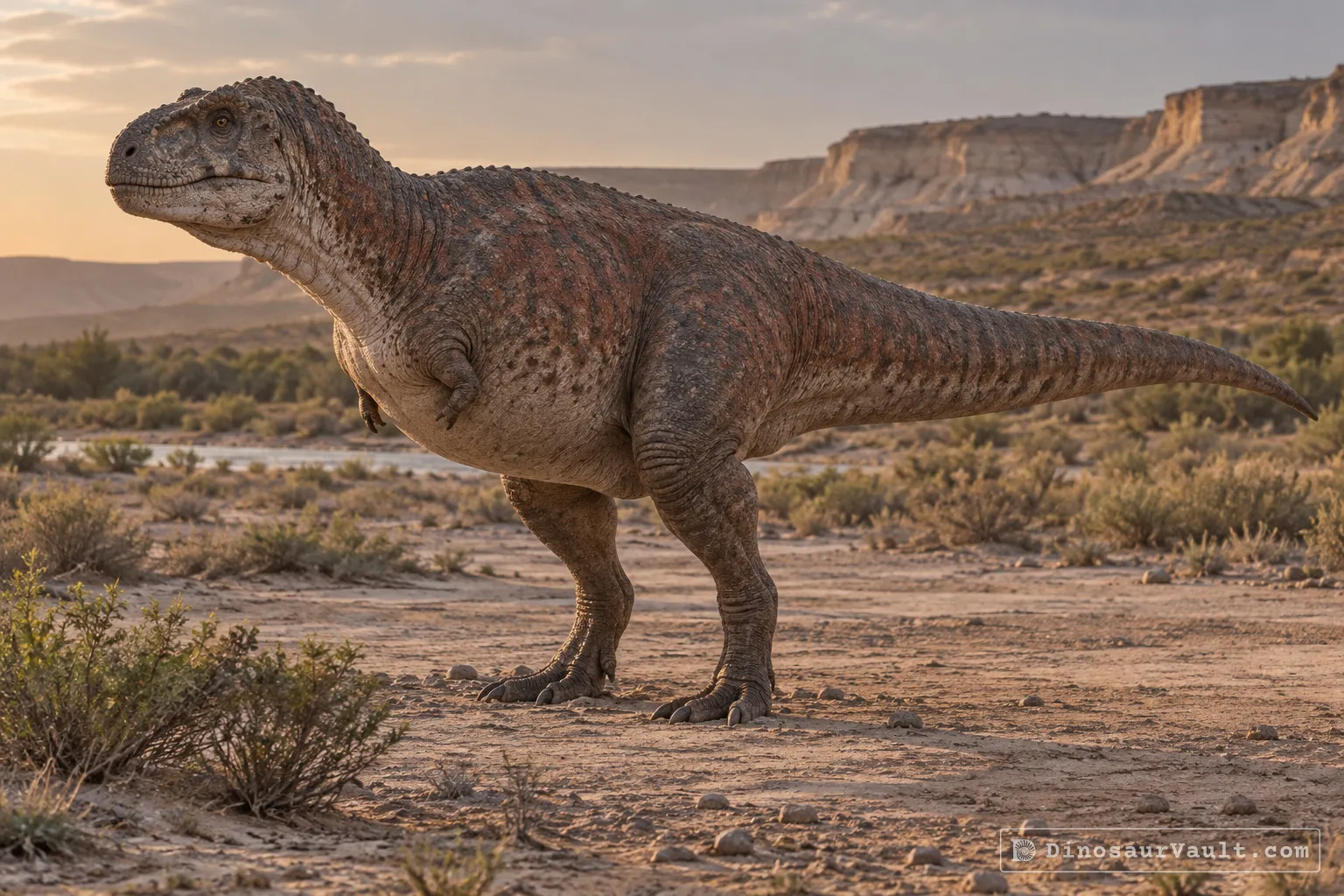
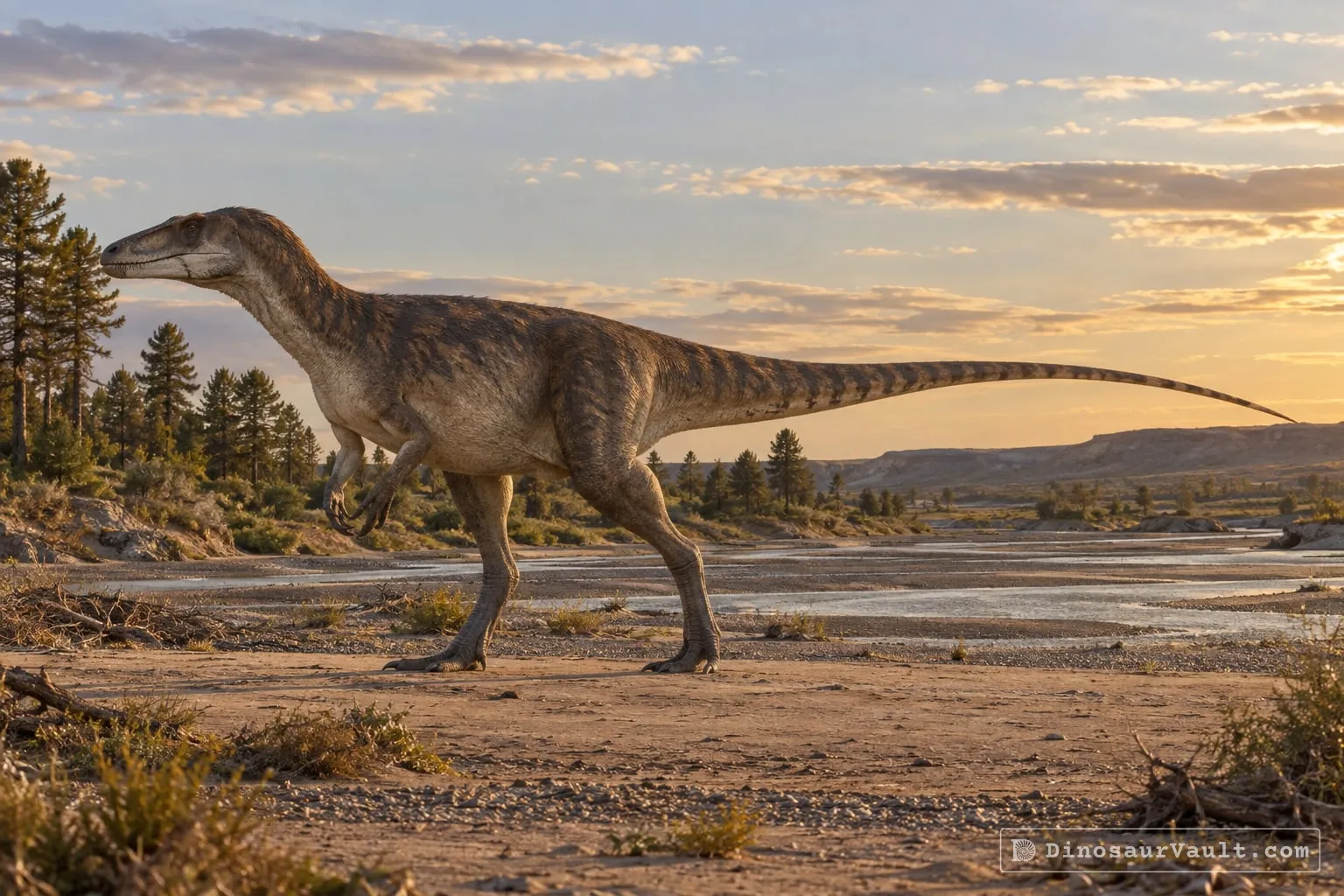


A rock formation can hold fossils laid down millions of years apart, so not every animal here met Bustingorrytitan.
The evidence
The science behind Bustingorrytitan
Which parts of the picture come from its own bones, and which come from its relatives.
From its own fossils
- The type skeleton preserves a lower-jaw bone, a tooth fragment, back and tail vertebrae, shoulder and hip bones, and much of the limbs.
- The upper arm has a broad muscle attachment crest, and the front of the thighbone carries a ridge that divides toward the knee.
- The type skeleton has five complete hand bones arranged in a half-cylinder. Three of its foot claws are preserved, flattened from side to side and strongly curved, with their tips missing.
Borrowed from relatives
- Its missing upper skull is restored by comparison with Tapuiasaurus, and gaps in its neck, trunk and tail with Mendozasaurus.
Still unknown
- Its exact adult body size.
- The complete shape and length of its neck, and the bones at the tips of its fingers.
- Its skin covering and color.
Discovery timeline
- 2018Same rocksSimóN, Salgado & Calvo
- 2022Same rocksCanale et al.
- 2023Named itSimón & Salgado
Key papers
The research behind what we know of Bustingorrytitan
Same rocks
Described Choconsaurus, another titanosaur from the Huincul Formation, with well-preserved vertebrae and limb bones.
A New Titanosaur Sauropod from the Upper Cretaceous of Patagonia, NeuquéN Province, Argentina. Ameghiniana 55: 1-29
Read the paper : A New Titanosaur Sauropod from the Upper Cretaceous of Patagonia, NeuquéN Province, Argentina (opens in a new tab)Same rocks
Named Meraxes, a large predator from the Huincul Formation with a large skull and short arms.
New giant carnivorous dinosaur reveals convergent evolutionary trends in theropod arm reduction. Current Biology 32: 3195-3202.e5
Read the paper : New giant carnivorous dinosaur reveals convergent evolutionary trends in theropod arm reduction (opens in a new tab)Named it
Described Bustingorrytitan from partial skeletons and identified distinctive features of its vertebrae, upper arm and thighbone.
A new gigantic titanosaurian sauropod from the early Late Cretaceous of Patagonia (Neuquén Province, Argentina). Acta Palaeontologica Polonica 68: 1-17
No link available
Close relatives
Other members of Lithostrotia


Sources: Wikidata