Outline: a typical sauropod
Isisaurus
- Lived
- 72 to 66 million years ago, Late Cretaceous
- Diet
- Herbivore
- Group
- Sauropods
- Found in
- India and Pakistan
- Named by
- Wilson and Upchurch 2003
Where its fossils were found
The evidence
Today

70 million years ago
Field notes
About Isisaurus
What it was like
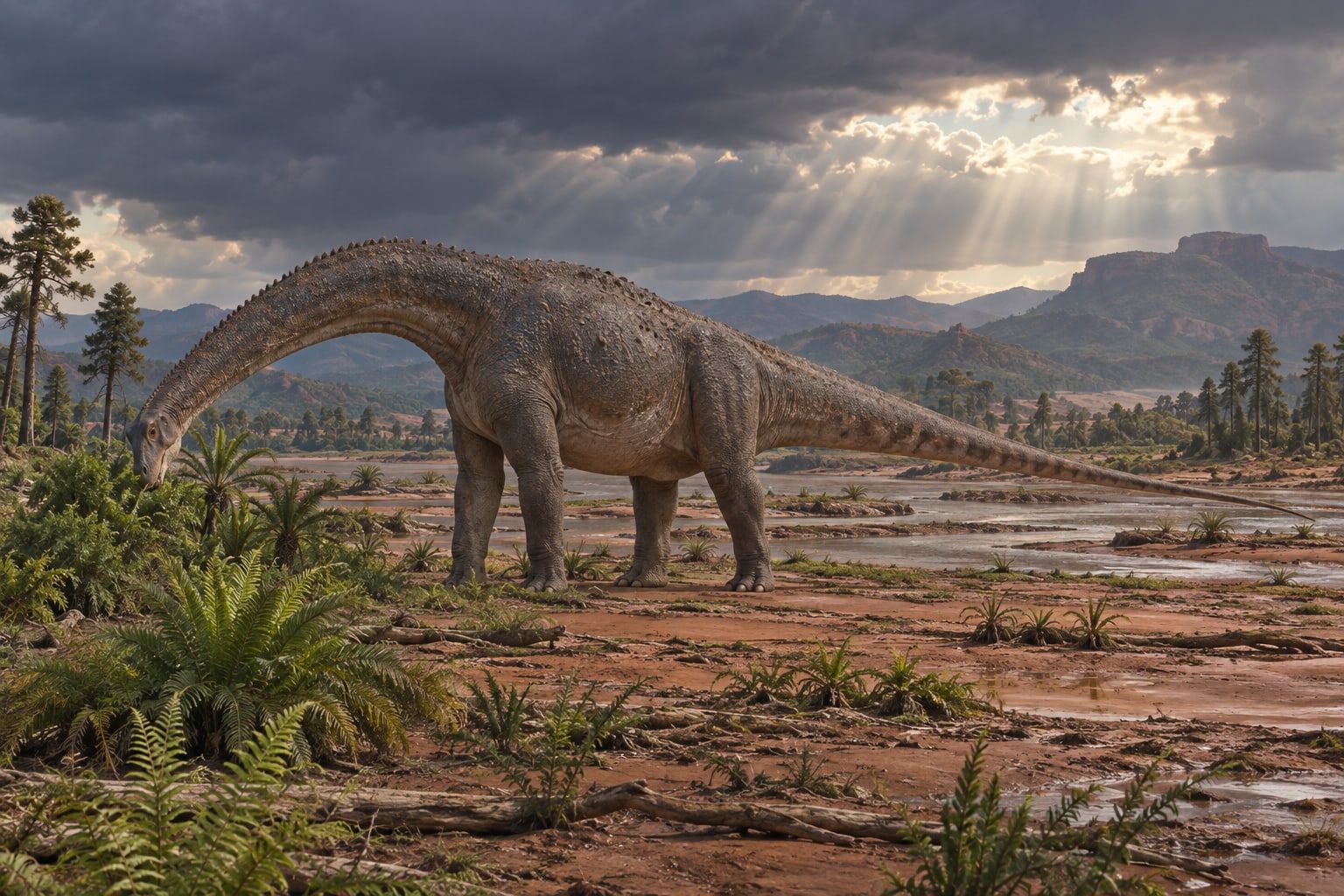
Isisaurus was a titanosaur, one of the long-necked, four-legged plant eaters that spread across the southern continents in the Cretaceous. Compared with many of its relatives it had fairly long front legs and a short, sturdy neck, so it may have fed from trees rather than close to the ground.
Its world
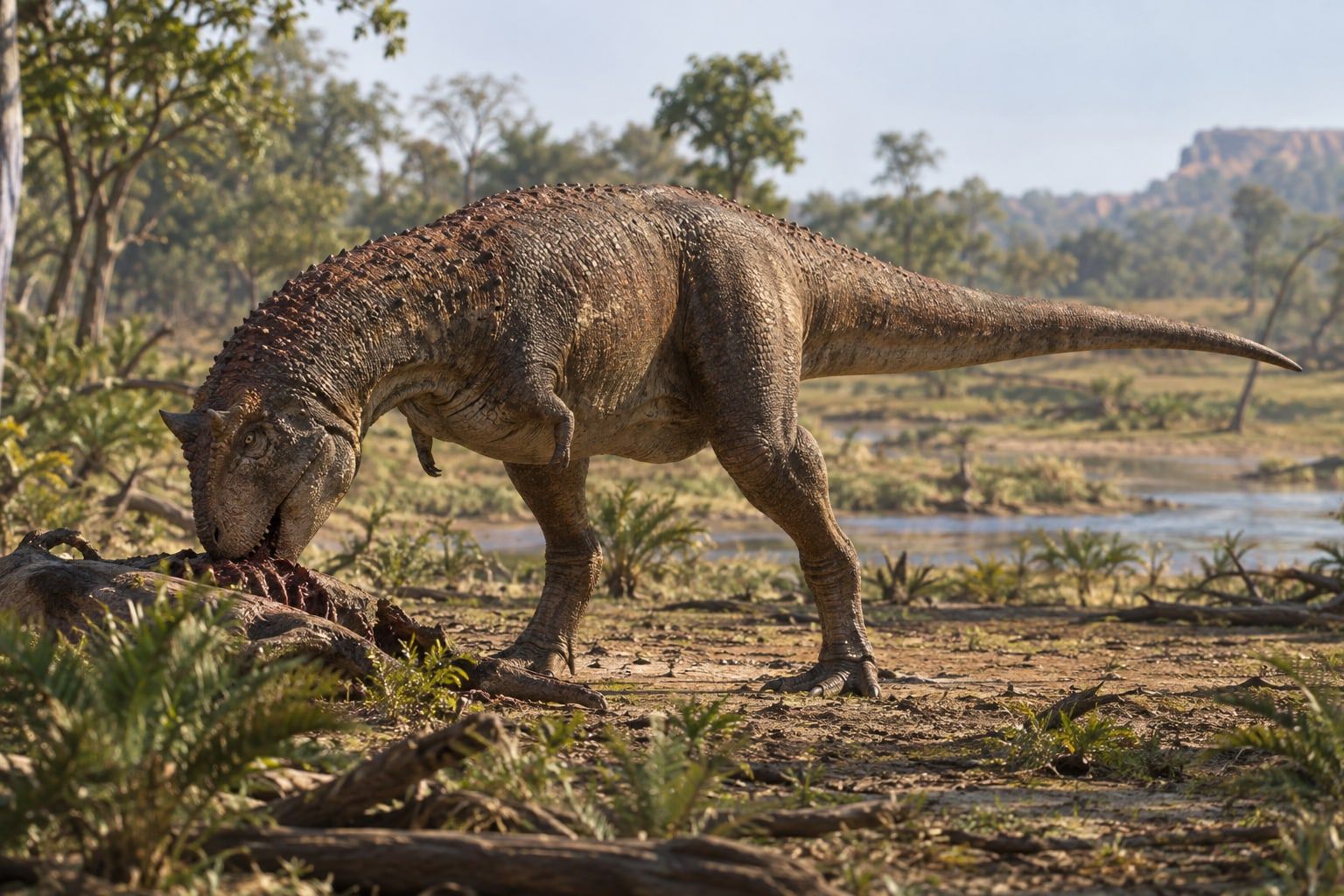
It lived about 72 to 66 million years ago, at the very end of the Late Cretaceous, in what is now India, with fossils also reported from Pakistan. Its bones come from the Lameta Formation, where it shared the land with the hunter Rajasaurus and other titanosaurs such as Jainosaurus.
How it was found
Wilson and Upchurch named Isisaurus in 2003 for bones that had earlier been placed in another genus. The name honors the institute in India whose team collected the skeleton.
Lived alongside
Found in the same rock formations
Close relatives
Other members of Saltasauroidea
Sources: WikidataNamed in: J. A. Wilson and P. Upchurch. 2003. A revision of Titanosaurus Lydekker (Dinosauria – Sauropoda), the first dinosaur genus with a 'Gondwanan' distribution. Journal of Systematic Palaeontology 1(3):125-160