Hulsanpes
"Khulsan foot"
- Lived
- 84 to 72 million years ago, Late Cretaceous
- Diet
- Carnivore
- Group
- Theropods, Dromaeosauridae
- Found in
- Mongolia
- Named by
- Osmolska 1982
Where its fossils were found
The evidence
Today

80 million years ago
Habitat
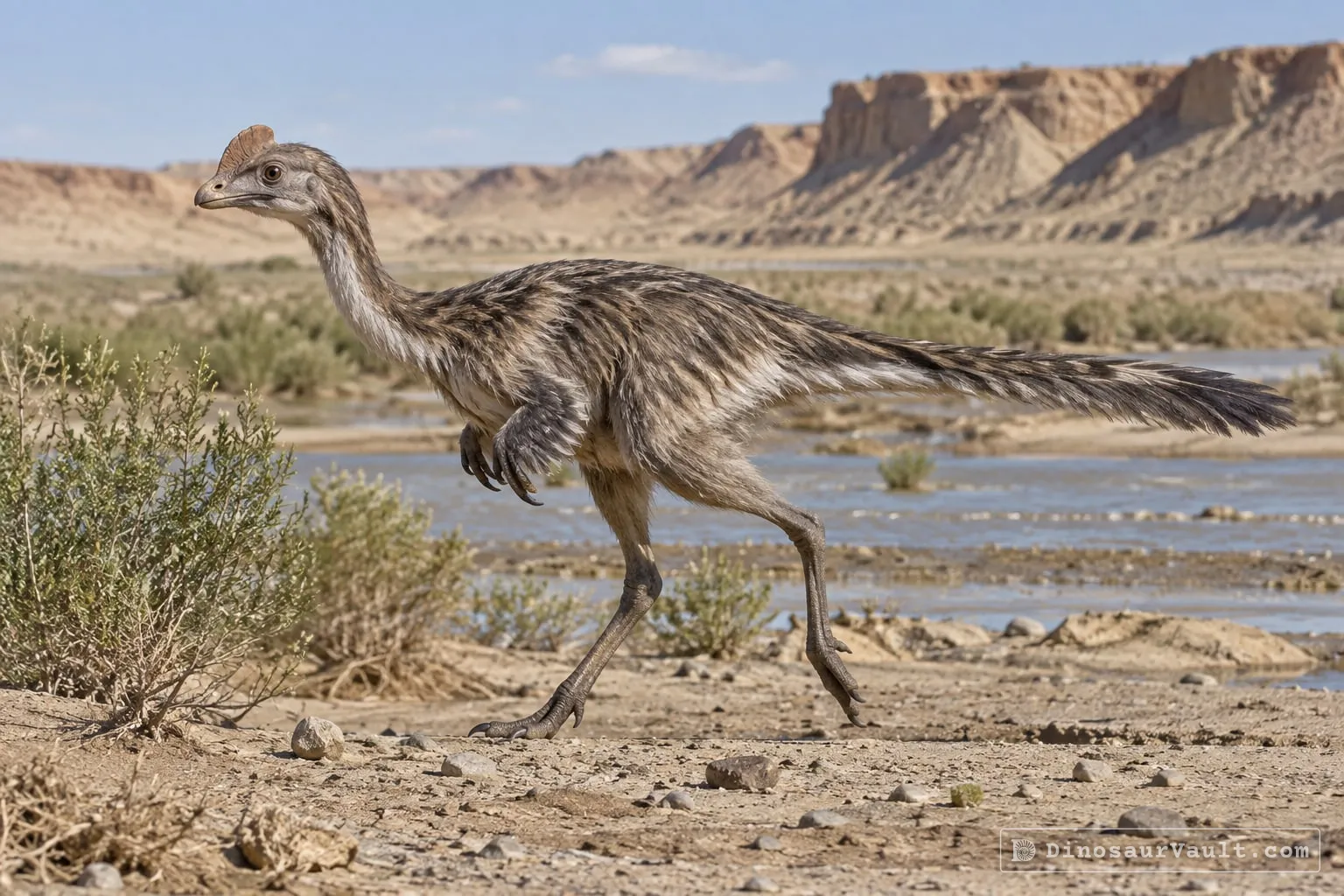
A dry, sandy landscape in Mongolia, recorded in the Baruungoyot Formation. Other dinosaurs from these rocks include Saichania, Tarchia and Shri.
Field notes
About Hulsanpes
What it was like
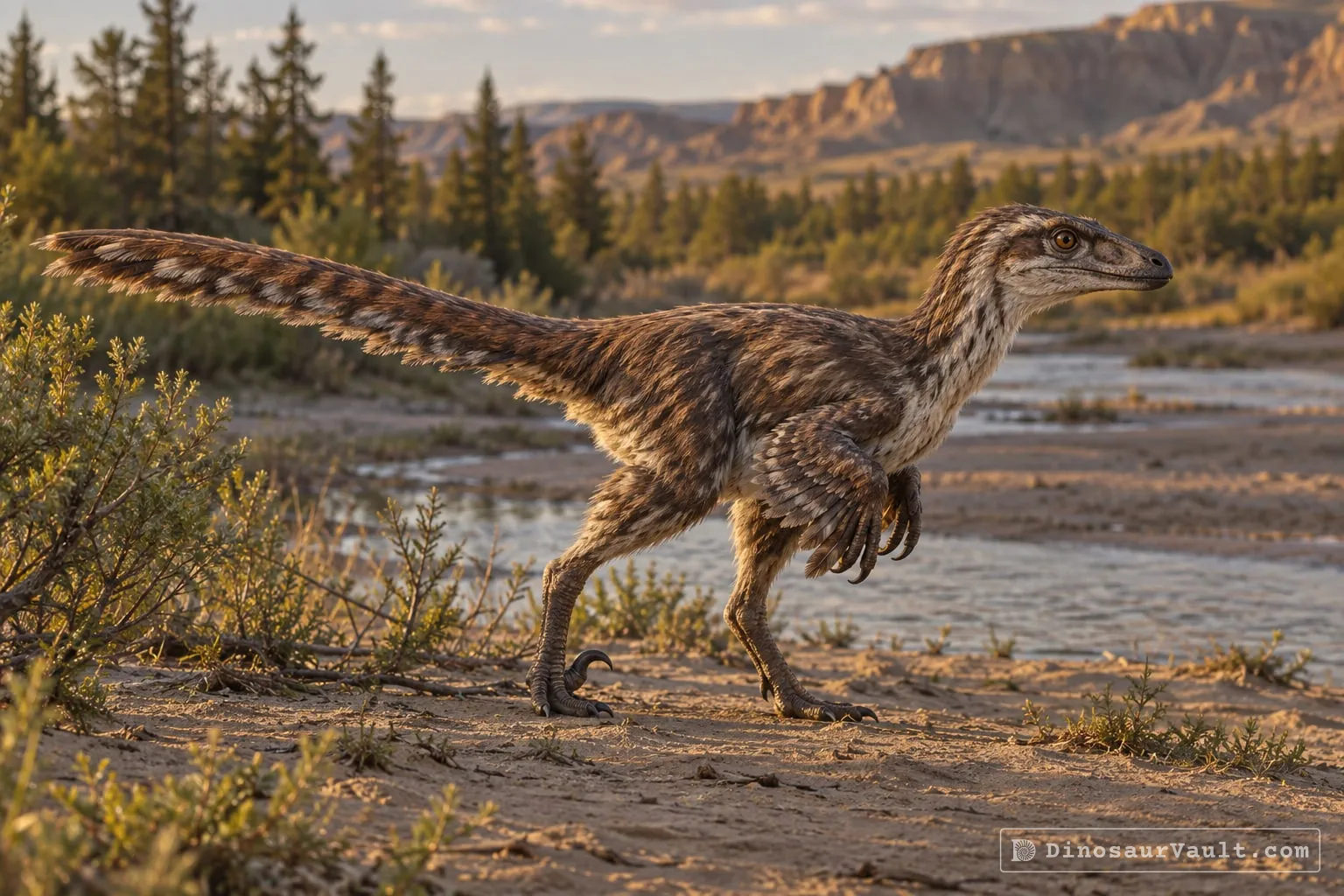
Hulsanpes was a small dromaeosaur known from a foot and a piece of skull from a young animal. It belongs to the halszkaraptorines, an odd group that may have hunted in water.
Its world
It lived in the Late Cretaceous, in what is now Mongolia. It comes from the Baruungoyot Formation, a dry land shared with the armored Saichania and Tarchia and the dromaeosaur Shri.
How it was found
Osmolska named Hulsanpes in 1982.
Field gallery
More views of Hulsanpes
Scenes reconstructed from the available fossil evidence.
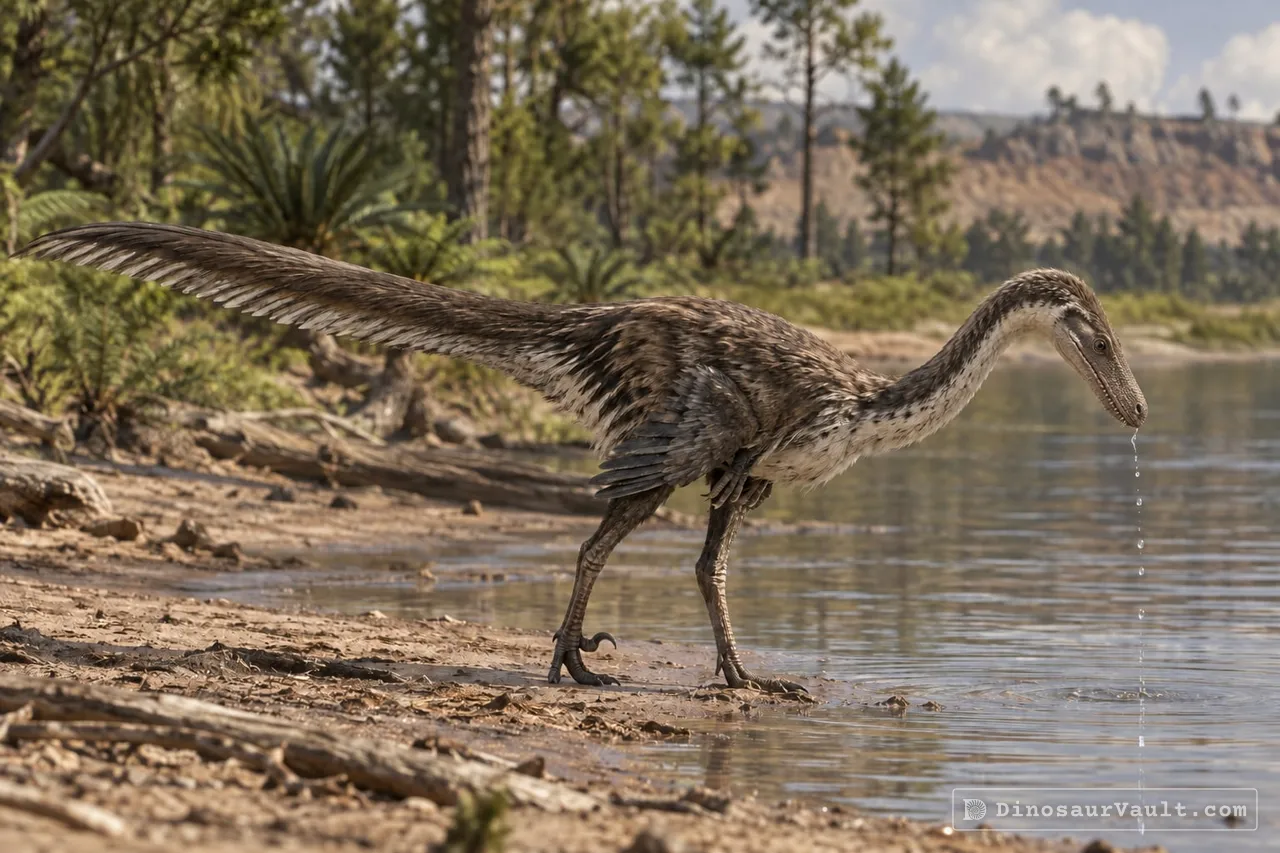
1 of 3
Lived alongside
Found in the same rock formations
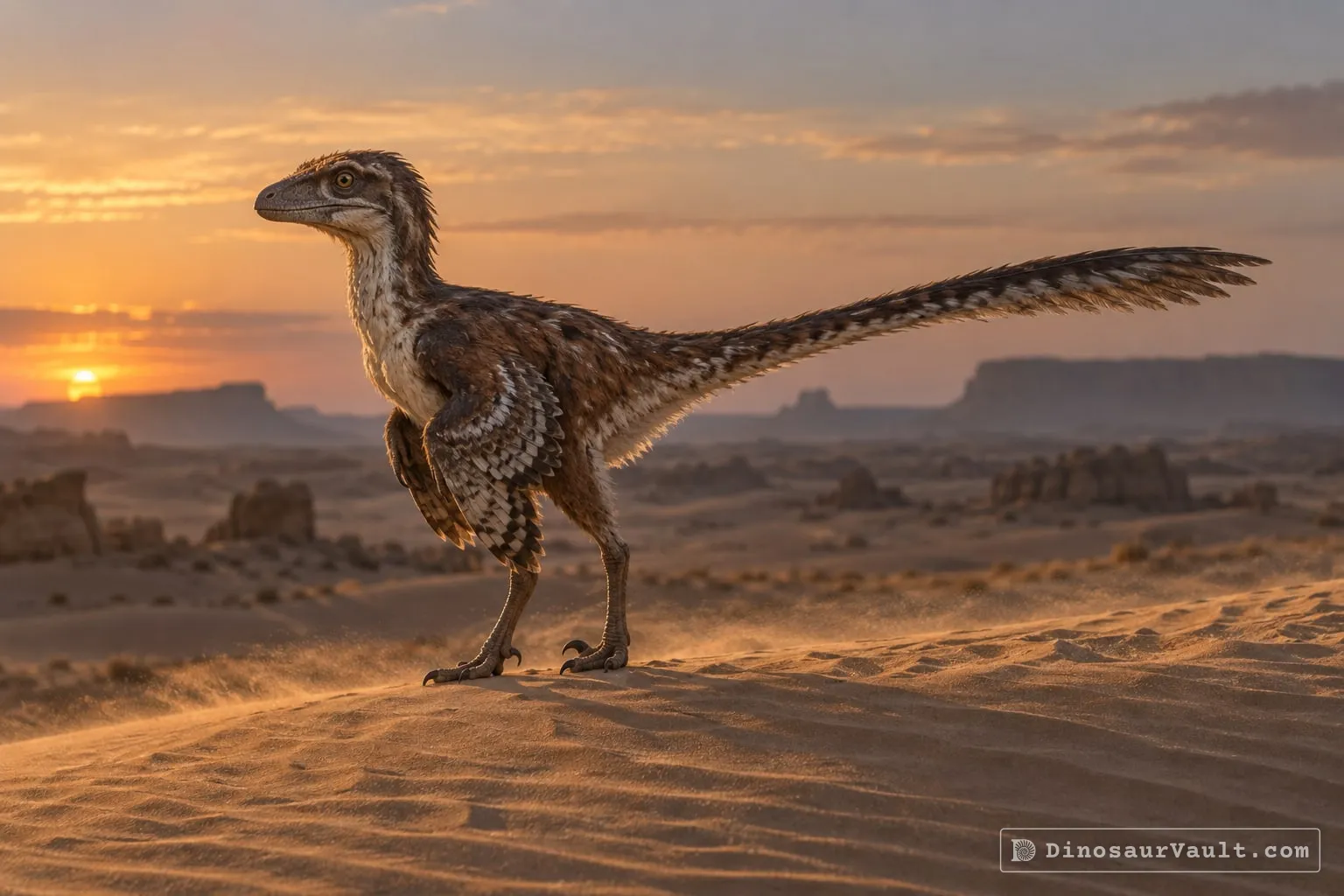
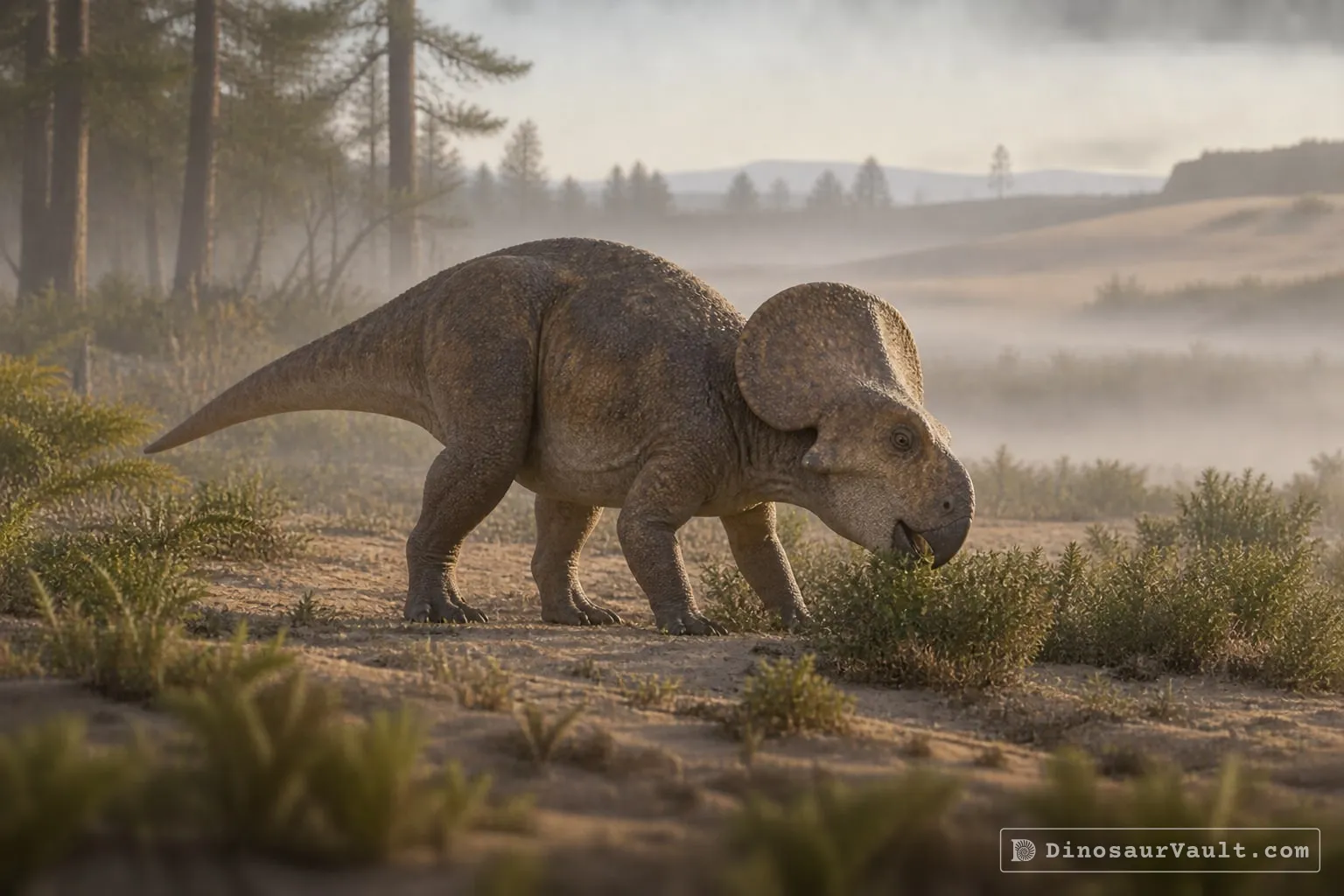
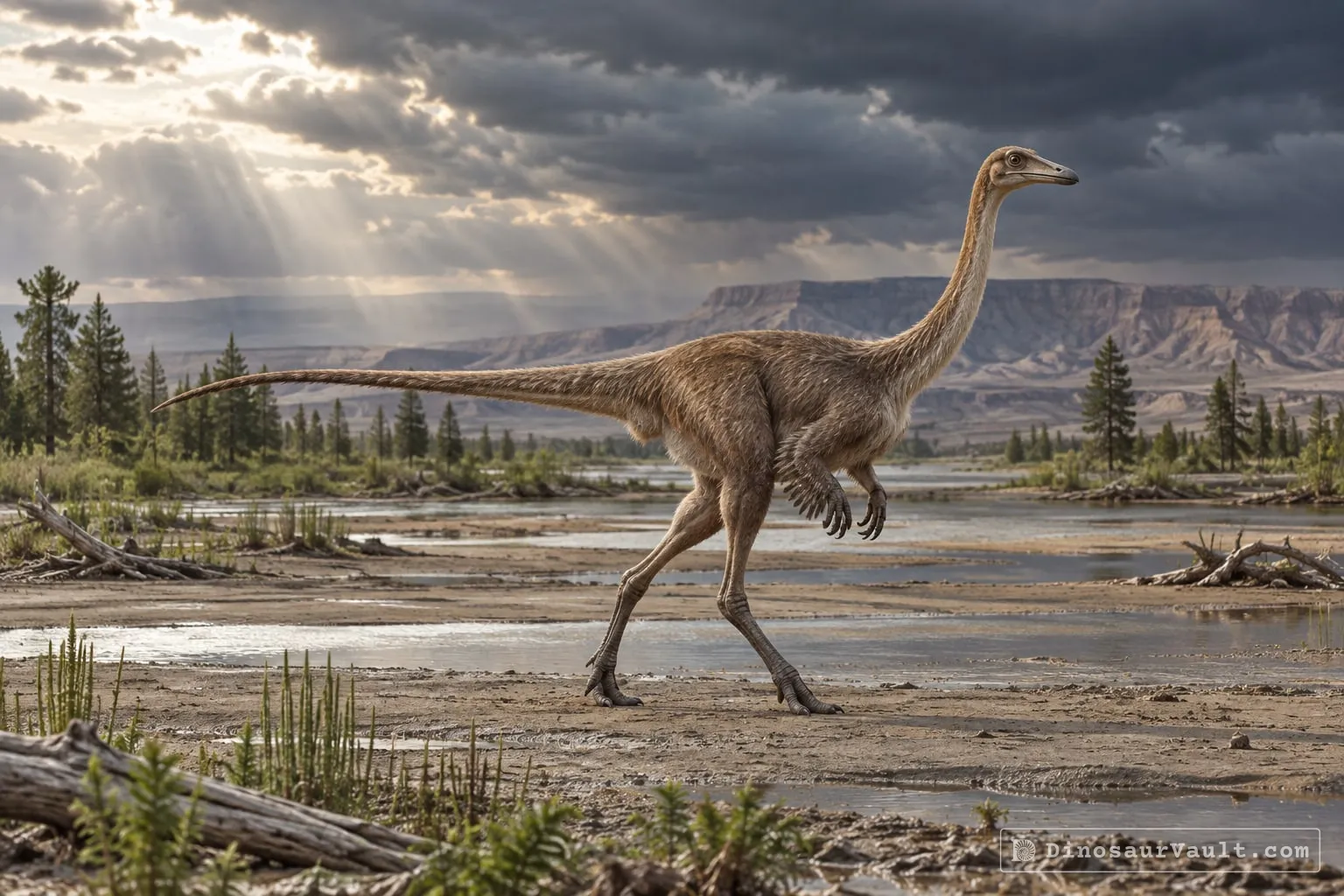
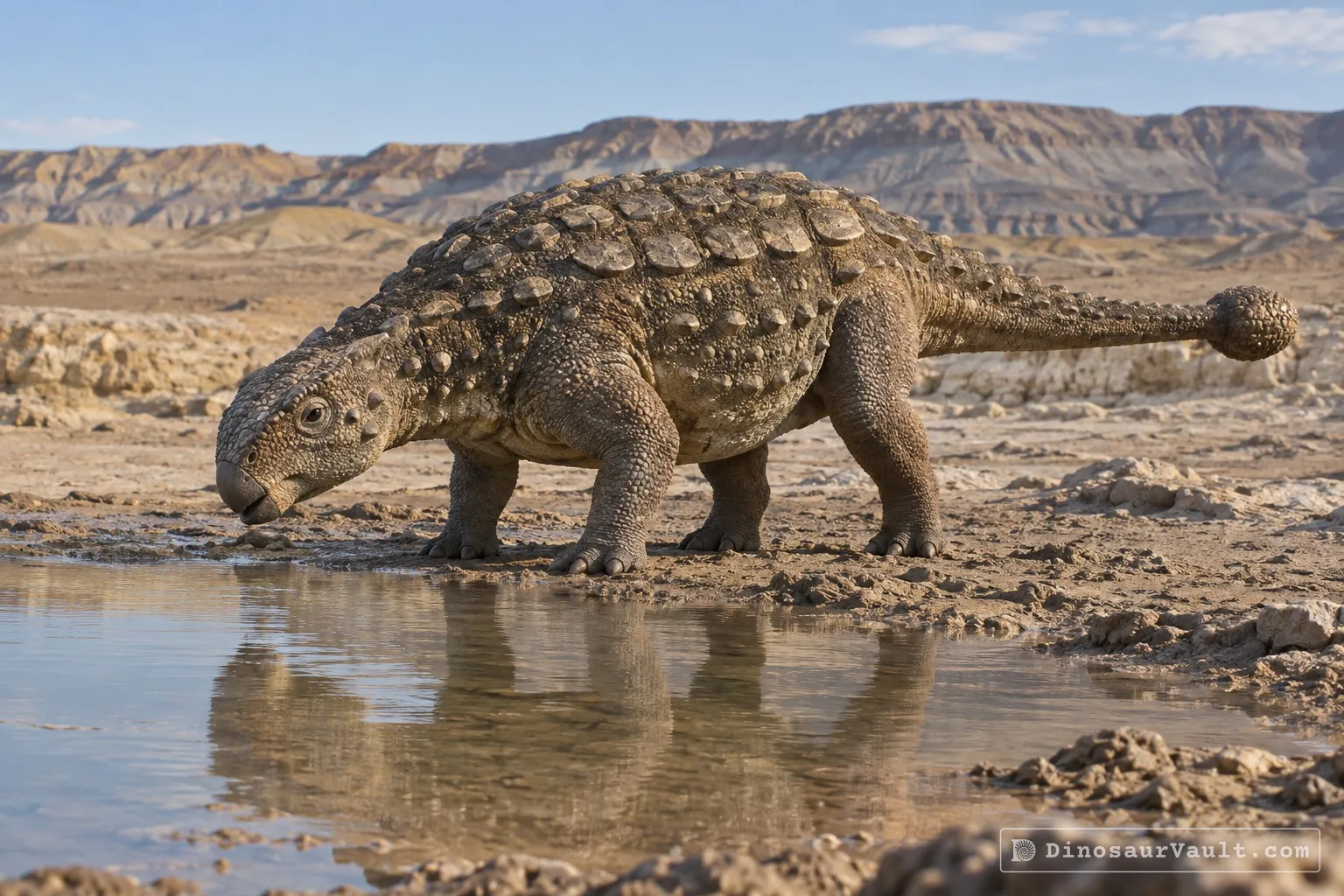
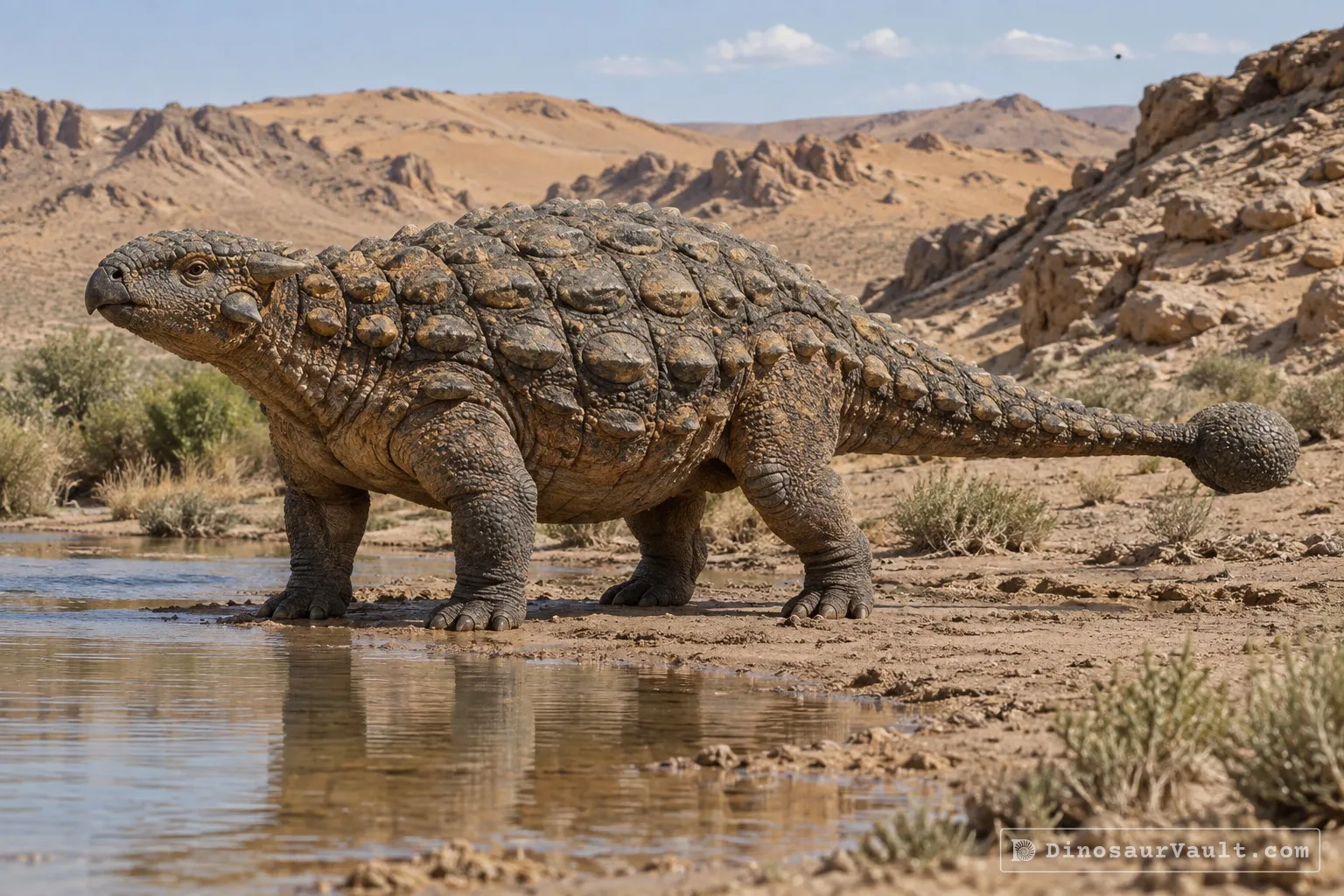
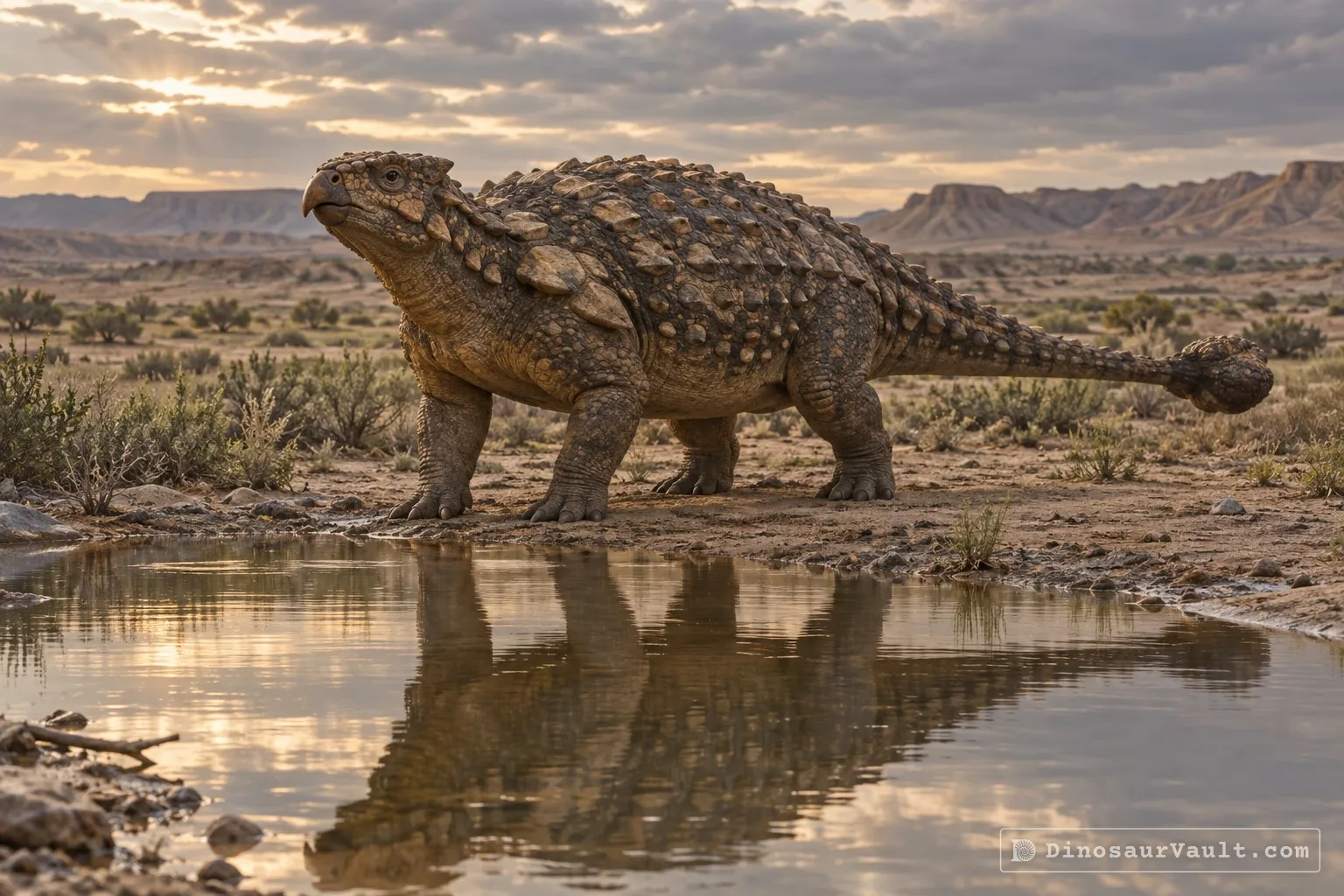


A rock formation can hold fossils laid down millions of years apart, so not every animal here met Hulsanpes.
The evidence
The science behind Hulsanpes
Which parts of the picture come from its own bones, and which come from its relatives.
From its own fossils
- The type specimen preserves an incomplete right foot and a probably associated fragment of the braincase.
- The braincase fragment preserves part of the inner ear region.
- The middle long bone of the foot overlaps its inner neighbor along a projecting edge.
Borrowed from relatives
- Mahakala supplies comparisons for the missing body, short arms and foot claws.
- Sinornithosaurus supplies a broader comparison for the missing snout and a possible covering of branched filaments.
Still unknown
- Its adult size and head, neck and arm proportions, and where its group belongs in the dromaeosaur family tree.
- Whether it hunted in water as well as on land.
- Its feather covering and color.
Discovery timeline
- 1982Named itOsmólska
- 2017Family treeCau et al.
- 2018RedescriptionCau & Madzia
- 2022Family treeLee et al.
Key papers
The research behind what we know of Hulsanpes
Named it
Named Hulsanpes from an immature animal's partial foot and tentatively assigned it to the dromaeosaurs.
Hulsanpes perlei n.g. n.sp. (Deinonychosauria, Saurischia, Dinosauria) from the Upper Cretaceous Barun Goyot Formation of Mongolia. Neues Jahrbuch für Geologie und Paläontologie - Monatshefte 1982: 440-448
Read the paper : Hulsanpes perlei n.g. n.sp. (Deinonychosauria, Saurischia, Dinosauria) from the Upper Cretaceous Barun Goyot Formation of Mongolia (opens in a new tab)Family tree
Described Halszkaraptor and, in its analysis, grouped it with Hulsanpes and Mahakala.
Synchrotron scanning reveals amphibious ecomorphology in a new clade of bird-like dinosaurs. Nature 552: 395-399
Read the paper : Synchrotron scanning reveals amphibious ecomorphology in a new clade of bird-like dinosaurs (opens in a new tab)Redescription
Described the braincase fragment and foot, proposed a close relationship with Mahakala, and suggested adaptations for running.
Redescription and affinities ofHulsanpes perlei(Dinosauria, Theropoda) from the Upper Cretaceous of Mongolia. PeerJ 6: e4868
Read the paper : Redescription and affinities ofHulsanpes perlei(Dinosauria, Theropoda) from the Upper Cretaceous of Mongolia (opens in a new tab)Family tree
Described Natovenator and left the relationships among Natovenator, Mahakala and Hulsanpes unresolved within their branch of the family tree.
A non-avian dinosaur with a streamlined body exhibits potential adaptations for swimming. Communications Biology 5
Read the paper : A non-avian dinosaur with a streamlined body exhibits potential adaptations for swimming (opens in a new tab)
Close relatives
Other members of Dromaeosauridae


Sources: Wikidata