Tianyulong
tyen-yoo-LONG
"Tianyu dragon"
- Lived
- 168 to 152 million years ago, Middle Jurassic to Late Jurassic
- Diet
- Herbivore
- Group
- Early ornithischians, Heterodontosauridae
- Found in
- China
- Named by
- Zheng et al. 2009
Where its fossils were found
The evidence
Today

160 million years ago
Habitat
The Tiaojishan Formation records forests of conifers and ginkgo trees around lakes in what is now China. Anchiornis, Yi and Caihong are also known from these rocks.
Field notes
About Tianyulong
What it was like
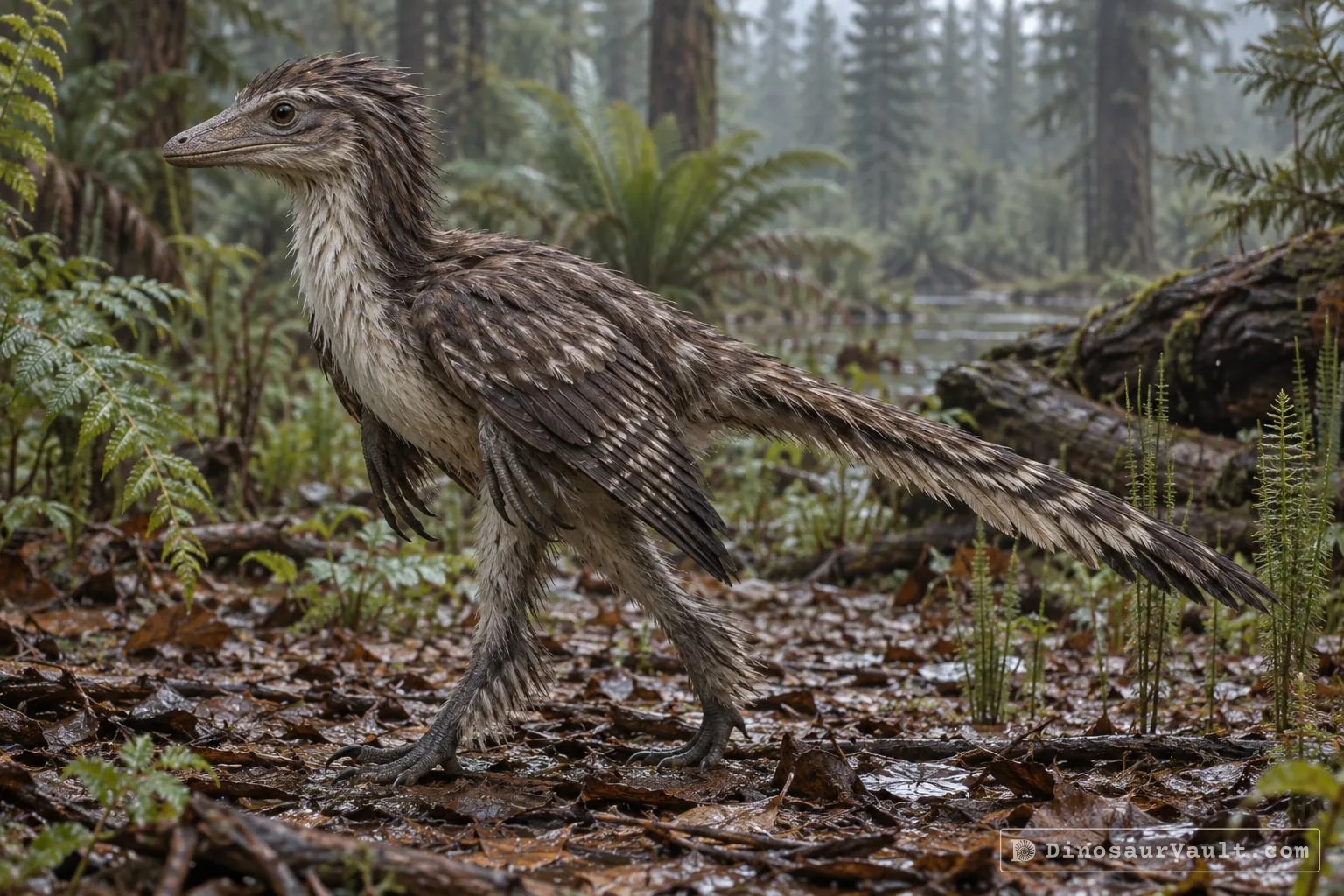
Tianyulong was a small plant eater from the heterodontosaurid family, with teeth of different shapes, including tusk-like teeth at the front of its jaws. Its fossil shows long, stiff filaments along its back and tail.
These filaments were a surprise, because Tianyulong was a bird-hipped dinosaur, far from the line that led to birds. They suggest that simple fuzz may have been widespread among dinosaurs.
Its world
It lived in the Jurassic in what is now China. Its rocks come from the Tiaojishan Formation, which also holds the feathered Anchiornis, the bat-winged Yi and the rainbow-colored Caihong.
How it was found
Zheng and colleagues named it in 2009 from one skeleton. The name honors the museum that holds the fossil.
Field gallery
More views of Tianyulong
Scenes reconstructed from the available fossil evidence.
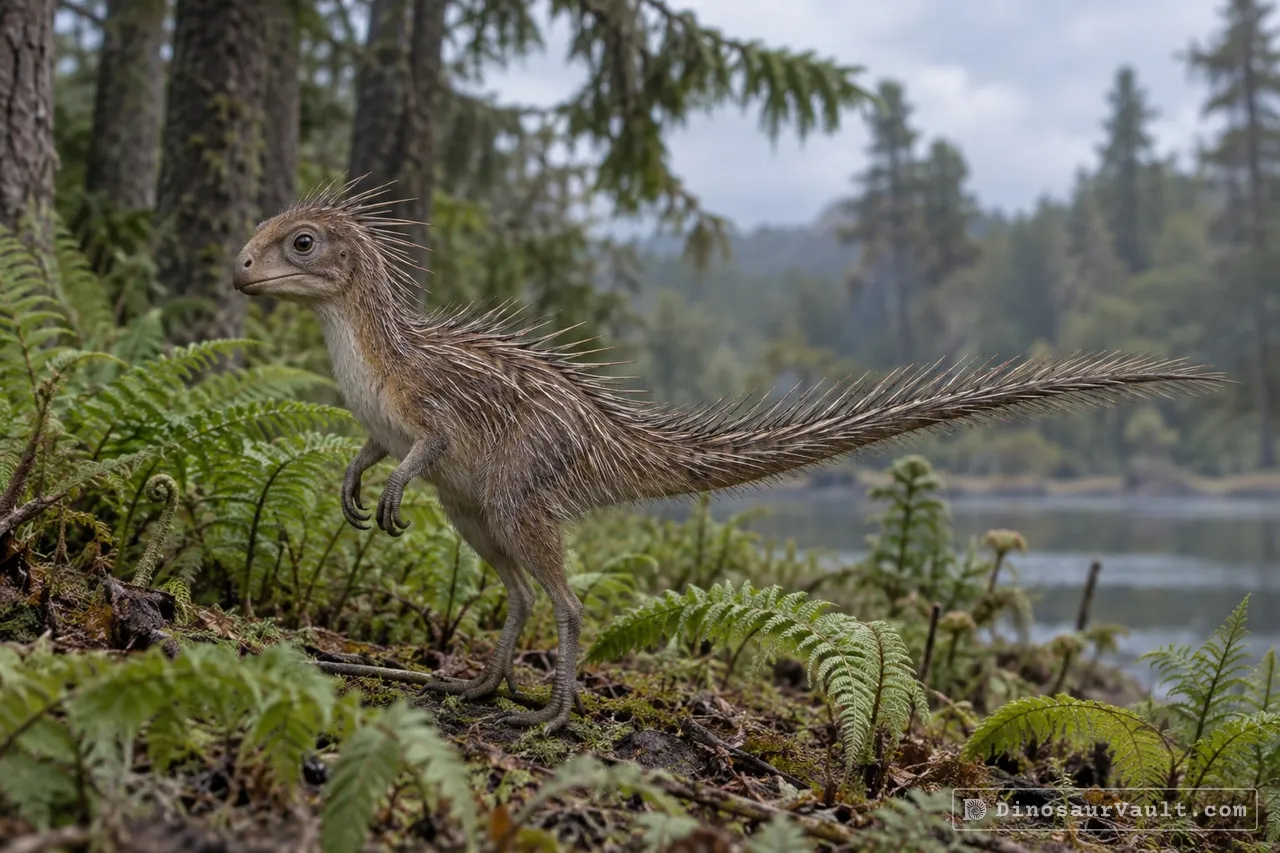
1 of 3
Lived alongside
Found in the same rock formations
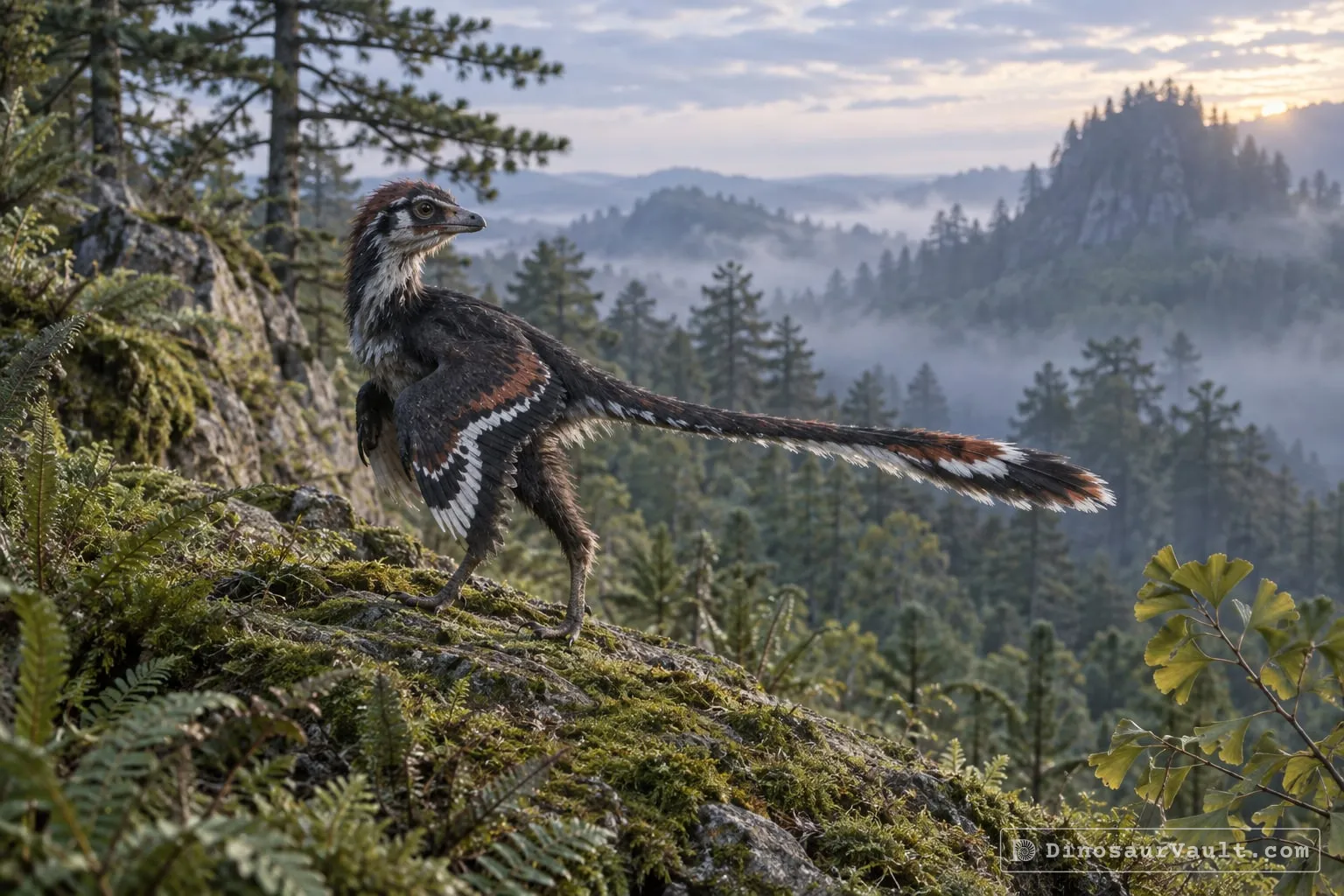
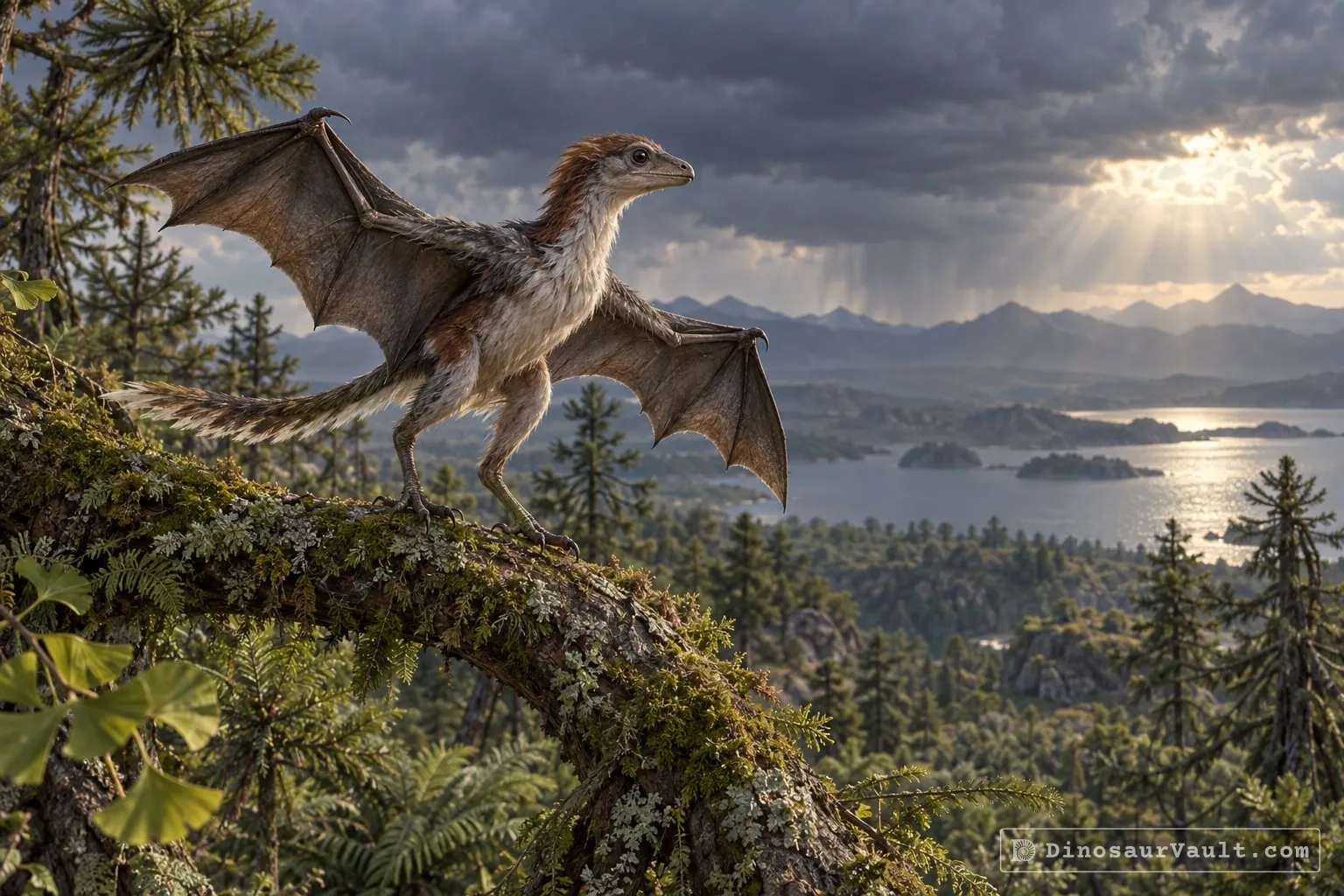
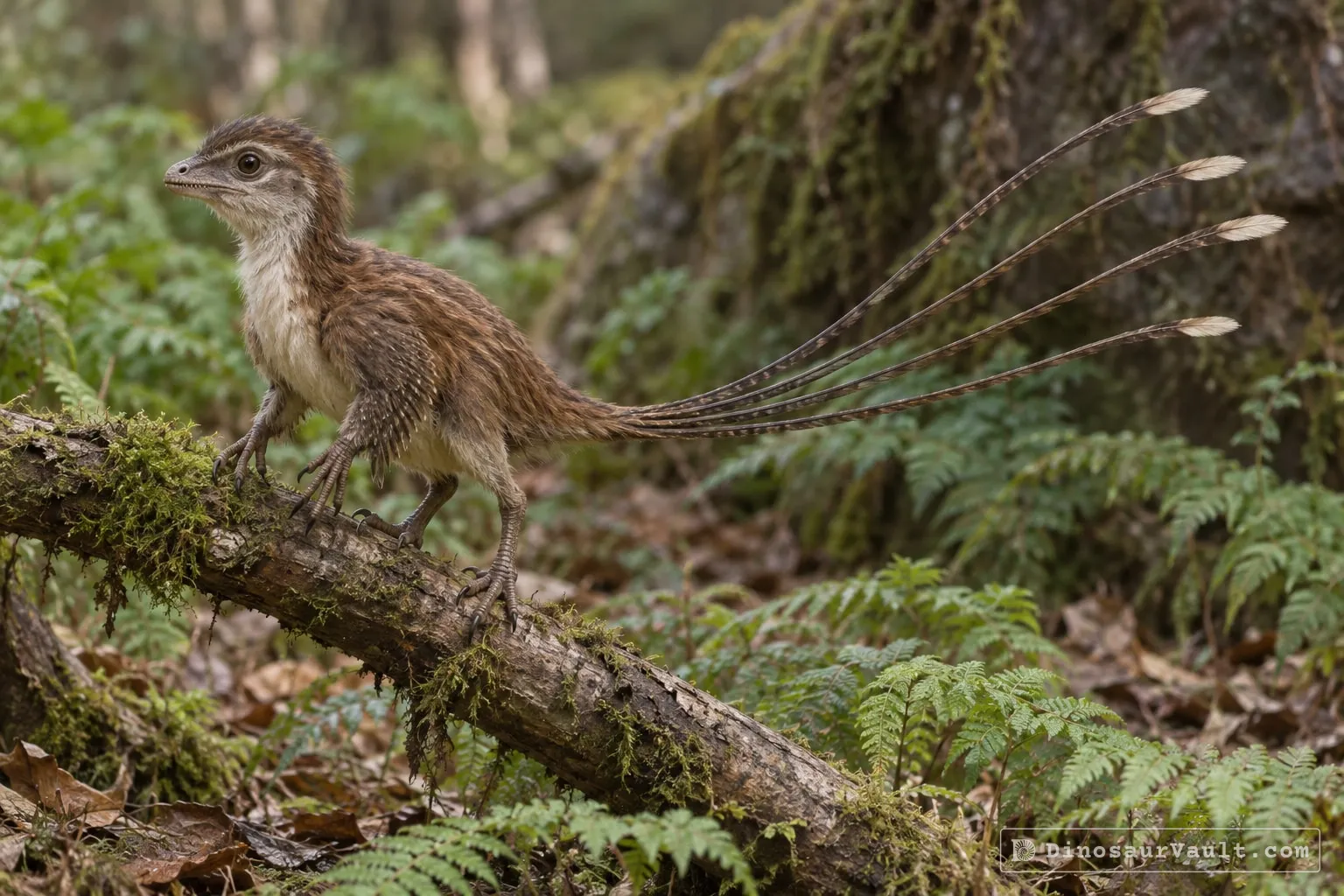
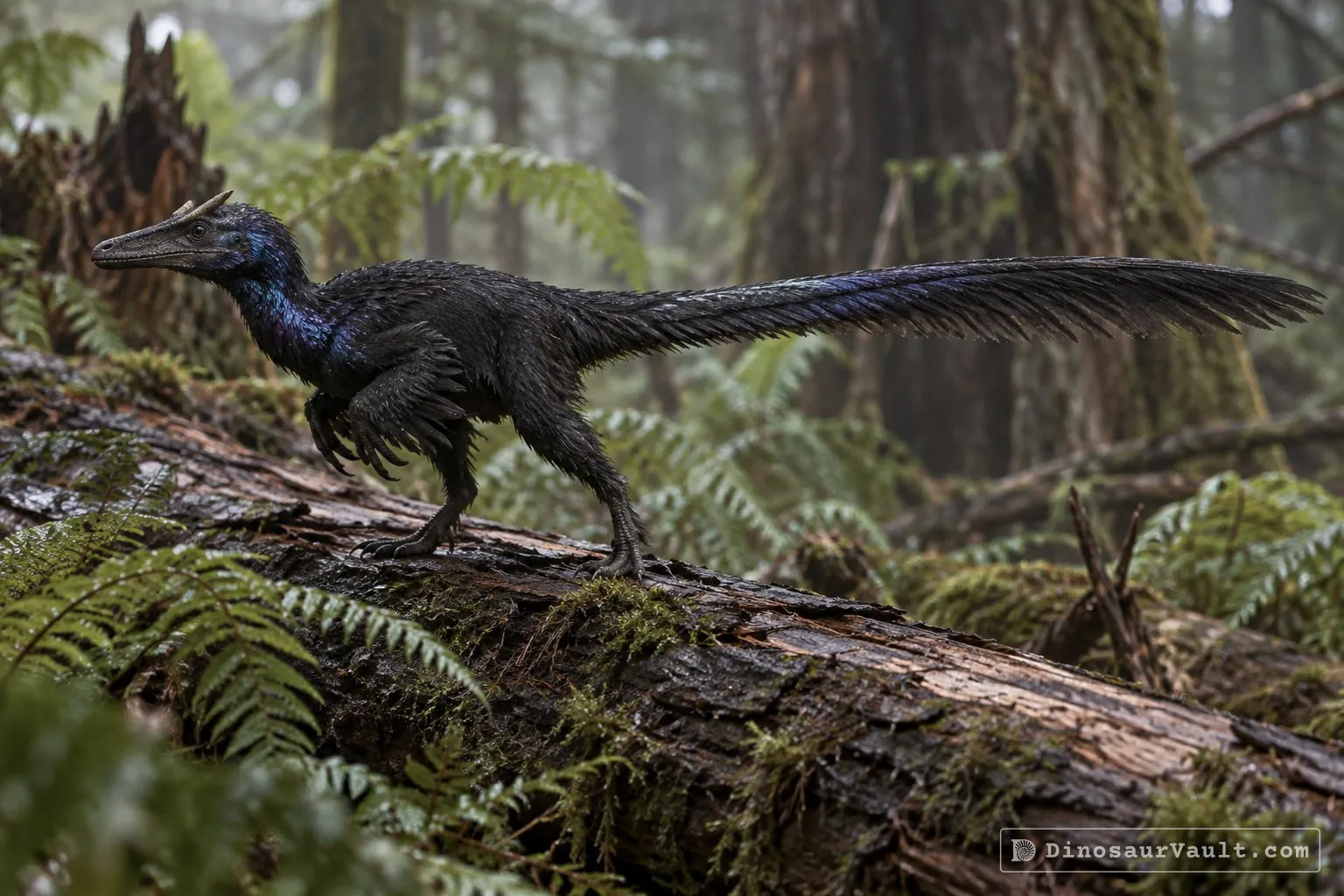
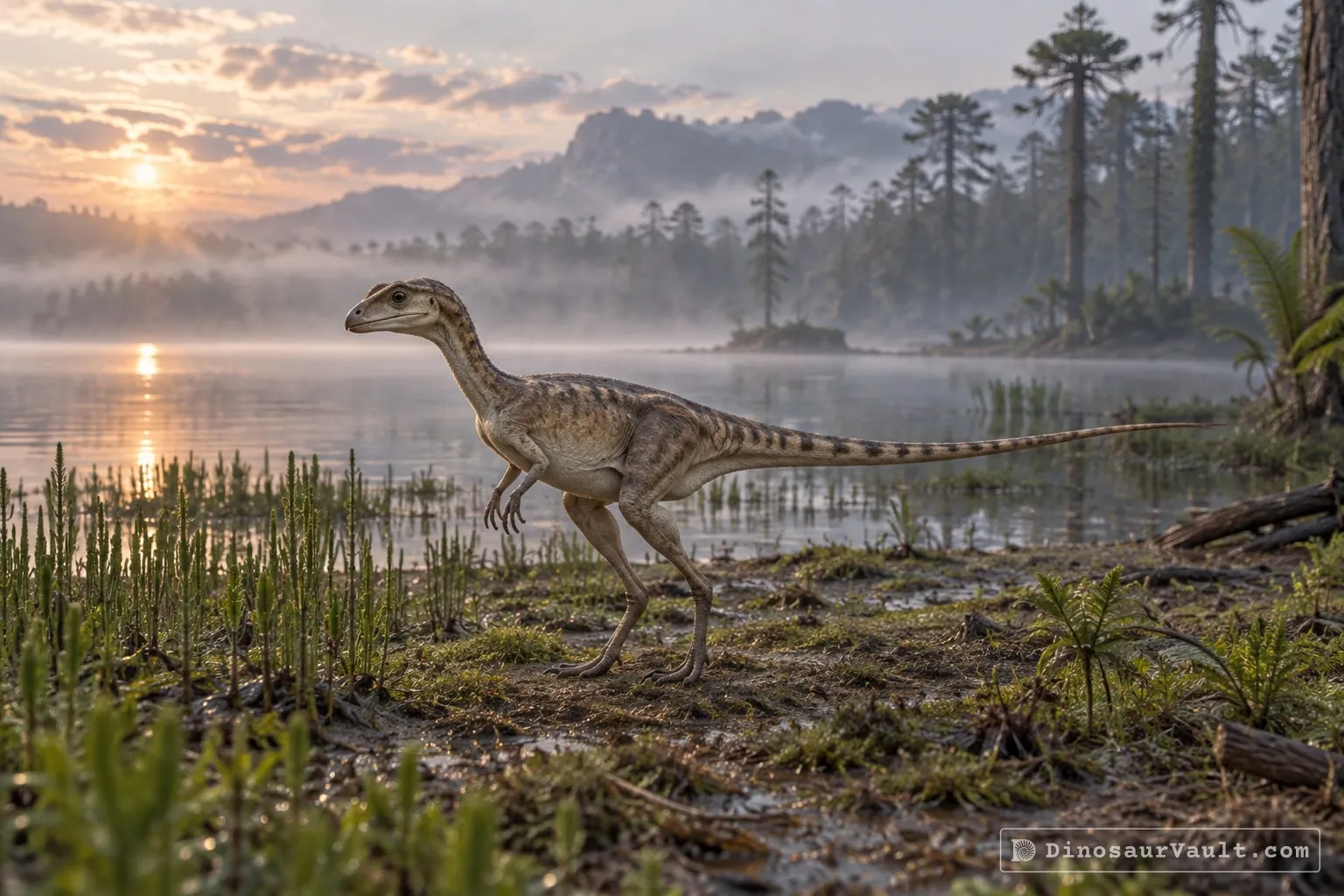
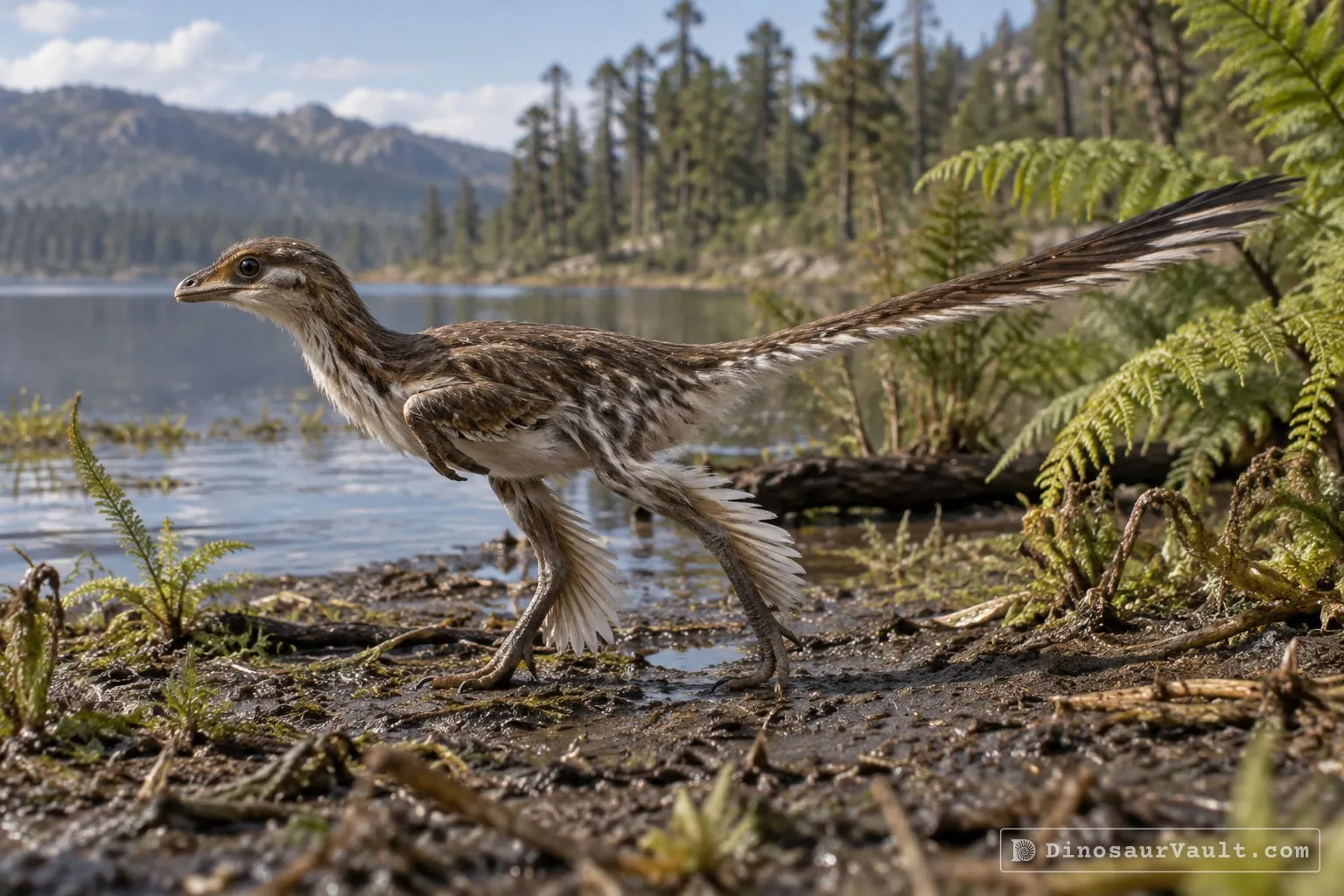
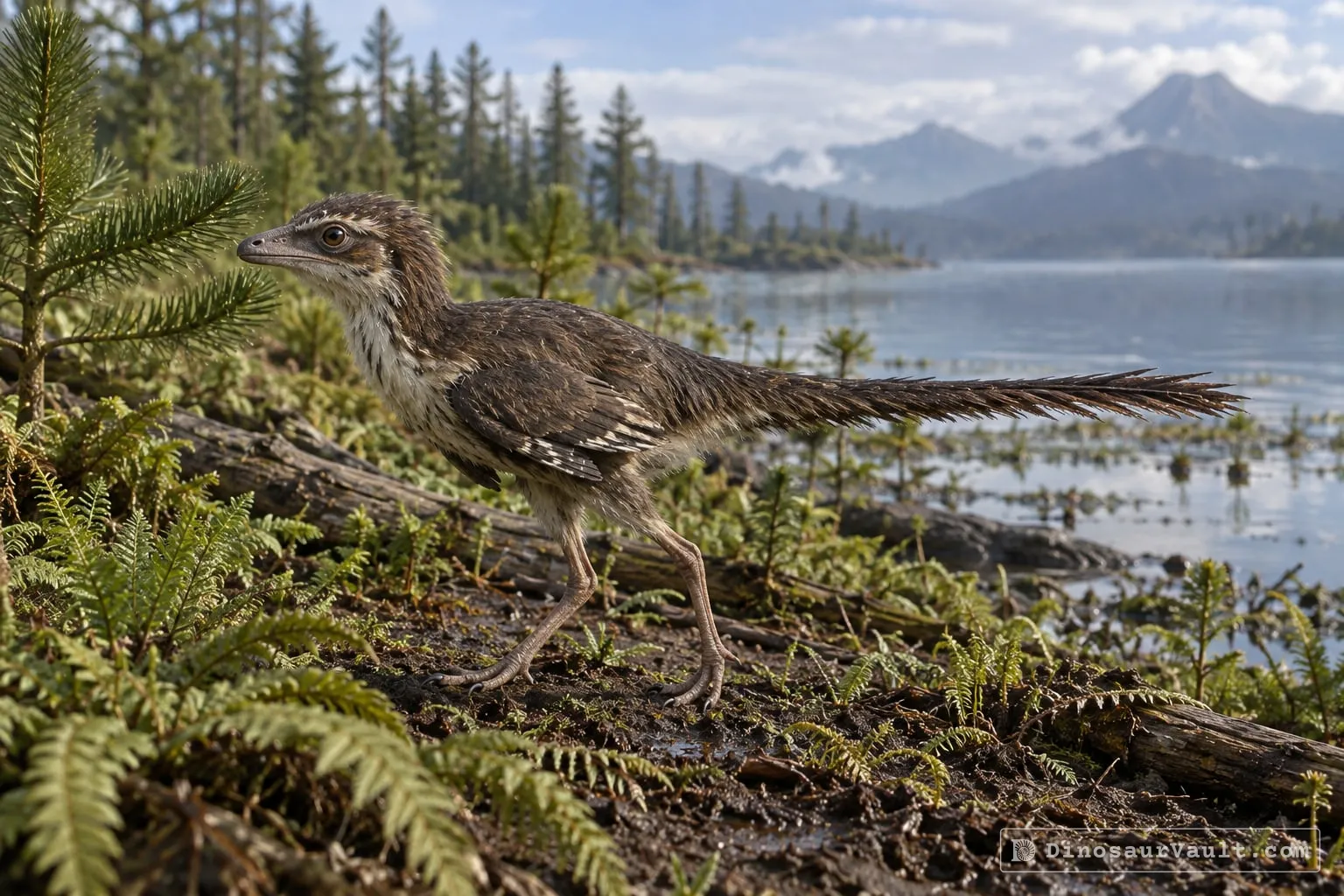


A rock formation can hold fossils laid down millions of years apart, so not every animal here met Tianyulong.
The evidence
The science behind Tianyulong
Which parts of the picture come from its own bones, and which come from its relatives.
From its own fossils
- Long, unbranched filaments are preserved beside its neck, back and tail.
- Its jaws carried tusk-like teeth alongside smaller cheek teeth.
- The skeleton shows a relatively large head, short arms and long hind legs.
Borrowed from relatives
- Missing parts of the head are compared with Heterodontosaurus and other heterodontosaurids.
- Kulindadromeus preserves both scales and featherlike structures, adding another example of a fuzzy covering among bird-hipped dinosaurs.
Still unknown
- Whether its filaments shared the same evolutionary origin as bird feathers.
- Its color and how far the filaments extended over its body.
- The full shape of the back of its skull.
Discovery timeline
- 2009Named itZheng et al.
- 2012Full descriptionSereno
- 2014SkinGodefroit et al.
Key papers
The research behind what we know of Tianyulong
Named it
Described a heterodontosaurid with long, unbranched filaments, revealing a fuzzy covering in a dinosaur far from the bird lineage.
An Early Cretaceous heterodontosaurid dinosaur with filamentous integumentary structures. Nature 458: 333-336
Read the paper : An Early Cretaceous heterodontosaurid dinosaur with filamentous integumentary structures (opens in a new tab)Full description
Revised Tianyulong's anatomy, highlighting its large head and short arms, and interpreted the first skeleton as mature.
Taxonomy, morphology, masticatory function and phylogeny of heterodontosaurid dinosaurs. ZooKeys 226: 1-225
Read the paper : Taxonomy, morphology, masticatory function and phylogeny of heterodontosaurid dinosaurs (opens in a new tab)Skin
Described Kulindadromeus with scales and several kinds of featherlike covering, strengthening the case that fuzz extended beyond theropods.
A Jurassic ornithischian dinosaur from Siberia with both feathers and scales. Science 345: 451-455
Read the paper : A Jurassic ornithischian dinosaur from Siberia with both feathers and scales (opens in a new tab)
Close relatives
Other members of Heterodontosauridae


Sources: Wikidata