Laplatasaurus
"La Plata lizard"
- Lived
- 84 to 72 million years ago, Late Cretaceous
- Diet
- Herbivore
- Group
- Sauropods
- Found in
- Argentina
- Named by
- Huene 1927
Where its fossils were found
The evidence
Today

80 million years ago
Habitat
It lived on river floodplains in Argentina, in the landscape preserved by the Anacleto Formation. Other dinosaurs from these rocks include Aucasaurus, Neuquensaurus and Gasparinisaura.
Field notes
About Laplatasaurus
What it was like
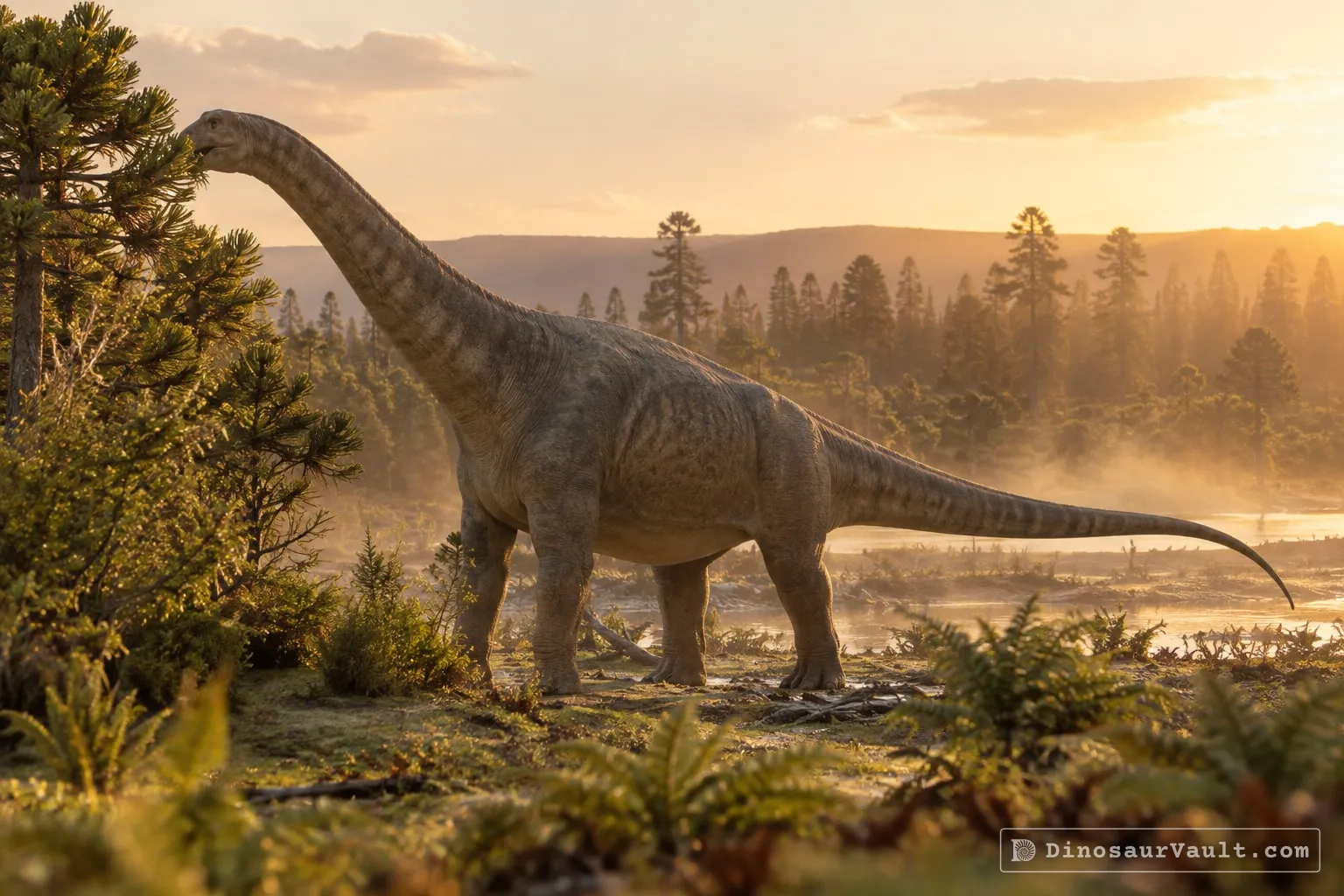
Laplatasaurus was a titanosaur, a long-necked plant eater. It is known from limb bones and backbones. For many years its bones were placed in another genus of titanosaur.
Its world
It lived in the Late Cretaceous in what is now Argentina. Its bones come from the Anacleto Formation, where it shared the land with the abelisaurid Aucasaurus, the predator Aerosteon and the small titanosaur Neuquensaurus.
How it was found
Huene named Laplatasaurus. It is named after an Argentine city with a famous natural history museum.
Field gallery
More views of Laplatasaurus
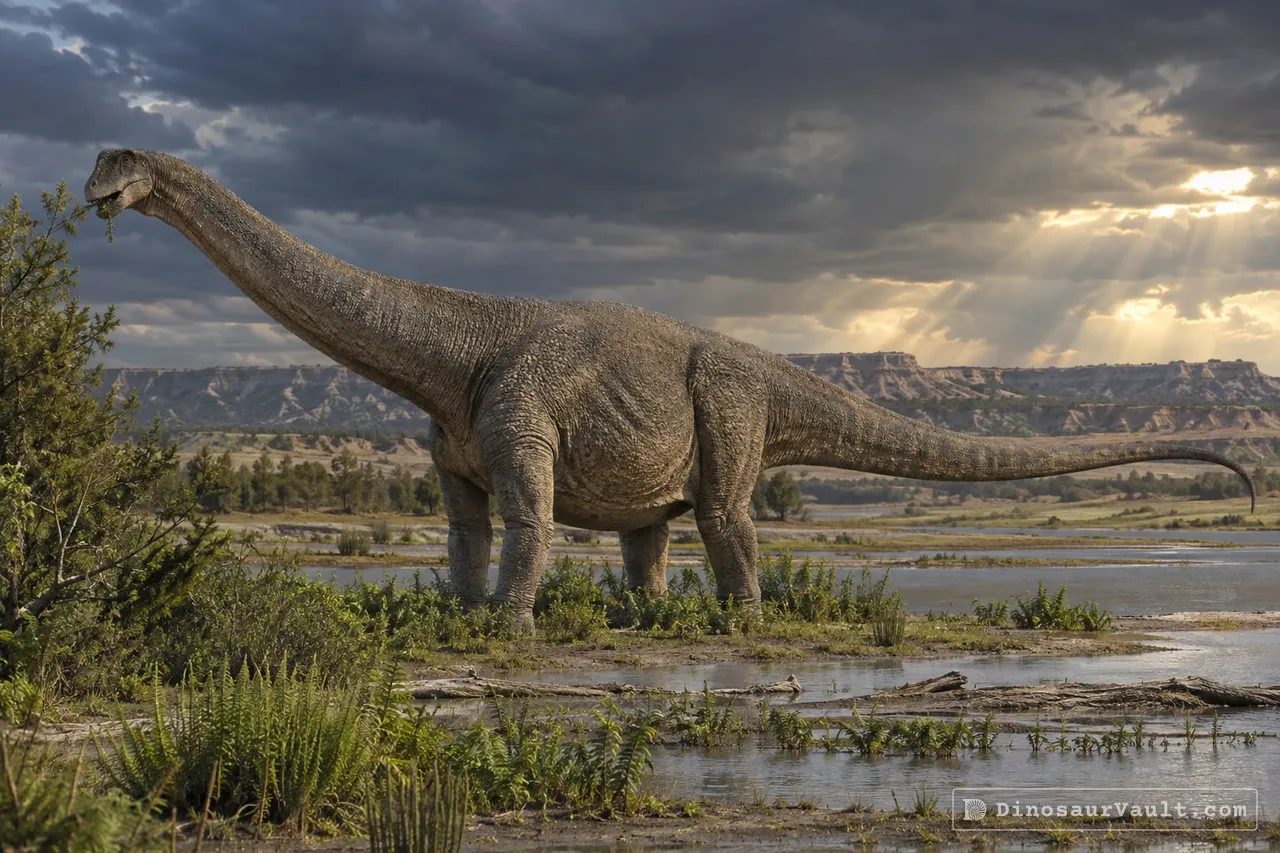
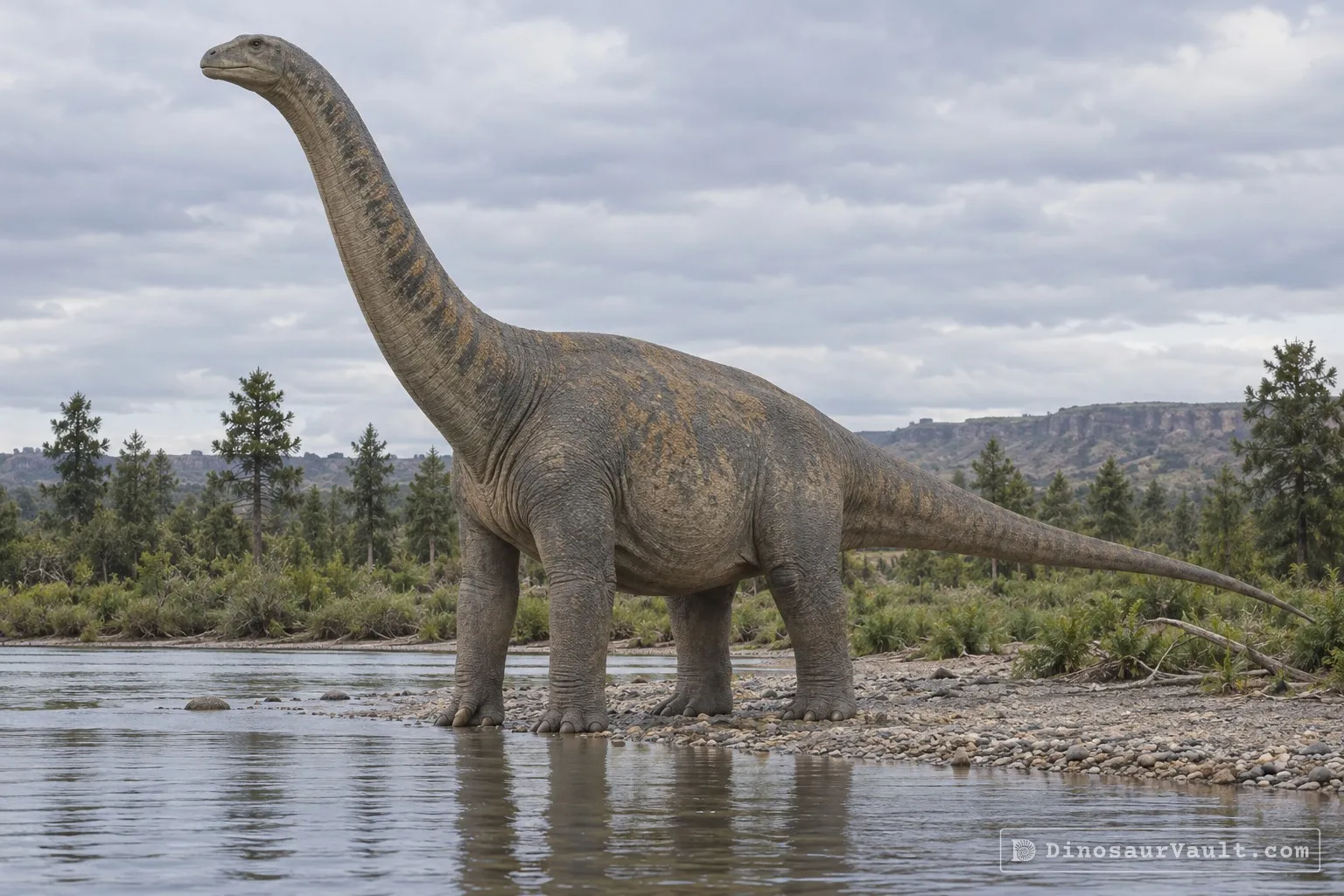
Scenes reconstructed from the available fossil evidence.
Lived alongside
Found in the same rock formations
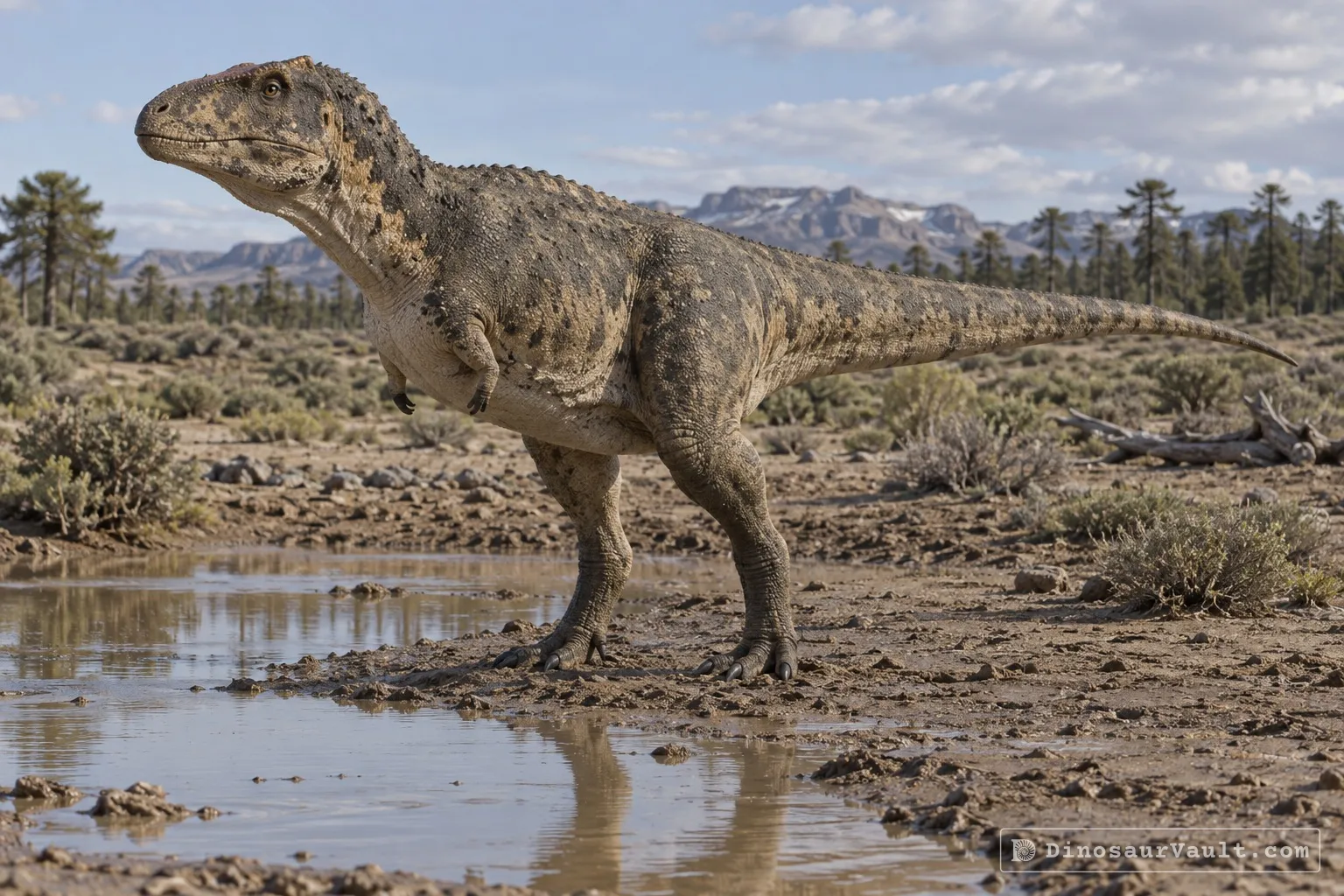
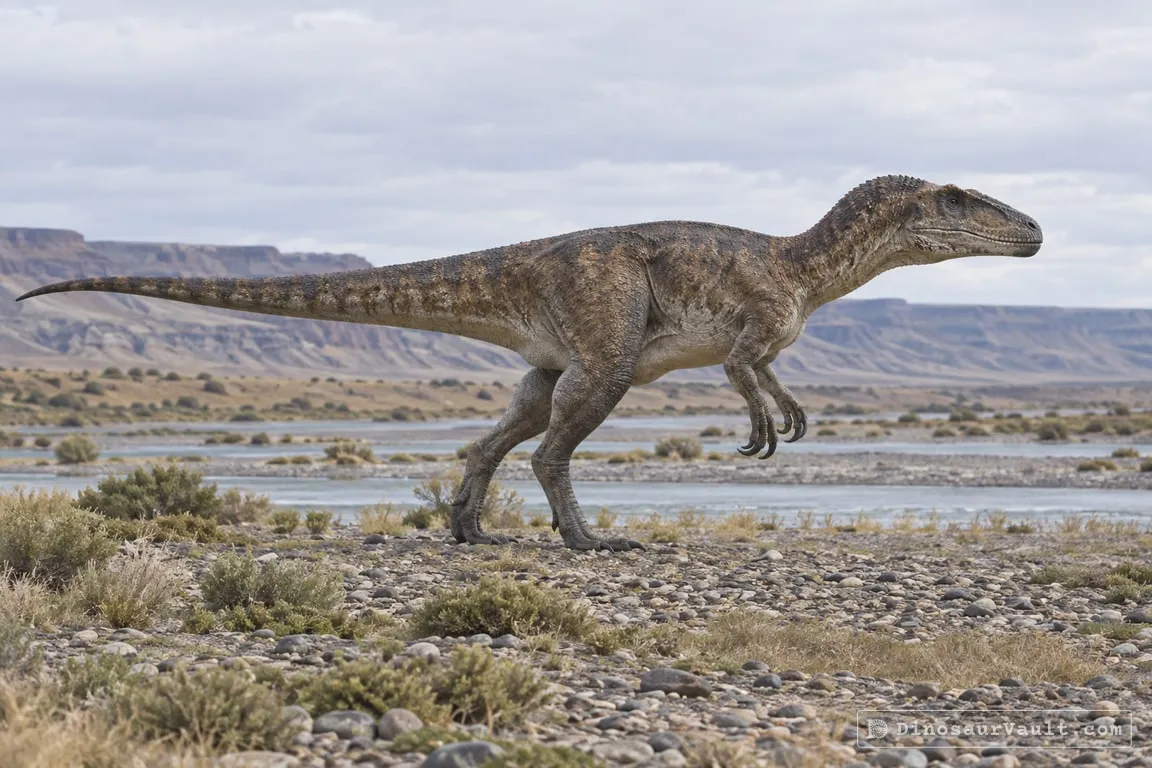
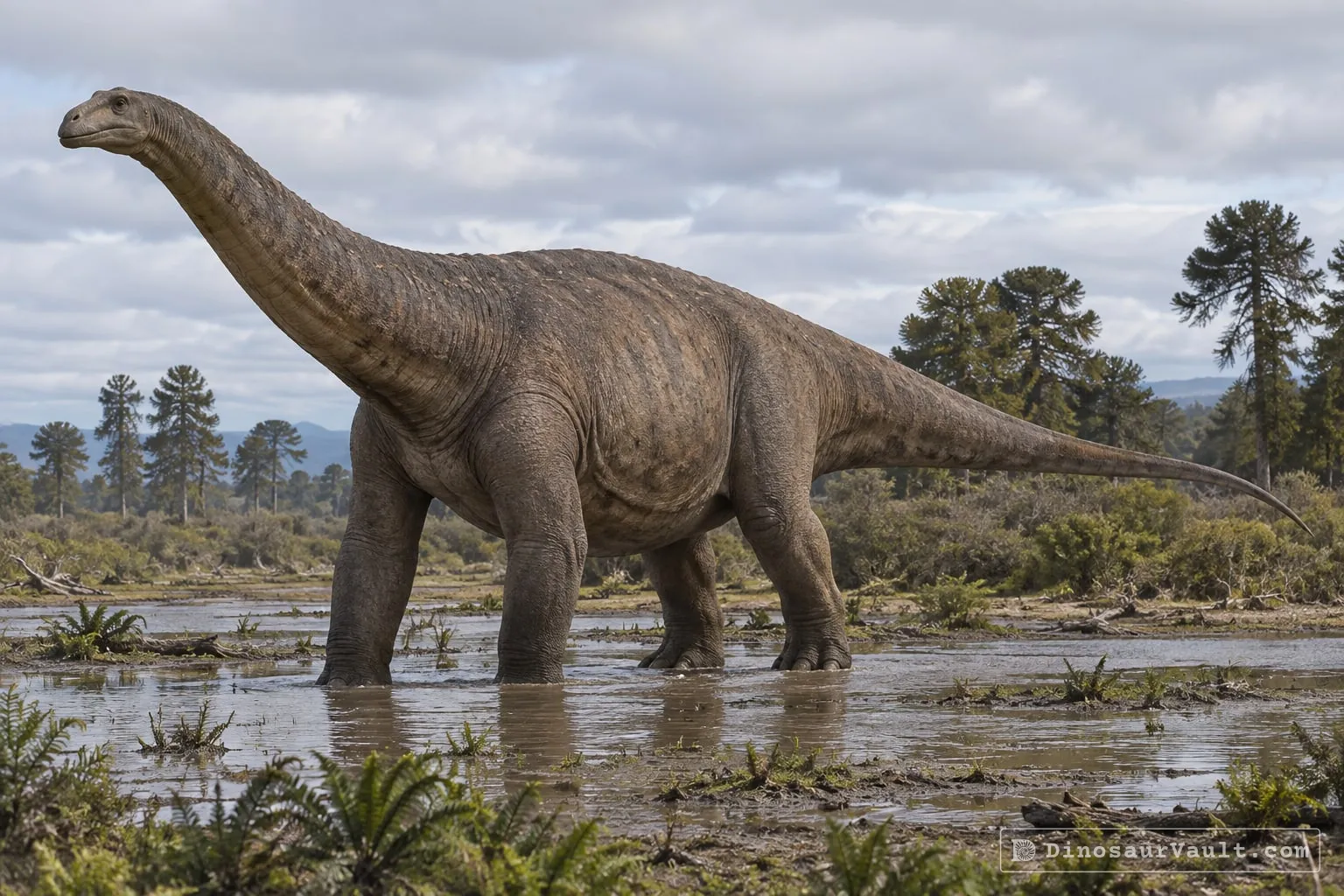
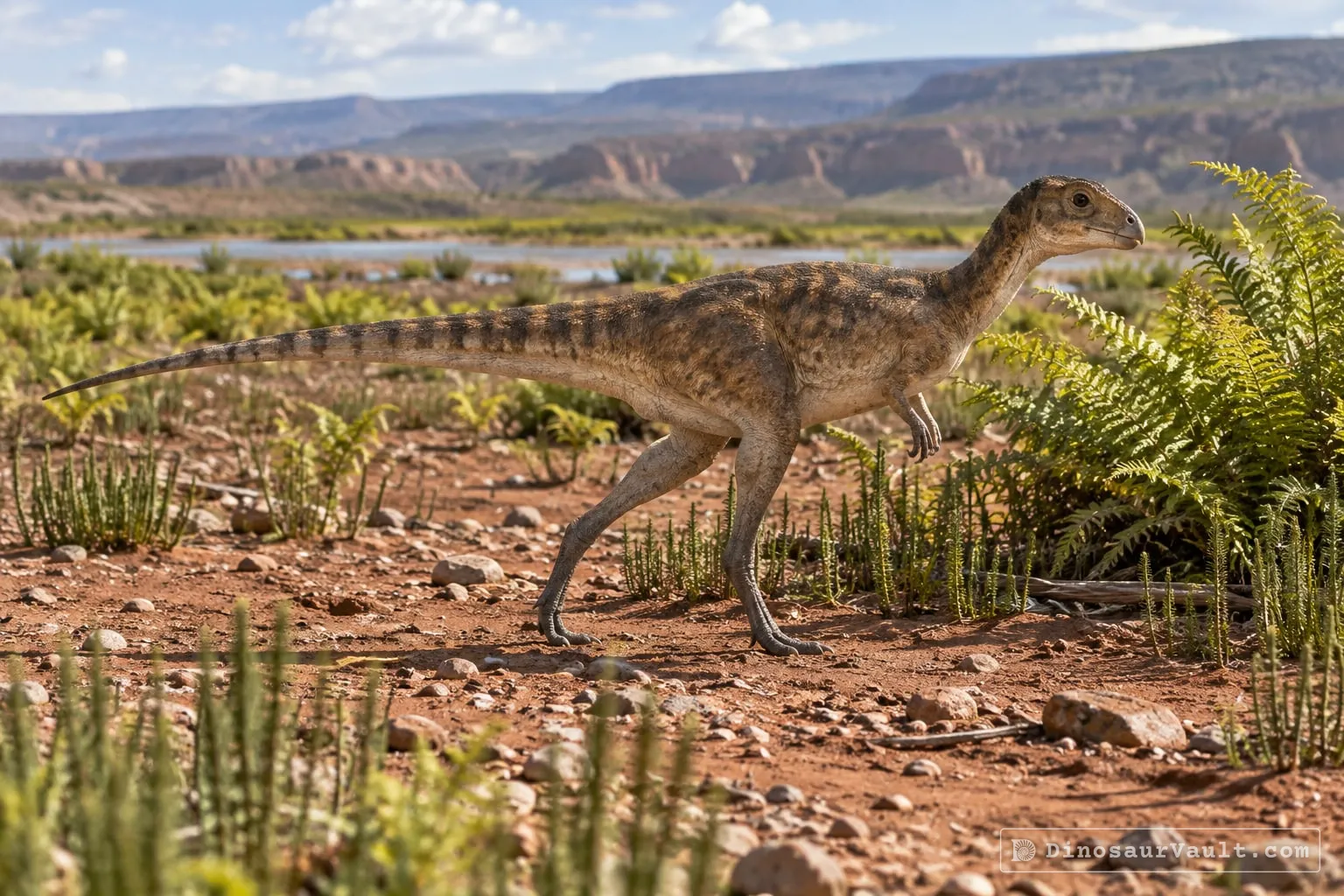
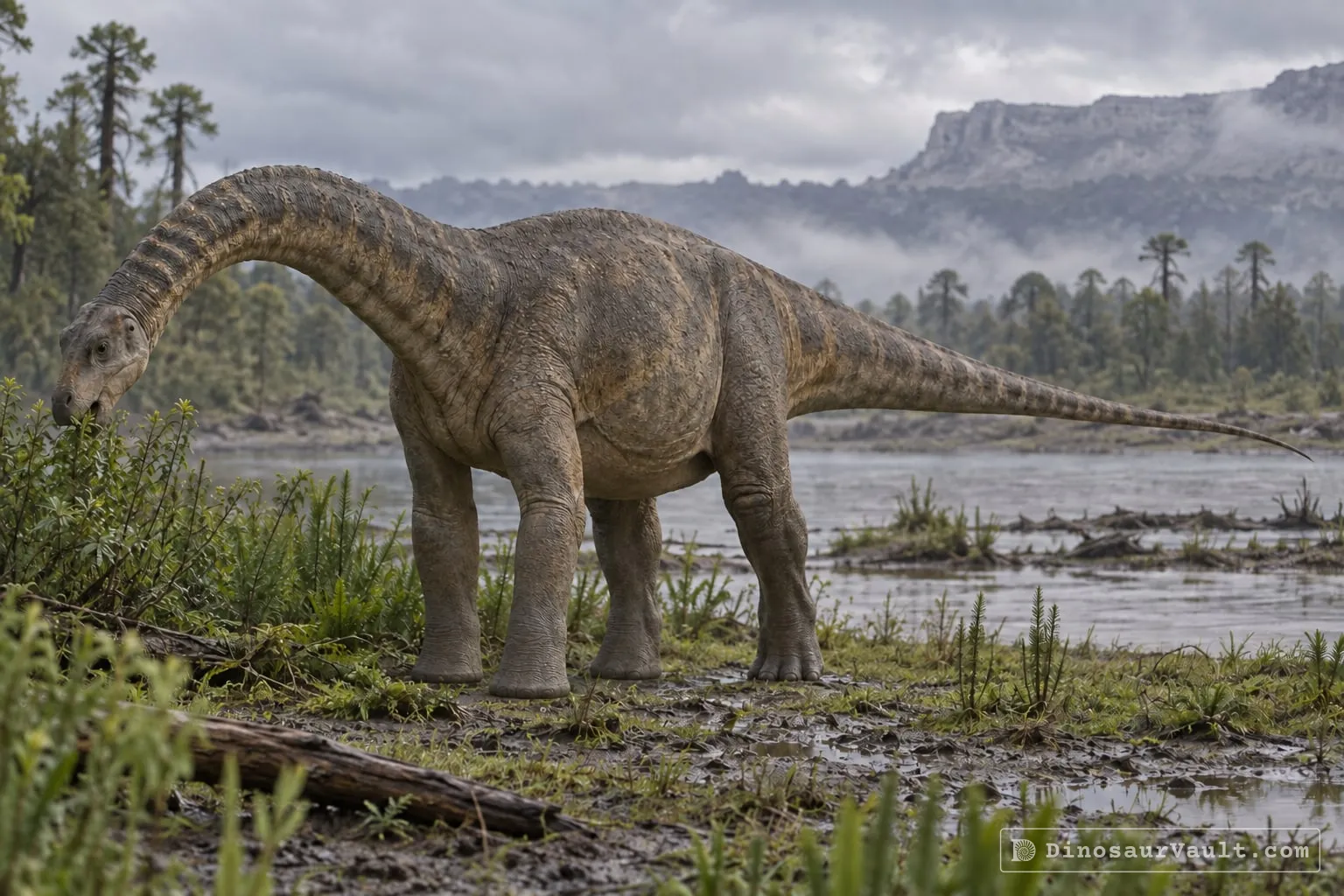
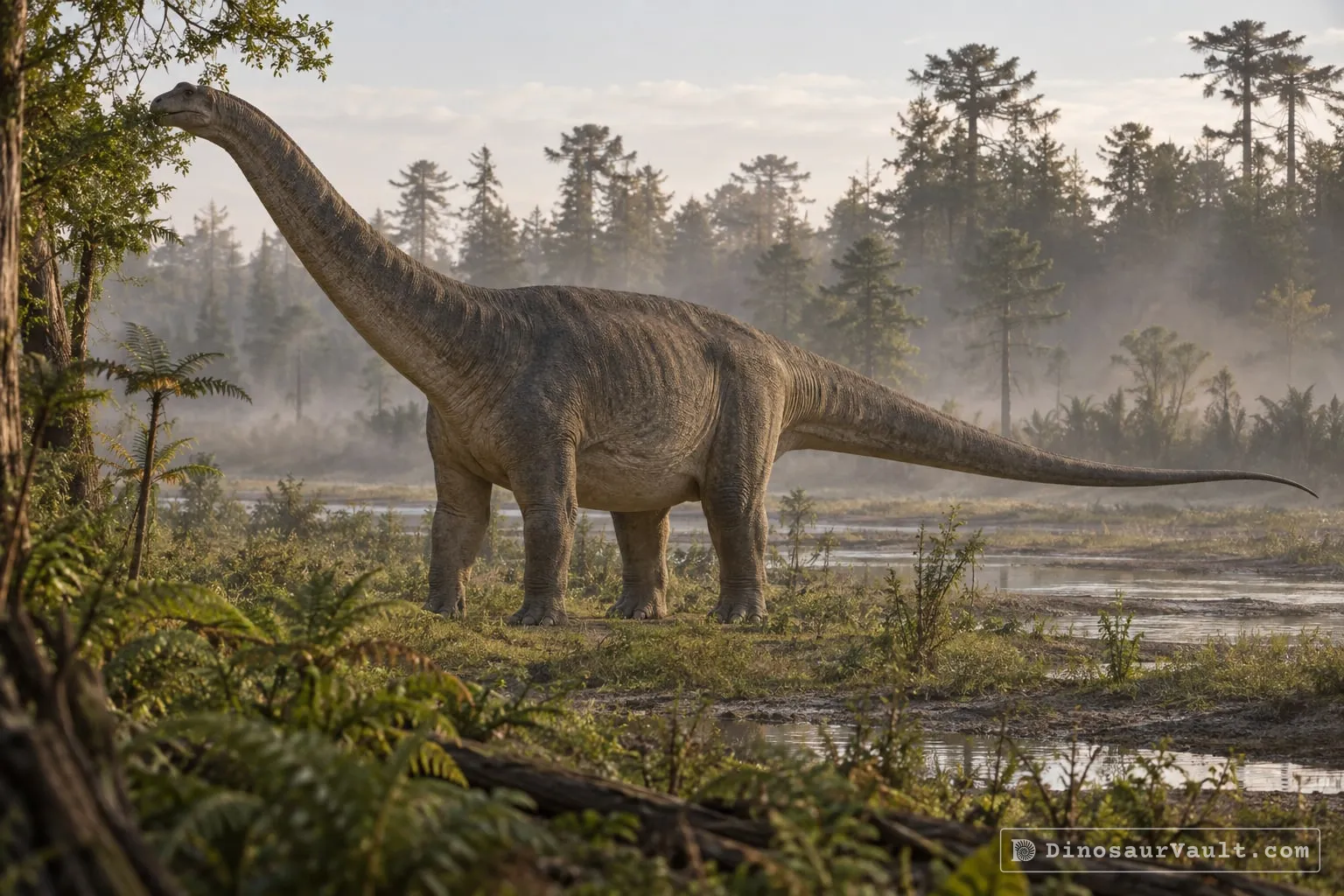


A rock formation can hold fossils laid down millions of years apart, so not every animal here met Laplatasaurus.
The evidence
The science behind Laplatasaurus
Which parts of the picture come from its own bones, and which come from its relatives.
From its own fossils
- The bones that now define Laplatasaurus are a slender right shinbone and the slender, nearly straight bone beside it.
- The shinbone has a deep groove below the knee, and its companion bone has a deep hollow near its upper end.
- Many limb bones and backbones originally assigned to it have since been reassigned to other titanosaurs.
Borrowed from relatives
- Its missing skull is restored by comparison with Tapuiasaurus.
- Uberabatitan offers comparisons for the missing backbone and forelimbs, while Mendozasaurus offers comparisons for the hands and feet.
Still unknown
- Its full size and the proportions of its neck and tail.
- The shape of its skull and its skin covering.
- Whether the defining lower-leg bones belong to the same individual, and which titanosaurs were its closest relatives.
Discovery timeline
- 1927Named itHuene
- 2003Family treeWilson & Upchurch
- 2015RedescriptionGallina & Otero
Key papers
The research behind what we know of Laplatasaurus
Named it
Introduced the name Laplatasaurus among the sauropods then known from South America.
Short review of the present knowledge of the Sauropoda. Memoirs of the Queensland Museum 9: 121-126
No link available
Family tree
Reviewed the species once lumped under an early catch-all titanosaur name and sorted them among separate genera.
A revision ofTitanosaurusLydekker (dinosauria ‐ sauropoda), the first dinosaur genus with a ‘Gondwanan’ distribution. Journal of Systematic Palaeontology 1: 125-160
Read the paper : A revision ofTitanosaurusLydekker (dinosauria ‐ sauropoda), the first dinosaur genus with a ‘Gondwanan’ distribution (opens in a new tab)Redescription
Restricted Laplatasaurus to its defining lower-leg bones and reassigned other remains; a reduced family tree paired it with Uberabatitan with weak support.
Reassessment of Laplatasaurus araukanicus (Sauropoda: Titanosauria) from the Upper Cretaceous of Patagonia, Argentina. Ameghiniana 52: 487
Read the paper : Reassessment of Laplatasaurus araukanicus (Sauropoda: Titanosauria) from the Upper Cretaceous of Patagonia, Argentina (opens in a new tab)
Close relatives
Other members of Titanosauria


Sources: Wikidata