Outline: a typical theropod
Aerosteon
"air bone"
- Lived
- 84 to 72 million years ago, Late Cretaceous
- Diet
- Carnivore
- Group
- Theropods, Megaraptoridae
- Found in
- Argentina
- Named by
- Sereno et al. 2008
Where its fossils were found
The evidence
Today

80 million years ago
Field notes
About Aerosteon
What it was like
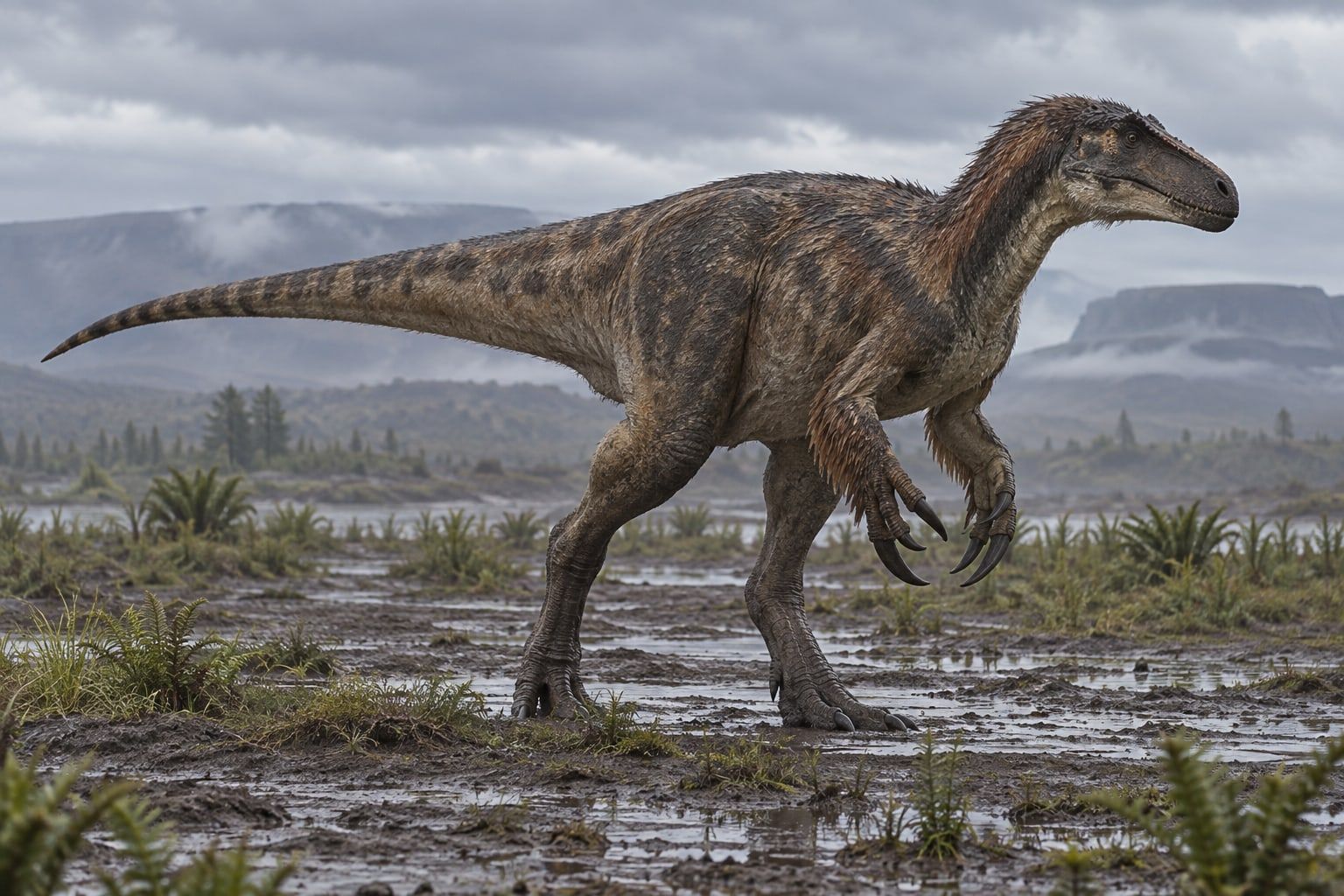
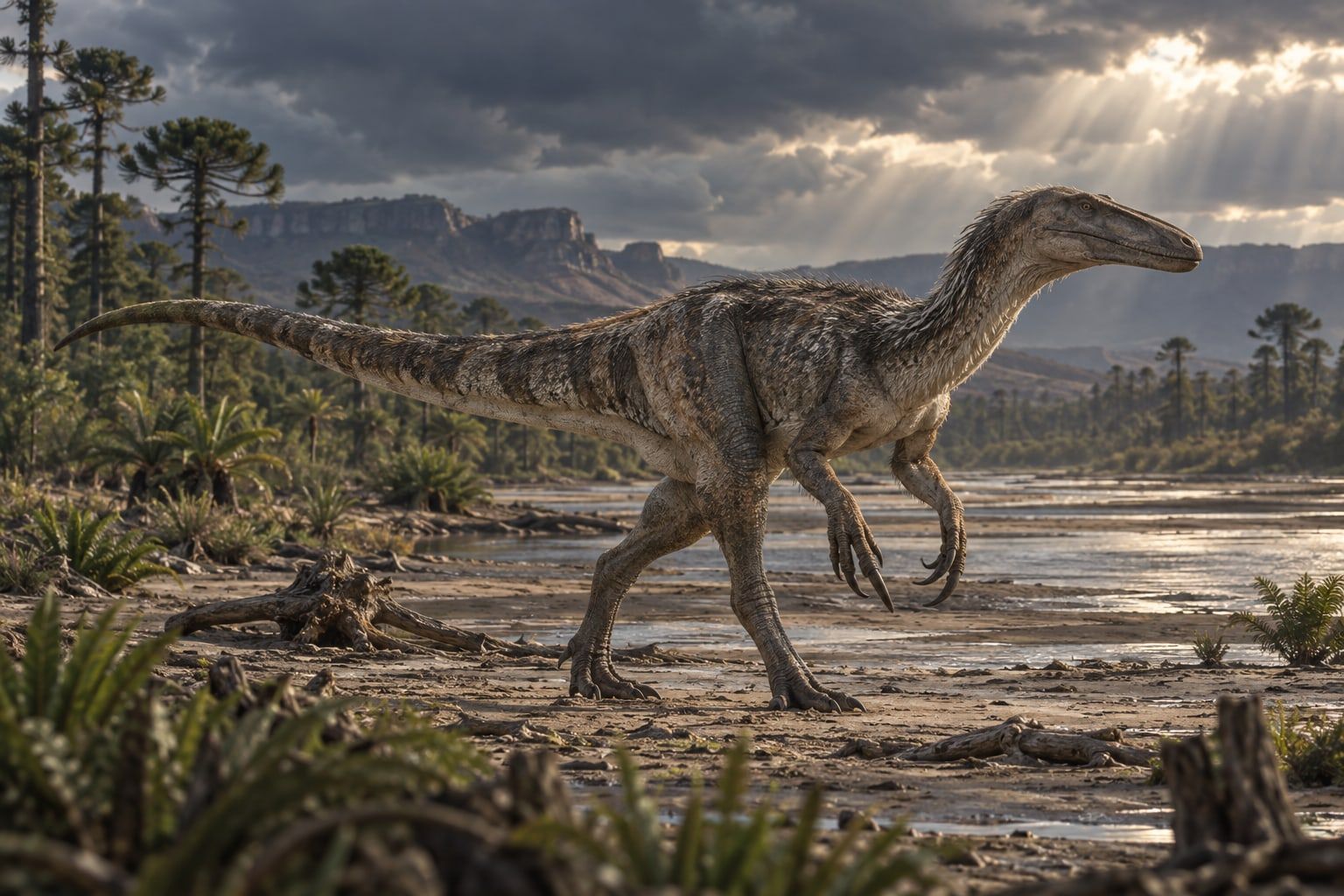
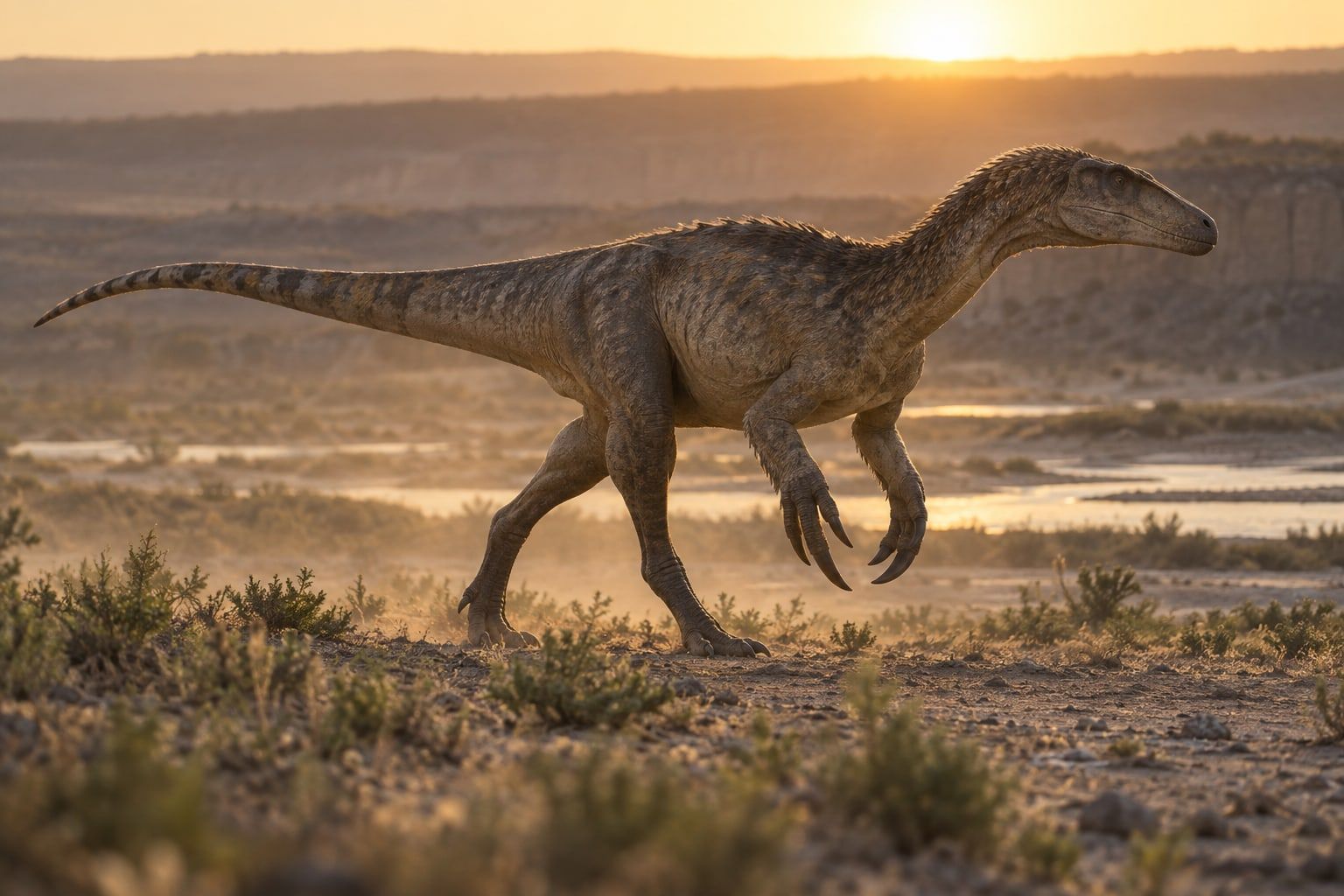
Aerosteon was a large meat eater from the megaraptoran group, relatives of Megaraptor and Australovenator. Its bones are full of hollow spaces that held air sacs, much like the bones of living birds.
Those air-filled bones are the reason for its name. They suggest it breathed with a bird-like system of air sacs, which may have helped it take in oxygen and kept its skeleton light.
Its world
Aerosteon lived about 84 to 72 million years ago, in the Late Cretaceous, in what is now Argentina. Its bones come from the Anacleto Formation, home to the abelisaurid Aucasaurus, the small plant eater Gasparinisaura and titanosaurs such as Neuquensaurus and Antarctosaurus.
How it was found
Sereno and colleagues named Aerosteon in 2008 from a single partial skeleton. Scientists are still working out exactly where megaraptorans sit on the theropod family tree.
Lived alongside
Found in the same rock formations
Close relatives
Other members of Megaraptoridae
Sources: WikidataNamed in: P. C. Sereno, R. N. Martínez, and J. A. Wilson, D. J. Varricchio, O. A. Alcober, H. C. E. Larsson. 2008. Evidence for avian intrathoracic air sacs in a new predatory dinosaur from Argentina. PLoS ONE 3(9):e3303:1-20