Barrosasaurus
"Barrosa lizard"
- Lived
- 84 to 72 million years ago, Late Cretaceous
- Diet
- Herbivore
- Group
- Sauropods
- Found in
- Argentina
- Named by
- Salgado and Coria 2009
Where its fossils were found
The evidence
Today

80 million years ago
Habitat
The Anacleto Formation records winding rivers and broad floodplains, with strong seasonal changes in rainfall. Other dinosaurs from these rocks include Aucasaurus, Neuquensaurus and Gasparinisaura.
Field notes
About Barrosasaurus
What it was like
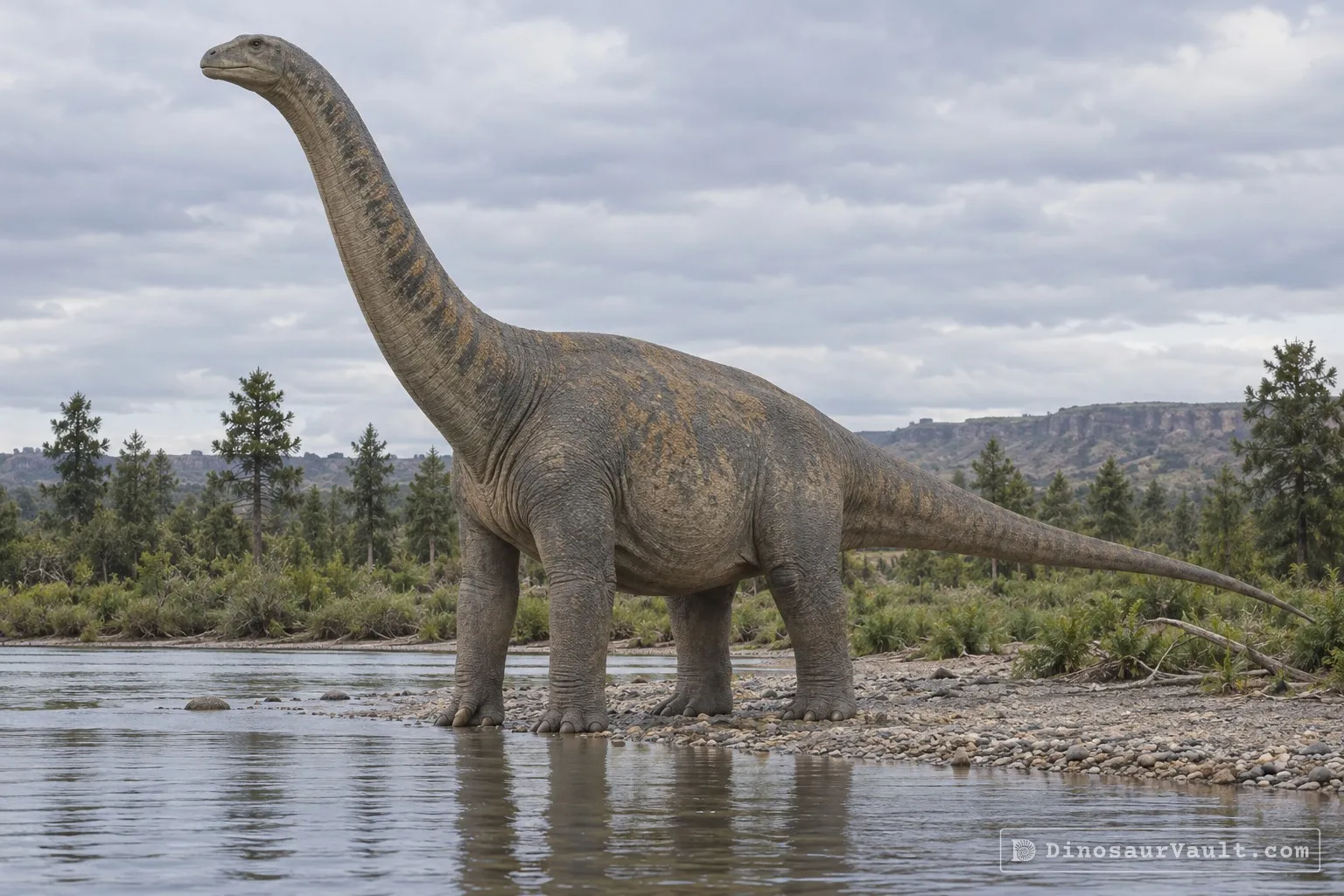
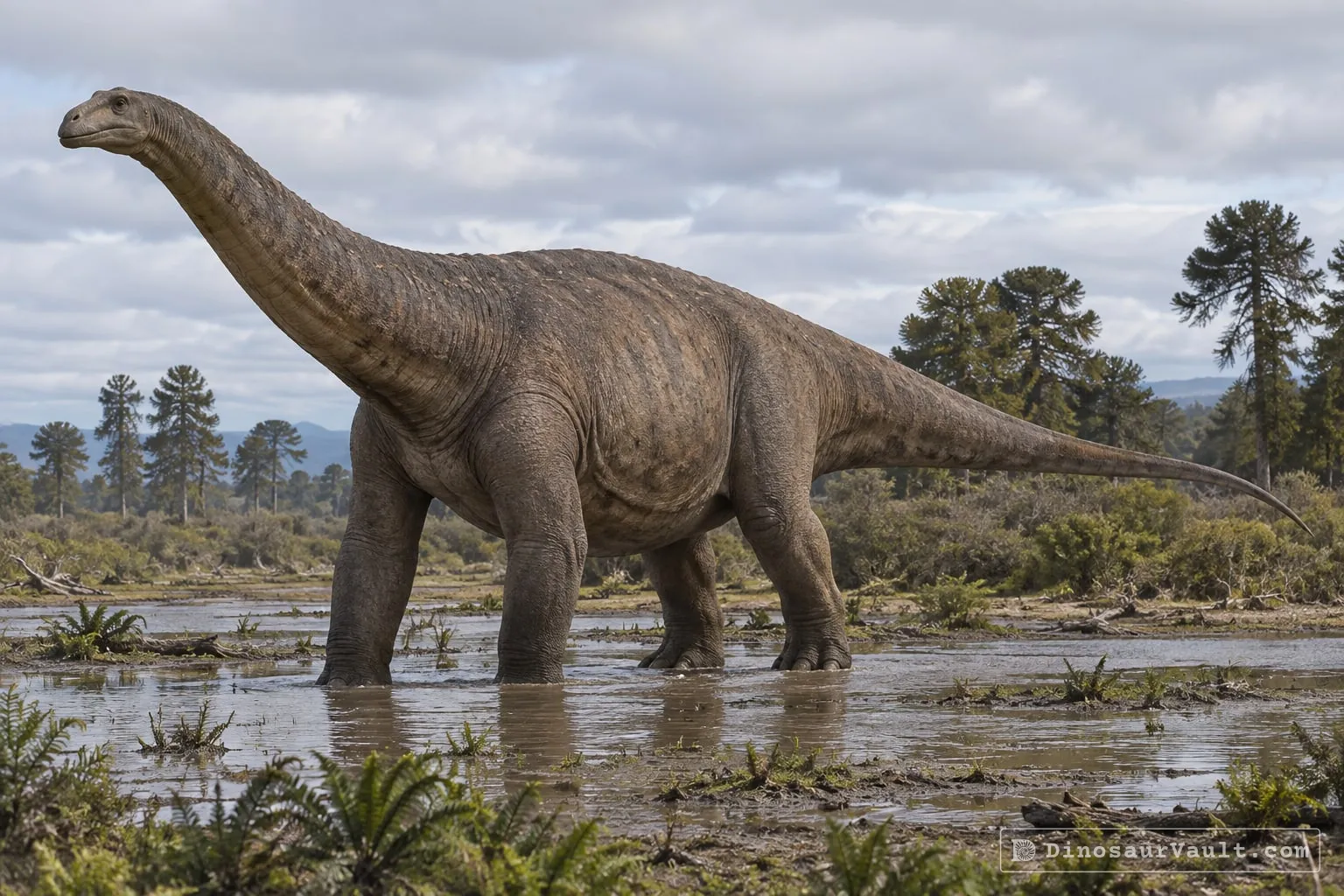
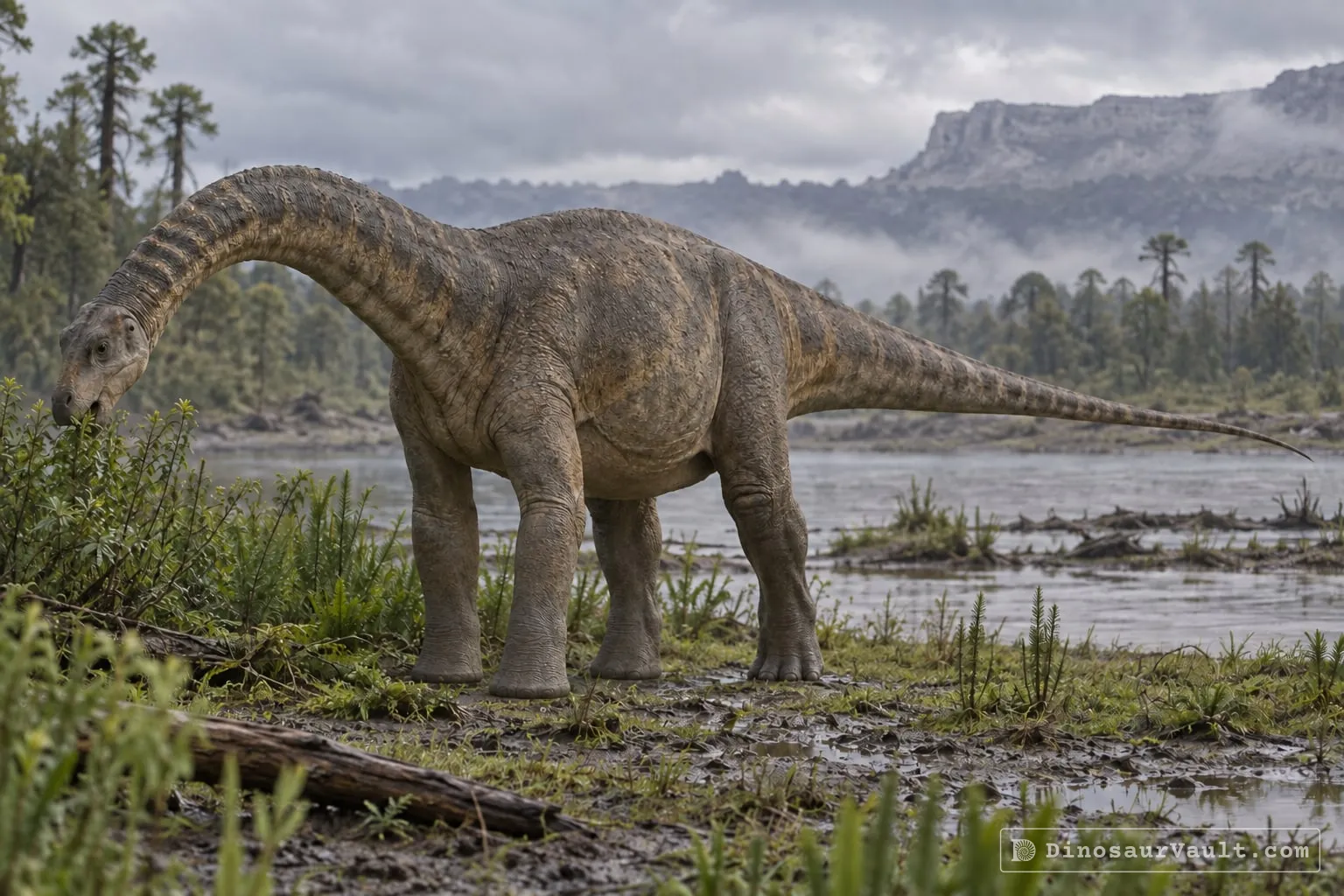
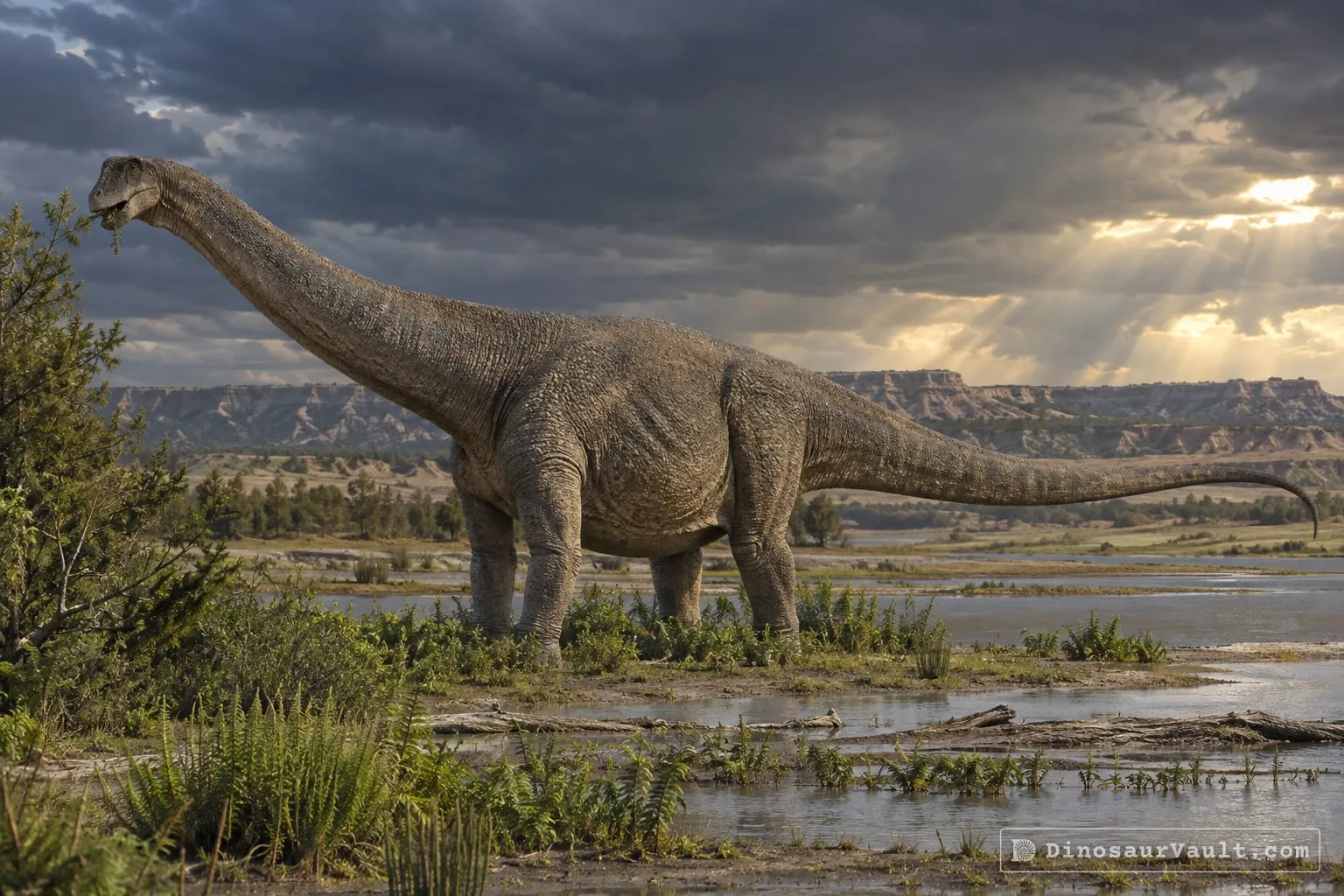
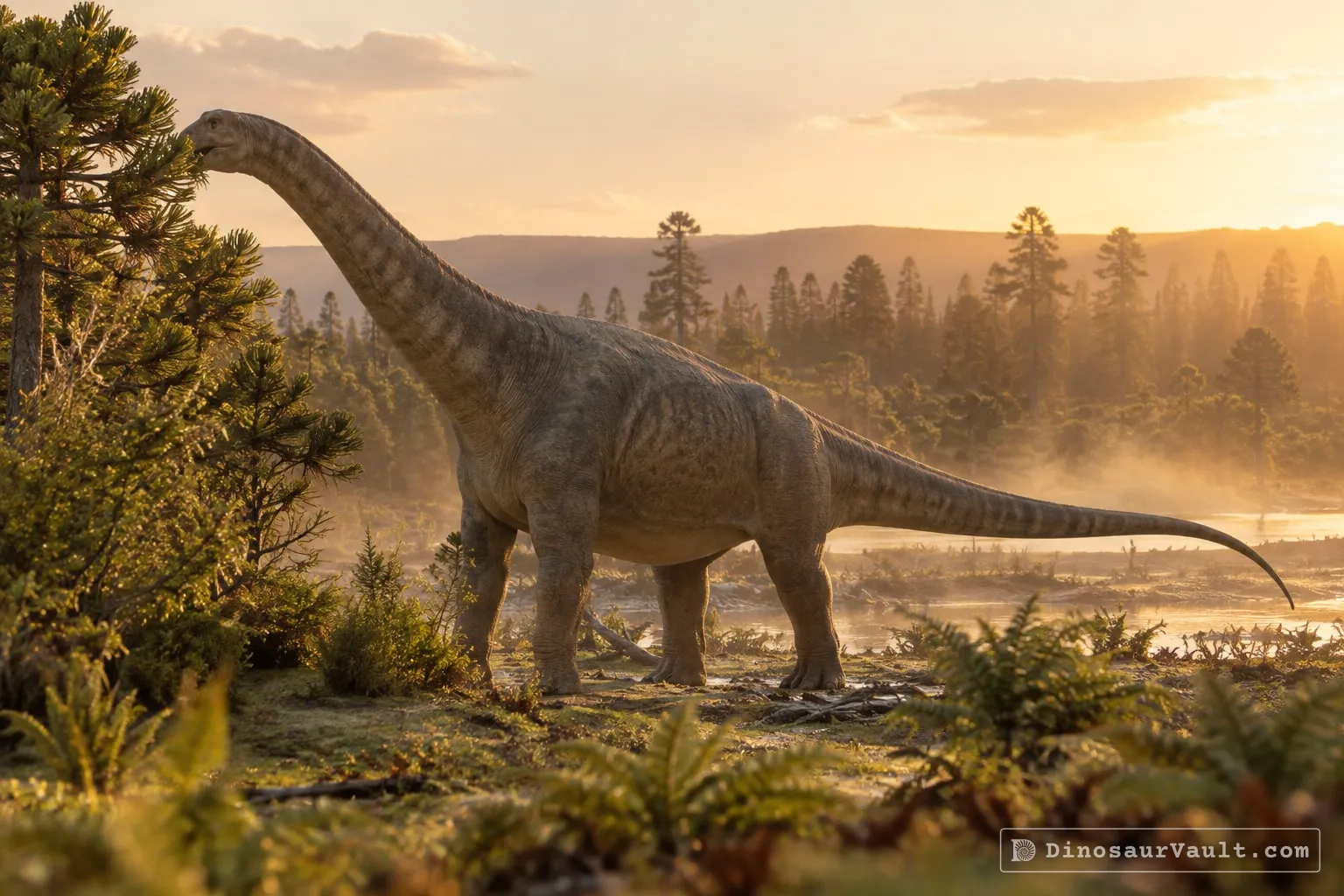
Barrosasaurus was a titanosaur, a long-necked plant eater. It is known from three large back bones.
Its world
It lived in the Late Cretaceous in what is now Argentina. Its bones come from the Anacleto Formation, where it shared the land with the abelisaurid Aucasaurus, the predator Aerosteon and the small plant eater Gasparinisaura.
How it was found
Salgado and Coria named it in 2009.
Field gallery
More views of Barrosasaurus
Scenes reconstructed from the available fossil evidence.
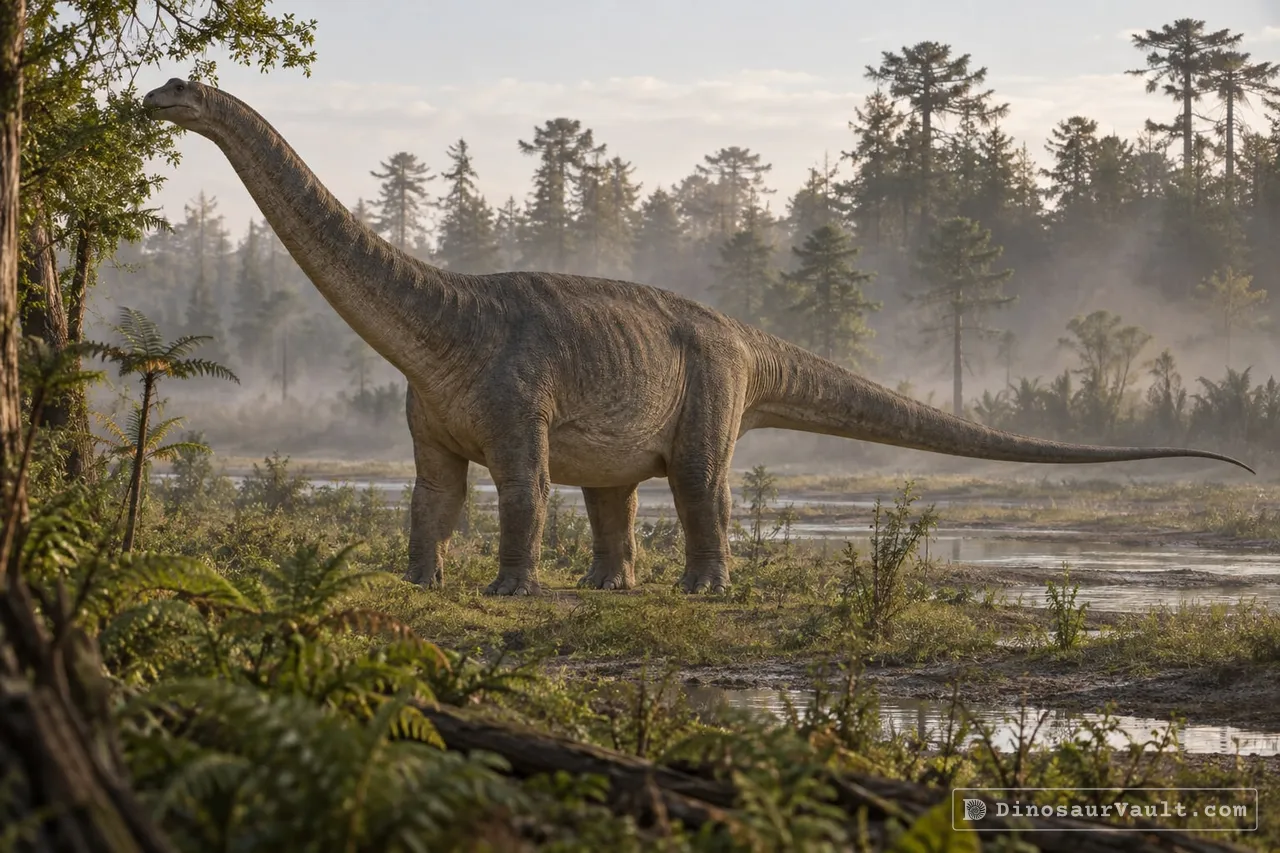
1 of 2
Lived alongside
Found in the same rock formations
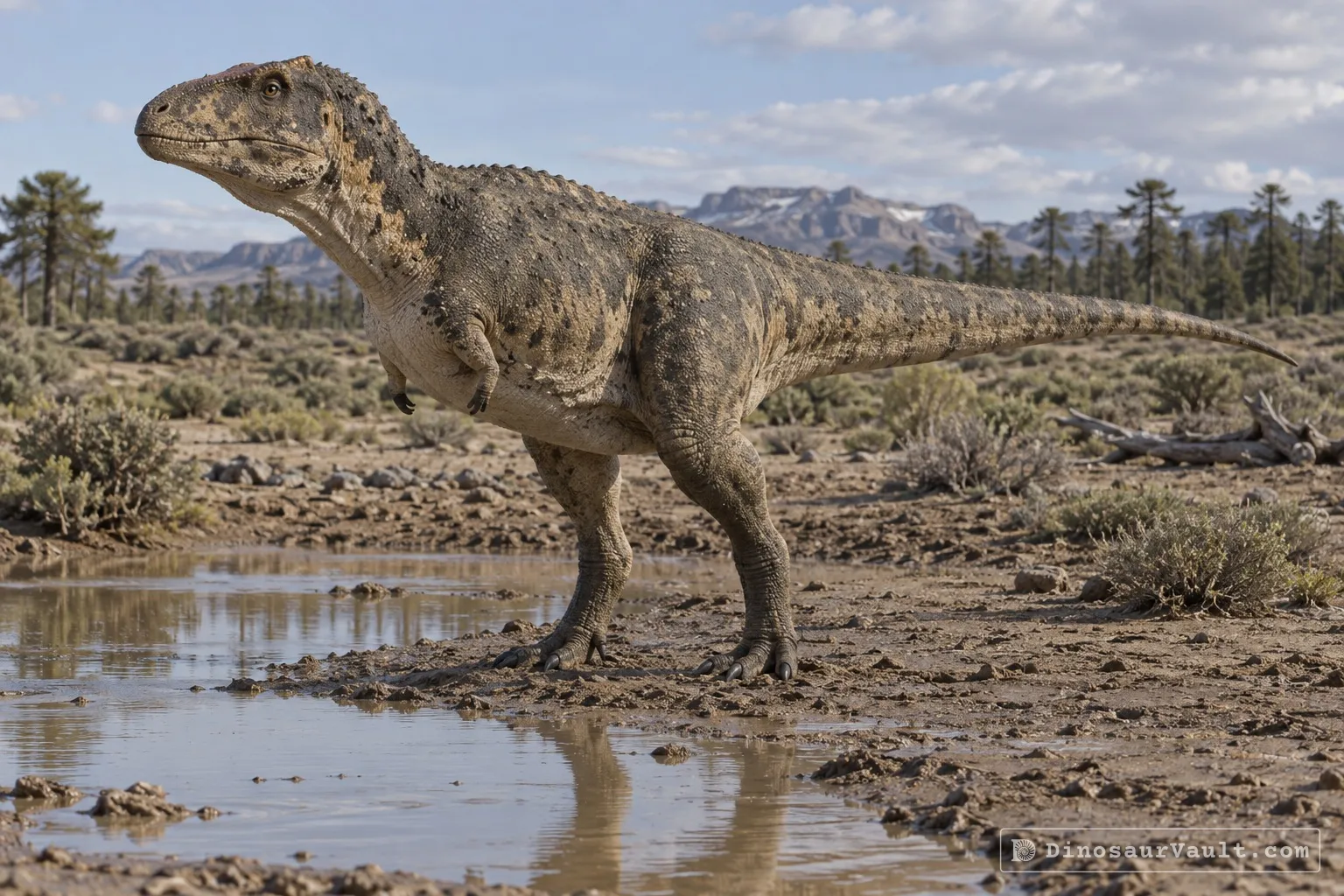
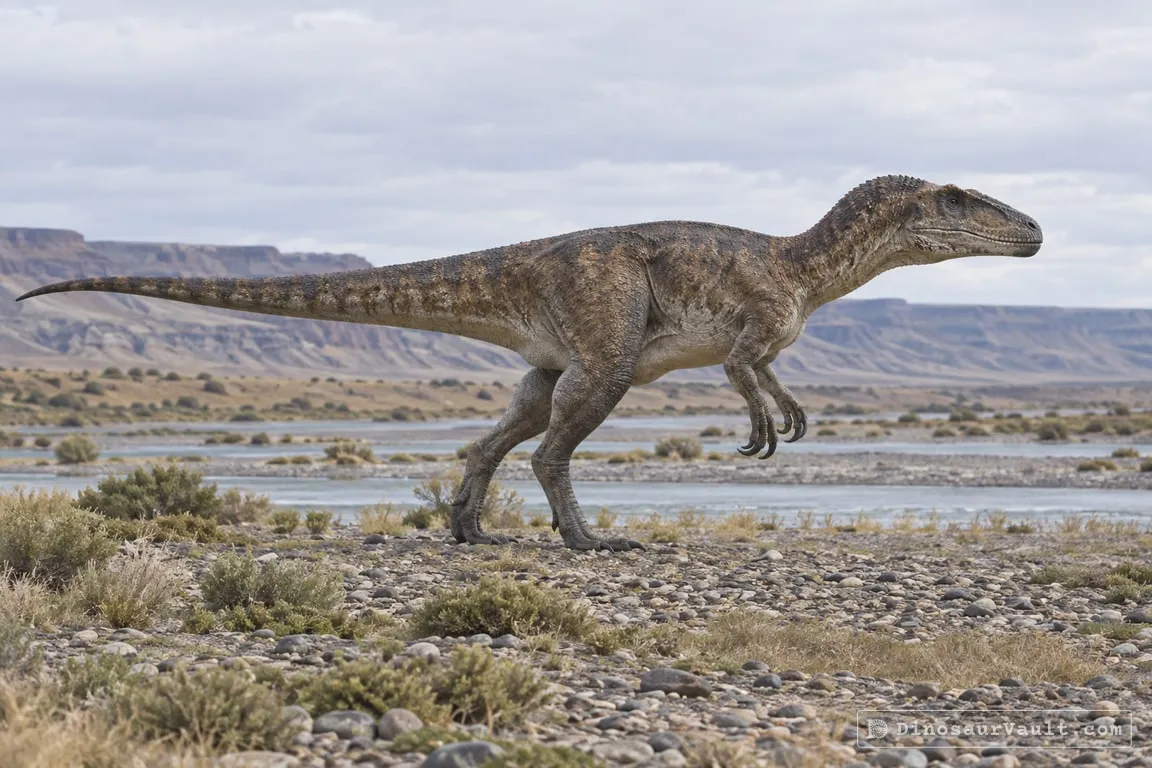
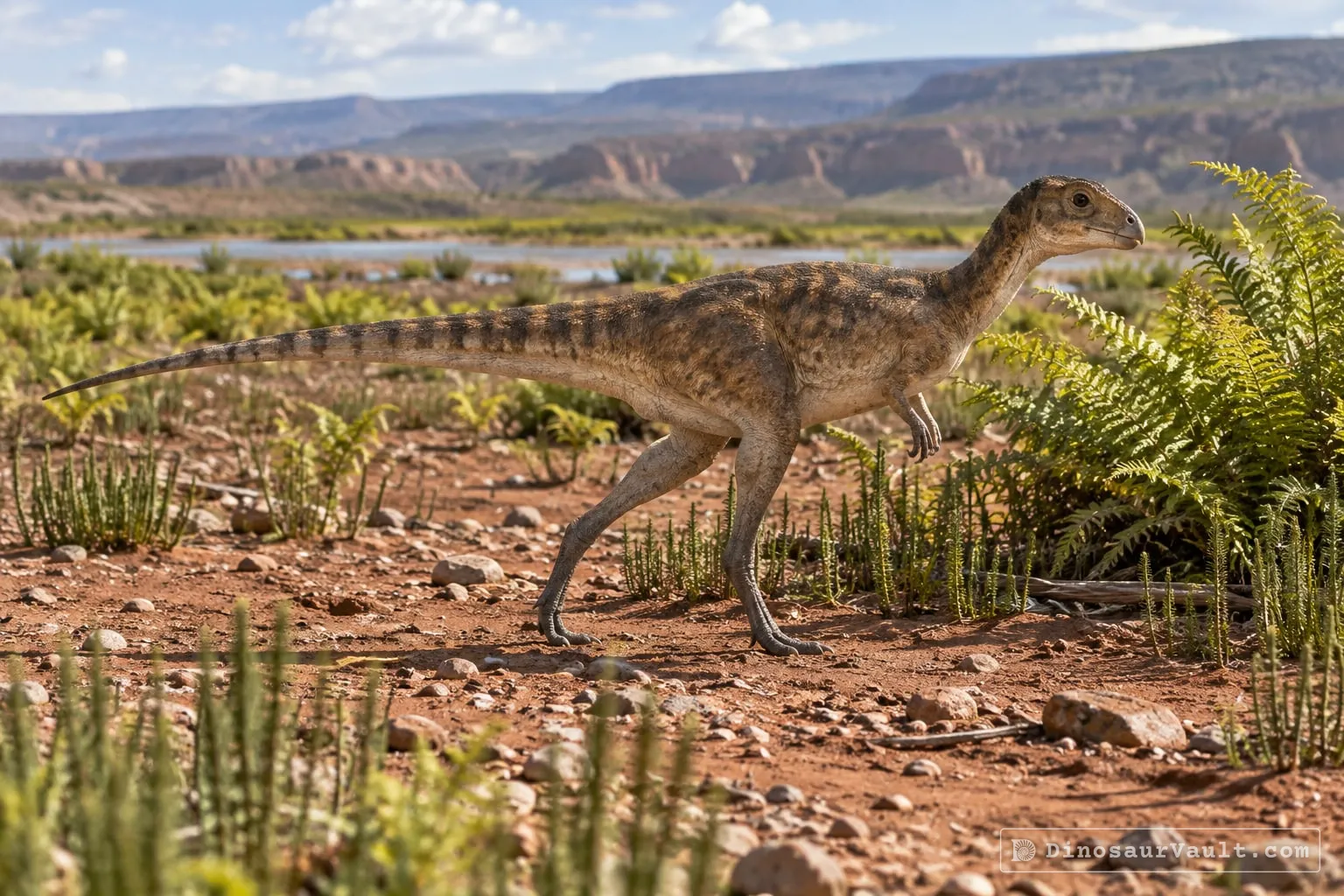


A rock formation can hold fossils laid down millions of years apart, so not every animal here met Barrosasaurus.
The evidence
The science behind Barrosasaurus
Which parts of the picture come from its own bones, and which come from its relatives.
From its own fossils
- Three large, incomplete back vertebrae are the only known bones.
- The thin bony struts linking parts of these vertebrae form a distinctive pattern.
Borrowed from relatives
- The missing limbs can be restored using other titanosaurs, such as Neuquensaurus, as anatomical guides.
- Its long neck and tail follow the general body plan of titanosaurs.
Still unknown
- The shape of its skull and the proportions of its limbs.
- Its adult size.
- Its skin covering and color.
Discovery timeline
- 2009Named itSALGADO & CORIA
- 2010Close relativeOtero
- 2014Its worldArmas et al.
Key papers
The research behind what we know of Barrosasaurus
Named it
Named a new titanosaur from large back vertebrae with a distinctive arrangement of bony struts.
Barrosasaurus casamiquelai gen. et sp. nov., a new titanosaur (Dinosauria, Sauropoda) from the Anacleto Formation (Late Cretaceous: early Campanian) of Sierra Barrosa (Neuquén, Argentina). Zootaxa 2222
Read the paper : Barrosasaurus casamiquelai gen. et sp. nov., a new titanosaur (Dinosauria, Sauropoda) from the Anacleto Formation (Late Cretaceous: early Campanian) of Sierra Barrosa (Neuquén, Argentina) (opens in a new tab)Close relative
Described the limbs and limb girdles of Neuquensaurus, a fellow titanosaur useful for comparing the missing parts of Barrosasaurus.
The Appendicular Skeleton ofNeuquensaurus, a Late Cretaceous Saltasaurine Sauropod from Patagonia, Argentina. Acta Palaeontologica Polonica 55: 399-426
Read the paper : The Appendicular Skeleton ofNeuquensaurus, a Late Cretaceous Saltasaurine Sauropod from Patagonia, Argentina (opens in a new tab)Its world
Reconstructed winding rivers and floodplains in the Anacleto Formation, with seasonal rainfall.
Sedimentary palaeoenvironment, petrography, provenance and diagenetic inference of the Anacleto Formation in the Neuquén Basin, Late Cretaceous, Argentina. Journal of South American Earth Sciences 53: 59-76
Read the paper : Sedimentary palaeoenvironment, petrography, provenance and diagenetic inference of the Anacleto Formation in the Neuquén Basin, Late Cretaceous, Argentina (opens in a new tab)
Close relatives
Other members of Titanosauria


Sources: Wikidata