Pitekunsaurus
- Lived
- 84 to 72 million years ago, Late Cretaceous
- Diet
- Herbivore
- Group
- Sauropods
- Found in
- Argentina
- Named by
- Filippi and Garrido 2008
Where its fossils were found
The evidence
Today

80 million years ago
Habitat
Sandy river channels crossed a muddy floodplain in the Anacleto Formation. Other dinosaurs from these rocks include Aucasaurus, Neuquensaurus and Gasparinisaura.
Field notes
About Pitekunsaurus
What it was like
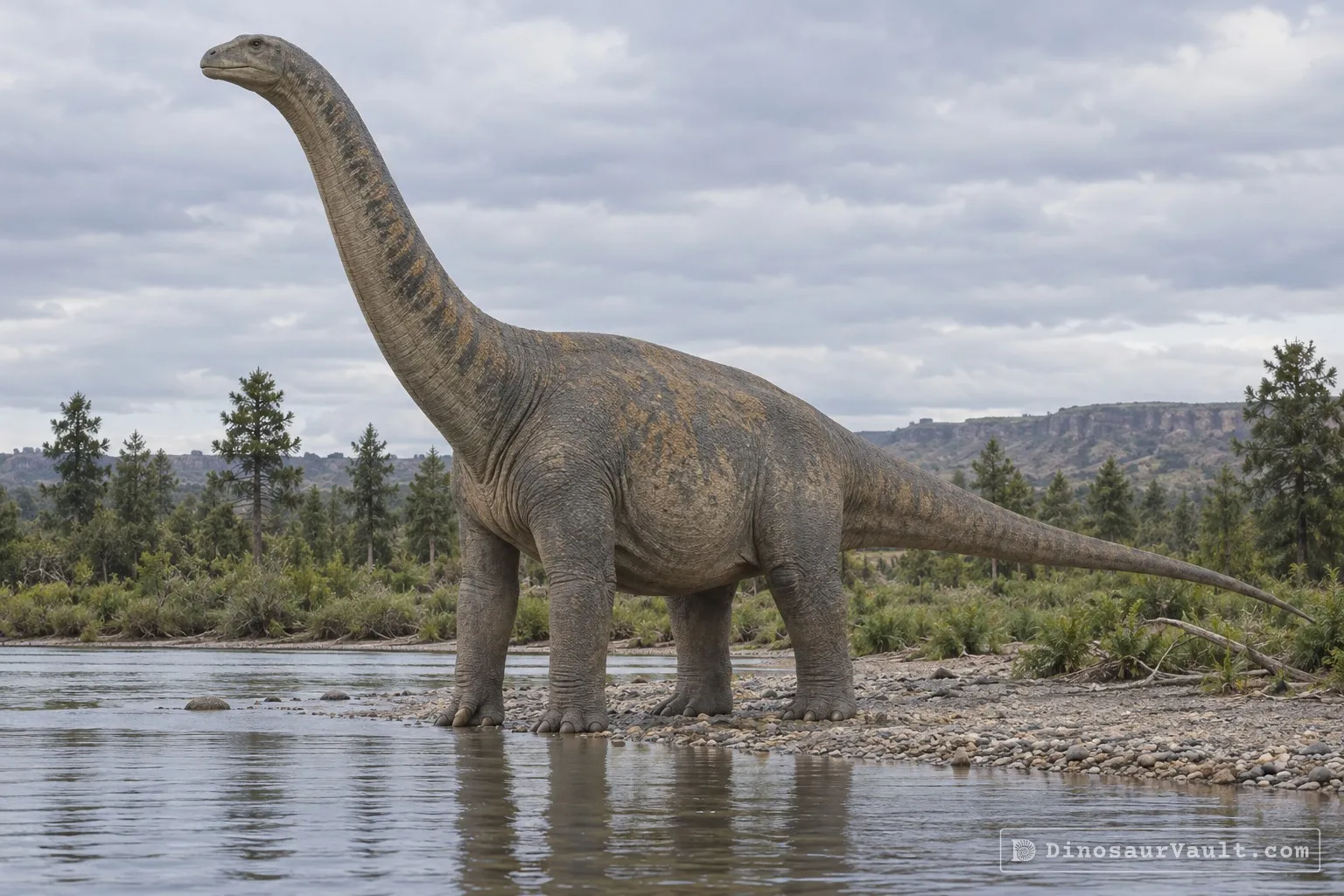
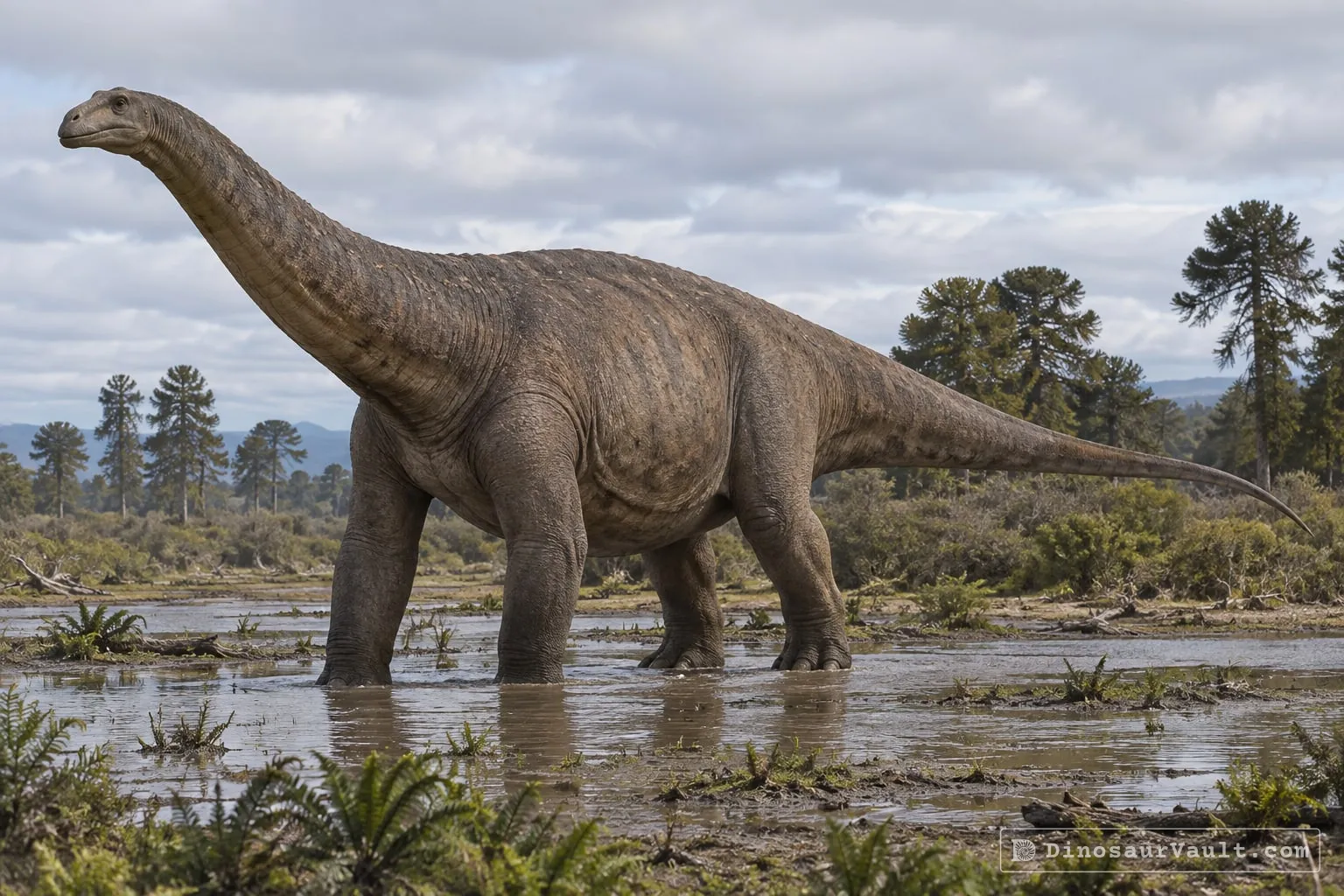
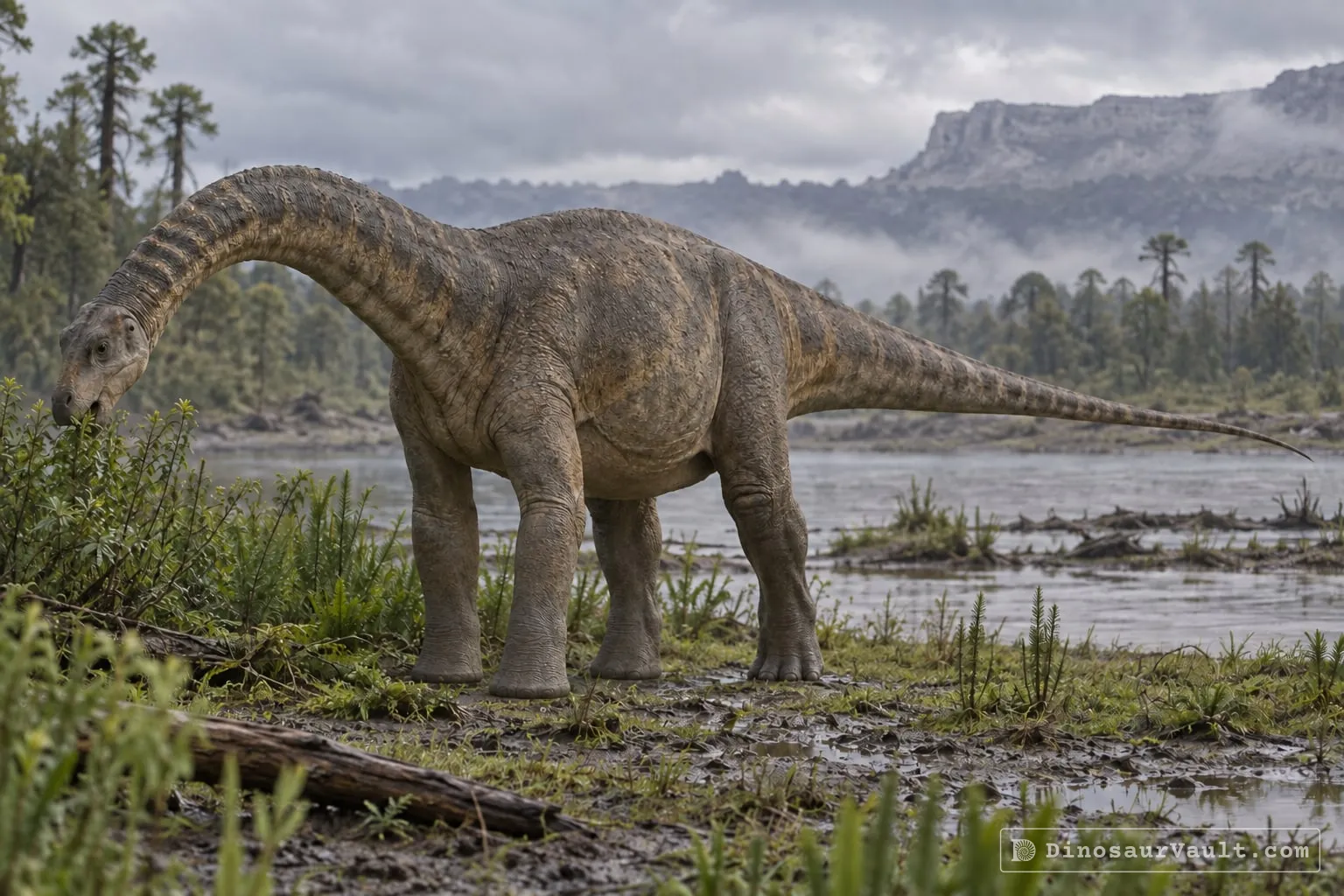
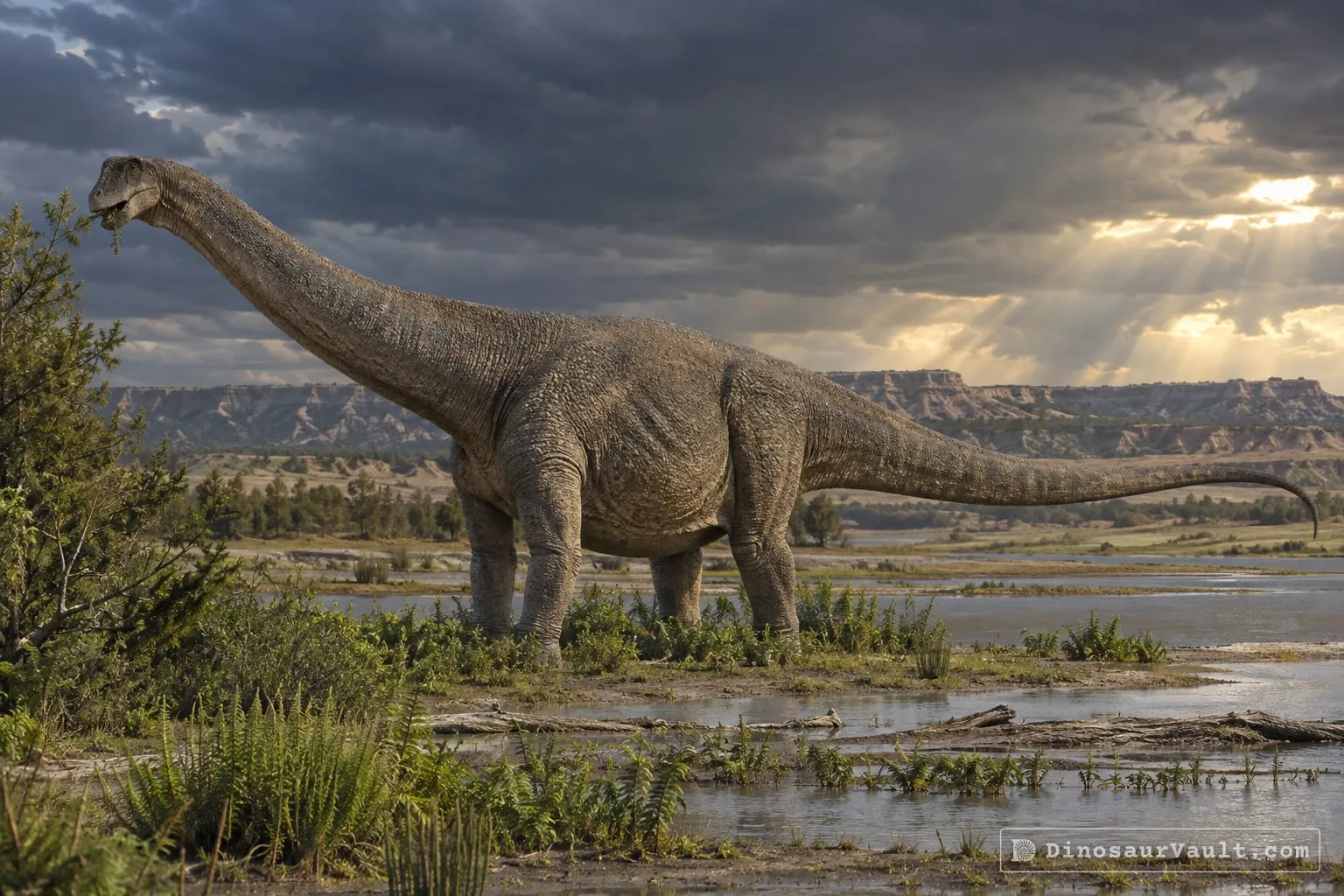
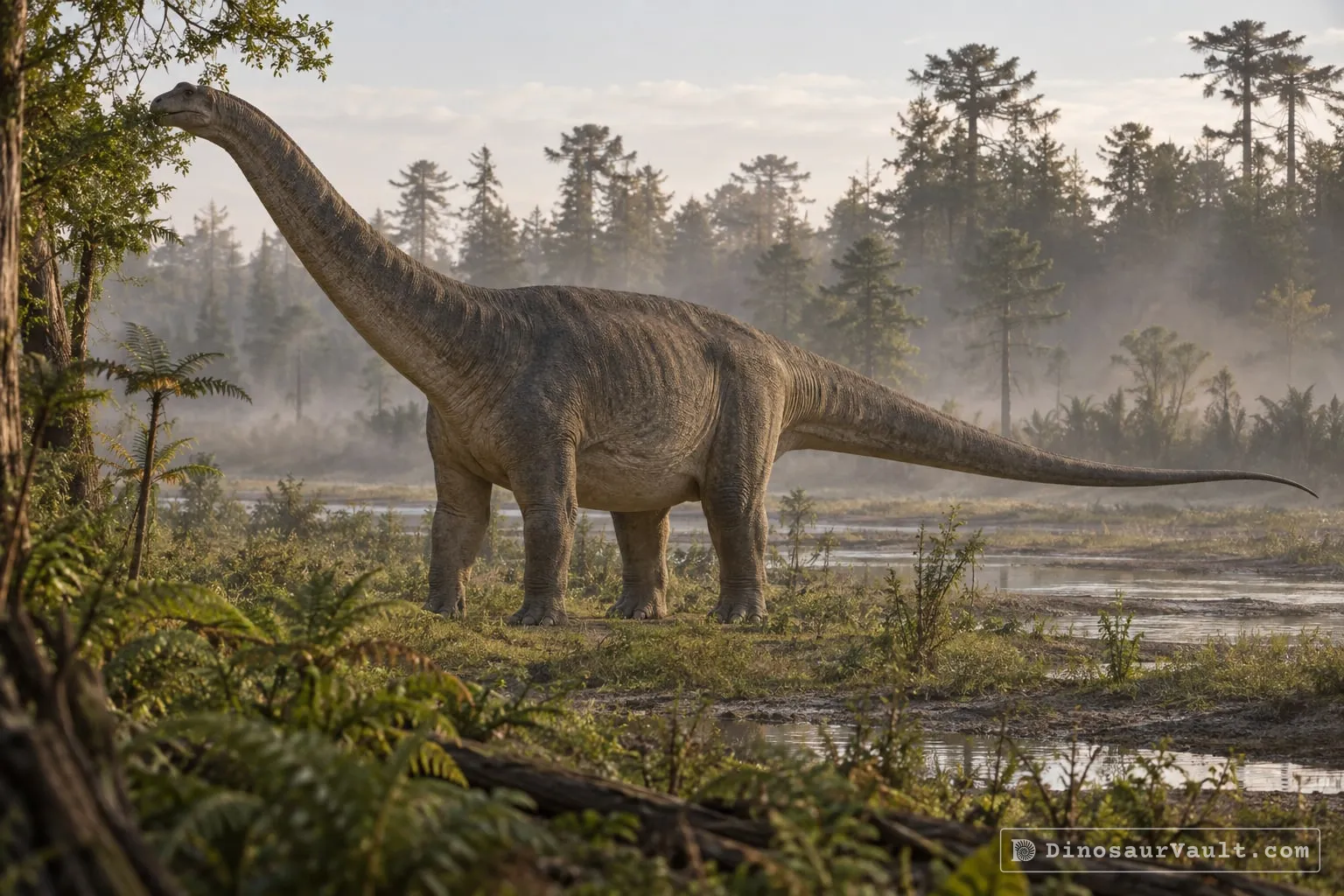
Pitekunsaurus was a titanosaur, a long-necked plant eater. It is known from part of the skull and bones of the backbone and limbs.
Its world
It lived in the Late Cretaceous in what is now Argentina. Its bones come from the Anacleto Formation, where it shared the land with the abelisaurid Aucasaurus, the predator Aerosteon and the small titanosaur Neuquensaurus.
How it was found
Filippi and Garrido named it in 2008. Its name comes from a local language.
Field gallery
More views of Pitekunsaurus
Scenes reconstructed from the available fossil evidence.
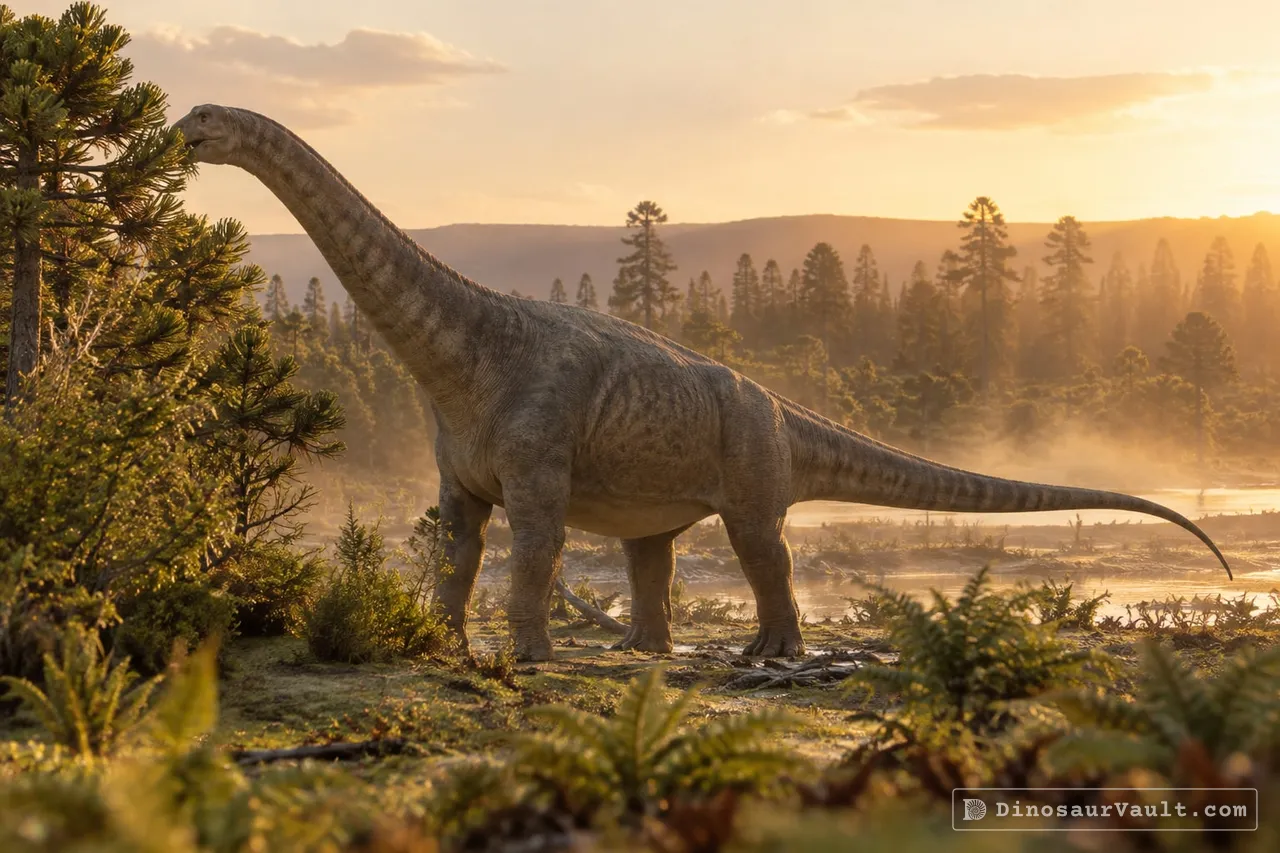
1 of 3
Lived alongside
Found in the same rock formations
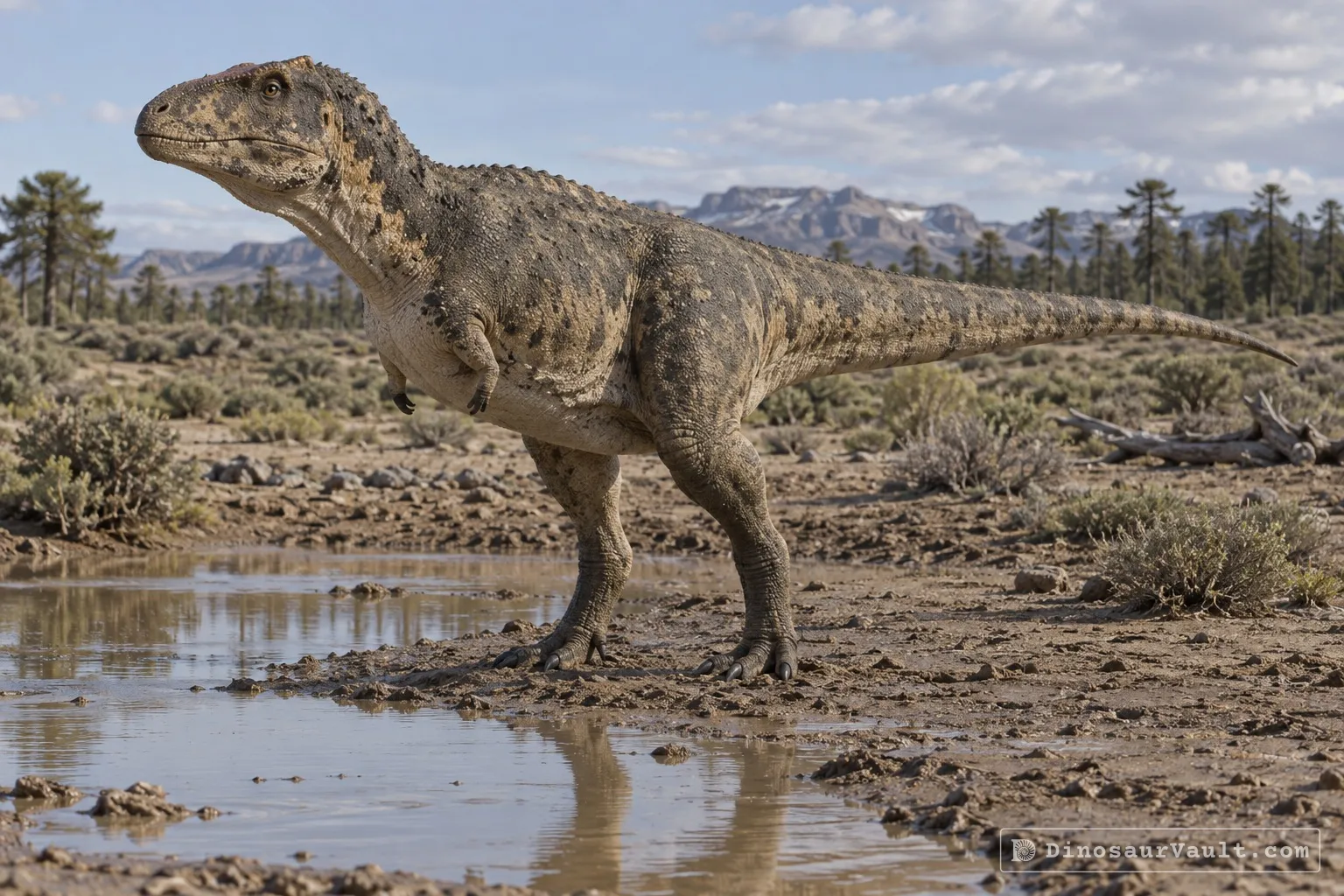
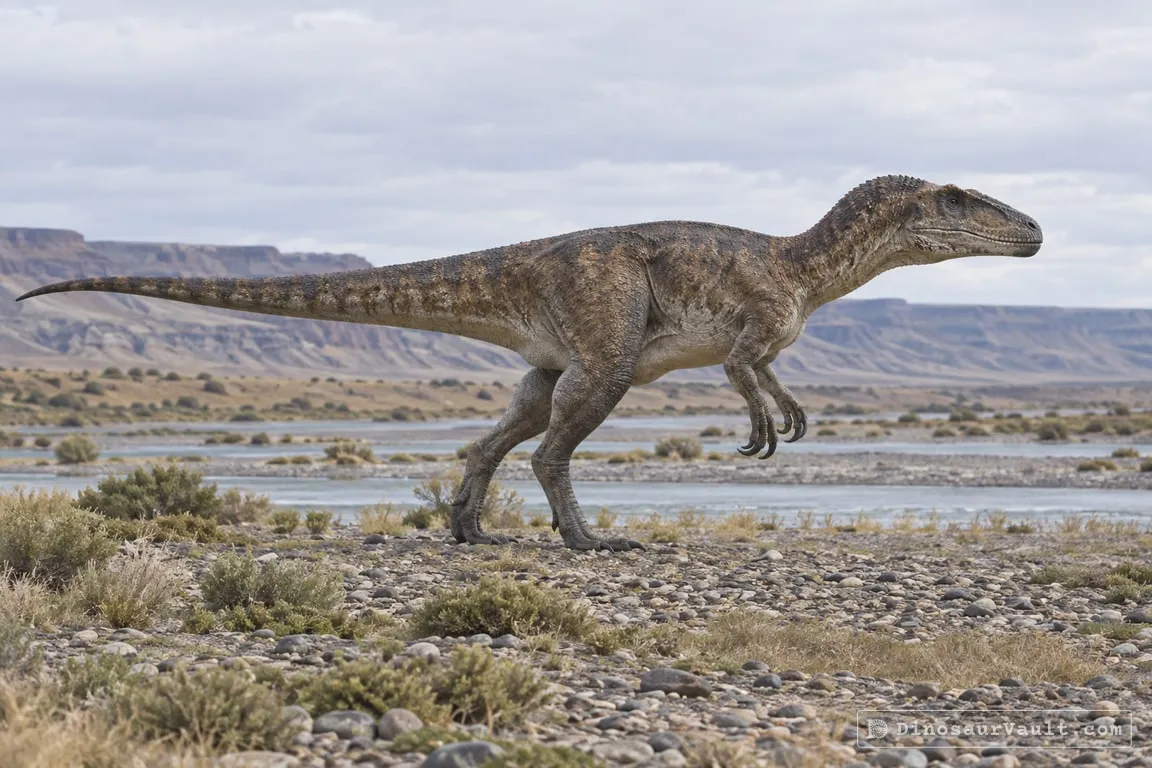
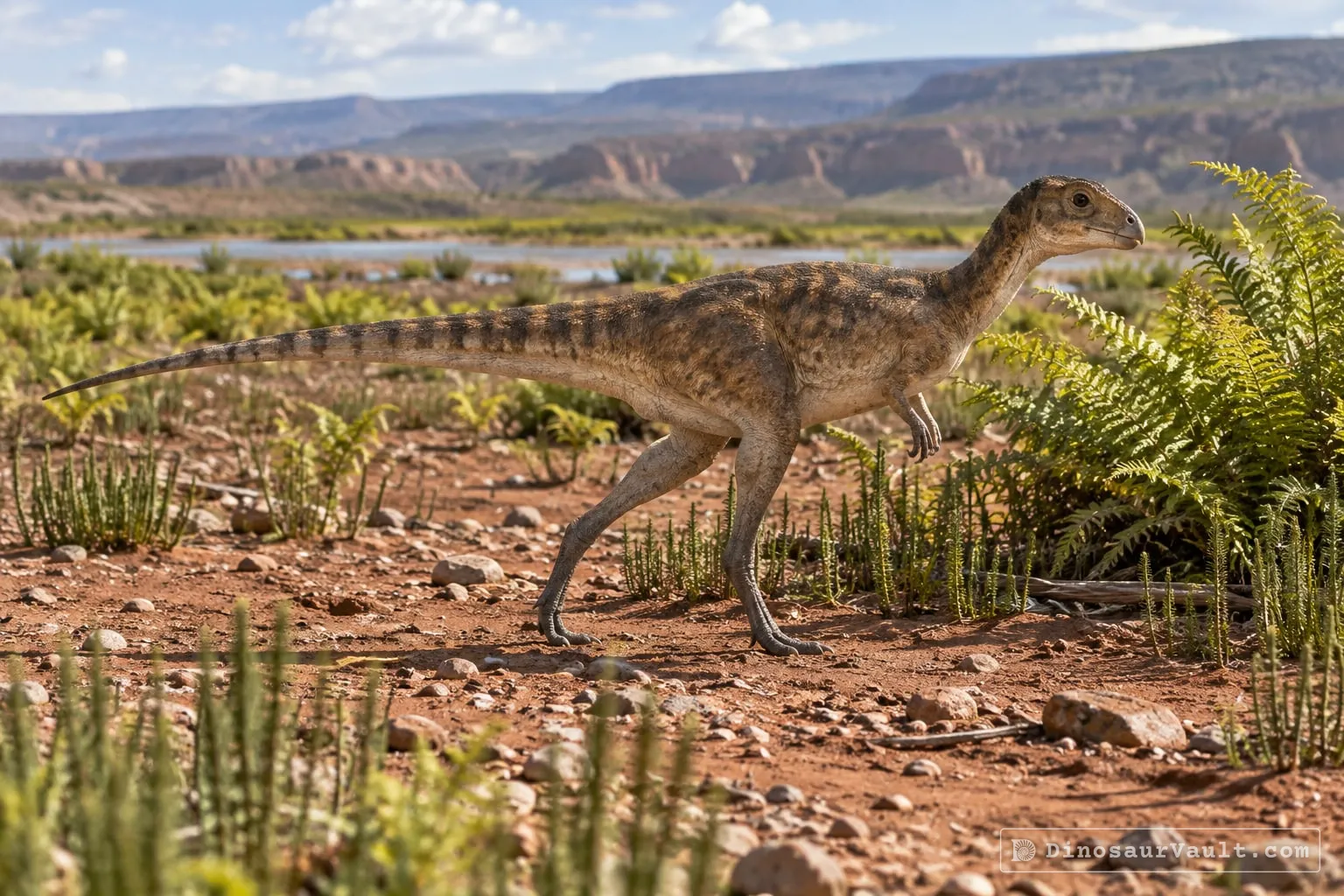


A rock formation can hold fossils laid down millions of years apart, so not every animal here met Pitekunsaurus.
The evidence
The science behind Pitekunsaurus
Which parts of the picture come from its own bones, and which come from its relatives.
From its own fossils
- The partial skeleton includes the braincase, the left forehead bone, a tooth, vertebrae from the neck, back and tail, rib fragments, the right shoulder blade, a forearm bone and the top of the left thigh bone.
- Its forearm bone, the ulna, is straight and sturdy, with a well-developed point at the elbow. The blade of the shoulder blade widens moderately toward its end.
- The rear tail vertebrae have different kinds of joints, including a vertebra with rounded ends on both sides.
Borrowed from relatives
- Its missing face can be modeled on Tapuiasaurus, a titanosaur known from a skull, and the rest of its neck and body on more complete titanosaurs such as Mnyamawamtuka.
Still unknown
- The shape of the complete head, and how long the complete neck and tail were.
- Whether the mixed joints in its rear tail are normal for the animal or a sign of disease.
- Its closest relatives. One recent analysis grouped it with Narambuenatitan under one method and placed it near Mnyamawamtuka under another.
Discovery timeline
- 2008Named itFilippi & Garrido
- 2011Same rocksFilippi, García & Garrido
- 2013Family treeCORIA et al.
- 2025Family treeDíaz et al.
Key papers
The research behind what we know of Pitekunsaurus
Named it
Described a partial titanosaur skeleton with unusual tail joints resembling those of Rinconsaurus.
Pitekunsaurus macayai gen. et sp. nov., nuevo titanosaurio (Saurischia, Sauropoda) del Cretácico Superior de la Cuenca Neuquina, Argentina [Pitekunsaurus macayai gen. et sp. nov., new titanosaur (Saurischia, Sauropoda) from the Upper Cretaceous of the Neuquén Basin, Argentina]. Ameghiniana 45: 575-590
No link available
Same rocks
Described Narambuenatitan from the Anacleto Formation, compared its skull with Pitekunsaurus and explained the river and floodplain deposits.
A New Titanosaur Sauropod Dinosaur from the Upper Cretaceous of North Patagonia, Argentina. Acta Palaeontologica Polonica 56: 505-520
Read the paper : A New Titanosaur Sauropod Dinosaur from the Upper Cretaceous of North Patagonia, Argentina (opens in a new tab)Family tree
Named Overosaurus and placed Pitekunsaurus with Aeolosaurus and Gondwanatitan in its family tree.
<i>Overosaurus paradasorum</i> gen. et sp. nov. , a new sauropod dinosaur (Titanosauria: Lithostrotia) from the Late Cretaceous of Neuquén, Patagonia, Argentina. Zootaxa 3683
Read the paper : <i>Overosaurus paradasorum</i> gen. et sp. nov. , a new sauropod dinosaur (Titanosauria: Lithostrotia) from the Late Cretaceous of Neuquén, Patagonia, Argentina (opens in a new tab)Family tree
A large titanosaur family tree that included Pitekunsaurus found its position shifted with the weighting method, near Narambuenatitan in one result and Mnyamawamtuka in another.
Revision of Romanian sauropod dinosaurs reveals high titanosaur diversity and body-size disparity on the latest Cretaceous Haţeg Island, with implications for titanosaurian biogeography. Journal of Systematic Palaeontology 23
Read the paper : Revision of Romanian sauropod dinosaurs reveals high titanosaur diversity and body-size disparity on the latest Cretaceous Haţeg Island, with implications for titanosaurian biogeography (opens in a new tab)
Close relatives
Other members of Rinconsauria


Sources: Wikidata