Daliansaurus
"Dalian lizard"
Type species Daliansaurus liaoningensis
- Lived
- 126 to 120 million years ago, Early Cretaceous
- Diet
- Omnivore
- Group
- Theropods, Troodontidae
- Found in
- China
- Named by
- Shen et al. 2017
Where its fossils were found
The evidence
Today

125 million years ago
Habitat
Conifer forests grew around lakes in the landscape recorded by the Yixian Formation. Other dinosaurs in the region included Yutyrannus, Sinosauropteryx and Sinornithosaurus.
Field notes
About Daliansaurus
What it was like
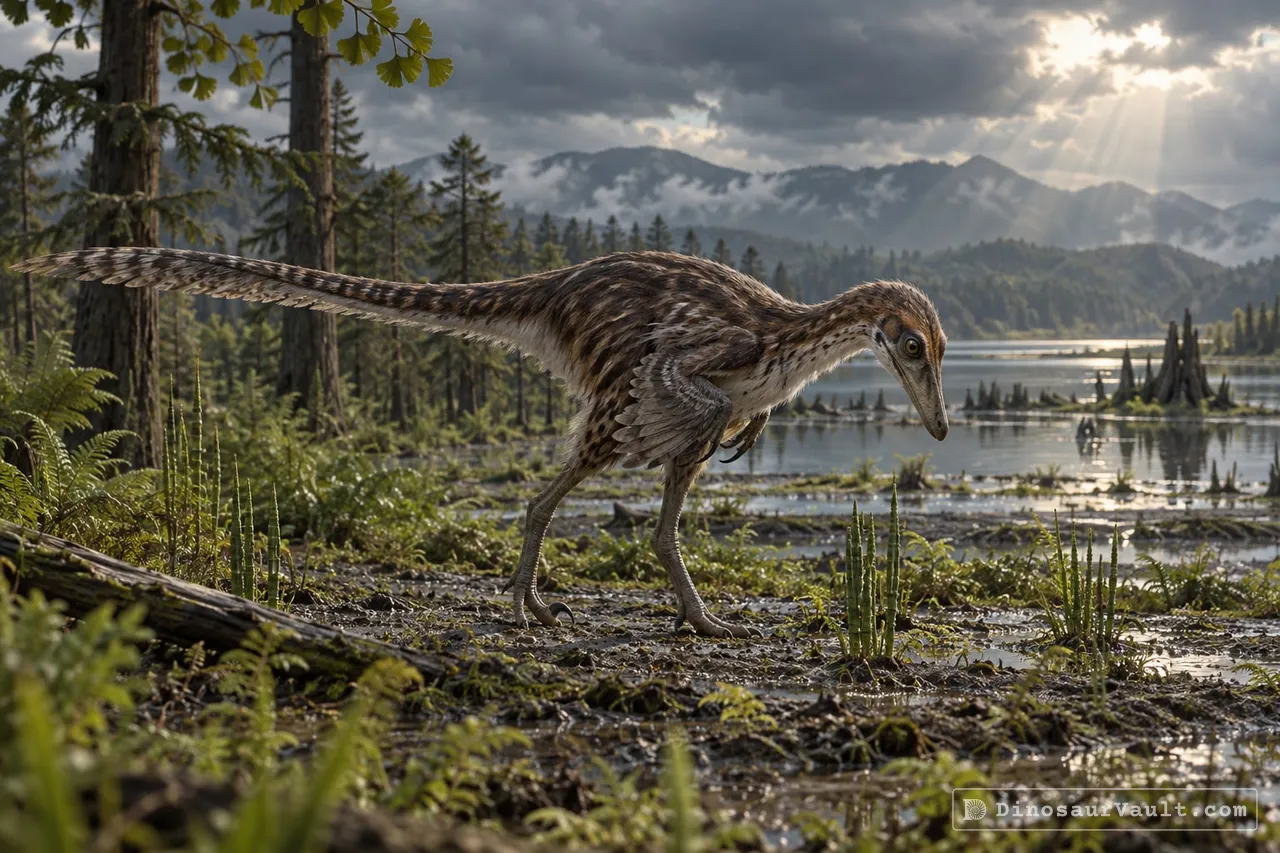
Daliansaurus was a small troodontid, a feathered theropod with long legs. Its feet had a large claw on the second toe, a bit like the sickle claw of dromaeosaurs.
Its world
It lived in the Early Cretaceous, in what is now China. It comes from the Yixian Formation, where it shared the land with the feathered tyrannosaur Yutyrannus and the small predators Sinosauropteryx and Sinornithosaurus.
How it was found
Shen and colleagues named Daliansaurus in 2017. The type species is Daliansaurus liaoningensis.
Field gallery
More views of Daliansaurus
Scenes reconstructed from the available fossil evidence.
1 of 3
Lived alongside
Found in the same rock formations
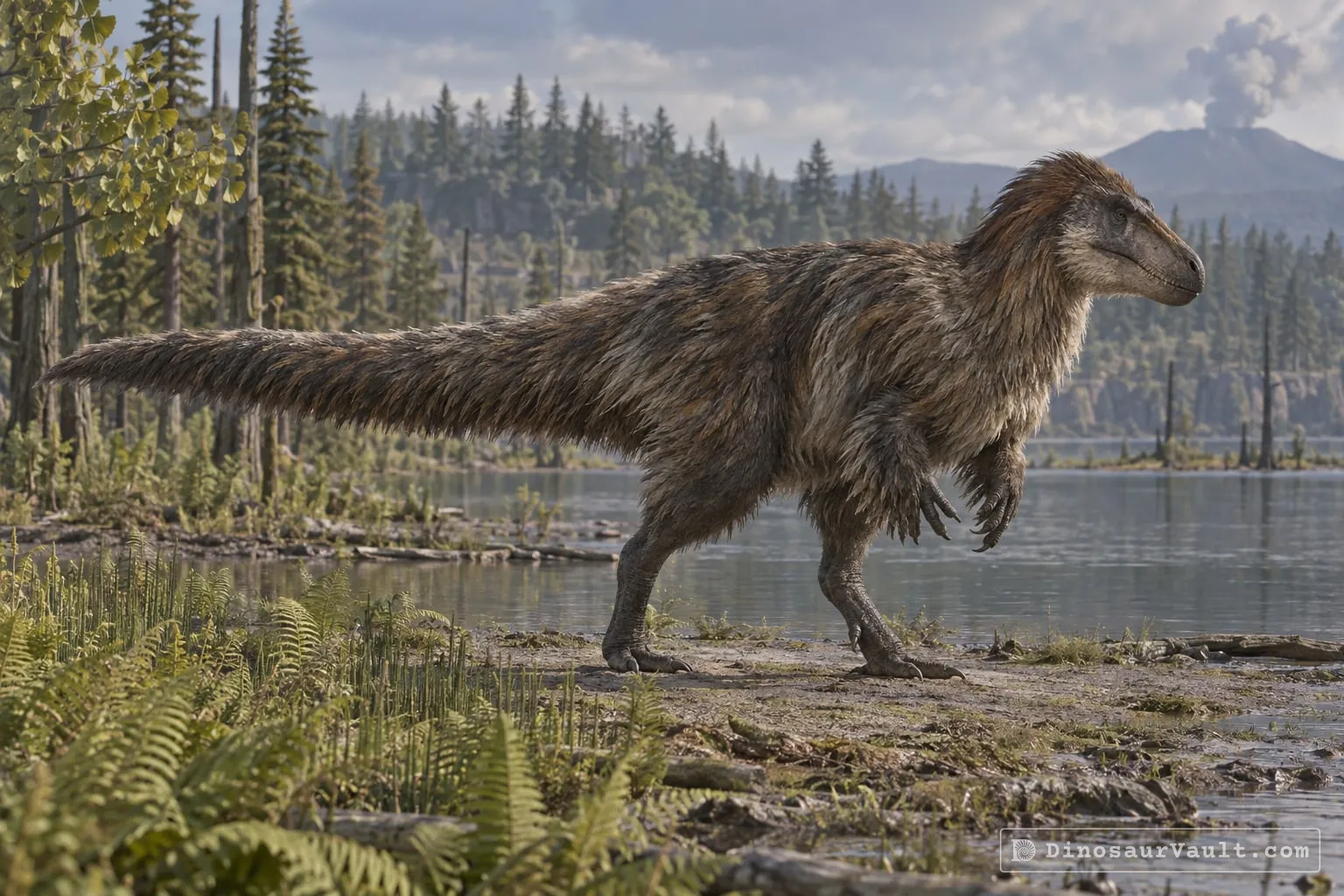
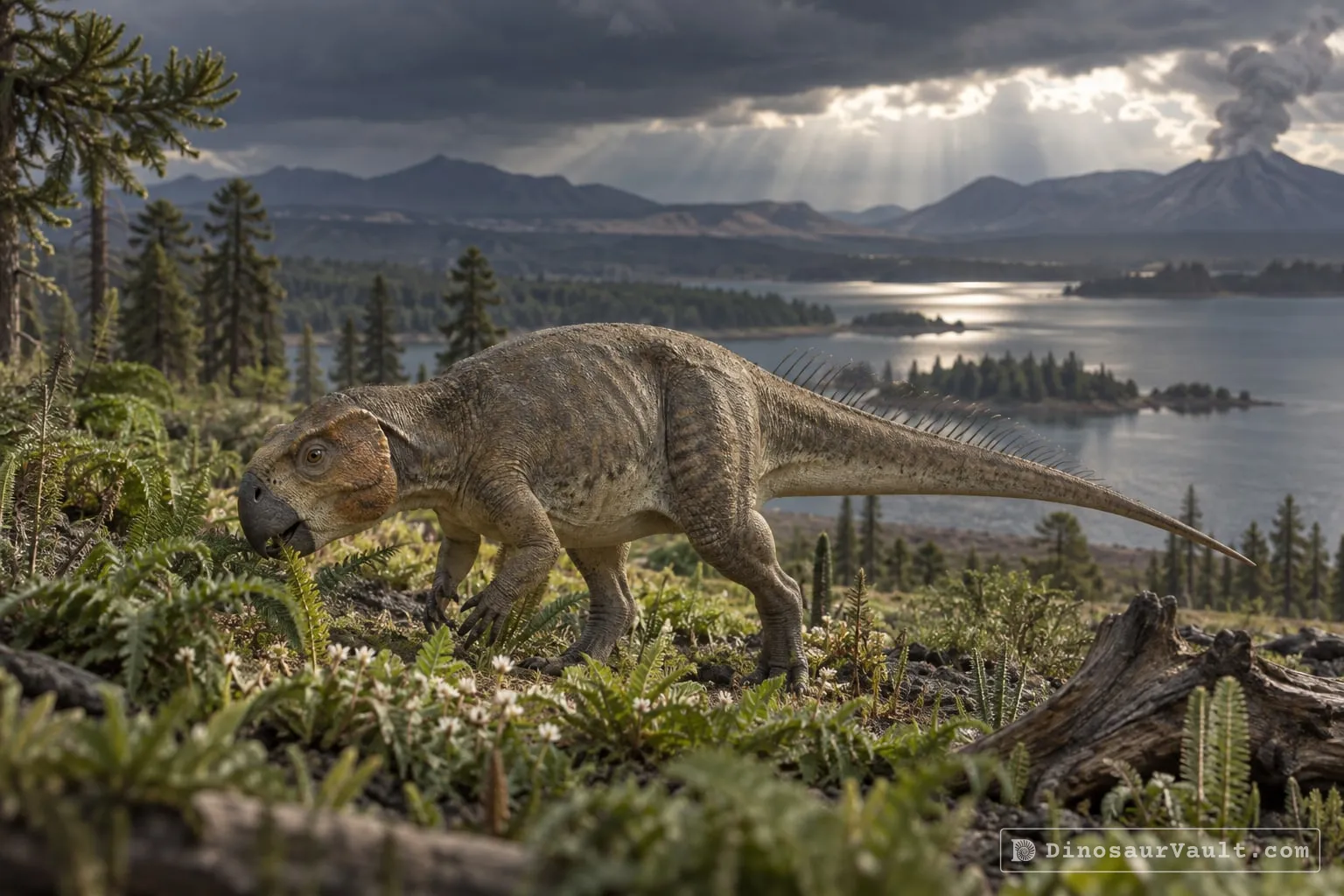
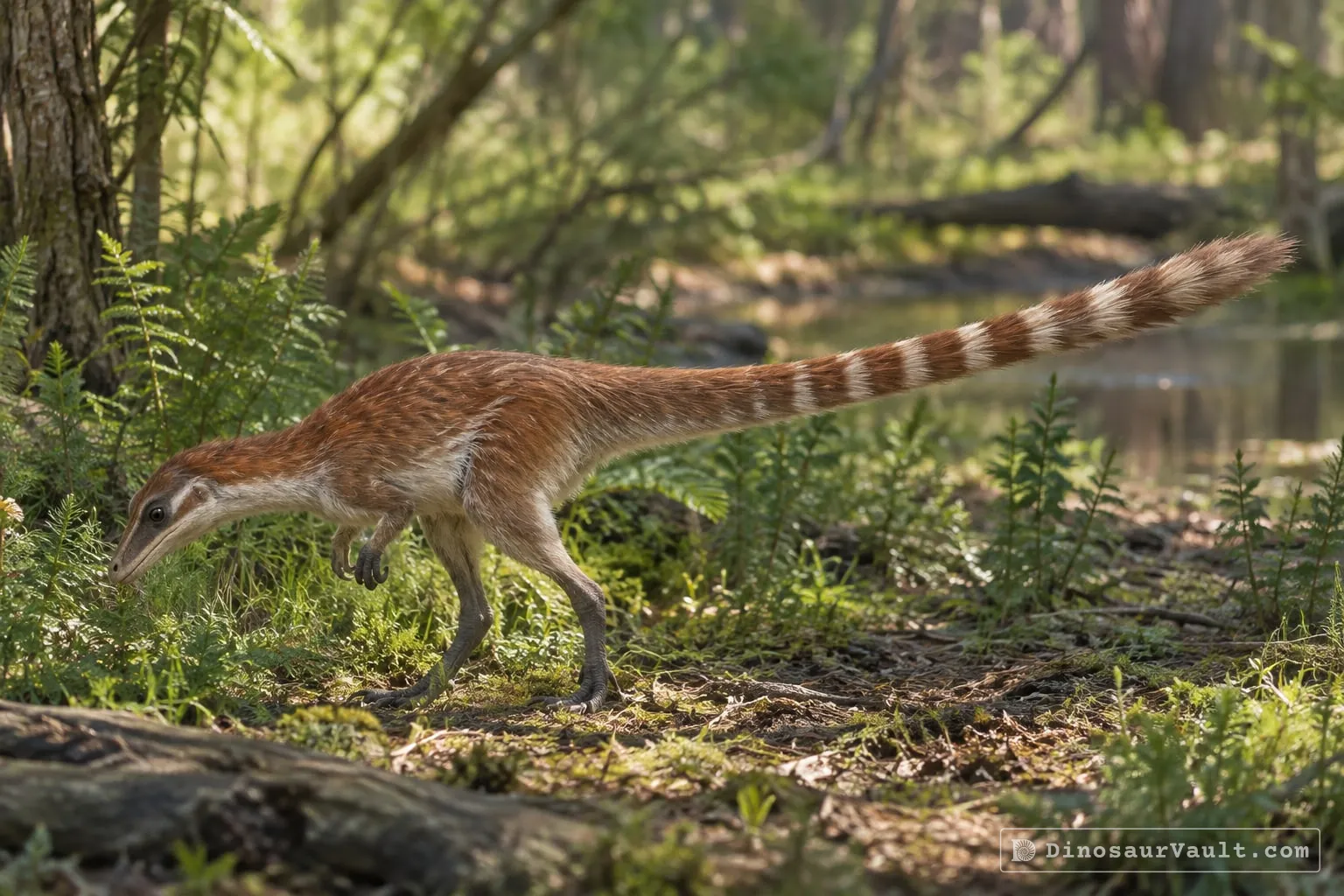
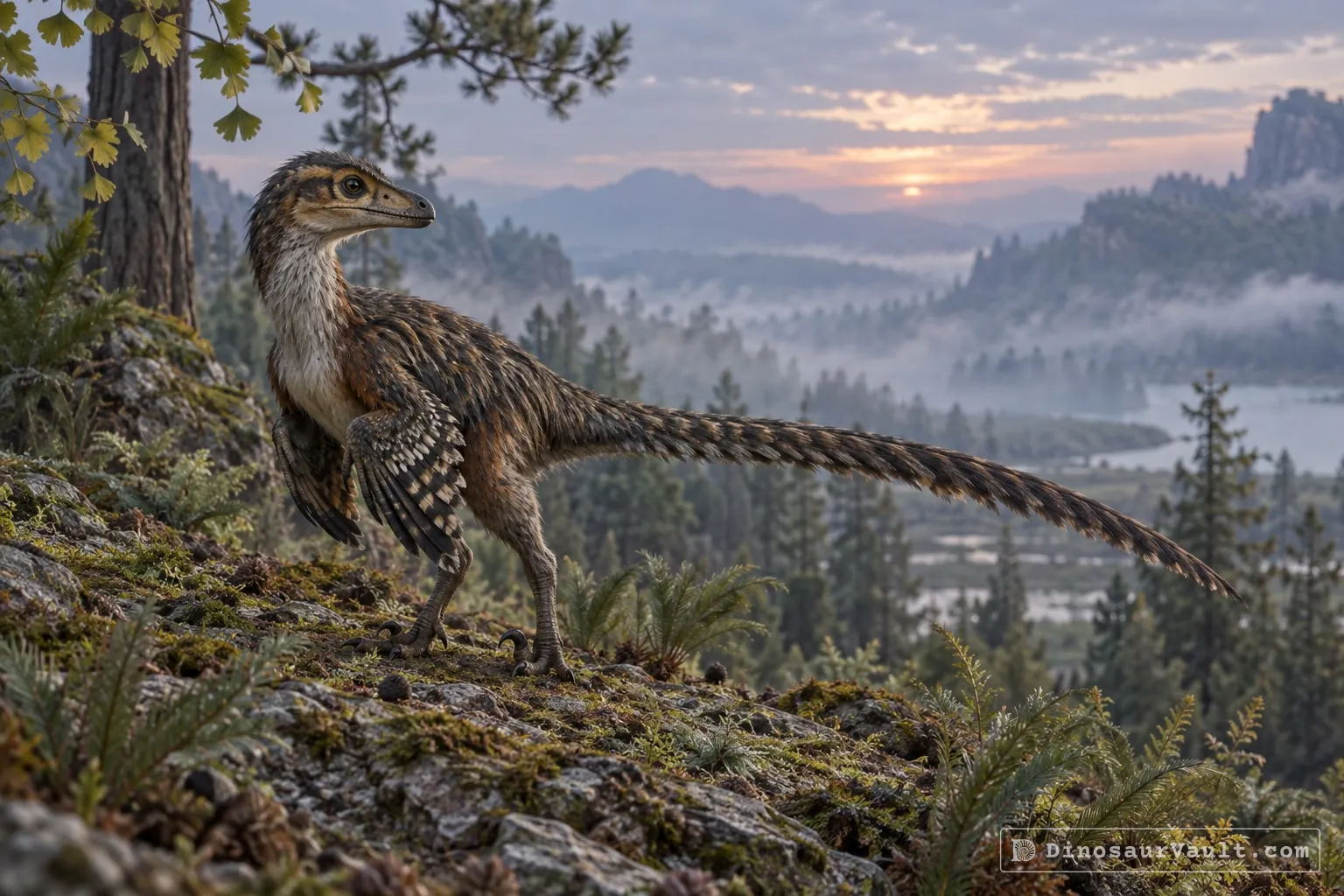
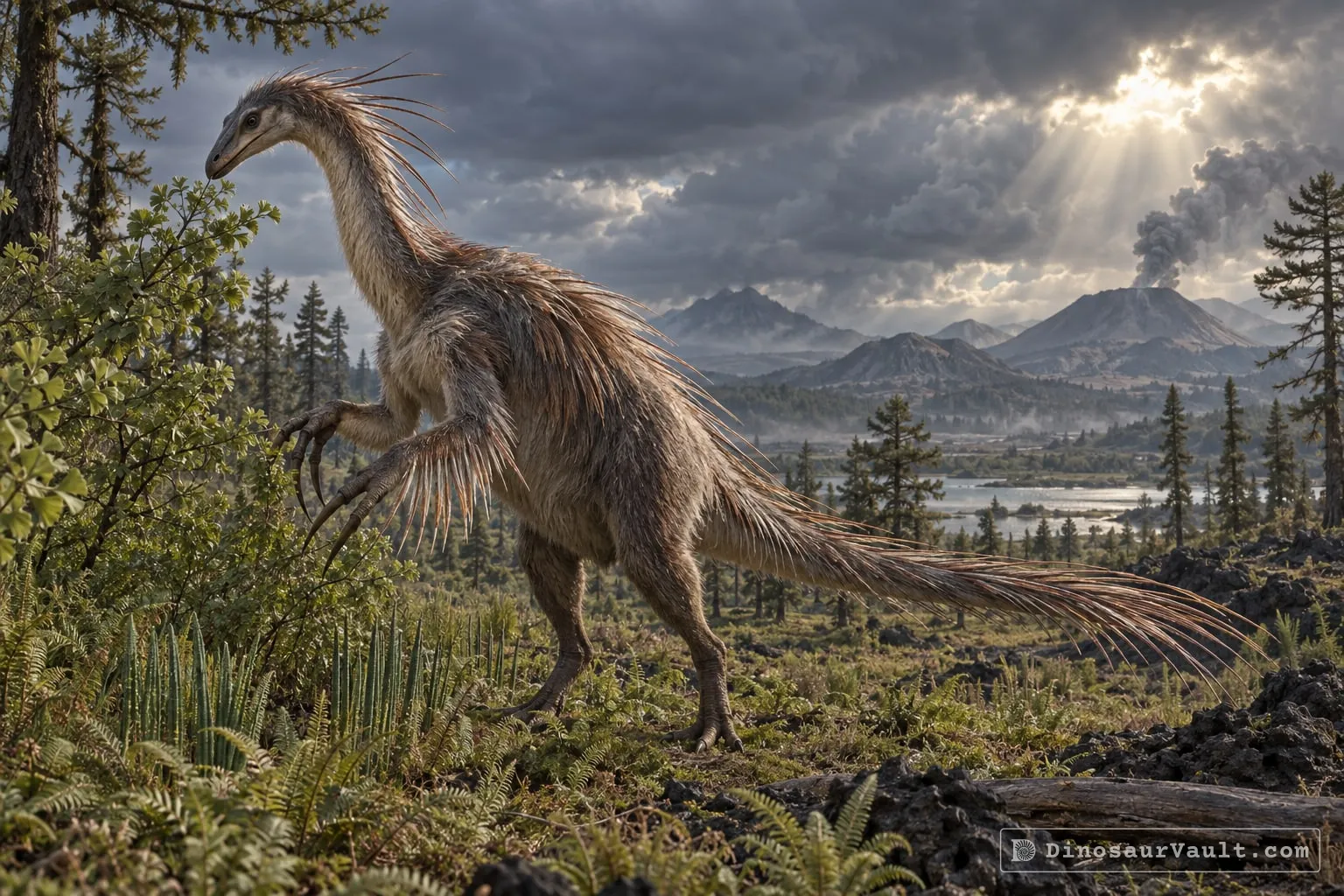
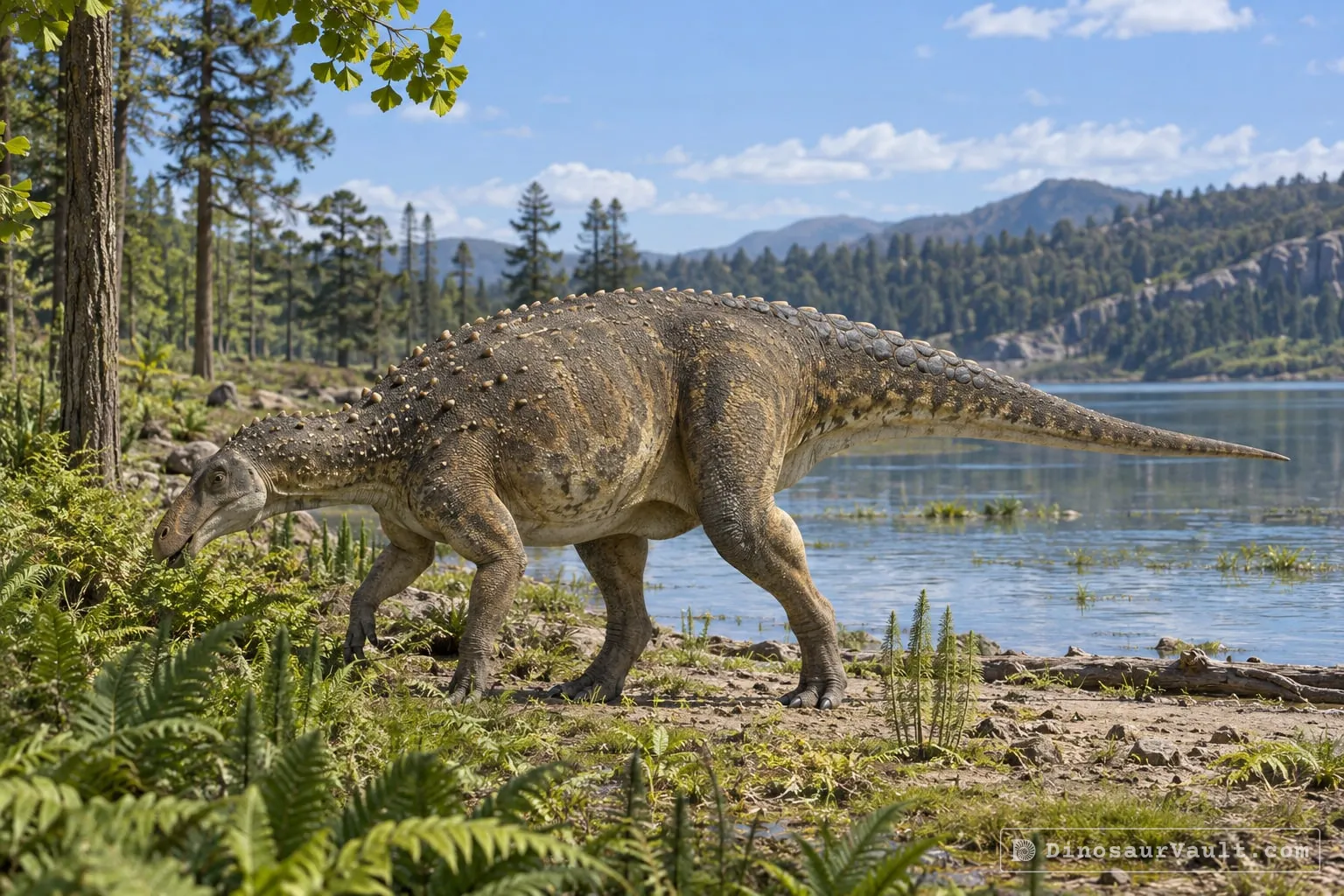
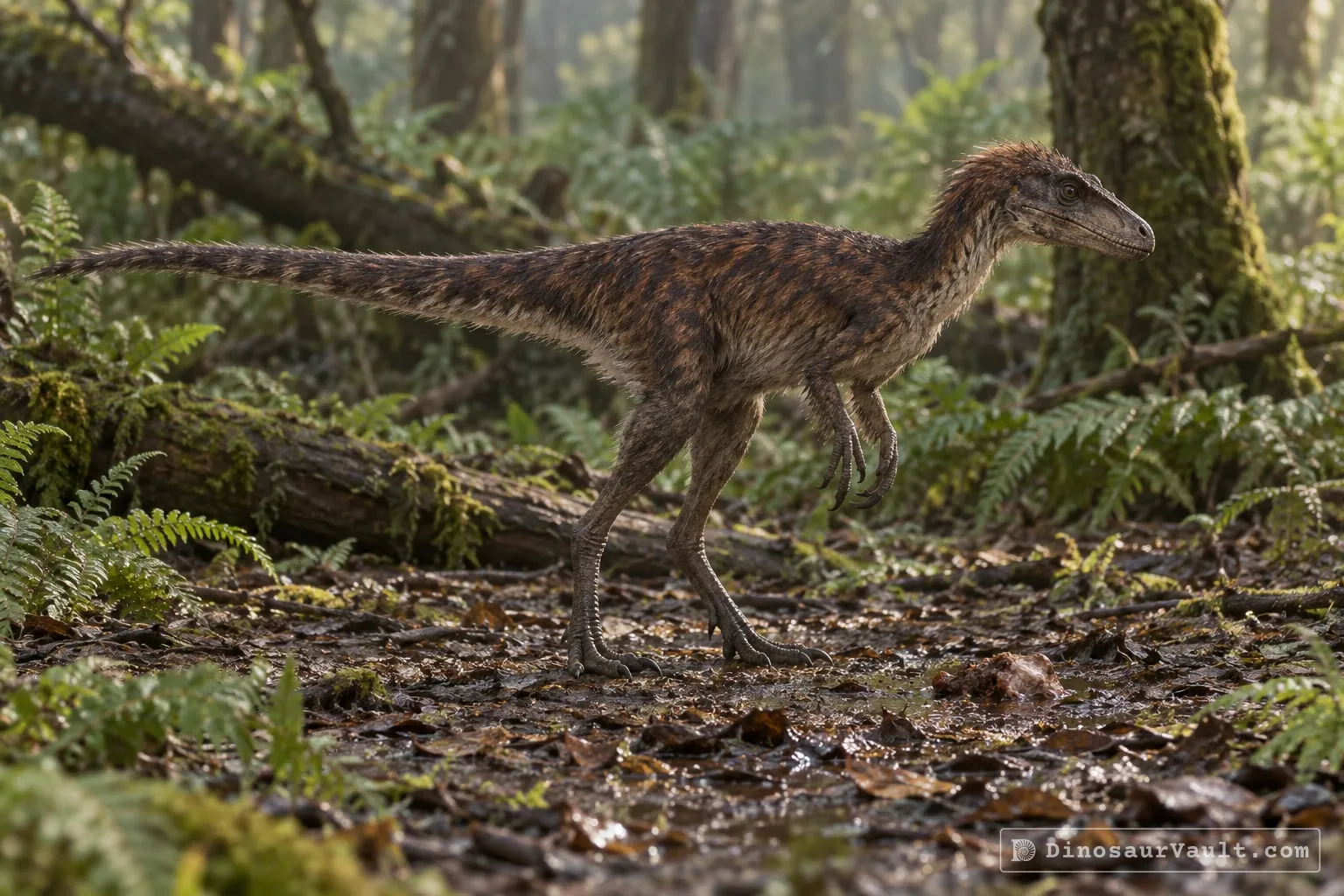
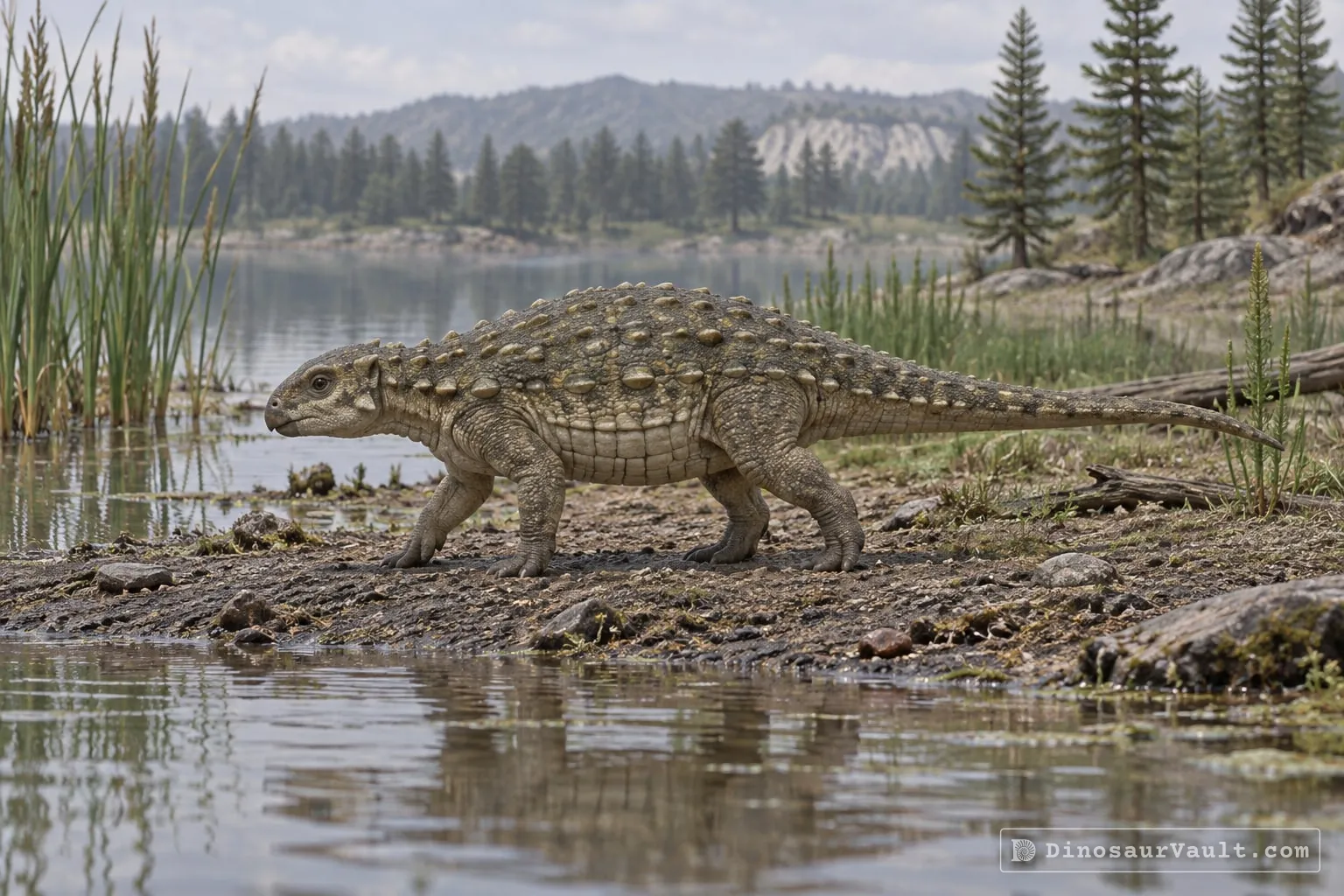


A rock formation can hold fossils laid down millions of years apart, so not every animal here met Daliansaurus.
The evidence
The science behind Daliansaurus
Which parts of the picture come from its own bones, and which come from its relatives.
From its own fossils
- A nearly complete skeleton preserves the front of the skull and lower jaws, much of the backbone, the hands and one hind leg. The back of the skull is missing or hidden in rock, and the shoulder bones are absent.
- The claw on the fourth toe is deep and sturdy, nearly as long as the sickle-shaped claw on the second toe and more robust than it.
- Thin sections of the forearm bones record rapid early growth followed by slower growth.
Borrowed from relatives
- Most of the skeleton is known from its own bones. The back of the skull is restored after Sinovenator, and the tip of the third toe after Sinornithoides.
- A feather covering and the missing shoulder bones are restored from Jianianhualong, a feathered troodontid from the same rocks.
Still unknown
- The shape of the back of its skull.
- Its closest relatives. The study that named it placed it beside Sinovenator and its kin, while a later study placed it outside that group.
- The color and arrangement of its feathers, and how it used the big claw on its fourth toe.
Discovery timeline
- 2017Named itSHEN et al.
- 2017Growing upShen et al.
- 2017Close relativeXu et al.
Key papers
The research behind what we know of Daliansaurus
Named it
Described a nearly complete skeleton with an unusually large fourth toe claw and placed Daliansaurus close to Sinovenator, Sinusonasus and Mei.
A New Troodontid Dinosaur from the Lower Cretaceous Yixian Formation of Liaoning Province, China. Acta Geologica Sinica - English Edition 91: 763-780
Read the paper : A New Troodontid Dinosaur from the Lower Cretaceous Yixian Formation of Liaoning Province, China (opens in a new tab)Growing up
Forearm bone tissue recorded changing growth rates and suggested that the animal died late in growth, before reaching full size.
Forearm bone histology of the small theropod Daliansaurus liaoningensis (Paraves: Troodontidae) from the Yixian Formation, Liaoning, China. Historical Biology 31: 253-261
Read the paper : Forearm bone histology of the small theropod Daliansaurus liaoningensis (Paraves: Troodontidae) from the Yixian Formation, Liaoning, China (opens in a new tab)Close relative
Described Jianianhualong, a troodontid from the same rocks with feathers preserved on the neck, body, limbs and tail.
Mosaic evolution in an asymmetrically feathered troodontid dinosaur with transitional features. Nature Communications 8
Read the paper : Mosaic evolution in an asymmetrically feathered troodontid dinosaur with transitional features (opens in a new tab)
Close relatives
Other members of Troodontidae


Sources: Wikidata