Maip
Type species Maip macrothorax
- Lived
- 72 to 66 million years ago, Late Cretaceous
- Diet
- Carnivore
- Length
- about 9 m (30 ft)
- Group
- Theropods, Megaraptoridae
- Found in
- Argentina
- Named by
- Aranciaga Rolando et al. 2022
Size comparison
To scale


Scale in meters
Where its fossils were found
The evidence
Today

70 million years ago
Habitat
A river plain in southern Argentina supported ferns, clubmosses, conifers and cycads. Nullotitan and Isasicursor are also known from the Chorrillo Formation.
Field notes
About Maip
What it was like
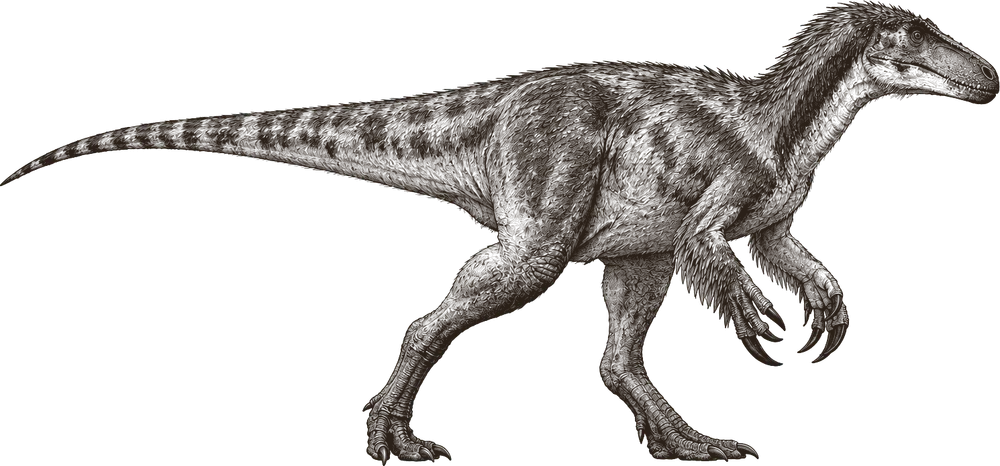
Maip was a large, long-legged predator built for speed. Like other megaraptorids, it probably had a slender skull, long arms, and huge, curved claws on its hands. It grew to roughly 9 meters (30 feet) long, making it one of the largest megaraptorids known.
Its ribs were unusually large and robust for a theropod of its size, suggesting powerful chest muscles. This feature is reflected in its species name, Maip macrothorax, which refers to its wide chest.
Its world
Maip lived from about 72 to 66 million years ago, in the Late Cretaceous, in what is now Argentina. Its bones come from the Chorrillo Formation.
It shared its habitat with the plant-eating Nullotitan, and with the smaller theropods Kank and Isasicursor.
How it was found
Aranciaga Rolando and colleagues named Maip in 2022, based on an incomplete skeleton. Only one fossil find is known so far. Maip may be the largest megaraptorid discovered anywhere, and it is considered a close relative of other megaraptorids from South America, such as Megaraptor, Murusraptor, and Orkoraptor.
Field gallery
More views of Maip
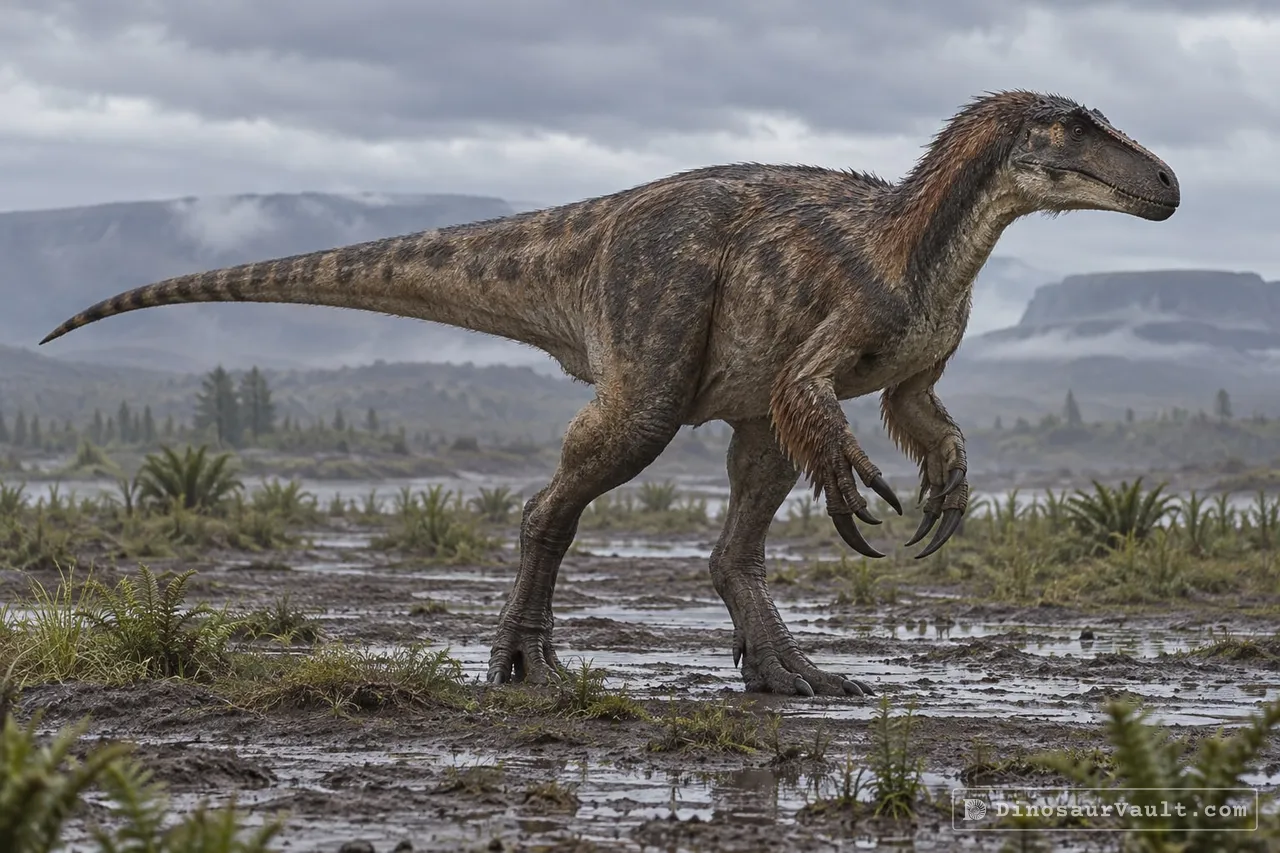
Scenes reconstructed from the available fossil evidence.
1 of 7
Lived alongside
Found in the same rock formations


A rock formation can hold fossils laid down millions of years apart, so not every animal here met Maip.
The evidence
The science behind Maip
Which parts of the picture come from its own bones, and which come from its relatives.
From its own fossils
- An incomplete skeleton preserves vertebrae, ribs and bones from the belly and shoulder region.
- The large ribs and vertebrae reveal a deep, broad chest.
Borrowed from relatives
- The slender head is restored by comparison with megaraptorids such as Murusraptor.
- Long grasping arms and enlarged hand claws follow better-known relatives such as Australovenator and Megaraptor.
- Much of the legs and tail is reconstructed from other megaraptorids.
Still unknown
- The exact shape of its skull and hands.
- Its skin covering and color.
- How its proportions changed as it grew.
Often drawn wrong
- A bulky Tyrannosaurus head gives it the wrong family resemblance.
- Its palms should face inward rather than downward.
Discovery timeline
- 2015Close relativeWhite et al.
- 2019Same rocksNovas et al.
- 2022Named itAranciaga Rolando et al.
Key papers
The research behind what we know of Maip
Close relative
Found flexible arms and grasping fingers in Australovenator, a close relative used to help restore Maip's missing forelimbs.
Forearm Range of Motion in Australovenator wintonensis (Theropoda, Megaraptoridae). PLOS ONE 10: e0137709
Read the paper : Forearm Range of Motion in Australovenator wintonensis (Theropoda, Megaraptoridae) (opens in a new tab)Same rocks
Described dinosaurs, other animals and fossil plants from the rocks that later yielded Maip, including Nullotitan and Isasicursor.
Paleontological discoveries in the Chorrillo Formation (upper Campanian-lower Maastrichtian, Upper Cretaceous), Santa Cruz Province, Patagonia, Argentina. Revista del Museo Argentino de Ciencias Naturales 21: 217-293
Read the paper : Paleontological discoveries in the Chorrillo Formation (upper Campanian-lower Maastrichtian, Upper Cretaceous), Santa Cruz Province, Patagonia, Argentina (opens in a new tab)Named it
Named a large megaraptorid from an incomplete skeleton and reconstructed its broad chest from the ribs and vertebrae.
A large Megaraptoridae (Theropoda: Coelurosauria) from Upper Cretaceous (Maastrichtian) of Patagonia, Argentina. Scientific Reports 12
Read the paper : A large Megaraptoridae (Theropoda: Coelurosauria) from Upper Cretaceous (Maastrichtian) of Patagonia, Argentina (opens in a new tab)
Close relatives
Other members of Megaraptoridae


Sources: Wikidata