Yunnanosaurus
yoo-NAN-oh-SORE-us
"Yunnan lizard"
- Lived
- 201 to 193 million years ago, Early Jurassic
- Length
- about 7 m (23 ft)
- Found in
- China
- Named by
- Young 1940
Size comparison
To scale


Scale in metersOutline: typical early sauropodomorph shape
Where its fossils were found
The evidence
Today

195 million years ago
Habitat
Rivers and lakes crossed the landscape where the Lufeng Formation formed. Lufengosaurus and Sinosaurus lived in the same region.
Field notes
About Yunnanosaurus
What it was like
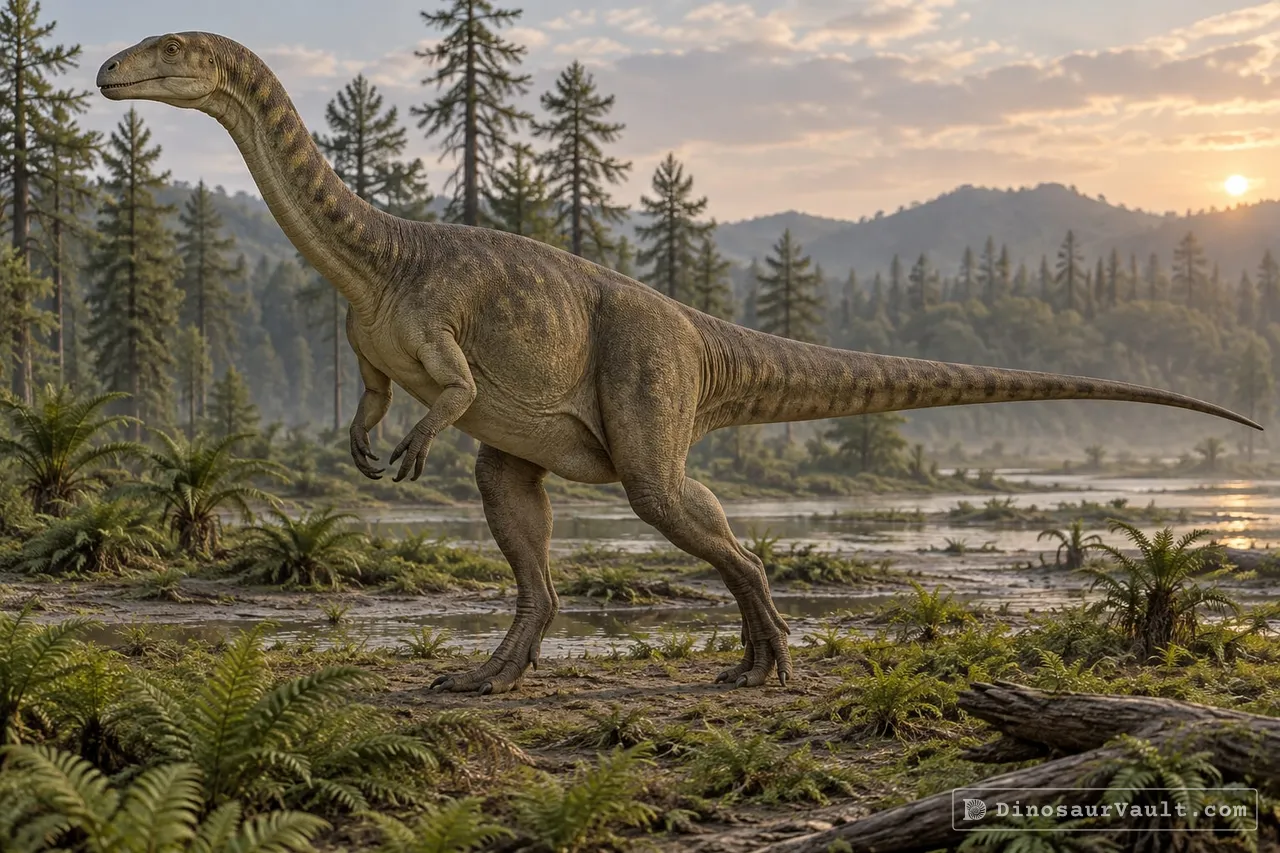
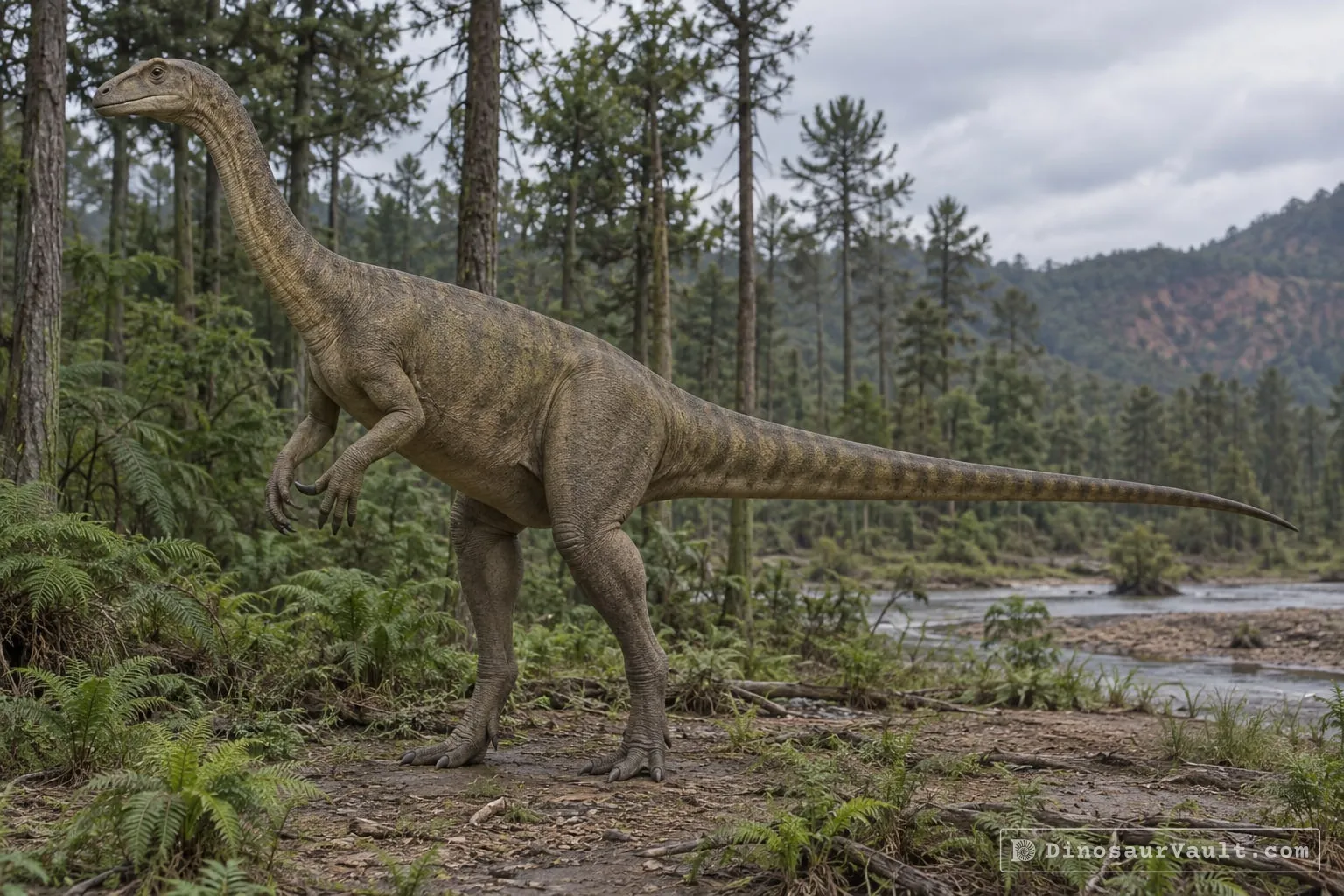
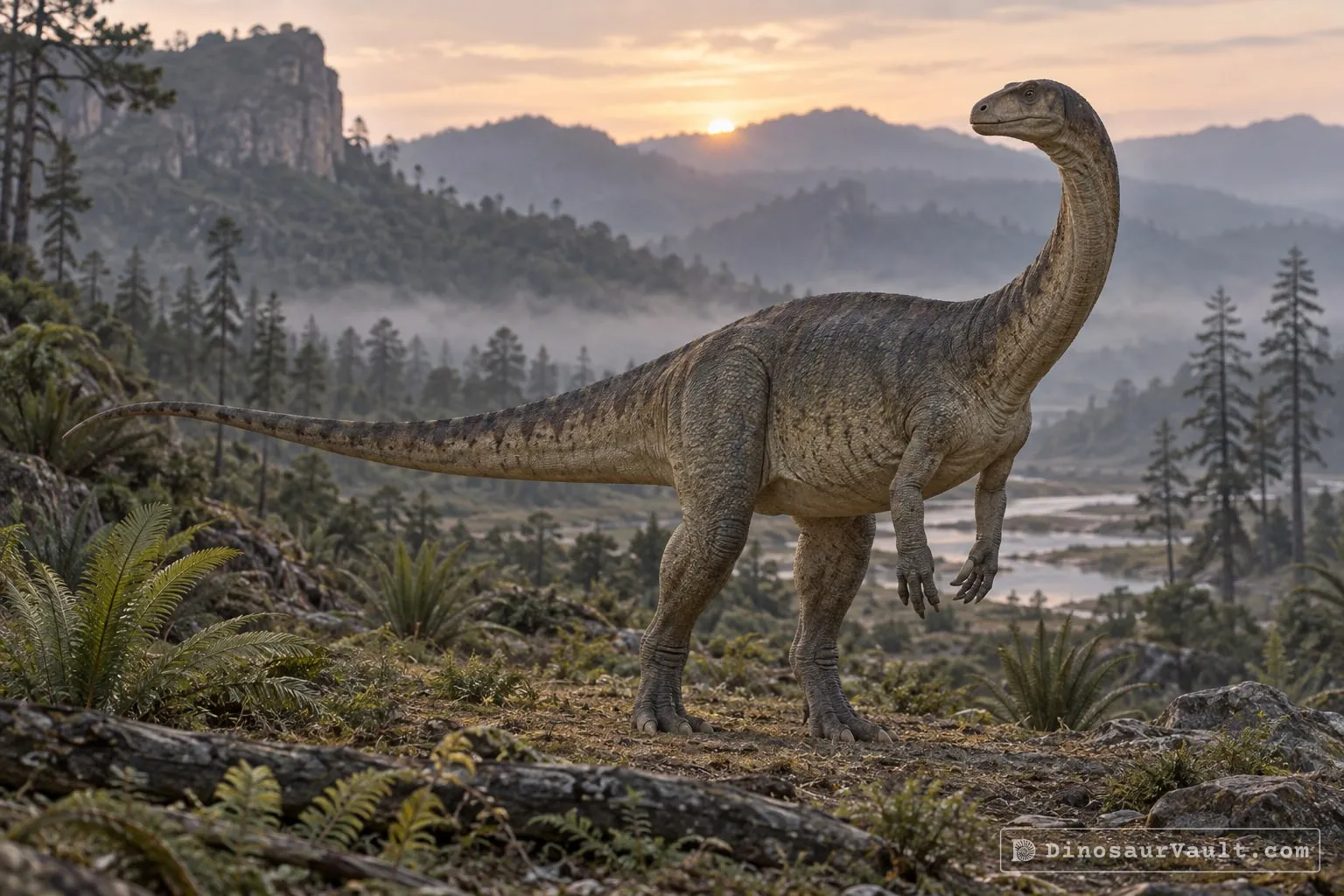
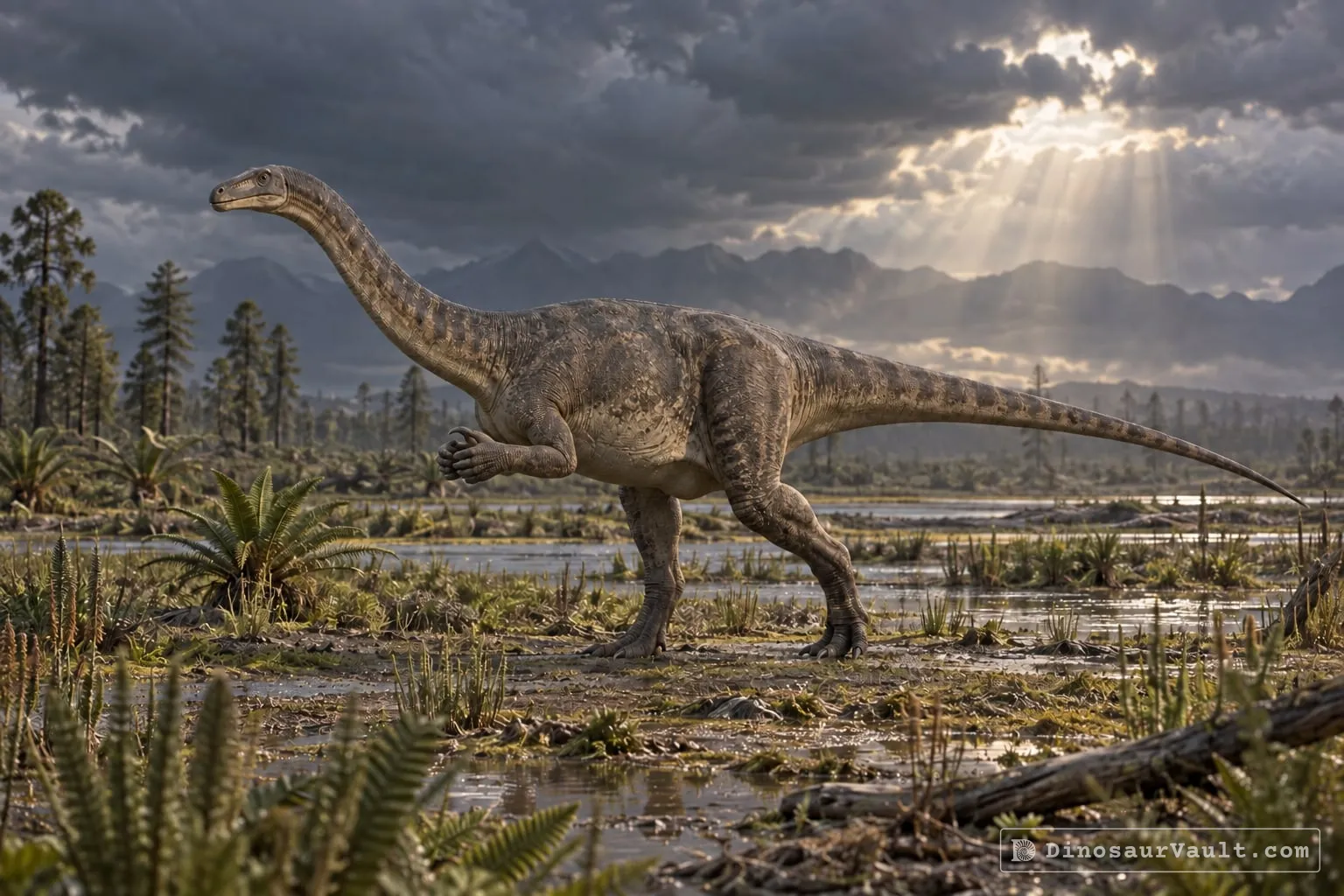
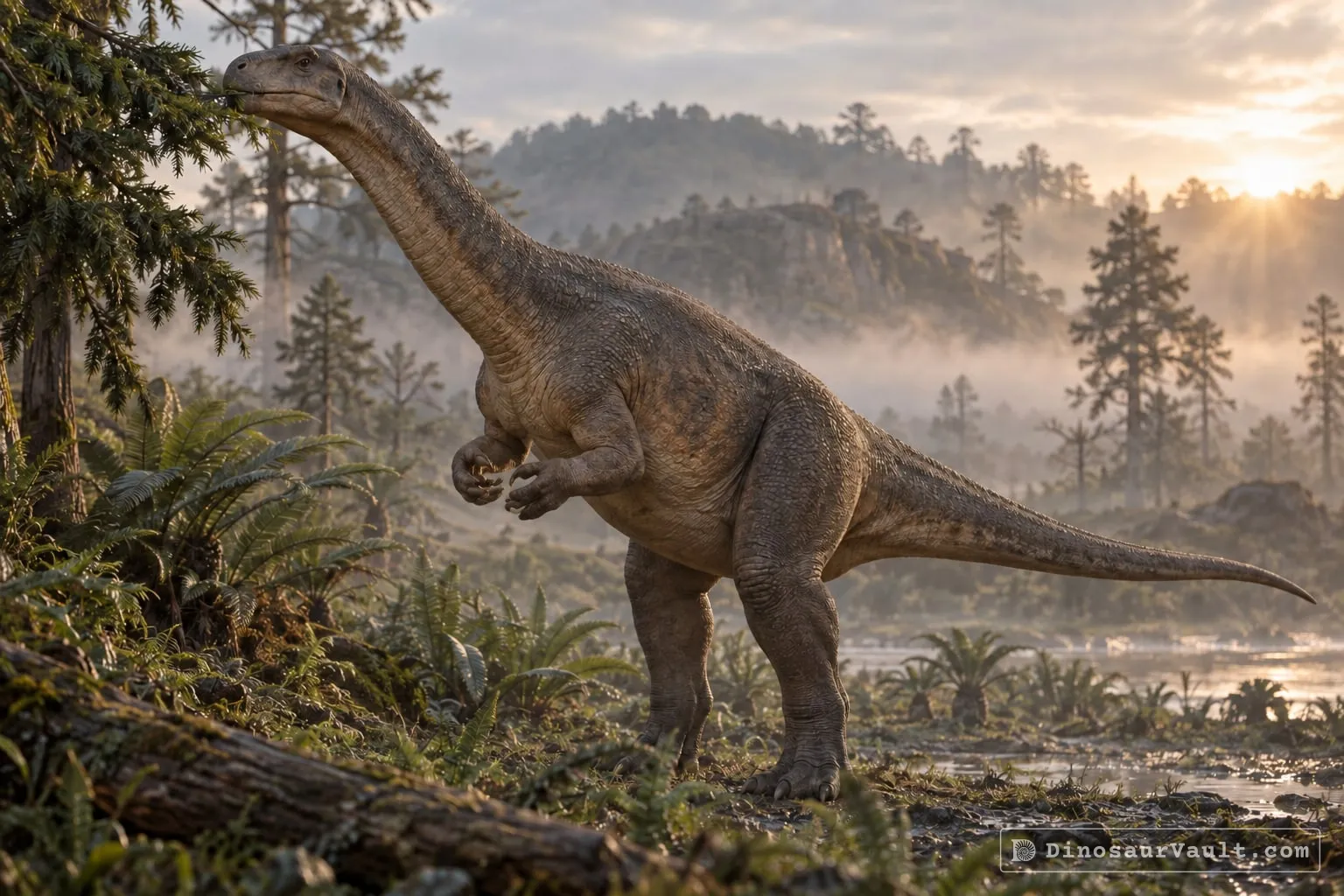
Yunnanosaurus was a long-necked plant eater about 7 meters (23 feet) long. Its teeth were unusual: they were spoon-shaped and wore against each other, much like the teeth of later sauropods, which suggests it chewed in a similar way.
Its world
It lived in the Early Jurassic, in what is now China. It comes from the Lufeng Formation, where it shared the land with the plant eater Lufengosaurus and the crested predator Sinosaurus.
How it was found
Young named Yunnanosaurus in 1940. More than a dozen finds are known, including many skulls and skeletons.
Field gallery
More views of Yunnanosaurus
Scenes reconstructed from the available fossil evidence.
Lived alongside
Found in the same rock formations
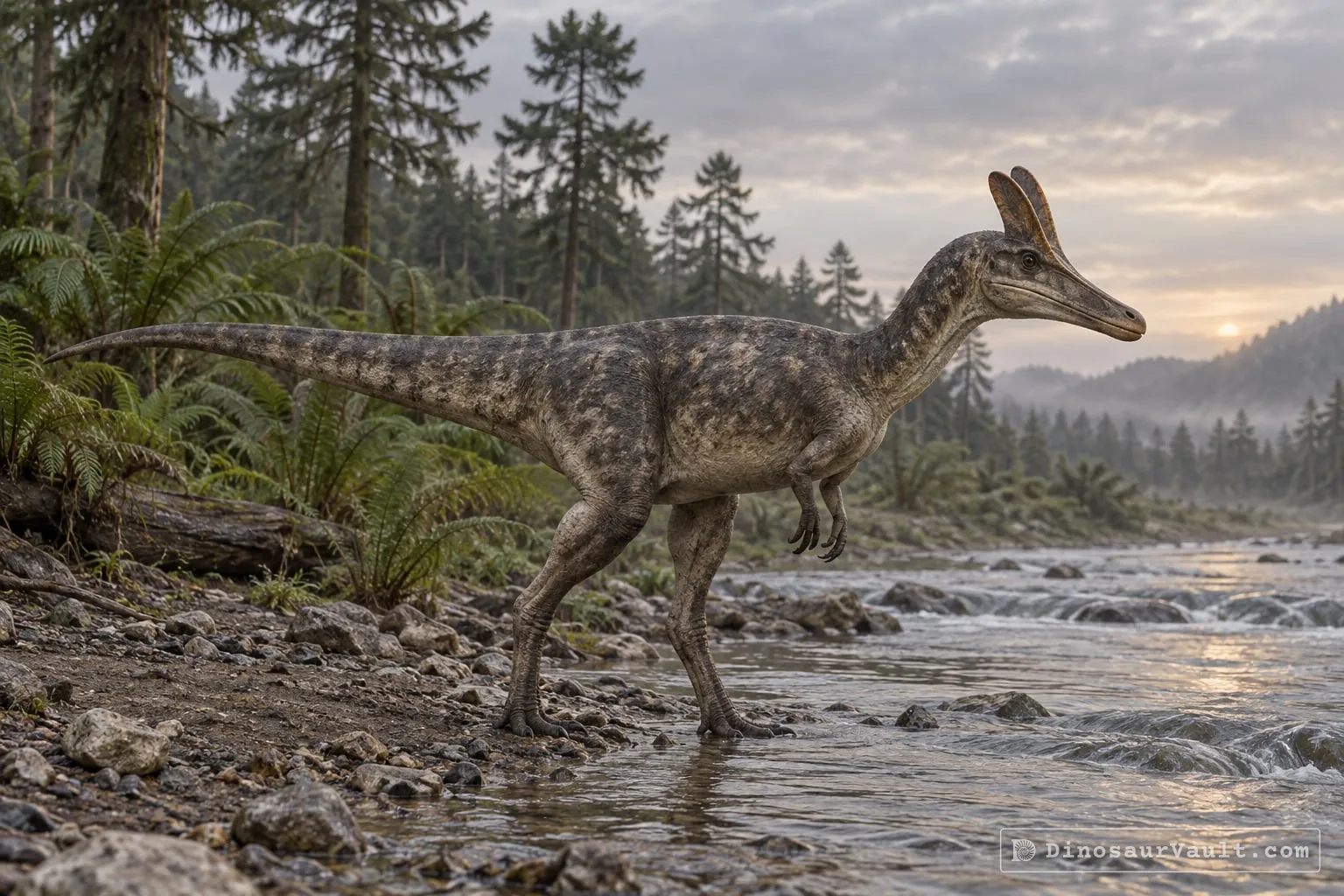
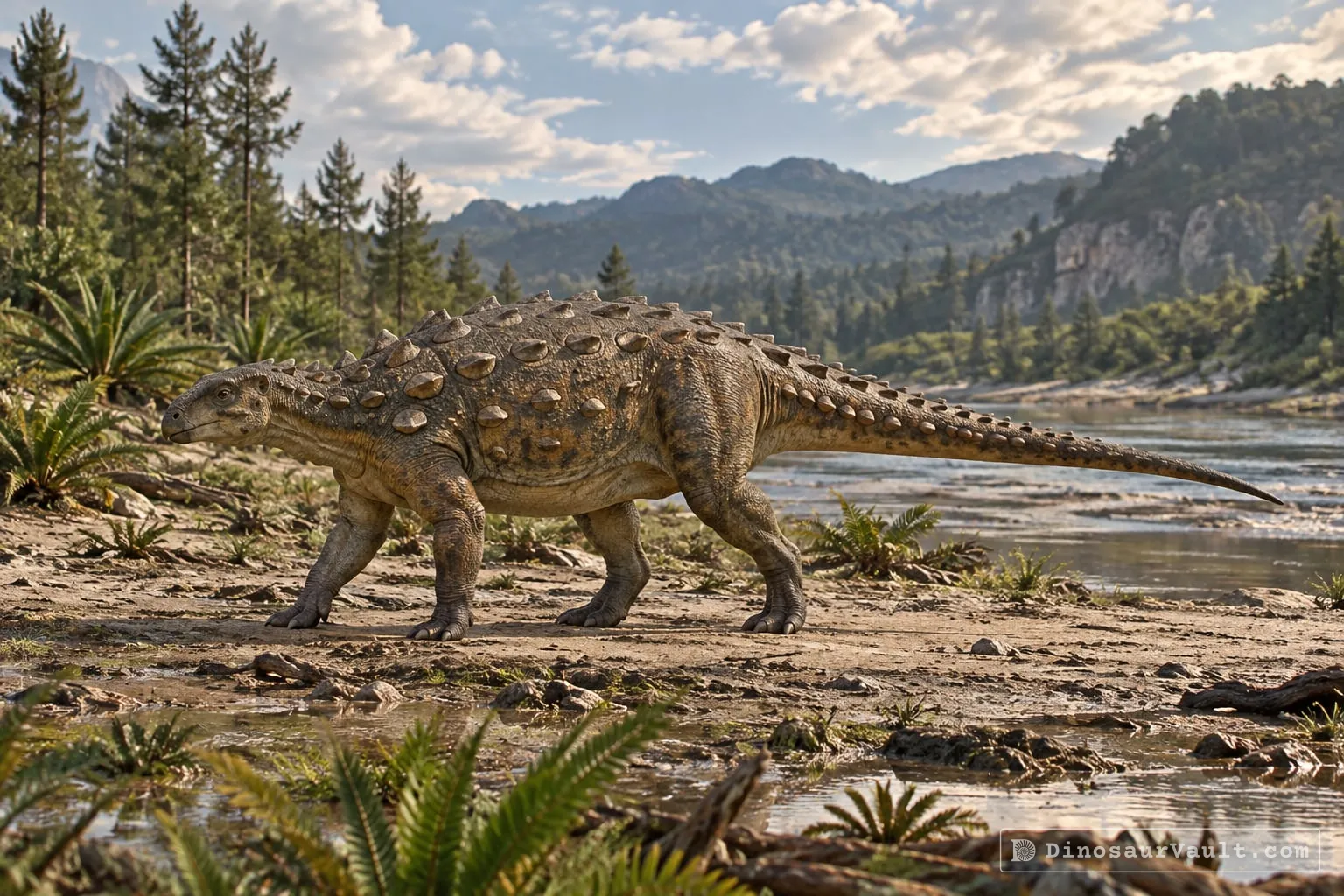
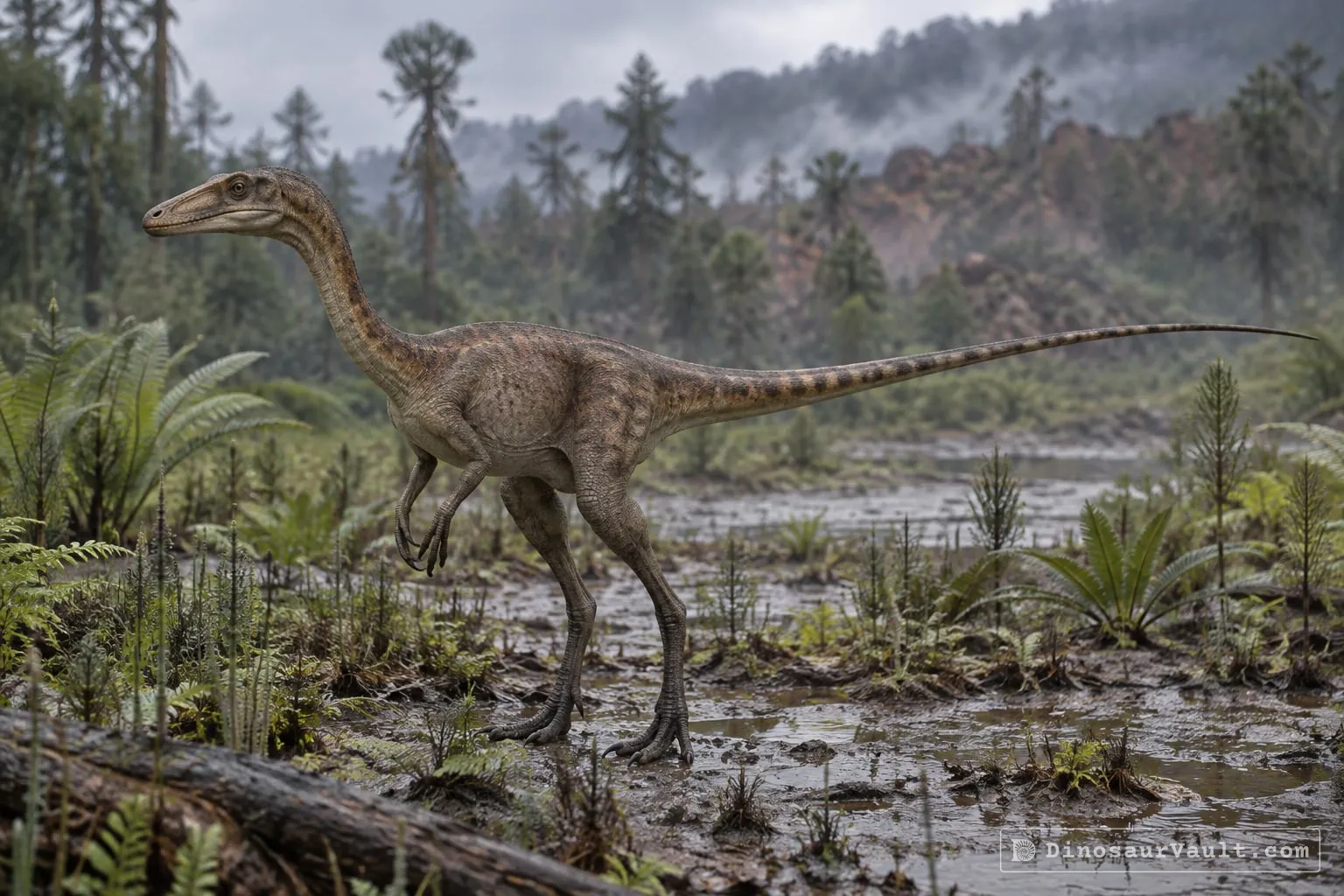
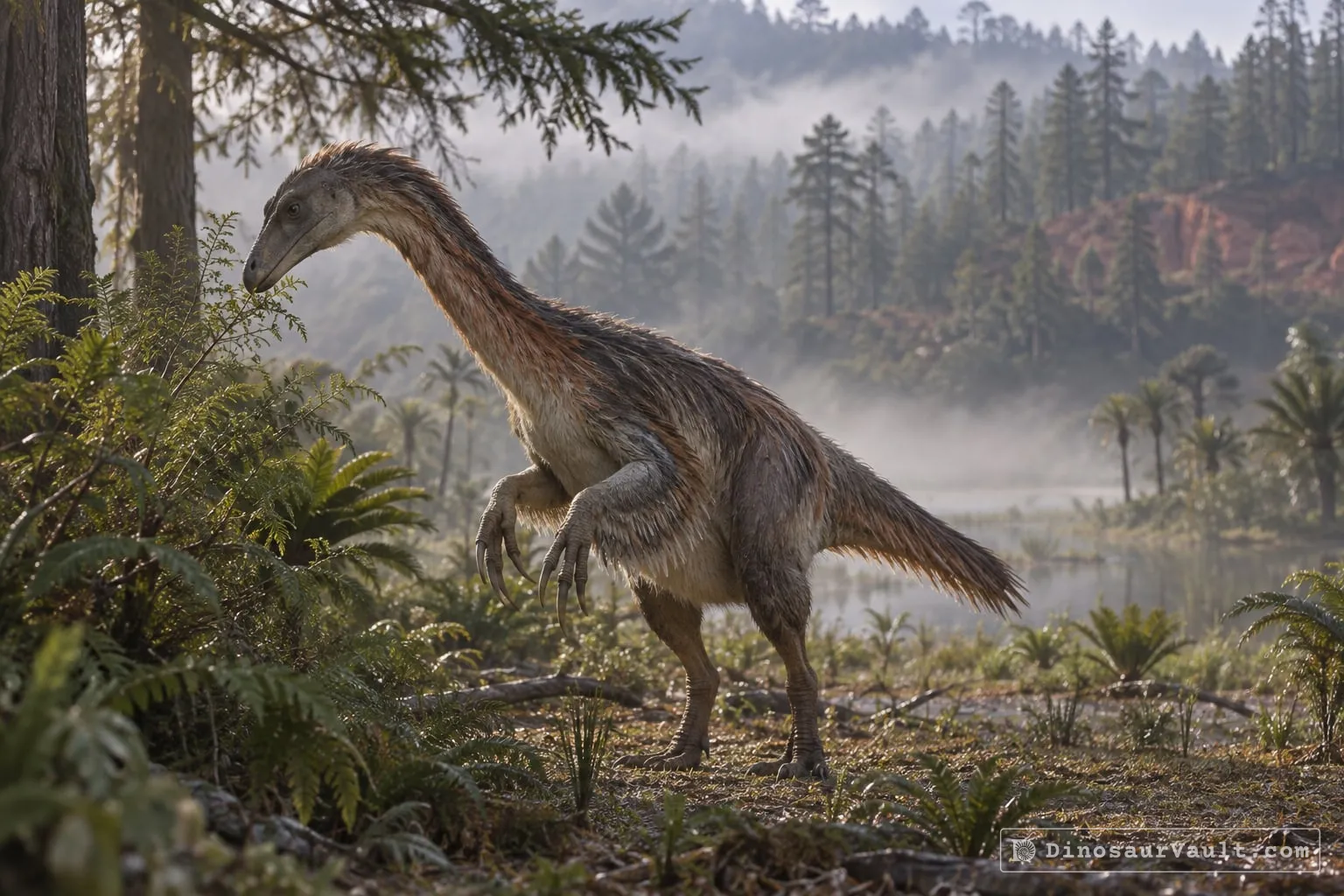


A rock formation can hold fossils laid down millions of years apart, so not every animal here met Yunnanosaurus.
The evidence
The science behind Yunnanosaurus
Which parts of the picture come from its own bones, and which come from its relatives.
From its own fossils
- Skulls have small nostril openings and bony bumps along the middle of the skull roof.
- The upper jaw has long tooth crowns without serrated edges.
- An almost complete young skeleton preserves parts of the skull as well as the body.
Borrowed from relatives
- Much of its body is known from its own skeletons, including a young animal.
- The fleshy outline of a restoration follows comparisons with other early sauropodomorphs such as Lufengosaurus.
Still unknown
- Exactly how its unusual teeth worked during feeding.
- Its color.
- Whether it cared for its young.
Discovery timeline
- 1940Named itYoung
- 2007SkullBARRETT et al.
- 2013Growing upSekiya et al.
Key papers
The research behind what we know of Yunnanosaurus
Named it
Introduced Yunnanosaurus as a new long-necked dinosaur from the fossil-bearing rocks of China.
Preliminary notes on the Lufeng vertebrate fossils. Bulletin of the Geological Society of China 20: 235-239
No link available
Skull
Redescribed the skull, identifying unusual bony bumps, small nostril openings and long upper teeth with smooth edges.
The skull of Yunnanosaurus huangi Young, 1942 (Dinosauria: Prosauropoda) from the Lower Lufeng Formation (Lower Jurassic) of Yunnan, China. Zoological Journal of the Linnean Society 150: 319-341
Read the paper : The skull of Yunnanosaurus huangi Young, 1942 (Dinosauria: Prosauropoda) from the Lower Lufeng Formation (Lower Jurassic) of Yunnan, China (opens in a new tab)Growing up
Described an almost complete juvenile skeleton assigned to Yunnanosaurus robustus, including parts of its skull.
A new juvenile specimen ofYunnanosaurus robustus(Dinosauria: Sauropodomorpha) from Early to Middle Jurassic of Chuxiong Autonomous Prefecture, Yunnan Province, China. Historical Biology 26: 252-277
Read the paper : A new juvenile specimen ofYunnanosaurus robustus(Dinosauria: Sauropodomorpha) from Early to Middle Jurassic of Chuxiong Autonomous Prefecture, Yunnan Province, China (opens in a new tab)
Close relatives
Other members of Sauropodiformes


Sources: Wikidata