Lishulong
"chestnut tree dragon"
Type species Lishulong wangi
- Lived
- 200 to 175 million years ago, Early Jurassic
- Found in
- China
- Named by
- Zhang et al. 2024
Where its fossils were found
The evidence
Today

185 million years ago
Habitat
Inland basins in southwestern China, where the Lufeng Formation preserves a rich dinosaur community. Its neighbors included Lufengosaurus, Yunnanosaurus and Sinosaurus.
Field notes
About Lishulong
What it was like
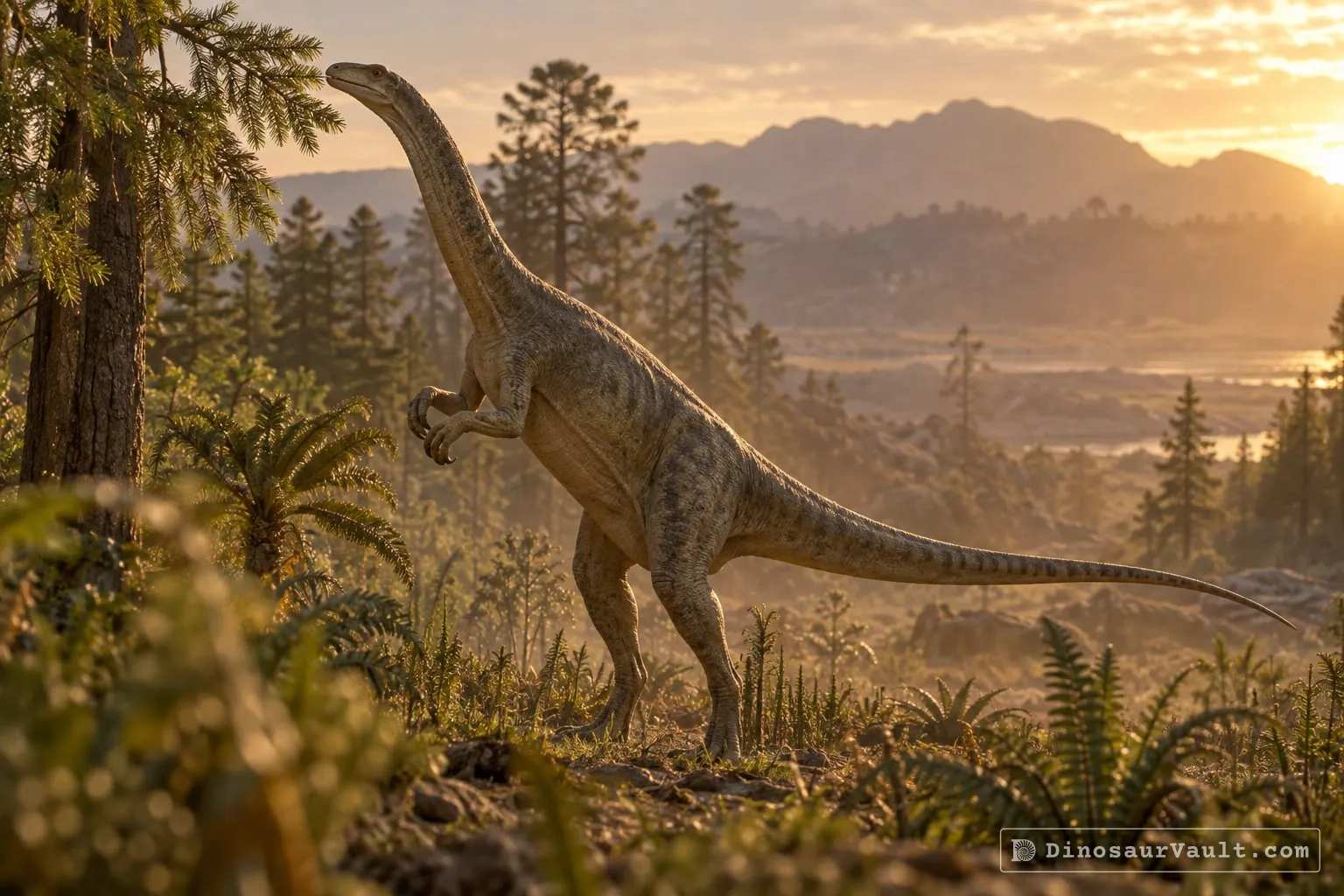
Lishulong was a large plant eater from the long-necked line that later produced the giant sauropods. It is known from a well-preserved skull and part of the skeleton.
Its world
It lived in the Early Jurassic in what is now southwestern China. Its bones come from the Lufeng Formation, where it shared the land with Lufengosaurus, Yunnanosaurus and the crested hunter Sinosaurus.
How it was found
Zhang and colleagues named Lishulong in 2024, from a single find.
Field gallery
More views of Lishulong
Scenes reconstructed from the available fossil evidence.
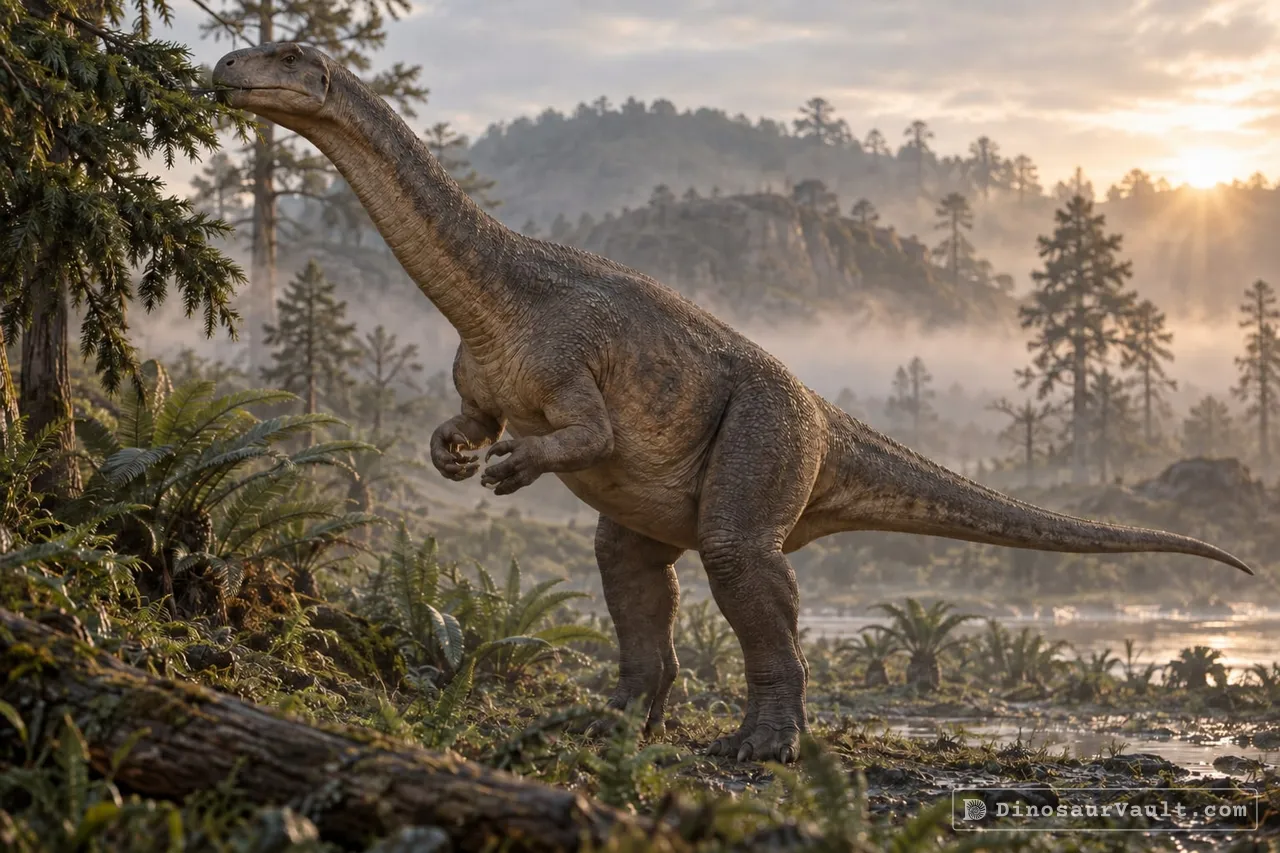
1 of 2
Lived alongside
Found in the same rock formations
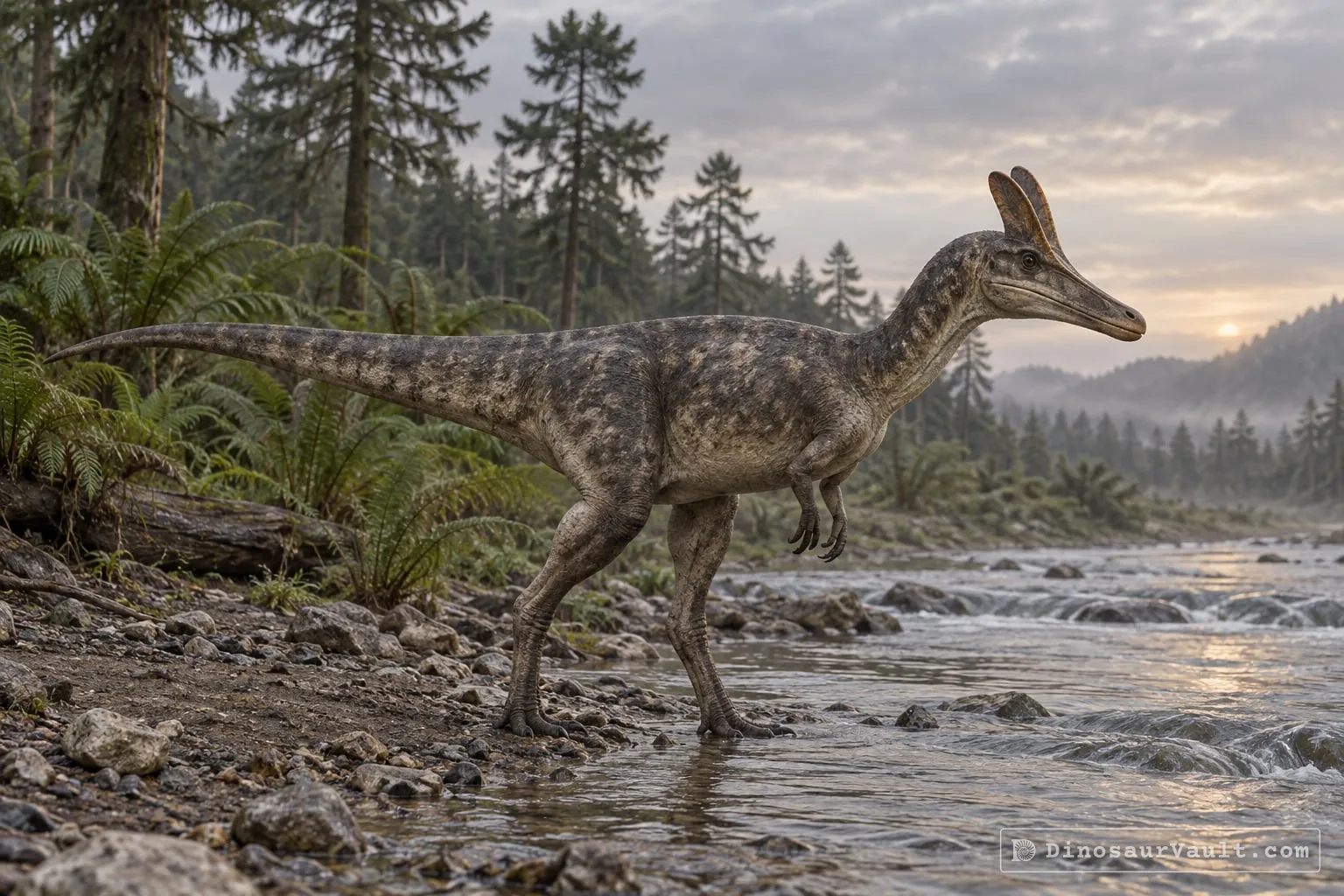
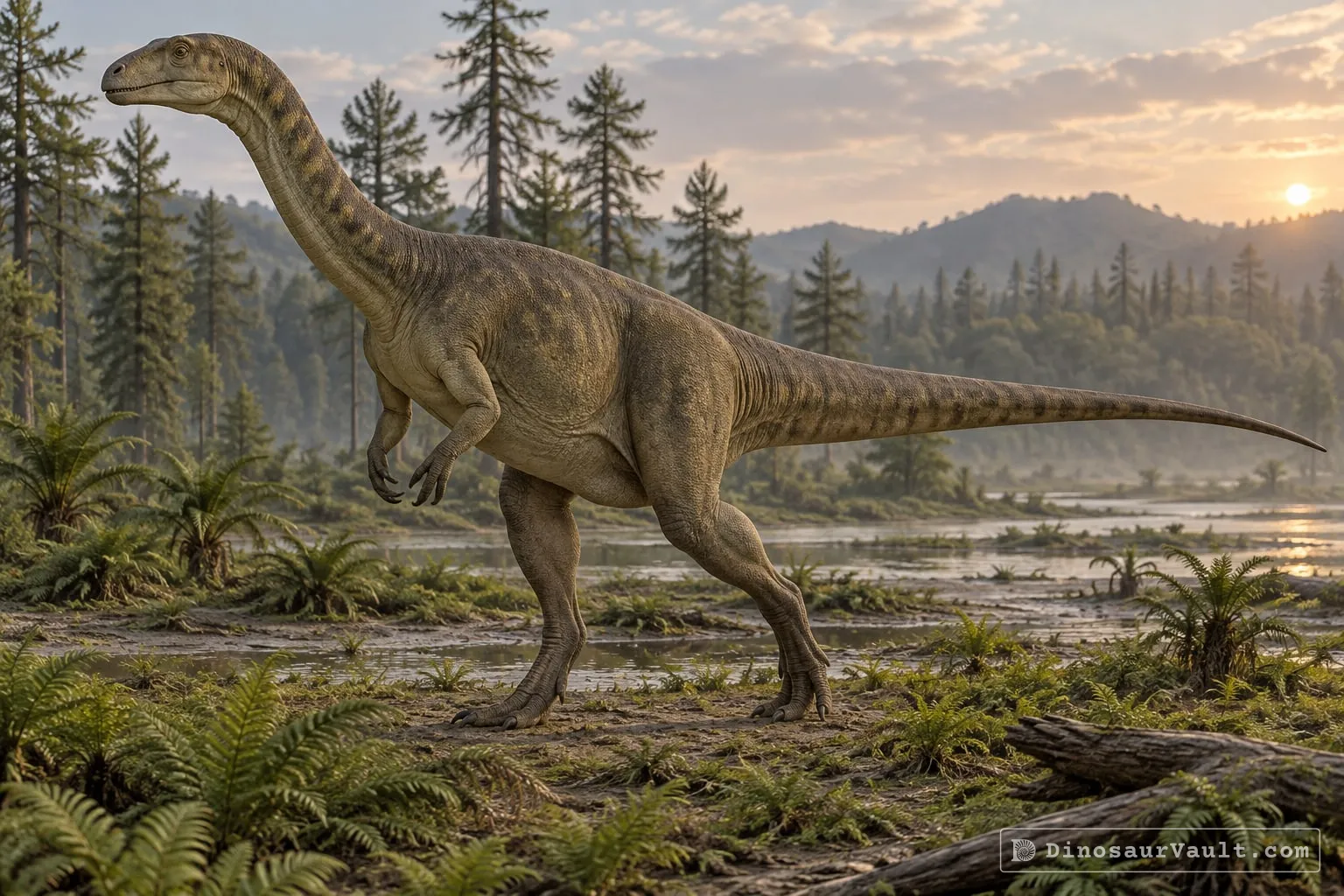
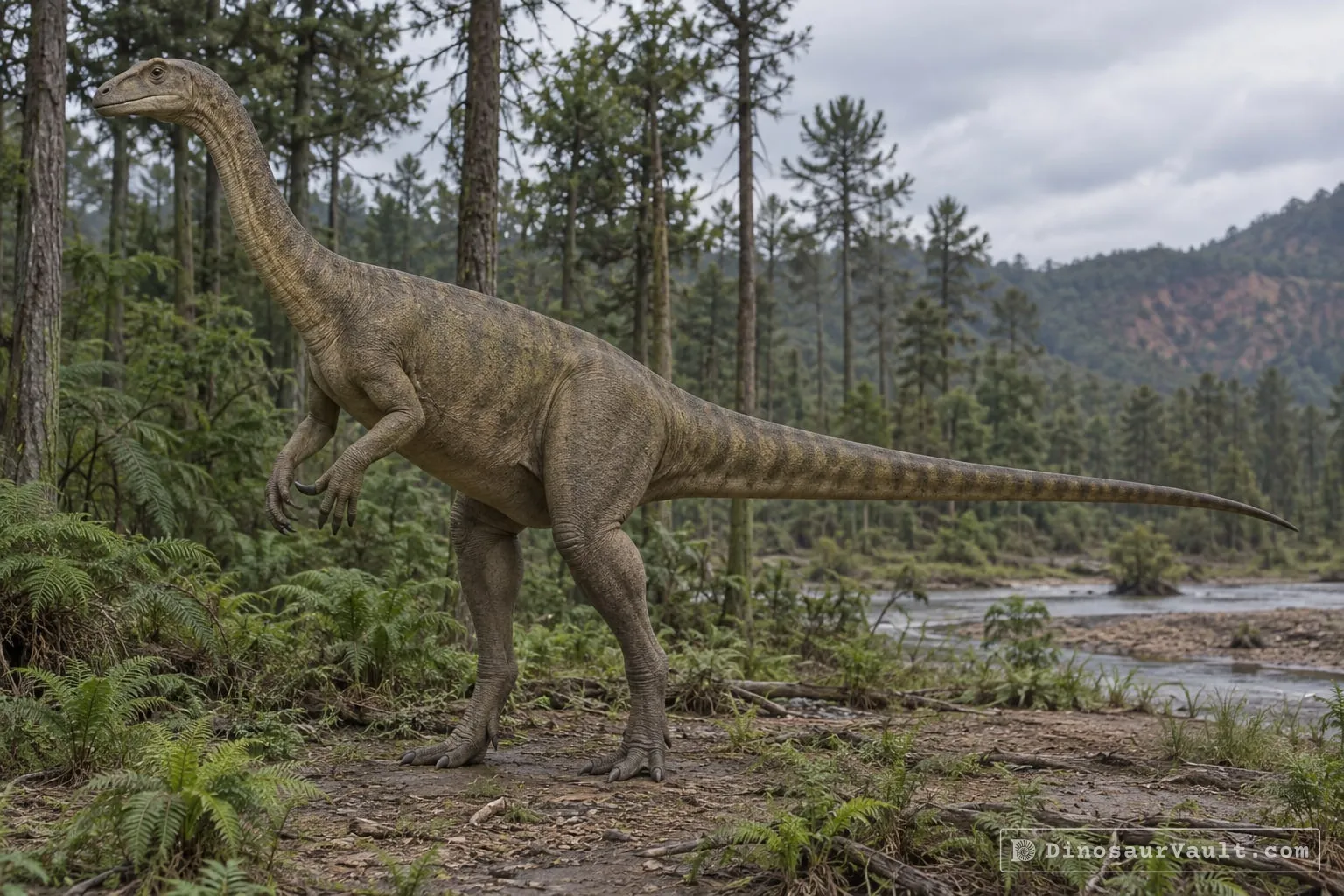
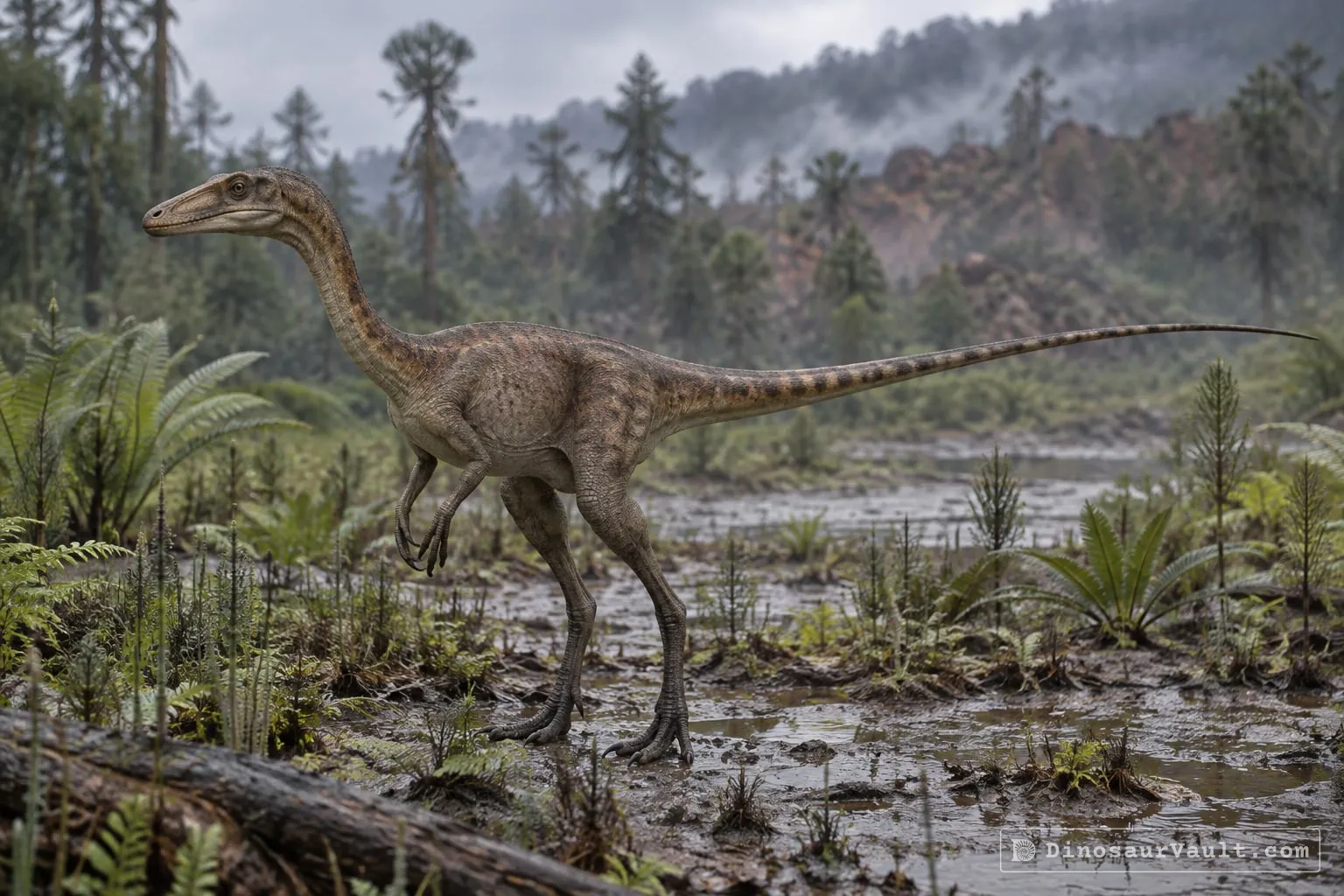
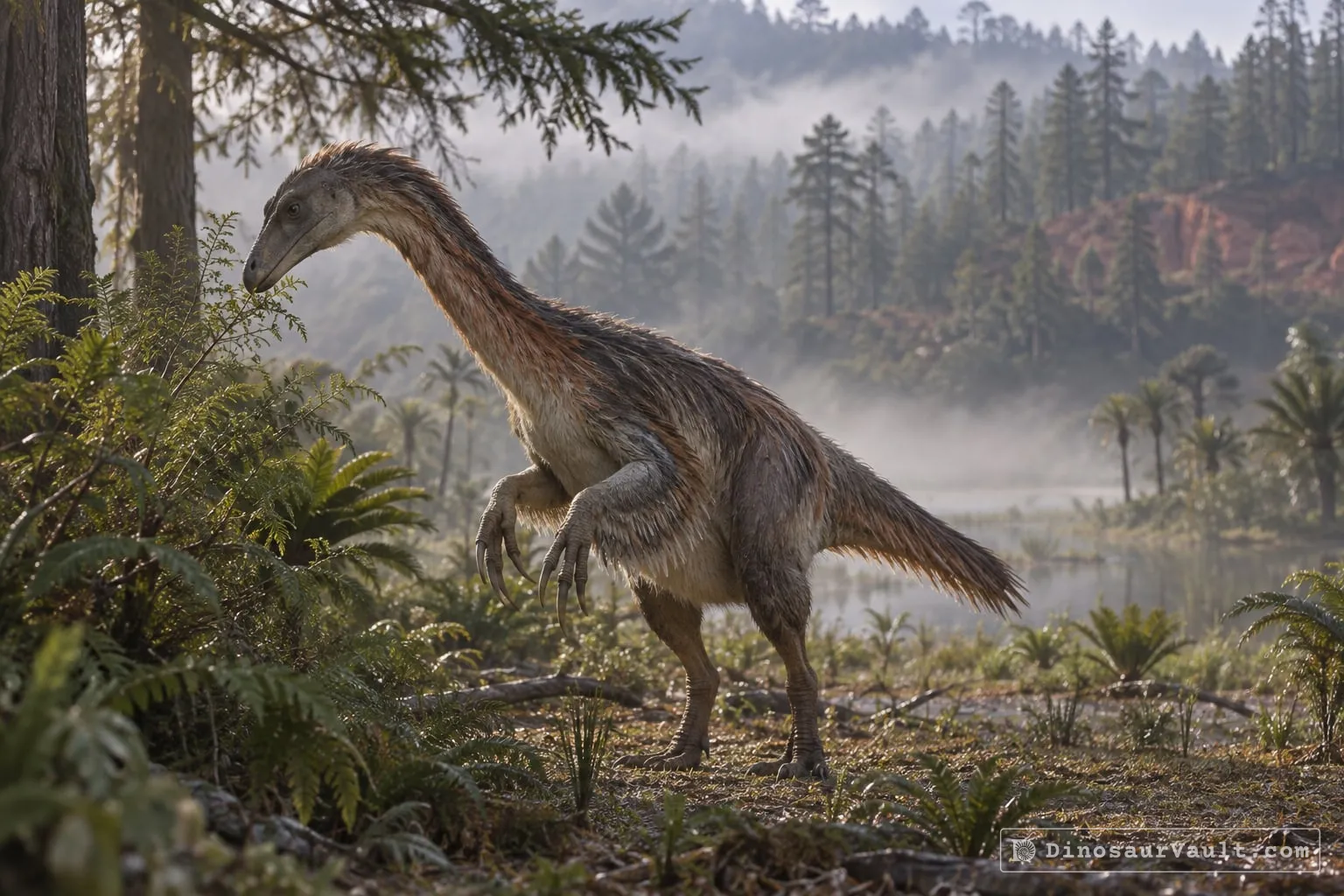
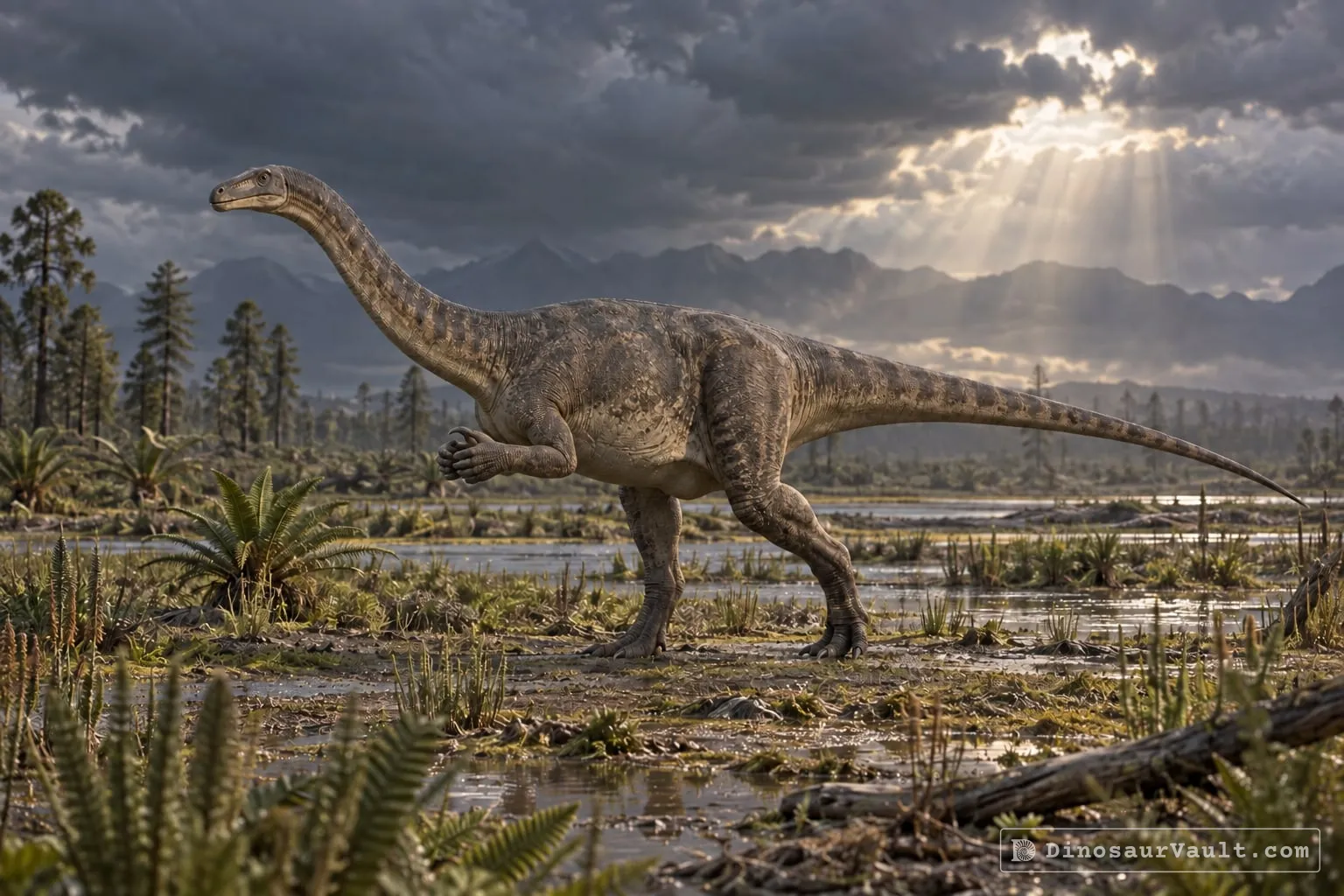
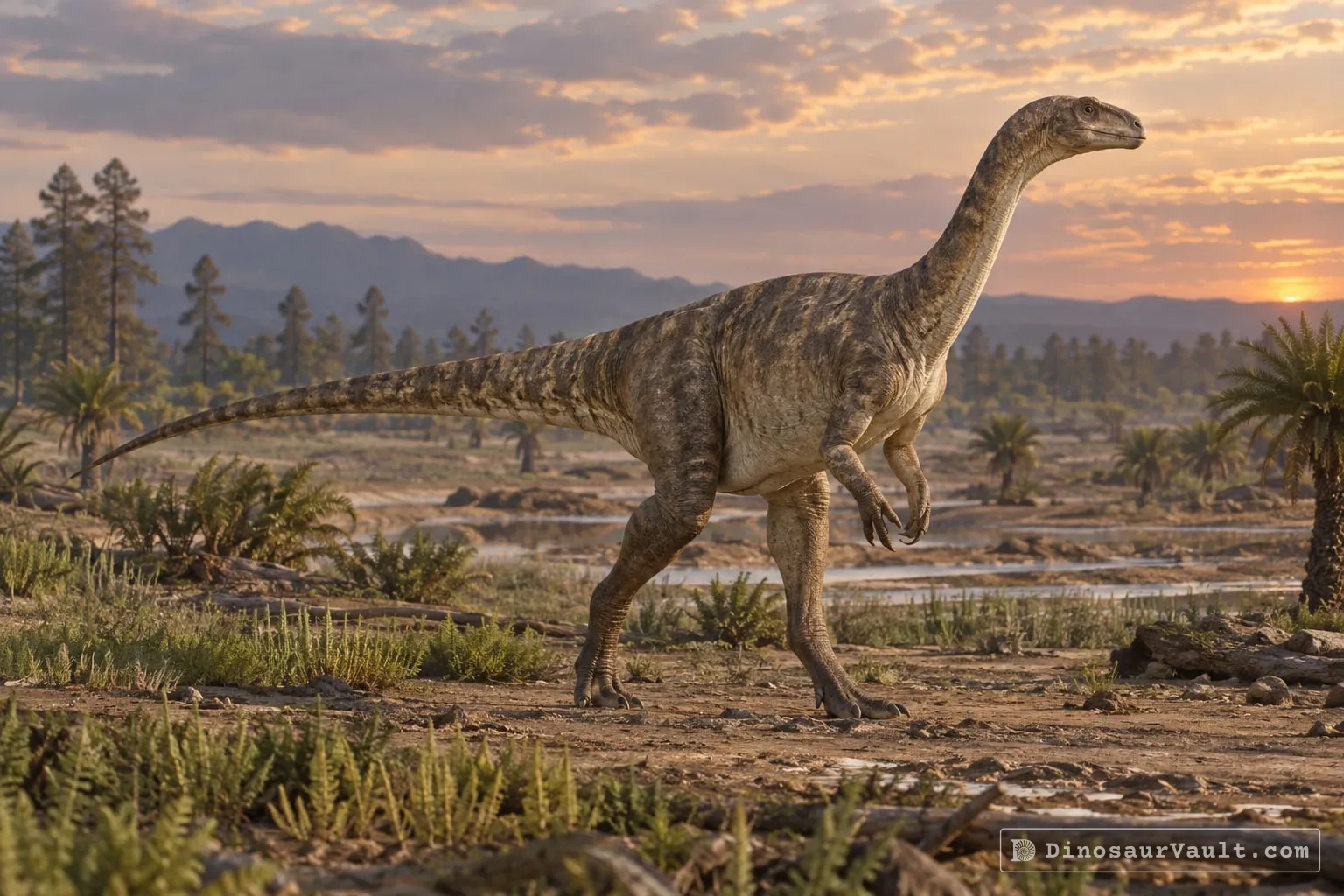


A rock formation can hold fossils laid down millions of years apart, so not every animal here met Lishulong.
The evidence
The science behind Lishulong
Which parts of the picture come from its own bones, and which come from its relatives.
From its own fossils
- The type specimen preserves a skull, lower jaws and connected long neck vertebrae. Its compressed skull is elongated, with a relatively deep lower jaw and rounded chin.
- The teeth sit in a row without overlapping, and their inner surfaces are slightly hollowed.
- The neck vertebrae have fused arches and bodies, a sign of skeletal maturity.
Borrowed from relatives
- Plateosaurus supplies comparisons for missing parts around the eyes and rear of the skull, and for the missing hands.
- Antetonitrus supplies broader comparisons for the missing trunk, hindquarters, tail and foot claws.
Still unknown
- Its full body length and limb proportions.
- Whether it usually walked on its hind legs or all fours.
- Its skin texture and color.
Discovery timeline
- 2017Same rocksWang, You & Wang
- 2018Same rocksZhang et al.
- 2024Named itZhang et al.
Key papers
The research behind what we know of Lishulong
Same rocks
Described Xingxiulong, another early sauropod relative from the same formation, with a mix of early and more specialized skeletal features.
A new basal sauropodiform dinosaur from the Lower Jurassic of Yunnan Province, China. Scientific Reports 7
Read the paper : A new basal sauropodiform dinosaur from the Lower Jurassic of Yunnan Province, China (opens in a new tab)Same rocks
Described the nearly complete skeleton of Yizhousaurus, another early sauropod relative from the same formation.
A new sauropodiform dinosaur with a ‘sauropodan’ skull from the Lower Jurassic Lufeng Formation of Yunnan Province, China. Scientific Reports 8
Read the paper : A new sauropodiform dinosaur with a ‘sauropodan’ skull from the Lower Jurassic Lufeng Formation of Yunnan Province, China (opens in a new tab)Named it
Described the skull and neck of Lishulong; one family-tree analysis placed it next to Yunnanosaurus among early sauropod relatives.
The largest sauropodomorph skull from the Lower Jurassic Lufeng Formation of China. PeerJ 12: e18629
Read the paper : The largest sauropodomorph skull from the Lower Jurassic Lufeng Formation of China (opens in a new tab)
Close relatives
Other members of Sauropodiformes


Sources: Wikidata