Sinosaurus
SY-noh-SORE-us
"Chinese lizard"
Type species Sinosaurus triassicus
- Lived
- 201 to 193 million years ago, Early Jurassic
- Diet
- Carnivore
- Group
- Theropods
- Found in
- China
- Named by
- Young 1940
Where its fossils were found
The evidence
Today

195 million years ago
Habitat
Inland river and lake country in China. Lufengosaurus, Yunnanosaurus and Panguraptor lived in the same region.
Field notes
About Sinosaurus
What it was like
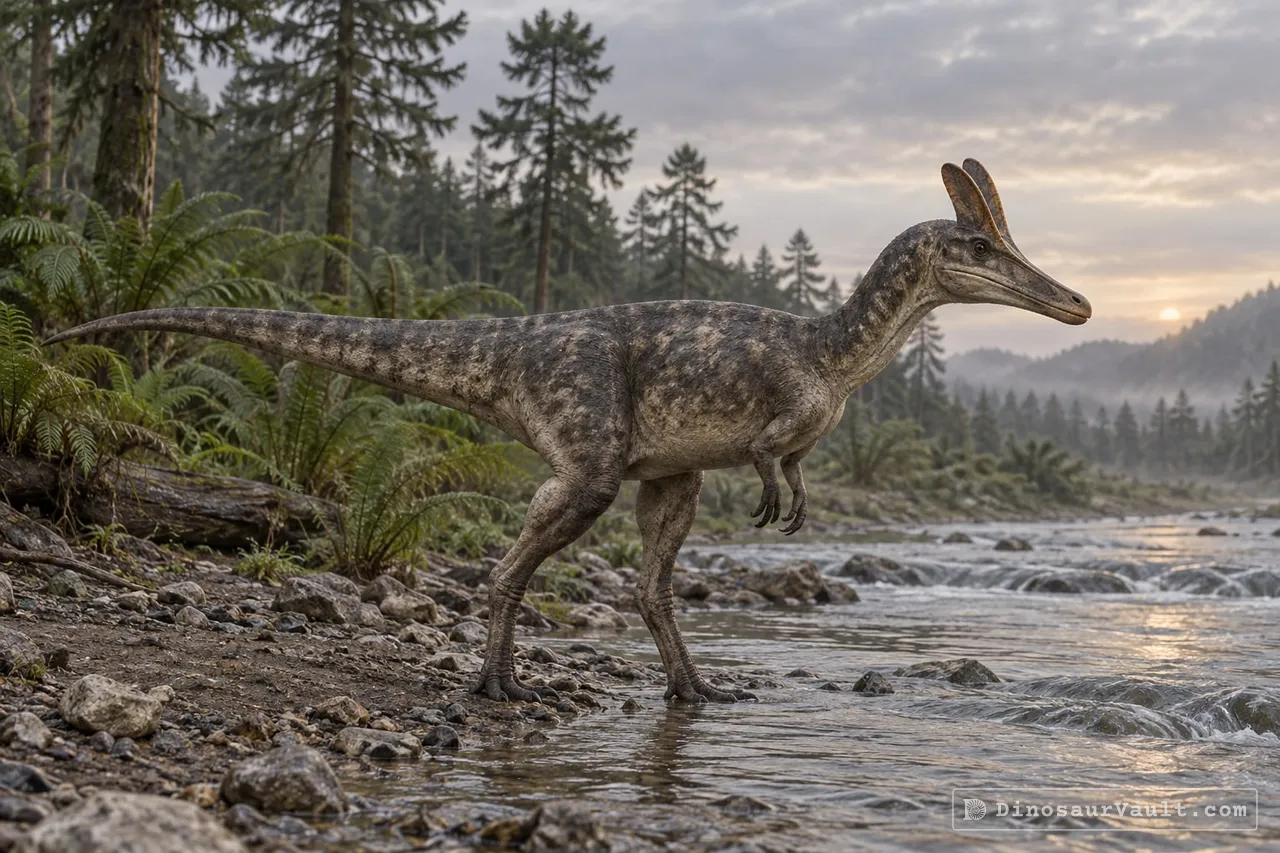
Sinosaurus was a two-legged meat eater with a pair of thin crests on top of its skull, much like Dilophosaurus. It had a long snout with sharp teeth and a notch near the front of its upper jaw.
Its exact relationships are debated, and the two crested genera may not be close relatives.
Its world
It lived in the Early Jurassic, about 201 to 193 million years ago, in what is now China. Its fossils come from the Lufeng Formation, where it probably hunted long-necked plant eaters such as Lufengosaurus and Yunnanosaurus.
How it was found
Young named Sinosaurus in 1940. The type species is Sinosaurus triassicus, named when the rocks were thought to be Triassic. About 15 finds are known.
Field gallery
More views of Sinosaurus
Scenes reconstructed from the available fossil evidence.
1 of 3
Lived alongside
Found in the same rock formations
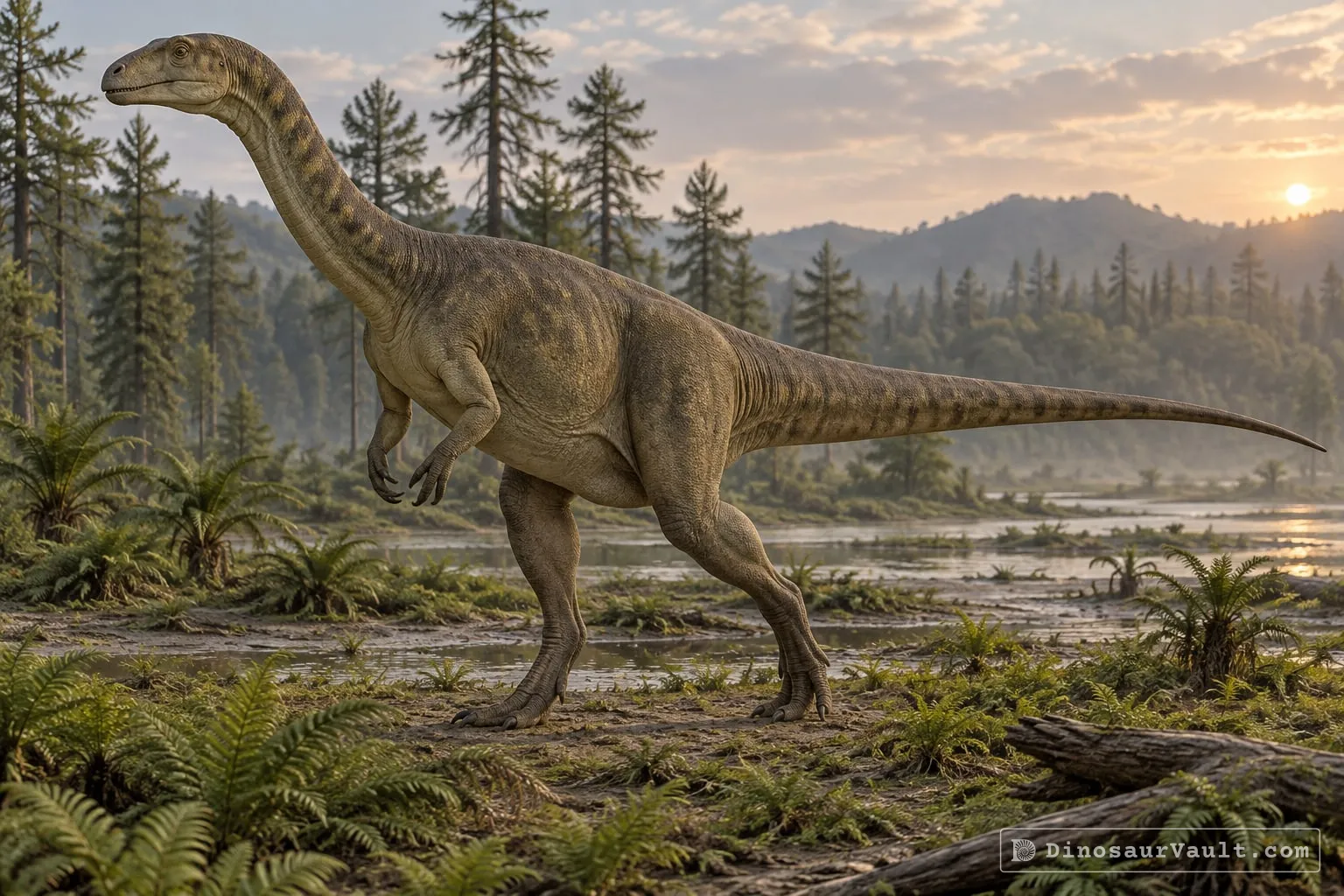
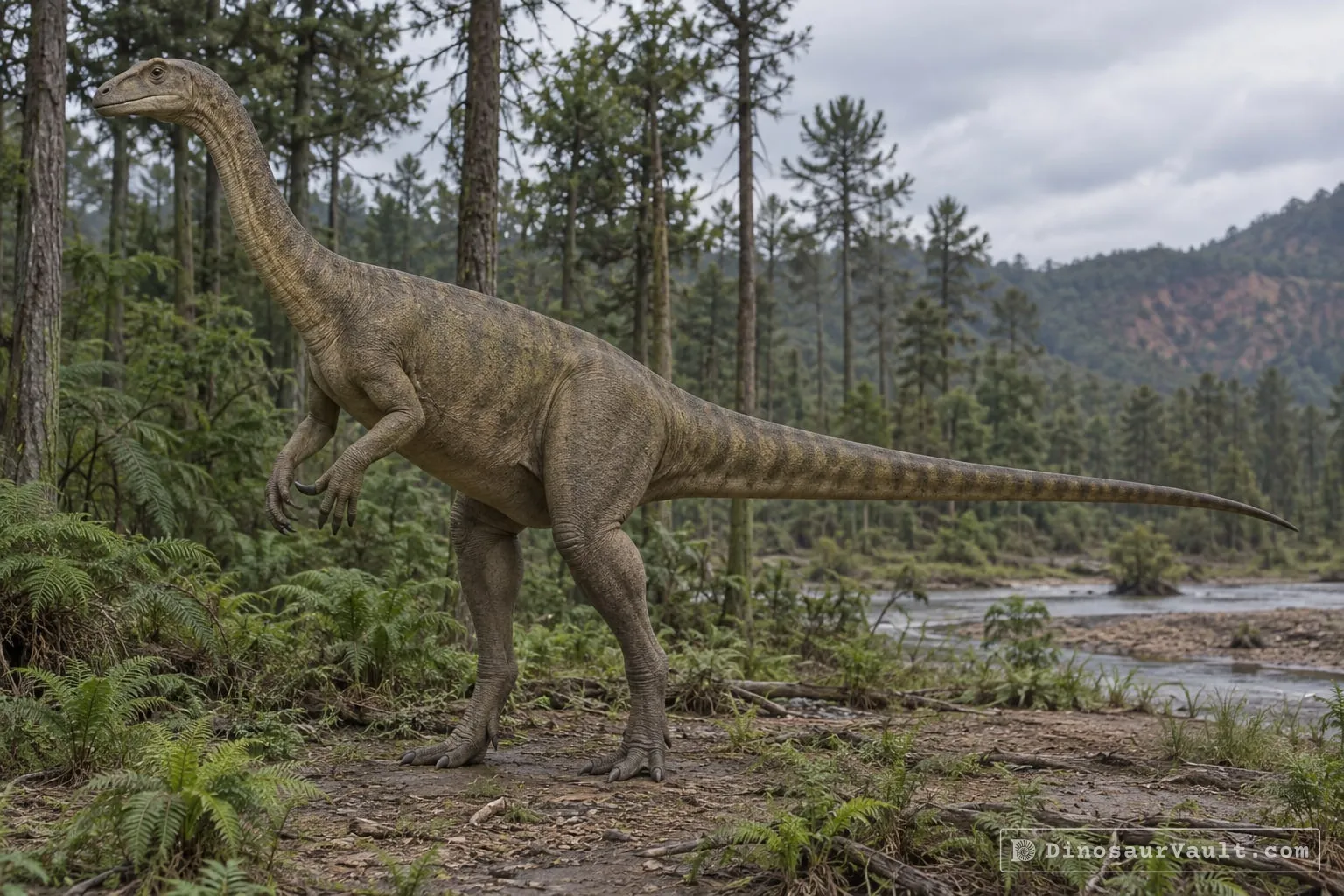
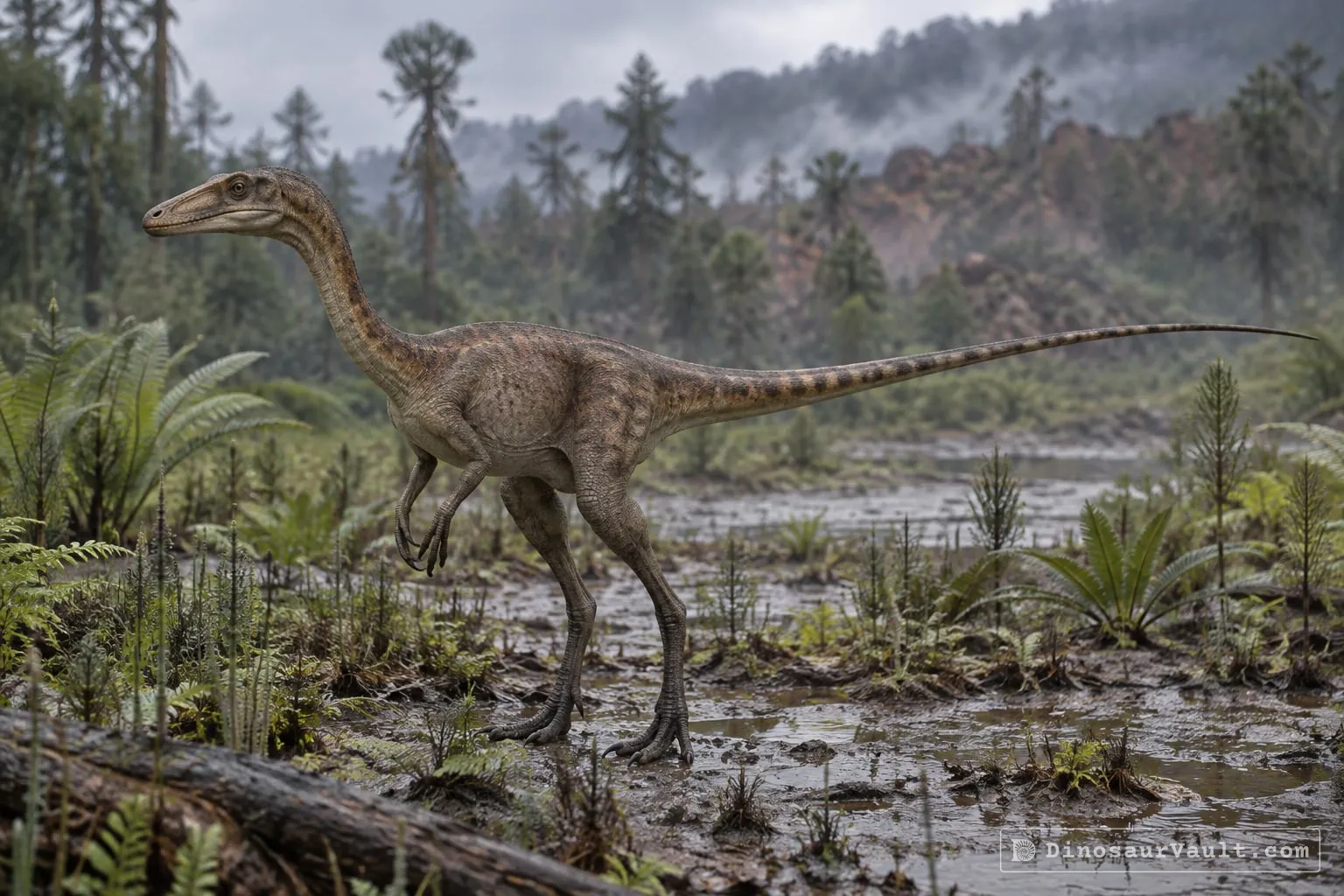
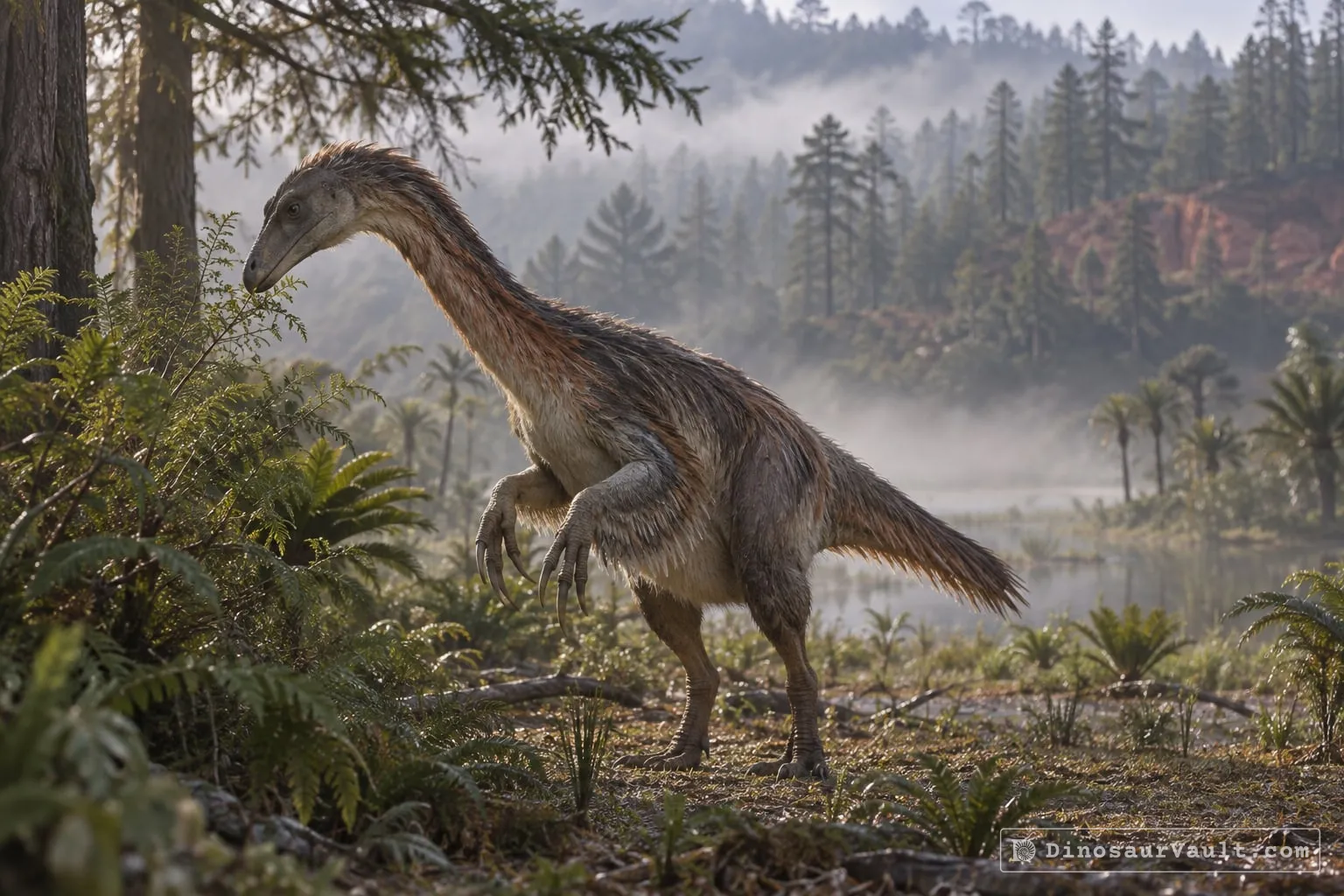
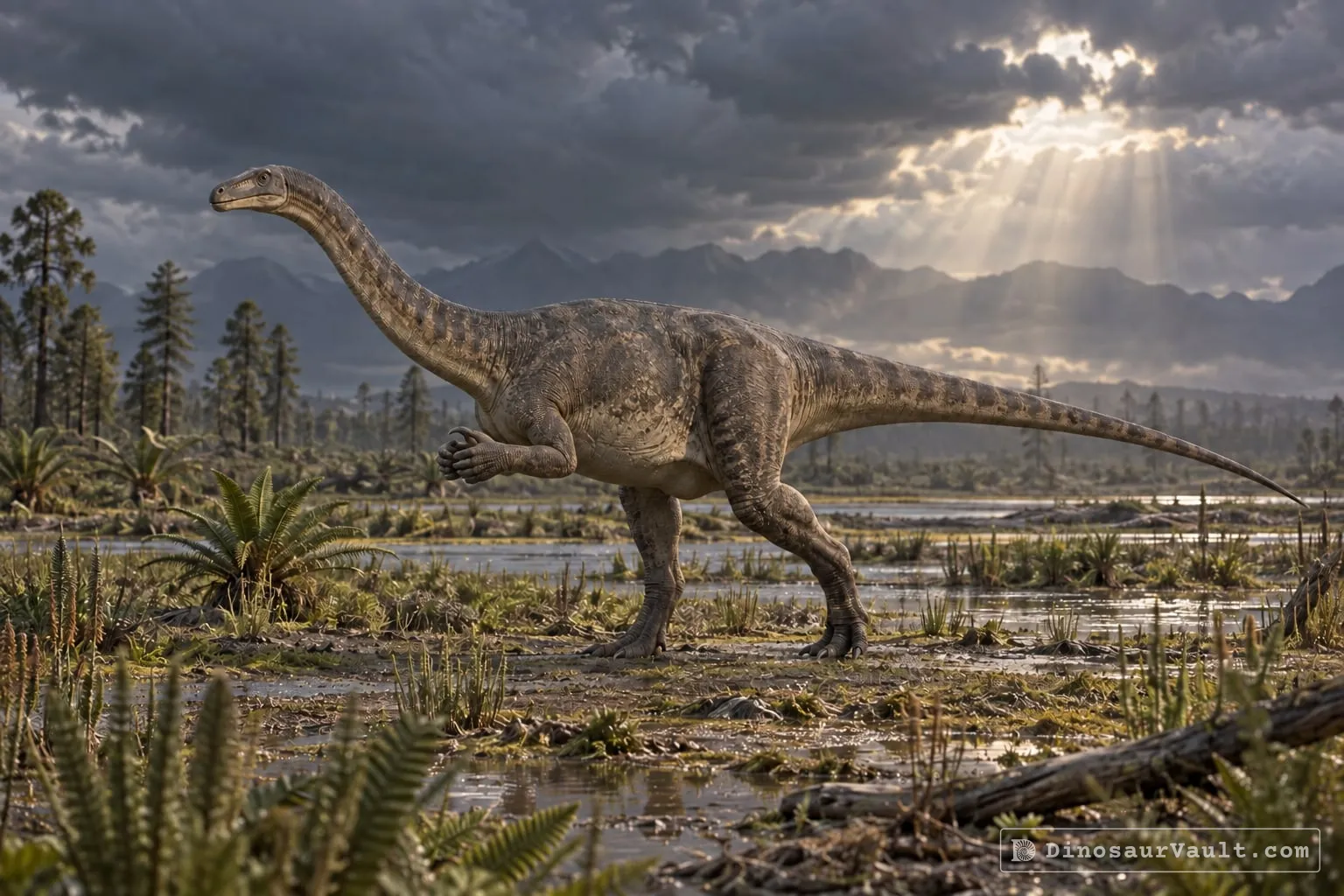
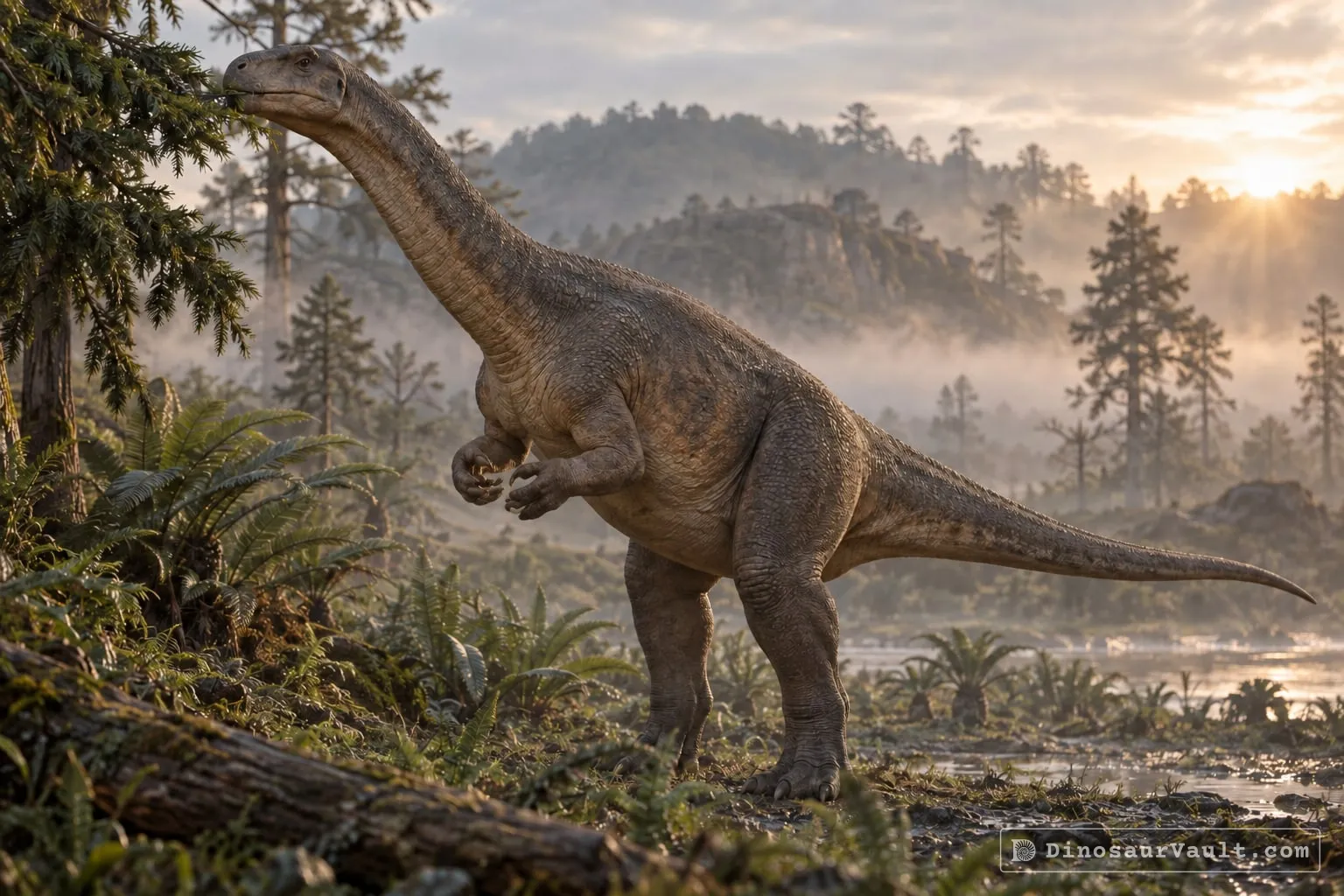
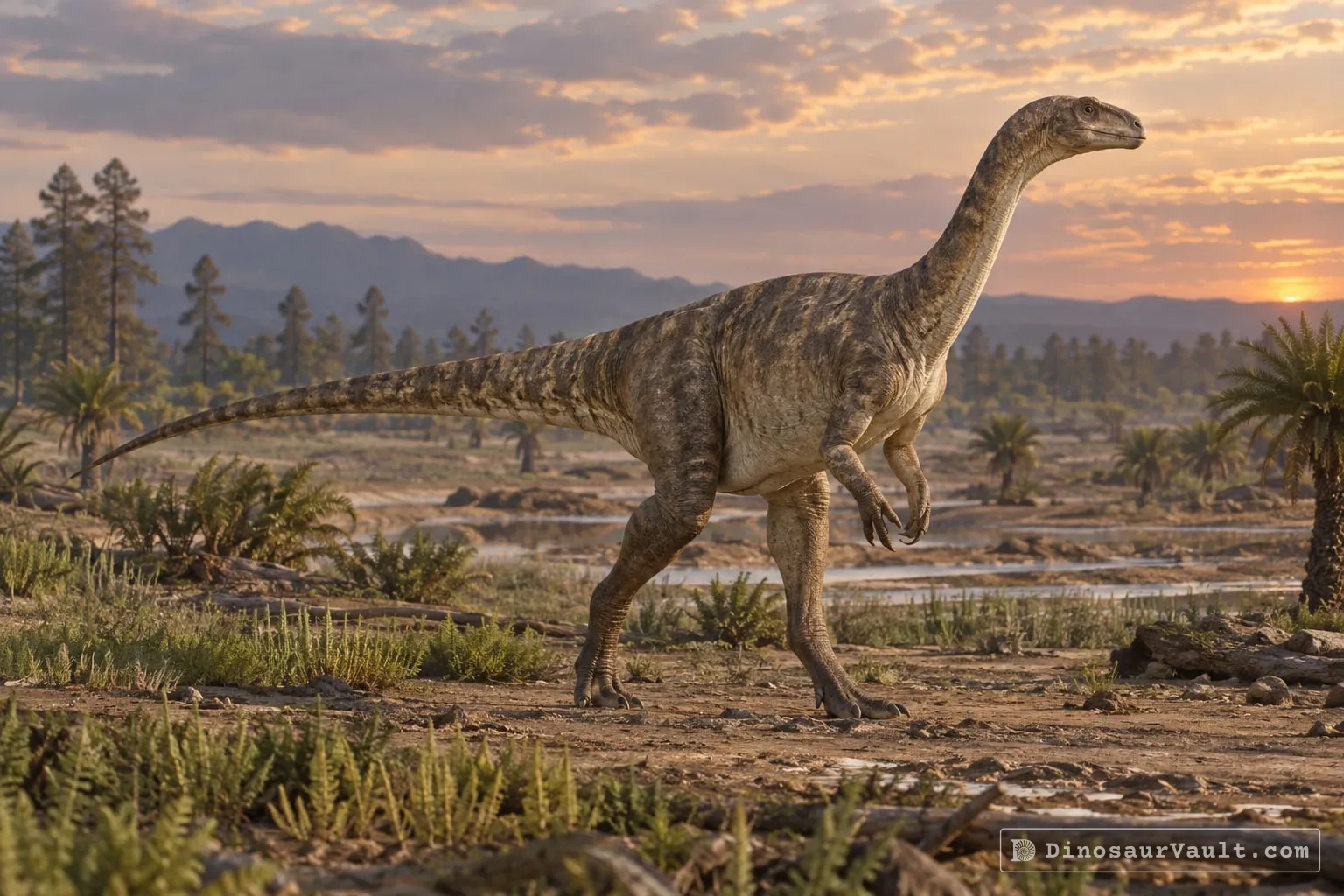
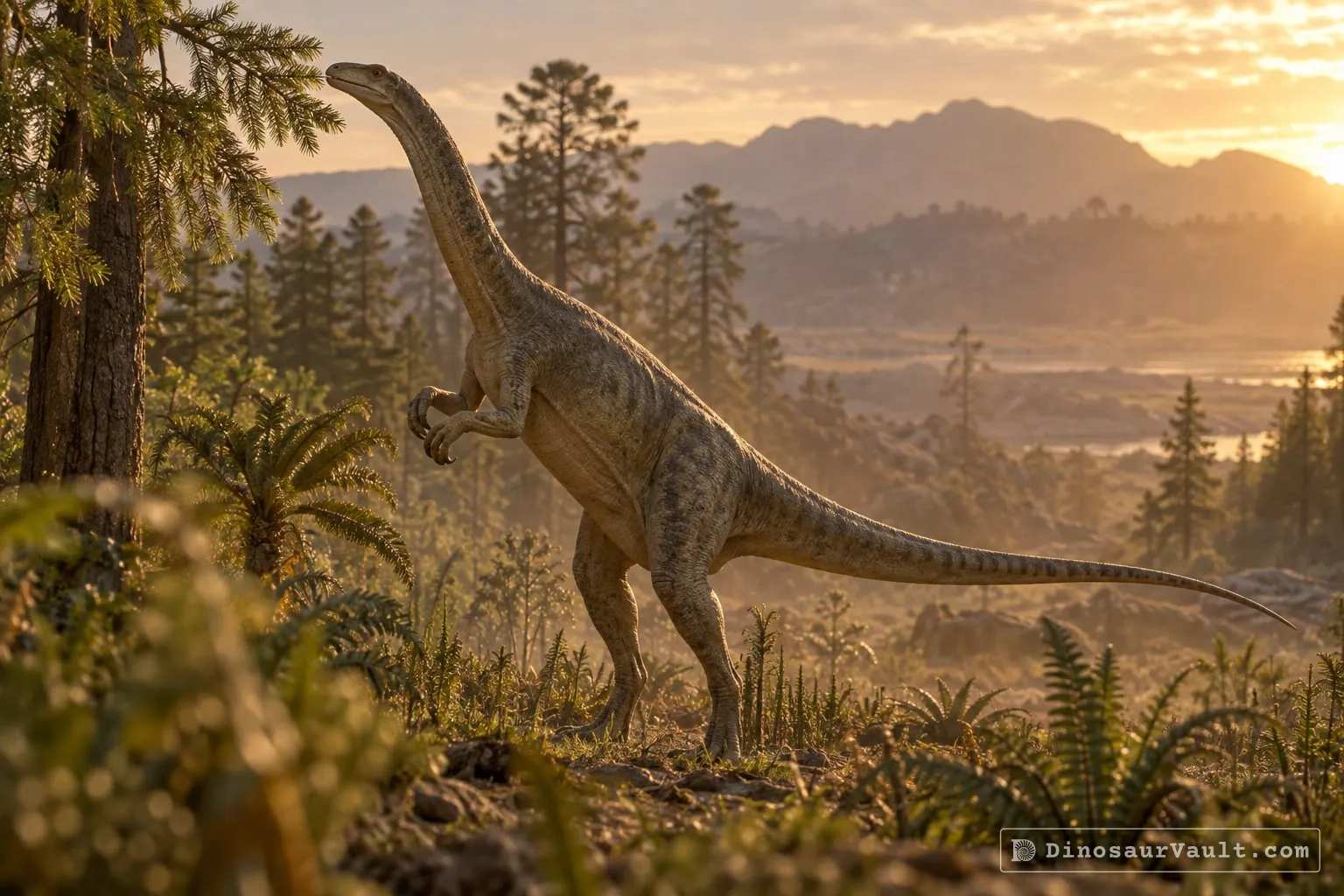


A rock formation can hold fossils laid down millions of years apart, so not every animal here met Sinosaurus.
The evidence
The science behind Sinosaurus
Which parts of the picture come from its own bones, and which come from its relatives.
From its own fossils
- A damaged upper jaw has a tooth socket that closed with new bone after the tooth was lost.
- The braincase preserves the bony passages of the inner ear and hollow spaces around the base of the brain.
Borrowed from relatives
- The shape of its brain cavity and inner ear is compared with Allosaurus and other early theropods.
- Missing body details are restored from other early meat eaters such as Dilophosaurus.
Still unknown
- Its precise place in the theropod family tree.
- The color and outer covering of its skull crests.
- How its proportions changed as it grew.
Discovery timeline
- 1940Named itYoung
- 2013SkullXing et al.
- 2014SkullXING et al.
Key papers
The research behind what we know of Sinosaurus
Named it
Named Sinosaurus from fossils in the Lufeng rocks of China.
Preliminary notes on the Lufeng vertebrate fossils. Bulletin of the Geological Society of China 20: 235-239
No link available
Skull
Found a healed tooth socket, showing that the animal survived a severe injury that stopped replacement teeth from growing at that position.
Tooth loss and alveolar remodeling in Sinosaurus triassicus (Dinosauria: Theropoda) from the lower jurassic strata of the Lufeng Basin, China. Chinese Science Bulletin 58: 1931-1935
Read the paper : Tooth loss and alveolar remodeling in Sinosaurus triassicus (Dinosauria: Theropoda) from the lower jurassic strata of the Lufeng Basin, China (opens in a new tab)Skull
Used scans to describe the braincase and inner ear, finding similarities to those of other early theropods.
Braincase Anatomy of the Basal TheropodSinosaurusfrom the Early Jurassic of China. Acta Geologica Sinica - English Edition 88: 1653-1664
Read the paper : Braincase Anatomy of the Basal TheropodSinosaurusfrom the Early Jurassic of China (opens in a new tab)
Close relatives
Other members of Theropoda


Sources: Wikidata