Xiangyunloong
"auspicious cloud dragon"
Type species Xiangyunloong fengming
- Lived
- 201 to 175 million years ago, Early Jurassic
- Found in
- China
- Named by
- Hu et al. 2026
Where its fossils were found
The evidence
Today

190 million years ago
Habitat
Shallow lakes, shorelines and rivers shaped its Early Jurassic home in what is now China. The Fengjiahe Formation also preserves Yunnanosaurus, Irisosaurus and the armored Yuxisaurus.
Field notes
About Xiangyunloong
What it was like
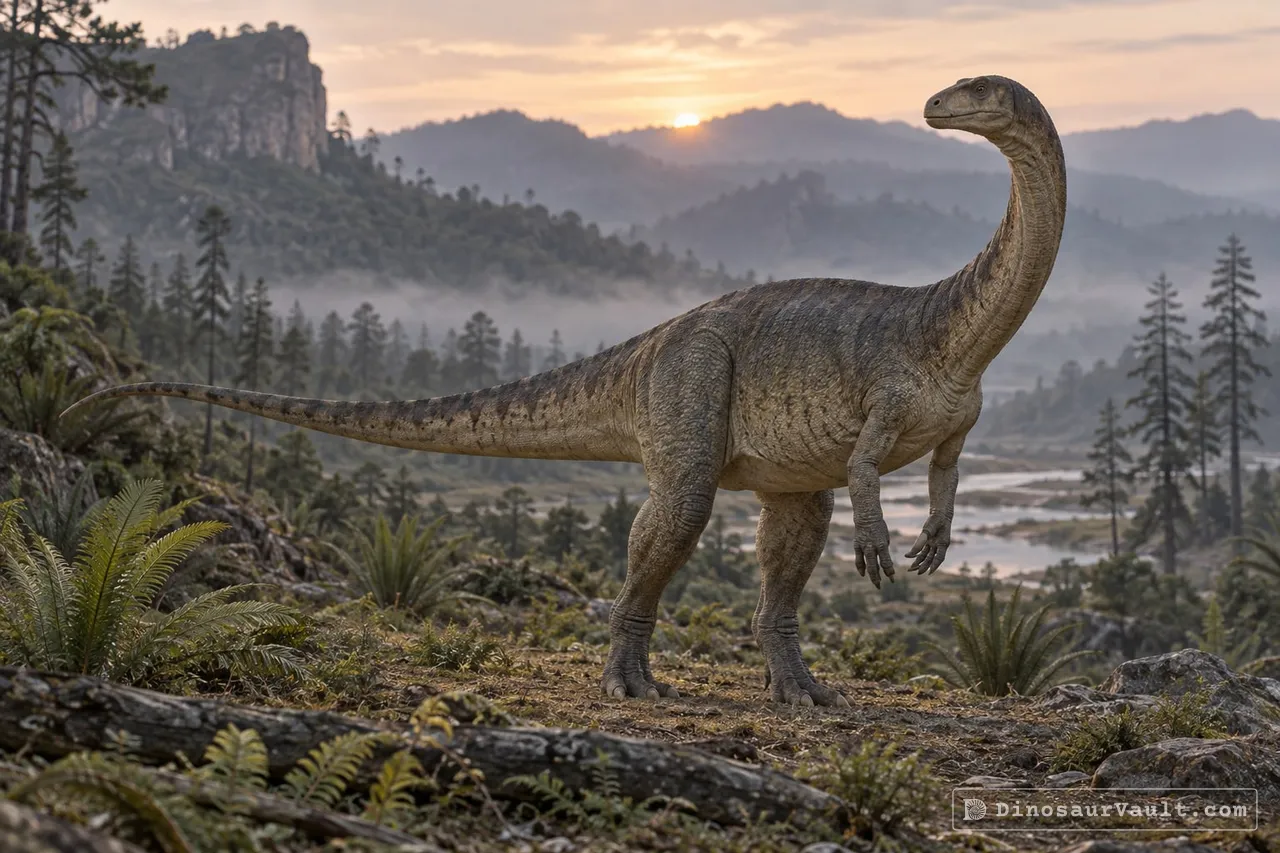
Xiangyunloong was a plant eater from the long-necked line that later produced the giant sauropods. It is known from a partial skeleton.
Its world
It lived in the Early Jurassic in what is now southwestern China. Its bones come from the Fengjiahe Formation, where it shared the land with Yunnanosaurus and the armored Yuxisaurus.
How it was found
Hu and colleagues named Xiangyunloong in 2026, from a single find.
Field gallery
More views of Xiangyunloong
Scenes reconstructed from the available fossil evidence.
Lived alongside
Found in the same rock formations
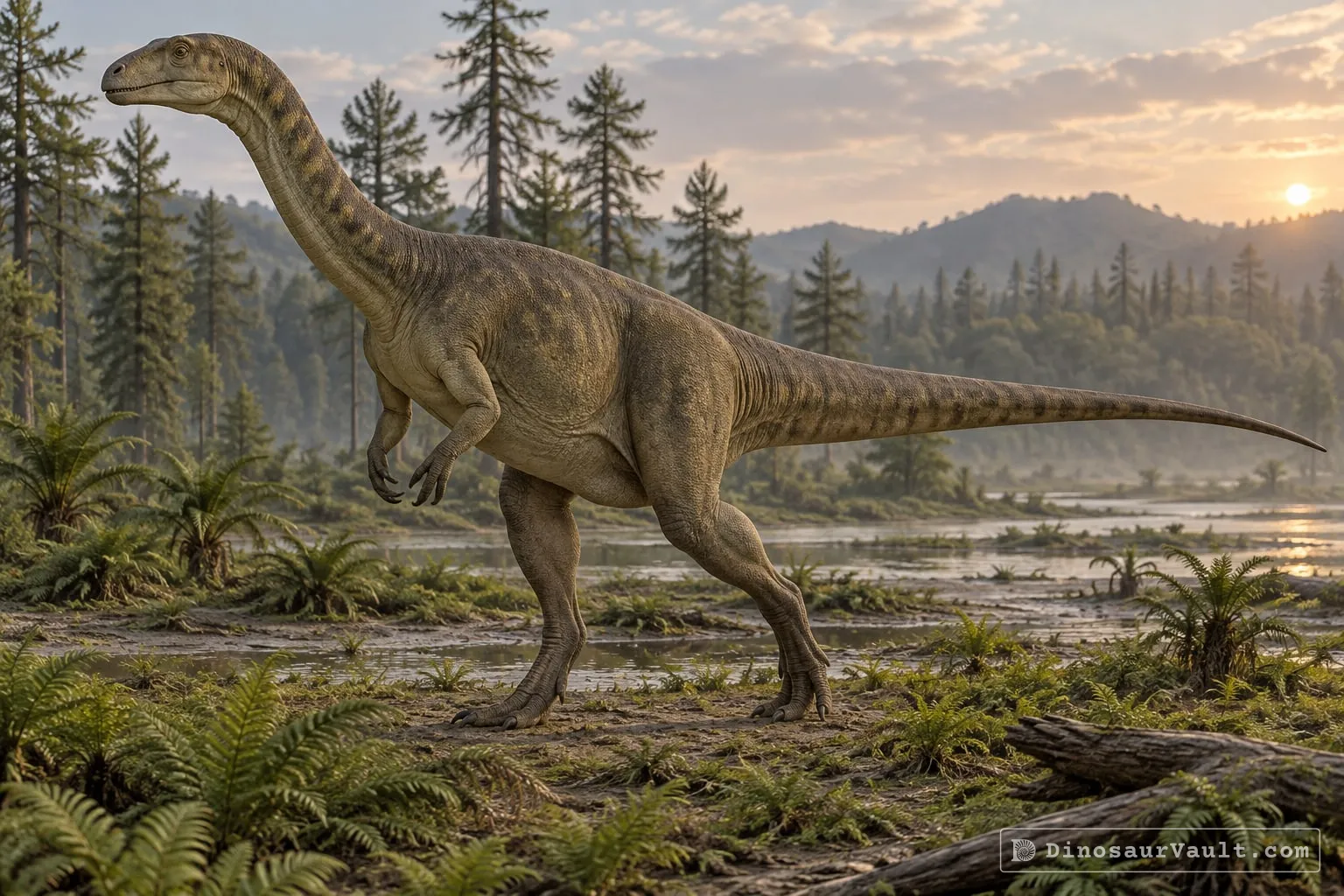
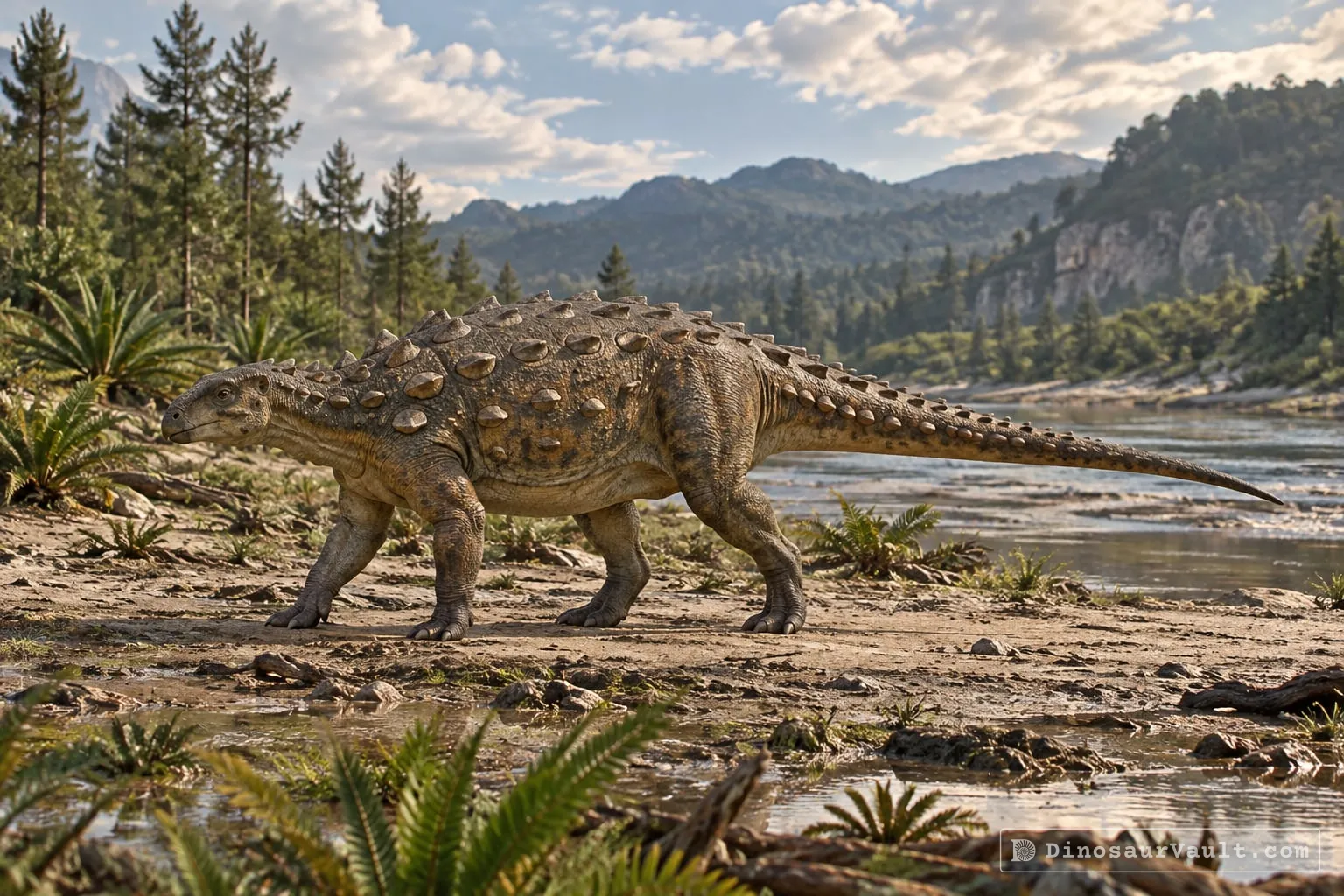
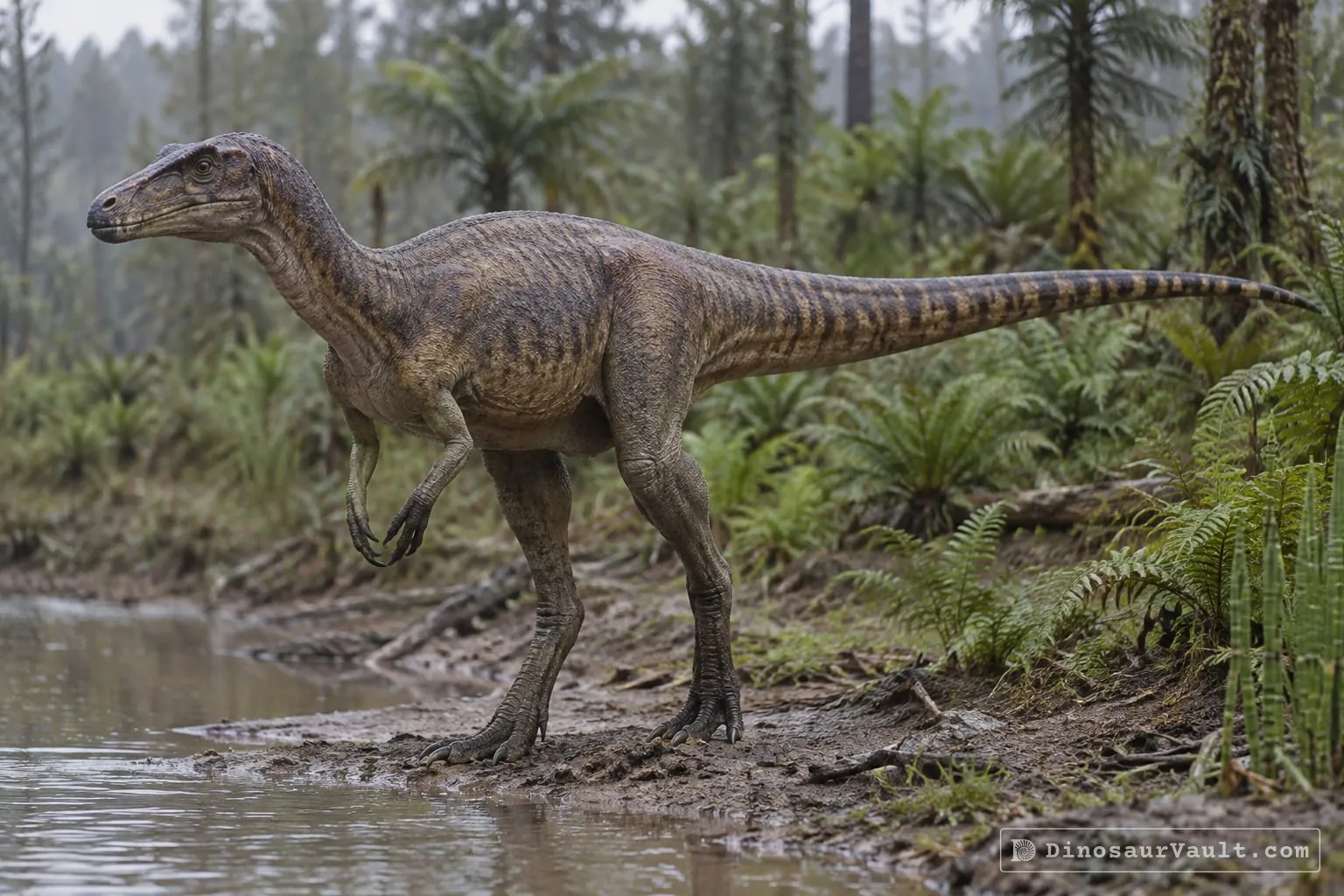
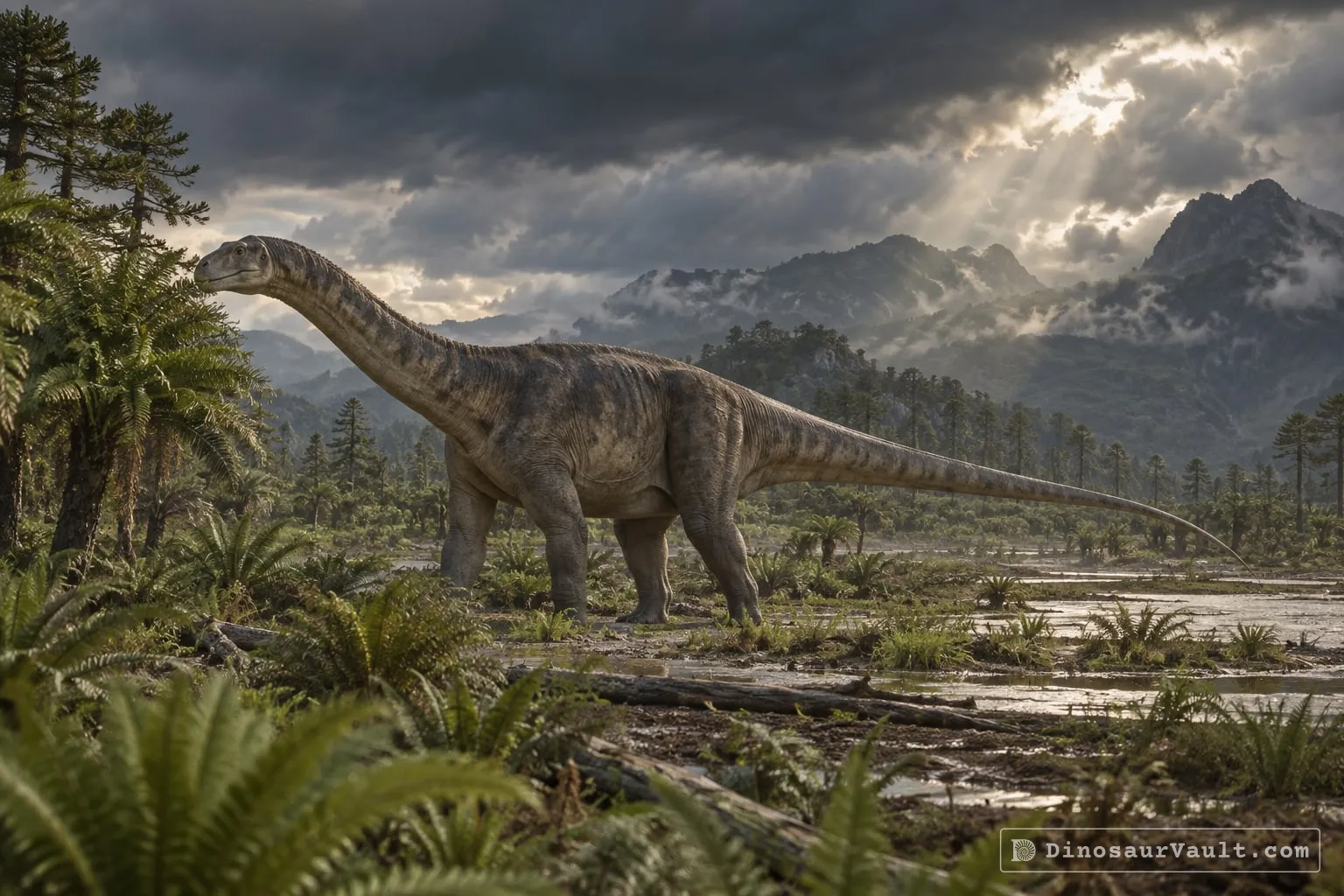
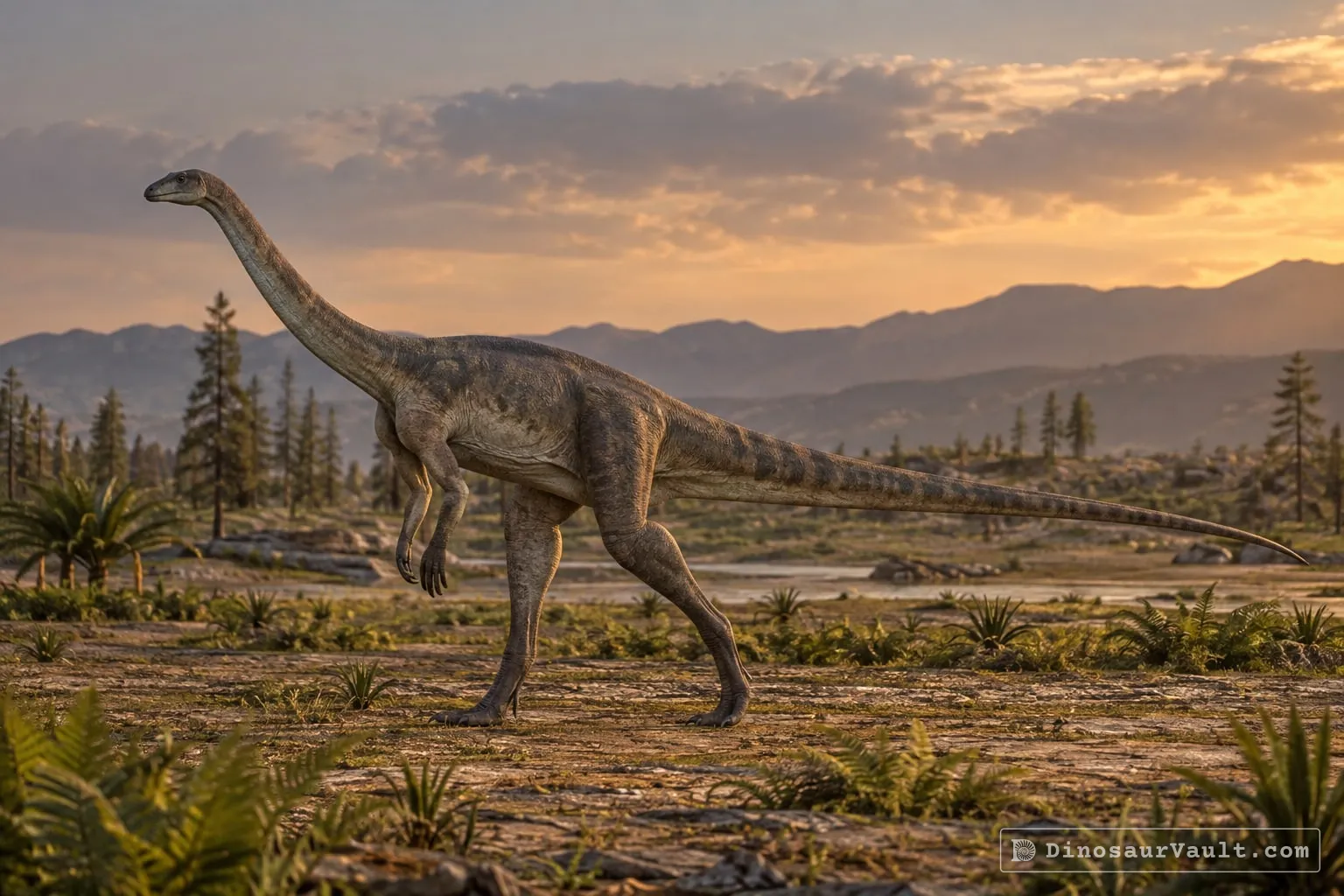
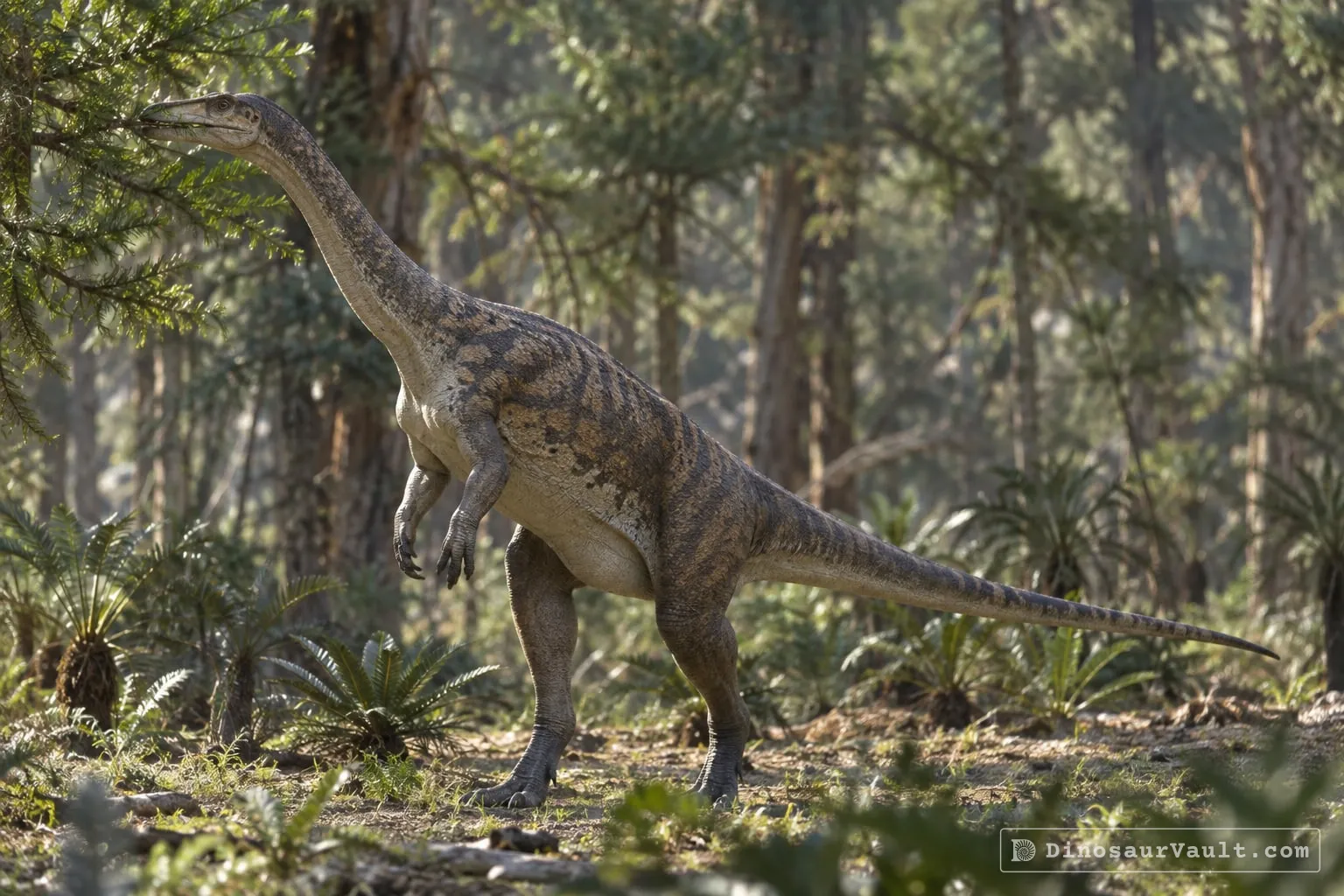


A rock formation can hold fossils laid down millions of years apart, so not every animal here met Xiangyunloong.
The evidence
The science behind Xiangyunloong
Which parts of the picture come from its own bones, and which come from its relatives.
From its own fossils
- The type skeleton preserves neck, back and tail vertebrae, rib fragments and parts of the pelvis. Its preserved neck vertebrae are proportionally short.
- The bony spines on the neck vertebrae widen sideways along their upper edges.
- Most vertebrae have fused joints between their main bodies and upper arches, indicating that this individual was mature.
Borrowed from relatives
- Its missing limbs and trunk are restored after Xingxiulong.
- Its missing skull and hands are restored after Plateosaurus.
- Its missing toe claws are tentatively restored after Antetonitrus.
Still unknown
- The shape of its skull, hands and feet.
- Whether it usually walked on its hind legs or on all fours.
- Its skin and color.
Discovery timeline
- 2020Same rocksPeyre de Fabrègues et al.
- 2022Same rocksYao et al.
- 2026Named itHu et al.
Key papers
The research behind what we know of Xiangyunloong
Same rocks
Named Irisosaurus, another early sauropodomorph from the Fengjiahe Formation, and placed it close to Mussaurus.
A new species of early-diverging Sauropodiformes from the Lower Jurassic Fengjiahe Formation of Yunnan Province, China. Scientific Reports 10
Read the paper : A new species of early-diverging Sauropodiformes from the Lower Jurassic Fengjiahe Formation of Yunnan Province, China (opens in a new tab)Same rocks
Described Yuxisaurus from the Fengjiahe Formation, revealing a heavily built armored dinosaur in the same regional fauna.
A new early branching armored dinosaur from the Lower Jurassic of southwestern China. eLife 11
Read the paper : A new early branching armored dinosaur from the Lower Jurassic of southwestern China (opens in a new tab)Named it
Described distinctive neck, back, tail and hip bones from a mature early sauropodomorph and compared it with Xingxiulong and other early relatives.
A new sauropodomorph dinosaur from the Lower Jurassic Fengjiahe Formation of Dali of Yunnan Province, China. Royal Society Open Science 13
Read the paper : A new sauropodomorph dinosaur from the Lower Jurassic Fengjiahe Formation of Dali of Yunnan Province, China (opens in a new tab)
Close relatives
Other members of Massopoda


Sources: Wikidata