Vectiraptor
"Isle of Wight thief"
Type species Vectiraptor greeni
- Lived
- 126 to 121 million years ago, Early Cretaceous
- Diet
- Carnivore
- Group
- Theropods, Dromaeosauridae
- Found in
- United Kingdom
- Named by
- Longrich et al. 2022
Where its fossils were found
The evidence
Today

125 million years ago
Habitat
The Wessex Formation records a floodplain crossed by rivers, with pools in low spots. Iguanodon, Hypsilophodon and Polacanthus lived in the same region.
Field notes
About Vectiraptor
What it was like
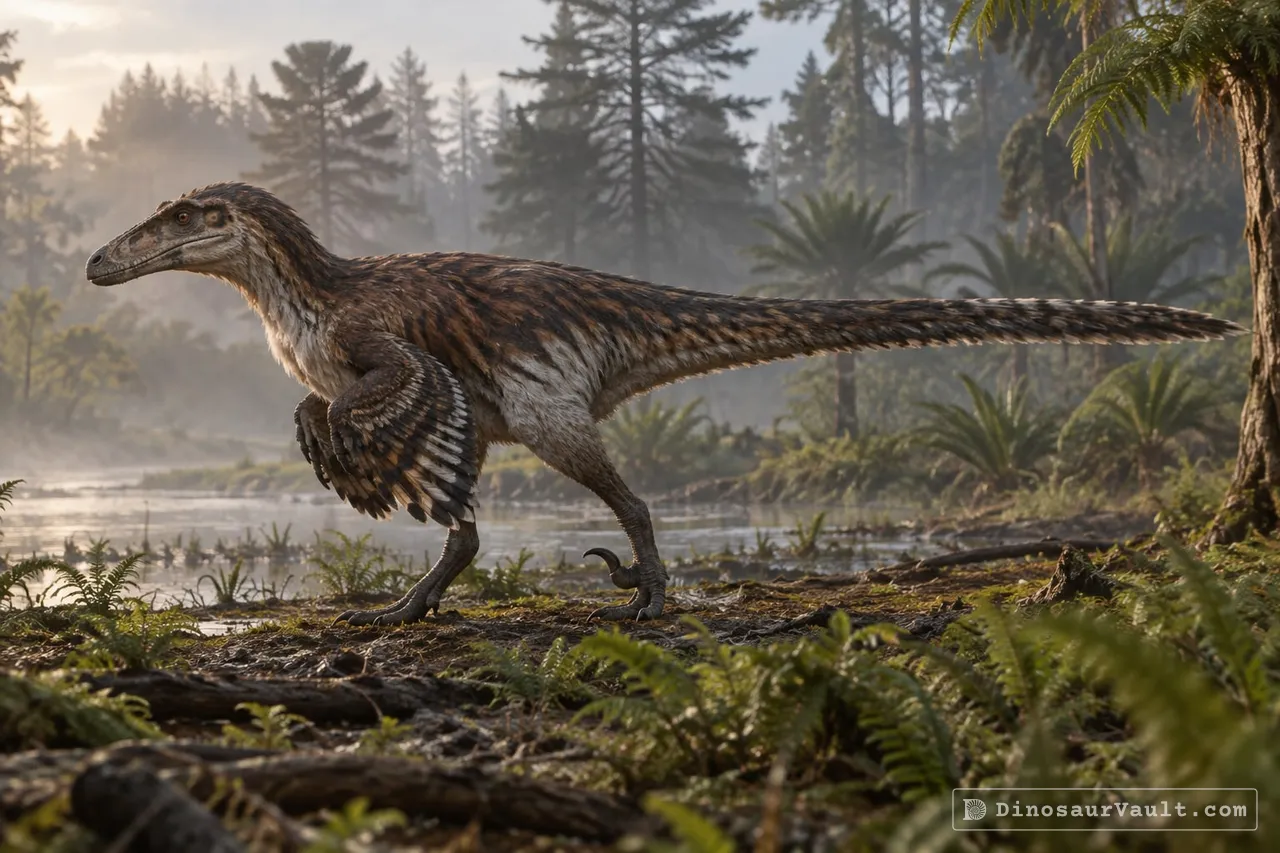
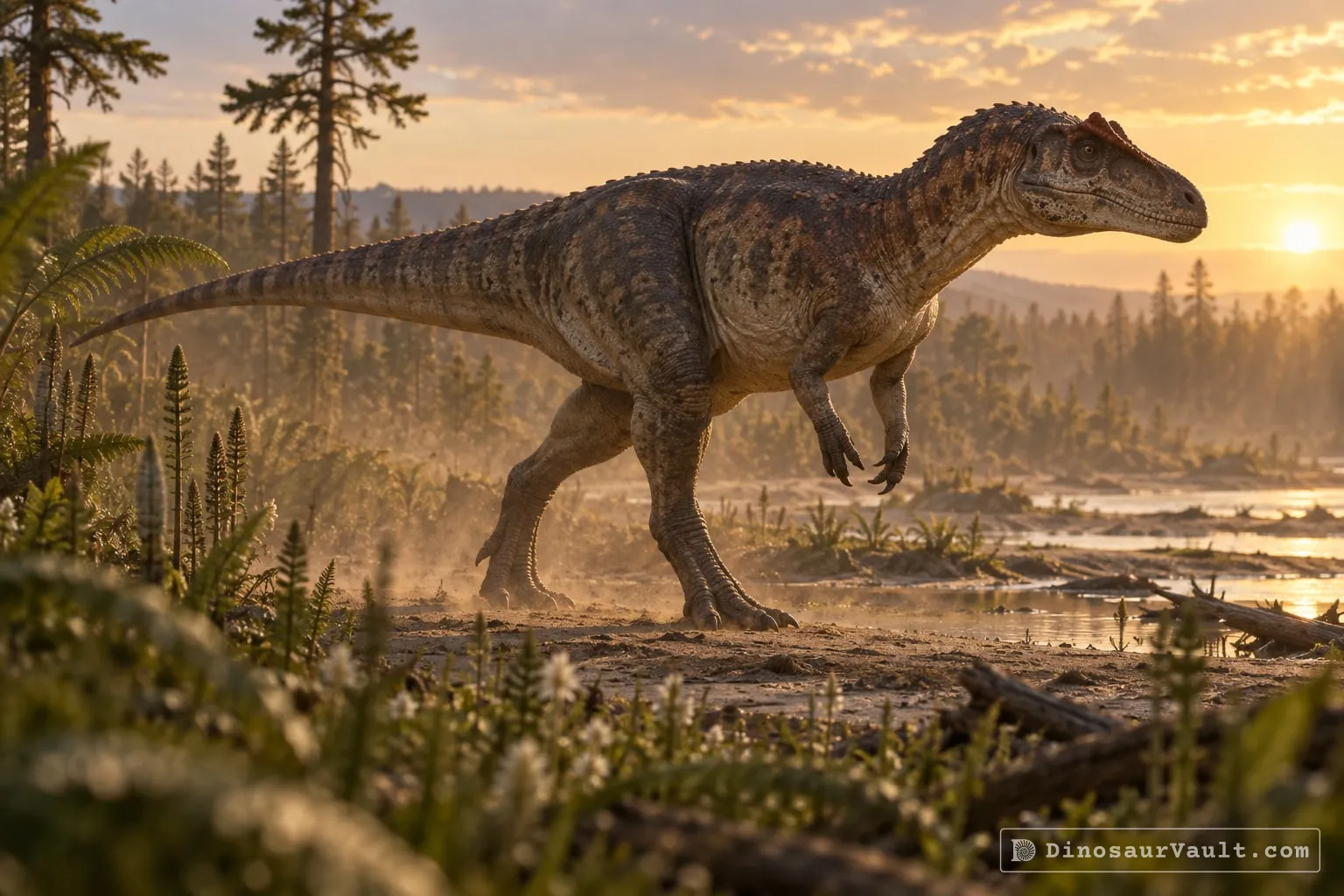
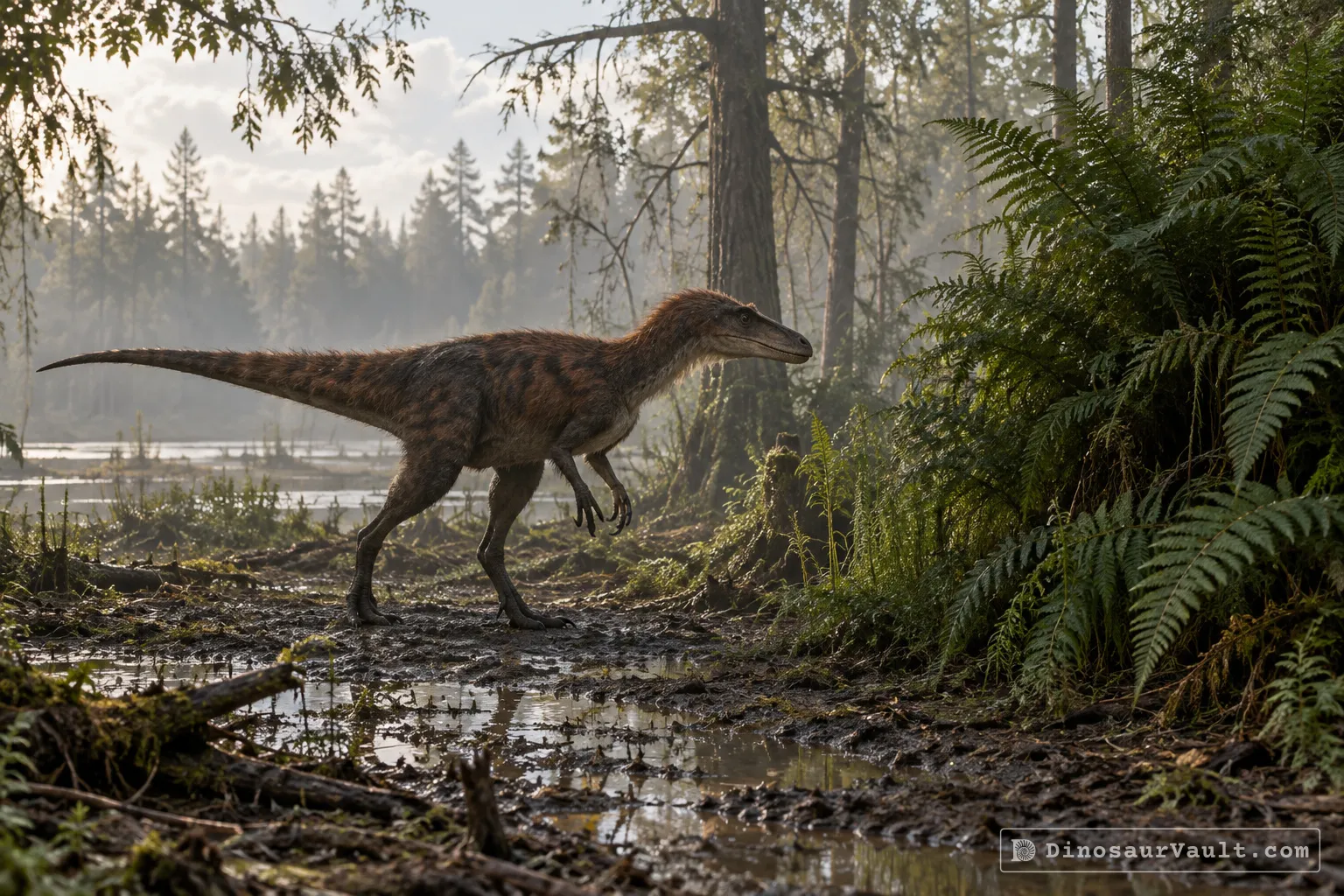
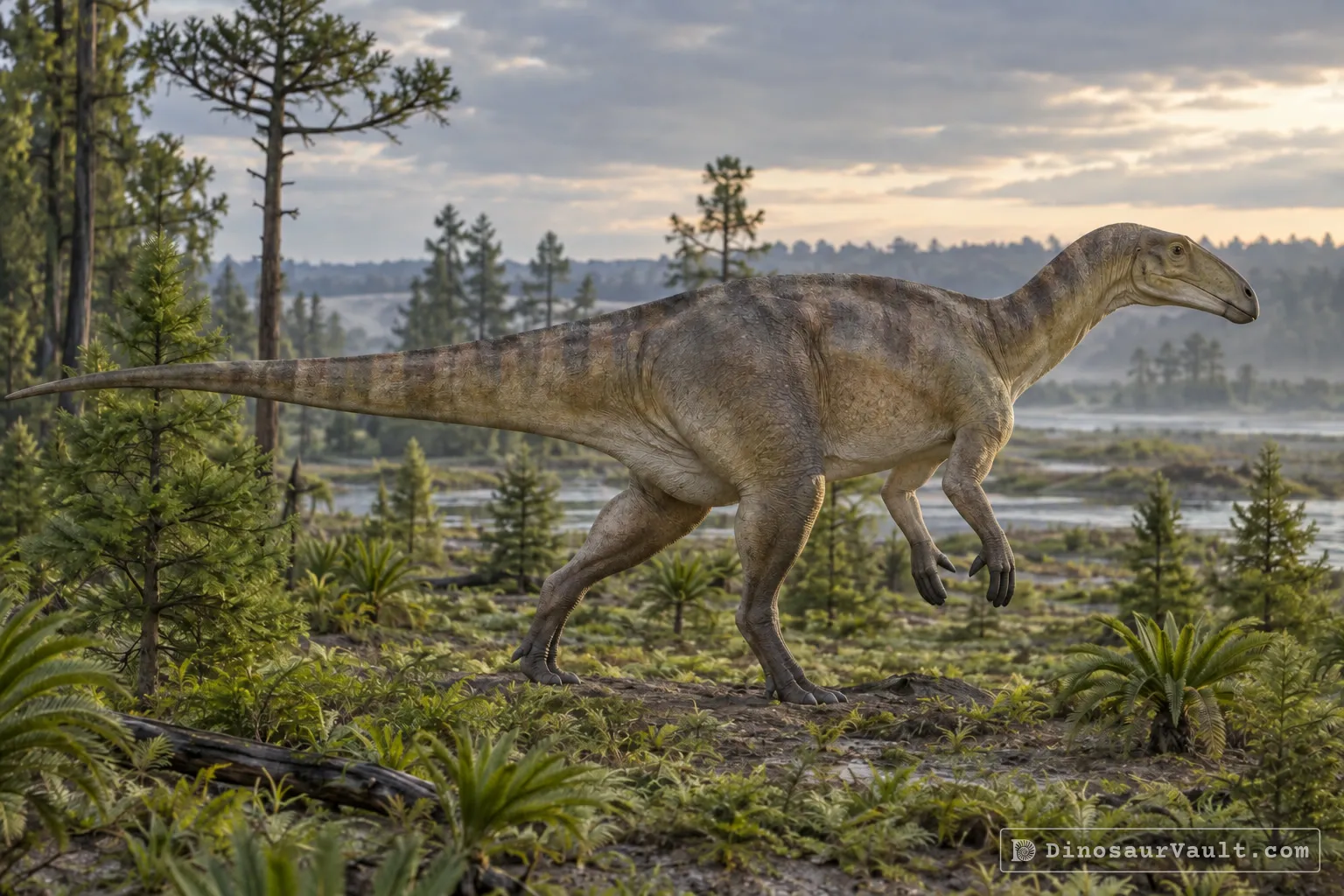
Vectiraptor was a raptor, a feathered hunter with a sickle claw on each foot. It is known only from a few backbones and part of the hips.
It was probably a fairly large raptor, bigger than Velociraptor.
Its world
It lived in the Early Cretaceous in what is now southern England. Its bones come from the Wessex Formation, where it shared the land with Iguanodon, the small Hypsilophodon, the armored Polacanthus and the hunters Baryonyx and Neovenator.
How it was found
Longrich and colleagues named Vectiraptor in 2022, from a single find.
Field gallery
More views of Vectiraptor
Scenes reconstructed from the available fossil evidence.
1 of 2
Lived alongside
Found in the same rock formations
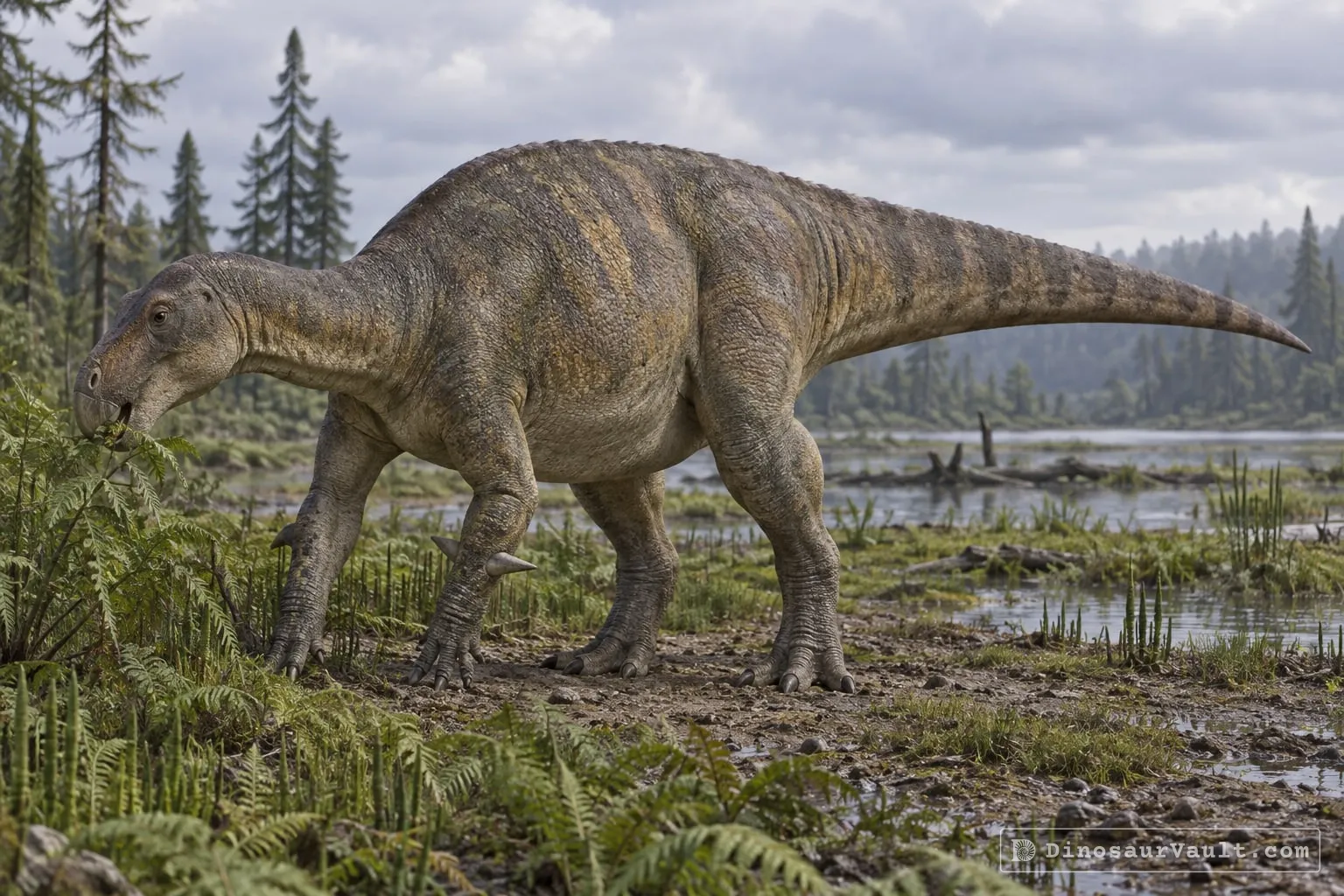
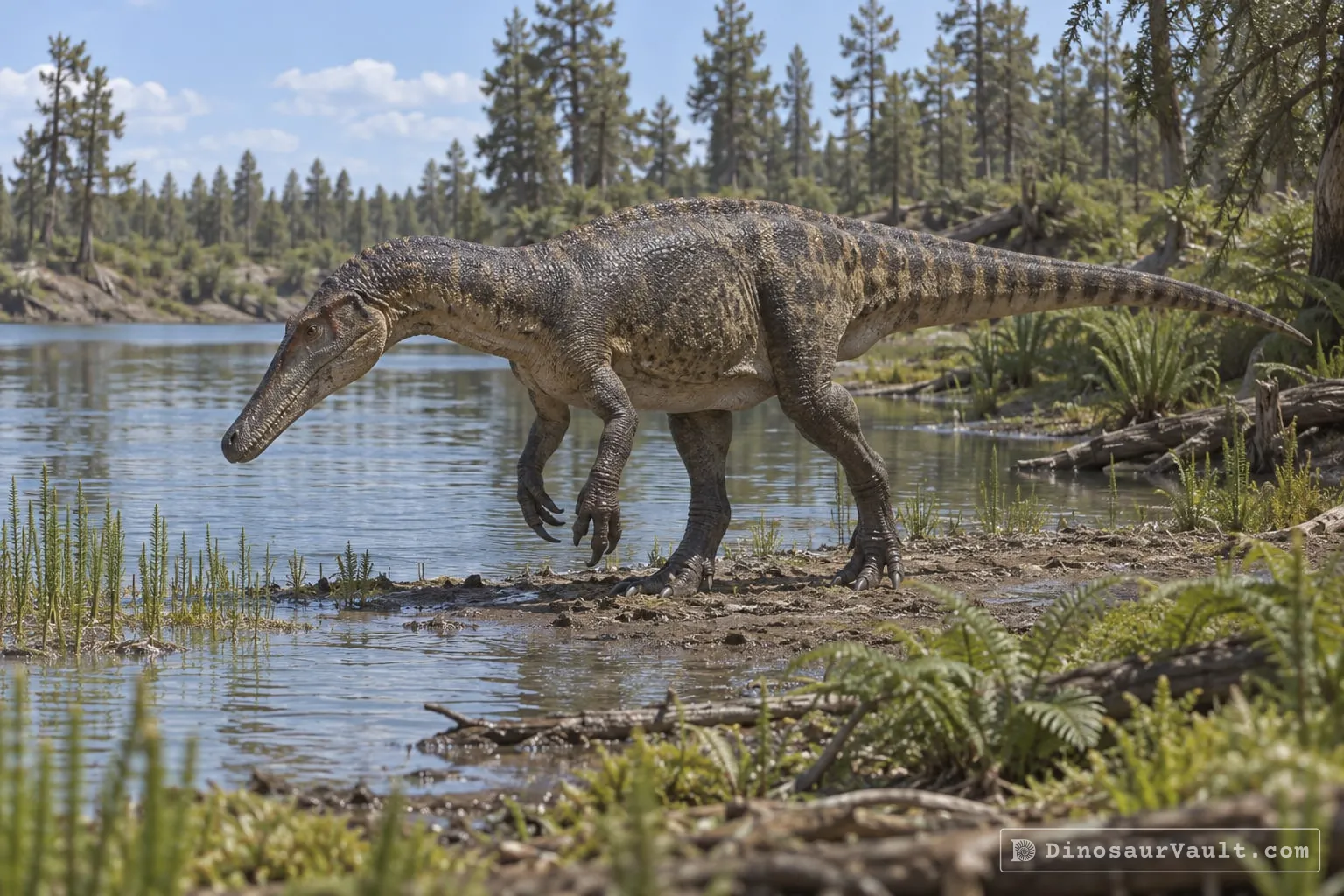
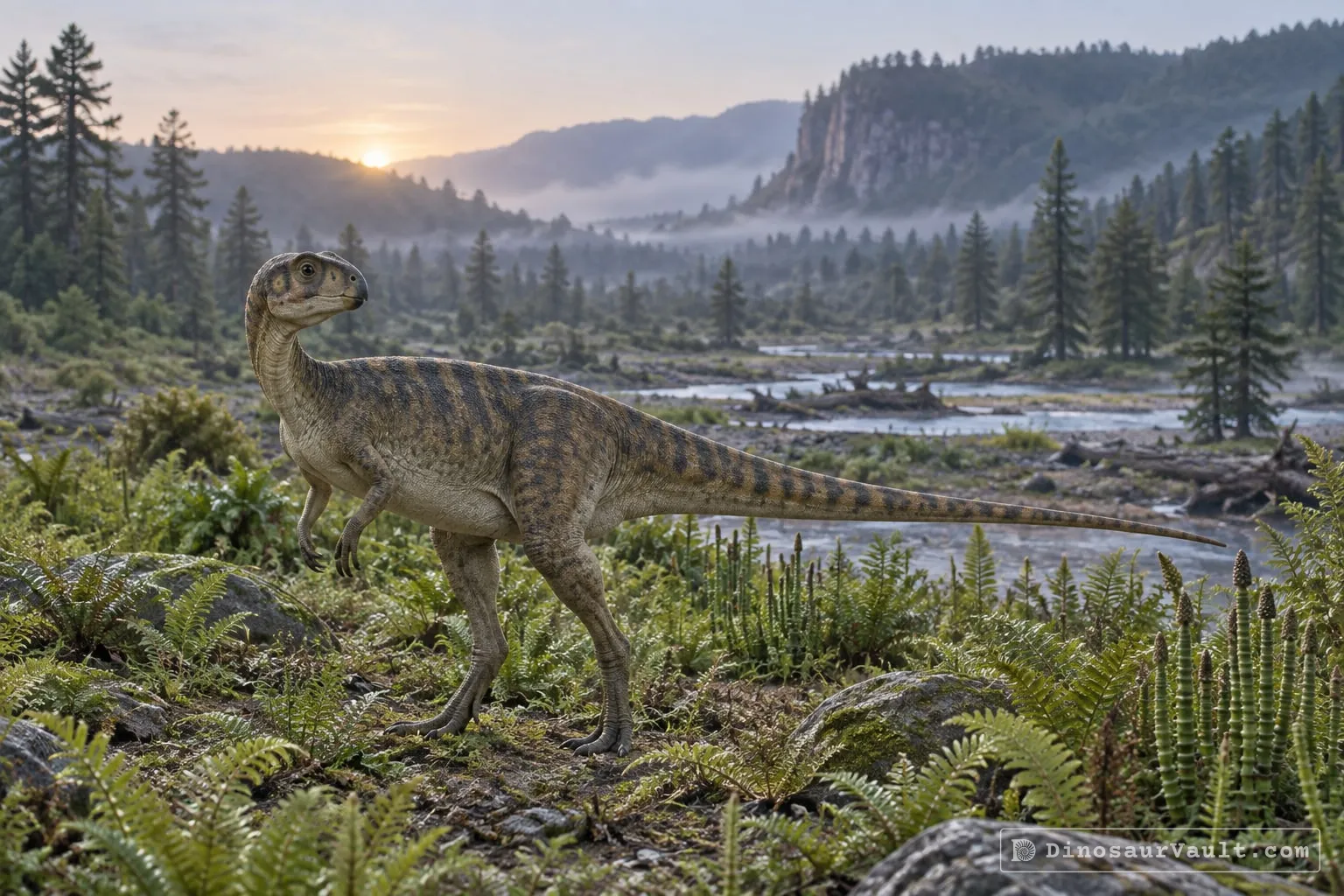
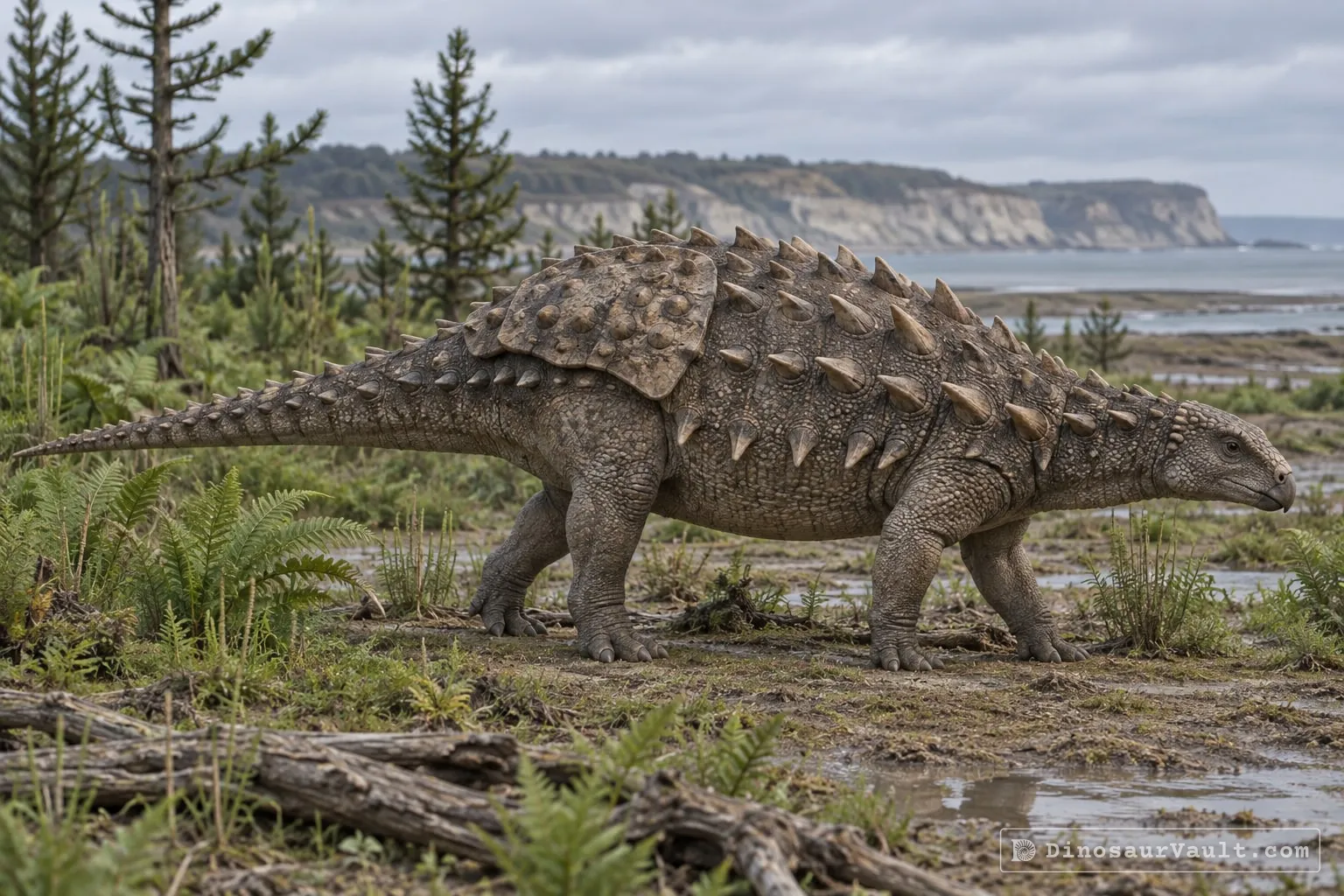
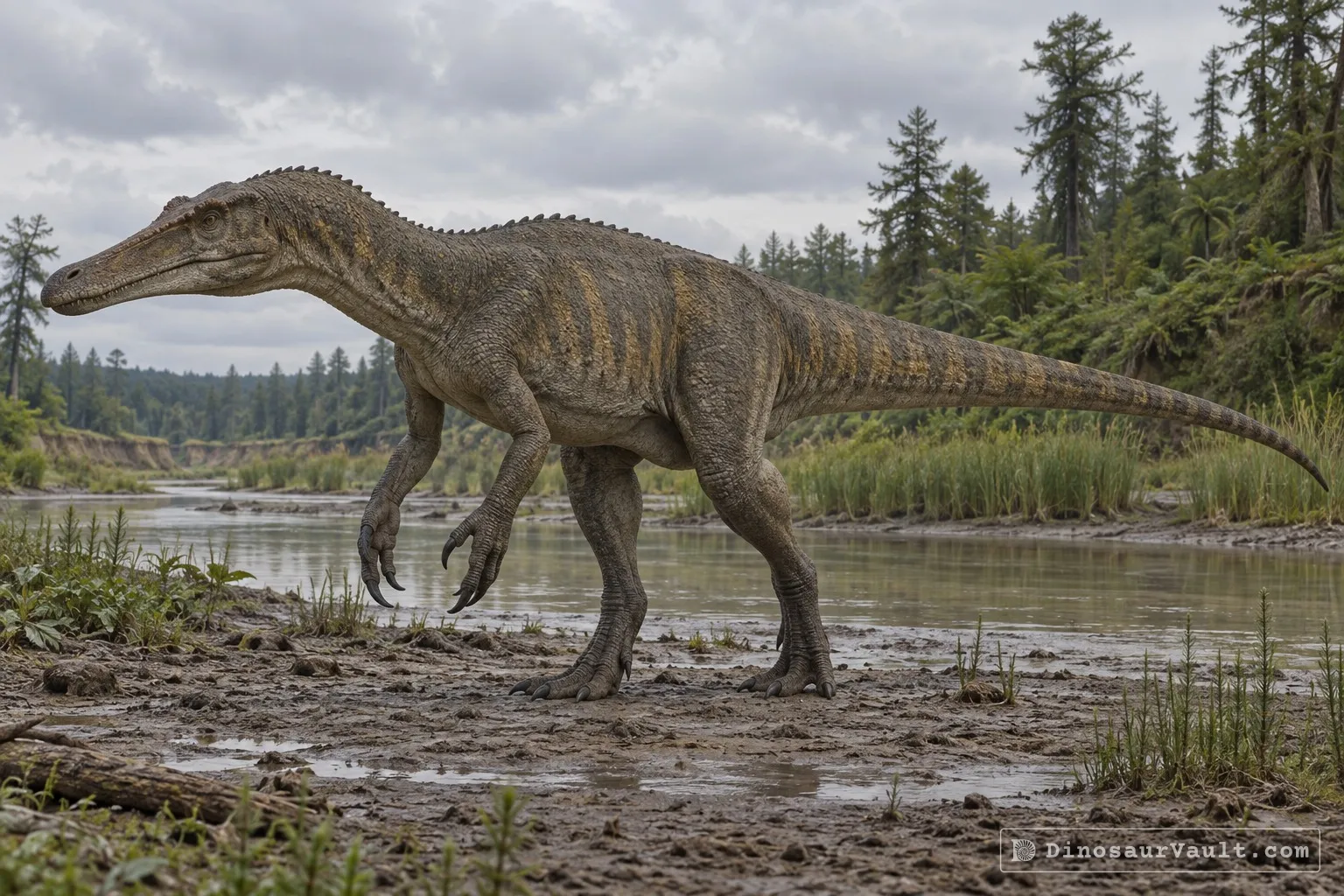


A rock formation can hold fossils laid down millions of years apart, so not every animal here met Vectiraptor.
The evidence
The science behind Vectiraptor
Which parts of the picture come from its own bones, and which come from its relatives.
From its own fossils
- Back vertebrae and part of the fused backbone at the hips are the only described remains.
- Its back vertebrae contain air spaces and have tall spines with large attachment scars for ligaments.
Borrowed from relatives
- The missing head, limbs and tail are restored by comparison with large raptors such as Deinonychus.
- Feathers are inferred from feathered raptors such as Microraptor.
Still unknown
- Its skull shape and exact body proportions.
- Its feather colors.
- What prey it hunted.
Discovery timeline
- 2003Close relativeXu et al.
- 2004Same rocksSweetman
- 2022Named itLongrich, Martill & Jacobs
Key papers
The research behind what we know of Vectiraptor
Close relative
Described feathered Microraptor, providing direct support for feather coverings in the raptor family.
Four-winged dinosaurs from China. Nature 421: 335-340
Read the paper : Four-winged dinosaurs from China (opens in a new tab)Same rocks
Reported raptor teeth from the Wessex Formation, showing that these hunters were present before Vectiraptor was named.
The first record of velociraptorine dinosaurs (Saurischia, Theropoda) from the Wealden (Early Cretaceous, Barremian) of southern England. Cretaceous Research 25: 353-364
Read the paper : The first record of velociraptorine dinosaurs (Saurischia, Theropoda) from the Wealden (Early Cretaceous, Barremian) of southern England (opens in a new tab)Named it
Described air-filled backbones and hip vertebrae of a large raptor resembling relatives from North America.
A new dromaeosaurid dinosaur from the Wessex Formation (Lower Cretaceous, Barremian) of the Isle of Wight, and implications for European palaeobiogeography. Cretaceous Research 134: 105123
Read the paper : A new dromaeosaurid dinosaur from the Wessex Formation (Lower Cretaceous, Barremian) of the Isle of Wight, and implications for European palaeobiogeography (opens in a new tab)
Close relatives
Other members of Dromaeosauridae


Sources: Wikidata