Yi
EE
"wing"
Type species Yi qi
- Lived
- 165 to 155 million years ago, Middle Jurassic to Late Jurassic
- Diet
- Carnivore
- Group
- Theropods, Scansoriopterygidae
- Found in
- China
- Named by
- Xu et al. 2015
Where its fossils were found
The evidence
Today

160 million years ago
Habitat
Yi lived in a wooded landscape with lakes and nearby volcanic activity in China. Anchiornis, Epidexipteryx and Tianyulong lived in the same regional forests, which probably had a fern understory.
A Dinosaur Vault film
The Dinosaur With Bat-Like Wings
Yi qi was a tiny feathered dinosaur from Jurassic China with wings of skin, stretched between a long finger and a rod of bone at the wrist. A short glide was probably its limit.
Subscribe on YouTubeField notes
About Yi
What it was like
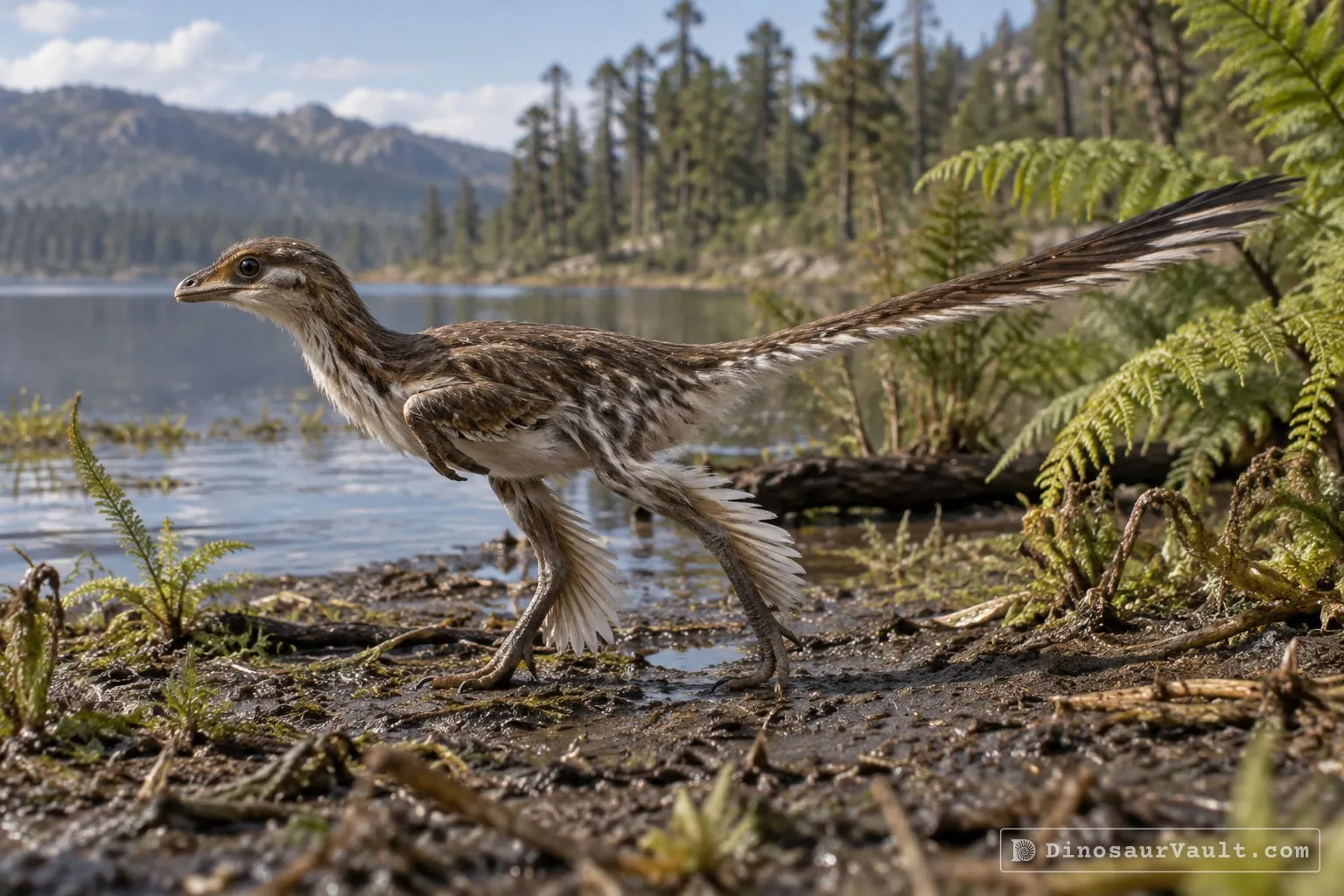
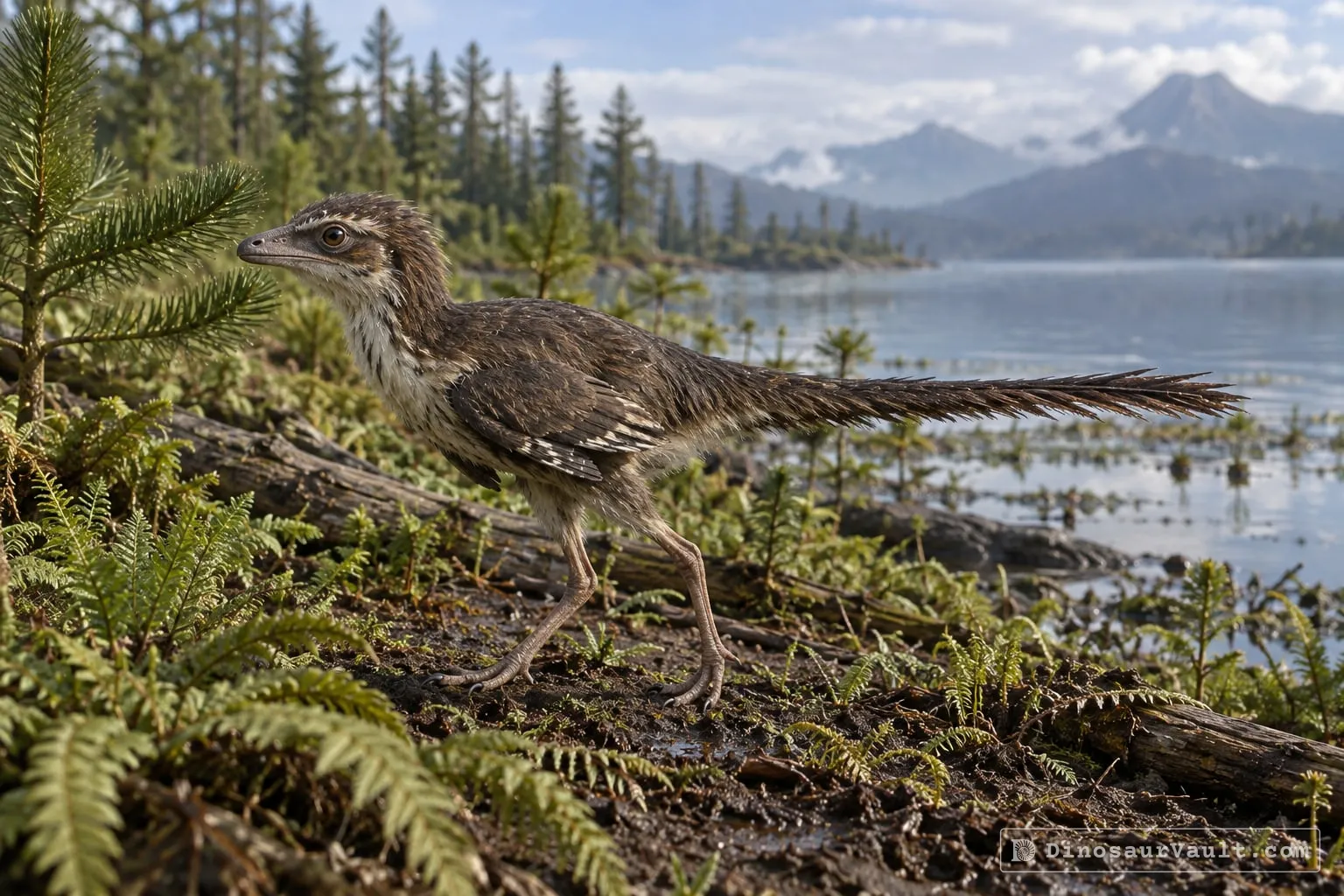
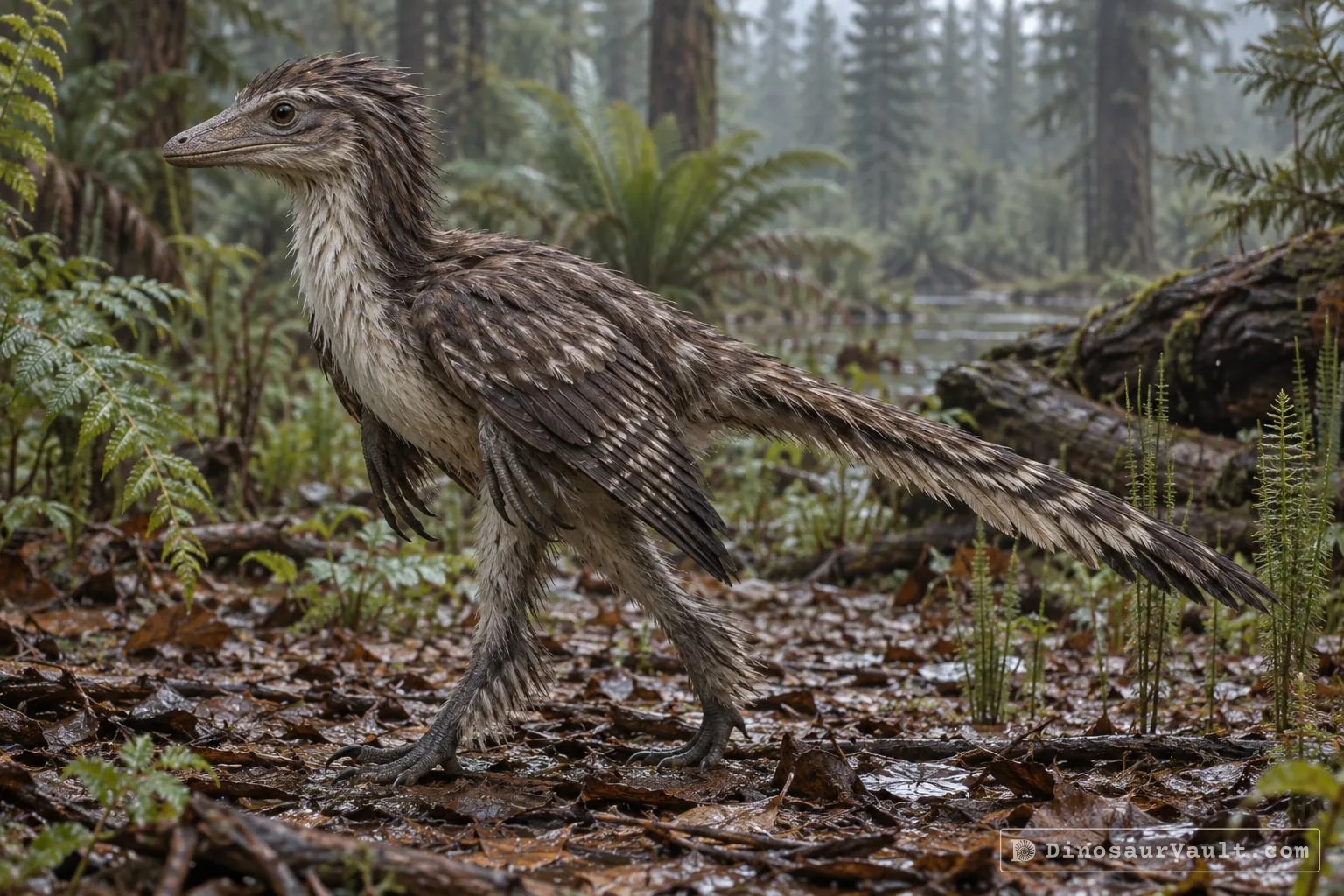
Yi was a tiny, likely tree-climbing dinosaur with an odd kind of wing found in no other known dinosaur. A long, rod-like bone extended from each wrist, and skin stretched between this rod and the arm and fingers to form a bat-like membrane rather than a feathered wing.
Alongside these membrane wings, Yi also had some feathers on its body, but scientists think it likely glided between branches instead of flying under its own power.
Its world
Yi lived from about 165 to 155 million years ago, spanning the Middle and Late Jurassic, in what is now China. Its fossils come from the Tiaojishan Formation.
It shared this forested world with other small, feathered maniraptorans, including Anchiornis, Epidexipteryx, Caihong, Pedopenna, Eosinopteryx, and Serikornis, as well as the plant eater Tianyulong.
How it was found
Xu and colleagues named Yi qi in 2015, from a single fossil skeleton, the only one known. Its strange wrist bone and wing membrane were unlike anything seen before in a dinosaur, and briefly made it one of the most talked-about fossil finds of its year.
Field gallery
More views of Yi
Scenes reconstructed from the available fossil evidence.

1 of 7
Lived alongside
Found in the same rock formations
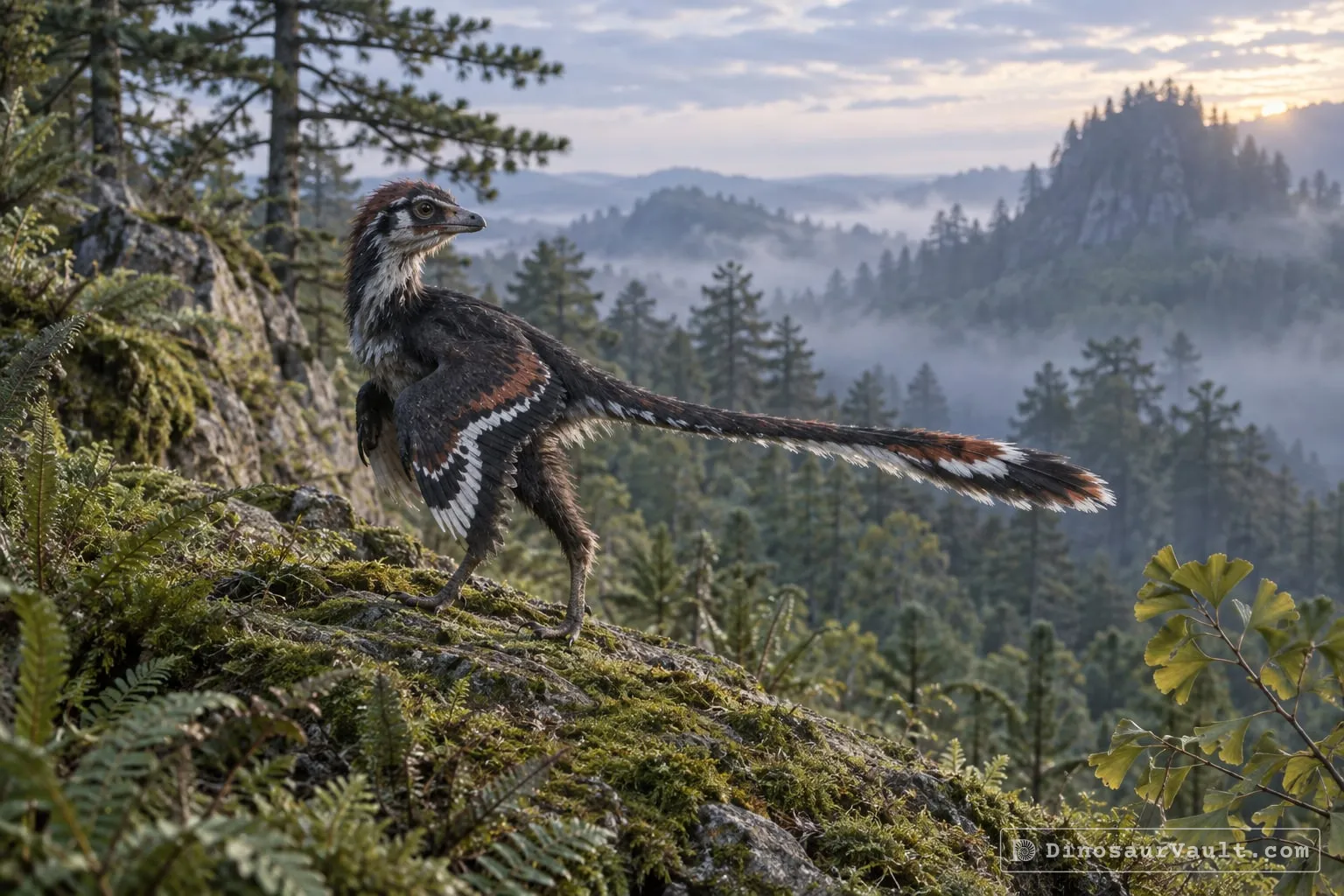
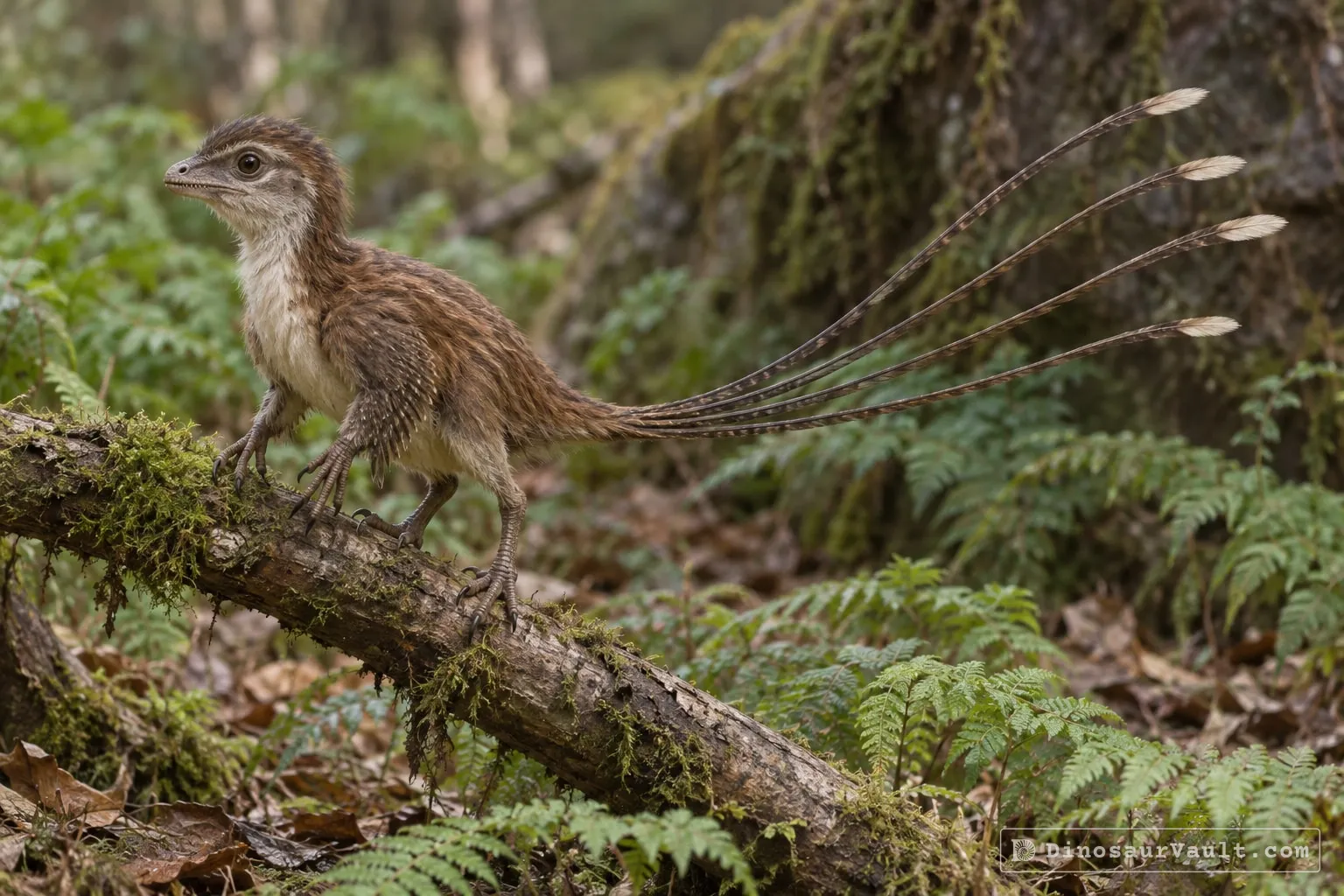
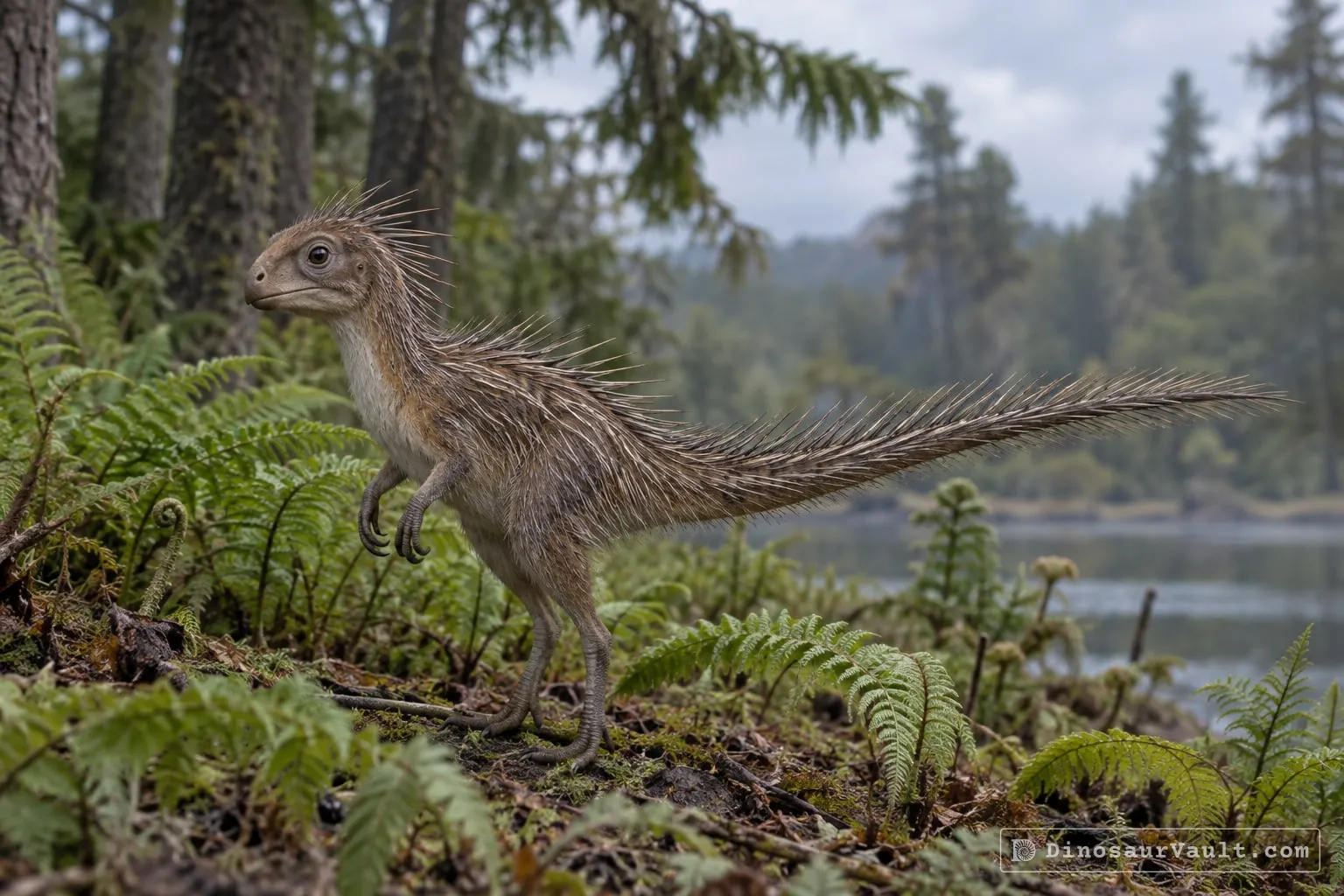
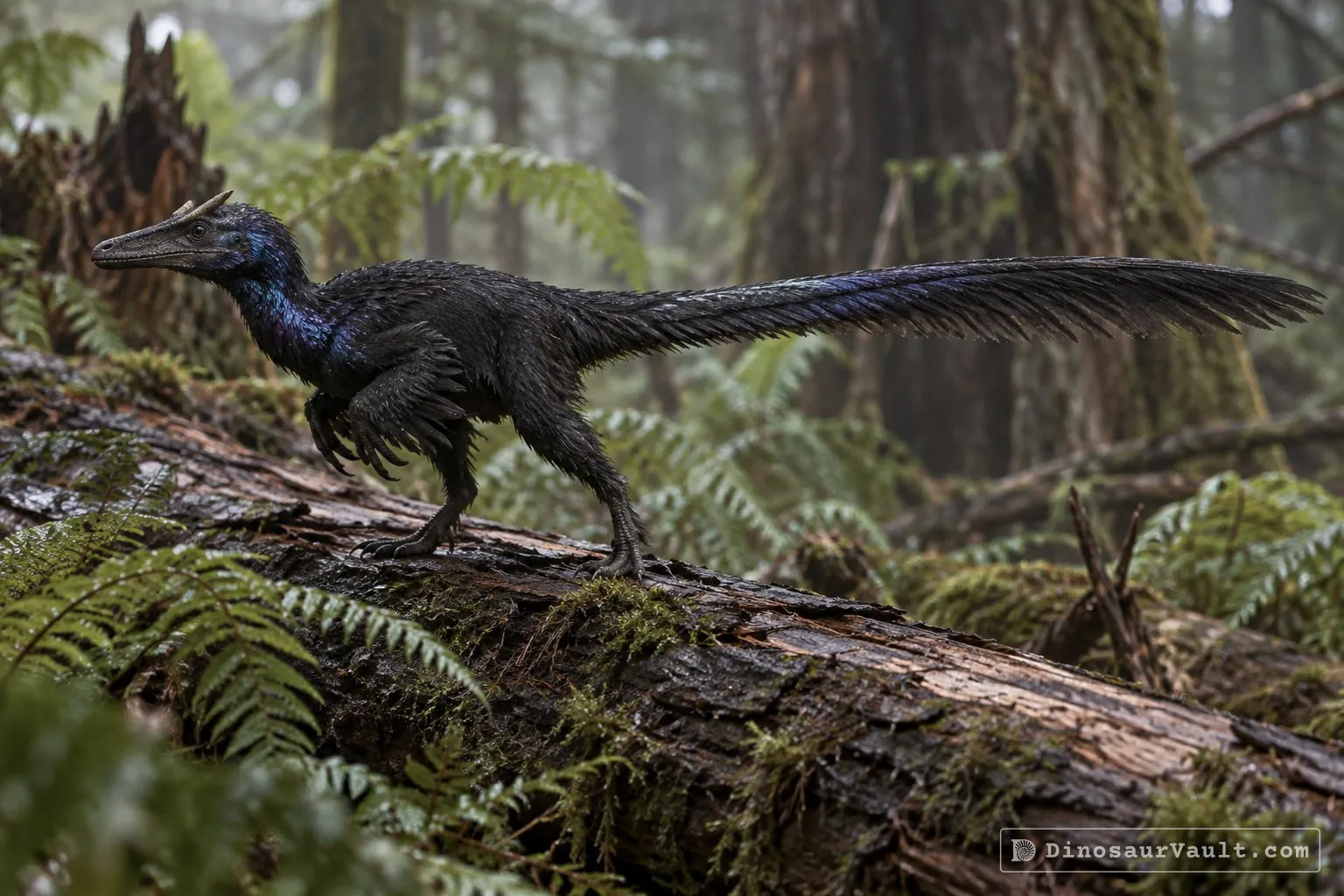



A rock formation can hold fossils laid down millions of years apart, so not every animal here met Yi.
The evidence
The science behind Yi
Which parts of the picture come from its own bones, and which come from its relatives.
From its own fossils
- A partial skeleton preserves long fingers and a rod-shaped bone extending from the wrist.
- Patches of a wing membrane survive beside the fingers and wrist rod.
- Stiff, filament-like feathers cover parts of the forelimbs and hindlimbs.
Borrowed from relatives
- The close relative Ambopteryx also preserves a wrist rod and wing membrane.
- Missing parts of the feet and tail are reconstructed using other small relatives such as Scansoriopteryx.
Still unknown
- The complete outline of its wing membrane.
- Exactly how it moved through the air and climbed among branches.
- Its full body coloring.
Often drawn wrong
- Its wing was supported by long fingers and a wrist rod, rather than the finger arrangement of a modern bat.
- A naked, leathery body leaves out its preserved feathers.
Discovery timeline
- 2015Named itXu et al.
- 2019Close relativeWang et al.
- 2020PostureDececchi et al.
Key papers
The research behind what we know of Yi
Named it
Described a feathered dinosaur with an unusual wrist rod and preserved patches of wing membrane.
A bizarre Jurassic maniraptoran theropod with preserved evidence of membranous wings. Nature 521: 70-73
Read the paper : A bizarre Jurassic maniraptoran theropod with preserved evidence of membranous wings (opens in a new tab)Close relative
Described Ambopteryx, another dinosaur with a wrist rod and membrane wings, supporting the interpretation of Yi's unusual wings.
A new Jurassic scansoriopterygid and the loss of membranous wings in theropod dinosaurs. Nature 569: 256-259
Read the paper : A new Jurassic scansoriopterygid and the loss of membranous wings in theropod dinosaurs (opens in a new tab)Posture
Tested possible wing shapes and found that Yi probably glided poorly and was highly unlikely to fly by flapping.
Aerodynamics Show Membrane-Winged Theropods Were a Poor Gliding Dead-end. iScience 23: 101574
Read the paper : Aerodynamics Show Membrane-Winged Theropods Were a Poor Gliding Dead-end (opens in a new tab)
Close relatives
Other members of Scansoriopterygidae


Sources: Wikidata