Tatankacephalus
"bison head"
- Lived
- 113 to 101 million years ago, Early Cretaceous
- Diet
- Herbivore
- Group
- Ankylosaurs, Nodosauridae
- Found in
- United States
- Named by
- Parsons and Parsons 2009
Where its fossils were found
The evidence
Today

105 million years ago
Habitat
It probably lived on river floodplains in what is now Montana. The Cloverly Formation also preserves Sauropelta, Deinonychus and Tenontosaurus.
Field notes
About Tatankacephalus
What it was like
Tatankacephalus was an armored plant eater known from a partial skull. Some ribs and armor found with it may belong to the same animal. It has been placed among both ankylosaurids and nodosaurs, and its exact position remains uncertain.
Its world
It lived in the Early Cretaceous in what is now Montana, in the United States. Its bones come from the Cloverly Formation, where it shared the land with the nodosaur Sauropelta, the sickle-clawed Deinonychus and the plant eater Tenontosaurus.
How it was found
Parsons and Parsons named Tatankacephalus in 2009, from a single find.
Field gallery
More views of Tatankacephalus
Scenes reconstructed from the available fossil evidence.
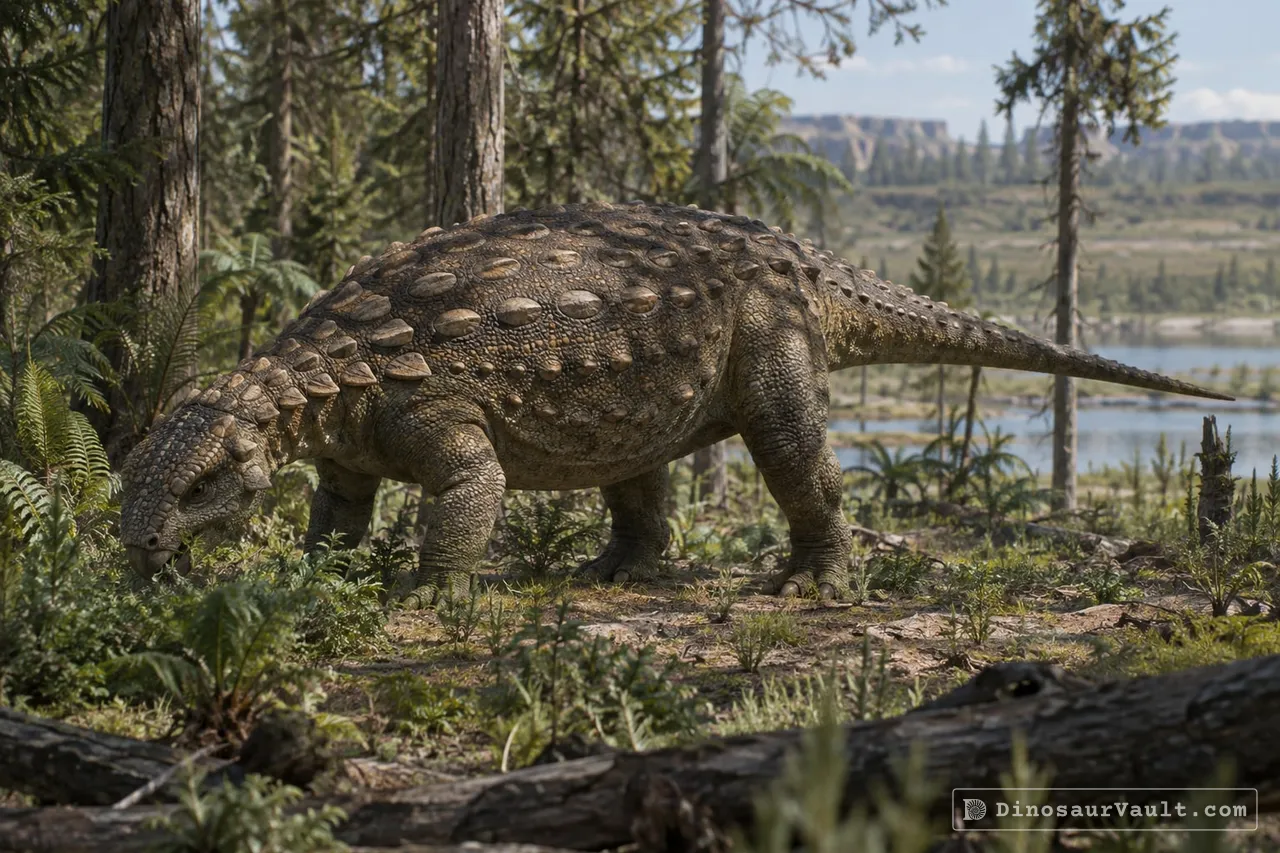
1 of 2
Lived alongside
Found in the same rock formations
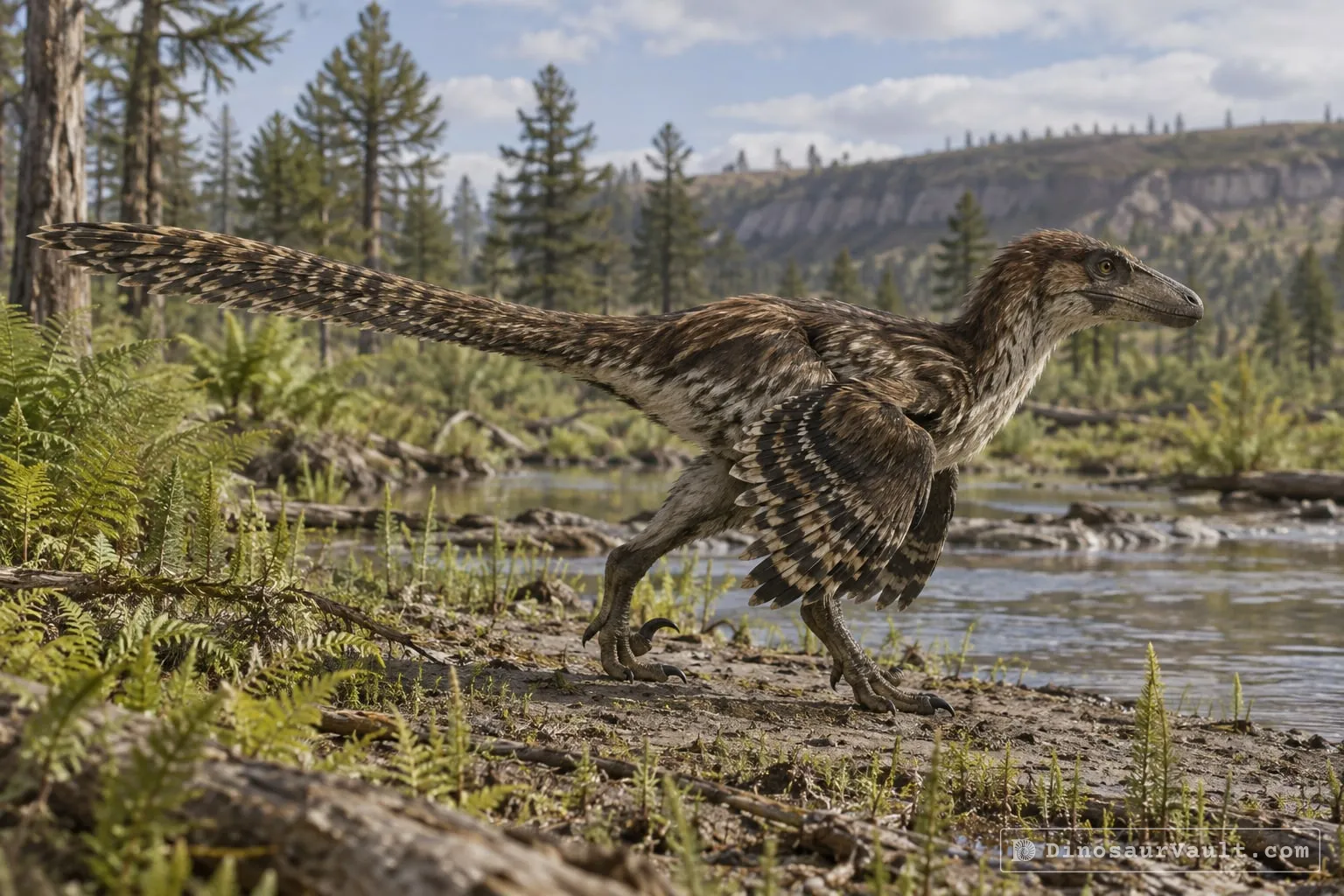
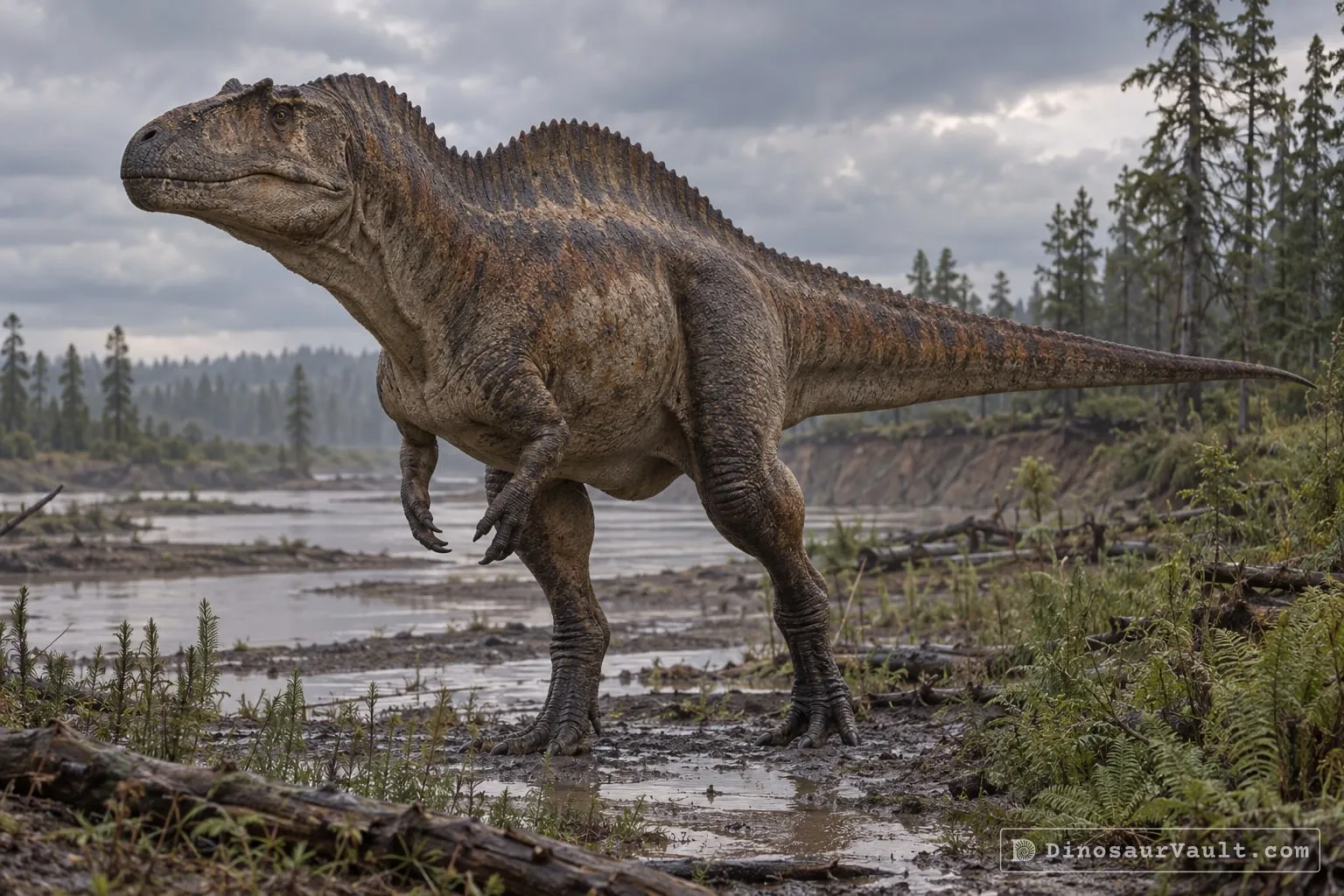
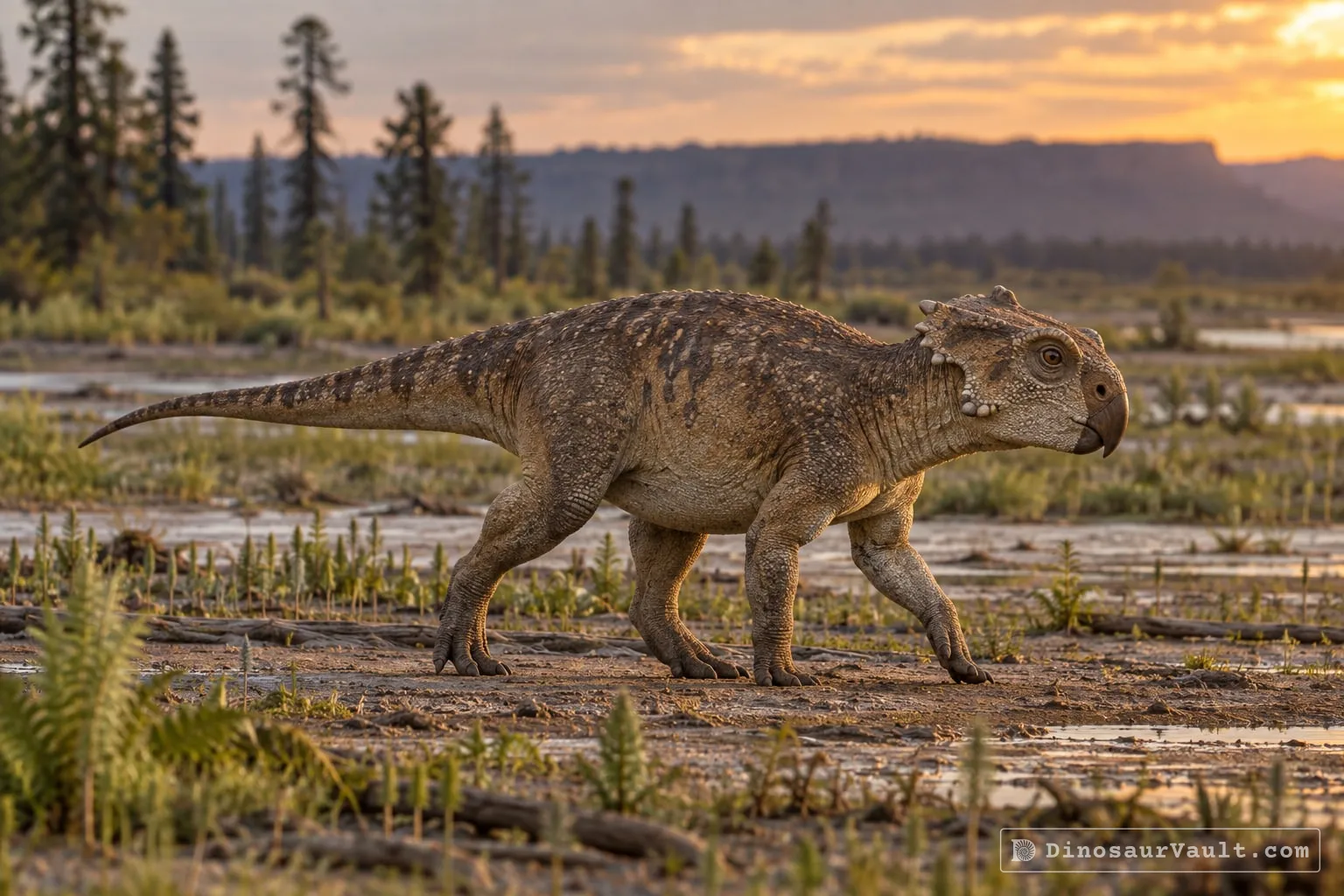
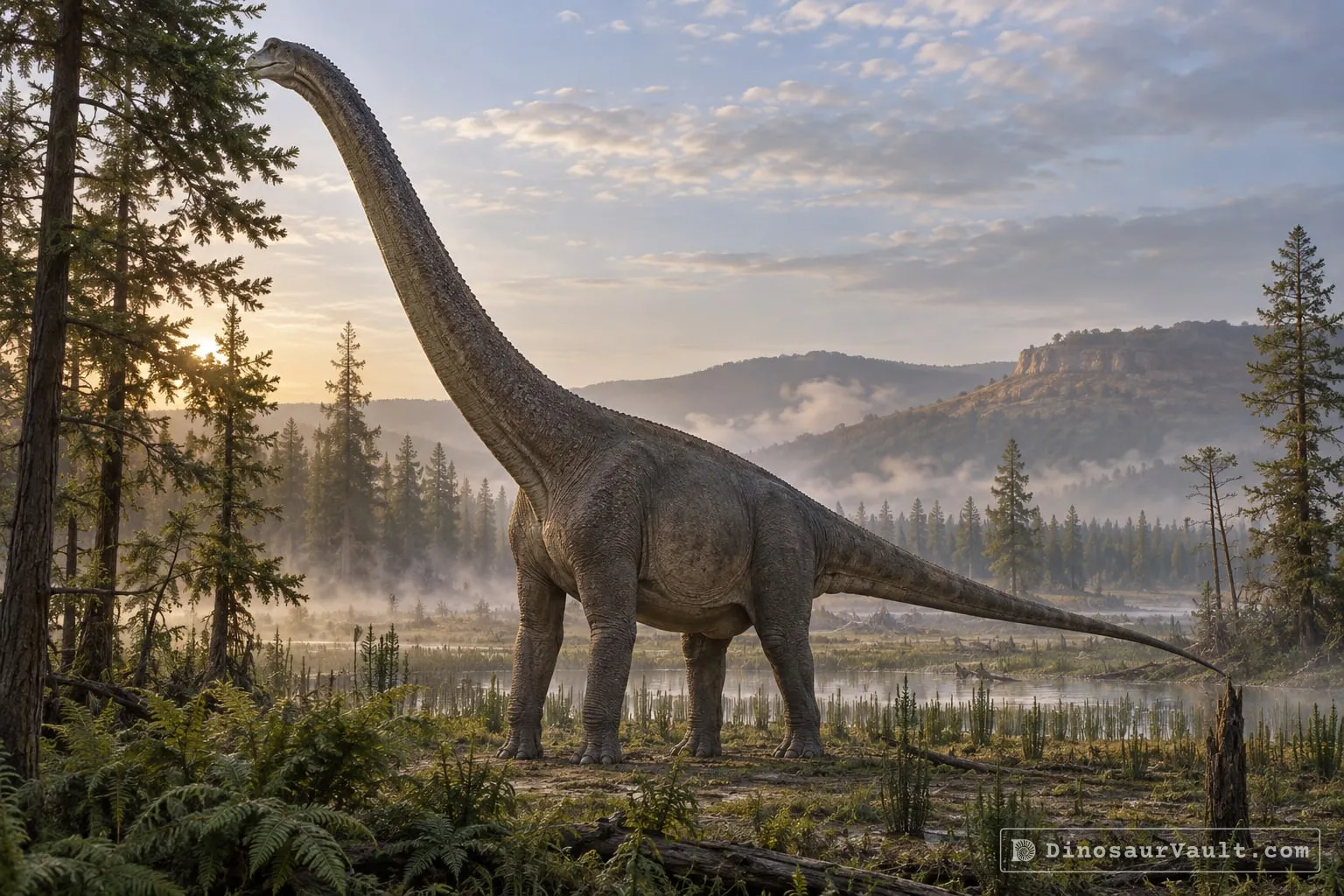
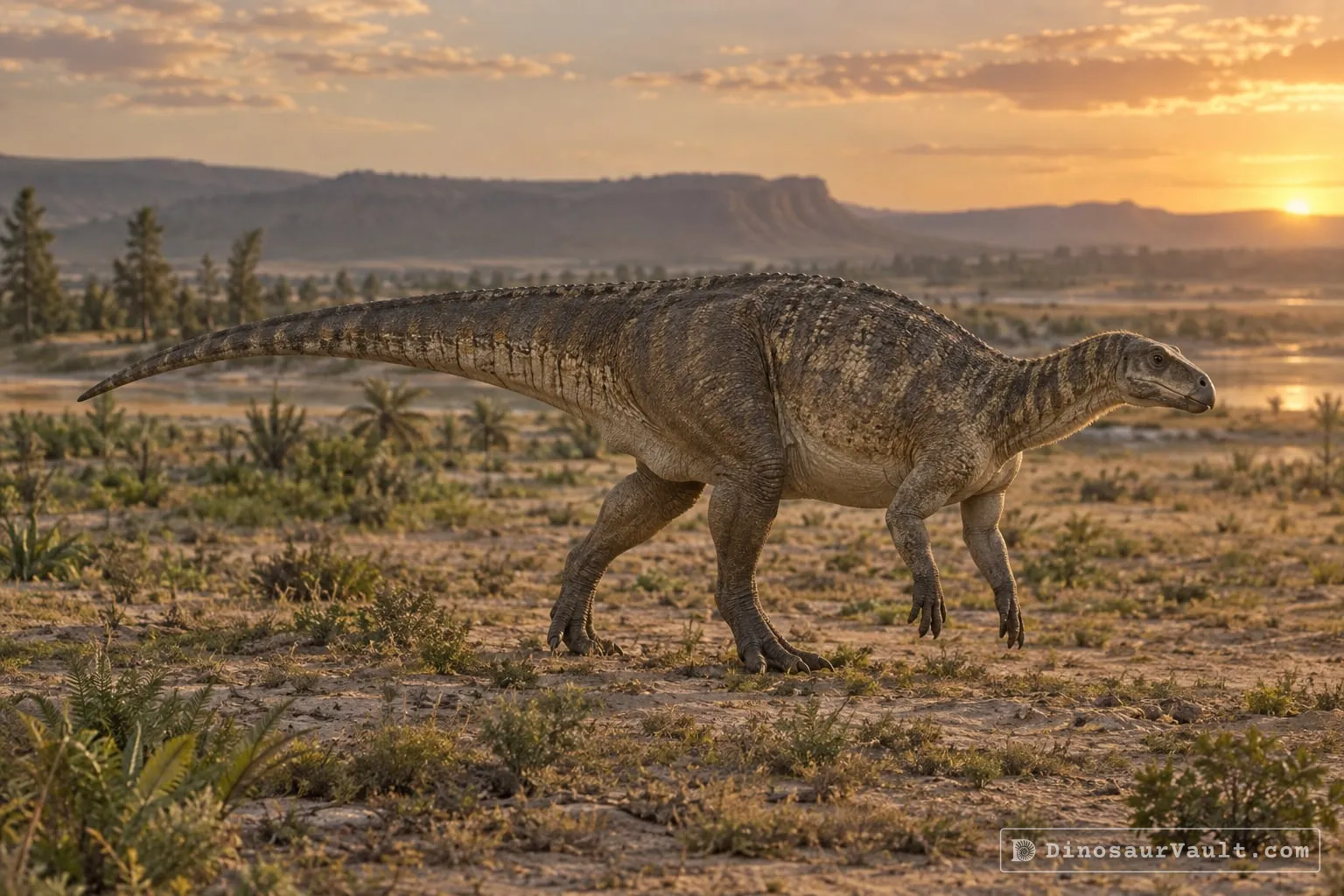
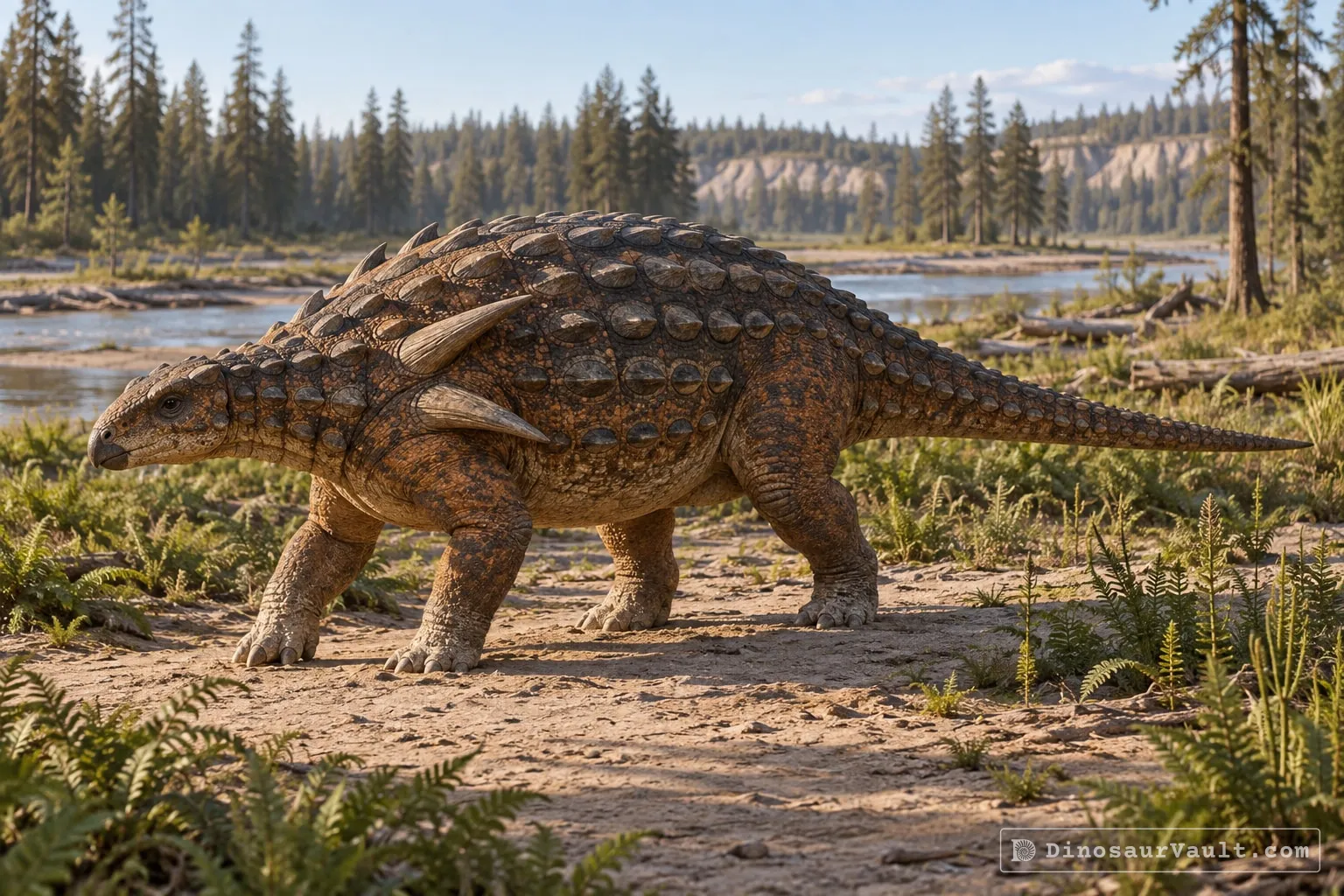
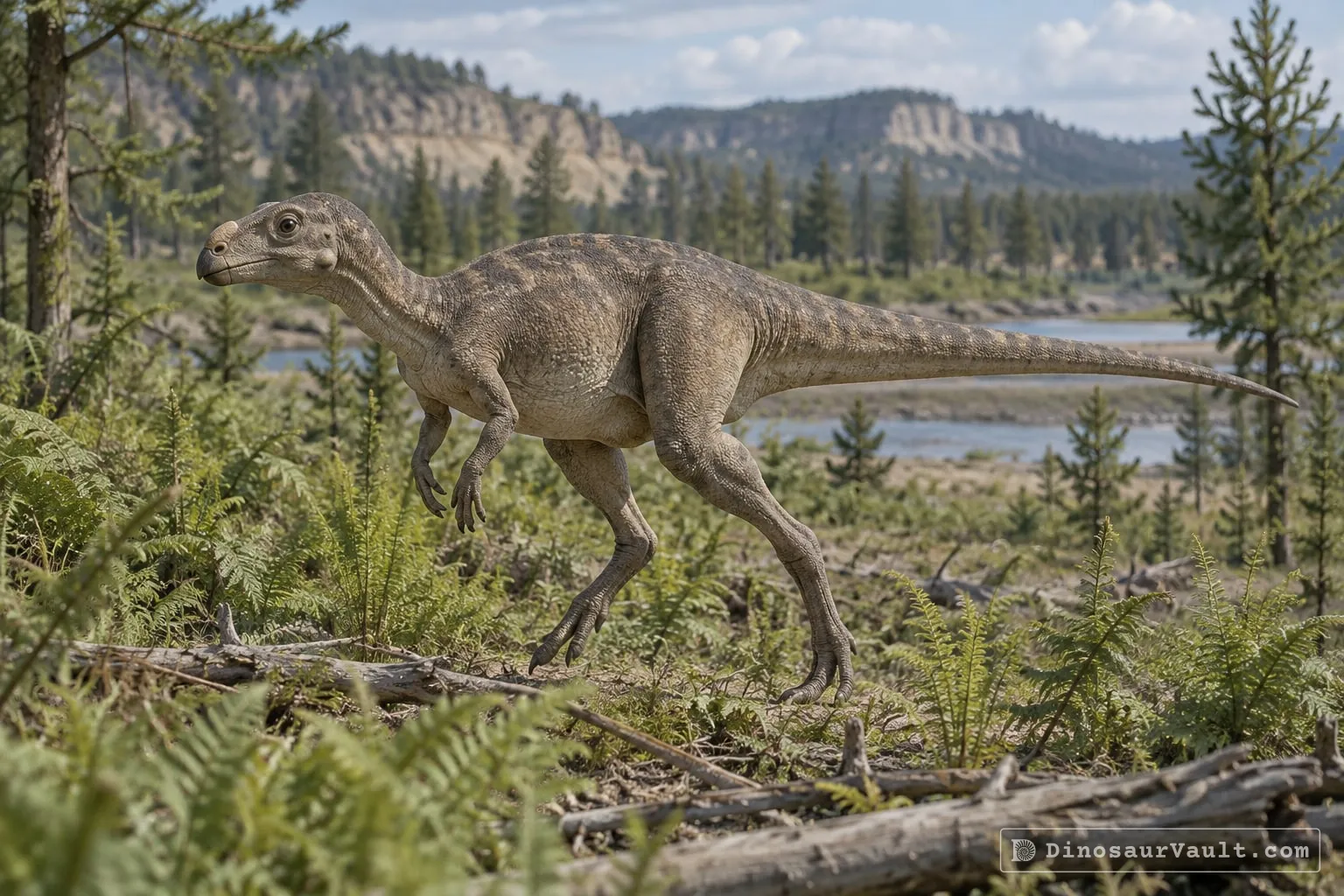
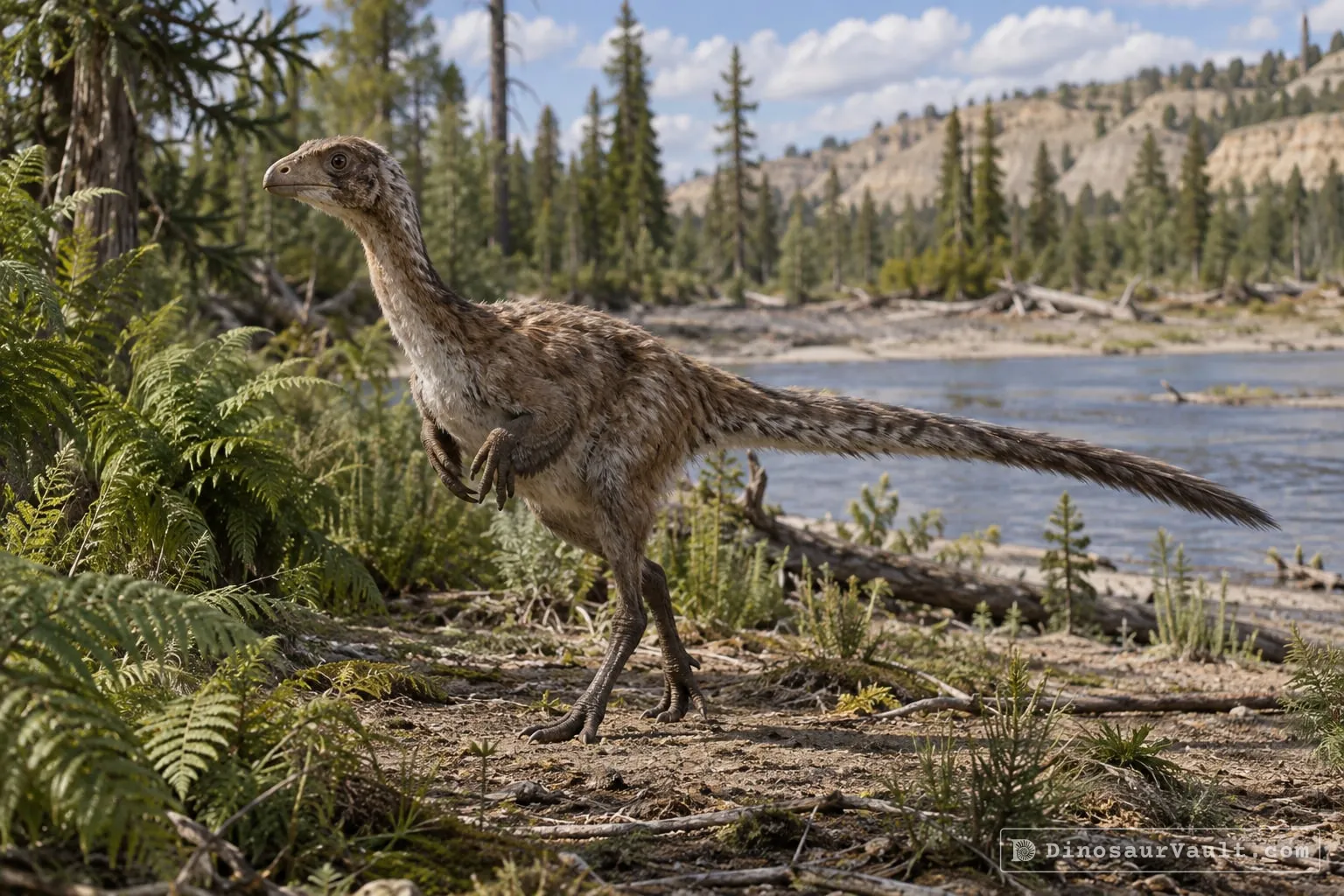


A rock formation can hold fossils laid down millions of years apart, so not every animal here met Tatankacephalus.
The evidence
The science behind Tatankacephalus
Which parts of the picture come from its own bones, and which come from its relatives.
From its own fossils
- Pieces of one skull preserve a smooth dome on the roof, a curved ridge across the back of the head and a round eye socket.
- Bony bosses stick out at the sides of the head: a diamond-shaped bone above the eye, a pyramid-shaped boss behind it and another low on the cheek. The tip of the snout carried teeth.
- Two pieces of bony armor and some ribs found with the skull may come from the same animal.
Borrowed from relatives
- The missing lower jaw, neck and shoulders are restored by comparison with Europelta, a nodosaur from Spain.
- The full length of the skull was estimated from the proportions of Gargoyleosaurus.
Still unknown
- How some pieces of the skull roof fitted together, and the full shape of its snout and lower jaw.
- The arrangement of armor across its body.
- Its exact place among armored dinosaurs. It was first described as an early ankylosaurid, a later study placed it among the nodosaurs, and a recent one found it either unresolved or grouped with Sauropelta, depending on the analysis.
Discovery timeline
- 2009Named itParsons & Parsons
- 2011Family treeThompson et al.
- 2013Same rocksOreska, Carrano & Dzikiewicz
- 2013Full descriptionKirkland et al.
Key papers
The research behind what we know of Tatankacephalus
Named it
Described a partial skull that distinguished Tatankacephalus from Sauropelta in the same formation, with teeth at the tip of its snout.
A new ankylosaur (Dinosauria: Ankylosauria) from the Lower Cretaceous Cloverly Formation of central Montana. Canadian Journal of Earth Sciences 46: 721-738
Read the paper : A new ankylosaur (Dinosauria: Ankylosauria) from the Lower Cretaceous Cloverly Formation of central Montana (opens in a new tab)Family tree
Compared armored dinosaurs and placed Tatankacephalus among the nodosaurs.
Phylogeny of the ankylosaurian dinosaurs (Ornithischia: Thyreophora). Journal of Systematic Palaeontology 10: 301-312
Read the paper : Phylogeny of the ankylosaurian dinosaurs (Ornithischia: Thyreophora) (opens in a new tab)Same rocks
Small fossil sites revealed a richer Cloverly community, including fishes, amphibians, lizards, crocodile relatives and mammals.
Vertebrate paleontology of the Cloverly Formation (Lower Cretaceous), I: faunal composition, biogeographic relationships, and sampling. Journal of Vertebrate Paleontology 33: 264-292
Read the paper : Vertebrate paleontology of the Cloverly Formation (Lower Cretaceous), I: faunal composition, biogeographic relationships, and sampling (opens in a new tab)Full description
Named Europelta, an early nodosaur whose lower jaws, neck vertebrae and armor give a comparison for armored dinosaurs that lack these parts.
The Basal Nodosaurid Ankylosaur Europelta carbonensis n. gen., n. sp. from the Lower Cretaceous (Lower Albian) Escucha Formation of Northeastern Spain. PLoS ONE 8: e80405
Read the paper : The Basal Nodosaurid Ankylosaur Europelta carbonensis n. gen., n. sp. from the Lower Cretaceous (Lower Albian) Escucha Formation of Northeastern Spain (opens in a new tab)
Close relatives
Other members of Nodosauridae


Sources: Wikidata