Acrocanthosaurus
AK-ro-KAN-tho-SORE-us
"high-spined lizard"
Type species Acrocanthosaurus atokensis
- Lived
- 121 to 94 million years ago, Early Cretaceous to Late Cretaceous
- Diet
- Carnivore
- Length
- about 12 m (38 ft)
- Group
- Theropods, Carcharodontosauridae
- Found in
- United States
- Named by
- Stovall and Langston 1950
Size comparison
To scale
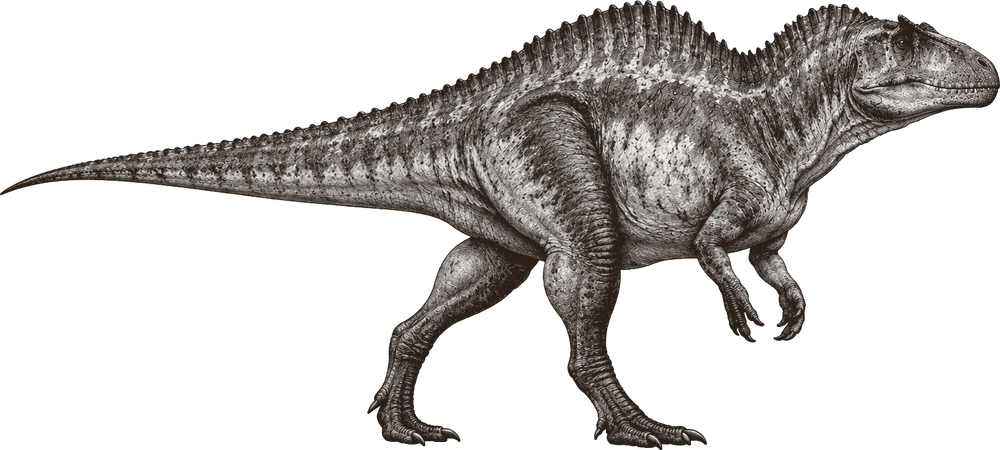


Scale in meters
Where its fossils were found
The evidence
Today

110 million years ago
Habitat
Rivers crossed the floodplains where the Antlers Formation formed in Oklahoma. Regional neighbors included Sauroposeidon, Tenontosaurus and Deinonychus.
Field notes
About Acrocanthosaurus
What it was like
Acrocanthosaurus was a huge meat-eating dinosaur, growing to about 11.5 meters (38 feet) long, making it one of the largest predators ever found in North America. Tall spines rose from many of its backbones, probably supporting a raised ridge of muscle along its neck, back, and hips.
Its skull was large and its jaws held many curved, serrated teeth. Its arms were smaller than its legs but still strong, and it likely used them to grip struggling prey while its jaws did most of the damage.
Its world
Acrocanthosaurus lived from about 121 to 94 million years ago, spanning the Early and Late Cretaceous, across what is now the United States, including Oklahoma, Texas, Arkansas, Wyoming, Arizona, and Maryland.
It shared its world with large plant eaters such as Sauroposeidon and Tenontosaurus, as well as smaller dinosaurs including Deinonychus and Sauropelta. As the largest predator around, Acrocanthosaurus was probably the top hunter in its habitat.
How it was found
Stovall and Langston named Acrocanthosaurus in 1950, based on fossils found in Oklahoma. Around 9 finds are now known across several states. Its closest relatives include Carcharodontosaurus and Giganotosaurus, other huge, spine-backed predators found on other continents.
Field gallery
More views of Acrocanthosaurus
Scenes reconstructed from the available fossil evidence.
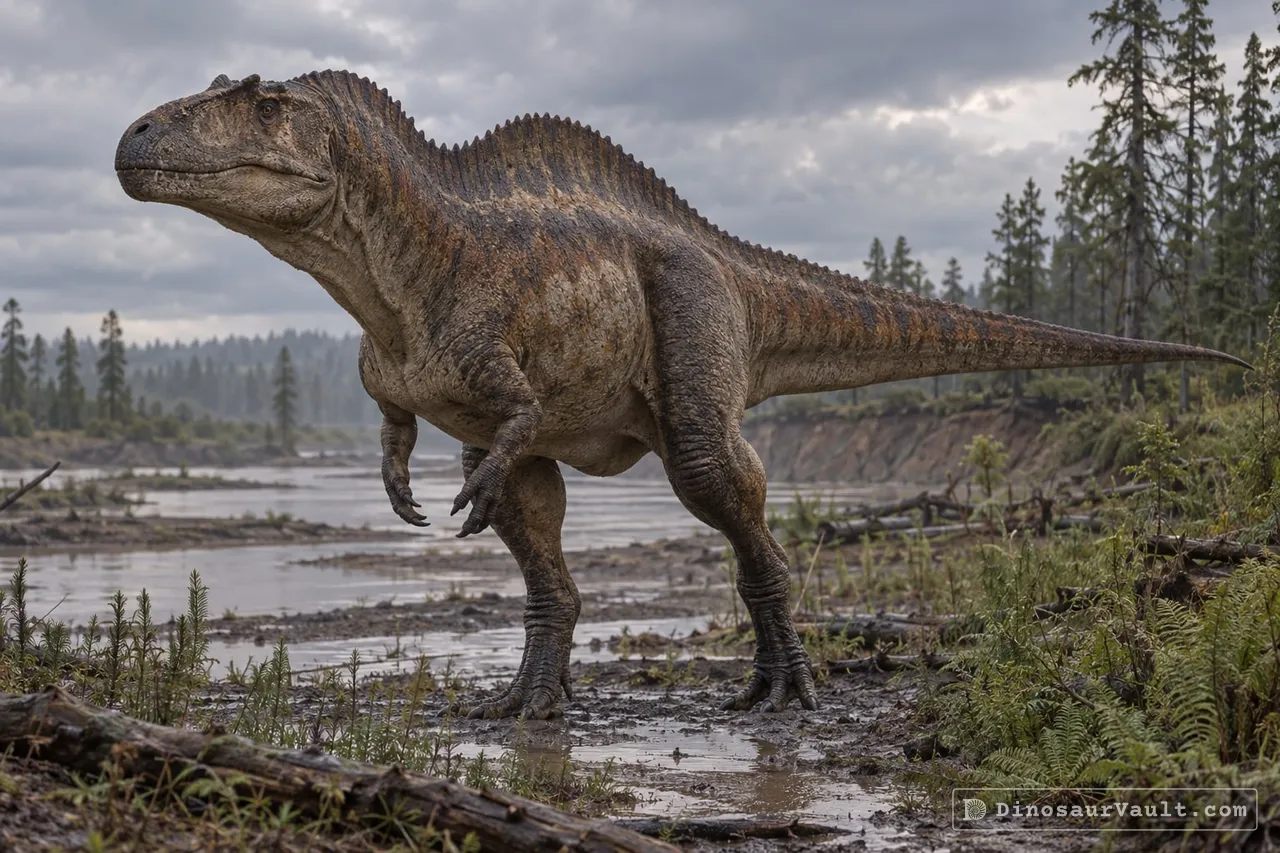
1 of 7
Lived alongside
Found in the same rock formations
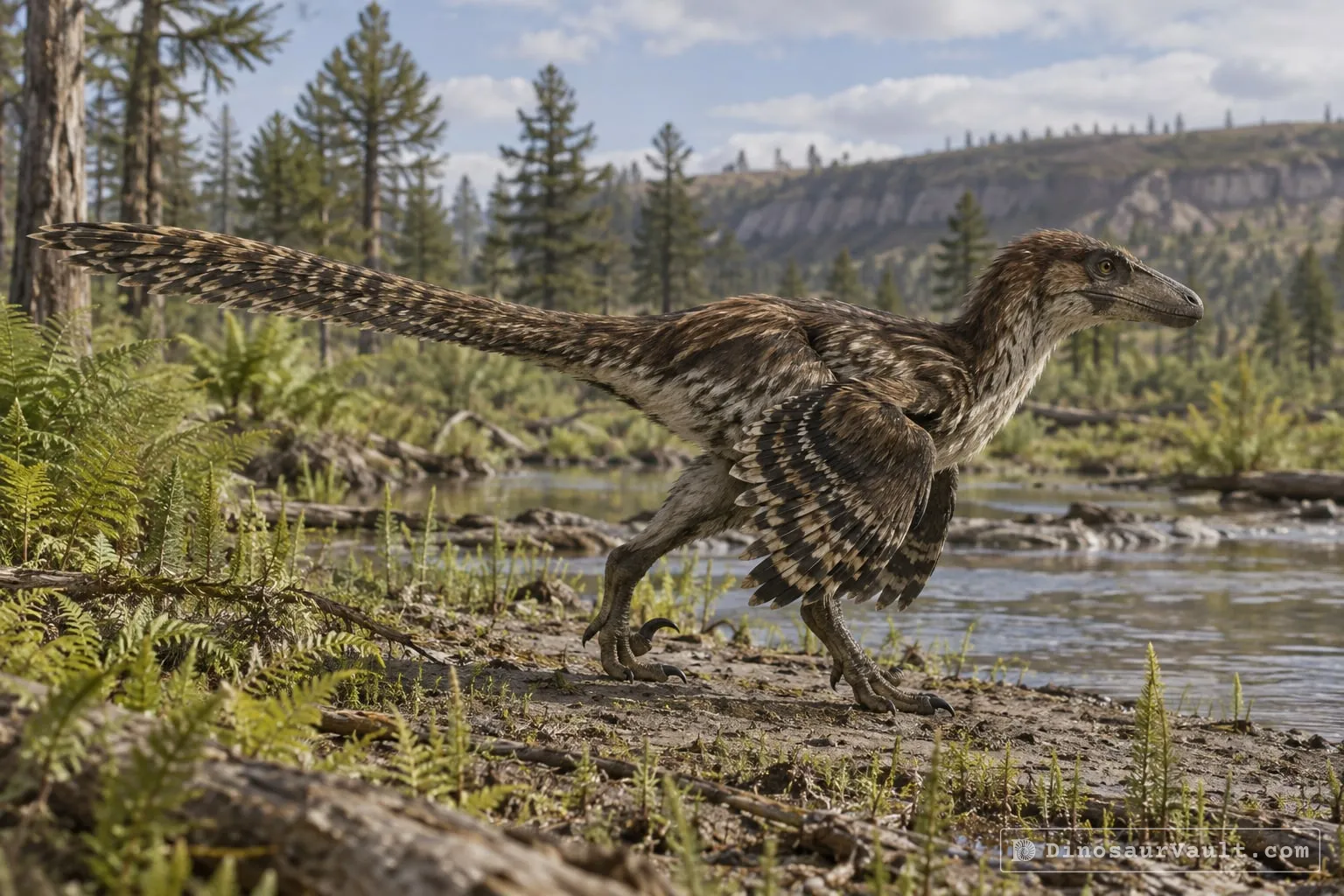
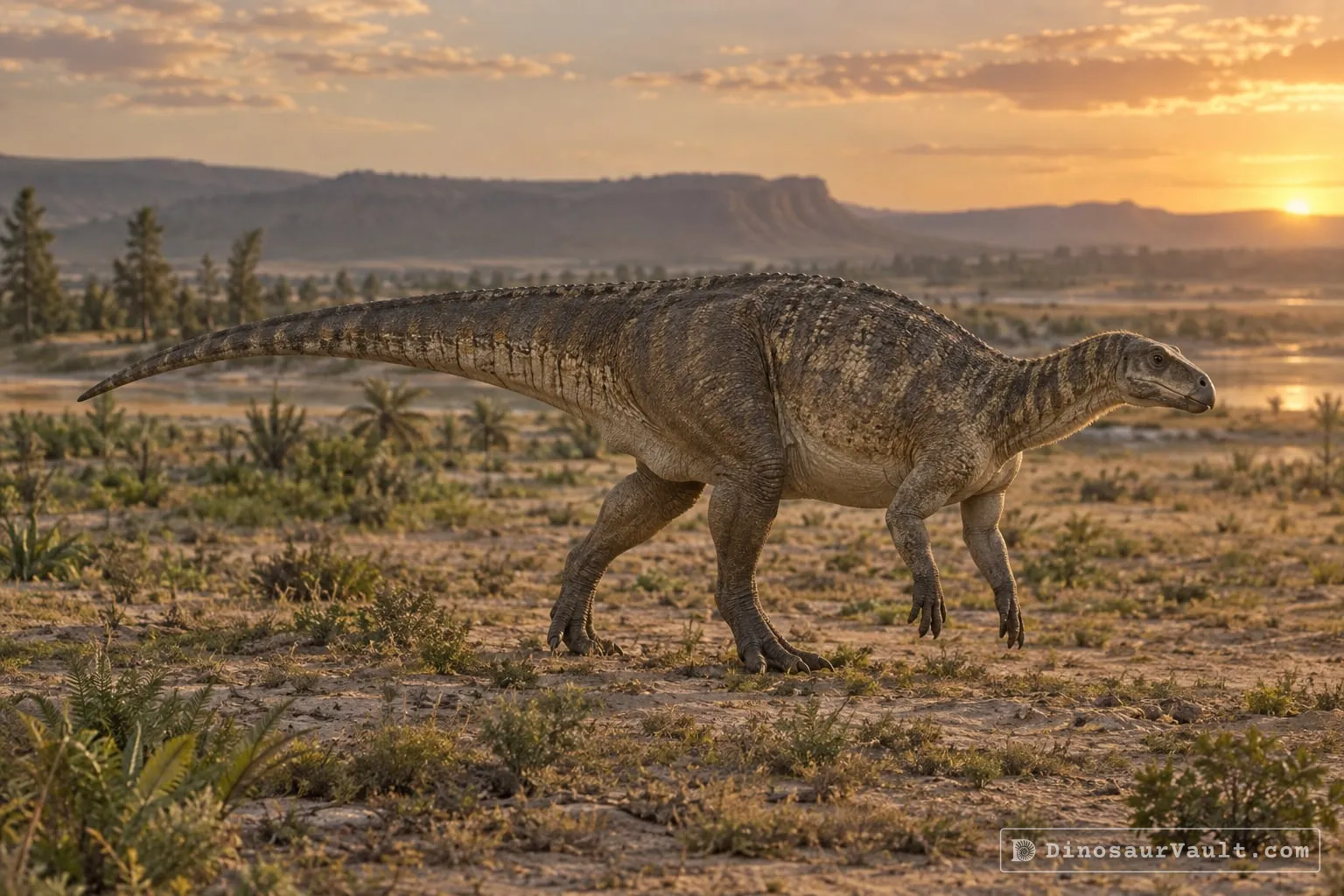
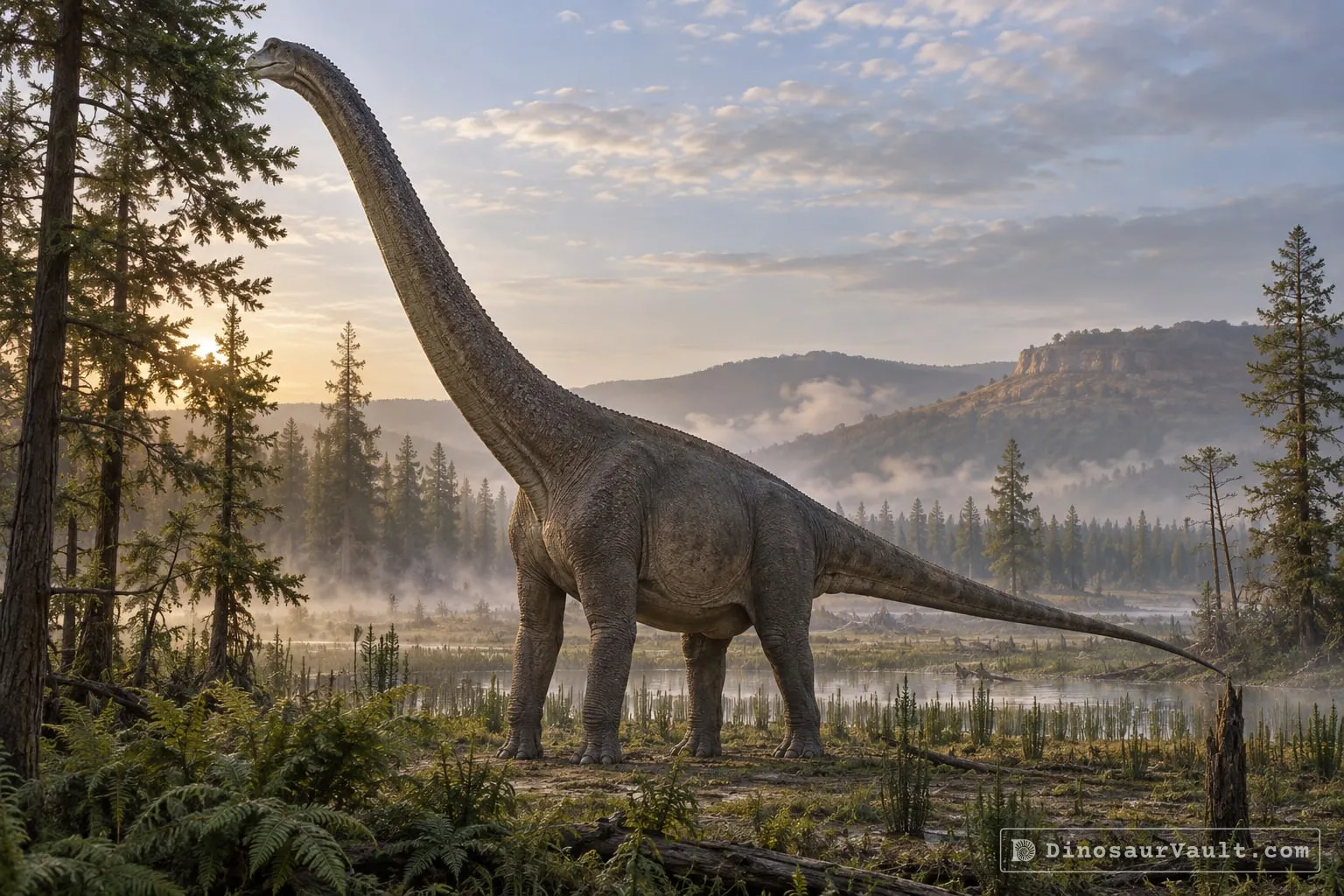
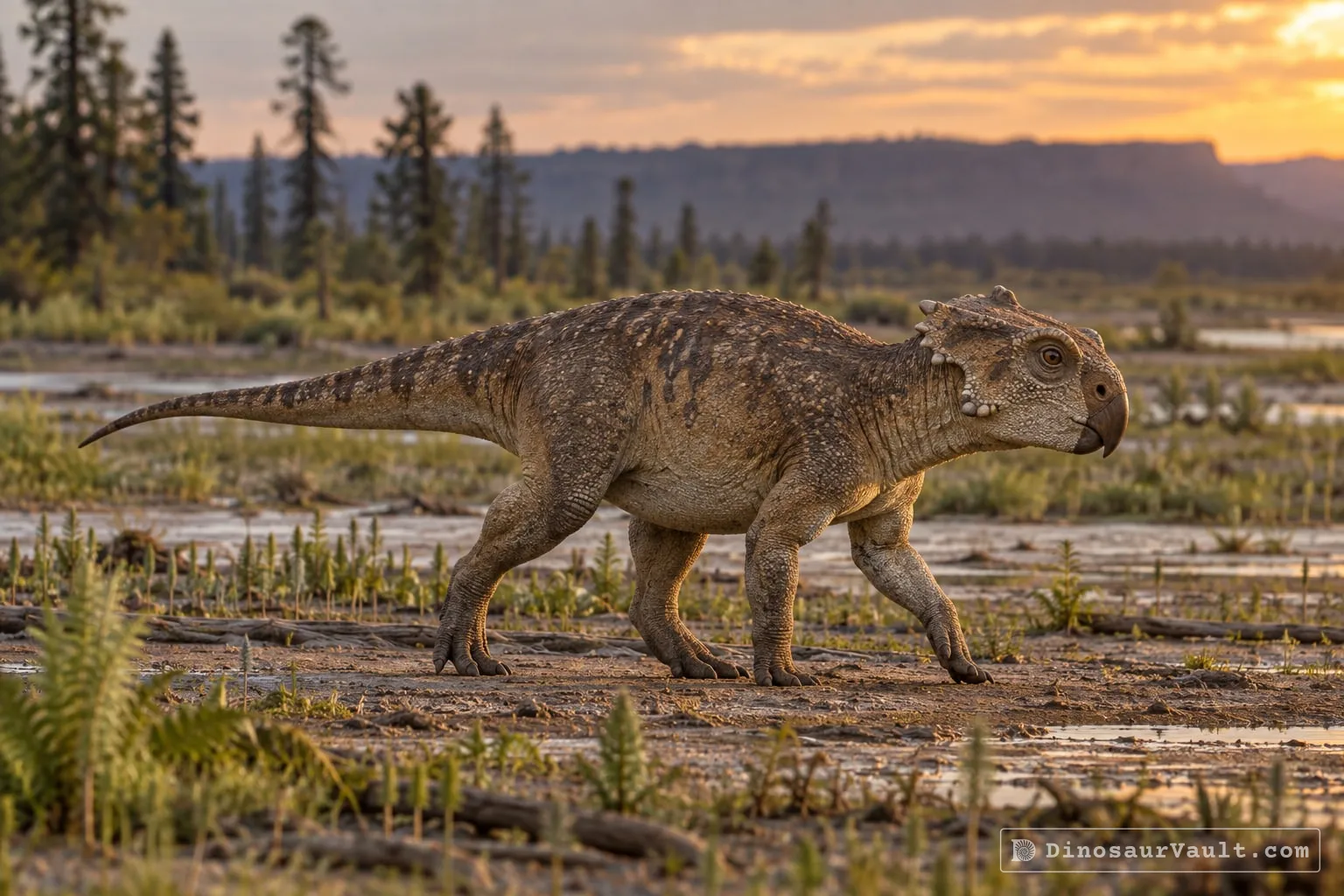
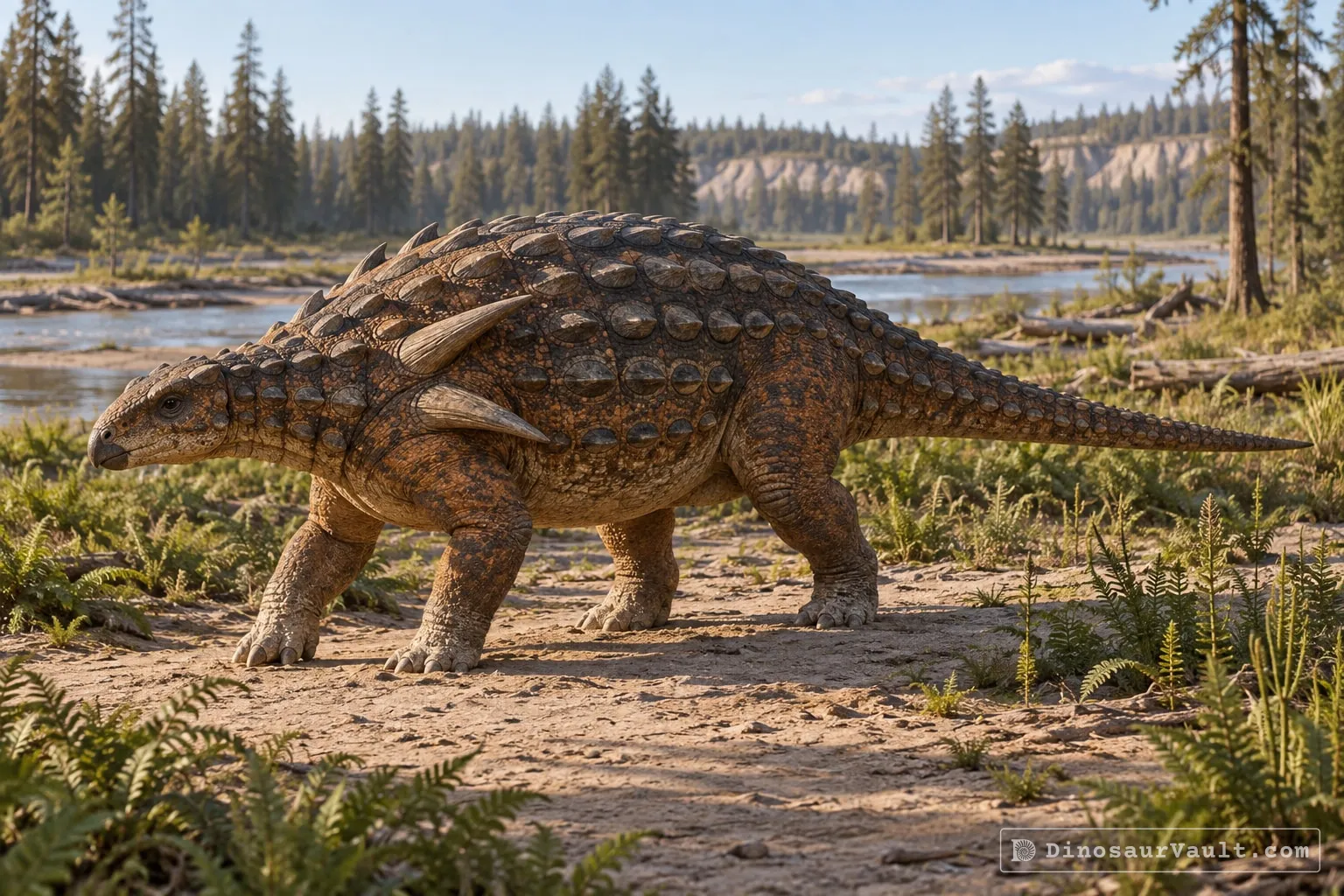
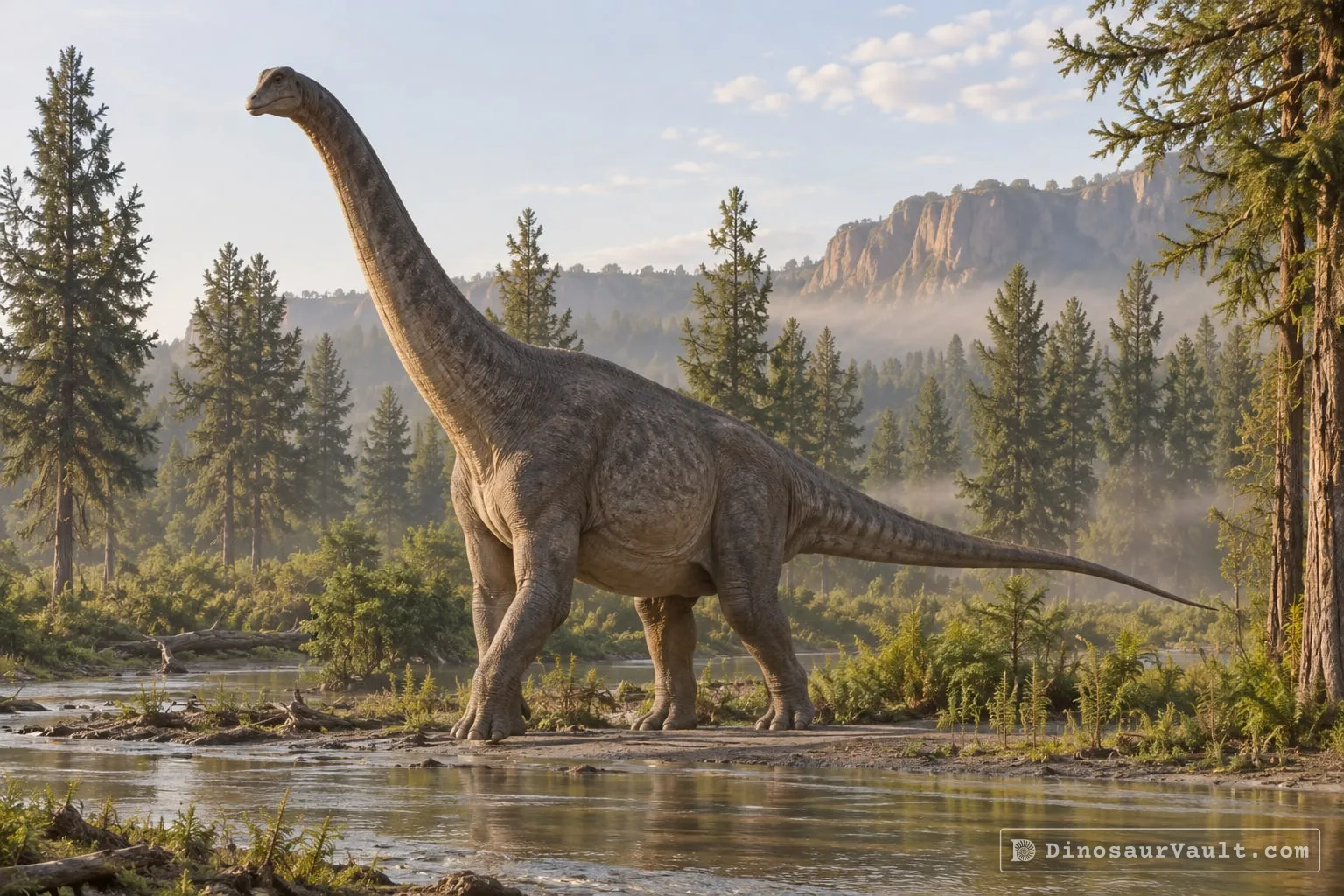
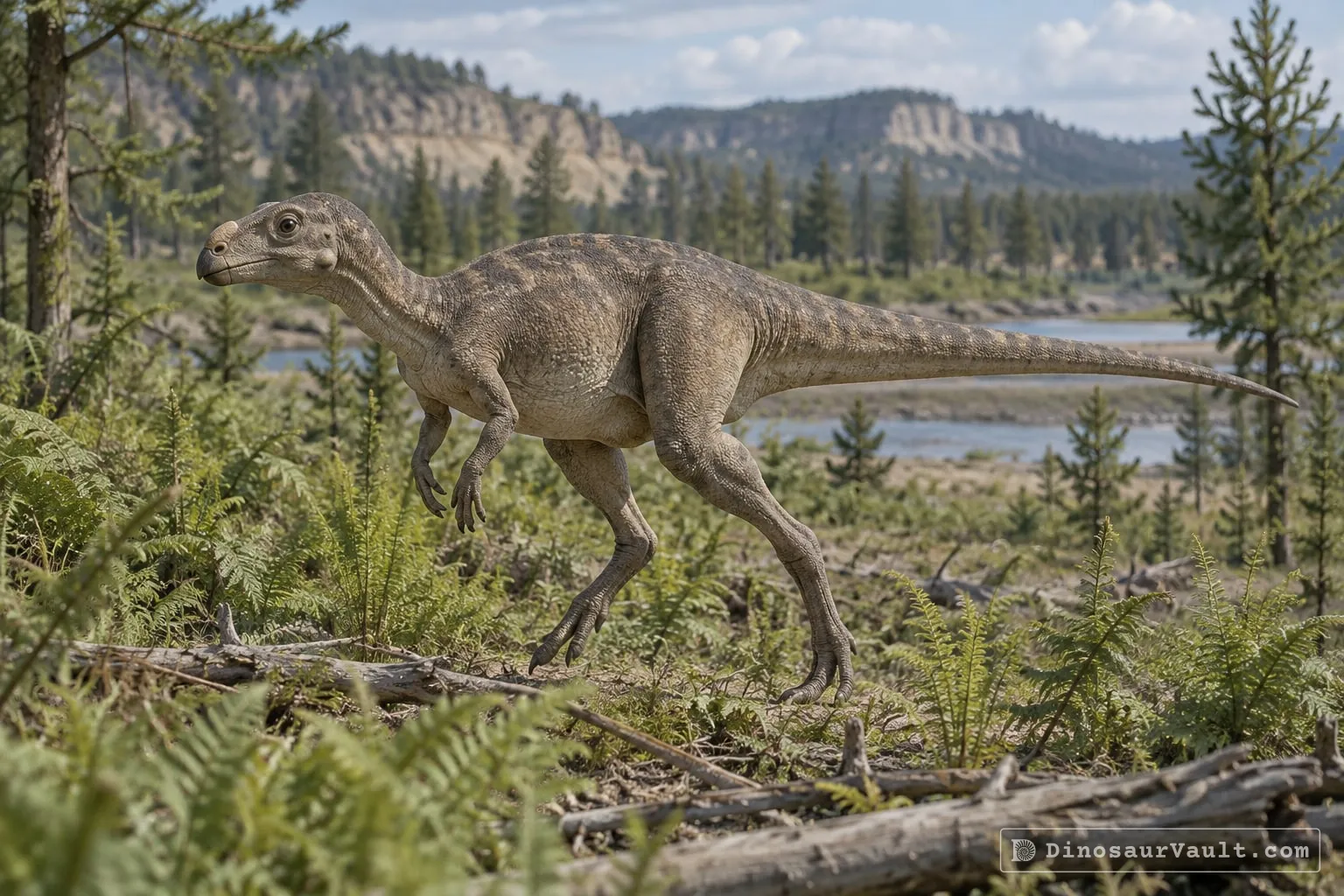
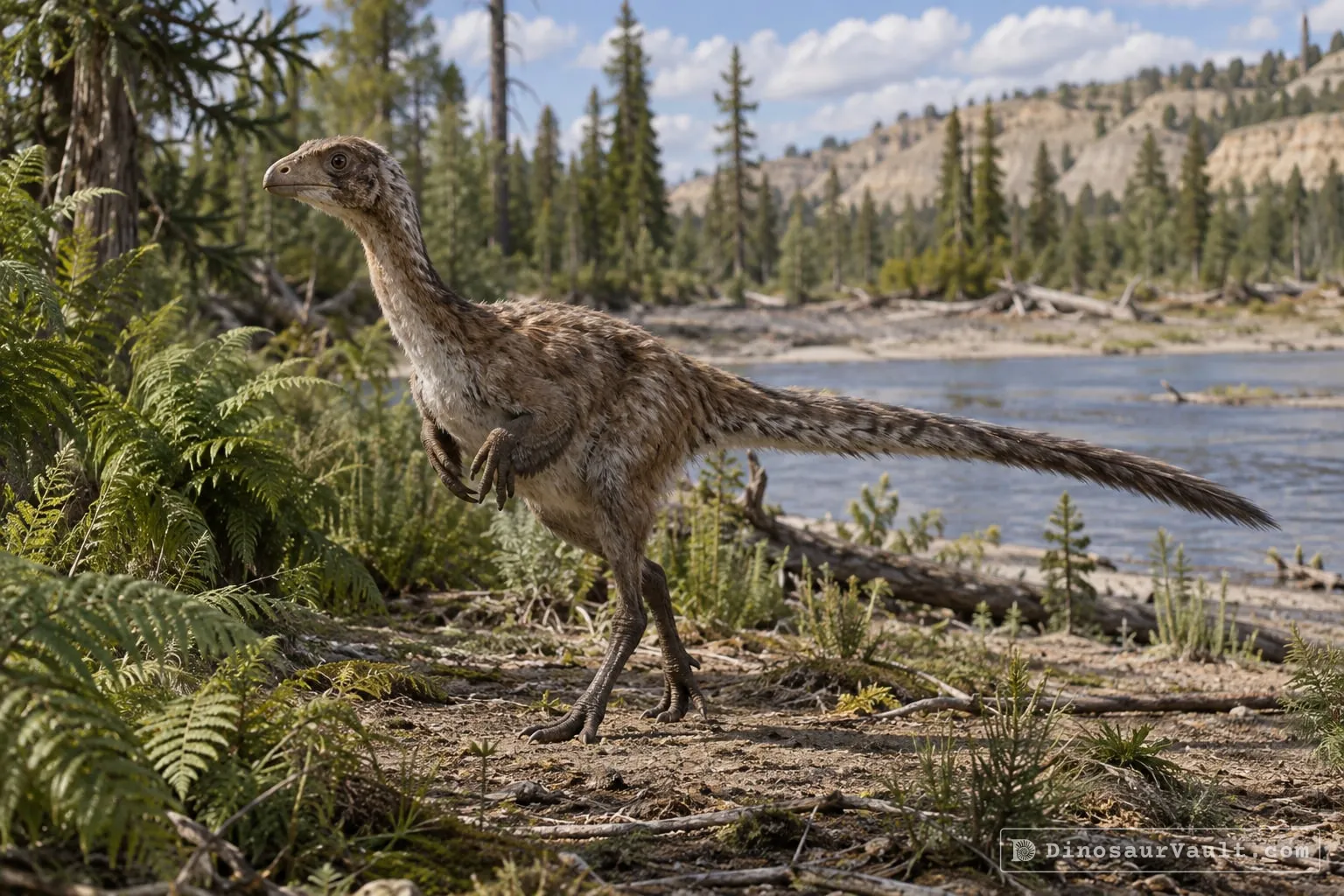


A rock formation can hold fossils laid down millions of years apart, so not every animal here met Acrocanthosaurus.
The evidence
The science behind Acrocanthosaurus
Which parts of the picture come from its own bones, and which come from its relatives.
From its own fossils
- Several partial skeletons preserve its long skull, serrated teeth, strong arms and powerful hindlegs.
- Tall bony spines rise from the vertebrae along its neck, back and hips.
- A complete forelimb shows inward-facing palms and grasping hands with three clawed fingers.
Borrowed from relatives
- Much of the body is known from its own bones; Allosaurus and other large theropods help fill missing parts.
- Lips covering the teeth and a mostly scaly body are inferred from other large theropods.
Still unknown
- The exact thickness and shape of the flesh over its tall spinal bones.
- Its skin color and pattern.
- How its skull and raised back changed as it grew.
Often drawn wrong
- Its raised back probably formed a broad ridge, rather than a thin sail like that of Spinosaurus.
- The hands faced inward and could not twist into a palm-down position.
- The tall spinal bones should be covered by flesh, rather than stick out as separate bare spikes.
Discovery timeline
- 1950Named itStovall & Langston
- 2005SkullFranzosa & Rowe
- 2005How it fedSenter & Robins
- 2011SkullEddy & Clarke
- 2023Close relativeCullen et al.
Key papers
The research behind what we know of Acrocanthosaurus
Named it
Named a large predator from Oklahoma whose unusually tall spinal bones gave it a raised back.
Acrocanthosaurus atokensis, a New Genus and Species of Lower Cretaceous Theropoda from Oklahoma. American Midland Naturalist 43: 696
Read the paper : Acrocanthosaurus atokensis, a New Genus and Species of Lower Cretaceous Theropoda from Oklahoma (opens in a new tab)Skull
Used scans of the braincase to reconstruct its internal spaces and estimate how Acrocanthosaurus held its head.
Cranial endocast of the Cretaceous theropod dinosaurAcrocanthosaurus atokensis. Journal of Vertebrate Paleontology 25: 859-864
Read the paper : Cranial endocast of the Cretaceous theropod dinosaurAcrocanthosaurus atokensis (opens in a new tab)How it fed
Moved casts of its arm bones to test their reach, suggesting that it gripped prey beneath its chest after catching it with its jaws.
Range of motion in the forelimb of the theropod dinosaur Acrocanthosaurus atokensis , and implications for predatory behaviour. Journal of Zoology 266: 307-318
Read the paper : Range of motion in the forelimb of the theropod dinosaur Acrocanthosaurus atokensis , and implications for predatory behaviour (opens in a new tab)Skull
Restudied a well-preserved skull and placed Acrocanthosaurus among the carcharodontosaurids, alongside relatives such as Carcharodontosaurus.
New Information on the Cranial Anatomy of Acrocanthosaurus atokensis and Its Implications for the Phylogeny of Allosauroidea (Dinosauria: Theropoda). PLoS ONE 6: e17932
Read the paper : New Information on the Cranial Anatomy of Acrocanthosaurus atokensis and Its Implications for the Phylogeny of Allosauroidea (Dinosauria: Theropoda) (opens in a new tab)Close relative
Compared theropod teeth and living reptiles, supporting lips that covered the teeth when large meat-eating dinosaurs closed their mouths.
Theropod dinosaur facial reconstruction and the importance of soft tissues in paleobiology. Science 379: 1348-1352
Read the paper : Theropod dinosaur facial reconstruction and the importance of soft tissues in paleobiology (opens in a new tab)
Close relatives
Other members of Carcharodontosauridae


Sources: Wikidata