Tarbosaurus
TAR-buh-SORE-us
"alarming lizard"
- Lived
- 72 to 66 million years ago, Late Cretaceous
- Diet
- Carnivore
- Length
- about 10 m (33 ft)
- Group
- Theropods, Tyrannosauridae
- Found in
- Mongolia and China
- Named by
- Maleev 1955
Size comparison
To scale
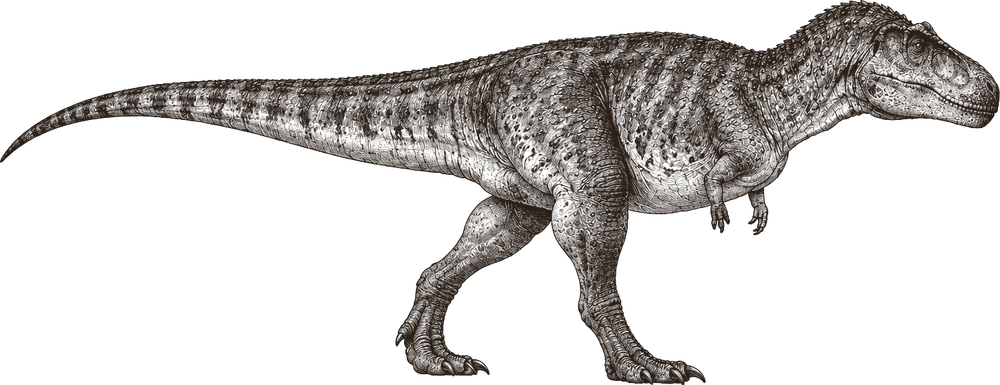


Scale in meters
Where its fossils were found
The evidence
Today

70 million years ago
Habitat
Rivers and wet floodplains covered the part of Mongolia preserved in the Nemegt Formation. Neighbors included Saurolophus, Deinocheirus and Gallimimus.
A Dinosaur Vault film
The Terrible Hand Mystery: What Had These Arms?
Two giant arms with hooked claws made Deinocheirus easy to imagine as a monster. Then more skeletons turned up in the Gobi, and the real animal was stranger: a duck-like bill, a tall hump and a belly full of stomach stones.
Subscribe on YouTubeField notes
About Tarbosaurus
What it was like
Tarbosaurus was a huge, bipedal meat eater with a massive skull, rows of large teeth, and tiny two-fingered arms. It grew to roughly 10 meters (33 feet) long, making it the largest predator known from its part of Asia.
Like other tyrannosaurids, it probably relied on strong jaws and keen senses to track and kill prey. Some paleontologists think Tarbosaurus was so similar to Tyrannosaurus that it may represent a population of the same genus from Asia, though most researchers still treat them as separate.
Its world
Tarbosaurus lived from about 72 to 66 million years ago, in the Late Cretaceous, across what is now Mongolia and China. Most of its fossils come from the Nemegt Formation, with more scattered finds from the Beds of Nogon Tsav in Mongolia and the Qiupa, Subashi, and Yuliangzi formations in China.
It shared its floodplain habitat with other Nemegt animals such as the long-armed Deinocheirus, the slender Alioramus, the long-necked Nemegtosaurus, and the ostrich-like Gallimimus, as well as the plant-eating Saurolophus and the clawed Therizinosaurus.
How it was found
Maleev named Tarbosaurus in 1955, from bones found in Mongolia. Since then, paleontologists have recovered about 51 fossil finds of the genus, including skulls and skeletons, making it one of the better-known large predatory dinosaurs from Asia. It is considered a close relative of Tyrannosaurus, Albertosaurus, Gorgosaurus, and other tyrannosaurids such as Daspletosaurus and Alioramus.
Field gallery
More views of Tarbosaurus
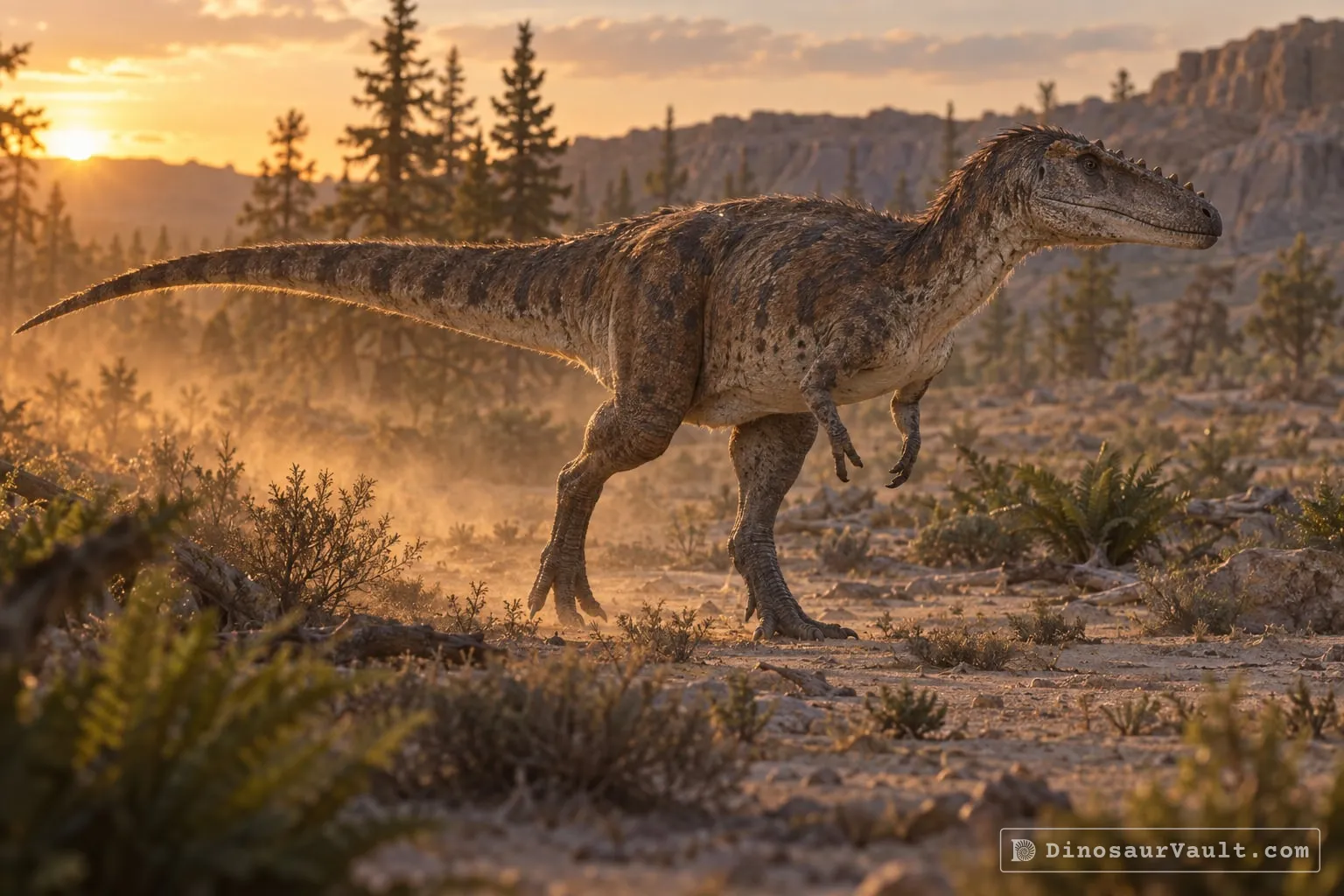
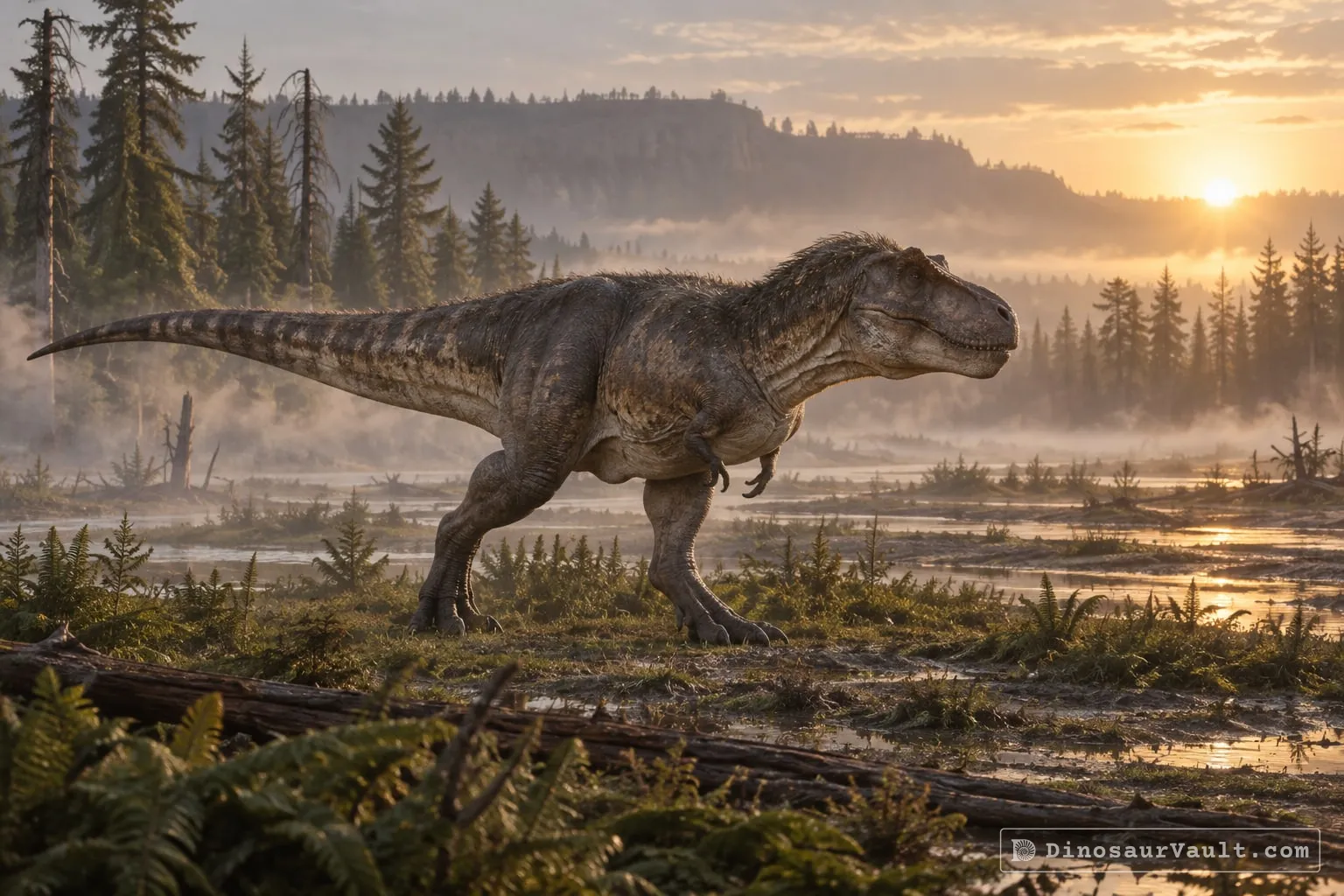
Scenes reconstructed from the available fossil evidence.
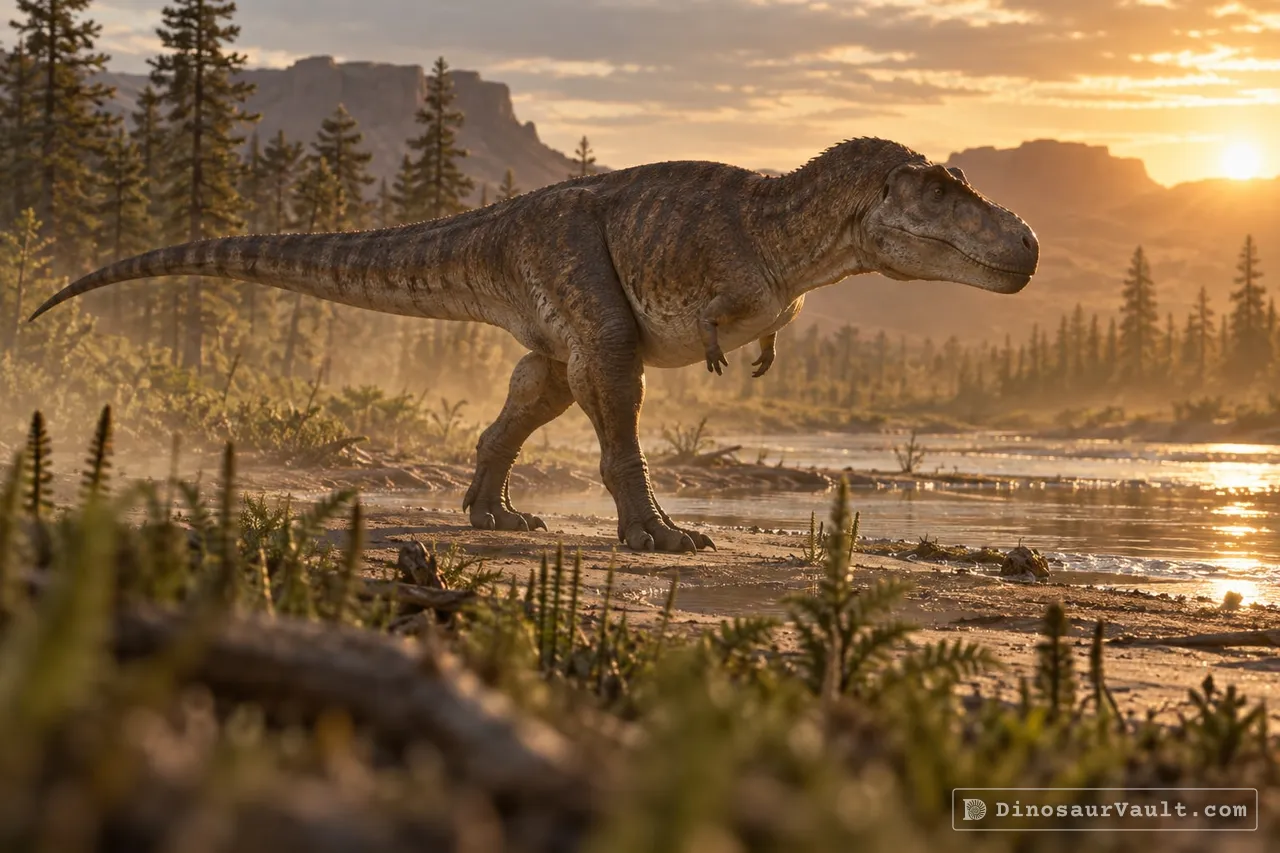
1 of 7
Lived alongside
Found in the same rock formations
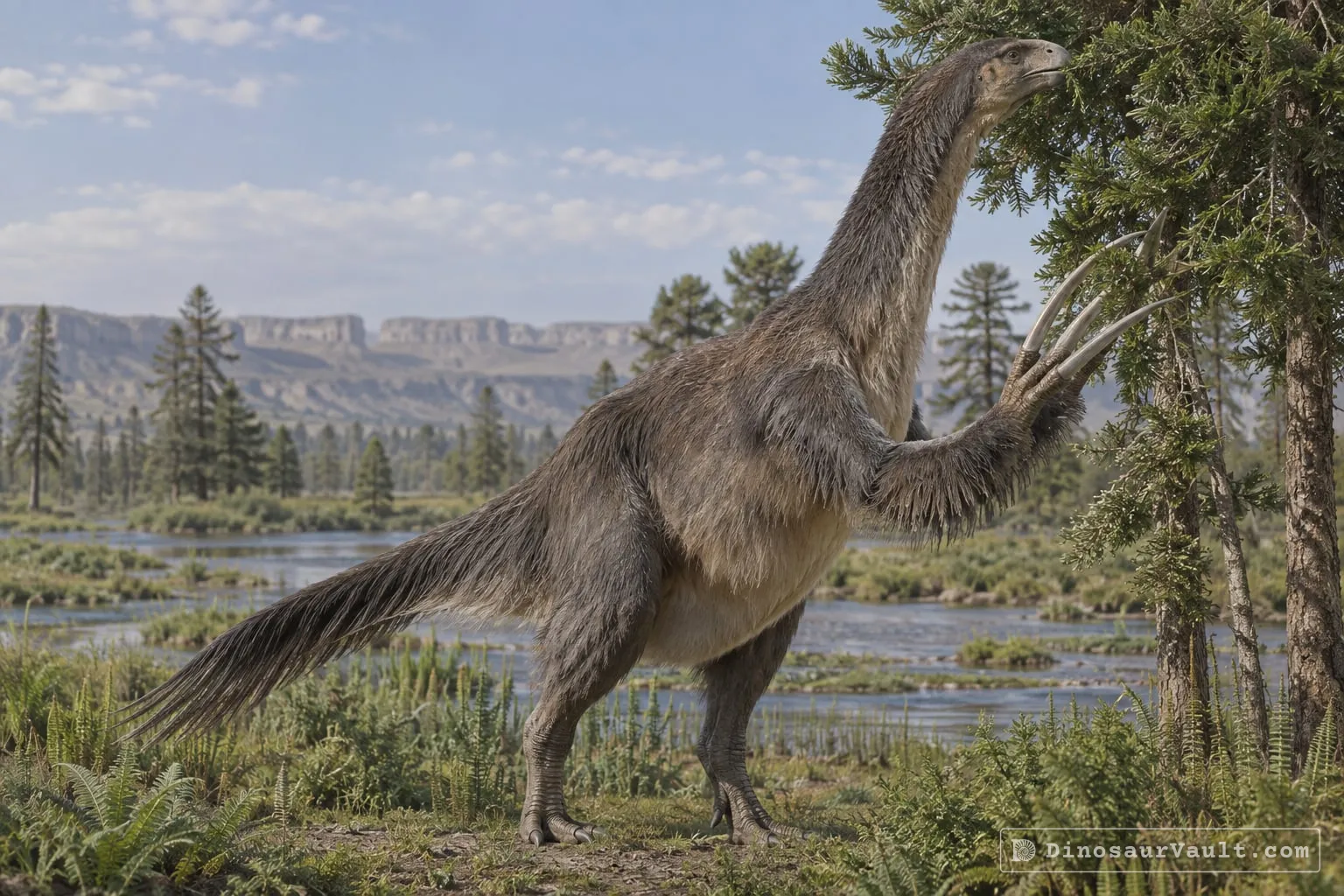
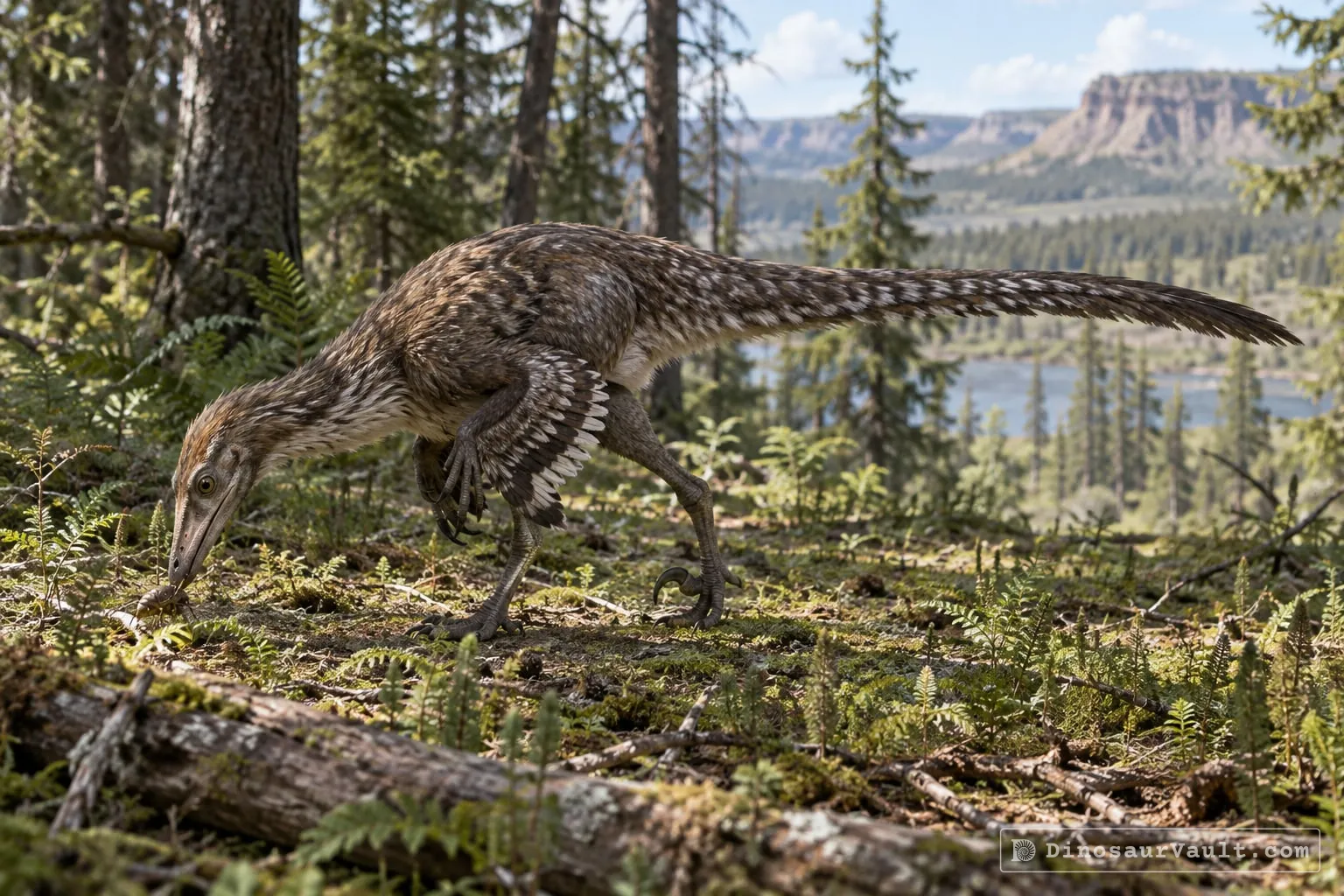
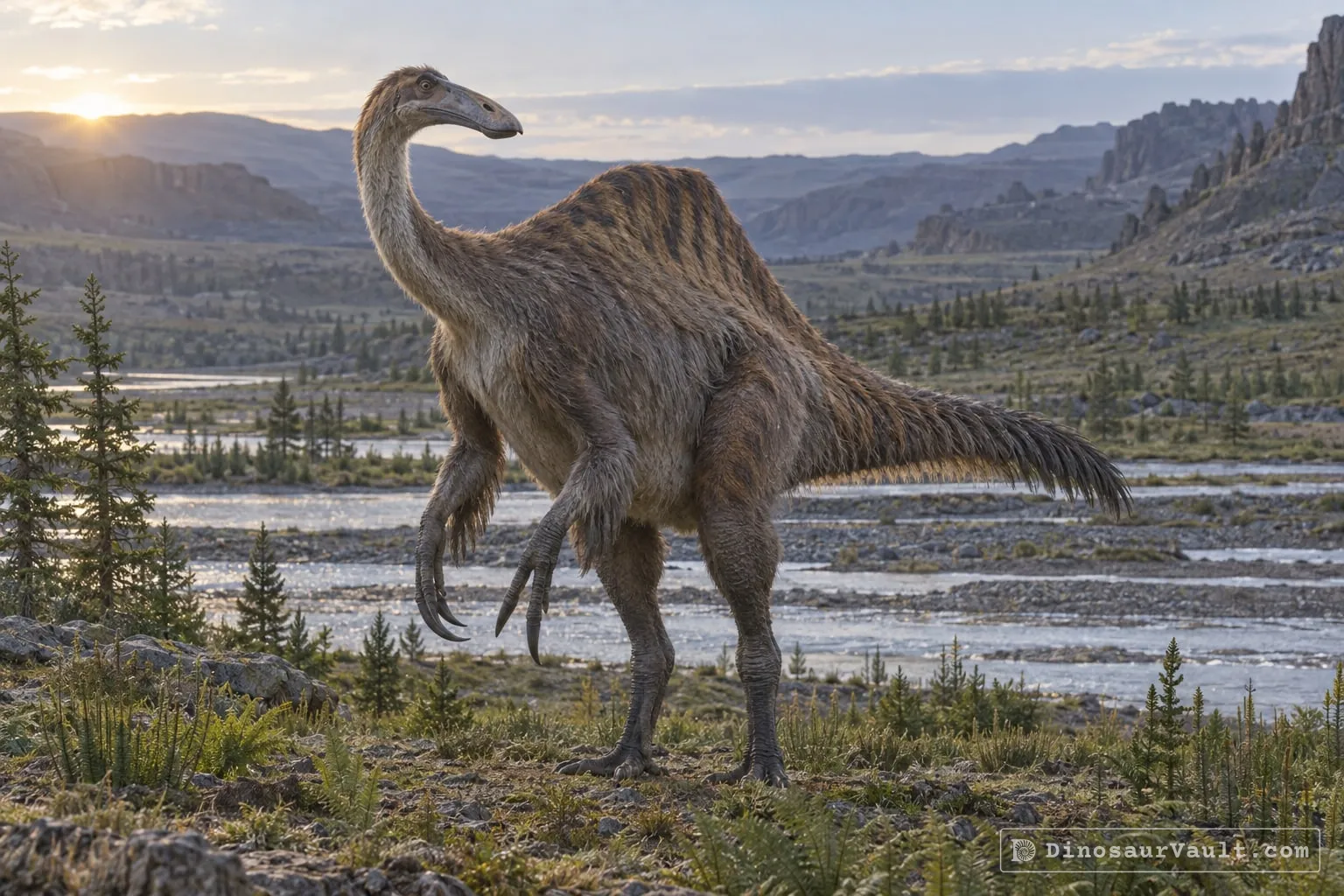
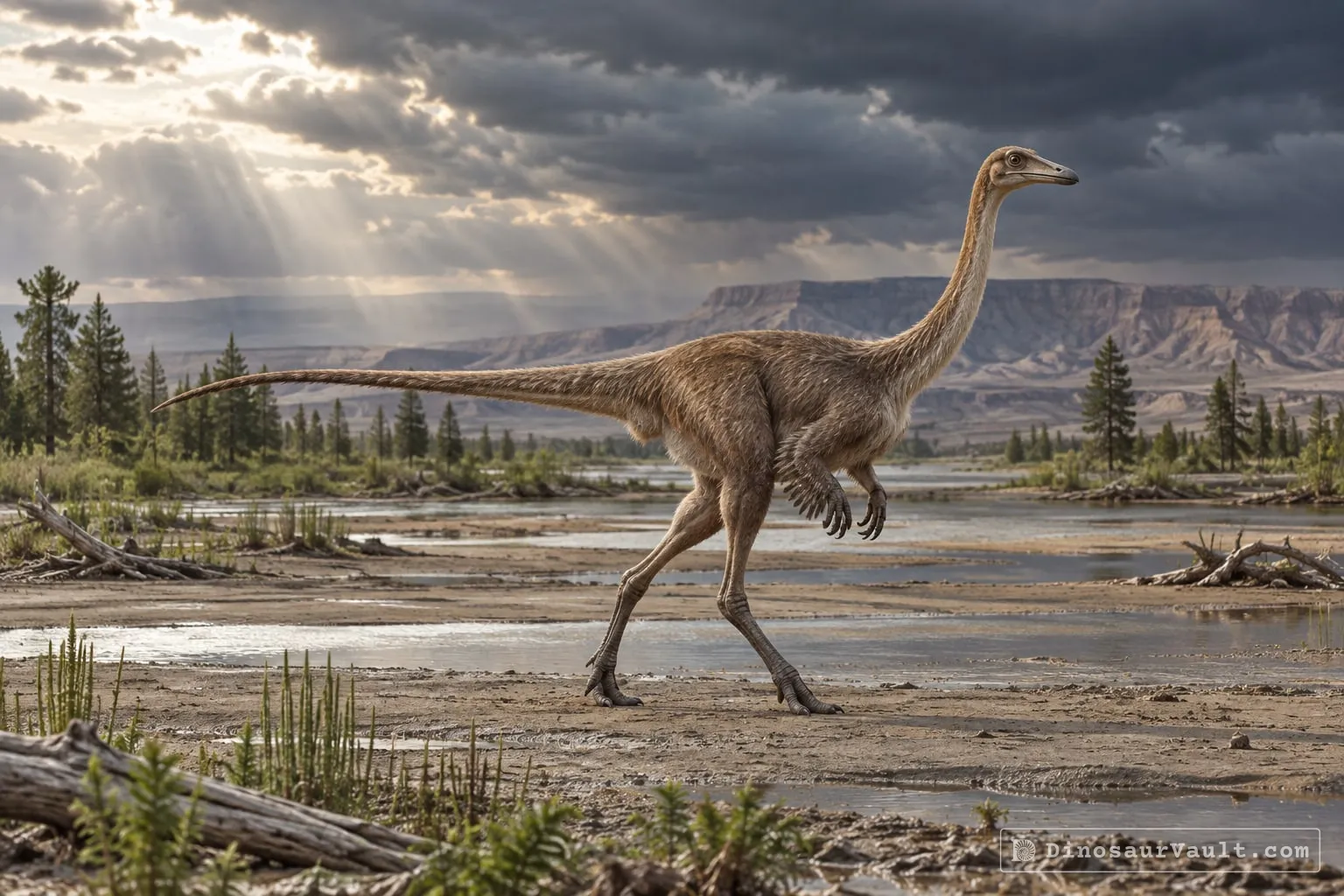
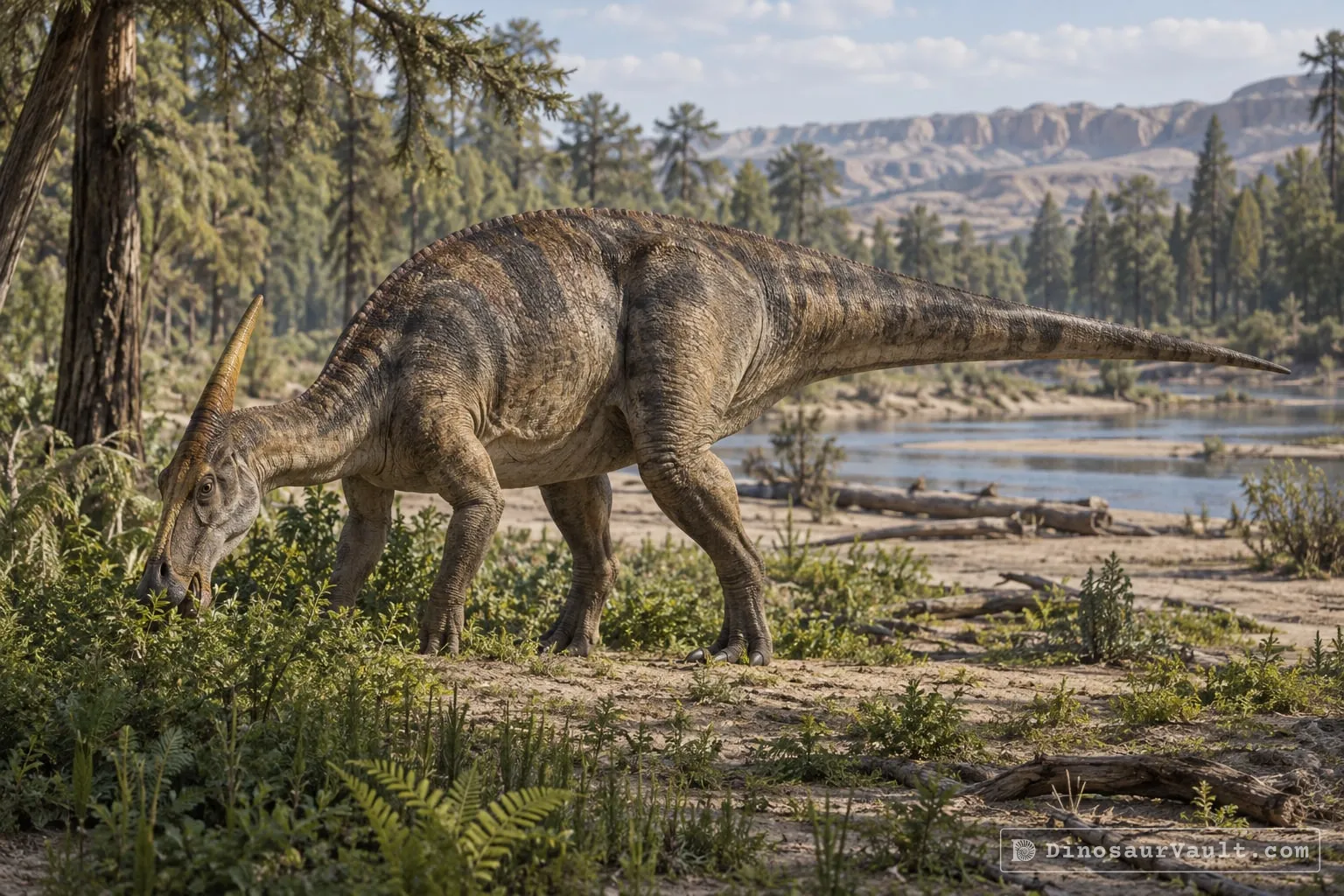
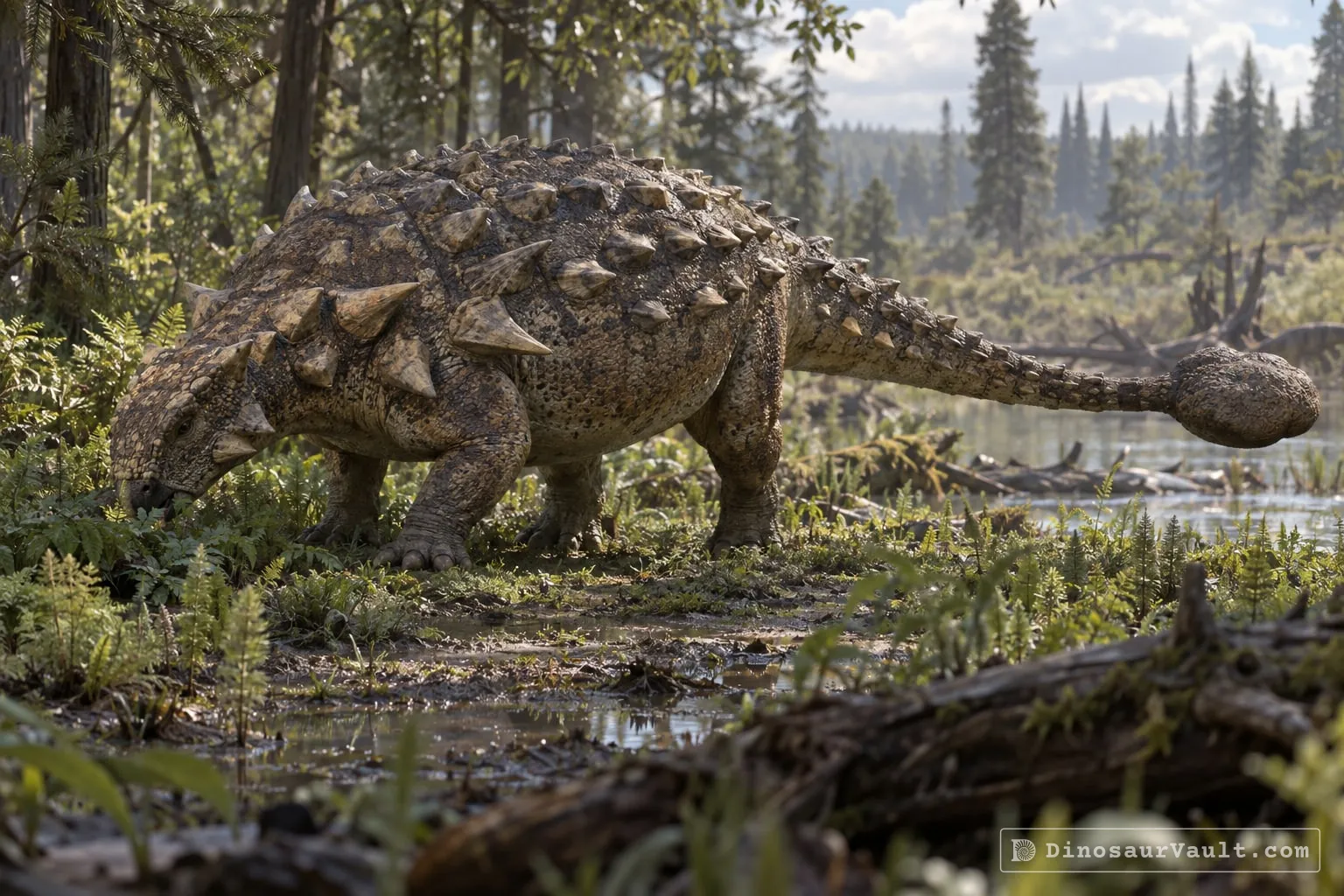


A rock formation can hold fossils laid down millions of years apart, so not every animal here met Tarbosaurus.
The evidence
The science behind Tarbosaurus
Which parts of the picture come from its own bones, and which come from its relatives.
From its own fossils
- Numerous skulls and skeletons show a deep skull, powerful legs and tiny arms with two fingers.
- A young skull has a shallower snout and proportionately larger eye sockets than an adult's.
- Preserved skin impressions show small scales.
Borrowed from relatives
- Almost the whole skeleton is known from its own bones.
- Lips over the teeth are inferred from comparisons with Tyrannosaurus and living reptiles.
Still unknown
- Its color and skin pattern.
- How skin covering varied across its body and through growth.
- Whether adults cared for their young or hunted together.
Often drawn wrong
- Its hands had two fingers, rather than the three often given to large meat eaters.
- Its skull was narrower at the rear than the broad skull of Tyrannosaurus.
- A dragging tail and upright body replace its balanced stance with the tail held above the ground.
Discovery timeline
- 1955Named itMaleev
- 2010How it fedHone & Watabe
- 2011Growing upTsuihiji et al.
- 2017SkinBell et al.
- 2023Close relativeCullen et al.
Key papers
The research behind what we know of Tarbosaurus
Named it
Named predatory dinosaurs from Mongolia, including fossils later united under Tarbosaurus.
[New carnivorous dinosaurs from the Upper Cretaceous of Mongolia]. Doklady Akademii Nauk USSR 104: 779-783
No link available
How it fed
Described bites on a Saurolophus arm bone, probably made by Tarbosaurus stripping flesh from a carcass.
New Information on Scavenging and Selective Feeding Behaviour of Tyrannosaurids. Acta Palaeontologica Polonica 55: 627-634
Read the paper : New Information on Scavenging and Selective Feeding Behaviour of Tyrannosaurids (opens in a new tab)Growing up
Described a young skull whose lightly built jaws suggest that young Tarbosaurus ate different prey from adults.
Cranial osteology of a juvenile specimen ofTarbosaurus bataar(Theropoda, Tyrannosauridae) from the Nemegt Formation (Upper Cretaceous) of Bugin Tsav, Mongolia. Journal of Vertebrate Paleontology 31: 497-517
Read the paper : Cranial osteology of a juvenile specimen ofTarbosaurus bataar(Theropoda, Tyrannosauridae) from the Nemegt Formation (Upper Cretaceous) of Bugin Tsav, Mongolia (opens in a new tab)Skin
Documented scaly skin in Tarbosaurus and other large tyrannosaurids, contrasting with feathered members of the wider family.
Tyrannosauroid integument reveals conflicting patterns of gigantism and feather evolution. Biology Letters 13: 20170092
Read the paper : Tyrannosauroid integument reveals conflicting patterns of gigantism and feather evolution (opens in a new tab)Close relative
Supported lips covering theropod teeth, a comparison used to restore the mouth of Tarbosaurus.
Theropod dinosaur facial reconstruction and the importance of soft tissues in paleobiology. Science 379: 1348-1352
Read the paper : Theropod dinosaur facial reconstruction and the importance of soft tissues in paleobiology (opens in a new tab)
Close relatives
Other members of Tyrannosauridae


Sources: Wikidata