Qianzhousaurus
- Diet
- Carnivore
- Length
- about 6.3 m (21 ft)
- Group
- Theropods, Tyrannosauridae
- Named by
- Lü et al. 2014
Size comparison
To scale
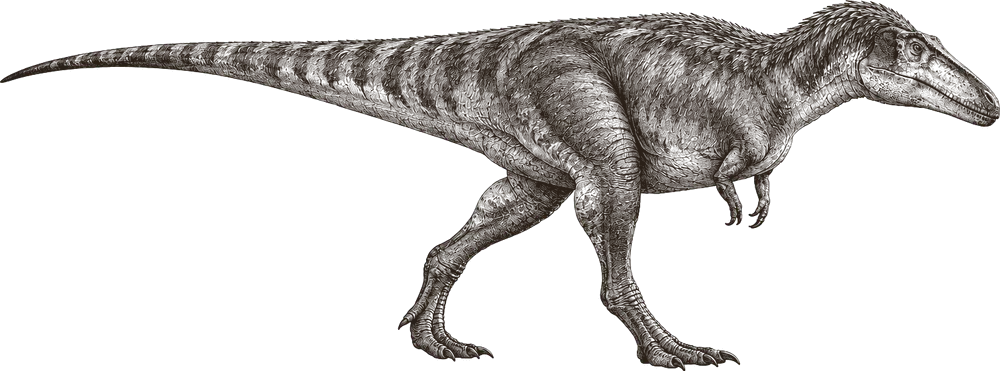


Scale in meters
Where its fossils were found
The evidence
No finds with map coordinates are recorded yet.
Habitat
It lived in southern China in a landscape with seasonal changes. Regional neighbors included the oviraptorids Ganzhousaurus and Jiangxisaurus and the sauropod Gannansaurus.
Field notes
About Qianzhousaurus
What it was like
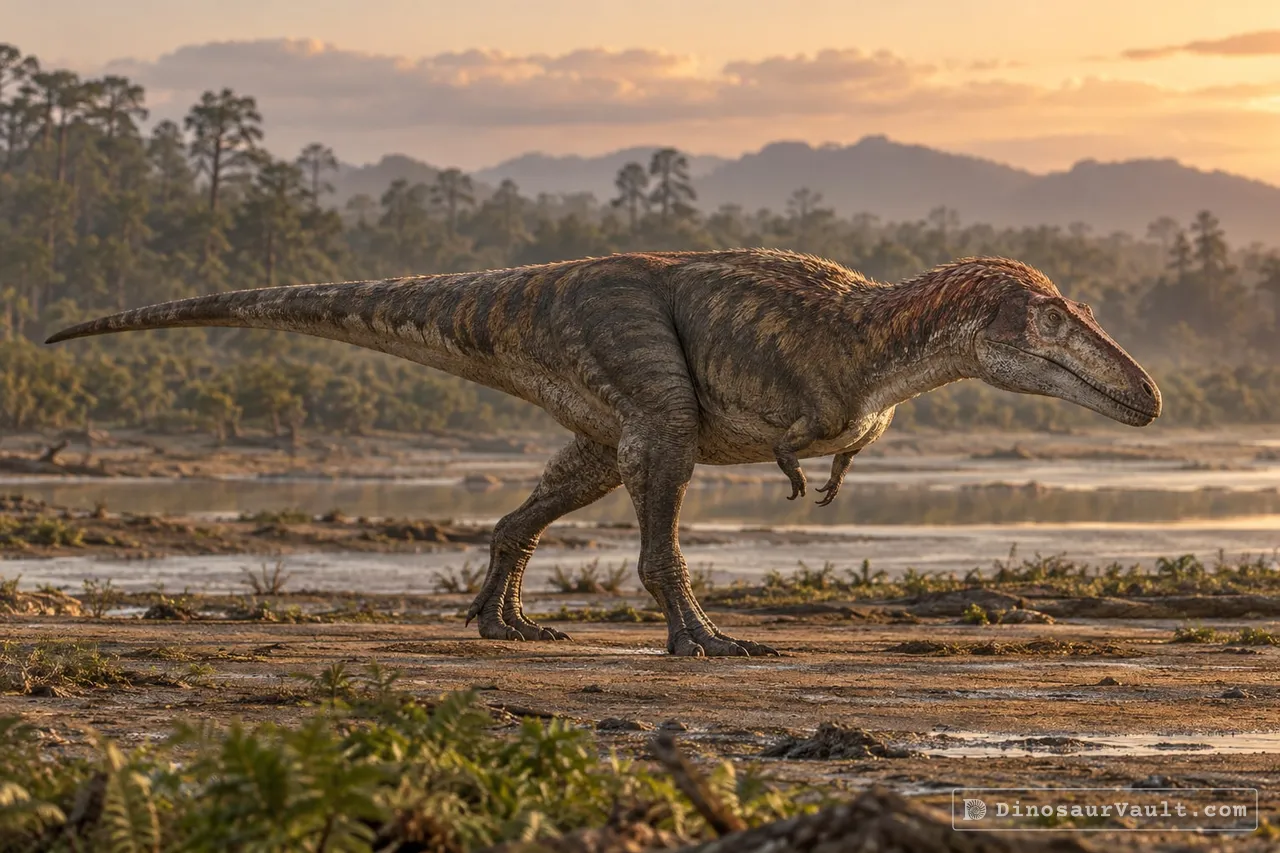
Qianzhousaurus was a tyrannosaur with an unusually long, narrow snout, quite different from the short, deep skulls of relatives such as Tyrannosaurus and Tarbosaurus. It belongs to a small group called the alioramins, tyrannosaurs known for this slender build of skull, alongside its closest relative, Alioramus. Beyond its distinctive skull shape, its size and proportions are not well documented.
Its world
Qianzhousaurus was part of the tyrannosaurid family, the same group of large predatory dinosaurs that includes Tyrannosaurus, Tarbosaurus, Albertosaurus, and Gorgosaurus. Like other alioramins, it lived in Asia during the Late Cretaceous, though the precise place and time of its own fossil finds are not well established in the available record.
How it was found
Lü and colleagues named Qianzhousaurus in 2014. Its long, narrow snout, unusual among tyrannosaurs, remains its most distinctive and best documented feature, and continues to shape how paleontologists think about the variety of skull shapes tyrannosaurs evolved.
Field gallery
More views of Qianzhousaurus
Scenes reconstructed from the available fossil evidence.
1 of 7
The evidence
The science behind Qianzhousaurus
Which parts of the picture come from its own bones, and which come from its relatives.
From its own fossils
- Its skull has a long, slender snout and low bumps along the nose.
- The skeleton belongs to an animal much more mature than the known Alioramus specimens, showing that the long snout persisted late into growth.
Borrowed from relatives
- Missing parts of the body are restored by comparison with Alioramus and other tyrannosaurs.
- Lips covering the teeth follow comparisons with Tyrannosaurus and other large theropods.
Still unknown
- Its full adult length.
- Whether it had feathers, and what color it was.
- How its diet differed from that of deep-skulled tyrannosaurs.
Often drawn wrong
- A short, deep Tyrannosaurus snout loses its distinctive long muzzle.
- The bumps on its nose were low, rather than tall horns.
Discovery timeline
- 2014Named itLü et al.
- 2015Same rocksLü et al.
- 2021SkullFoster et al.
- 2023Close relativeCullen et al.
Key papers
The research behind what we know of Qianzhousaurus
Named it
Named a long-snouted tyrannosaur and showed that this unusual skull shape persisted in a more mature animal than the known Alioramus specimens.
A new clade of Asian Late Cretaceous long-snouted tyrannosaurids. Nature Communications 5
Read the paper : A new clade of Asian Late Cretaceous long-snouted tyrannosaurids (opens in a new tab)Same rocks
Named Huanansaurus and documented a diverse regional fauna that included Qianzhousaurus, other oviraptorids and Gannansaurus.
A New Oviraptorid Dinosaur (Dinosauria: Oviraptorosauria) from the Late Cretaceous of Southern China and Its Paleobiogeographical Implications. Scientific Reports 5
Read the paper : A New Oviraptorid Dinosaur (Dinosauria: Oviraptorosauria) from the Late Cretaceous of Southern China and Its Paleobiogeographical Implications (opens in a new tab)Skull
Described the skull in detail and identified distinctive features separating Qianzhousaurus from Alioramus.
The cranial anatomy of the long-snouted tyrannosaurid dinosaur Qianzhousaurus sinensis from the Upper Cretaceous of China. Journal of Vertebrate Paleontology 41
Read the paper : The cranial anatomy of the long-snouted tyrannosaurid dinosaur Qianzhousaurus sinensis from the Upper Cretaceous of China (opens in a new tab)Close relative
Comparisons of teeth and jaws support lips covering the teeth in large theropods, informing the mouth of Qianzhousaurus.
Theropod dinosaur facial reconstruction and the importance of soft tissues in paleobiology. Science 379: 1348-1352
Read the paper : Theropod dinosaur facial reconstruction and the importance of soft tissues in paleobiology (opens in a new tab)
Close relatives
Other members of Tyrannosauridae


Sources: Wikidata