Zhuchengtyrannus
"Zhucheng tyrant"
- Lived
- 84 to 72 million years ago, Late Cretaceous
- Diet
- Carnivore
- Group
- Theropods, Tyrannosauridae
- Found in
- China
- Named by
- Hone et al. 2011
Where its fossils were found
The evidence
Today

80 million years ago
Habitat
Rivers crossed the landscape recorded by the Hongtuya Formation. Shantungosaurus and Sinoceratops were regional neighbors.
Field notes
About Zhuchengtyrannus
What it was like
Zhuchengtyrannus was a large, meat-eating tyrannosaurid, built along the same lines as close relatives such as Tyrannosaurus and Tarbosaurus. It had a deep, powerful skull, thick teeth suited to crushing bone, and small forelimbs compared to its powerful hind legs. Like other tyrannosaurids, it walked on two legs and was almost certainly the top predator in its habitat, likely preying on the large plant eaters that shared its world.
Its world
Zhuchengtyrannus lived in what is now China during the Late Cretaceous, between about 84 and 72 million years ago. Its fossils come from the same rock layers that have produced the enormous hadrosaur Shantungosaurus, along with the horned Sinoceratops and the armored Sinankylosaurus, all found in unusually large numbers at the same site.
How it was found
Hone and colleagues named Zhuchengtyrannus in 2011, based on jaw and skull bones. Only one fossil find has been reported so far, though its close relatives include Alioramus and Qianzhousaurus, both smaller tyrannosaurids from elsewhere in Asia.
Field gallery
More views of Zhuchengtyrannus
Scenes reconstructed from the available fossil evidence.
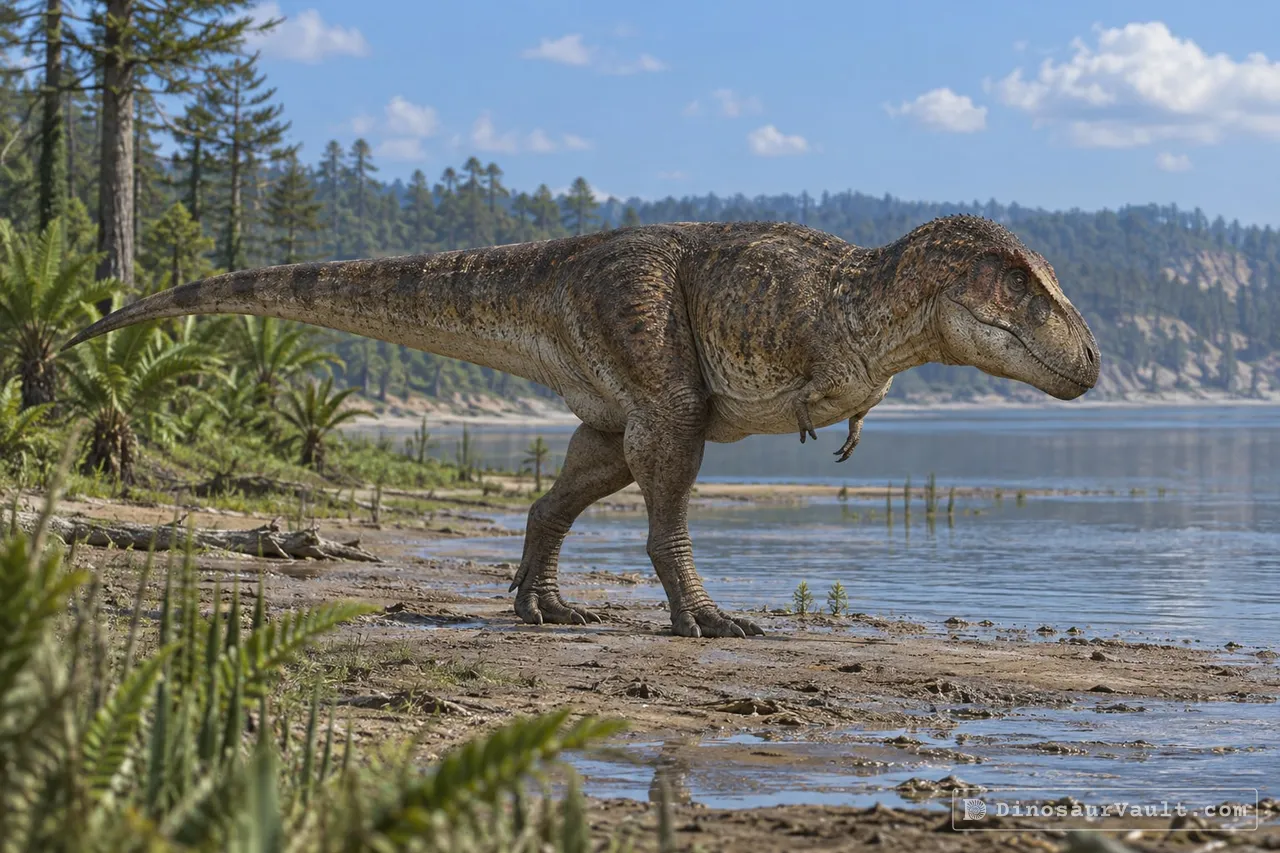
1 of 7
Lived alongside
Found in the same rock formations
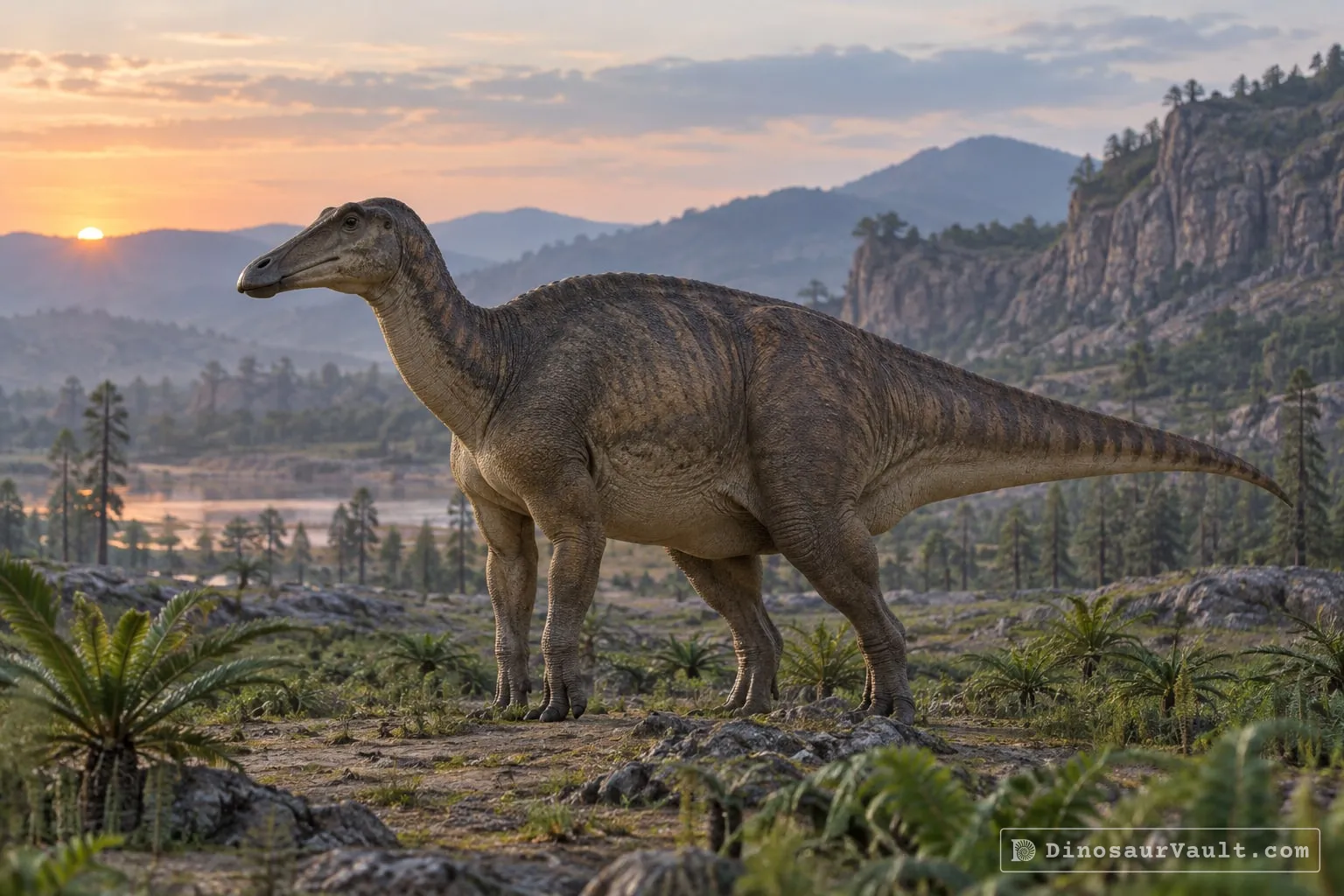
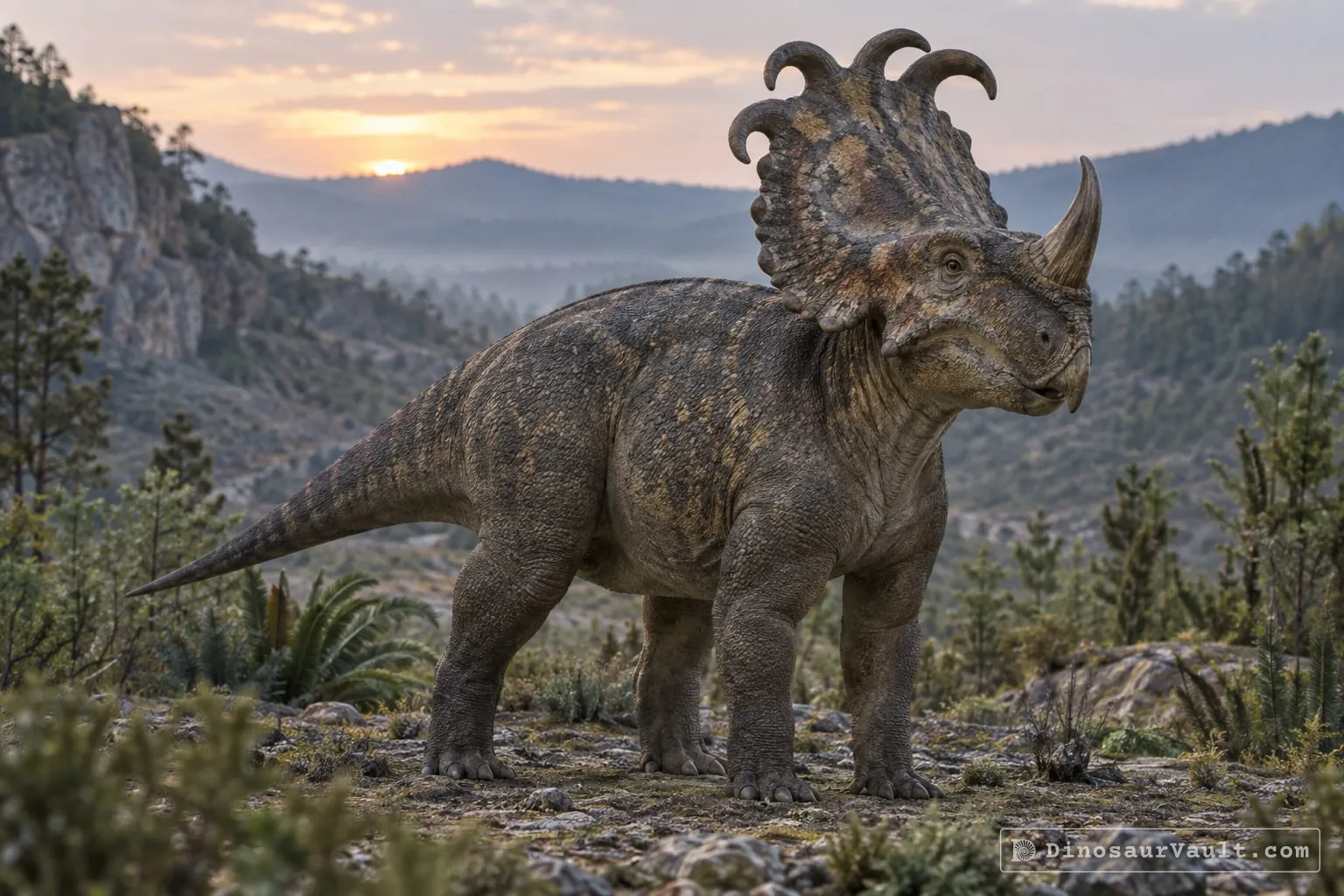
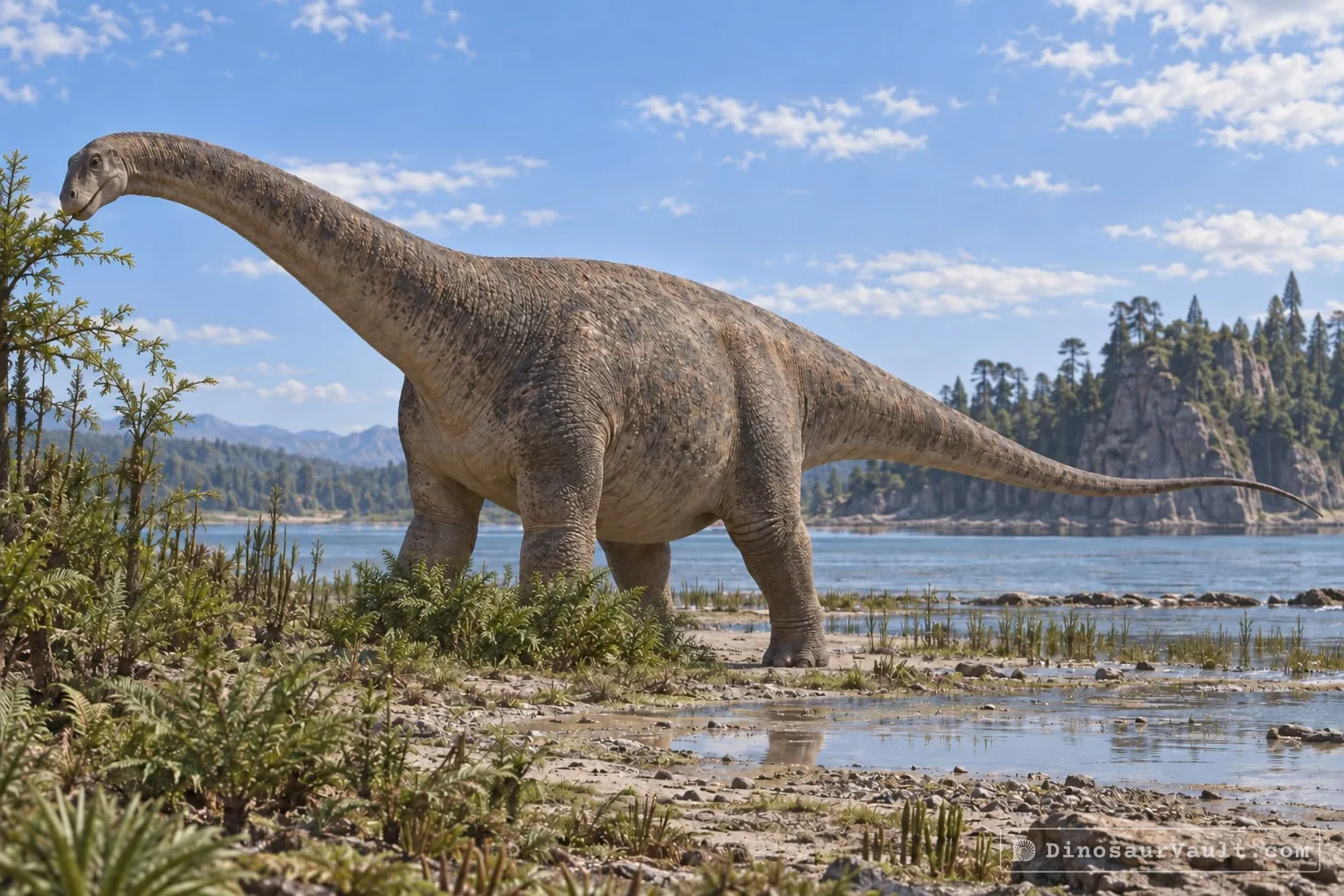
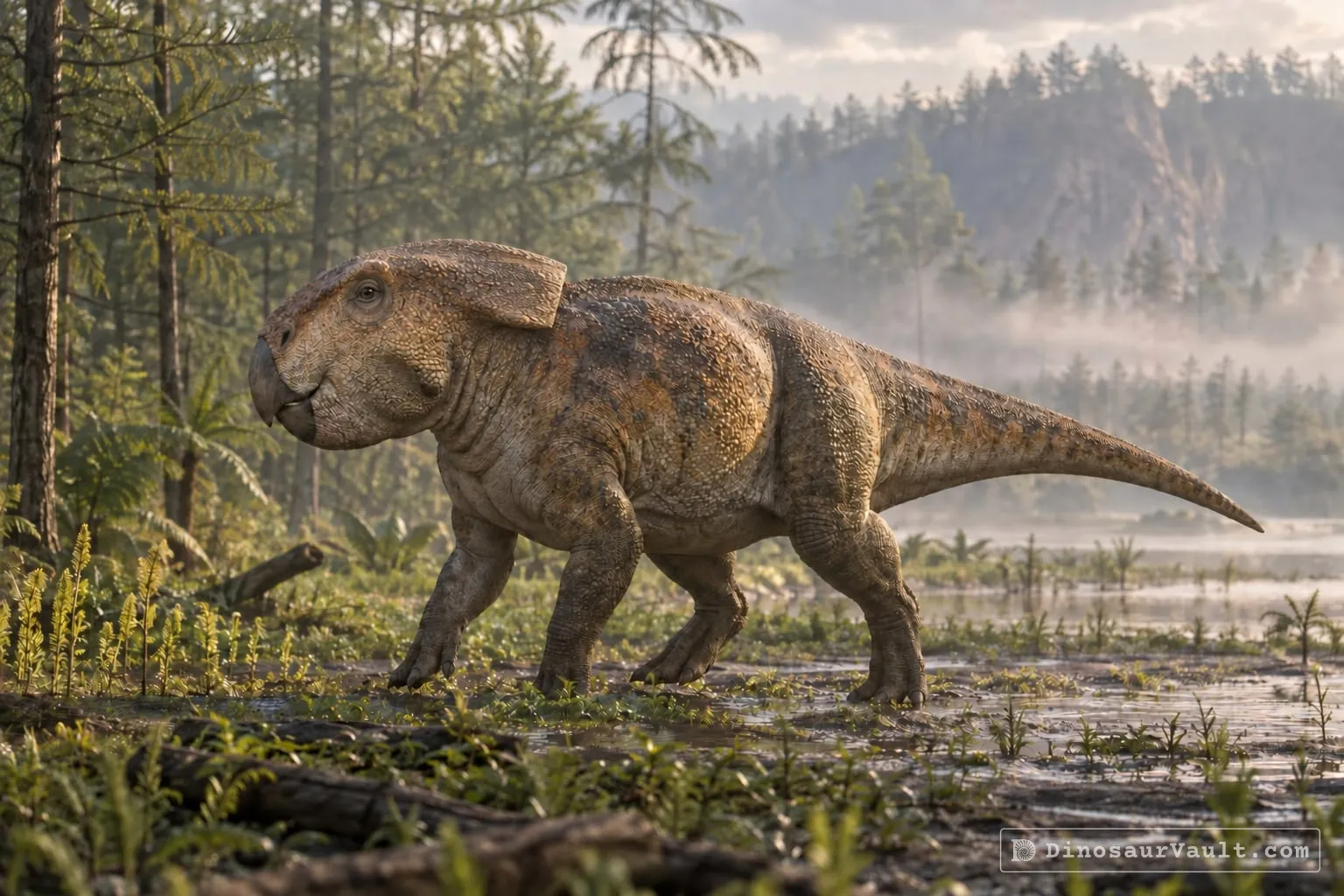
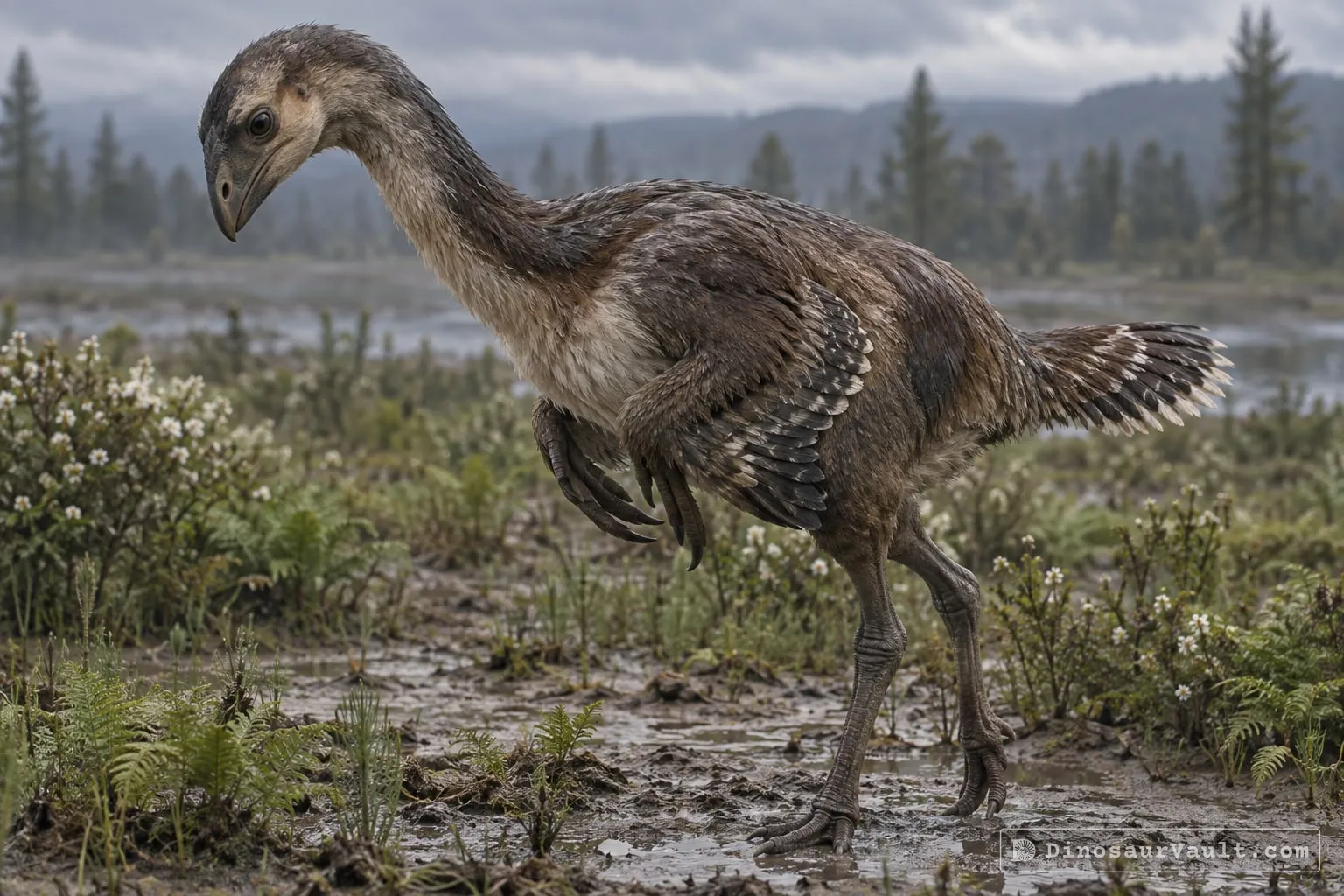
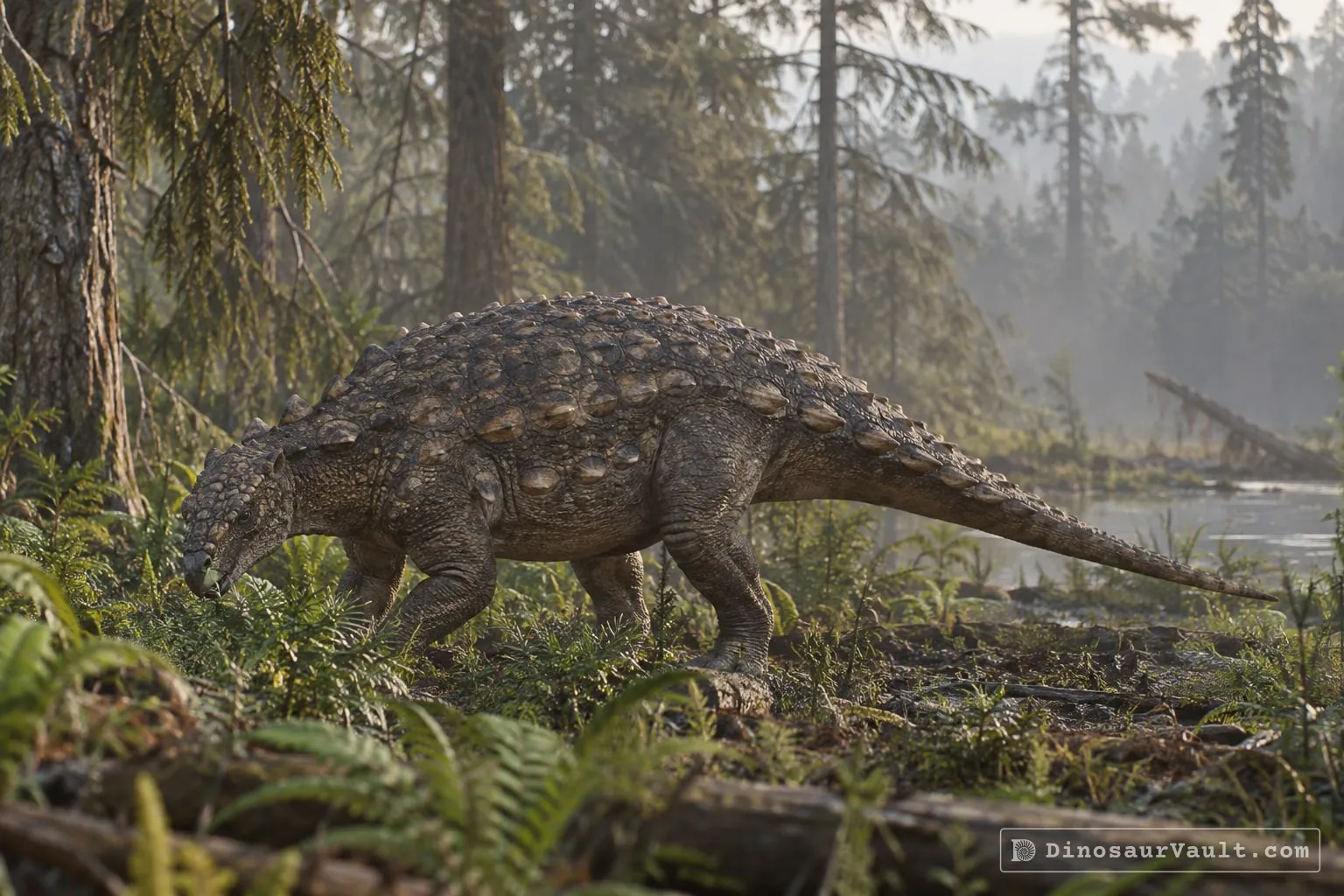
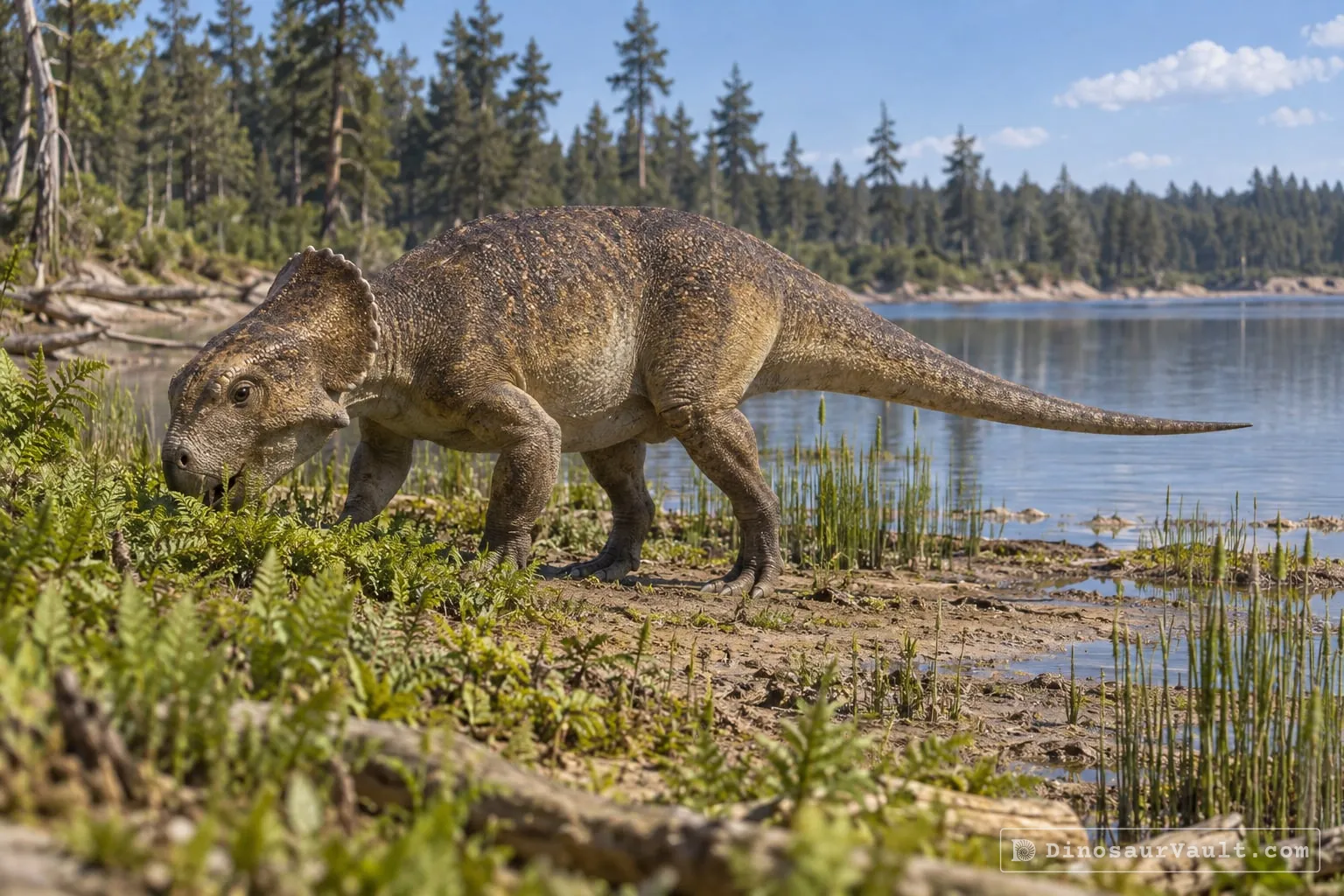


A rock formation can hold fossils laid down millions of years apart, so not every animal here met Zhuchengtyrannus.
The evidence
The science behind Zhuchengtyrannus
Which parts of the picture come from its own bones, and which come from its relatives.
From its own fossils
- Parts of the upper and lower jaws show a large, heavily built tyrannosaur.
- Distinctive features of the tooth-bearing upper jaw separate it from other tyrannosaurs.
Borrowed from relatives
- The short arms with paired fingers, powerful hindlimbs and heavy tail are restored from Tyrannosaurus and Tarbosaurus.
- Lips covering the teeth probably followed the pattern proposed for other large theropods.
Still unknown
- The shape of its complete skull and its exact adult length.
- Its skin covering and color.
- How it hunted and whether it lived alone.
Discovery timeline
- 2010Same rocksXu et al.
- 2011Named itHone et al.
- 2023Close relativeCullen et al.
Key papers
The research behind what we know of Zhuchengtyrannus
Same rocks
Described Sinoceratops, a horned dinosaur from the same regional deposits, with a large nasal horn and elaborate frill.
First ceratopsid dinosaur from China and its biogeographical implications. Chinese Science Bulletin 55: 1631-1635
Read the paper : First ceratopsid dinosaur from China and its biogeographical implications (opens in a new tab)Named it
Named a large tyrannosaur from partial upper and lower jaws, identifying features that distinguish it from other members of the family.
A new, large tyrannosaurine theropod from the Upper Cretaceous of China. Cretaceous Research 32: 495-503
Read the paper : A new, large tyrannosaurine theropod from the Upper Cretaceous of China (opens in a new tab)Close relative
Comparisons of theropod teeth and living reptiles supported lips covering the teeth when the mouth was closed.
Theropod dinosaur facial reconstruction and the importance of soft tissues in paleobiology. Science 379: 1348-1352
Read the paper : Theropod dinosaur facial reconstruction and the importance of soft tissues in paleobiology (opens in a new tab)
Close relatives
Other members of Tyrannosauridae


Sources: Wikidata