Shuangbaisaurus
"Shuangbai lizard"
- Lived
- 201 to 200 million years ago, Early Jurassic
- Diet
- Carnivore
- Group
- Theropods
- Found in
- China
- Named by
- Wang et al. 2017
Where its fossils were found
The evidence
Today

200 million years ago
Habitat
Lakes and rivers shaped the landscape recorded by the Fengjiahe Formation in China. Plant eaters there included Yunnanosaurus, Yuxisaurus and Chinshakiangosaurus.
Field notes
About Shuangbaisaurus
What it was like
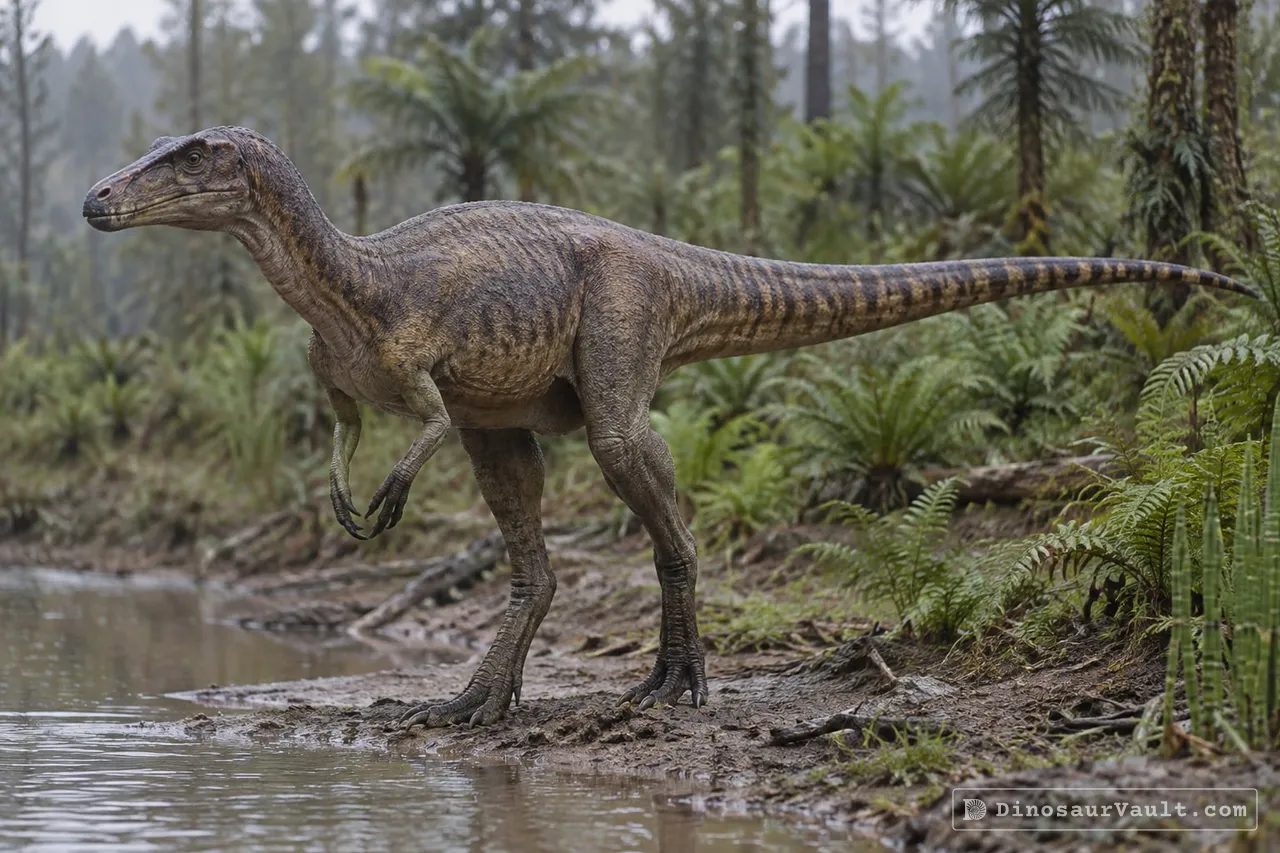
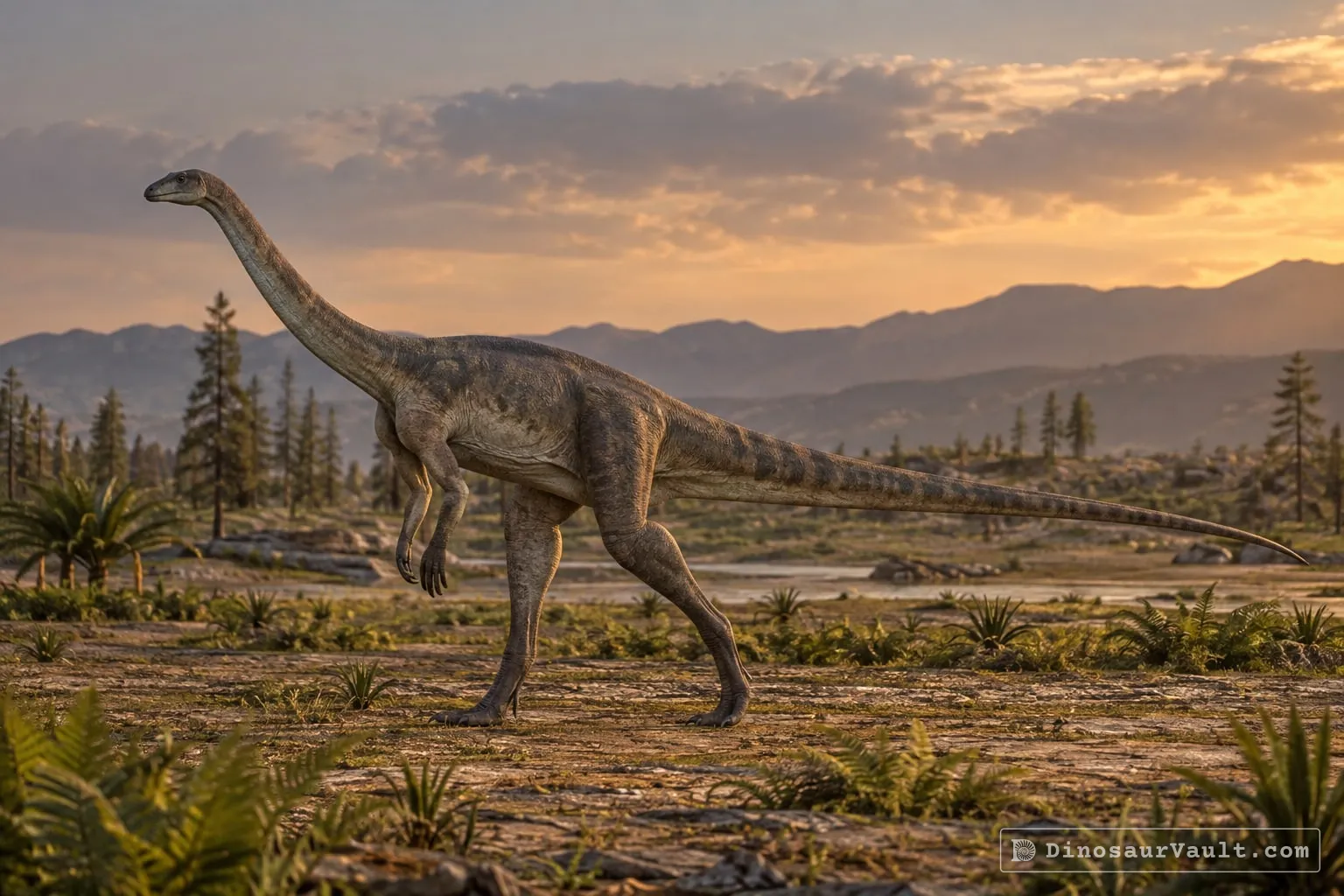
Shuangbaisaurus was a meat eater known from part of a skull. Like Dilophosaurus and Sinosaurus, it had a pair of thin crests on top of its head.
Some scientists think it is simply a Sinosaurus.
Its world
It lived in the Early Jurassic in what is now southwestern China. Its fossil comes from the Fengjiahe Formation, where it shared the land with the plant eater Yunnanosaurus and the armored Yuxisaurus.
How it was found
Wang and colleagues named Shuangbaisaurus in 2017, from a single find.
Field gallery
More views of Shuangbaisaurus
Scenes reconstructed from the available fossil evidence.
Lived alongside
Found in the same rock formations
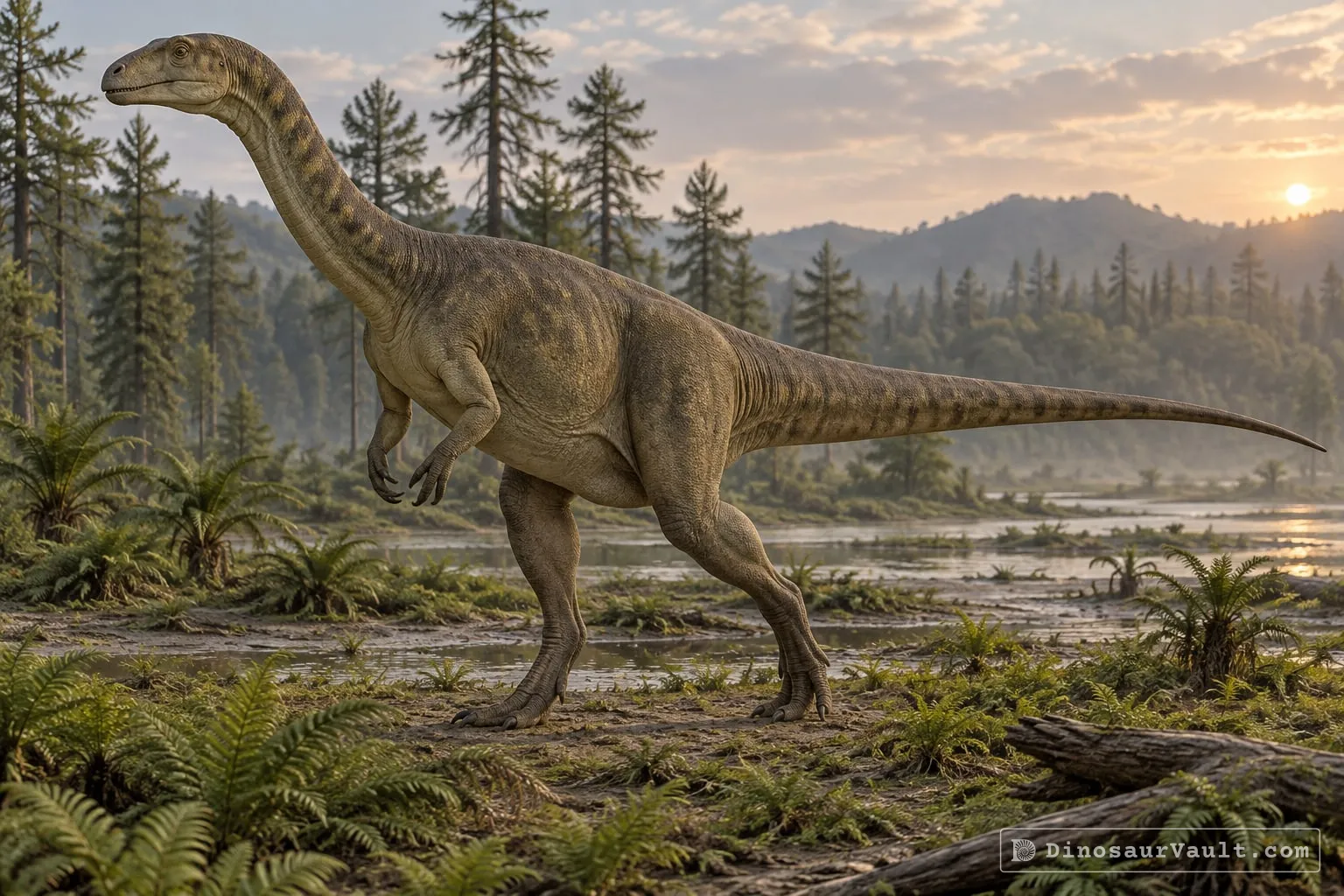
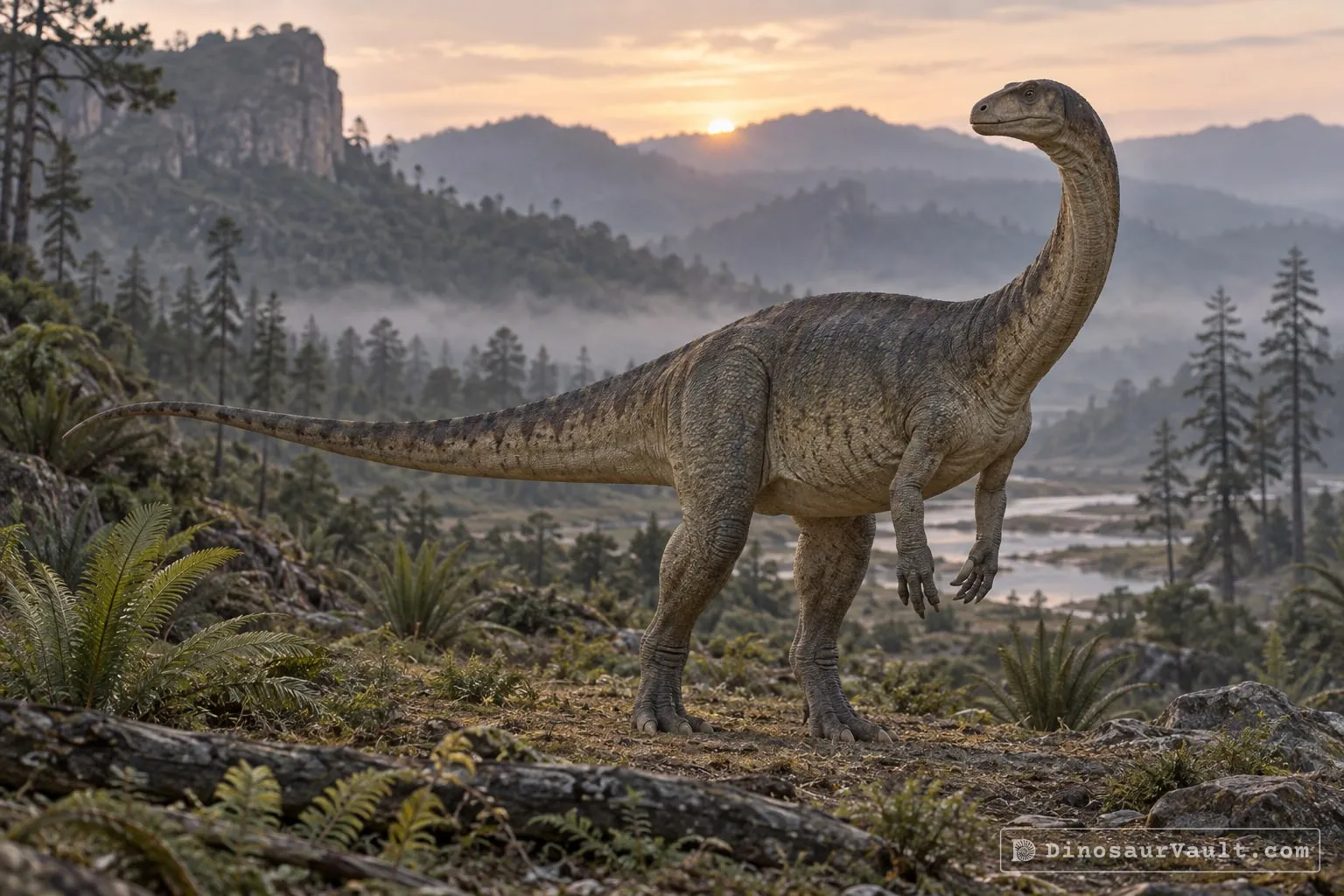
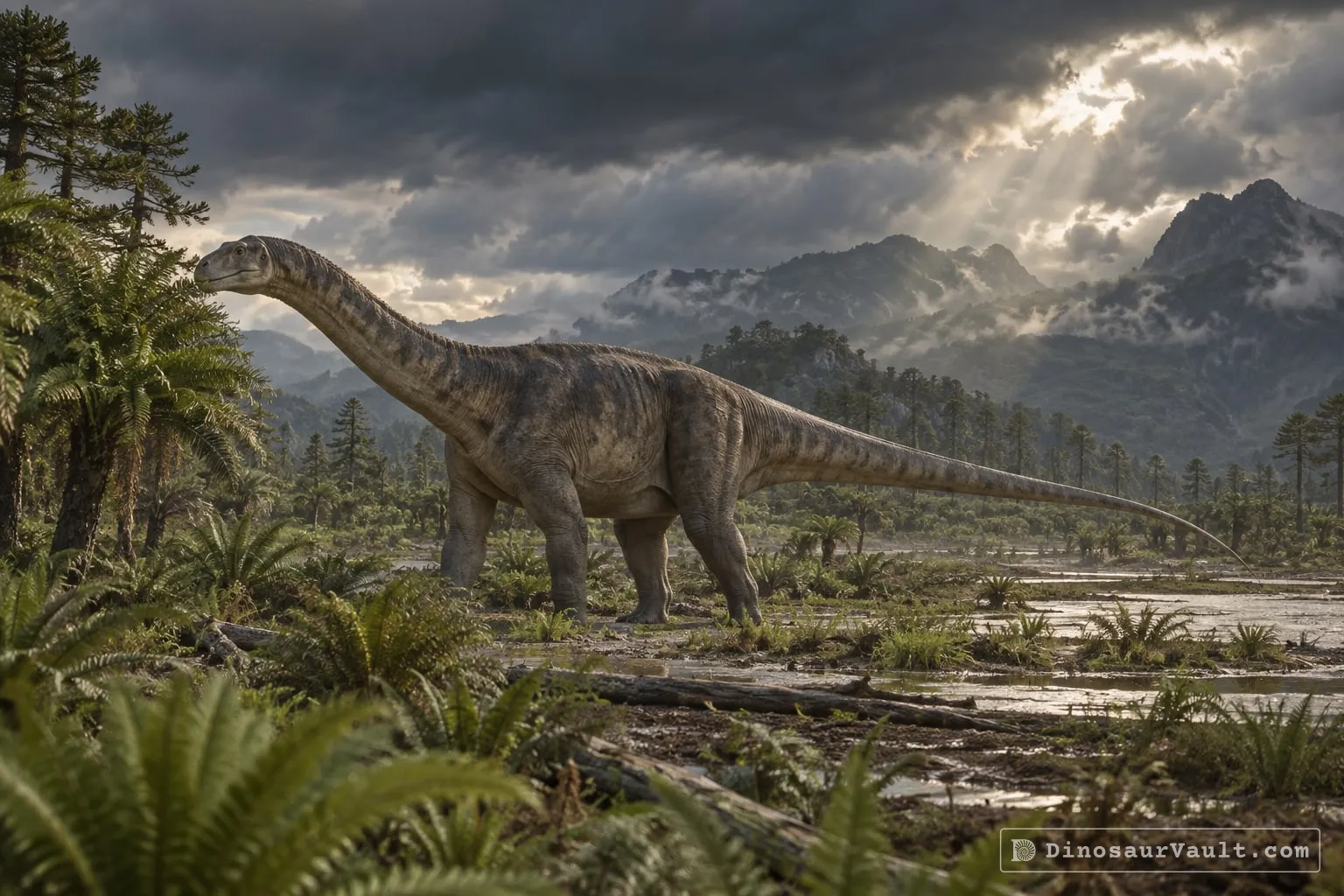


A rock formation can hold fossils laid down millions of years apart, so not every animal here met Shuangbaisaurus.
The evidence
The science behind Shuangbaisaurus
Which parts of the picture come from its own bones, and which come from its relatives.
From its own fossils
- A partial skull with a lower jaw preserves a deep snout and a pair of bony crests.
- The original description traces the crests back above the eye sockets.
Borrowed from relatives
- The missing body is restored by comparison with early meat eaters such as Dilophosaurus and Sinosaurus.
Still unknown
- Whether it is a distinct genus or another Sinosaurus.
- How much crushing changed the skull's shape.
- Its full body size, skin covering and color.
Discovery timeline
- 2017Named itWang et al.
- 2022Same rocksYao et al.
- 2025Family treeLi et al.
Key papers
The research behind what we know of Shuangbaisaurus
Named it
Described a partial skull with paired crests extending above the eyes and named Shuangbaisaurus.
A new crested theropod dinosaur from the Early Jurassic of Yunnan Province, China. Vertebrata PalAsiatica 55: 177-186
No link available
Same rocks
Named Yuxisaurus from the Fengjiahe Formation, revealing a heavily built armored plant eater in the same regional fauna.
A new early branching armored dinosaur from the Lower Jurassic of southwestern China. eLife 11
Read the paper : A new early branching armored dinosaur from the Lower Jurassic of southwestern China (opens in a new tab)Family tree
Grouped Shuangbaisaurus closely with Sinosaurus and questioned whether skull distortion and natural variation explain their differences.
New material of a non-averostran neotheropod dinosaur from the Lower Jurassic Lufeng Formation of Yunnan, south-western China. Zoological Journal of the Linnean Society 204
Read the paper : New material of a non-averostran neotheropod dinosaur from the Lower Jurassic Lufeng Formation of Yunnan, south-western China (opens in a new tab)
Close relatives
Other members of Theropoda


Sources: Wikidata