Protoavis
"first bird"
Type species Protoavis texensis
- Lived
- 227 to 206 million years ago, Late Triassic
- Diet
- Carnivore
- Group
- Theropods
- Found in
- United States
- Named by
- Chatterjee 1991
Where its fossils were found
The evidence
Today

220 million years ago
Habitat
The bones come from a region of river floodplains and lakes in what is now Texas. The Cooper Canyon Formation also preserves Coelophysis and Technosaurus.
Field notes
About Protoavis
What it was like
Protoavis is one of the most argued-over fossils of all. When it was first described, it was called the earliest bird, millions of years older than any other known bird.
Most scientists now think the bones come from several different animals, mixed together, including small dinosaurs and other reptiles. It is not accepted as a bird.
Its world
The bones date from the Late Triassic and were found in what is now Texas. Its bones come from the Cooper Canyon Formation, which has also produced Coelophysis.
How it was found
Chatterjee named Protoavis in 1991. The fossils were poorly preserved and crushed, which is part of why they are so hard to interpret.
Field gallery
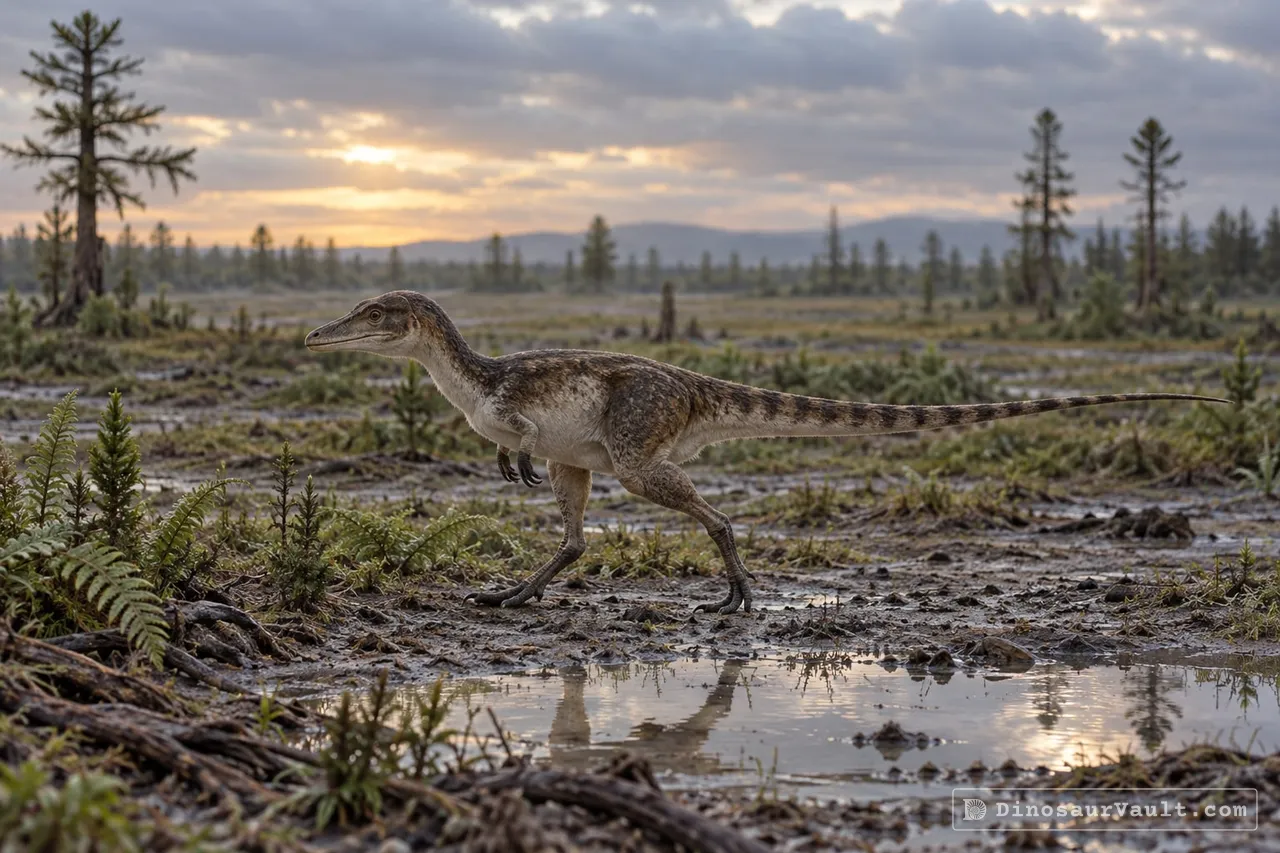
More views of Protoavis
Scenes reconstructed from the available fossil evidence.
Lived alongside
Found in the same rock formations


A rock formation can hold fossils laid down millions of years apart, so not every animal here met Protoavis.
The evidence
The science behind Protoavis
Which parts of the picture come from its own bones, and which come from its relatives.
From its own fossils
- The material consists of separated, fragmentary skull and body bones.
- Some of the assigned body bones resemble those of theropod dinosaurs.
Borrowed from relatives
- A whole-body restoration based on Coelophysis is a hypothetical comparison with a small Triassic theropod.
Still unknown
- Which bones belong to the same animal.
- Its true place in the reptile family tree.
- Its body shape and skin covering.
Discovery timeline
- 1991Named itChatterjee
- 1997Family treeSereno
- 1998Family treeHunt et al.
Key papers
The research behind what we know of Protoavis
Named it
Named Protoavis and interpreted its skull as that of a bird from the Triassic, an identification challenged by later studies.
Cranial anatomy and relationships of a new Triassic bird from Texas. Philosophical Transactions of the Royal Society of London. Series B: Biological Sciences 332: 277-346
Read the paper : Cranial anatomy and relationships of a new Triassic bird from Texas (opens in a new tab)Family tree
Interpreted Protoavis as a mixture of bones from different Triassic reptiles rather than an early bird.
THE ORIGIN AND EVOLUTION OF DINOSAURS. Annual Review of Earth and Planetary Sciences 25: 435-489
Read the paper : THE ORIGIN AND EVOLUTION OF DINOSAURS (opens in a new tab)Family tree
Reexamined the claimed bird features and instead proposed that Protoavis represented an unusual theropod.
Late Triassic dinosaursfrom the western United States. Geobios 31: 511-531
Read the paper : Late Triassic dinosaursfrom the western United States (opens in a new tab)
Close relatives
Other members of Theropoda


Sources: Wikidata