Shunosaurus
SHOO-noh-SORE-us
"Shu lizard"
Type species Shunosaurus lii
- Lived
- 175 to 155 million years ago, Middle Jurassic to Late Jurassic
- Diet
- Herbivore
- Length
- about 10 m (33 ft)
- Group
- Sauropods
- Found in
- China
- Named by
- Dong et al. 1983
Size comparison
To scale


Scale in metersOutline: typical sauropod shape
Where its fossils were found
The evidence
Today

165 million years ago
Habitat
The Shaximiao Formation in China records a landscape of rivers and lakes. Huayangosaurus, Omeisaurus and Xiaosaurus lived in these surroundings.
Field notes
About Shunosaurus
What it was like
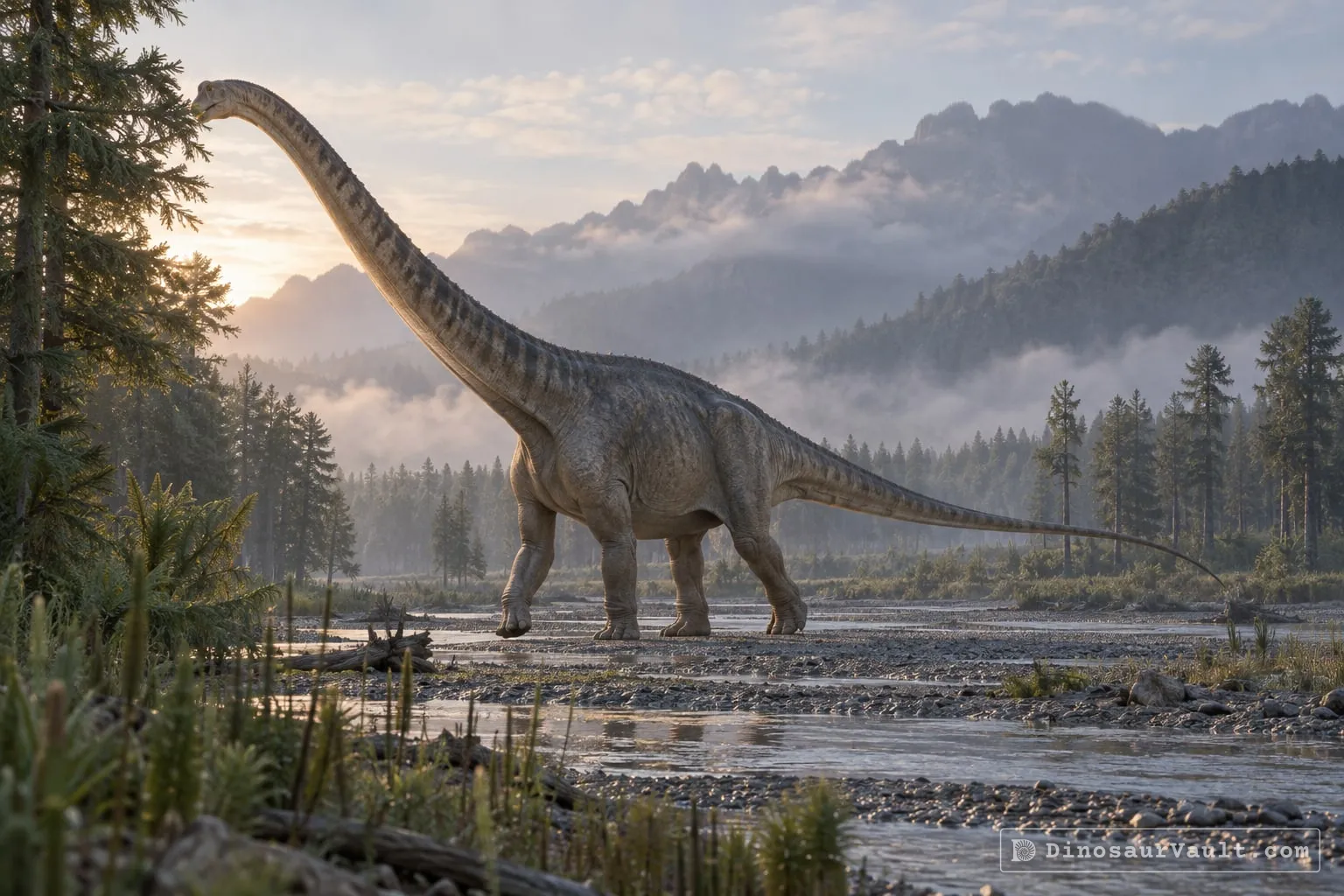
Shunosaurus was a long-necked plant eater about 10 meters (33 feet) long, short for a sauropod. Its tail ended in a small bony club with spikes, a rare weapon among long-necked dinosaurs.
It had a relatively short neck and probably fed on low plants.
Its world
It lived in the Middle and Late Jurassic, about 175 to 155 million years ago, in what is now China. Its fossils come from the Shaximiao Formation, a land of rivers and lakes shared with Omeisaurus, Mamenchisaurus, the stegosaur Huayangosaurus and the meat eater Yangchuanosaurus.
How it was found
Dong and colleagues named Shunosaurus in 1983. The type species is Shunosaurus lii. Several nearly complete skeletons have been found, making it one of the best known sauropods.
Field gallery
More views of Shunosaurus
Scenes reconstructed from the available fossil evidence.
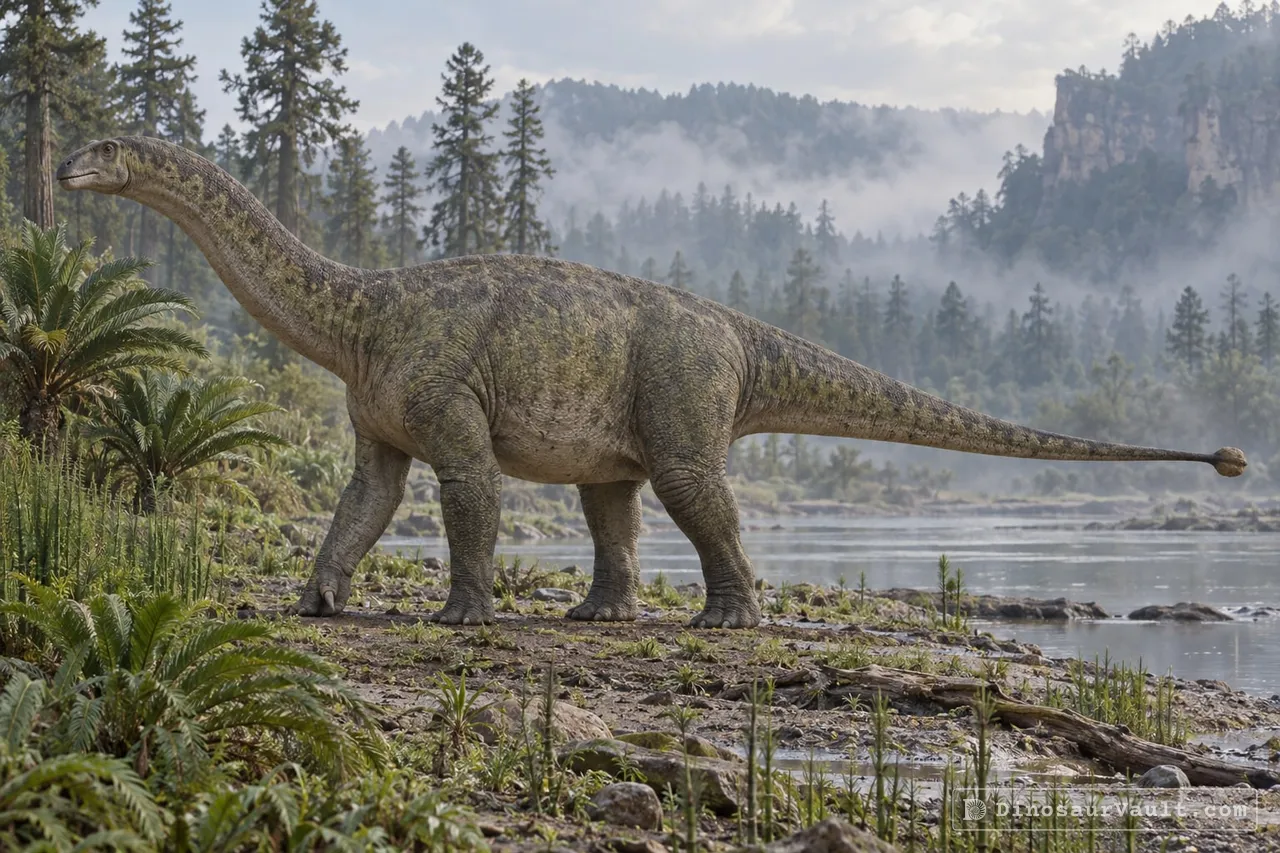
1 of 3
Lived alongside
Found in the same rock formations
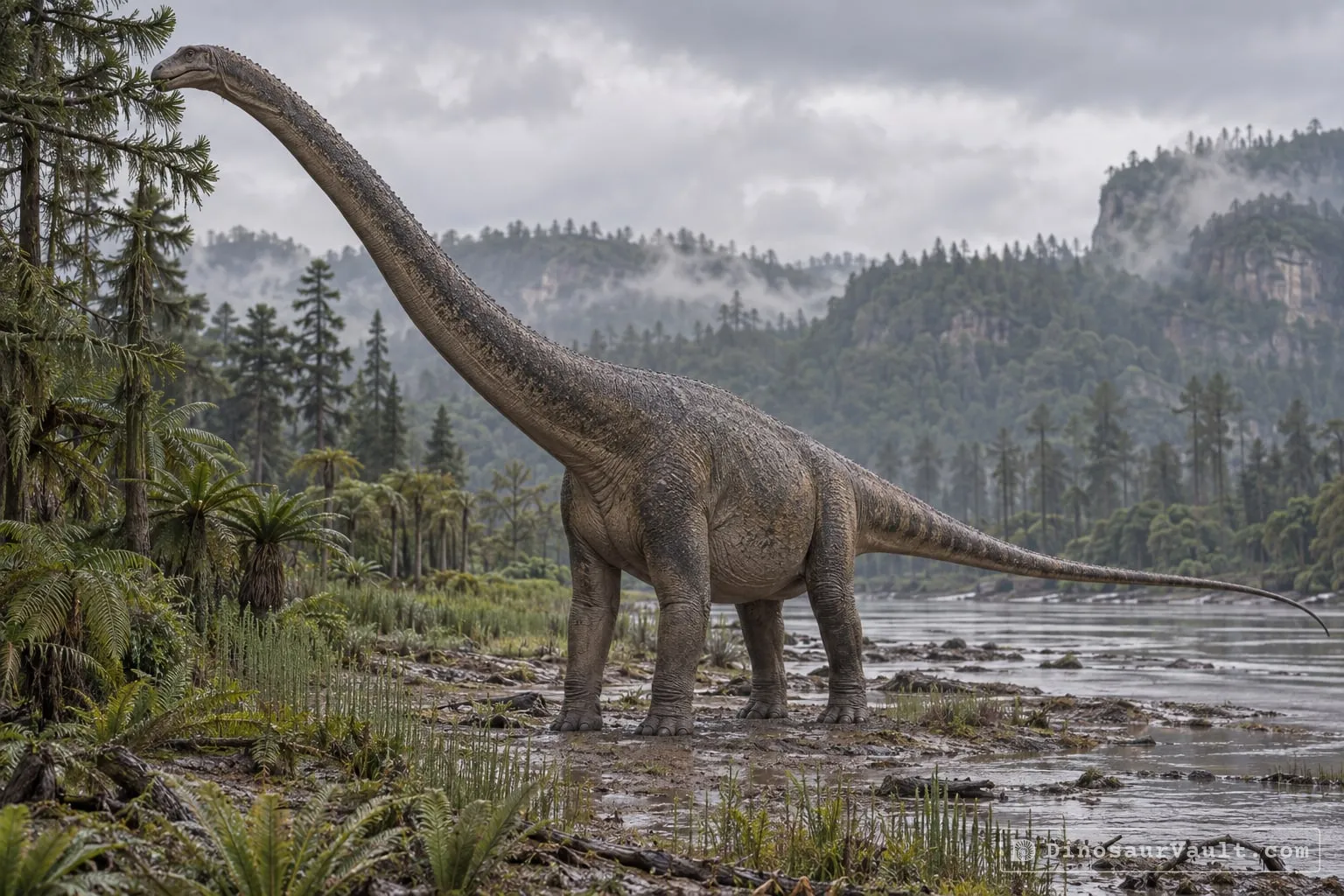
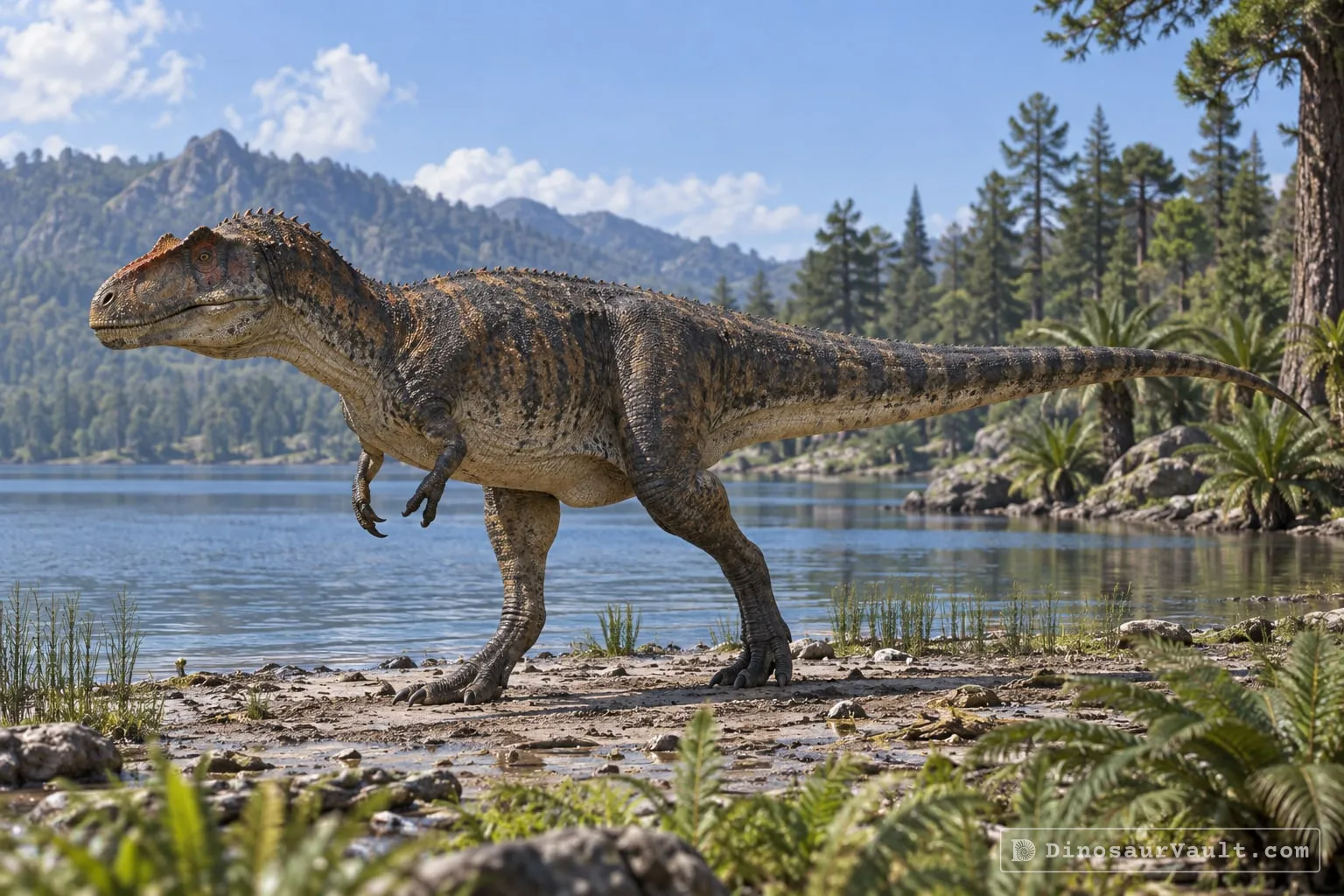
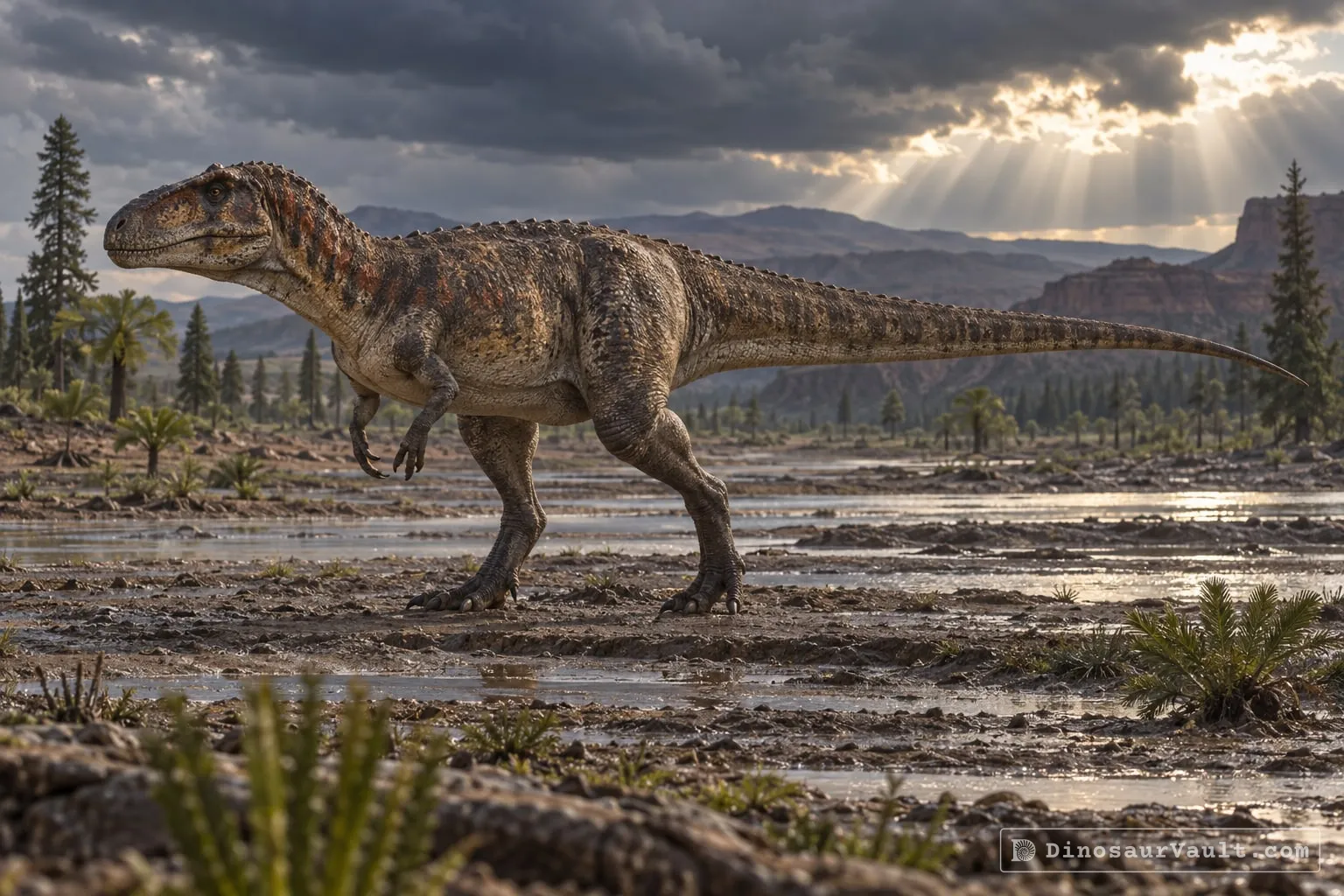
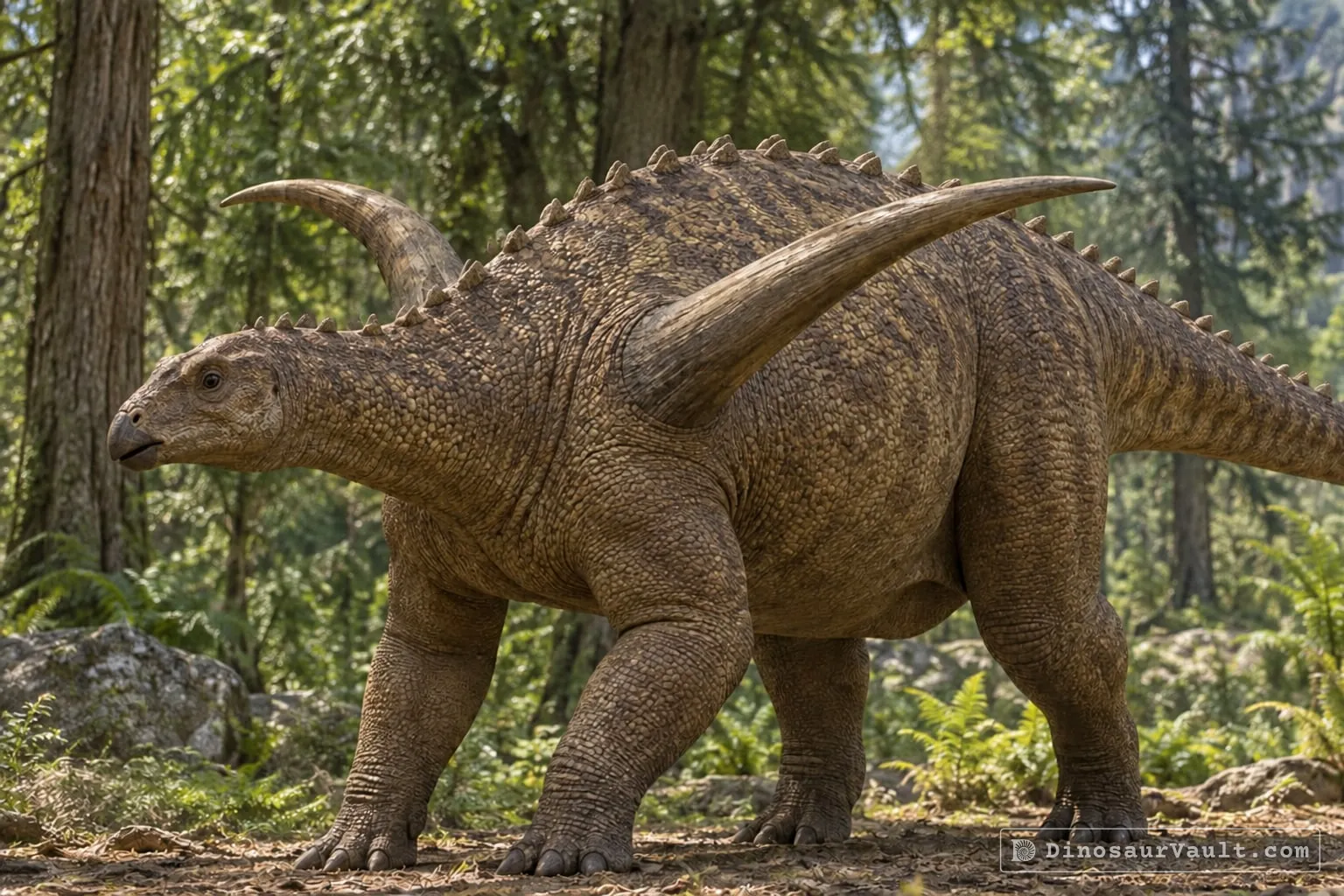
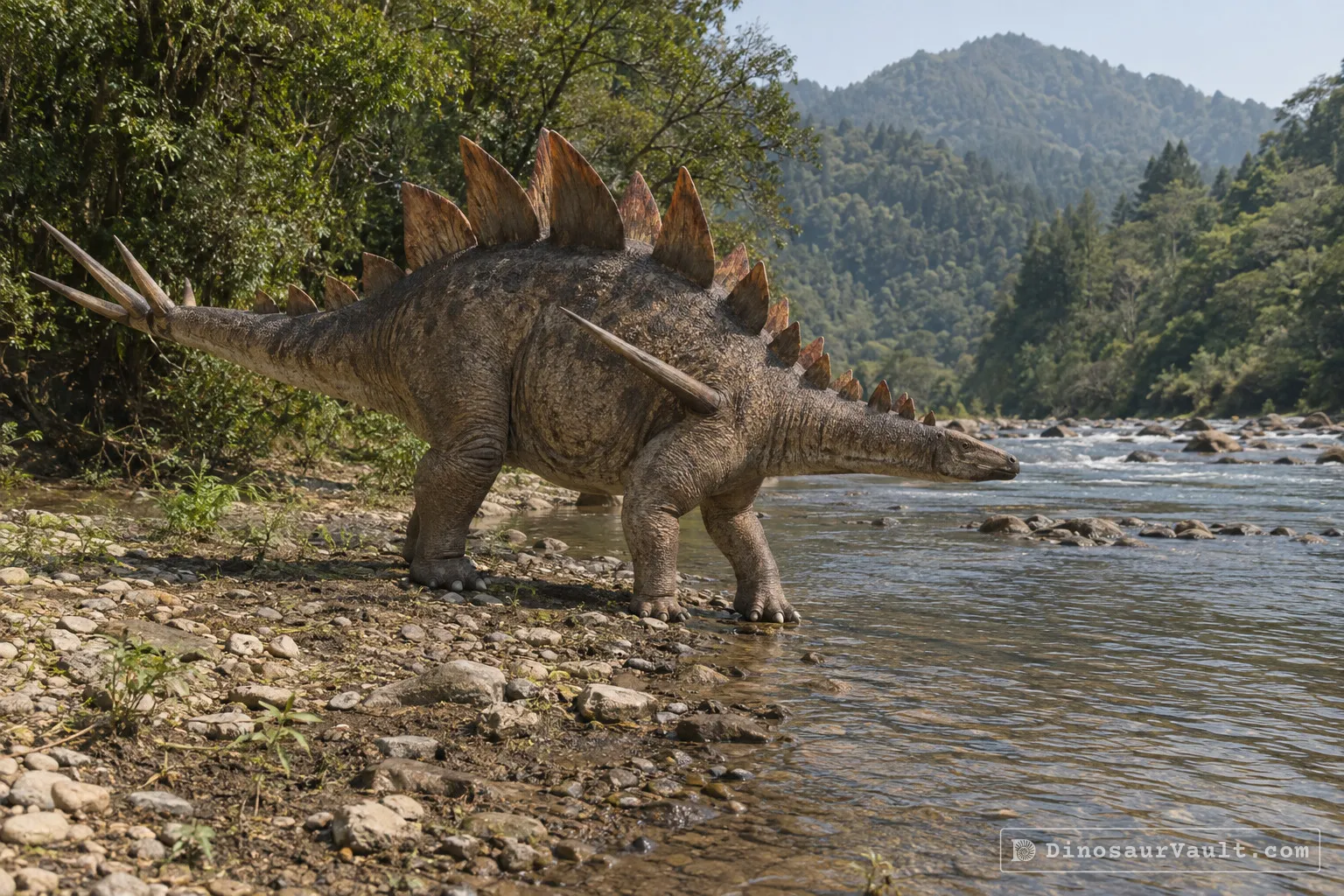
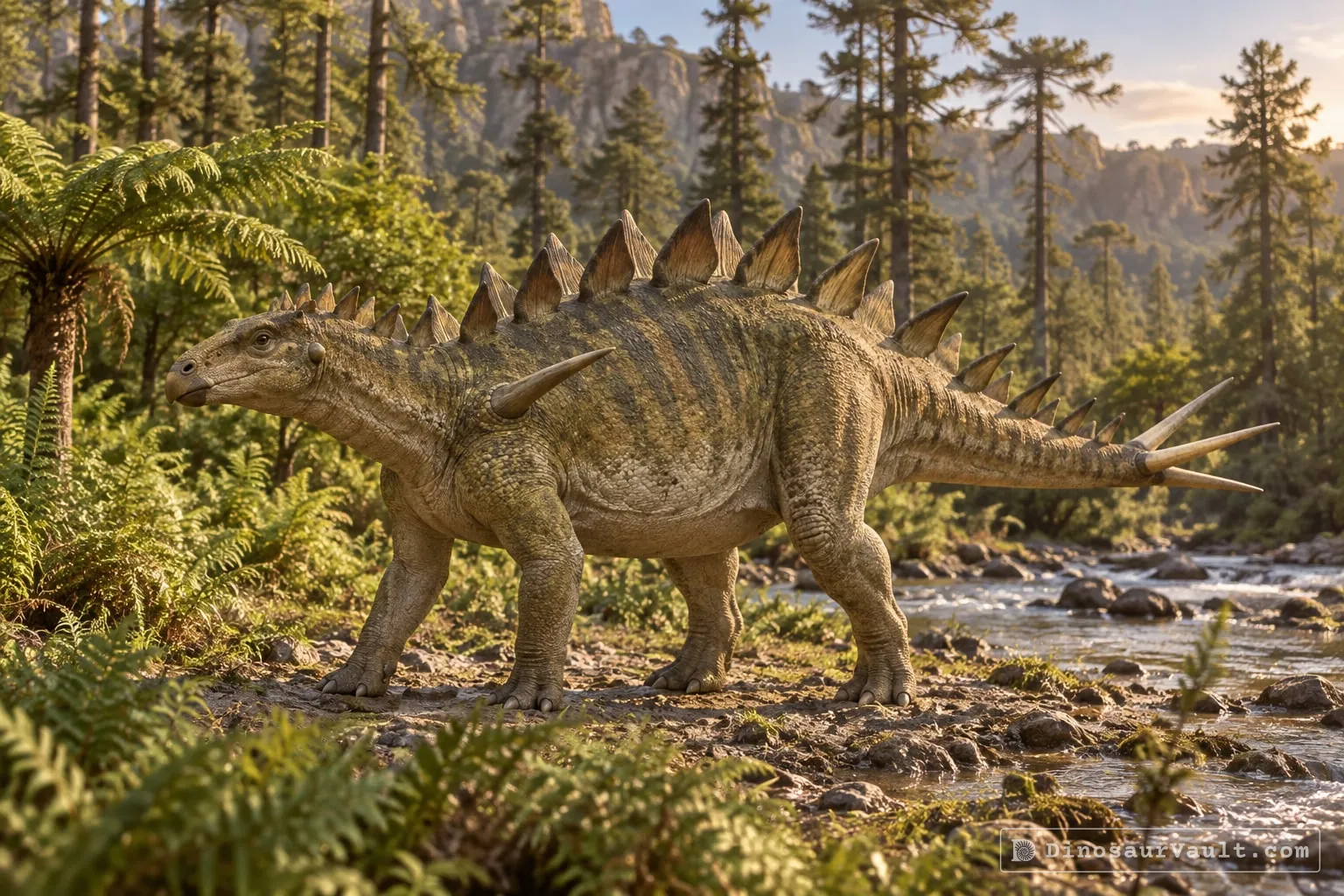
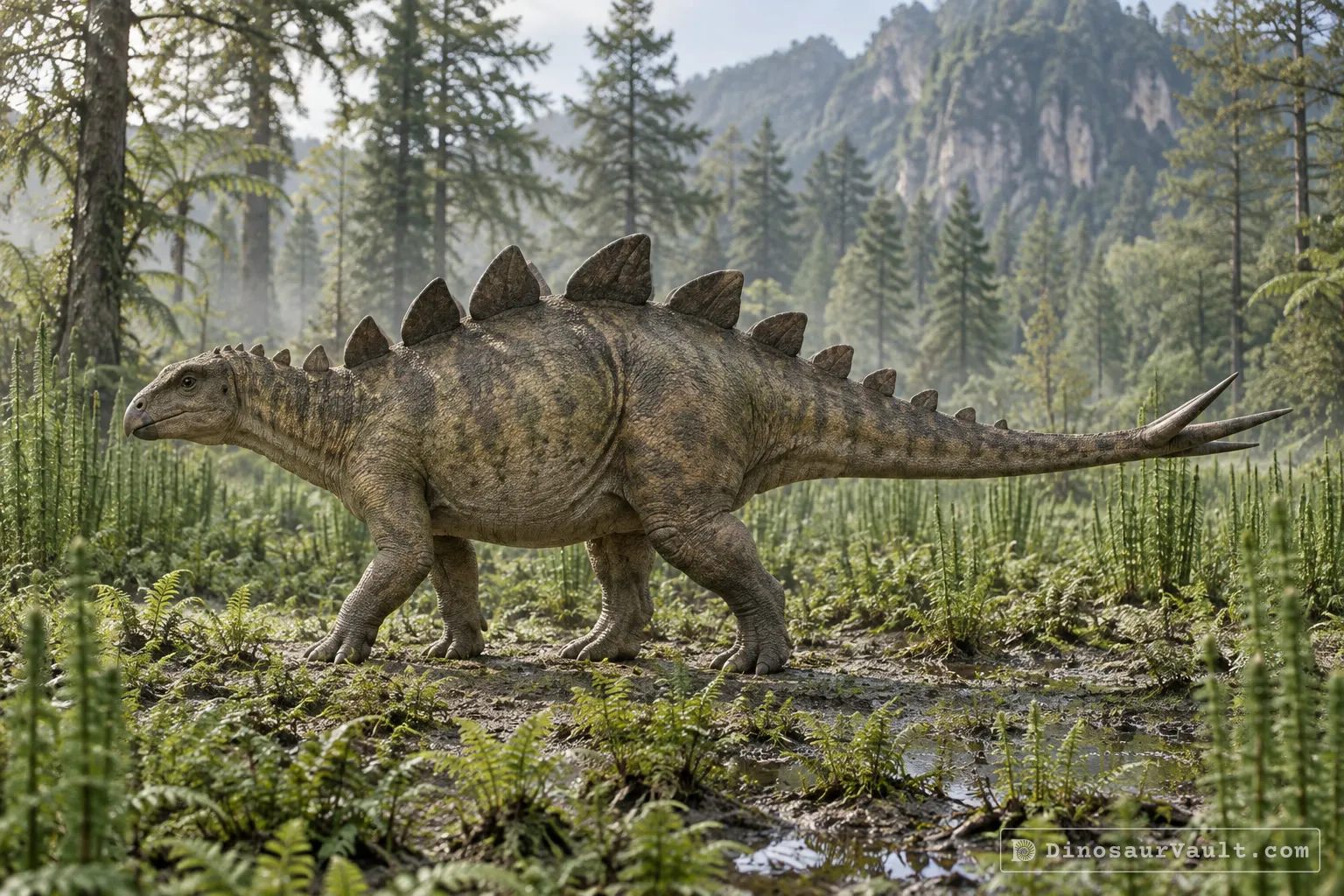


A rock formation can hold fossils laid down millions of years apart, so not every animal here met Shunosaurus.
The evidence
The science behind Shunosaurus
Which parts of the picture come from its own bones, and which come from its relatives.
From its own fossils
- Several complete skeletons reveal a relatively short neck and a small bony club at the end of the tail.
- Its teeth had narrow shafts and widened tips, and the curved tooth rows closed like garden shears.
- The skull and neck suggest that it fed on low-growing plants.
Borrowed from relatives
- Almost the whole body is known from its own bones, so little skeletal anatomy needs to be borrowed from relatives.
Still unknown
- Its skin color and pattern.
- Exactly which plants it ate.
- How it used its tail club.
Discovery timeline
- 1983Named itDong, Zhou & Zhang
- 2002SkullChatterjee & Zheng
- 2021Growing upMa et al.
Key papers
The research behind what we know of Shunosaurus
Named it
Named Shunosaurus from a skeleton with a short neck, strong limbs and spoon-shaped teeth.
[Dinosaurs from the Jurassic of Sichuan]. Palaeontologica Sinica, New Series C, Whole Number 162: 1-136
No link available
Skull
Described the skull, tooth replacement and curved jaws, linking their structure and the short neck to feeding near the ground.
Cranial anatomy of Shunosaurus, a basal sauropod dinosaur from the Middle Jurassic of China. Zoological Journal of the Linnean Society 136: 145-169
Read the paper : Cranial anatomy of Shunosaurus, a basal sauropod dinosaur from the Middle Jurassic of China (opens in a new tab)Growing up
Described another partial skeleton and compared bone structure and proportions across growth stages.
New Shunosaurus (Dinosauria: Sauropoda) material from the middle Jurassic lower Shaximiao Formation of Yunyang, Chongqing, China. Historical Biology 34: 1085-1099
Read the paper : New Shunosaurus (Dinosauria: Sauropoda) material from the middle Jurassic lower Shaximiao Formation of Yunyang, Chongqing, China (opens in a new tab)
Close relatives
Other members of Eusauropoda


Sources: Wikidata