Huayangosaurus
hwah-YANG-oh-SORE-us
"Huayang lizard"
- Lived
- 171 to 155 million years ago, Middle Jurassic to Late Jurassic
- Diet
- Herbivore
- Length
- about 4.5 m (15 ft)
- Group
- Stegosaurs, Huayangosauridae
- Found in
- China
- Named by
- Dong et al. 1982
Size comparison
To scale


Scale in metersOutline: typical stegosaur shape
Where its fossils were found
The evidence
Today

165 million years ago
Habitat
Its Shaximiao Formation world included rivers and conifer woodland. Shunosaurus and Omeisaurus were other plant eaters in these rocks.
Field notes
About Huayangosaurus
What it was like
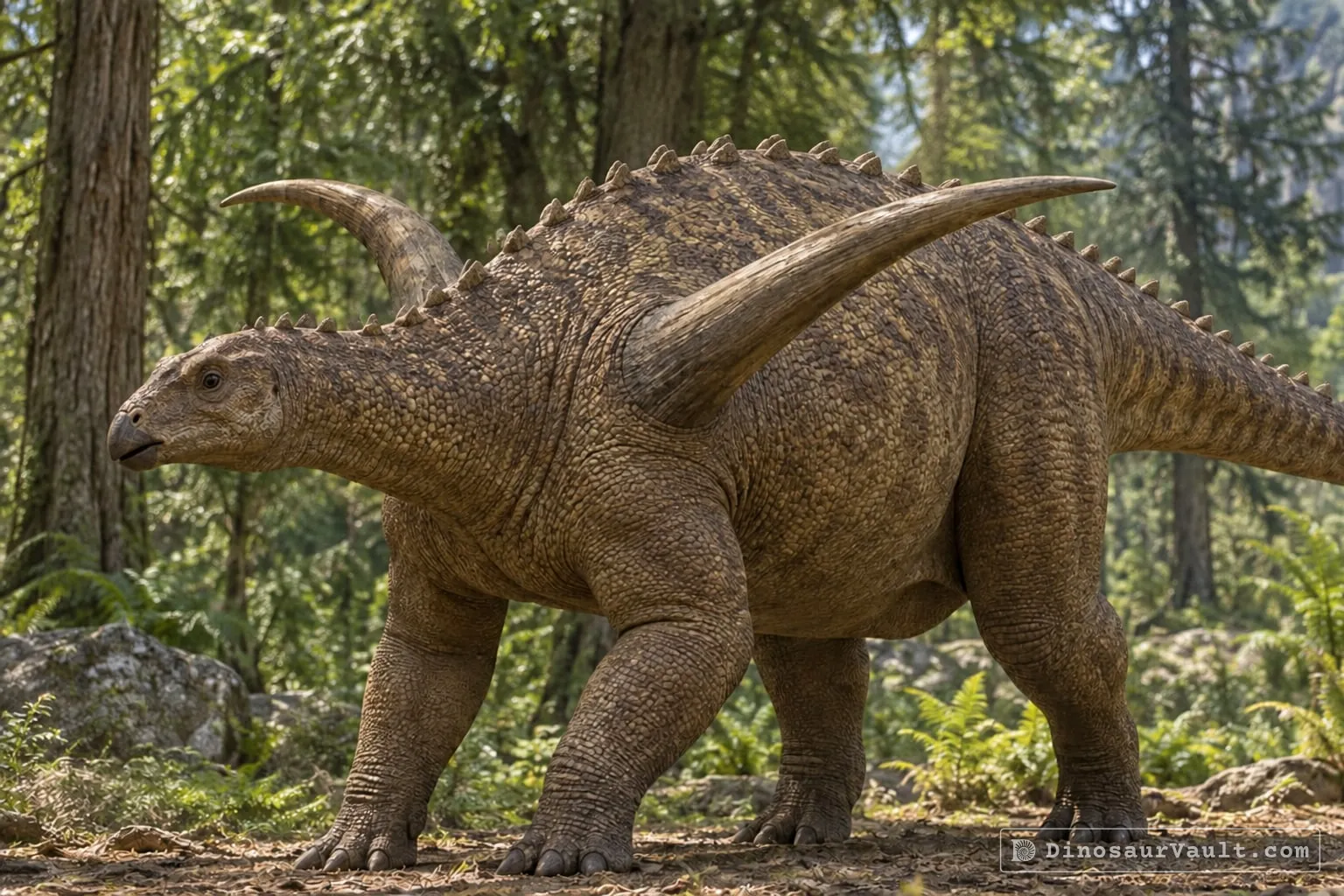
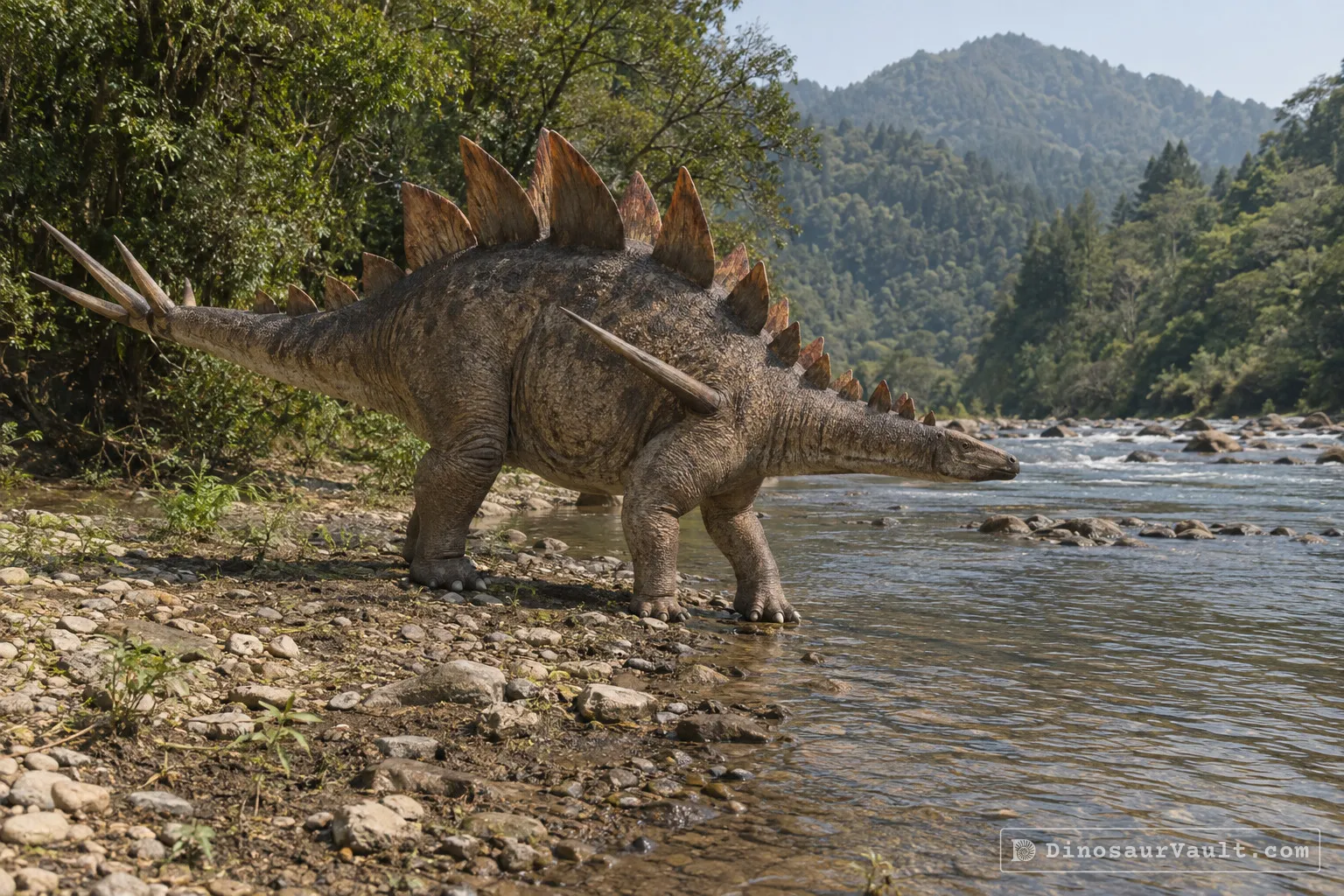
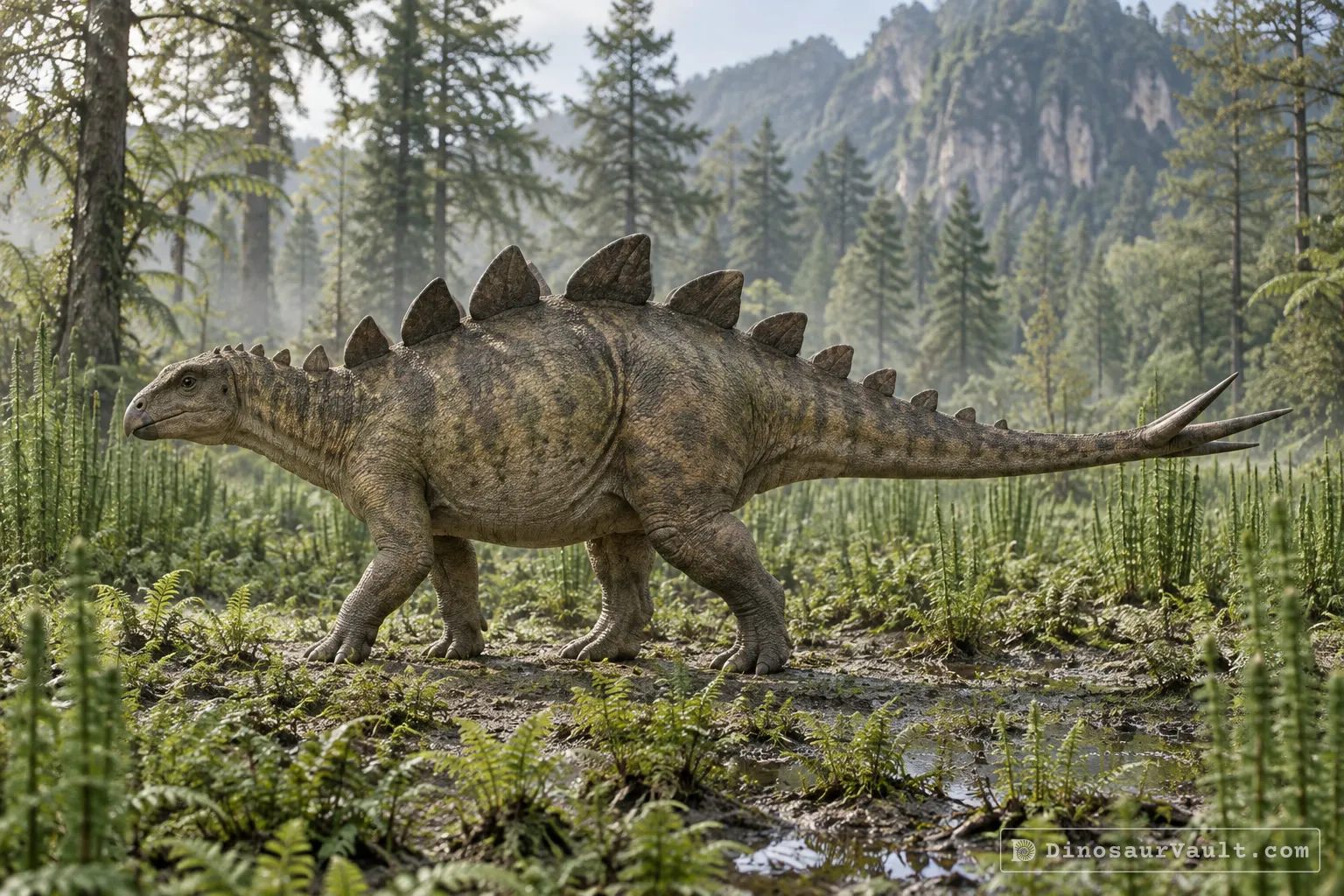
Huayangosaurus was one of the earliest stegosaurs, only about 4.5 meters (15 feet) long. It had two rows of small plates and spikes along its back, a pair of long spikes on its shoulders and spikes on its tail. Unlike Stegosaurus, it still had teeth at the very front of its upper jaw.
Its world
It lived in the Jurassic in what is now China. Its bones come from the Shaximiao Formation, where it shared the land with the long-necked Shunosaurus and Omeisaurus.
How it was found
Dong and colleagues named it in 1982. The name comes from an old name for the region of China where it was found. It is known from one good skeleton, which has helped scientists understand how the later, bigger stegosaurs evolved.
Field gallery
More views of Huayangosaurus
Scenes reconstructed from the available fossil evidence.
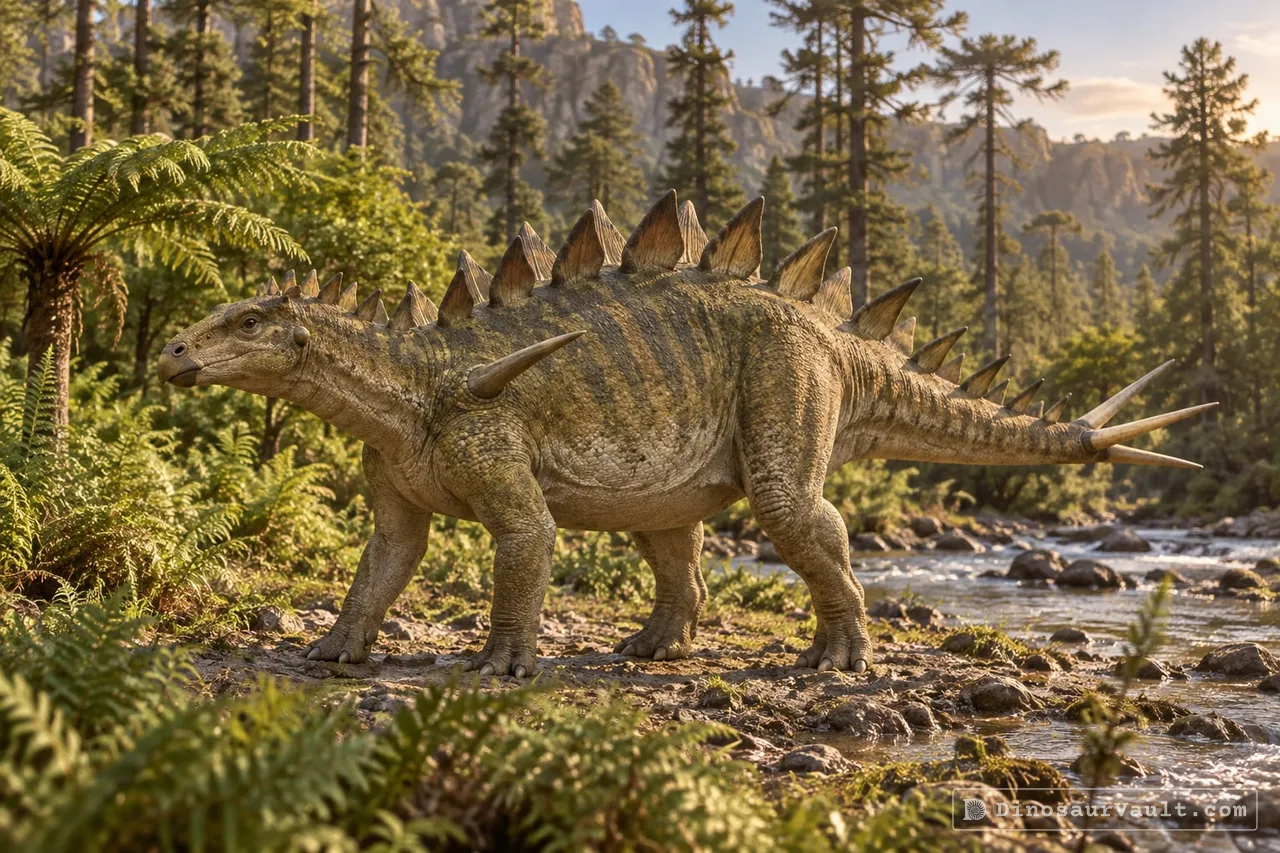
1 of 3
Lived alongside
Found in the same rock formations
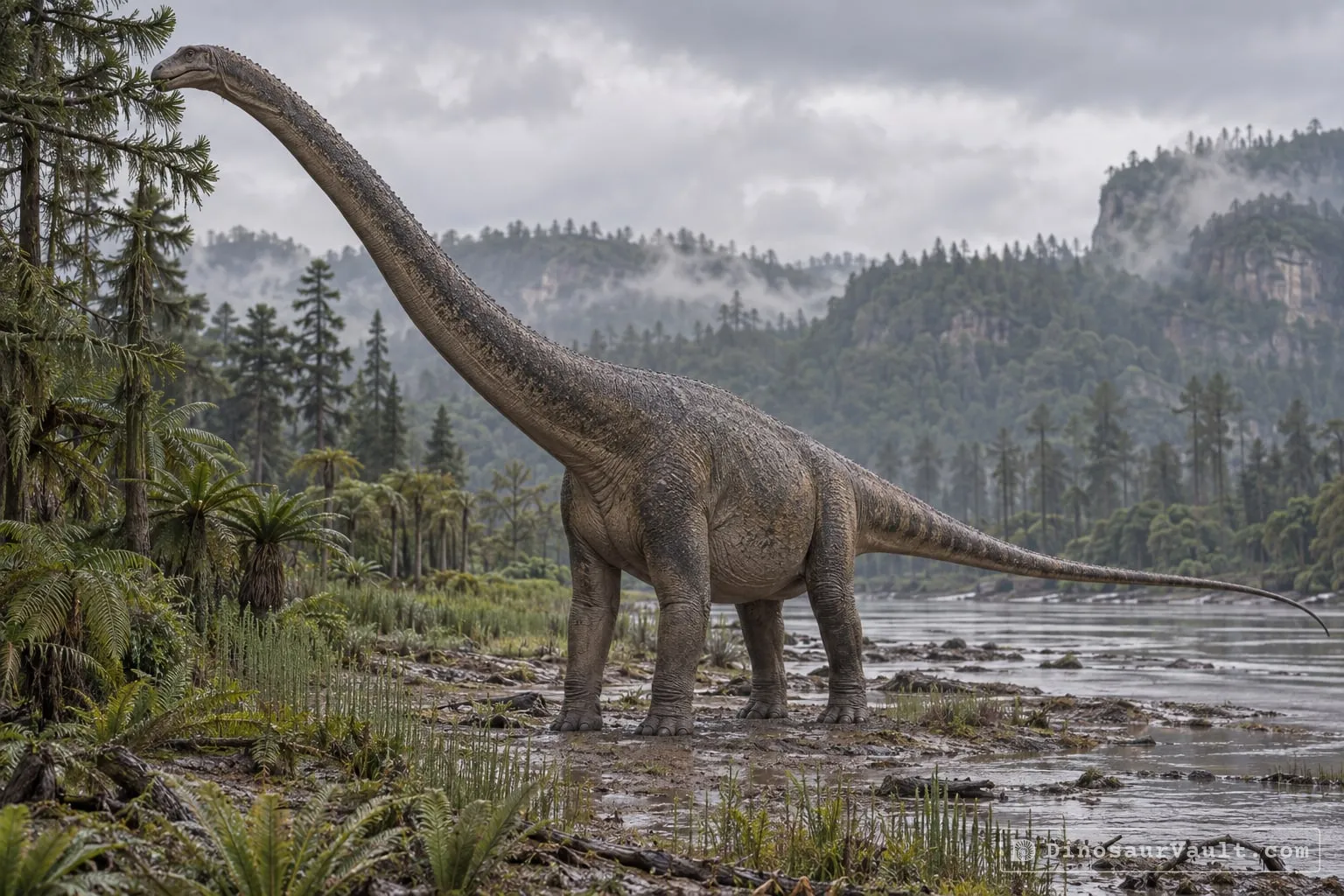
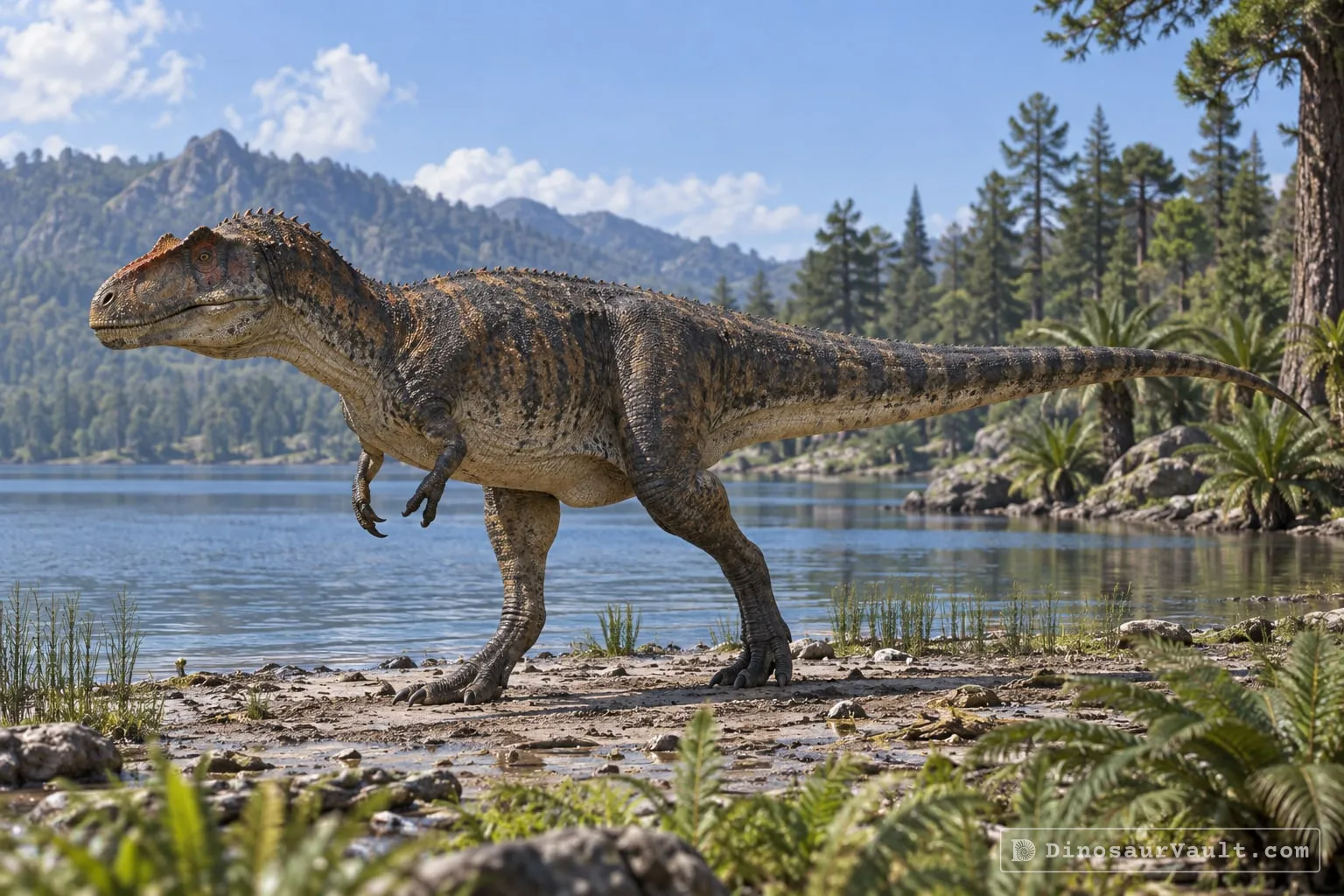
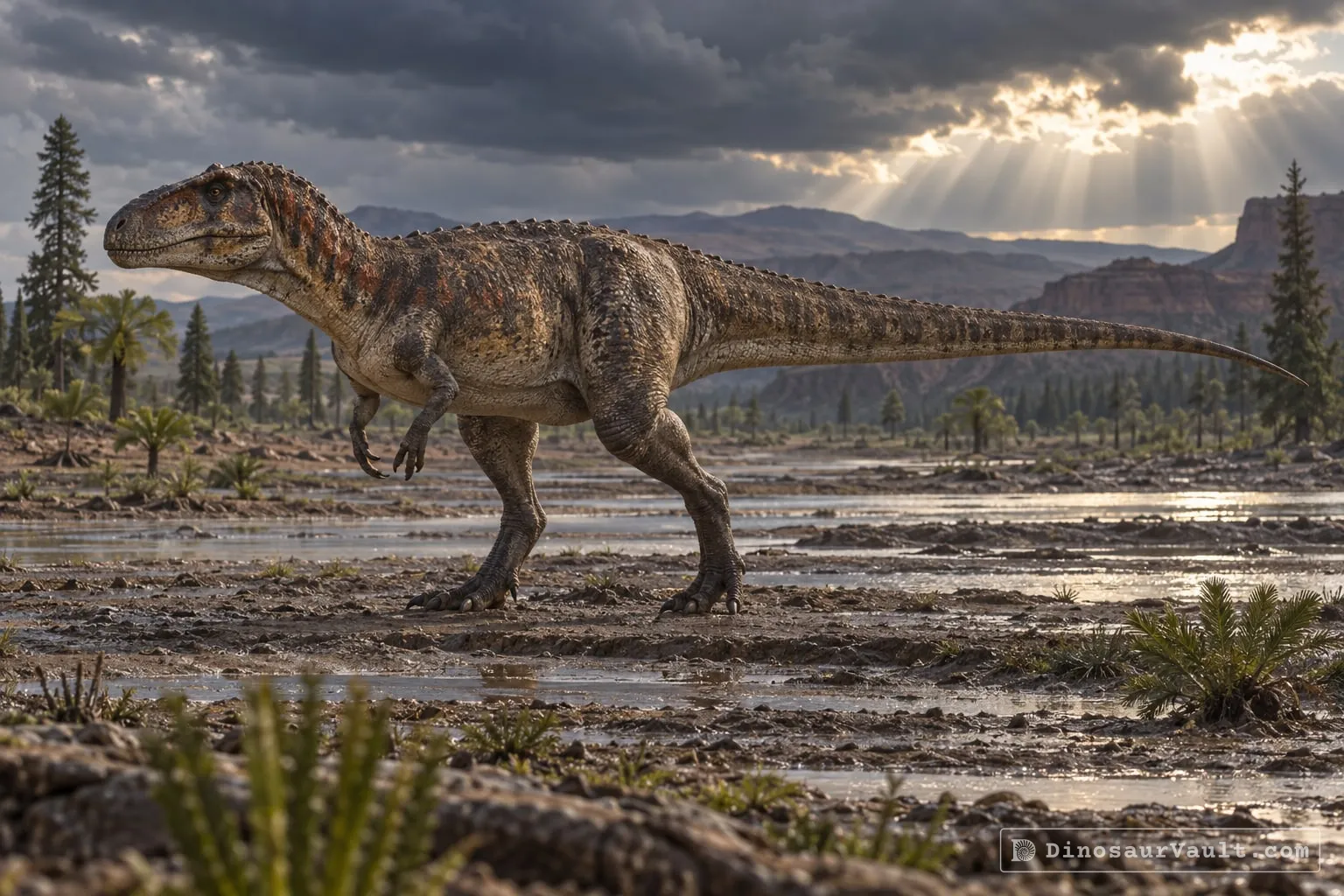
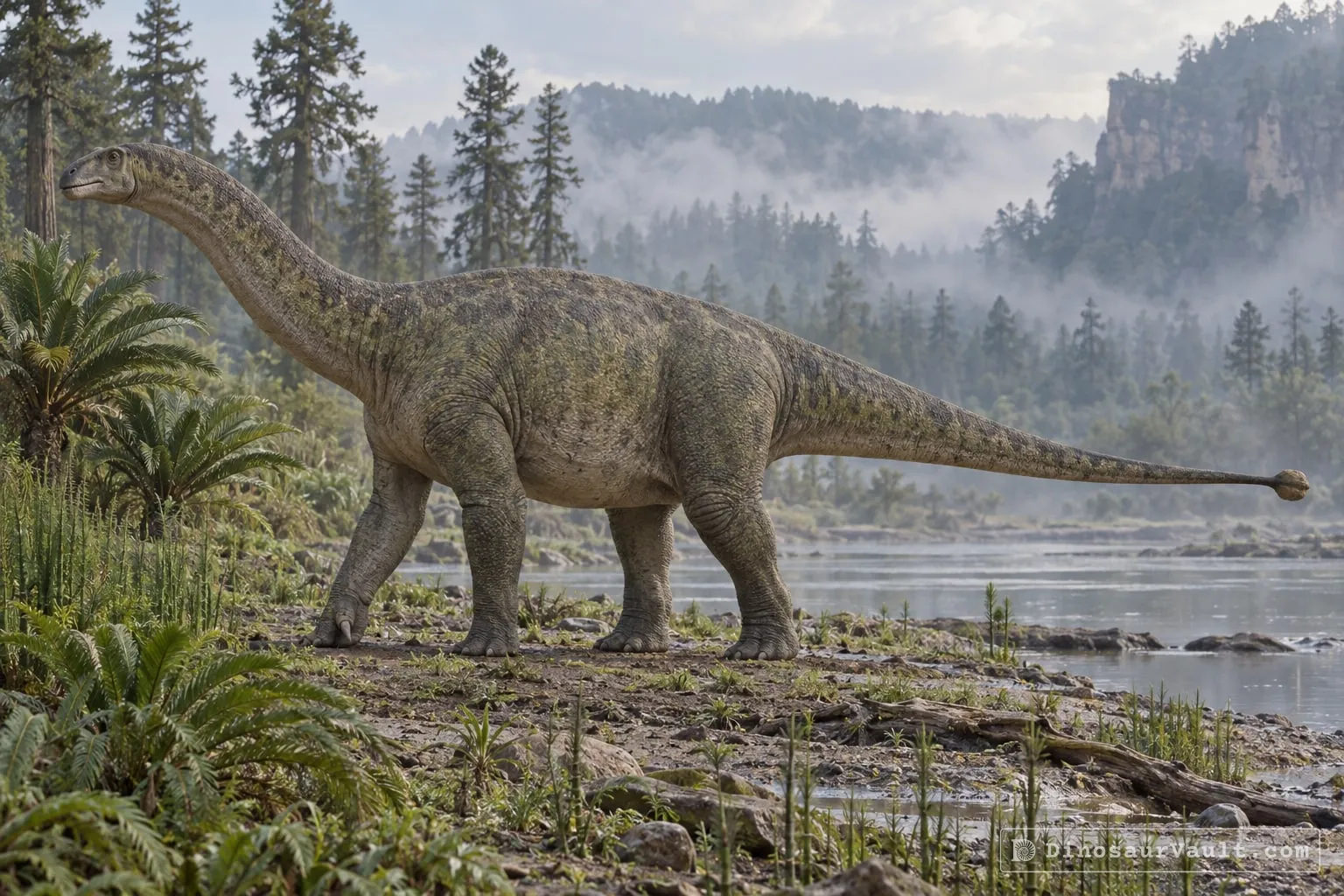


A rock formation can hold fossils laid down millions of years apart, so not every animal here met Huayangosaurus.
The evidence
The science behind Huayangosaurus
Which parts of the picture come from its own bones, and which come from its relatives.
From its own fossils
- Its skull preserves teeth at the front of the upper jaw, a feature lost in later stegosaurs.
- The bones include plates, spikes and small bony scales along the sides of the body.
- Some tendons hardened into bone, a feature retained from earlier armored dinosaurs.
Borrowed from relatives
- Much of its skeleton is known directly, rather than copied from Stegosaurus.
- Scaly skin follows other stegosaurs, including the skin impressions of Hesperosaurus.
Still unknown
- Its color.
- Exactly which plants it ate.
- How the plates and spikes changed as it grew.
Discovery timeline
- 1982Named itDong, Tang & Zhou
- 1992SkullSereno & Zhimin
- 2006Full descriptionMaidment, Wei & Norman
Key papers
The research behind what we know of Huayangosaurus
Named it
Named an early stegosaur from the same fossil assemblage as Shunosaurus.
Note on the new Mid-Jurassic stegosaur from Sichuan Basin, China. Vertebrata PalAsiatica 20: 83-87
No link available
Skull
Described its skull and showed that it retained upper snout teeth and other features lost in later stegosaurs.
The skull of the basal stegosaur Huayangosaurus taibaii and a cladistic diagnosis of stegosauria. Journal of Vertebrate Paleontology 12: 318-343
Read the paper : The skull of the basal stegosaur Huayangosaurus taibaii and a cladistic diagnosis of stegosauria (opens in a new tab)Full description
Restudied the body bones and found hardened tendons and other features linking Huayangosaurus to earlier armored dinosaurs.
Re-description of the postcranial skeleton of the middle Jurassic stegosaurHuayangosaurus taibaii. Journal of Vertebrate Paleontology 26: 944-956
Read the paper : Re-description of the postcranial skeleton of the middle Jurassic stegosaurHuayangosaurus taibaii (opens in a new tab)
Close relatives
Other members of Huayangosauridae


Sources: Wikidata