Omeisaurus
OH-may-SORE-us
"Omei lizard"
- Lived
- 171 to 143 million years ago, Middle Jurassic to Late Jurassic
- Diet
- Herbivore
- Length
- about 20 m (66 ft)
- Group
- Sauropods, Mamenchisauridae
- Found in
- China
- Named by
- Young 1939
Size comparison
To scale


Scale in metersOutline: typical sauropod shape
Where its fossils were found
The evidence
Today

155 million years ago
Habitat
Rivers and lakes crossed the landscape recorded in the Shaximiao Formation of China. Shunosaurus and Huayangosaurus were among the other plant eaters in these rocks.
Field notes
About Omeisaurus
What it was like
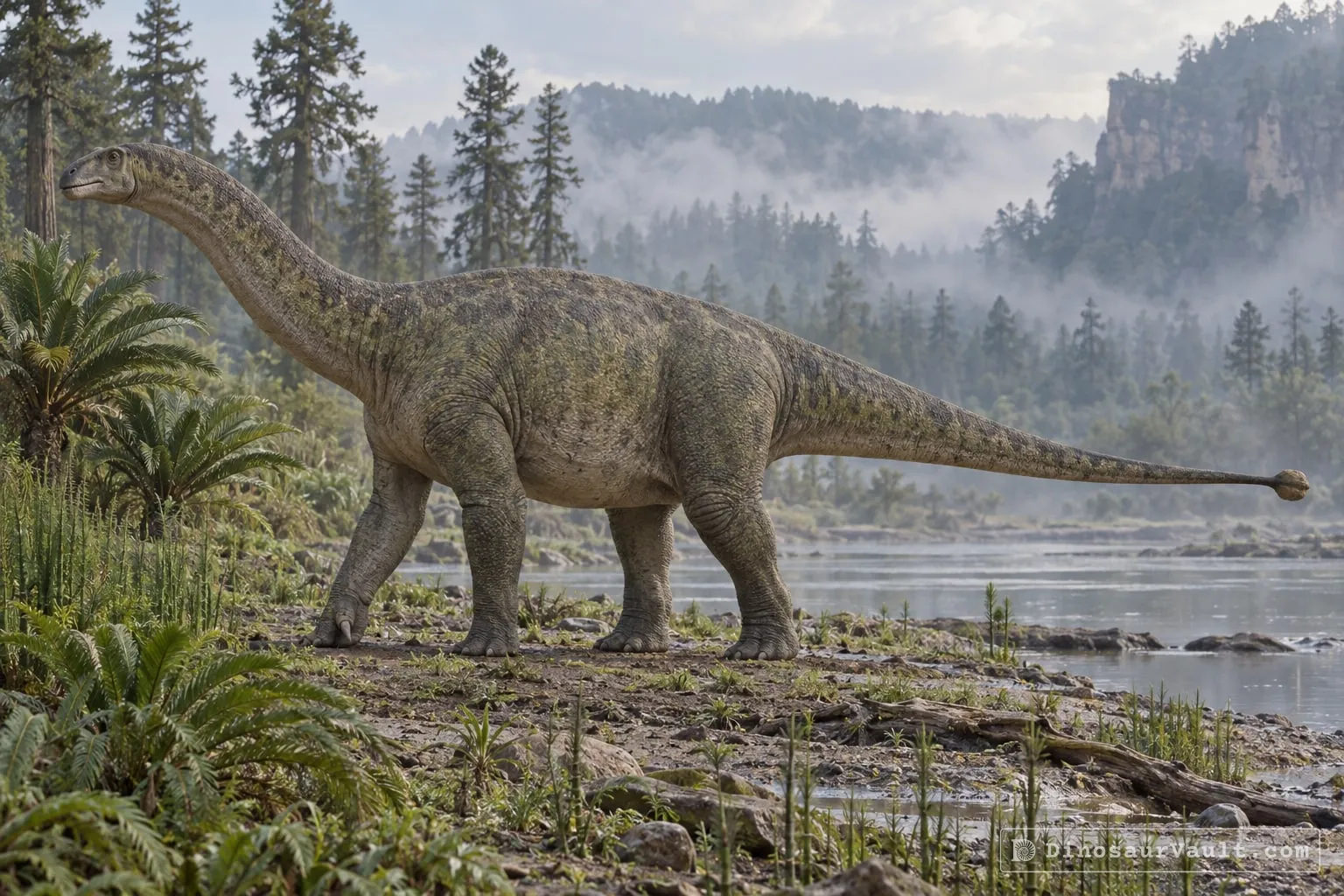
Omeisaurus was a long-necked plant eater with one of the longest necks of its time, made of many long, light backbones. The biggest individuals were about 20 meters (66 feet) long, and much of that length was neck.
It belonged to the mamenchisaurs, a family of long-necked sauropods from the Jurassic of China, and was a close relative of Mamenchisaurus.
Its world
It lived in the Jurassic in what is now China. Its bones come from the Shaximiao Formation, a land of rivers and forests where it lived alongside the long-necked Shunosaurus and Mamenchisaurus, the stegosaurs Tuojiangosaurus and Huayangosaurus, and the big hunter Yangchuanosaurus.
How it was found
Young named Omeisaurus in 1939, after the mountain near the place where it was found. About ten finds are known, and several species have been named, some of them much smaller than others.
Field gallery
More views of Omeisaurus
Scenes reconstructed from the available fossil evidence.
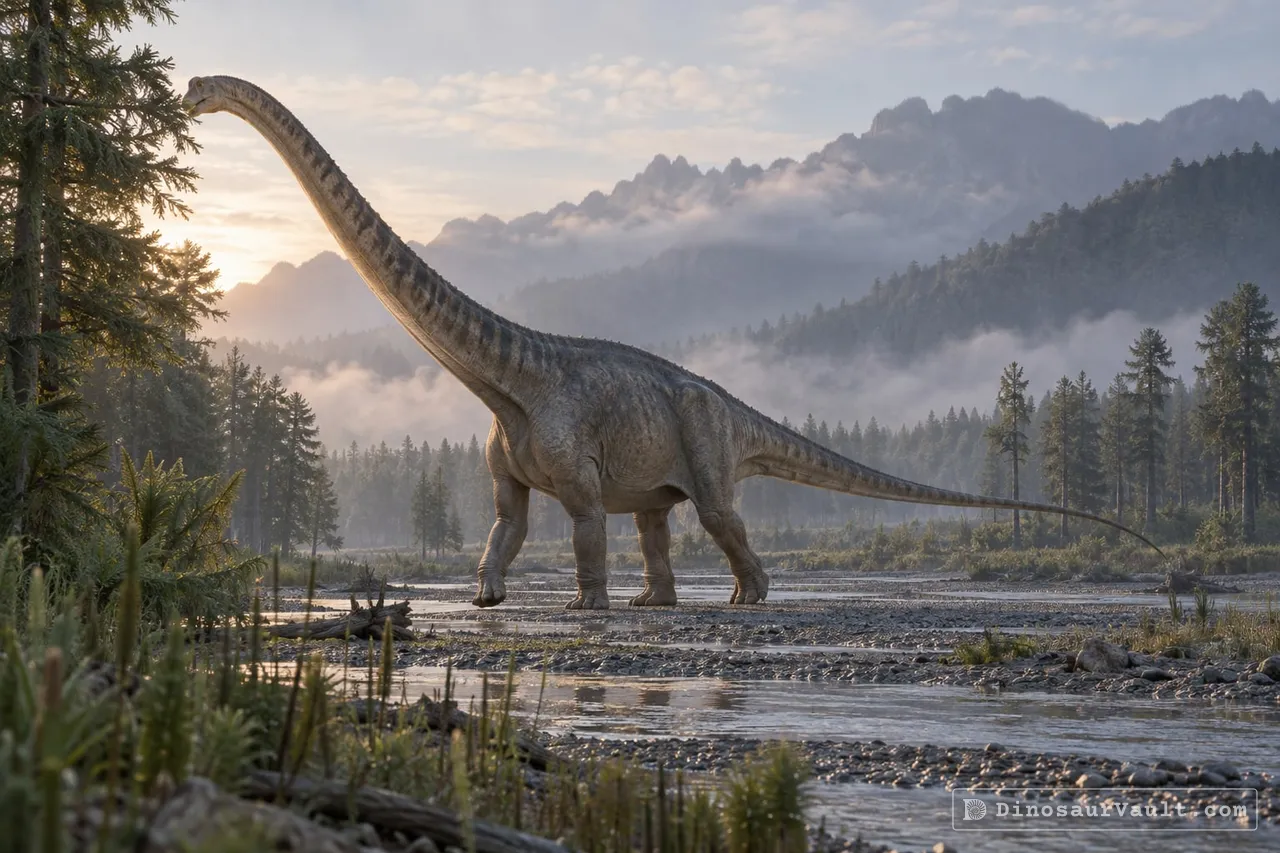
1 of 3
Lived alongside
Found in the same rock formations
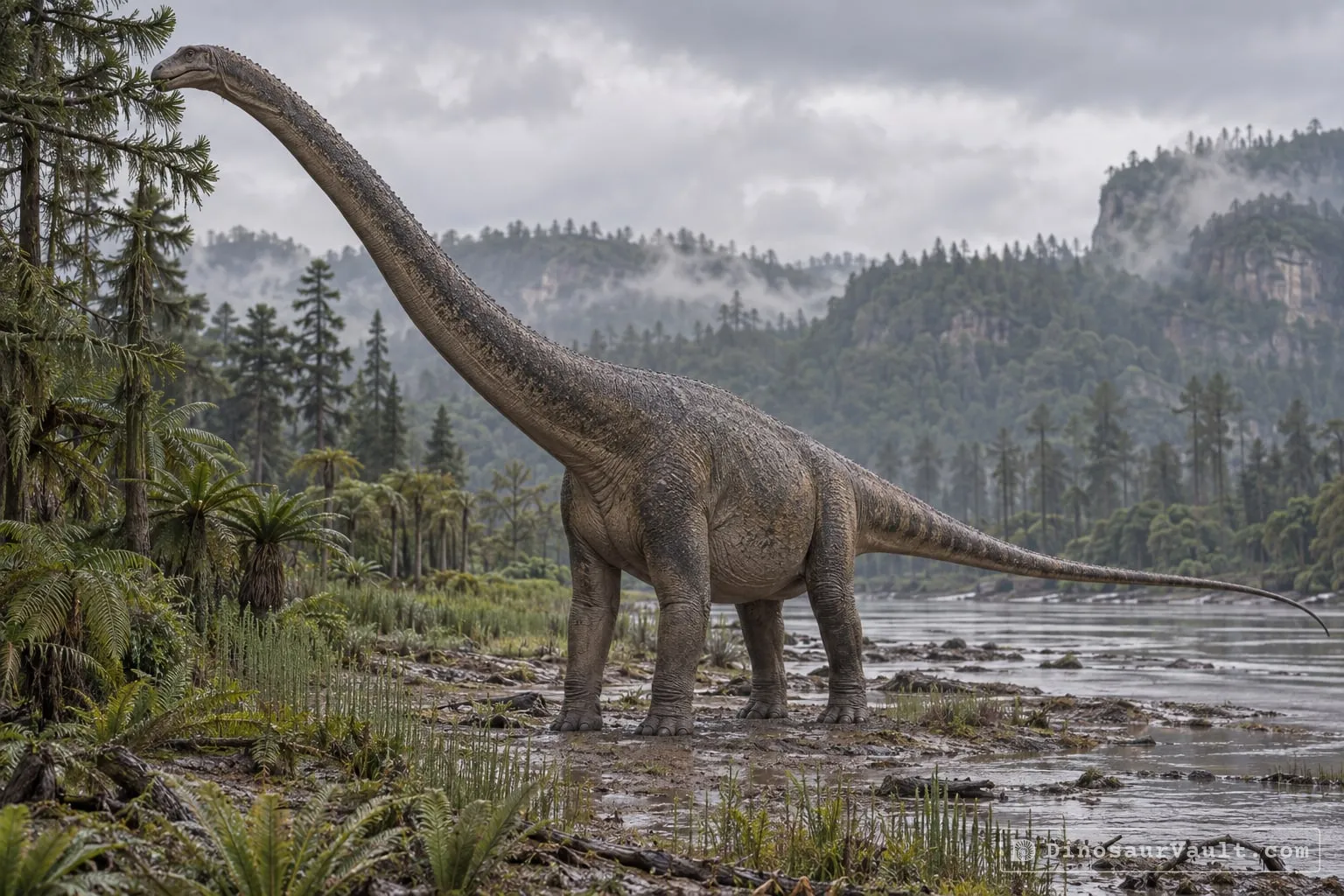
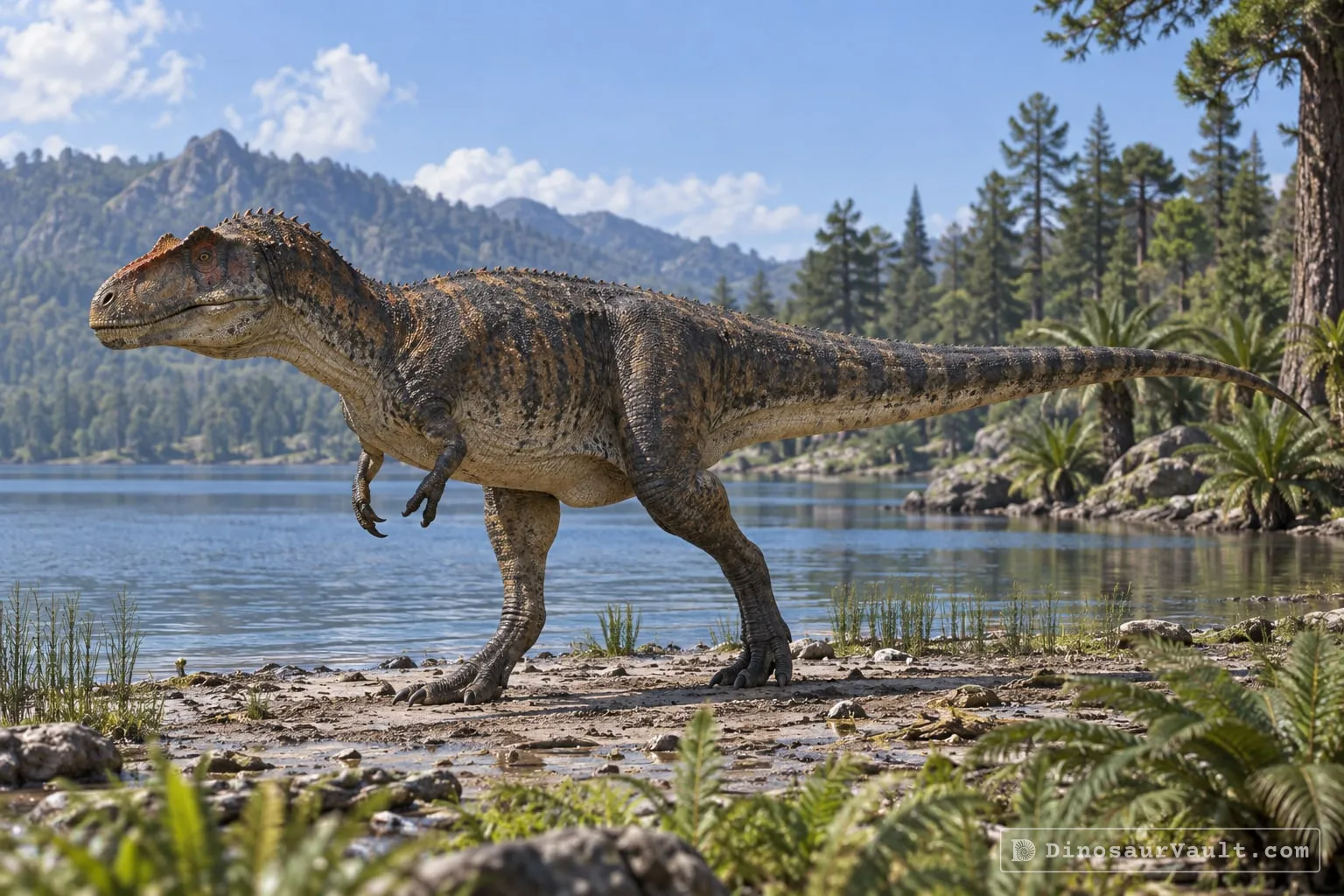
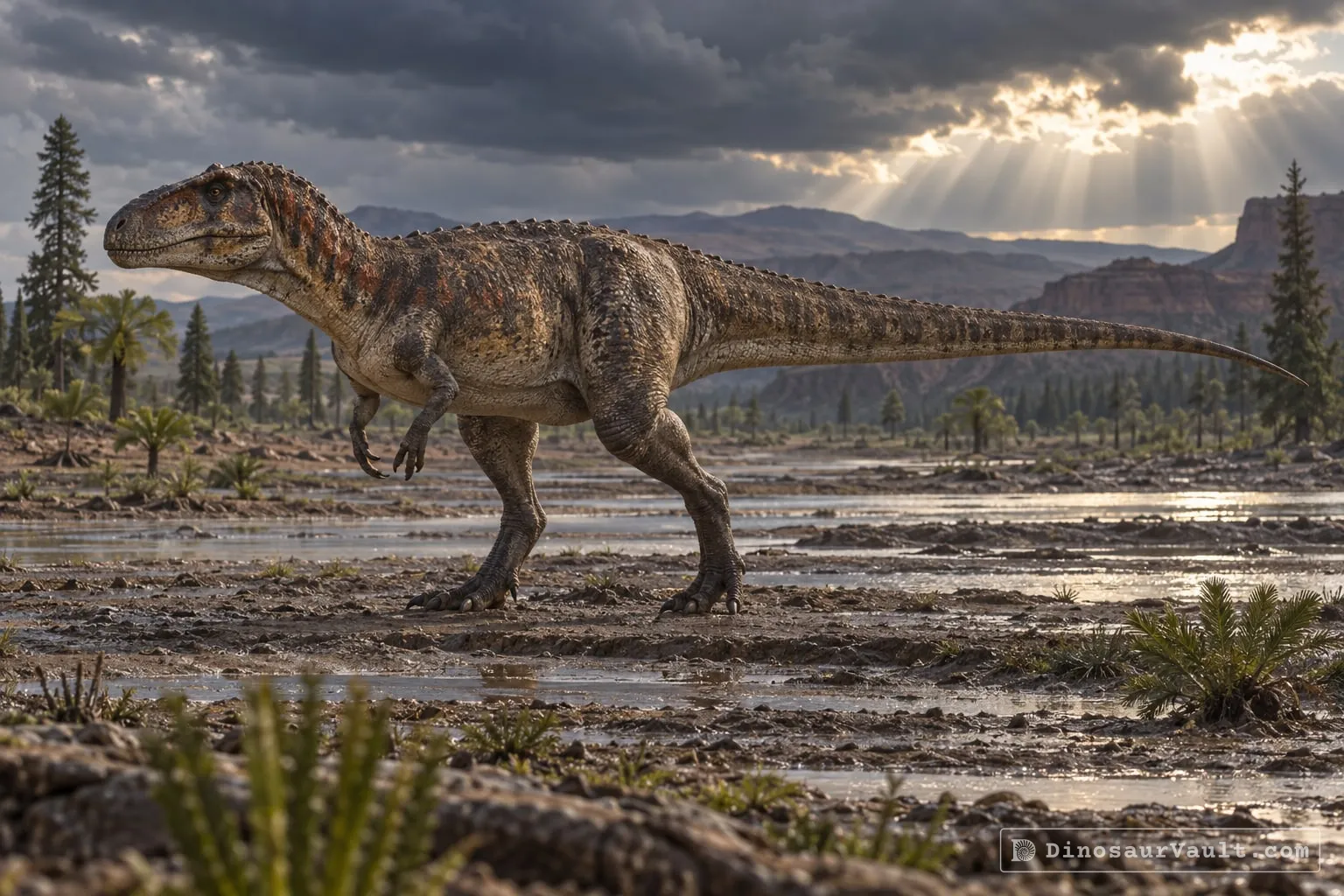
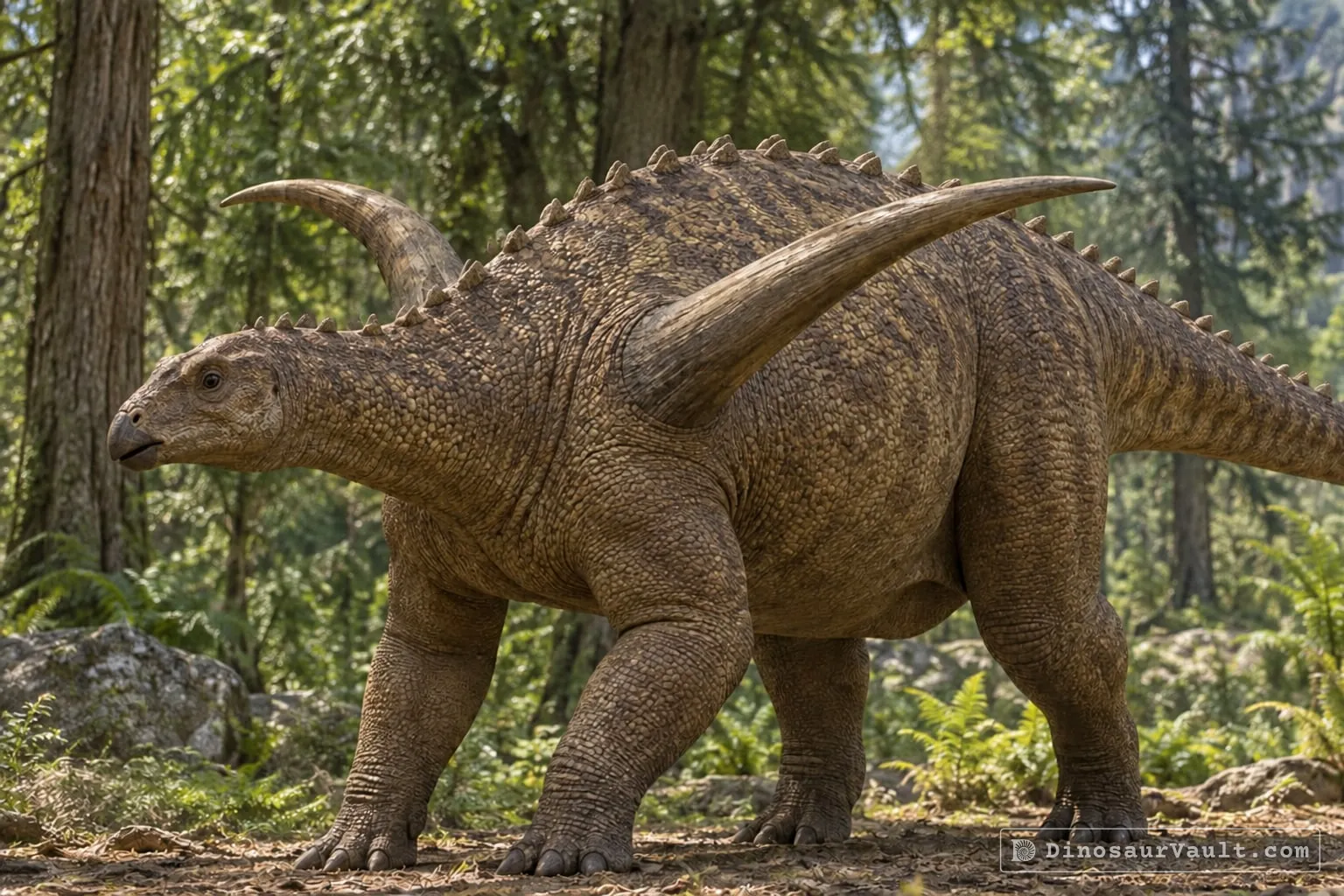
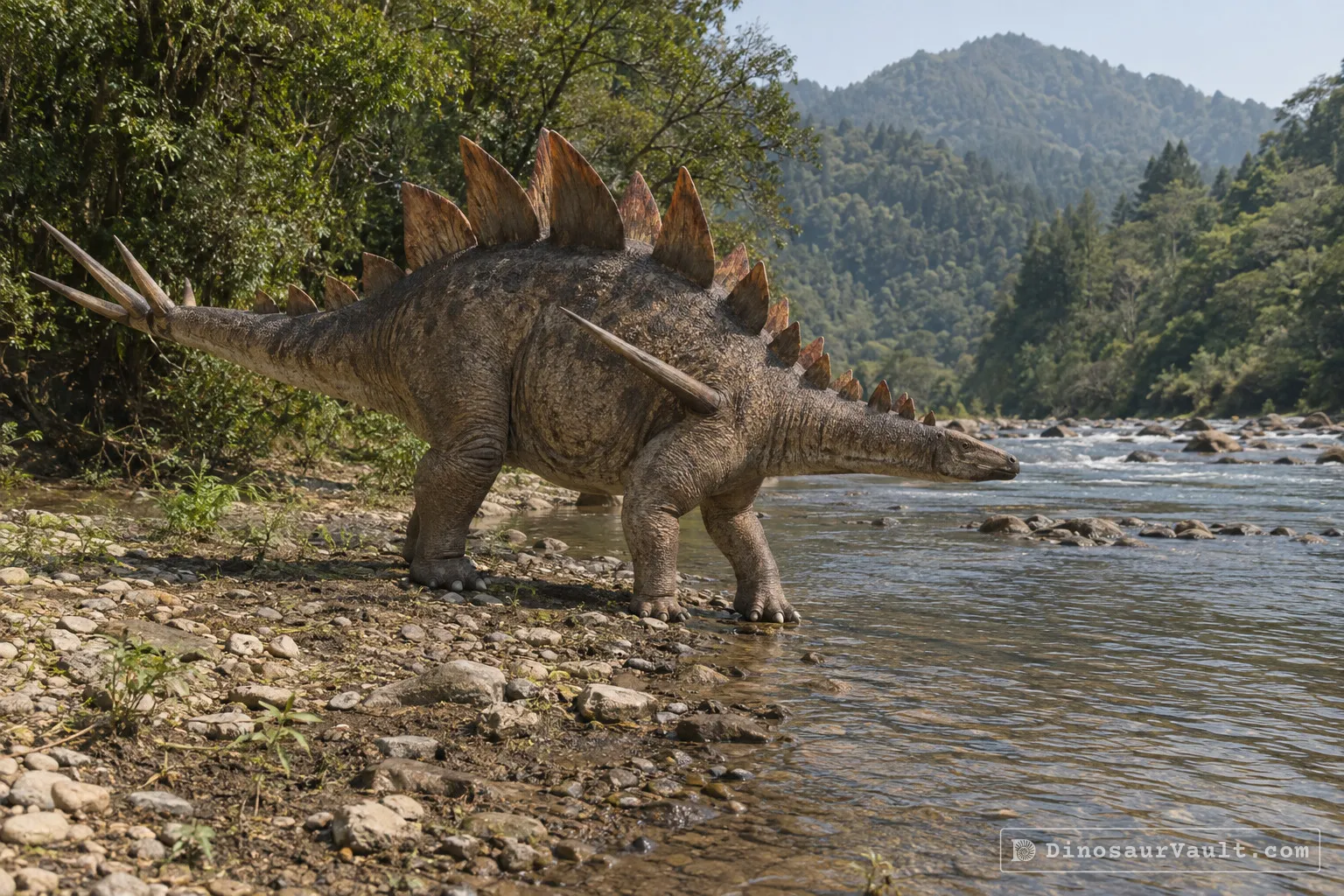
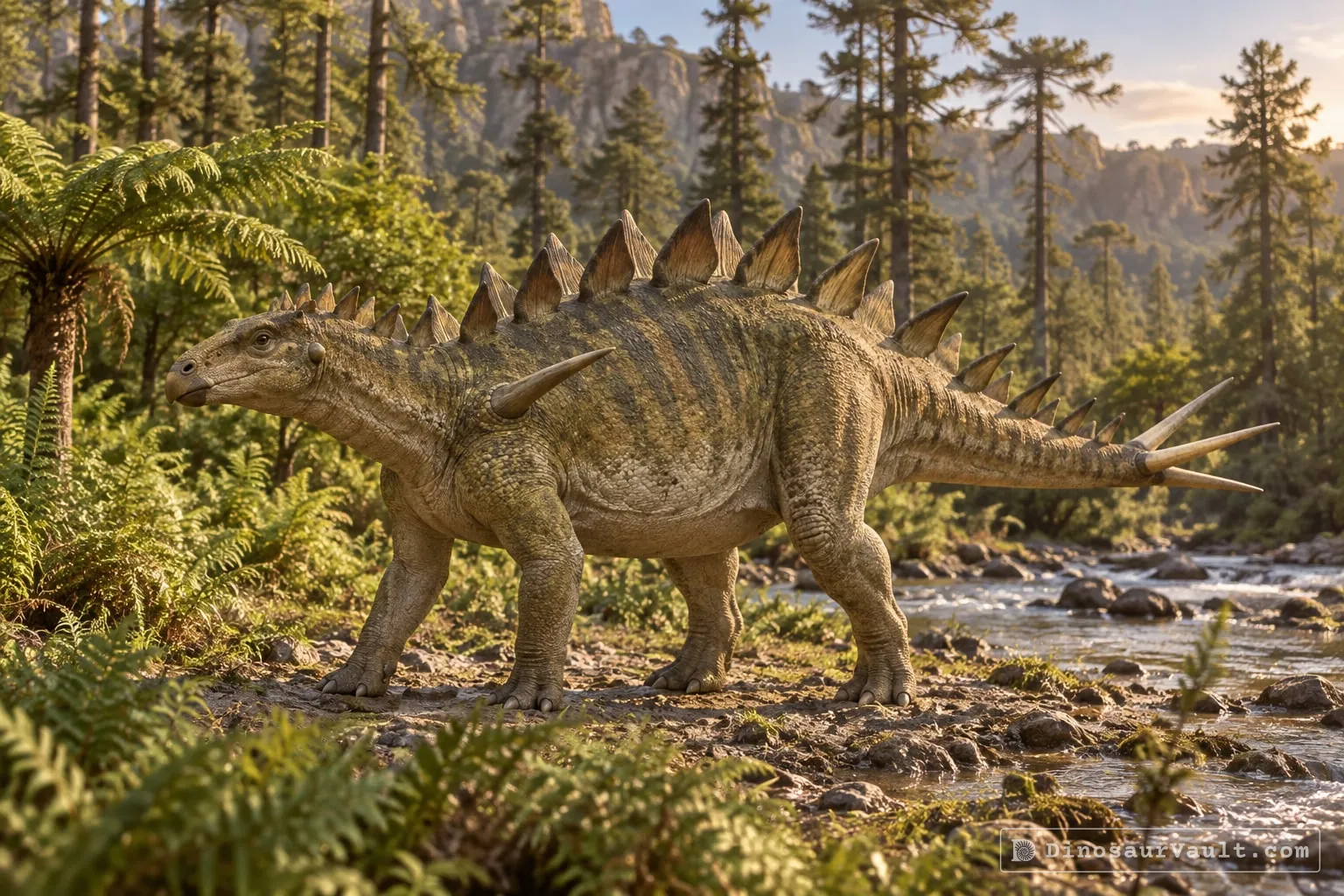
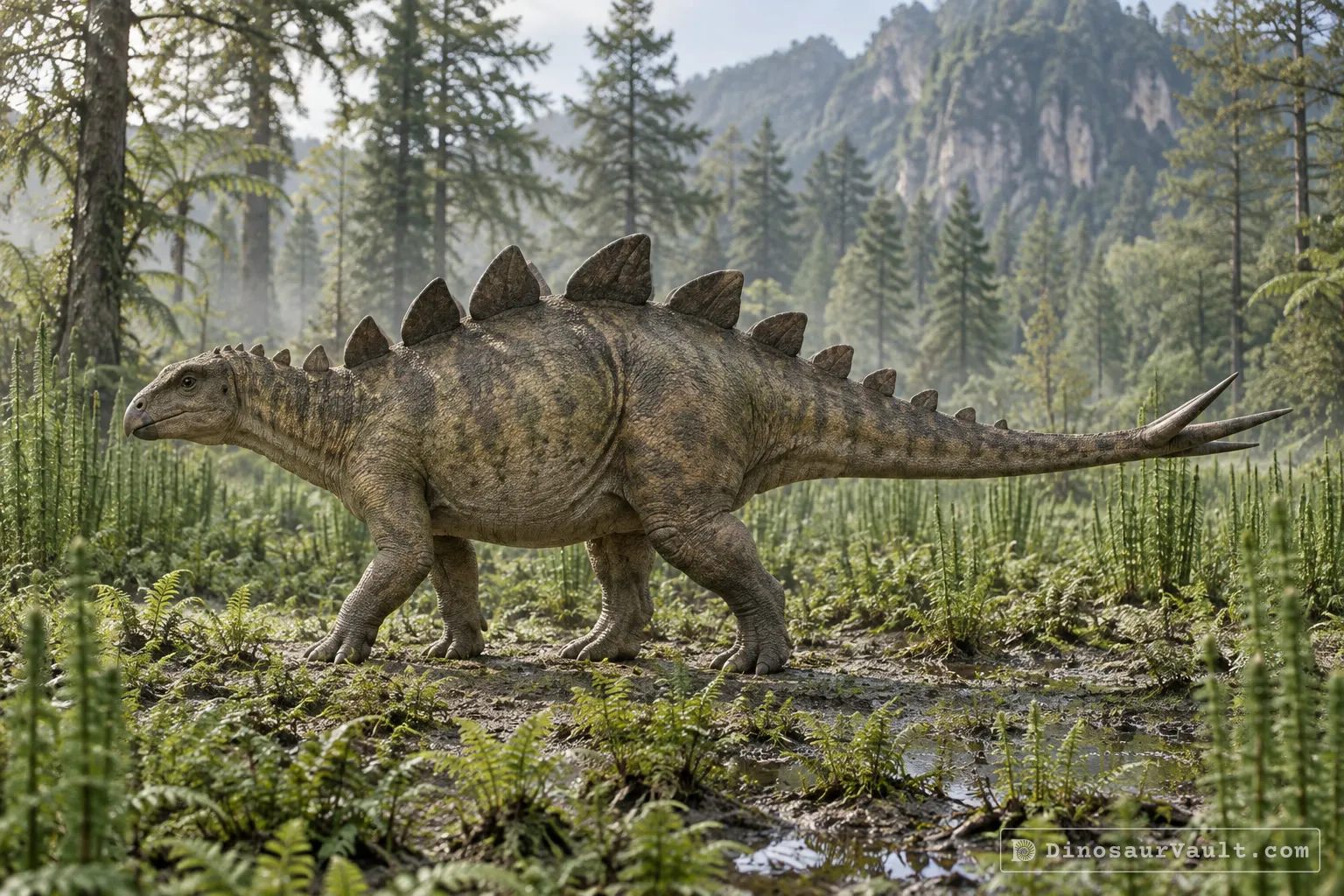


A rock formation can hold fossils laid down millions of years apart, so not every animal here met Omeisaurus.
The evidence
The science behind Omeisaurus
Which parts of the picture come from its own bones, and which come from its relatives.
From its own fossils
- Skeletons preserve a very long neck, a deep body and limbs built to carry its weight on all fours.
- Long neck vertebrae have deep hollows separated by thin bony ridges.
- Partly connected backbones and limb bones distinguish several species assigned to Omeisaurus.
Borrowed from relatives
- Much of the skeleton is restored from its own bones, including the well-preserved neck series of Omeisaurus tianfuensis.
- The likely system of air sacs extending into the neck follows comparisons with Mamenchisaurus and other sauropods.
Still unknown
- Its skin color and markings.
- Which plants it preferred to eat.
- How it usually held its neck while feeding.
Discovery timeline
- 1939Named itYoung
- 2020New findTan et al.
- 2020New findTan et al.
Key papers
The research behind what we know of Omeisaurus
Named it
Young named Omeisaurus from a partial sauropod skeleton found in China.
On a New Sauropoda, with Notes on Other Fragmentary Reptiles from Szechuan. Bulletin of the Geological Society of China 19: 279-315
Read the paper : On a New Sauropoda, with Notes on Other Fragmentary Reptiles from Szechuan (opens in a new tab)New find
Described a long, deeply hollowed neck vertebra that extended the known distribution of Omeisaurus eastward.
A new species of Omeisaurus (Dinosauria: Sauropoda) from the Middle Jurassic of Yunyang, Chongqing, China. Historical Biology 33: 1817-1829
Read the paper : A new species of Omeisaurus (Dinosauria: Sauropoda) from the Middle Jurassic of Yunyang, Chongqing, China (opens in a new tab)New find
Named Omeisaurus puxiani from a partial skeleton with distinctive hollows in its vertebrae and features of its arm bones.
A new species of Omeisaurus (Dinosauria: Sauropoda) from the Middle Jurassic of Yunyang, Chongqing, China. Historical Biology 33: 1817-1829
Read the paper : A new species of Omeisaurus (Dinosauria: Sauropoda) from the Middle Jurassic of Yunyang, Chongqing, China (opens in a new tab)
Close relatives
Other members of Mamenchisauridae


Sources: Wikidata