Gigantspinosaurus
"giant spine lizard"
- Lived
- 162 to 155 million years ago, Late Jurassic
- Diet
- Herbivore
- Group
- Stegosaurs, Huayangosauridae
- Found in
- China
- Named by
- Ouyang 1992
Where its fossils were found
The evidence
Today

160 million years ago
Habitat
River channels and floodplains in what is now China, with conifers recorded in the Shaximiao Formation. Other dinosaurs from these rocks include Mamenchisaurus, Yangchuanosaurus and Tuojiangosaurus.
Field notes
About Gigantspinosaurus
What it was like
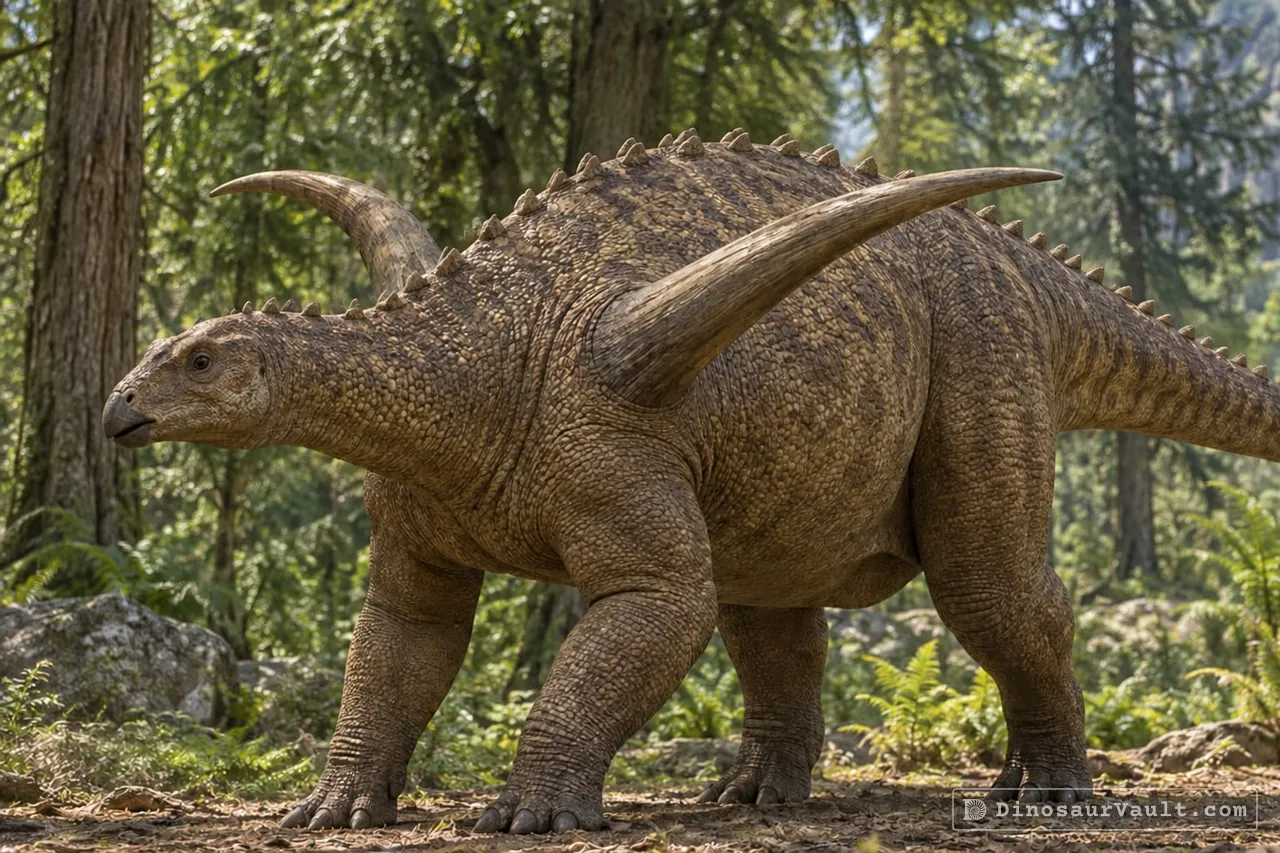
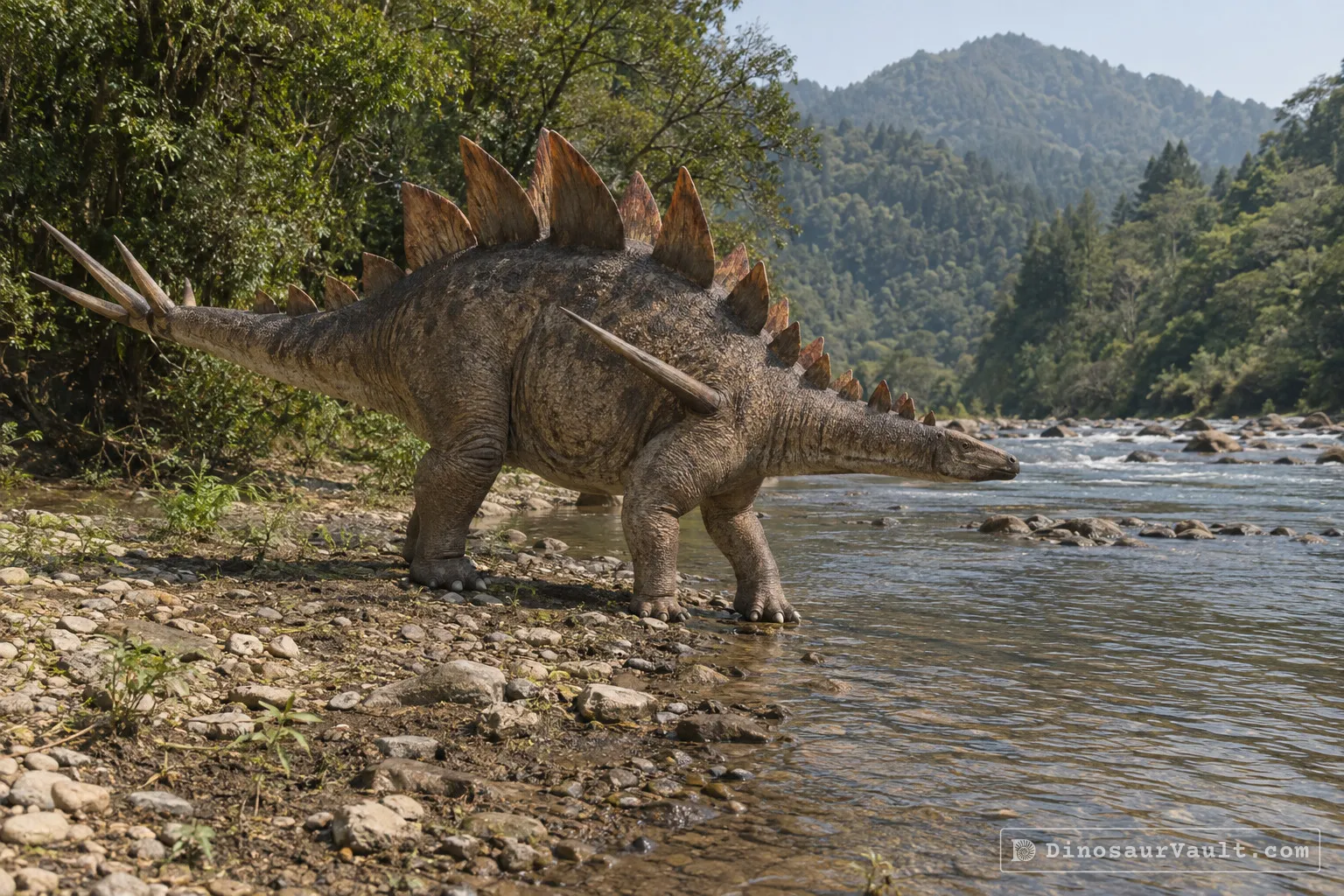
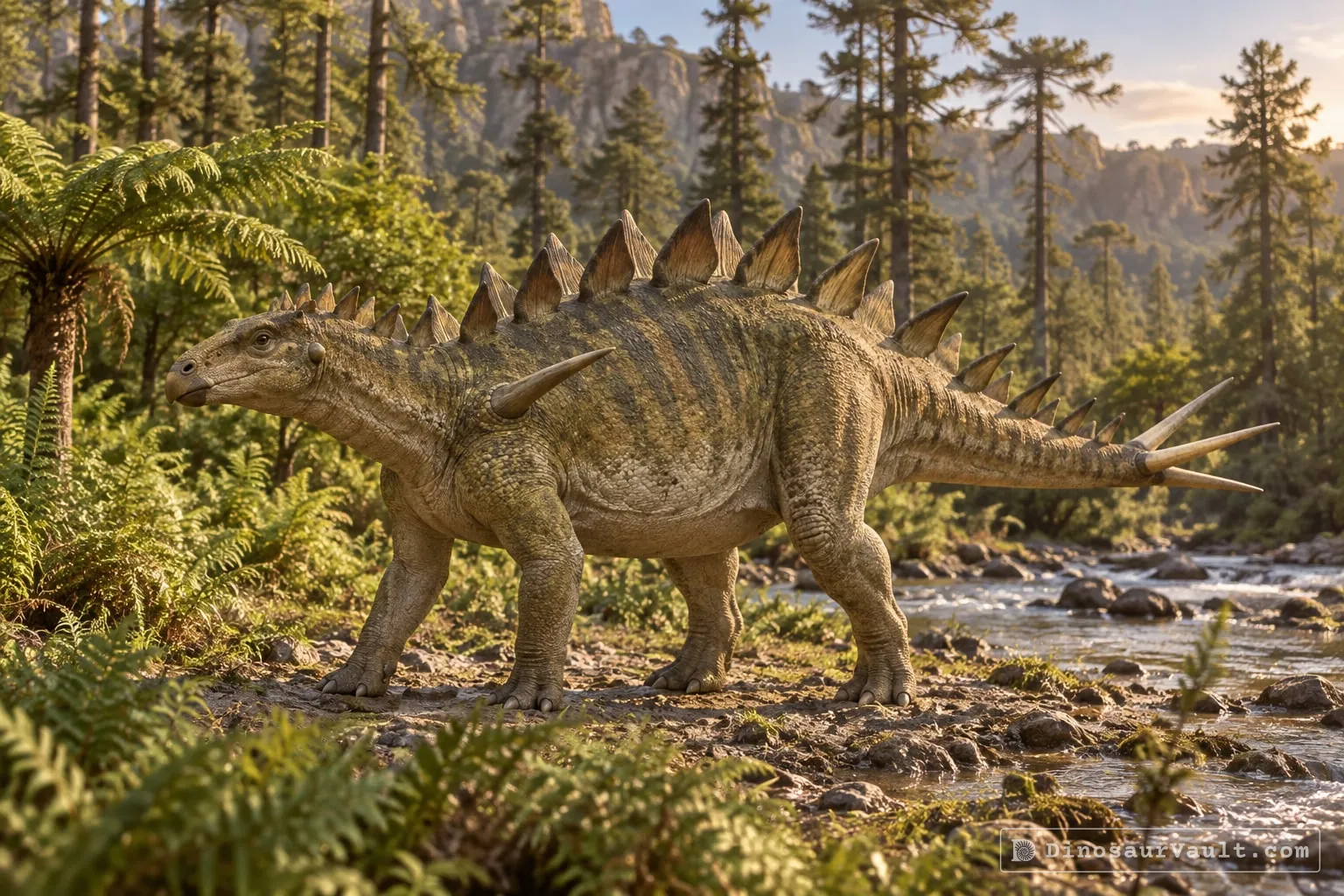
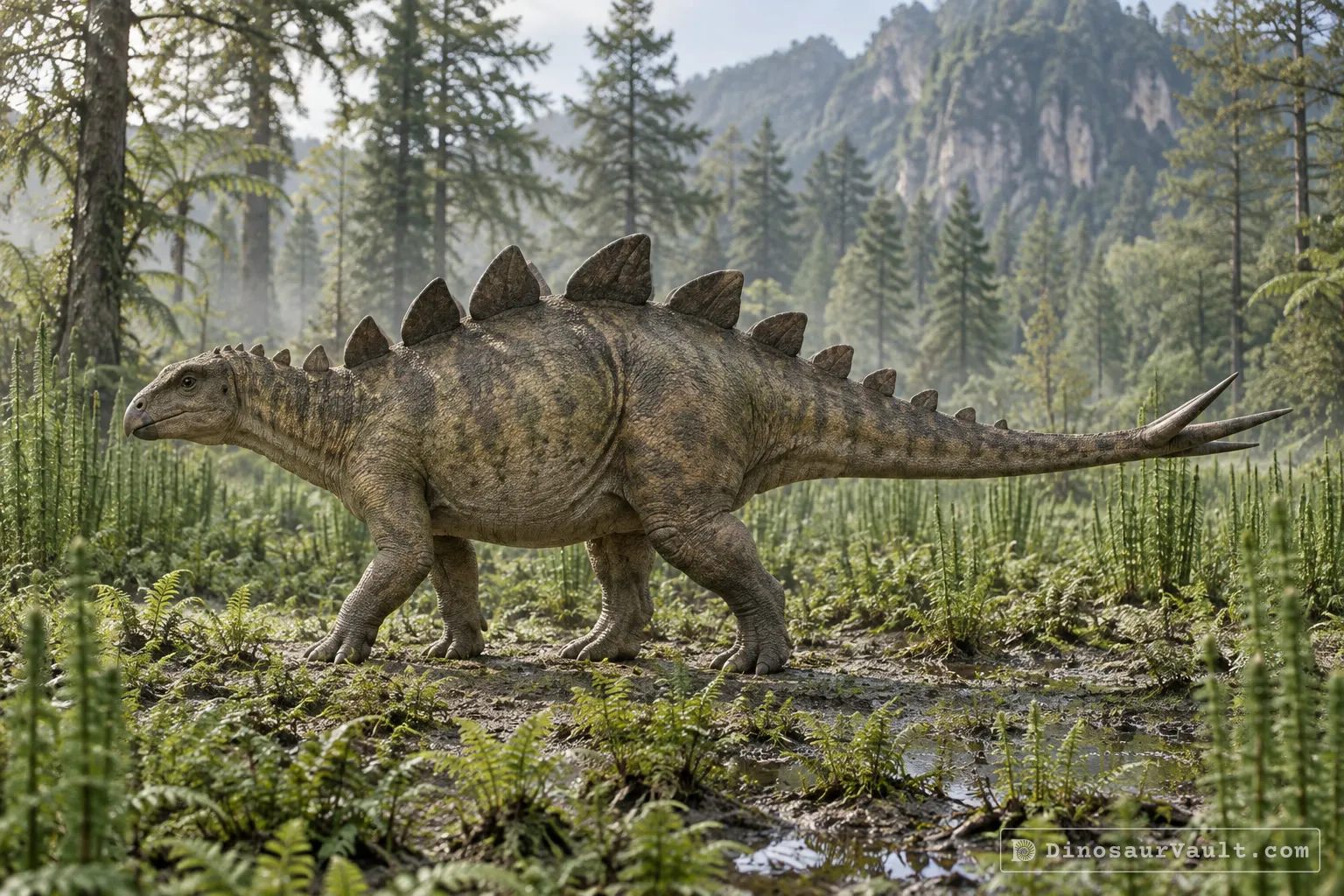
Gigantspinosaurus was a stegosaur, a four-legged plant eater. Its most striking feature was a pair of huge, comma-shaped spines, one projecting from each shoulder.
Its world
It lived in the Jurassic, in what is now China. Its fossil comes from the Shaximiao Formation, alongside the long-necked Mamenchisaurus and Omeisaurus, the meat eater Yangchuanosaurus and other stegosaurs such as Tuojiangosaurus.
How it was found
Ouyang named Gigantspinosaurus in 1992. It is known from one skeleton that includes skin impressions.
Field gallery
More views of Gigantspinosaurus
Scenes reconstructed from the available fossil evidence.
1 of 3
Lived alongside
Found in the same rock formations
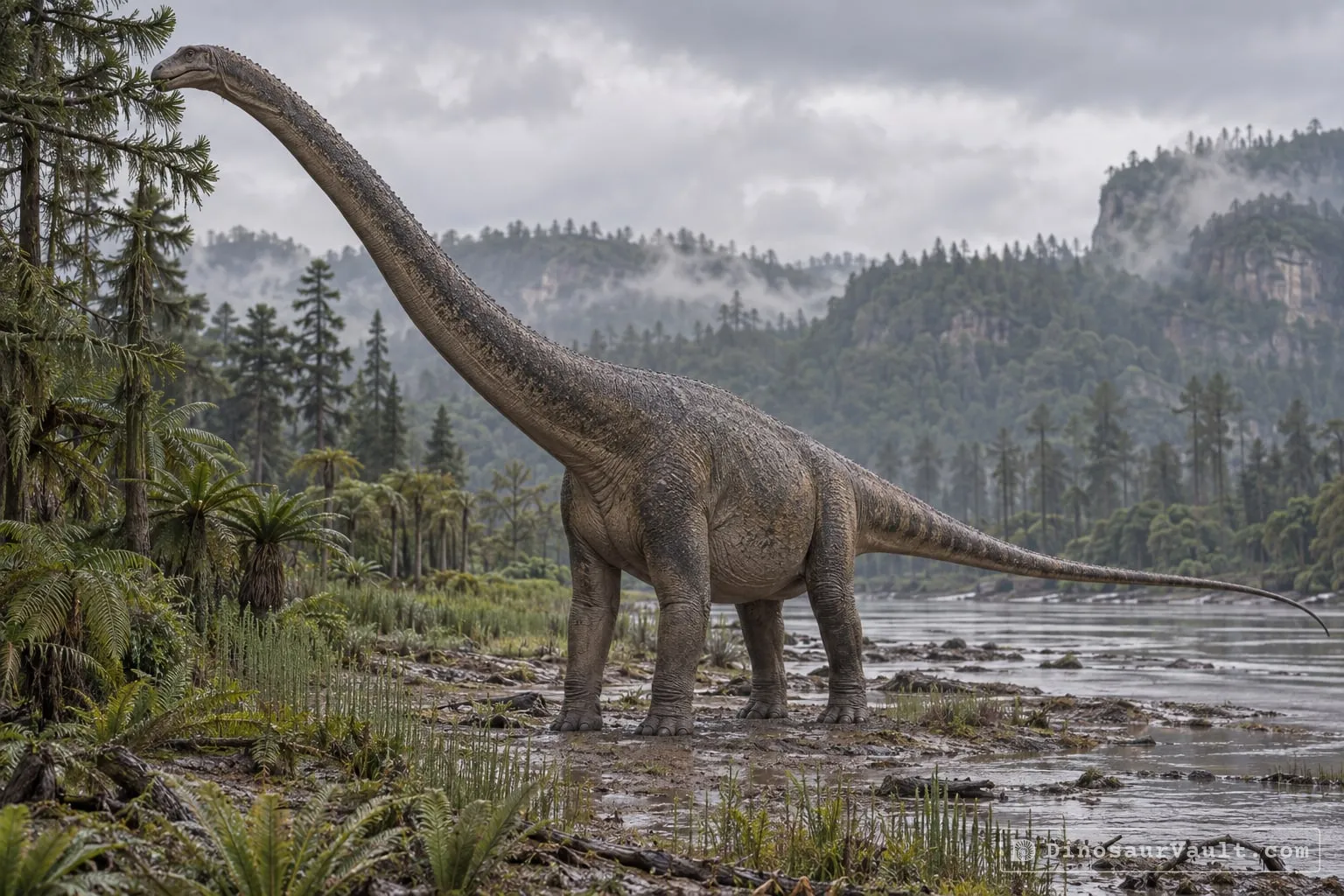
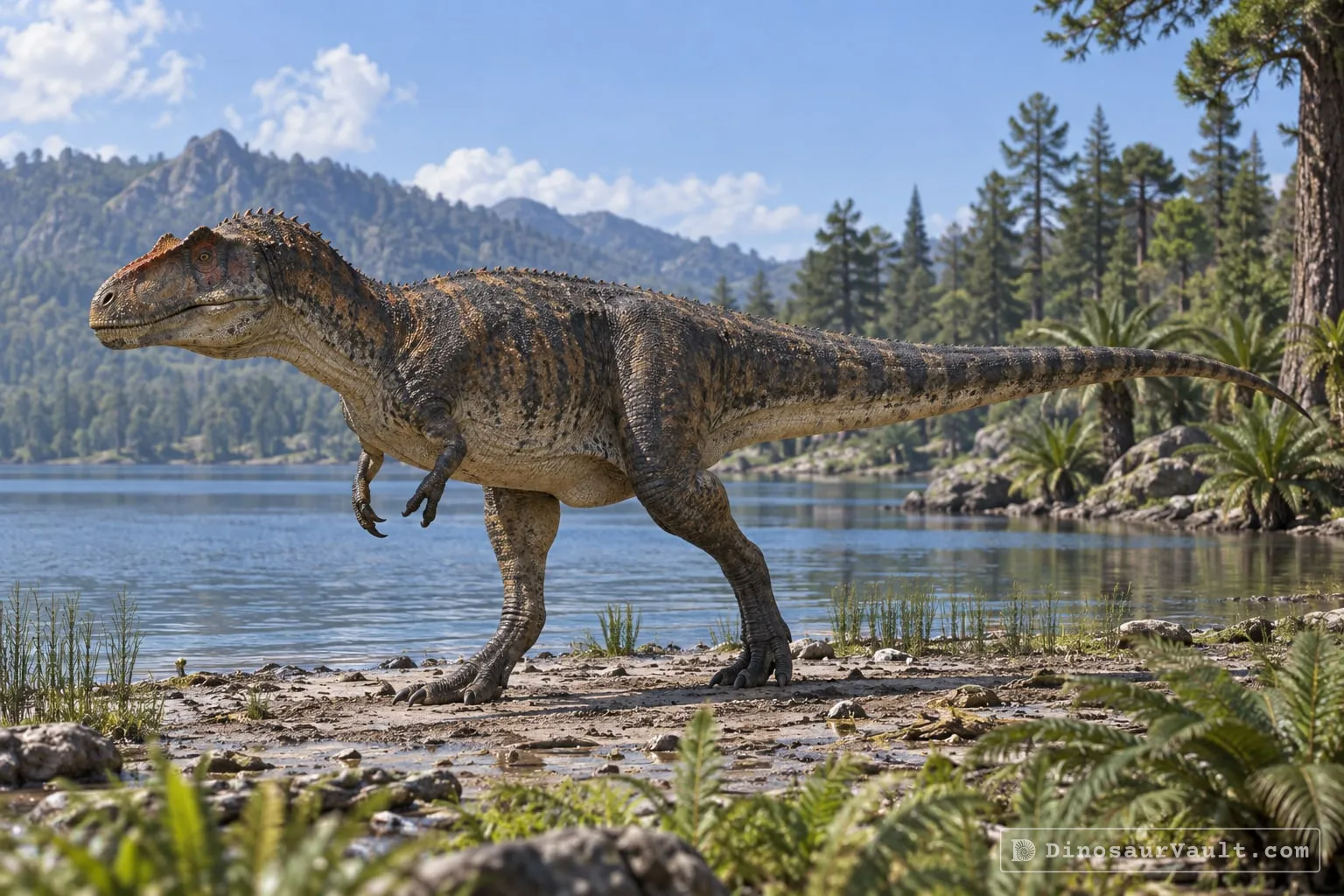
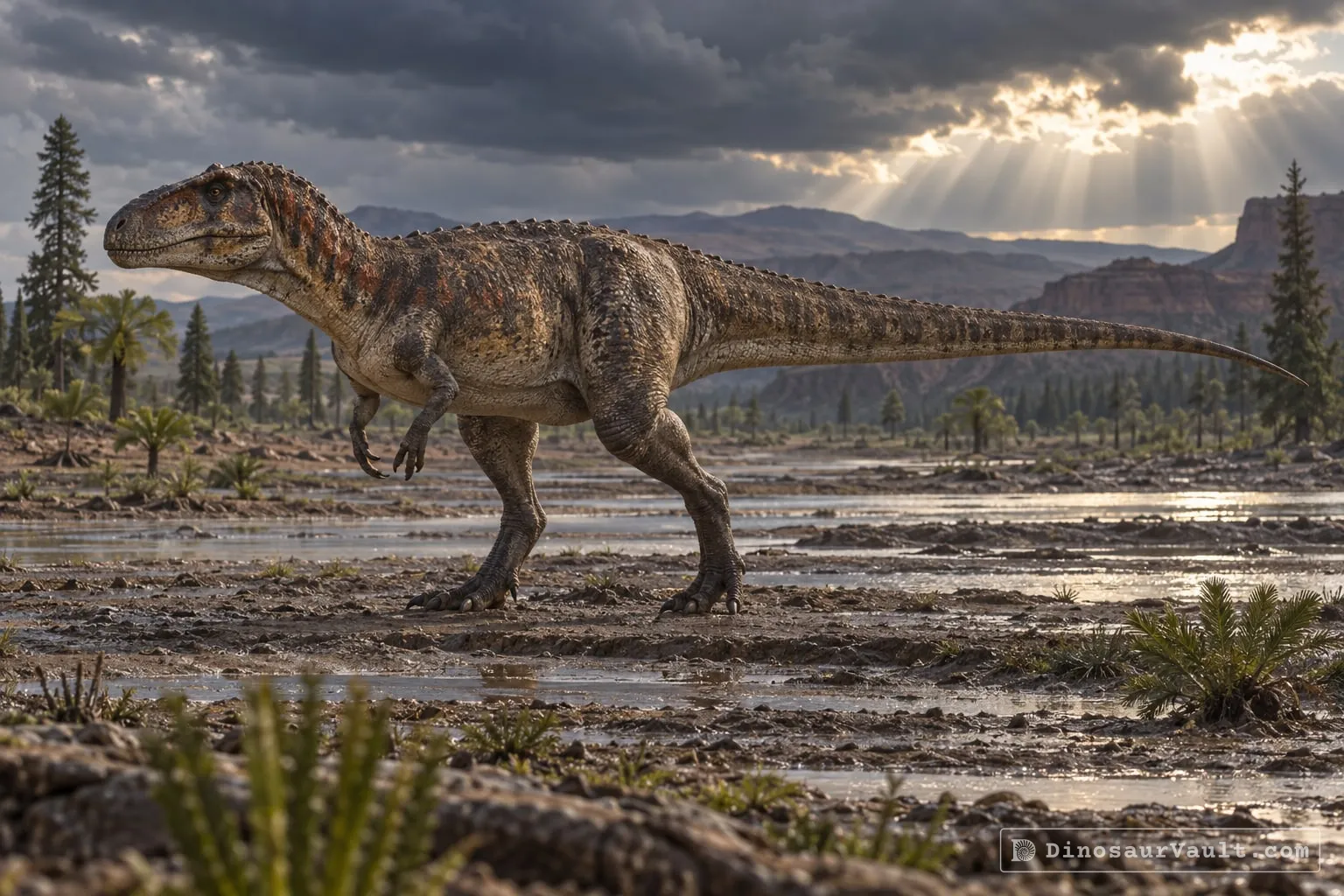
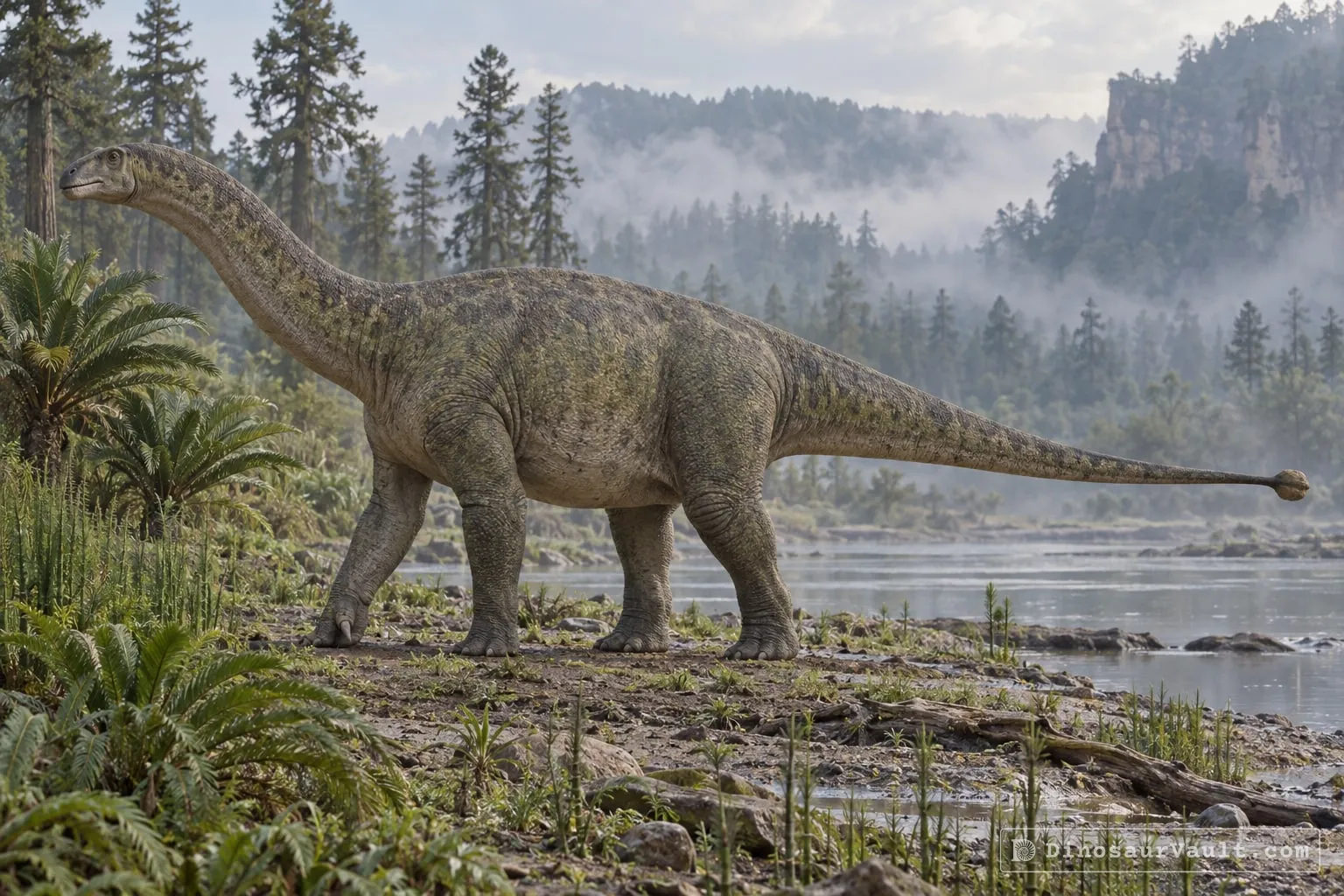
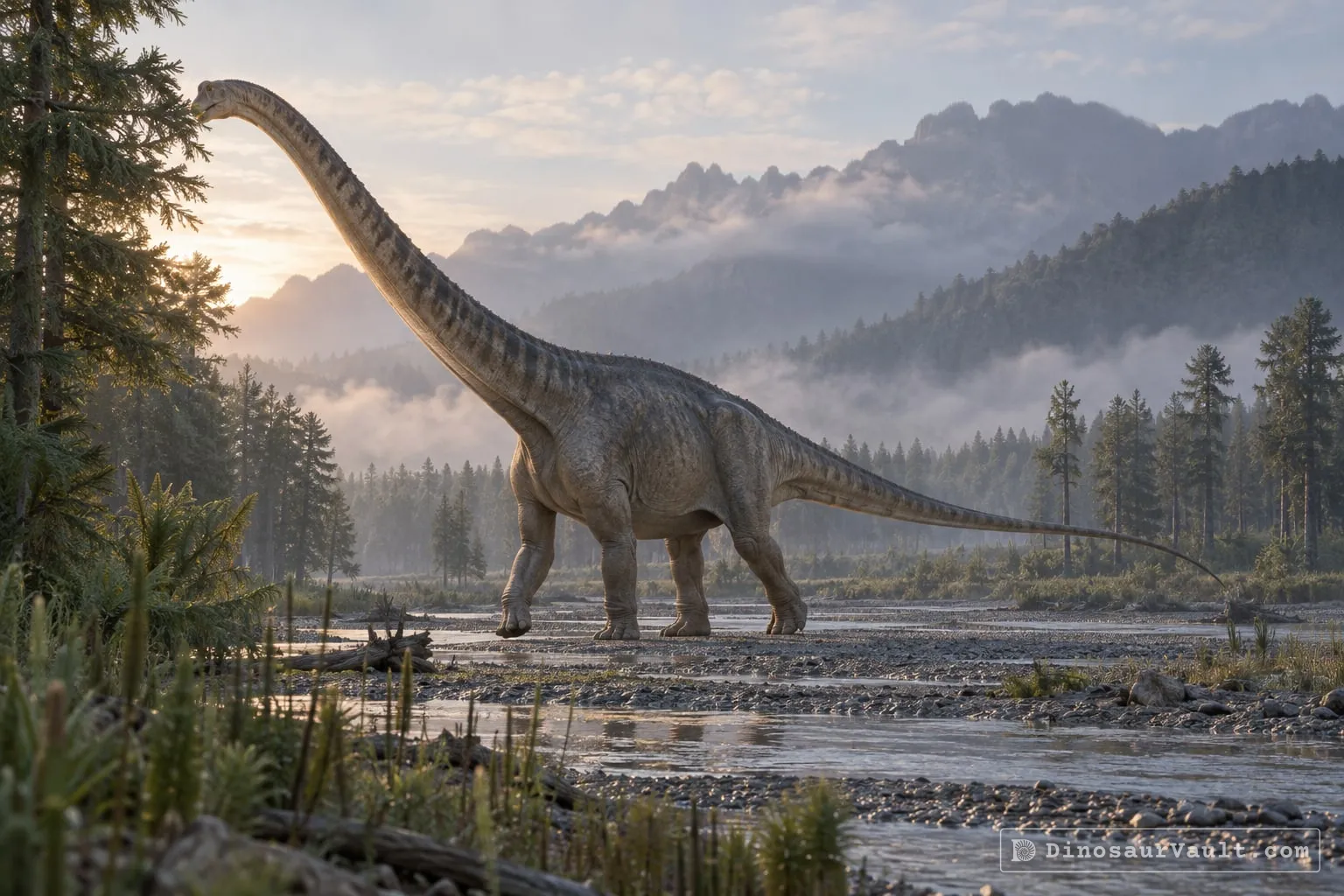


A rock formation can hold fossils laid down millions of years apart, so not every animal here met Gigantspinosaurus.
The evidence
The science behind Gigantspinosaurus
Which parts of the picture come from its own bones, and which come from its relatives.
From its own fossils
- A partial skeleton preserves a pair of huge, comma-shaped shoulder spines in their original positions.
- The skeleton includes the lower jaw, upper arm and thigh bones and the hips, along with skin impressions.
- Its lower jaw has an opening on its outer side, and its thigh bone is long compared with its upper arm bone.
Borrowed from relatives
- Restorations borrow a short, compact snout and skull roof from Huayangosaurus.
- Stegosaurus, known from a nearly complete skeleton, guides the neck, ribs, hips and legs.
Still unknown
- How it used its shoulder spines.
- Its exact place among early stegosaurs. In a recent family-tree study, its position shifted with the method used.
- Its color and the full covering of its body.
Discovery timeline
- 1992Named it
- 2006Family treeMAIDMENT & WEI
- 2018Full descriptionHAO et al.
- 2024Close relativeNing et al.
Key papers
The research behind what we know of Gigantspinosaurus
Family tree
Confirmed Gigantspinosaurus as a distinct stegosaur while reassessing several other named stegosaurs from China.
A review of the Late Jurassic stegosaurs (Dinosauria, Stegosauria) from the People's Republic of China. Geological Magazine 143: 621-634
Read the paper : A review of the Late Jurassic stegosaurs (Dinosauria, Stegosauria) from the People's Republic of China (opens in a new tab)Full description
Restudied the skeleton, identified it as an adult and found a mixture of features seen in earlier and later stegosaurs.
Redescription ofGigantspinosaurus sichuanensis(Dinosauria, Stegosauria) from the Late Jurassic of Sichuan, Southwestern China. Acta Geologica Sinica - English Edition 92: 431-441
Read the paper : Redescription ofGigantspinosaurus sichuanensis(Dinosauria, Stegosauria) from the Late Jurassic of Sichuan, Southwestern China (opens in a new tab)Close relative
Described the stegosaur Baiyinosaurus, compared its lower jaw with that of Gigantspinosaurus, and cautioned that tooth wear alone may not settle an animal's age.
A new stegosaur (Dinosauria: Ornithischia) from the Middle Jurassic of Gansu Province, China. Scientific Reports 14
Read the paper : A new stegosaur (Dinosauria: Ornithischia) from the Middle Jurassic of Gansu Province, China (opens in a new tab)
Close relatives
Other members of Huayangosauridae


Sources: Wikidata