Rinconsaurus
- Lived
- 86 to 84 million years ago, Late Cretaceous
- Diet
- Herbivore
- Group
- Sauropods
- Found in
- Argentina
- Named by
- Calvo and González Riga 2003
Where its fossils were found
The evidence
Today

80 million years ago
Habitat
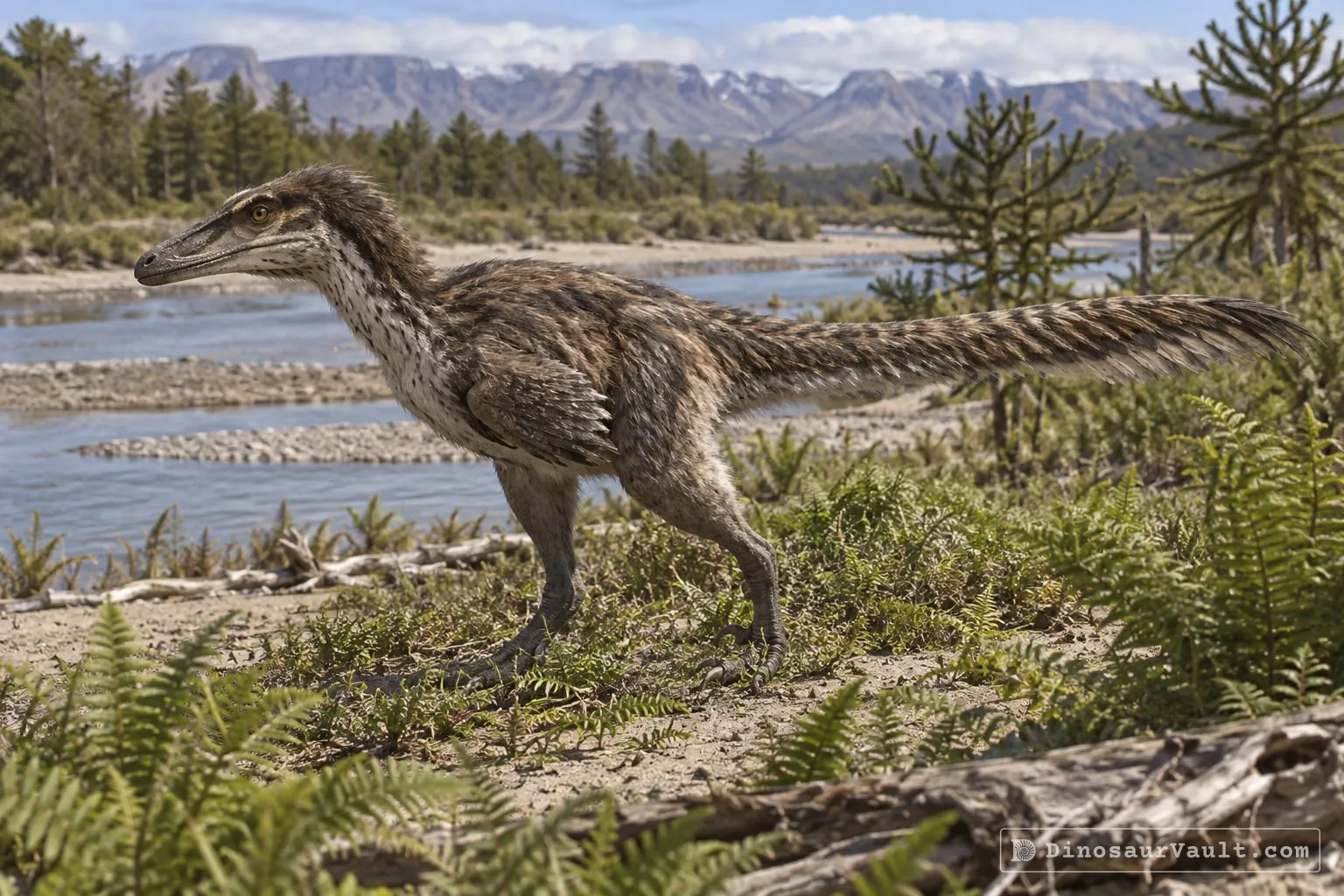
Rivers crossed the landscape recorded in the Bajo de la Carpa Formation of Argentina. Velocisaurus, Alvarezsaurus and Neuquensaurus also occur in this formation.
Field notes
About Rinconsaurus
What it was like
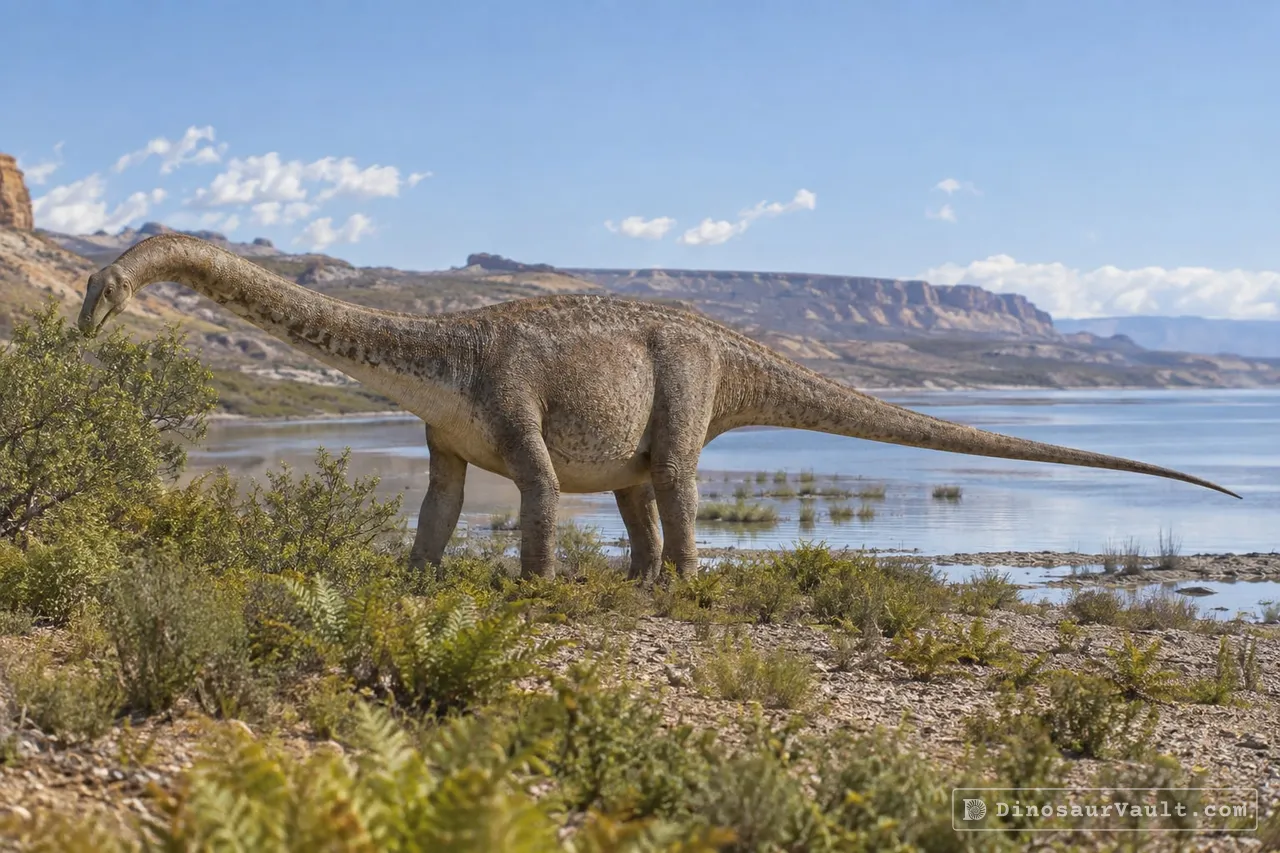
Rinconsaurus was a slender titanosaur, a long-necked plant eater. Its tail bones had an unusual mix of joint shapes. It is known from partial skeletons of several animals.
Its world
It lived about 86 to 84 million years ago, in the Late Cretaceous, in what is now Argentina. Its bones come from the Bajo de la Carpa Formation, where it shared the land with the small predator Velocisaurus and the small Alvarezsaurus.
How it was found
Calvo and González Riga named it in 2003. It is named after a town near where it was found.
Field gallery
More views of Rinconsaurus
Scenes reconstructed from the available fossil evidence.
Lived alongside
Found in the same rock formations
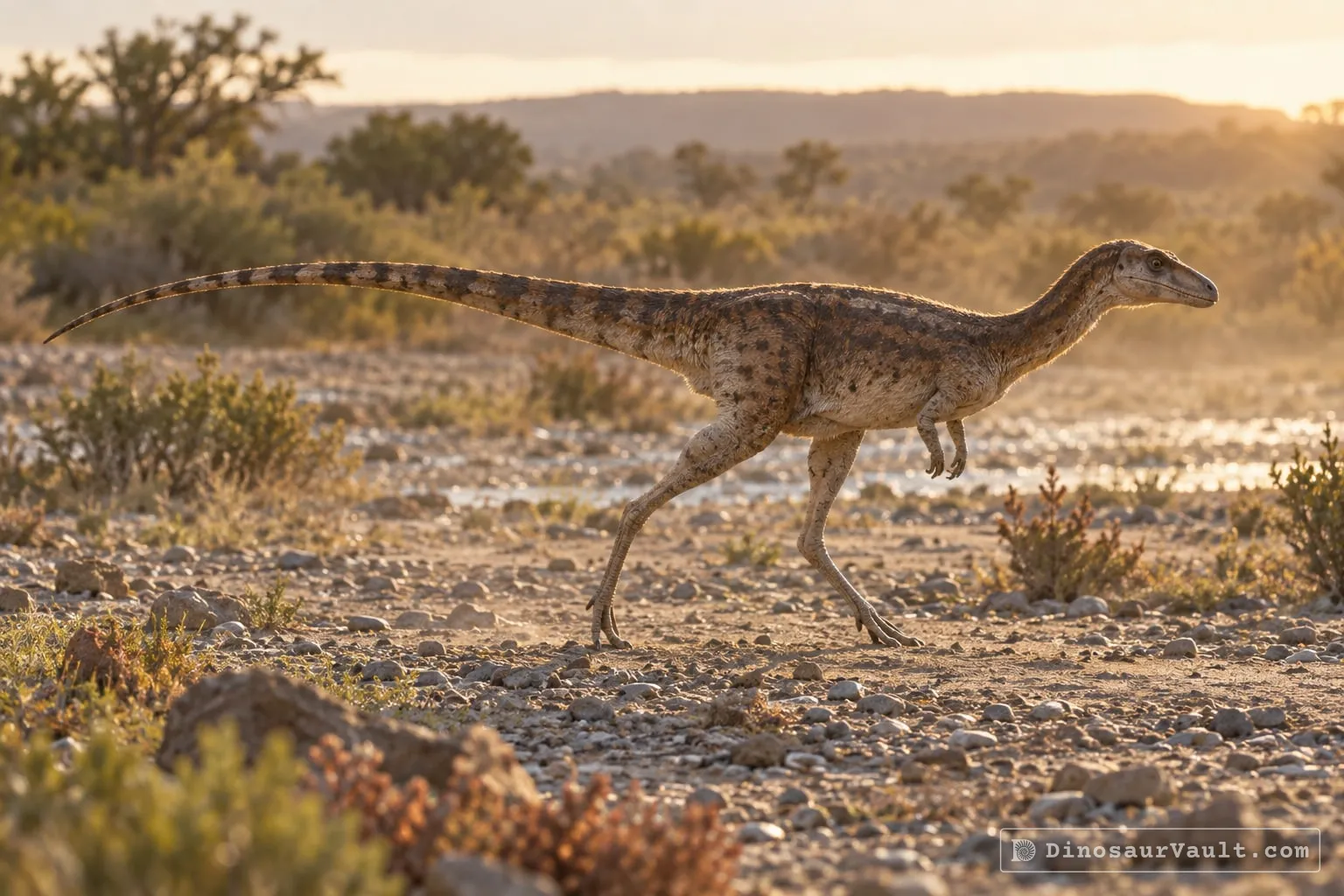
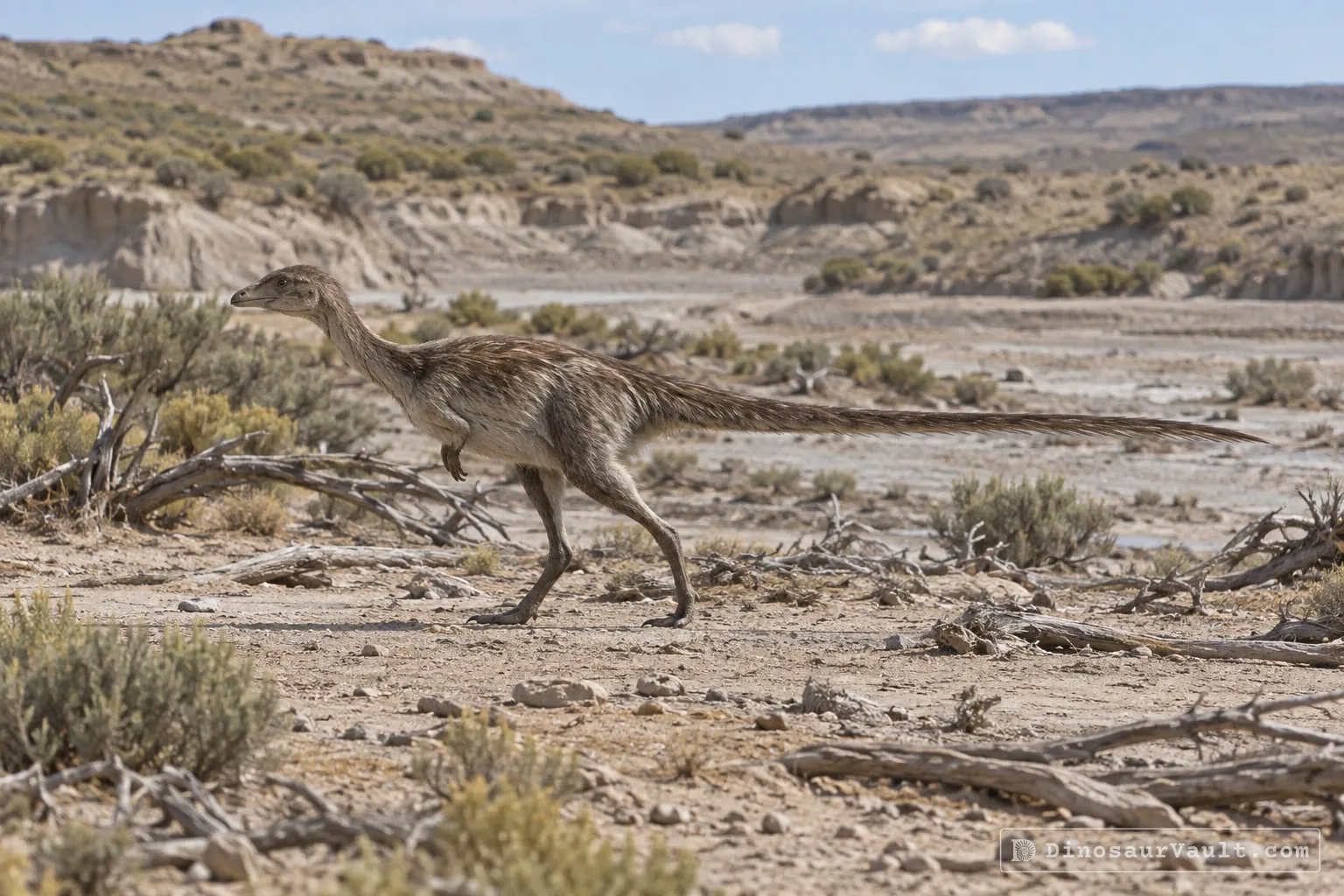
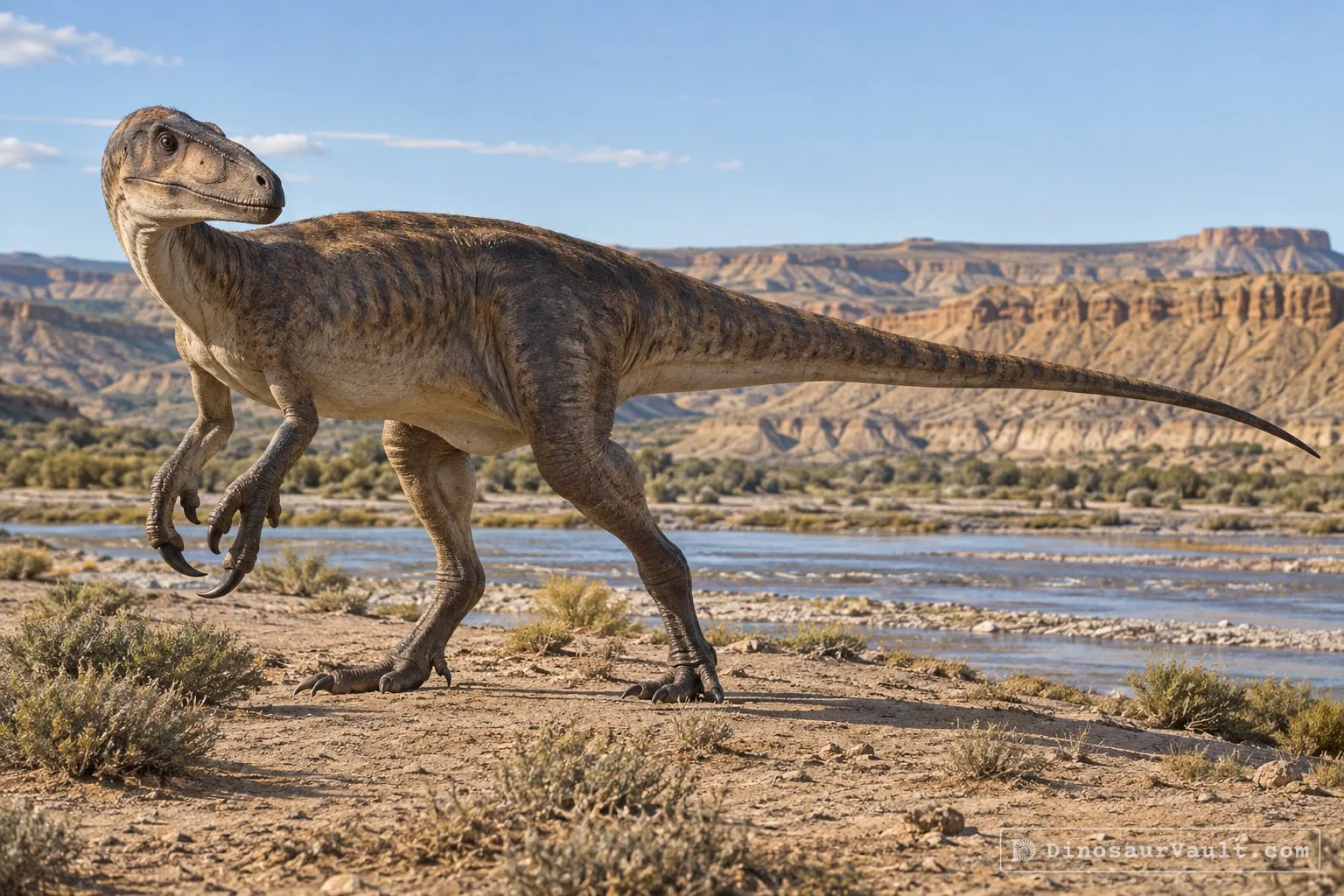
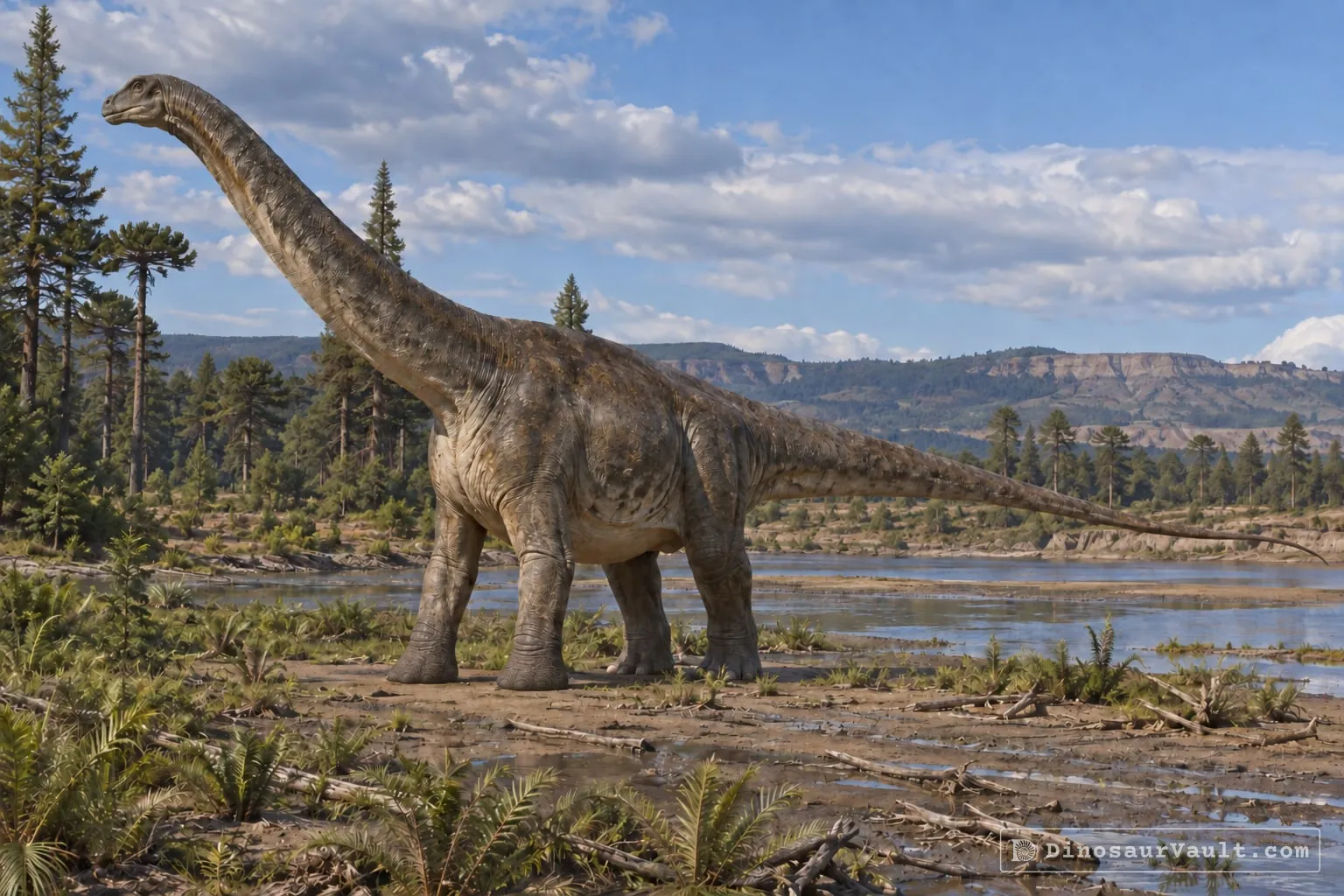
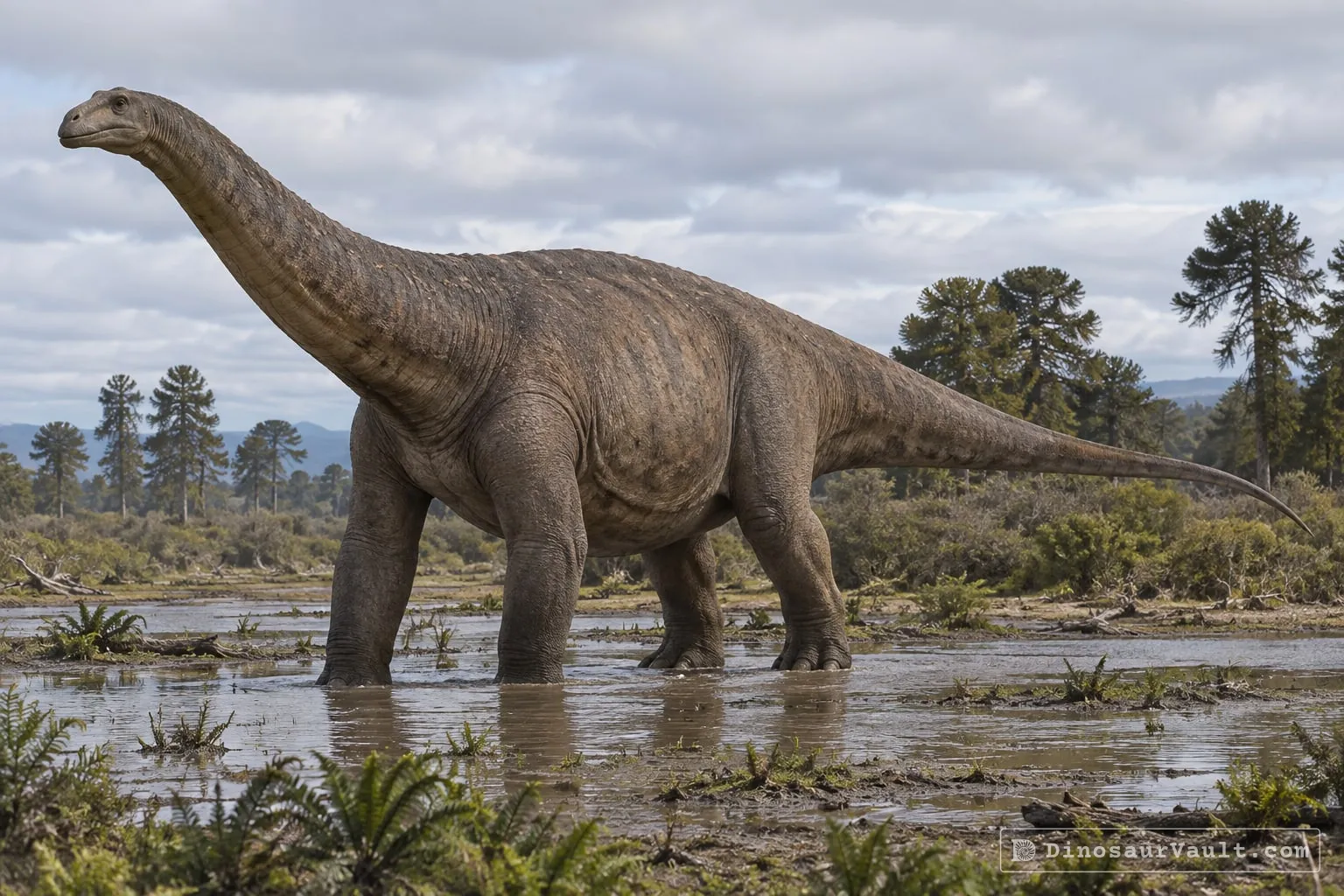
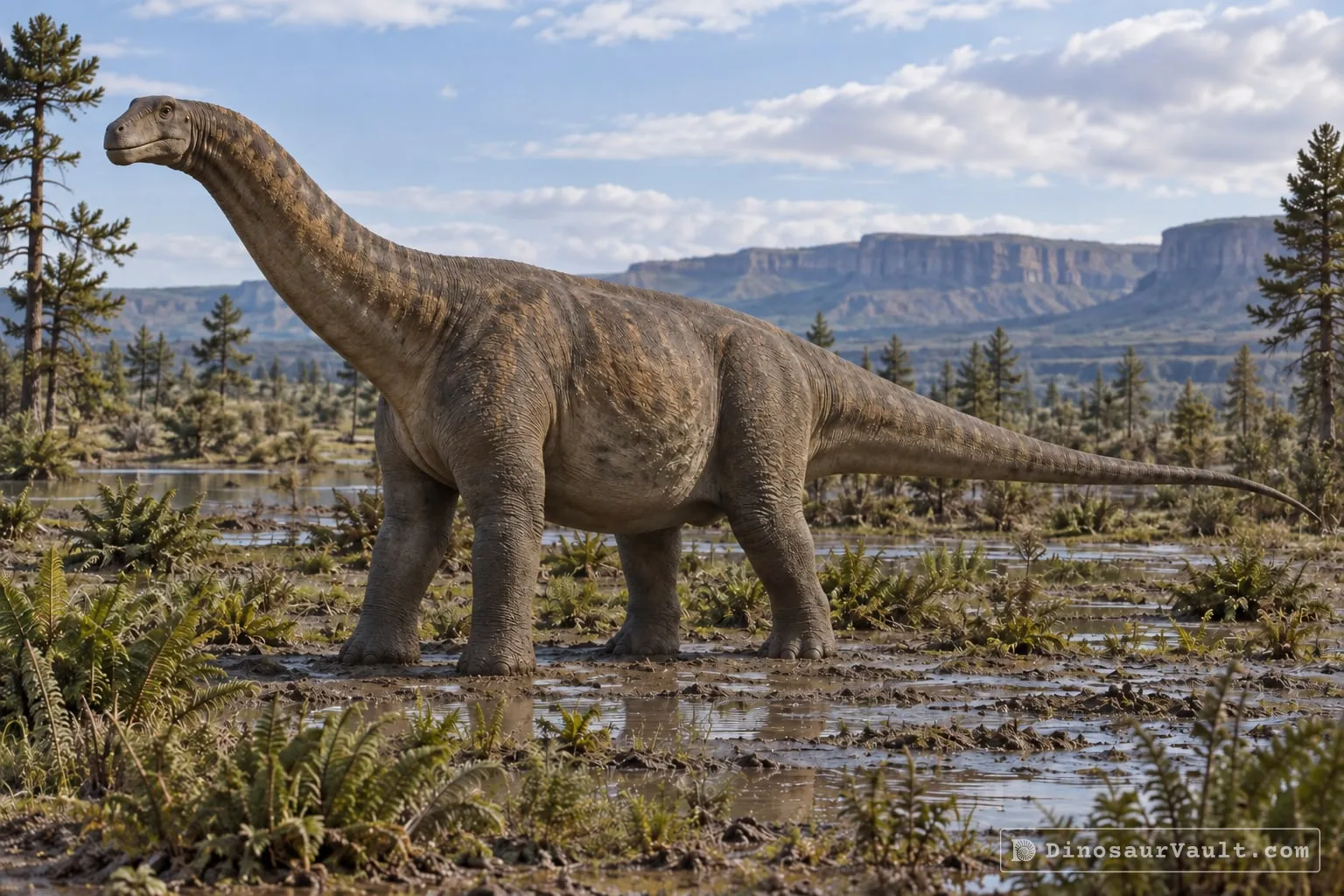
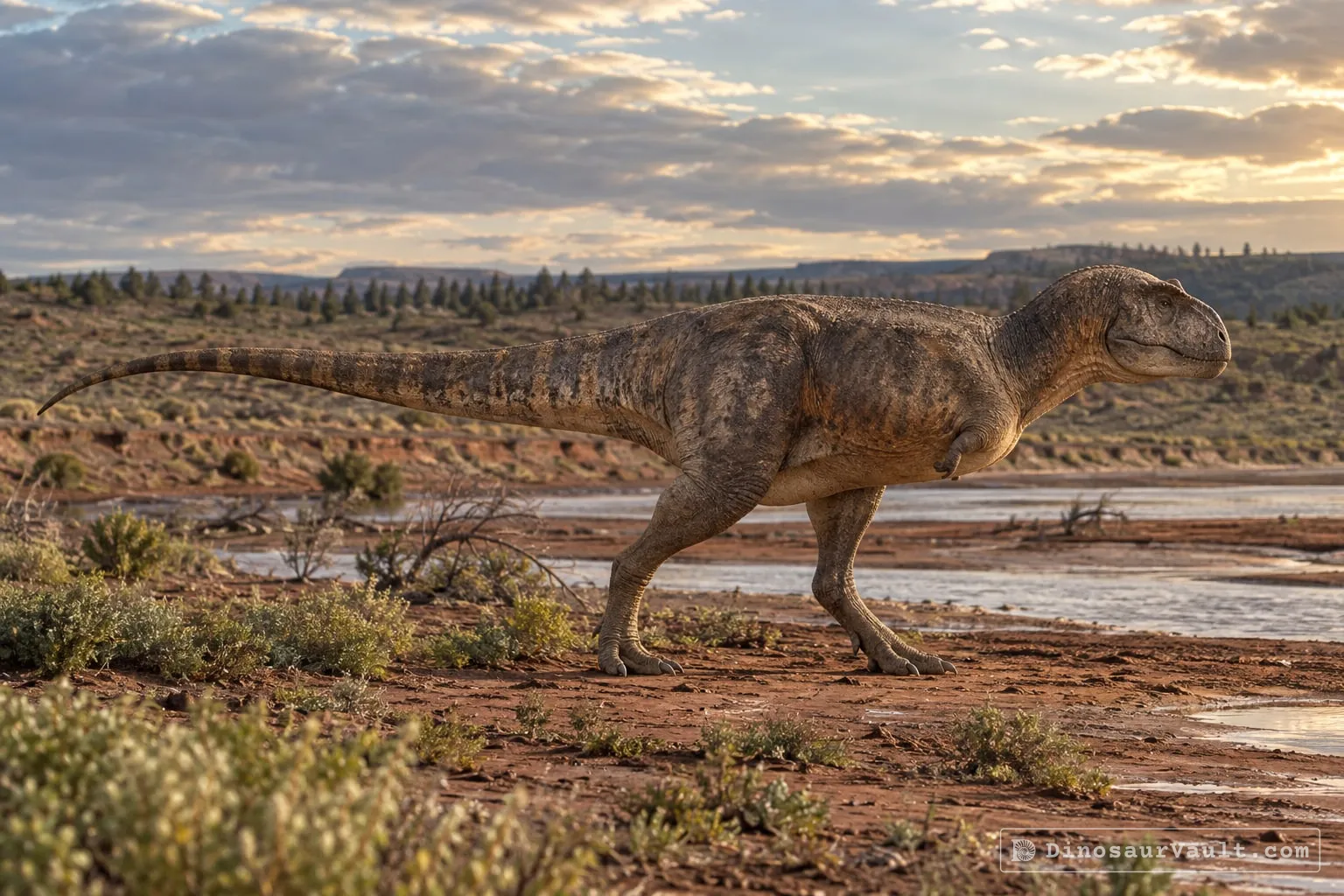


A rock formation can hold fossils laid down millions of years apart, so not every animal here met Rinconsaurus.
The evidence
The science behind Rinconsaurus
Which parts of the picture come from its own bones, and which come from its relatives.
From its own fossils
- The type specimen preserves tail vertebrae and a right hip bone. Other specimens assigned to Rinconsaurus preserve neck and back vertebrae, limb bones and teeth.
- The tail vertebrae have an unusual mixture of hollow and rounded joint surfaces.
- The limb bones show a more slender build than in many other titanosaurs.
Borrowed from relatives
- Its missing skull is compared with Tapuiasaurus.
- Its missing hand bones and toe tips are compared with Mendozasaurus.
Still unknown
- The complete shape of its head.
- Its skin covering and color.
- Whether it lived in herds.
Discovery timeline
- 2003Named itCalvo & González Riga
- 2022RedescriptionMoreno et al.
- 2023Full descriptionPérez Moreno et al.
Key papers
The research behind what we know of Rinconsaurus
Named it
Named a slender titanosaur from several partial skeletons and described its unusual mixture of tail joints.
Rinconsaurus caudamirus gen. et sp. nov., a new titanosaurid (Dinosauria, Sauropoda) from the Late Cretaceous of Patagonia, Argentina. Revista geológica de Chile 30
Read the paper : Rinconsaurus caudamirus gen. et sp. nov., a new titanosaurid (Dinosauria, Sauropoda) from the Late Cretaceous of Patagonia, Argentina (opens in a new tab)Redescription
Restudied the backbone, strengthened the diagnosis and reassigned bones previously identified as parts of its skull.
The Axial Skeleton of Rinconsaurus caudamirus (Sauropoda: Titanosauria) from the Late Cretaceous of Patagonia, Argentina. Ameghiniana 59
Read the paper : The Axial Skeleton of Rinconsaurus caudamirus (Sauropoda: Titanosauria) from the Late Cretaceous of Patagonia, Argentina (opens in a new tab)Full description
Compared limb and girdle bones across differently sized specimens, supporting their assignment to one species and reassessing its relationships.
The appendicular skeleton of Rinconsaurus caudamirus (Sauropoda: Titanosauria) from the Upper Cretaceous of Patagonia, Argentina. Cretaceous Research 142: 105389
Read the paper : The appendicular skeleton of Rinconsaurus caudamirus (Sauropoda: Titanosauria) from the Upper Cretaceous of Patagonia, Argentina (opens in a new tab)
Close relatives
Other members of Rinconsauria


Sources: Wikidata