Rativates
- Lived
- 84 to 72 million years ago, Late Cretaceous
- Diet
- Omnivore
- Group
- Theropods, Ornithomimidae
- Found in
- Canada
- Named by
- McFeeters et al. 2016
Where its fossils were found
The evidence
Today

80 million years ago
Habitat
River channels crossed the Late Cretaceous plains of what is now Alberta, Canada. Gorgosaurus, Daspletosaurus and Struthiomimus lived in the same region.
Field notes
About Rativates
What it was like
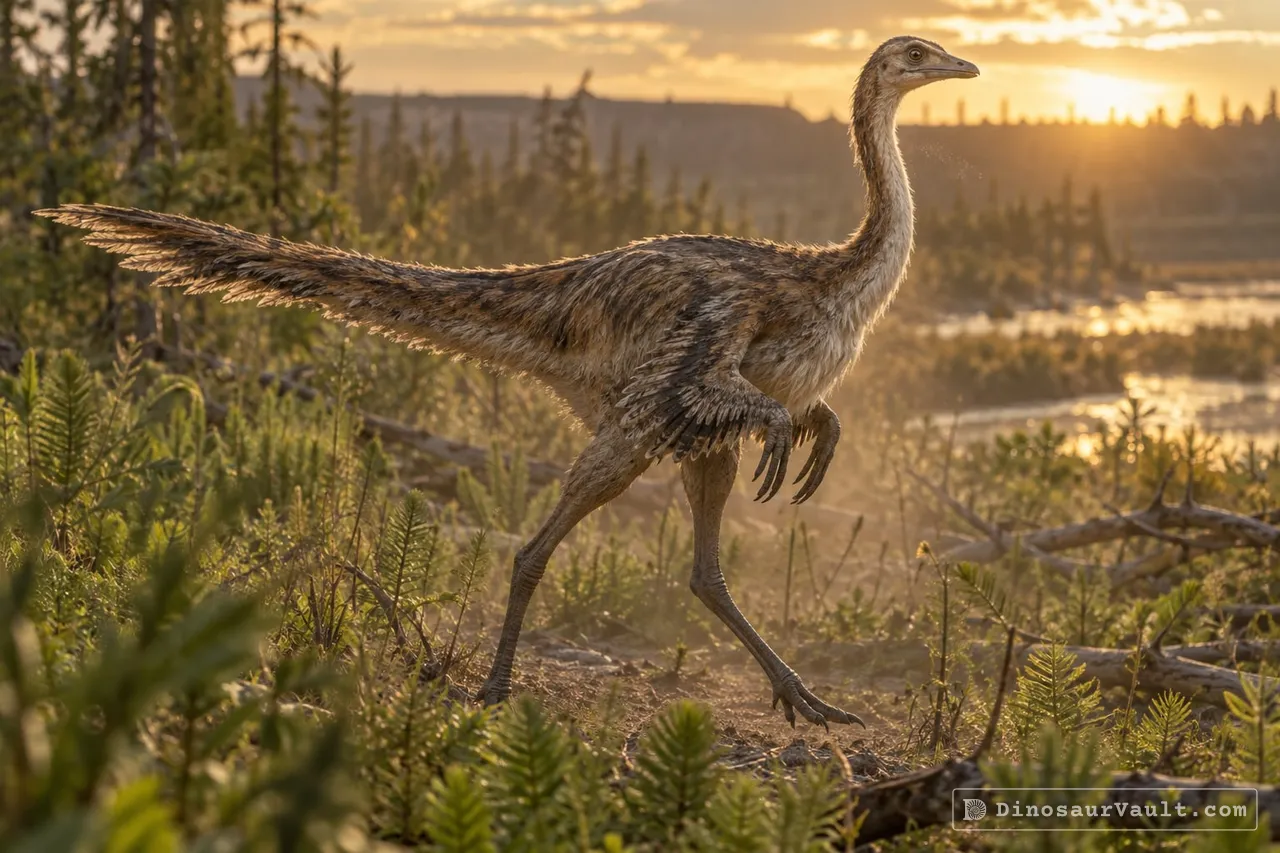
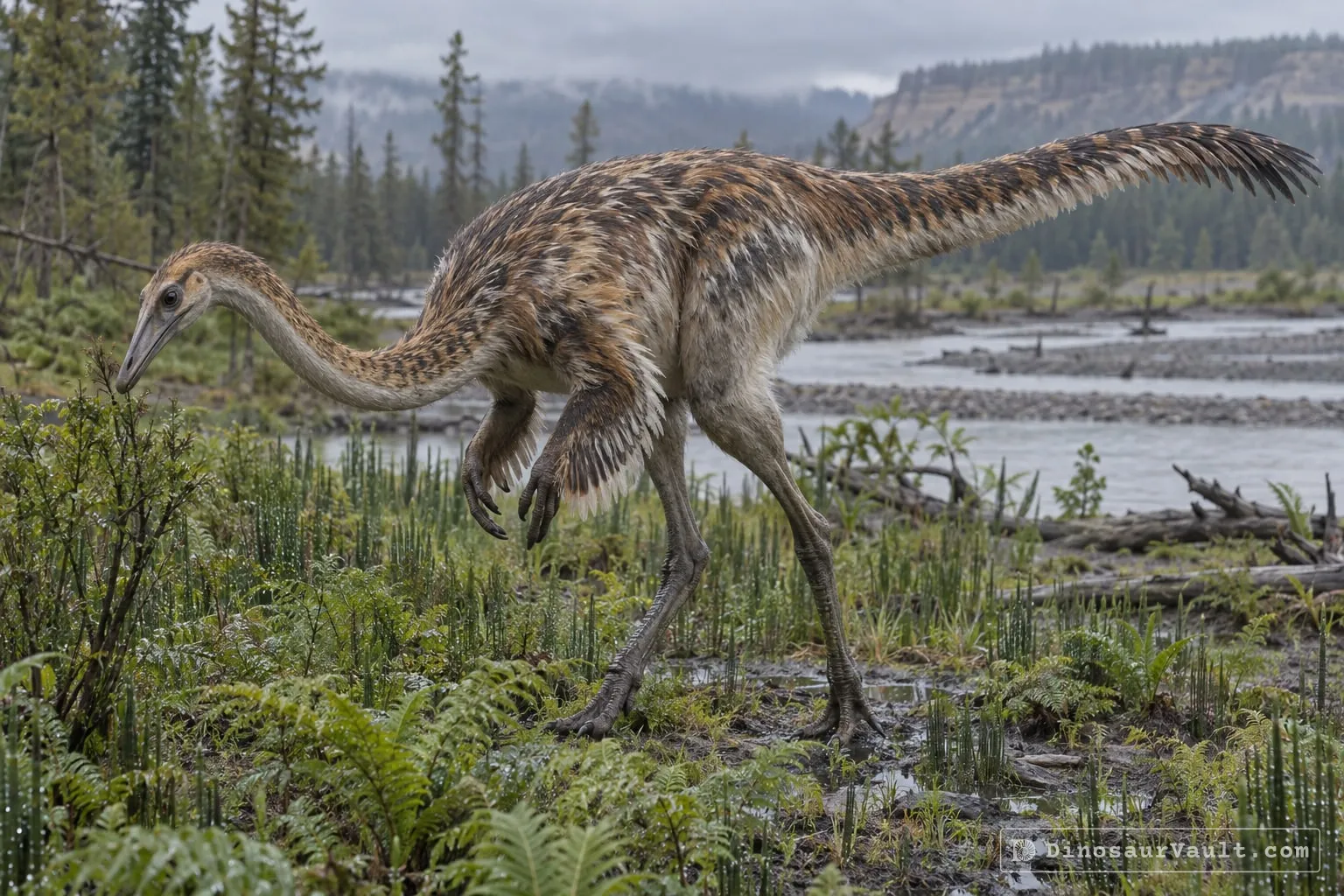
Rativates was an ostrich-like dinosaur with long legs for running and a toothless beak. It is known from a partial skeleton, which had once been placed in Struthiomimus.
Its world
It lived in the Late Cretaceous in what is now Alberta, Canada. It lived in the same region as the tyrannosaurs Gorgosaurus and Daspletosaurus and the small hunter Troodon.
How it was found
McFeeters and colleagues named it in 2016. The type species is Rativates evadens, a name that suggests an animal that escaped danger by running.
Field gallery
More views of Rativates
Scenes reconstructed from the available fossil evidence.
Lived alongside
Found in the same rock formations
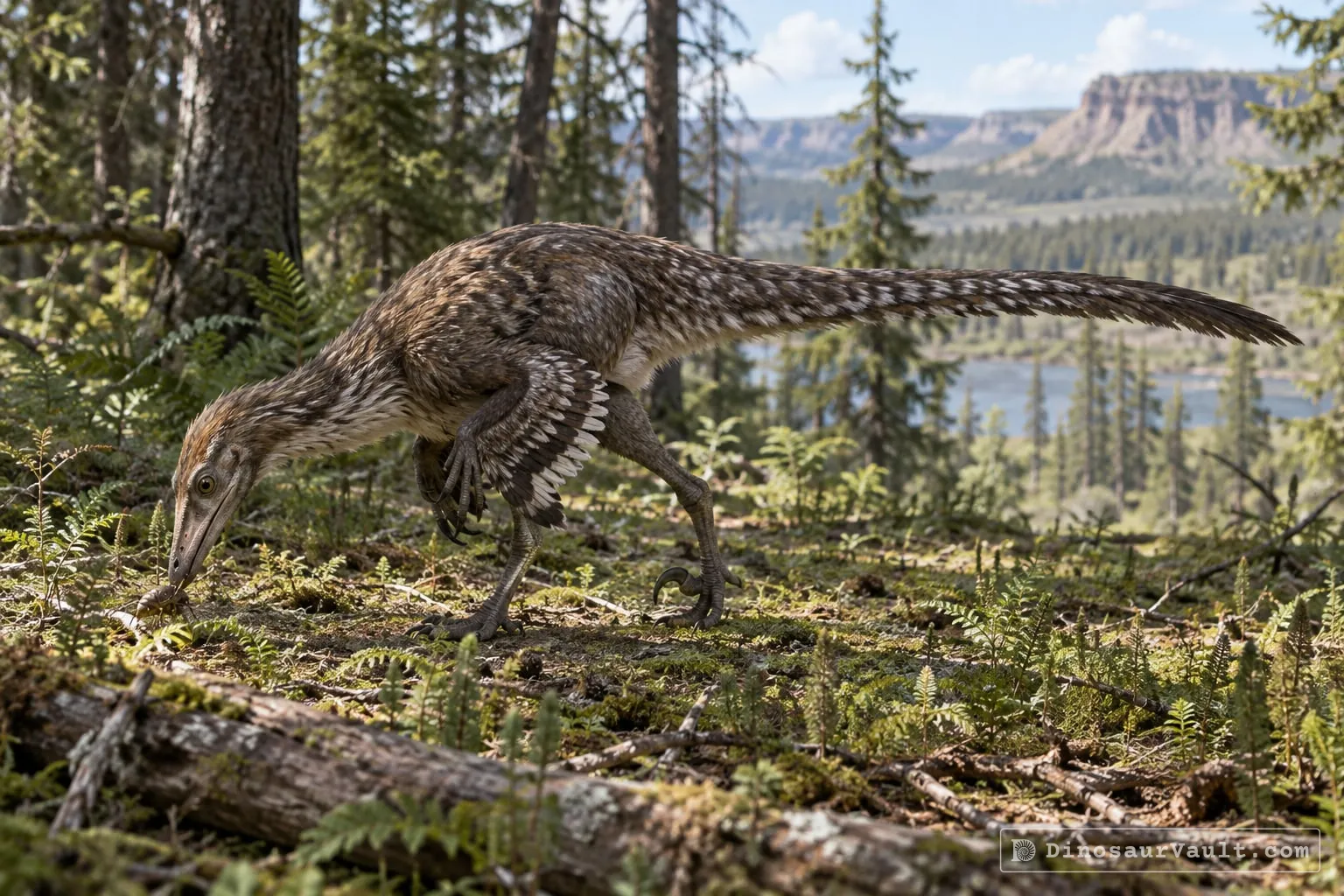
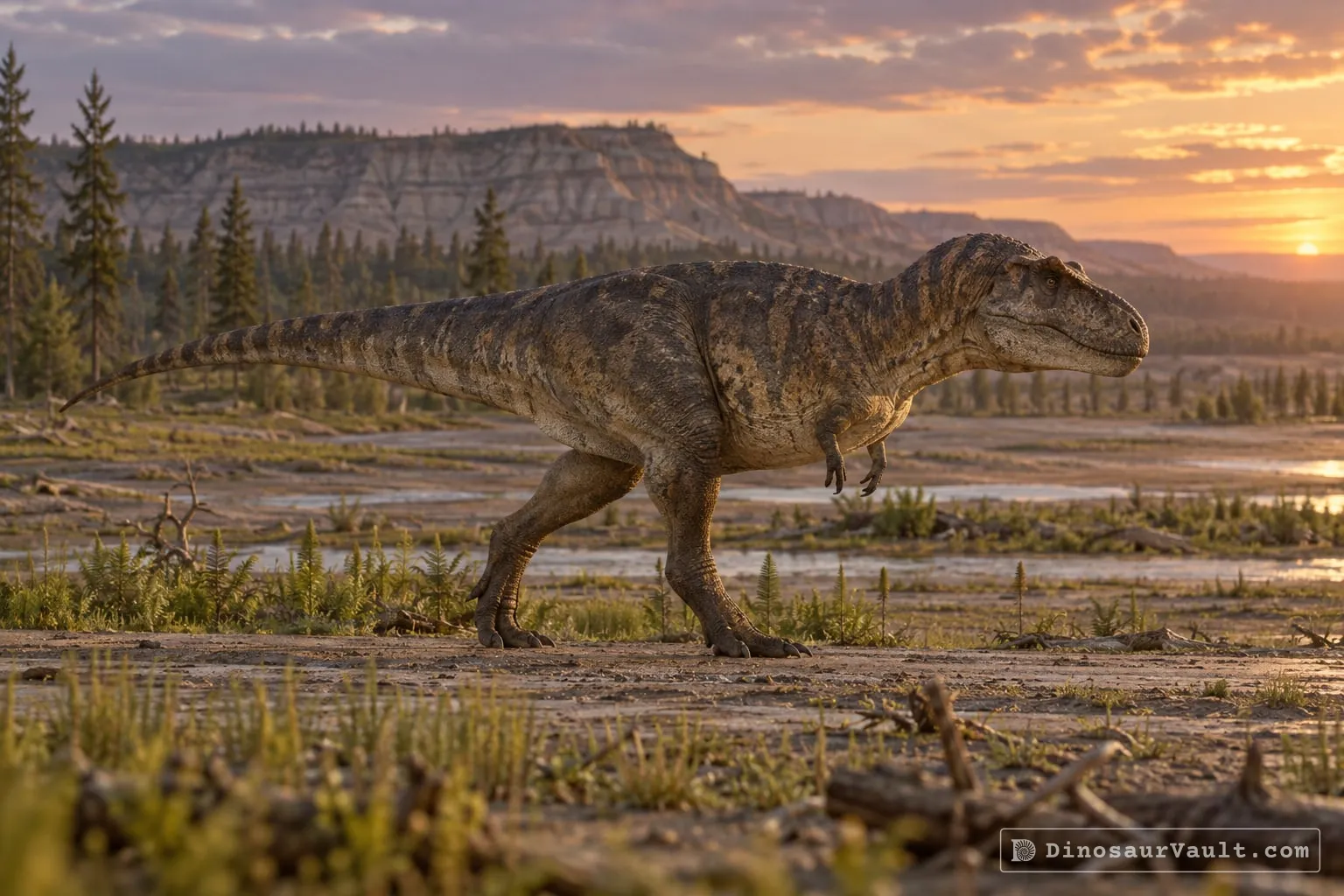
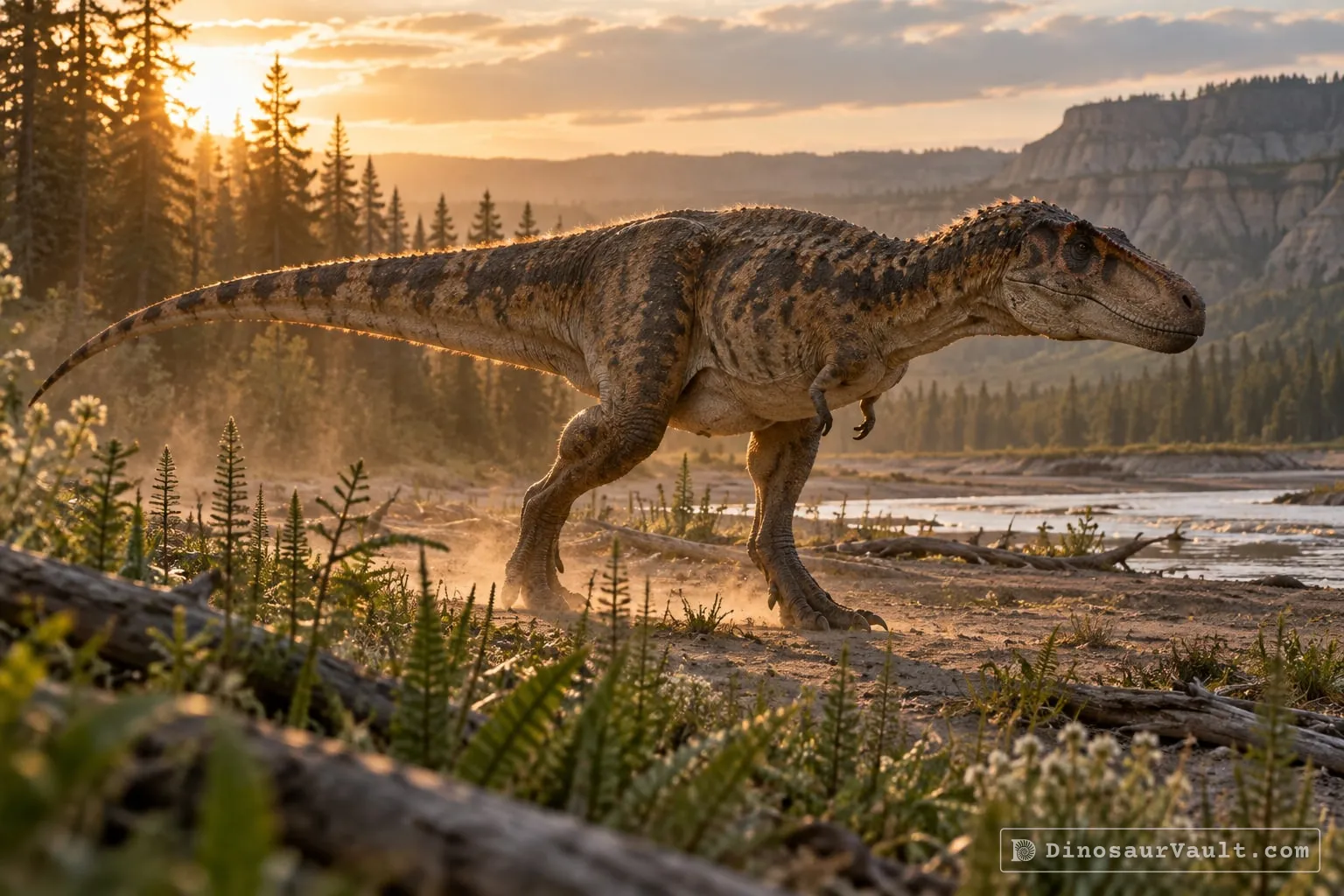
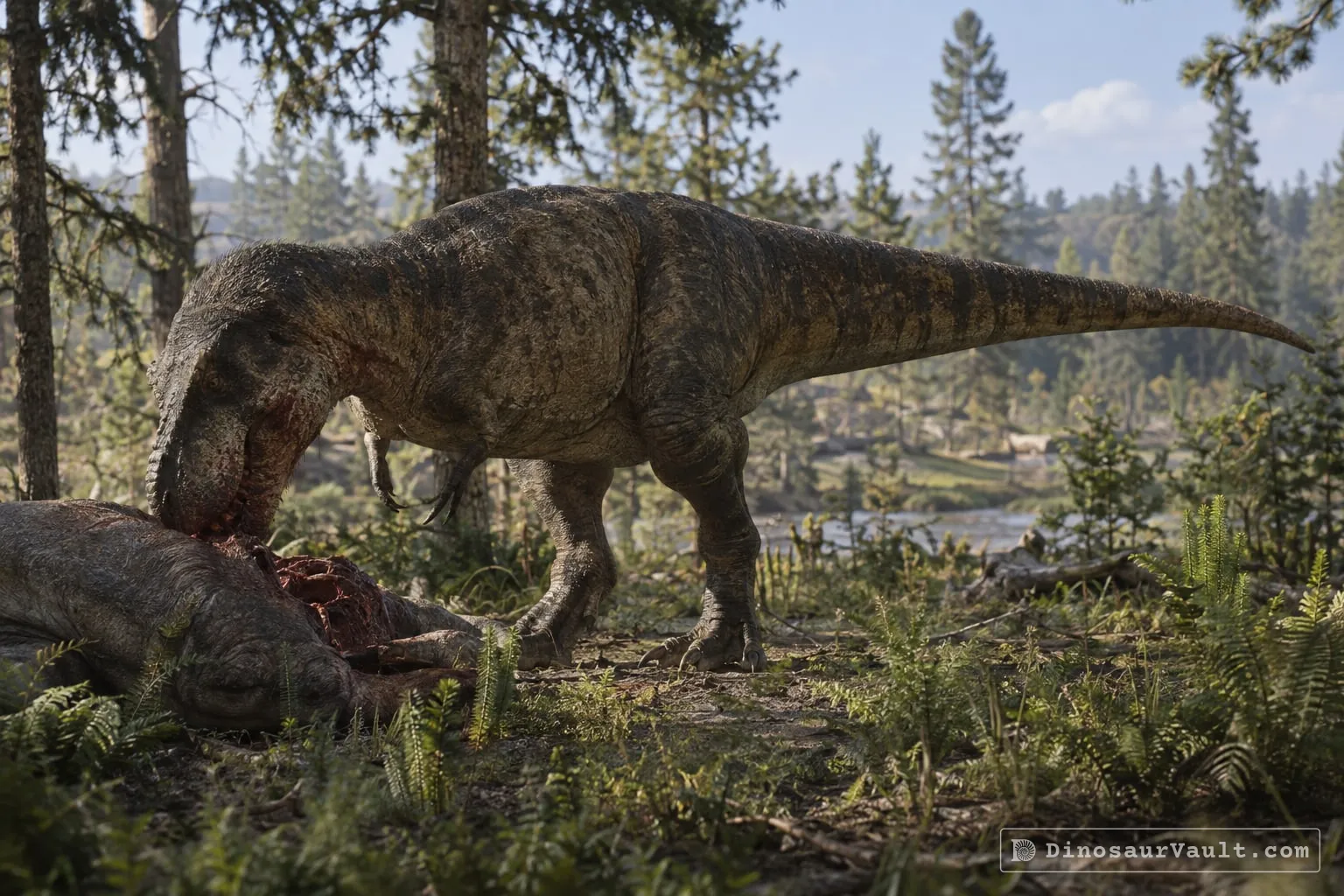
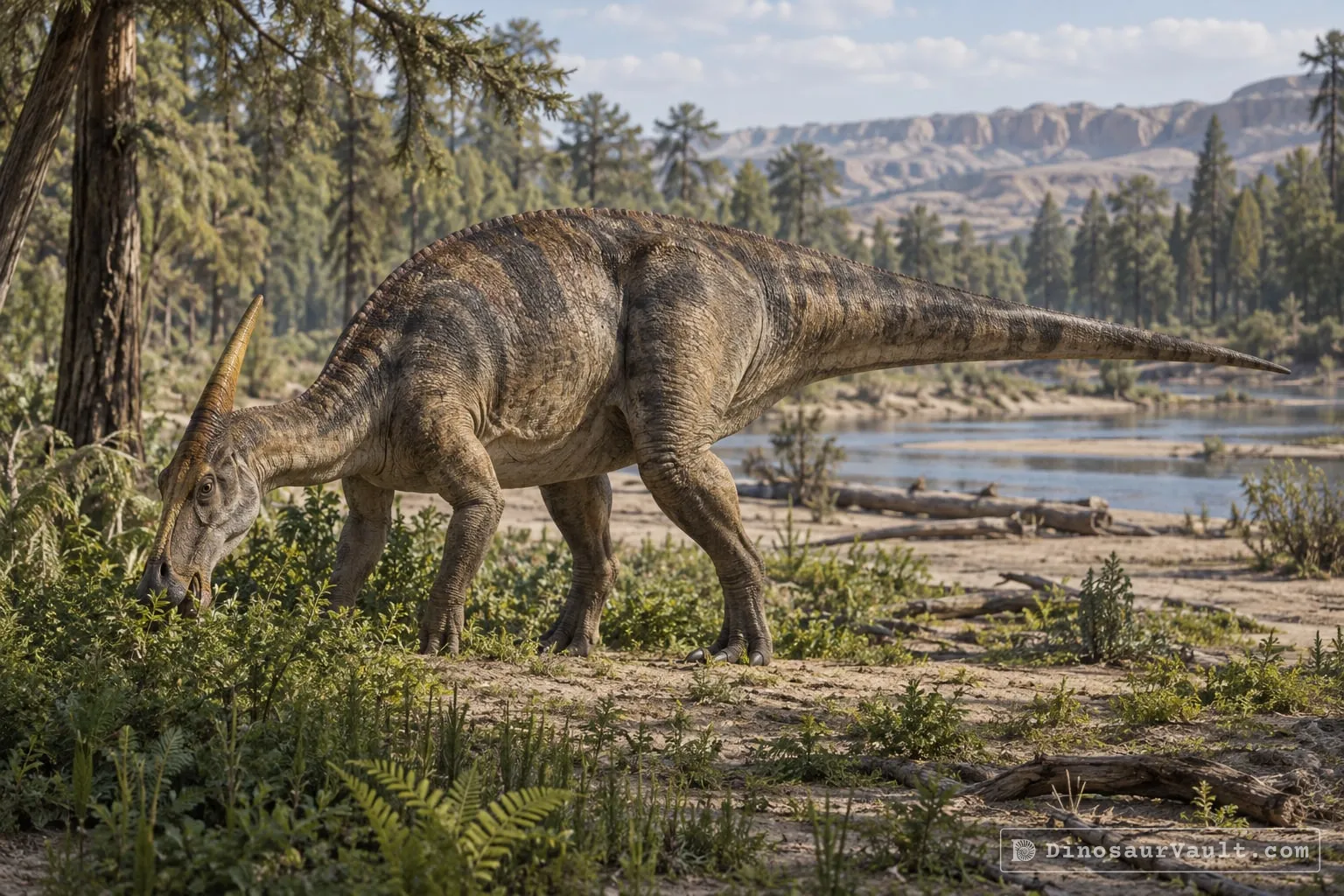
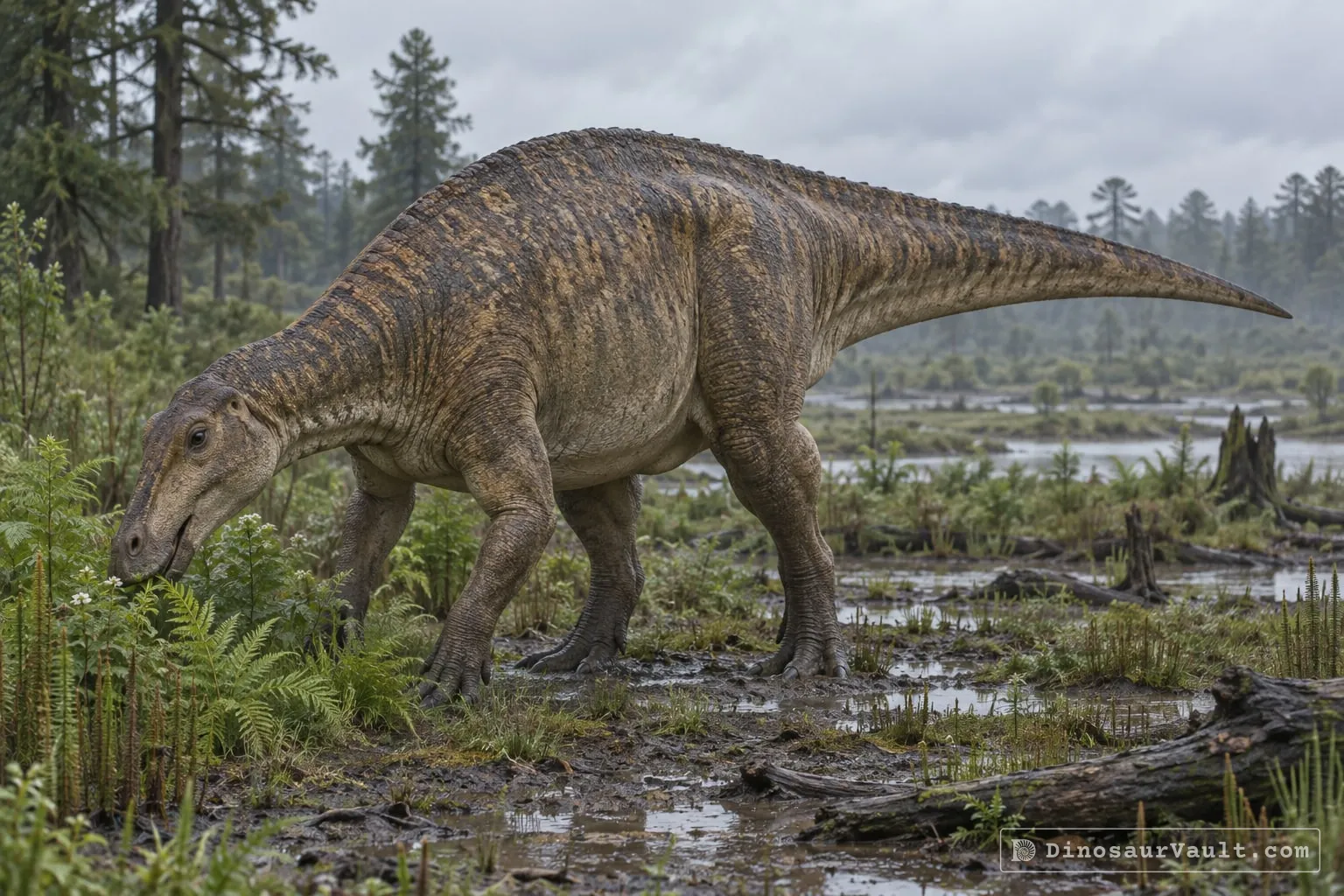


A rock formation can hold fossils laid down millions of years apart, so not every animal here met Rativates.
The evidence
The science behind Rativates
Which parts of the picture come from its own bones, and which come from its relatives.
From its own fossils
- A partial skeleton preserves parts of the skull, backbone, pelvis and hind limbs. Its preserved snout and lower jaw are toothless.
- Some tail vertebrae have unusually low bony spines. The preserved foot lacks the innermost toe, and its claw tips are partly restored.
- A thin slice of the thigh bone shows that the small specimen was past its juvenile stage.
Borrowed from relatives
- Gallimimus provides comparisons for the missing rear of the skull, neck, trunk and tail.
- Sinornithomimus provides comparisons for the missing forearms and hands.
- A feather covering is inferred from feathers preserved in Ornithomimus.
Still unknown
- Its feather color and exact covering.
- Which foods it ate.
- How its body changed as it grew.
Discovery timeline
- 2012SkinZelenitsky et al.
- 2016Named itMcFeeters et al.
- 2021Family treeNottrodt & Farke
Key papers
The research behind what we know of Rativates
Skin
Reported feathers in Ornithomimus, supporting a feather covering for its ostrich-like relatives.
Feathered Non-Avian Dinosaurs from North America Provide Insight into Wing Origins. Science 338: 510-514
Read the paper : Feathered Non-Avian Dinosaurs from North America Provide Insight into Wing Origins (opens in a new tab)Named it
Recognized a distinct ostrich-like dinosaur and used thigh-bone tissue to show that its small skeleton was not a juvenile.
A new ornithomimid theropod from the Dinosaur Park Formation of Alberta, Canada. Journal of Vertebrate Paleontology 36: e1221415
Read the paper : A new ornithomimid theropod from the Dinosaur Park Formation of Alberta, Canada (opens in a new tab)Family tree
Compared ankle bones across ostrich-like dinosaurs, including the poorly preserved ankle bones of Rativates.
New data on the distal tarsals in Ornithomimidae. Acta Palaeontologica Polonica 66
Read the paper : New data on the distal tarsals in Ornithomimidae (opens in a new tab)
Close relatives
Other members of Ornithomimidae


Sources: Wikidata