Linhevenator
"Linhe hunter"
Type species Linhevenator tani
- Lived
- 84 to 72 million years ago, Late Cretaceous
- Diet
- Omnivore
- Group
- Theropods, Troodontidae
- Found in
- China
- Named by
- Xu et al. 2011
Where its fossils were found
The evidence
Today

80 million years ago
Habitat
It lived on a dry landscape in what is now northern China. The Wulansuhai Formation also contains Protoceratops, Pinacosaurus and Linhenykus.
Field notes
About Linhevenator
What it was like
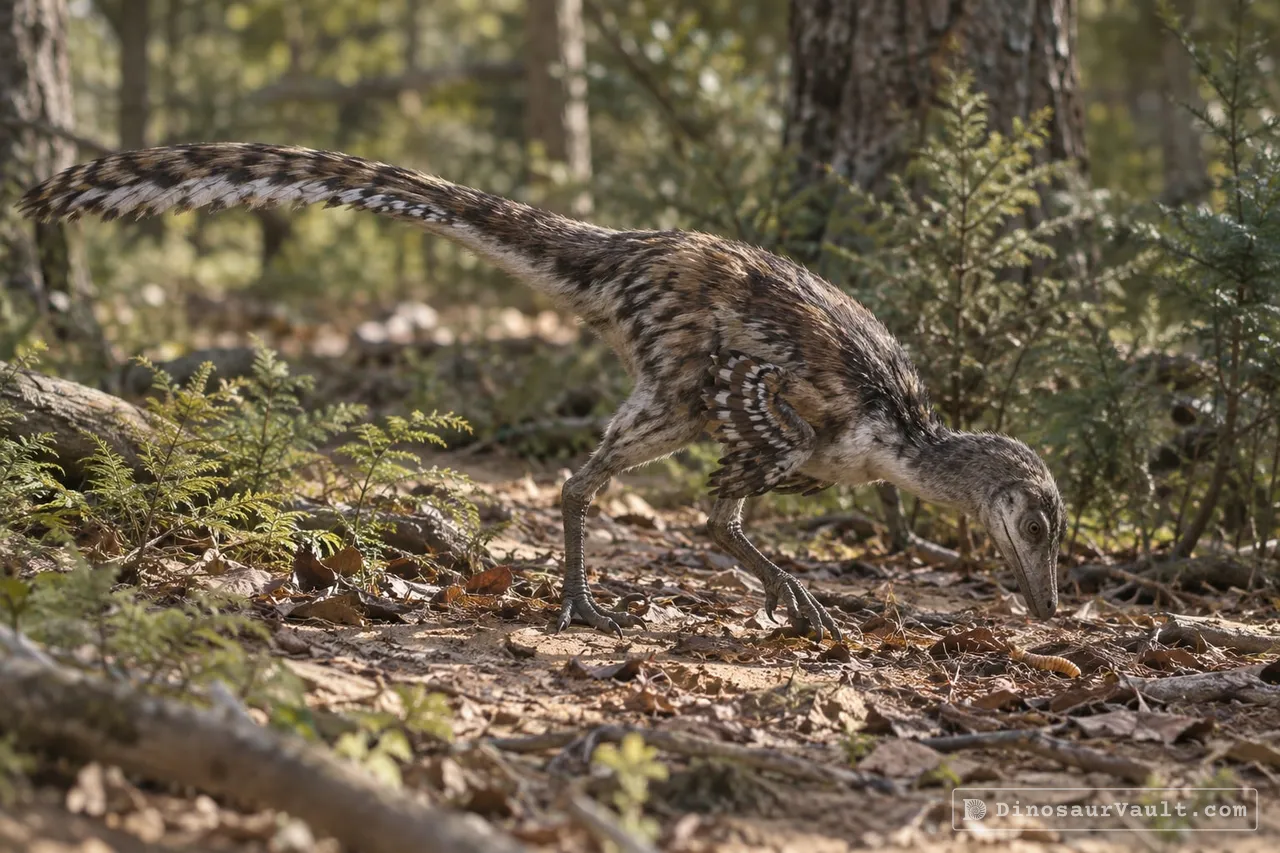
Linhevenator was a troodontid, a feathered, big-eyed theropod. Unlike most of its relatives, it had short, strong arms. It is known from a partial skeleton with a skull.
Its world
It lived in the Late Cretaceous in what is now northern China. Its bones come from the Wulansuhai Formation, a dry land shared with Protoceratops, the armored Pinacosaurus and the single-fingered Linhenykus.
How it was found
Xu and colleagues named it in 2011. The type species is Linhevenator tani.
Field gallery
More views of Linhevenator
Scenes reconstructed from the available fossil evidence.
1 of 3
Lived alongside
Found in the same rock formations
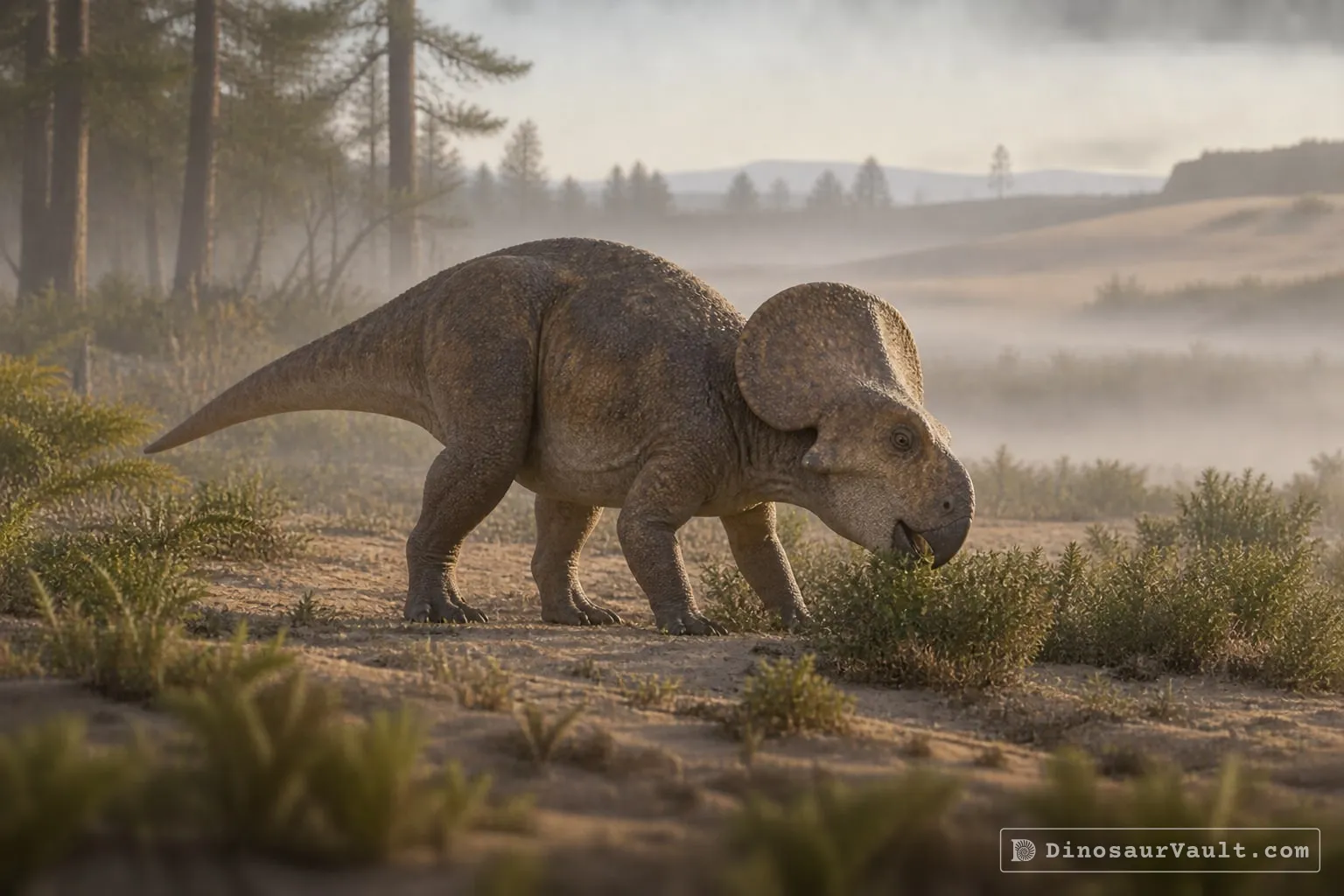
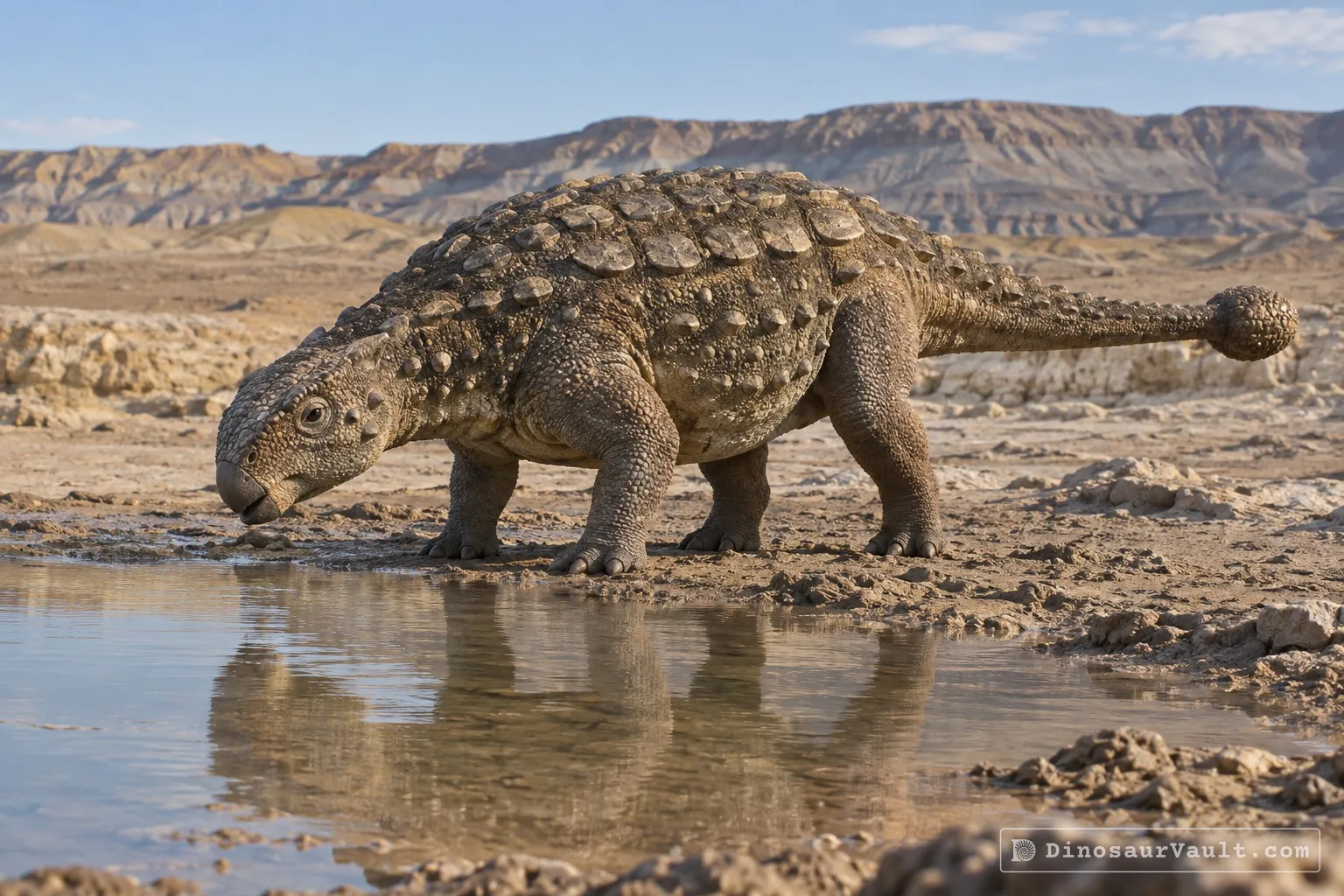
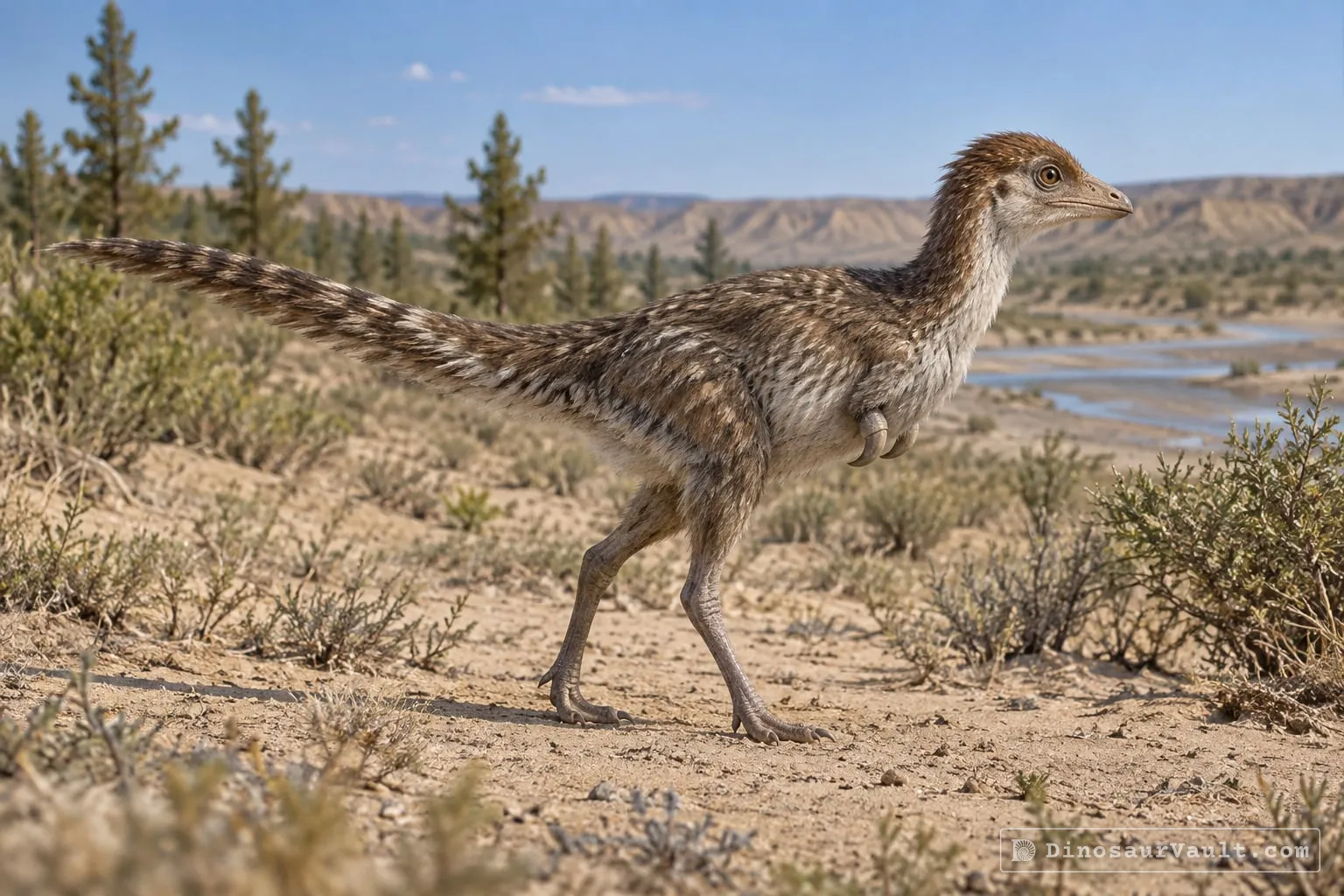
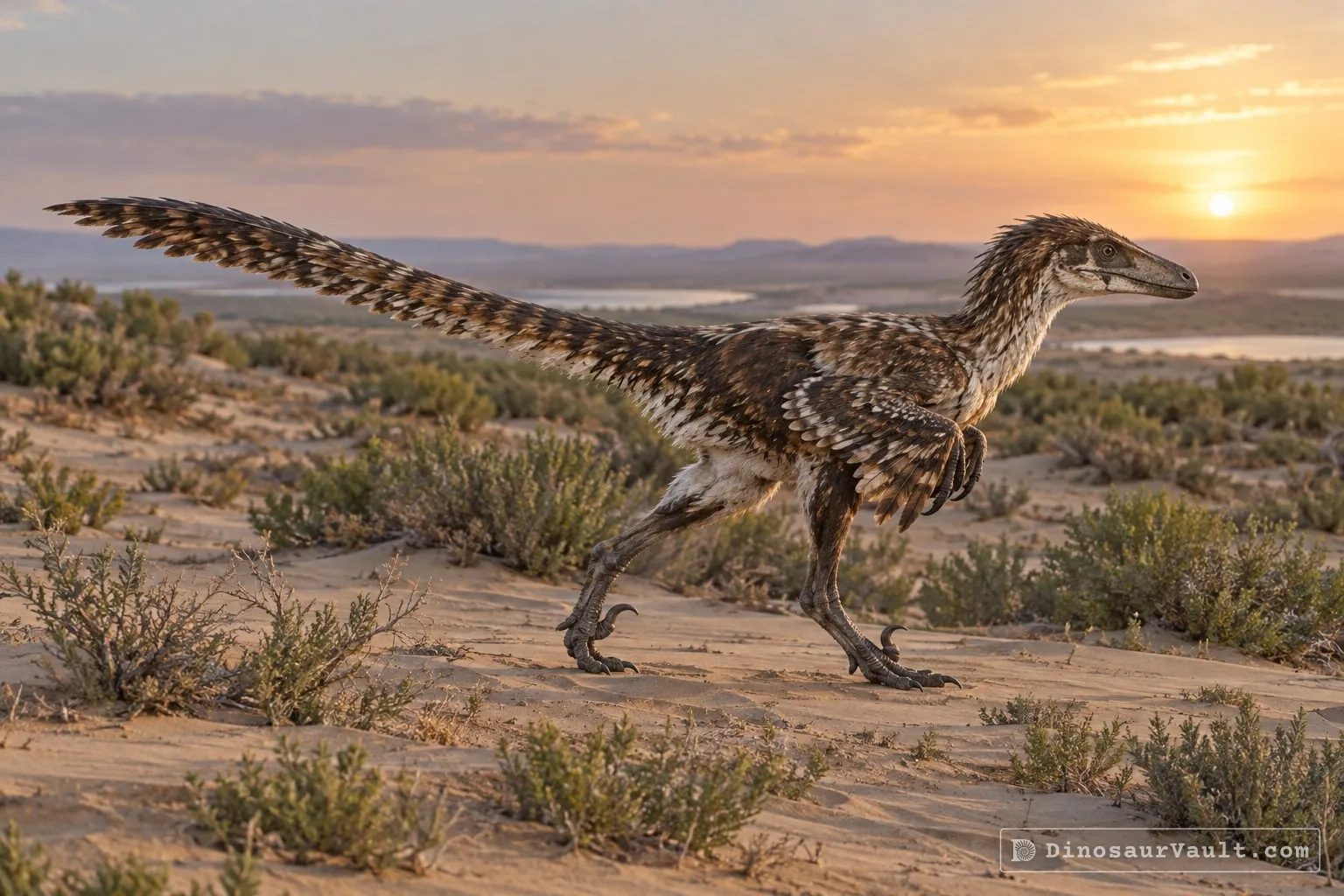
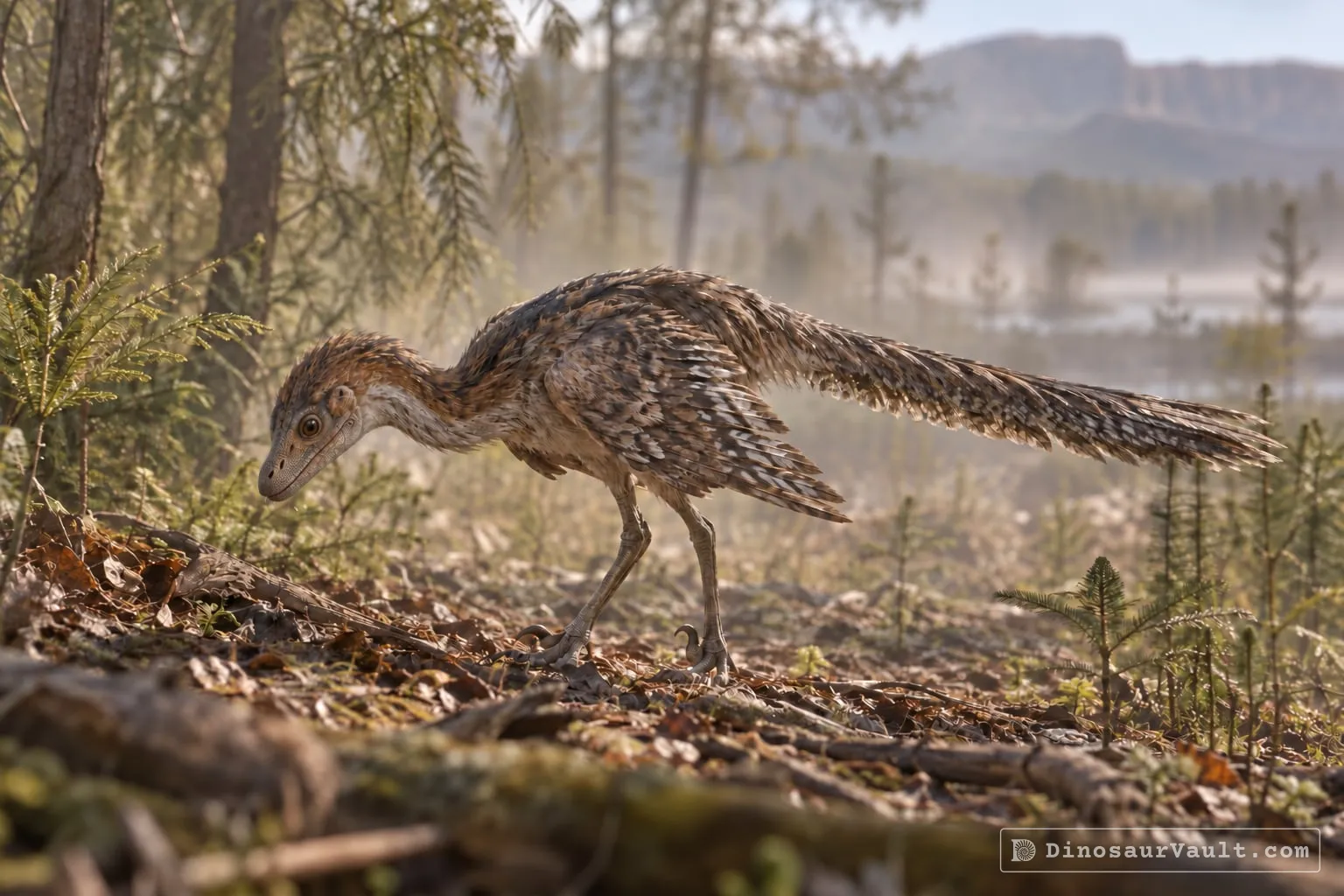
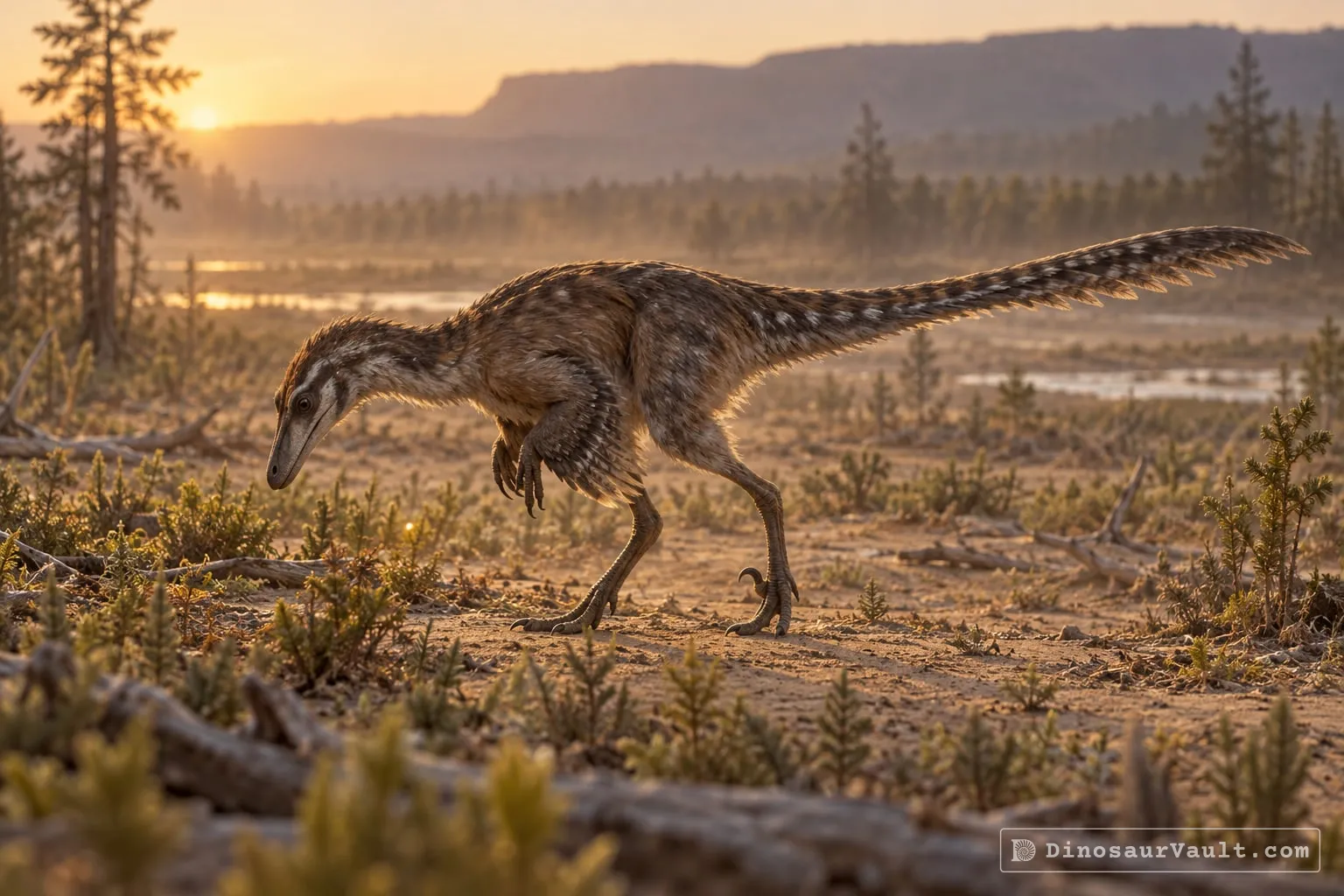
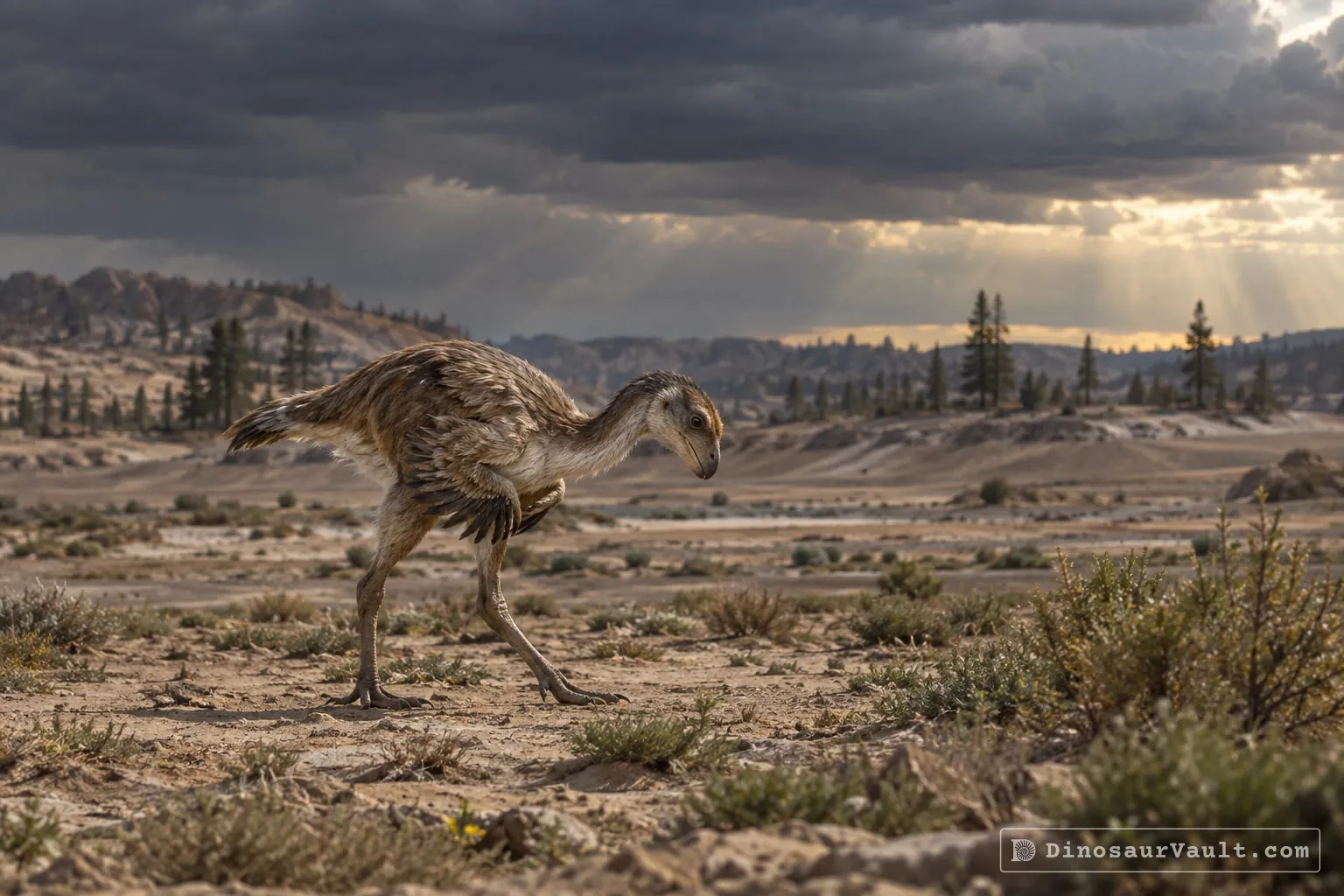


A rock formation can hold fossils laid down millions of years apart, so not every animal here met Linhevenator.
The evidence
The science behind Linhevenator
Which parts of the picture come from its own bones, and which come from its relatives.
From its own fossils
- A partial skeleton, partly still joined, preserves most of the skull, with a narrow, arched snout, along with backbones, a shoulder, an upper arm, hip bones, a thigh bone and much of a foot. Of the lower jaw, only part of one bone is preserved.
- Its upper arm was unusually short and robust for a troodontid, while its shoulder blade was long.
- The second toe had a large curved claw and joints that let it lift clear of the ground. The first and third toe claws are only slightly curved, and the upper foot is shorter than in many troodontids.
Borrowed from relatives
- The missing front of the snout is restored by comparison with Byronosaurus, another troodontid.
- The lower jaw, neck, forearms, hands, tail and feathers follow Jianianhualong, a troodontid known from a feathered skeleton.
- The outer toe claw follows Sinornithoides, in which it is less curved than the second-toe claw.
Still unknown
- How it used its short, strong arms, and what it ate.
- Its feather colors and exact feather arrangement.
- Its closest relatives. A recent study grouped it with Philovenator and Talos in some of its family trees, but support for that grouping was weak.
Discovery timeline
- 2011Named itXu et al.
- 2011Close relativeZanno et al.
- 2017Close relativeXu et al.
Key papers
The research behind what we know of Linhevenator
Named it
Described Linhevenator's short, robust upper arm and specialized second toe, revealing changes in limb shape within troodontids.
A Short-Armed Troodontid Dinosaur from the Upper Cretaceous of Inner Mongolia and Its Implications for Troodontid Evolution. PLoS ONE 6: e22916
Read the paper : A Short-Armed Troodontid Dinosaur from the Upper Cretaceous of Inner Mongolia and Its Implications for Troodontid Evolution (opens in a new tab)Close relative
A healed toe injury in Talos supports the idea that troodontids used their second toe for tasks beyond supporting body weight.
A New Troodontid Theropod, Talos sampsoni gen. et sp. nov., from the Upper Cretaceous Western Interior Basin of North America. PLoS ONE 6: e24487
Read the paper : A New Troodontid Theropod, Talos sampsoni gen. et sp. nov., from the Upper Cretaceous Western Interior Basin of North America (opens in a new tab)Close relative
Named Jianianhualong, a troodontid preserved with feathers, whose skeleton mixes early and later features and whose feathers include lopsided vanes.
Mosaic evolution in an asymmetrically feathered troodontid dinosaur with transitional features. Nature Communications 8
Read the paper : Mosaic evolution in an asymmetrically feathered troodontid dinosaur with transitional features (opens in a new tab)
Close relatives
Other members of Troodontidae


Sources: Wikidata