Lapampasaurus
"La Pampa lizard"
- Lived
- 72 to 66 million years ago, Late Cretaceous
- Diet
- Herbivore
- Group
- Ornithopods, Hadrosauridae
- Found in
- Argentina
- Named by
- Coria et al. 2012
Where its fossils were found
The evidence
Today

70 million years ago
Habitat
A coastal landscape influenced by the tides in what is now Argentina. Bonapartesaurus, Austroraptor and Neuquensaurus are also known from the Allen Formation.
Field notes
About Lapampasaurus
What it was like
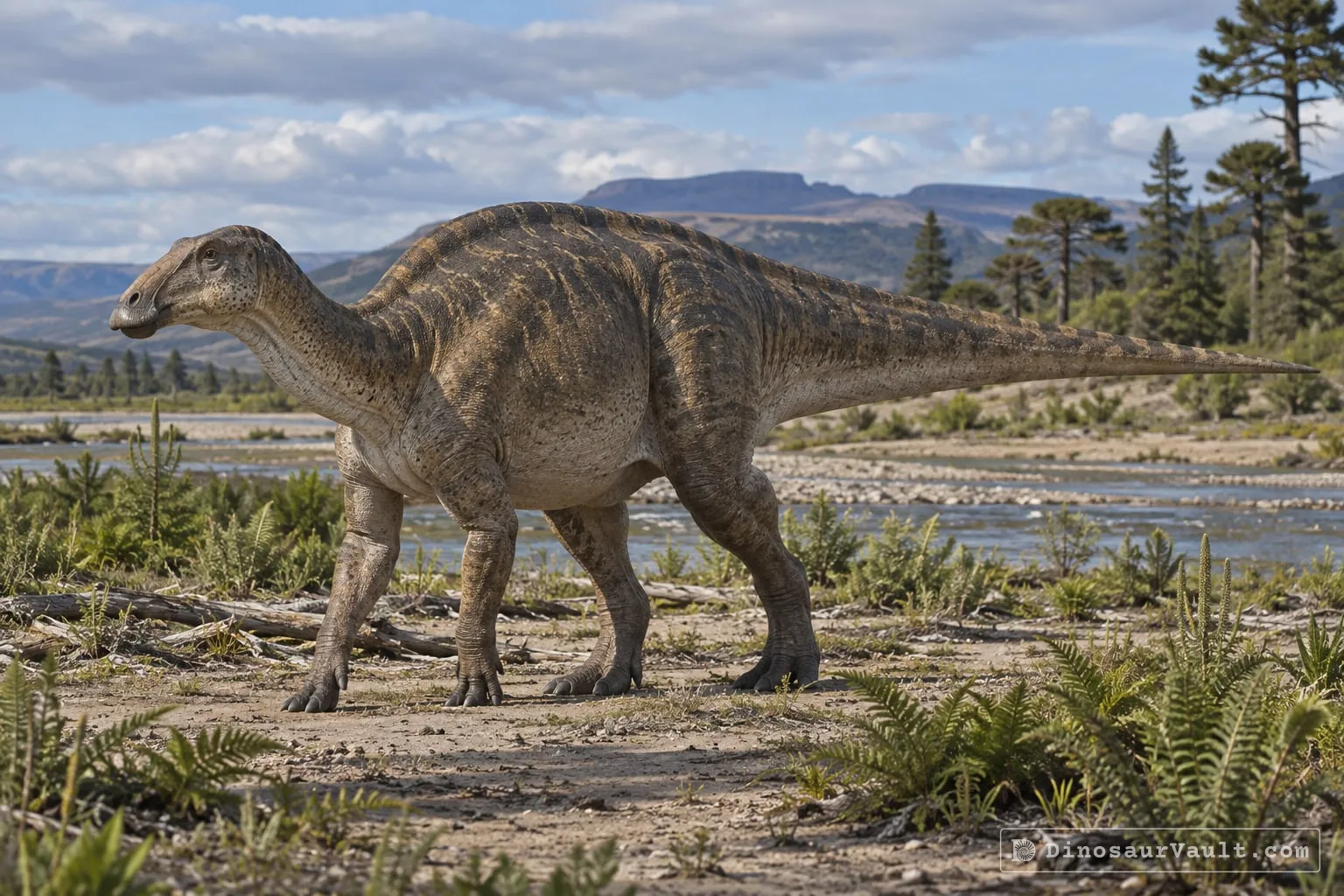
Lapampasaurus was a duck-billed plant eater, known from part of the backbone and legs.
Its world
It lived about 72 to 66 million years ago, at the end of the Late Cretaceous, in what is now Argentina. Its bones come from the Allen Formation, where it shared the land with the hadrosaur Bonapartesaurus, the raptor Austroraptor and the titanosaurs Aeolosaurus and Neuquensaurus.
How it was found
Coria and colleagues named Lapampasaurus in 2012, from a single find.
Field gallery
More views of Lapampasaurus
Scenes reconstructed from the available fossil evidence.
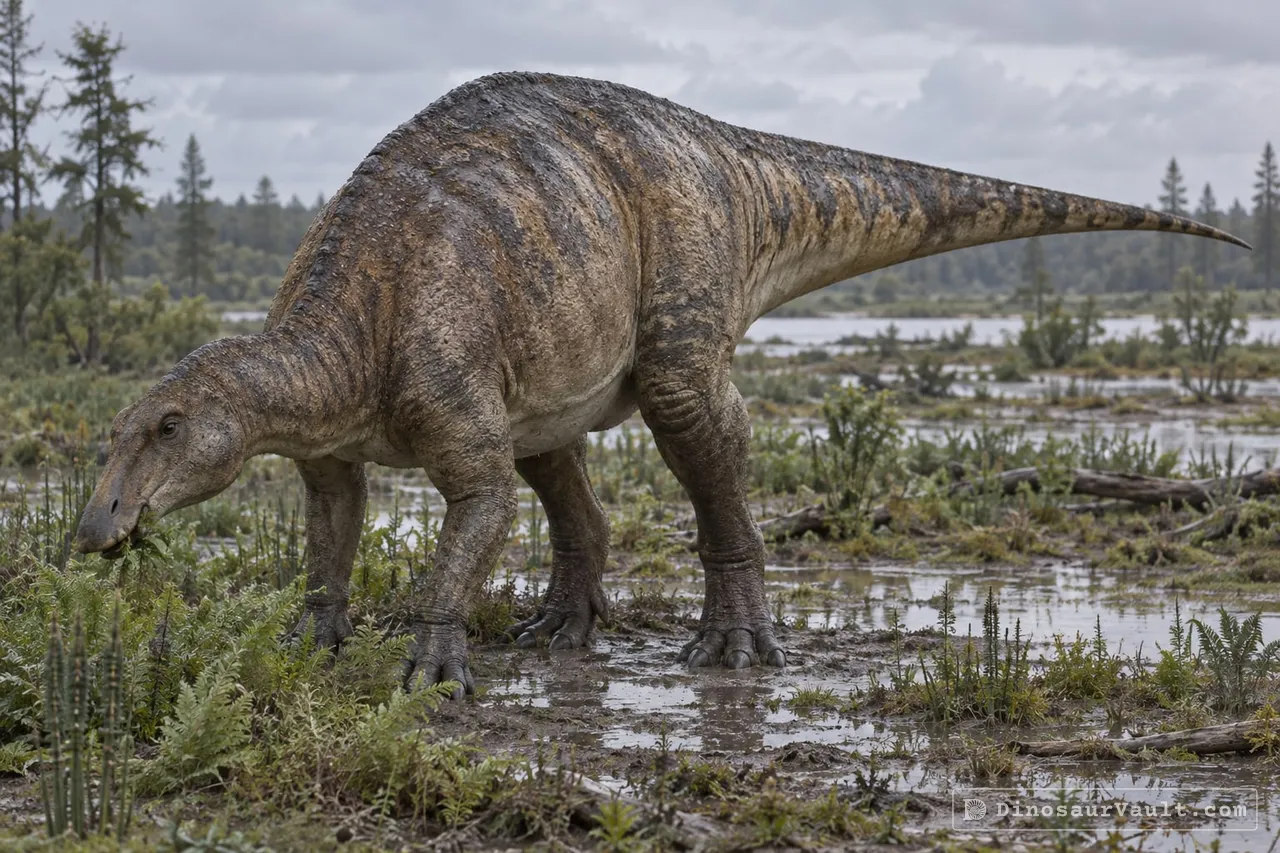
1 of 3
Lived alongside
Found in the same rock formations
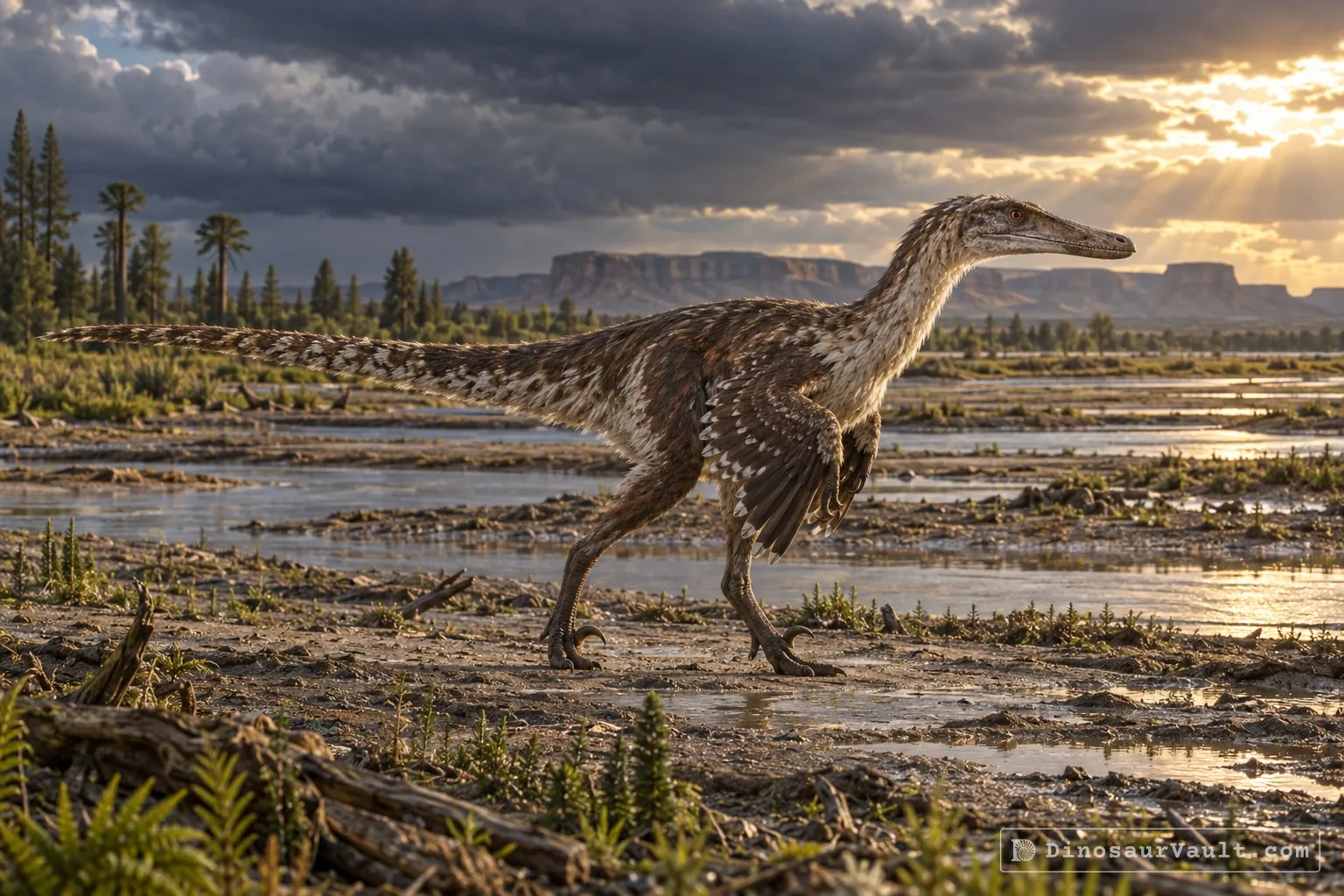
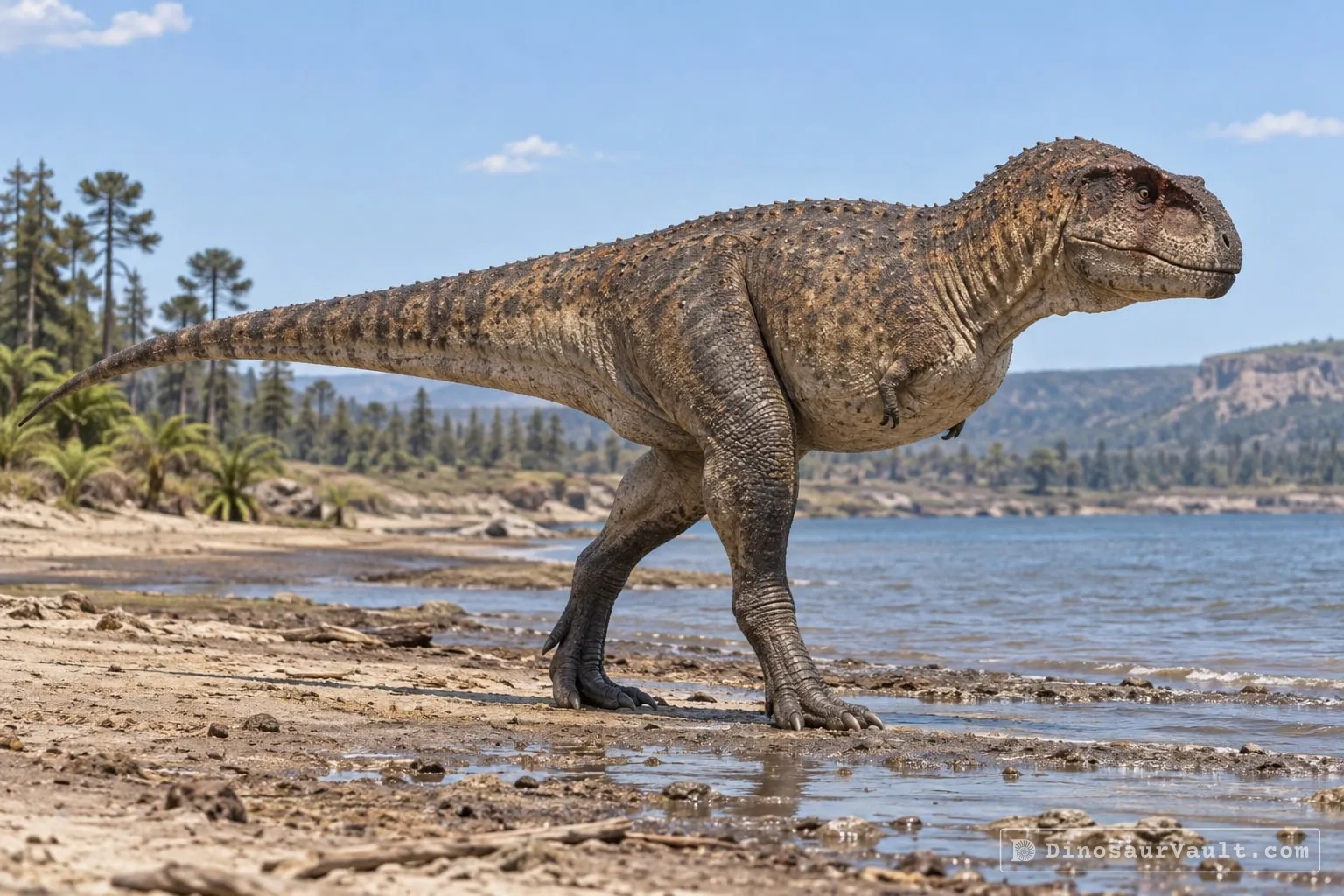
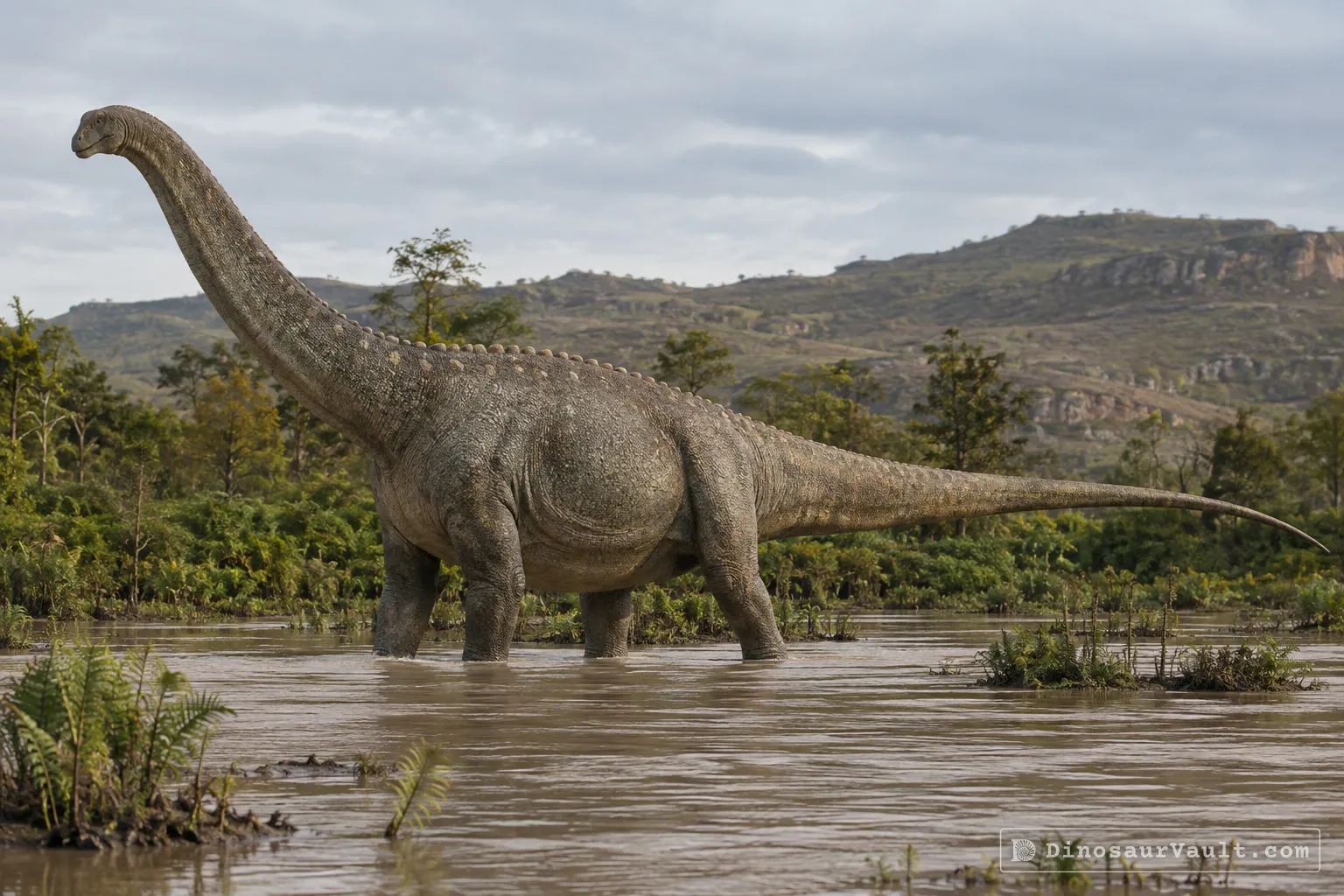
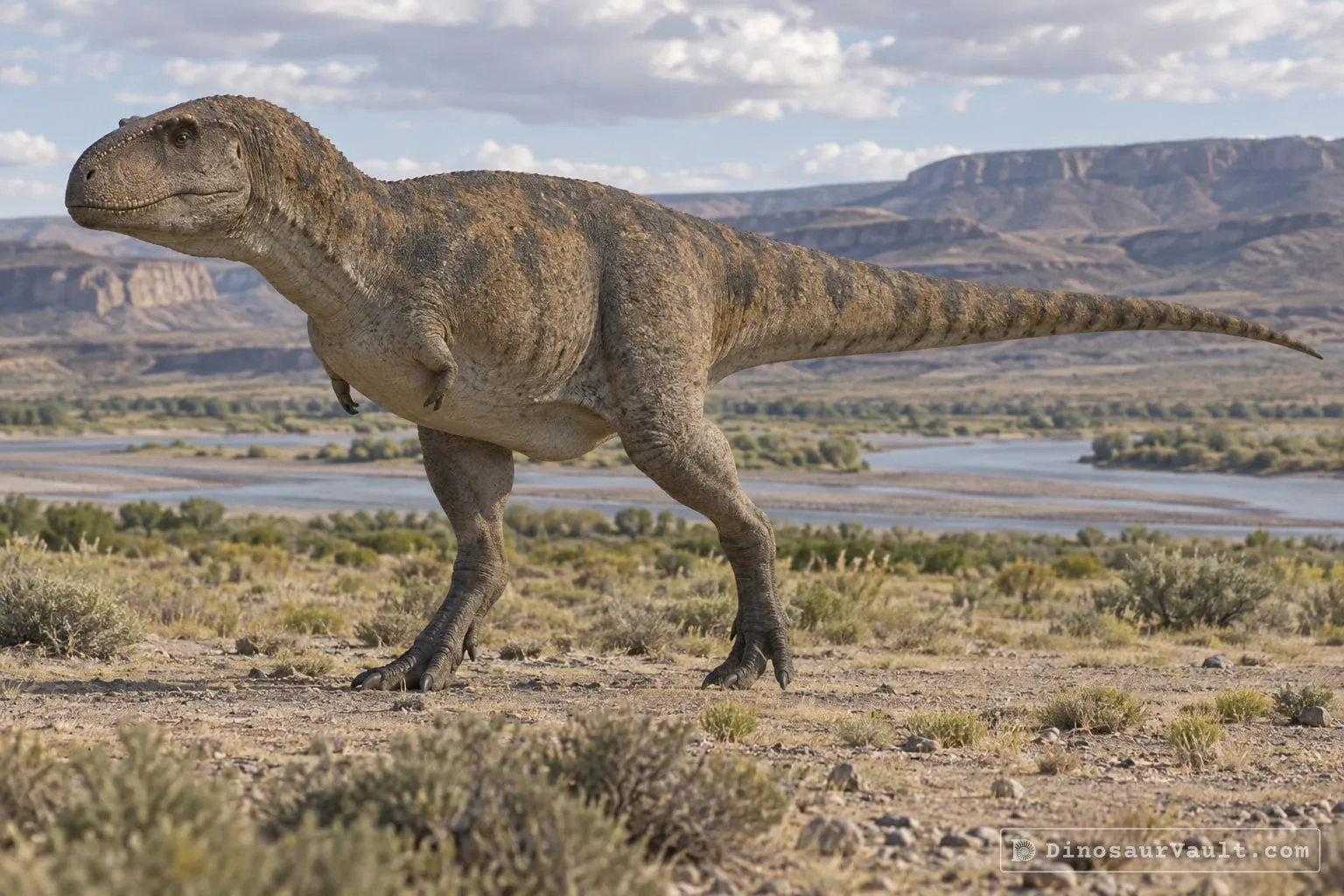
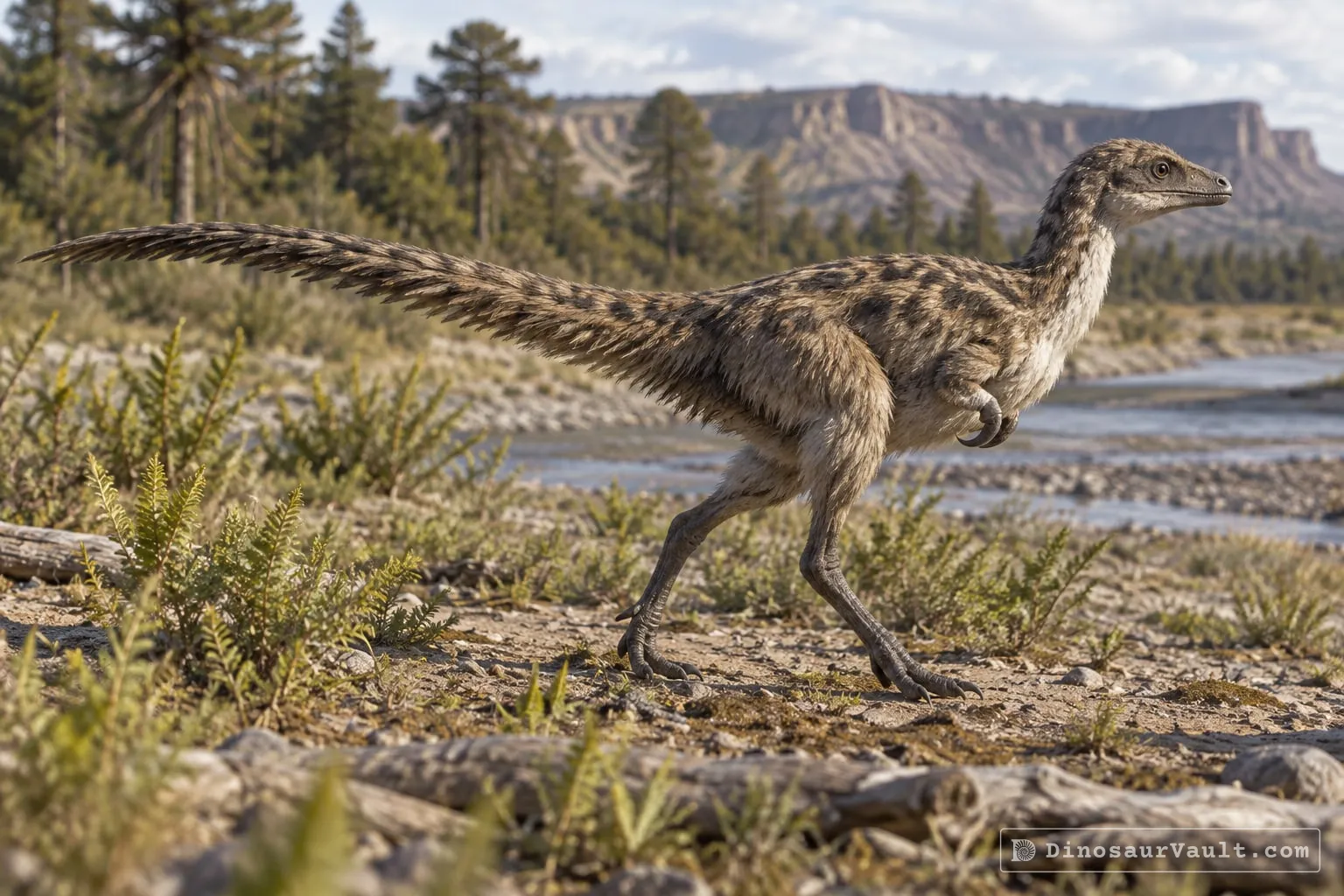
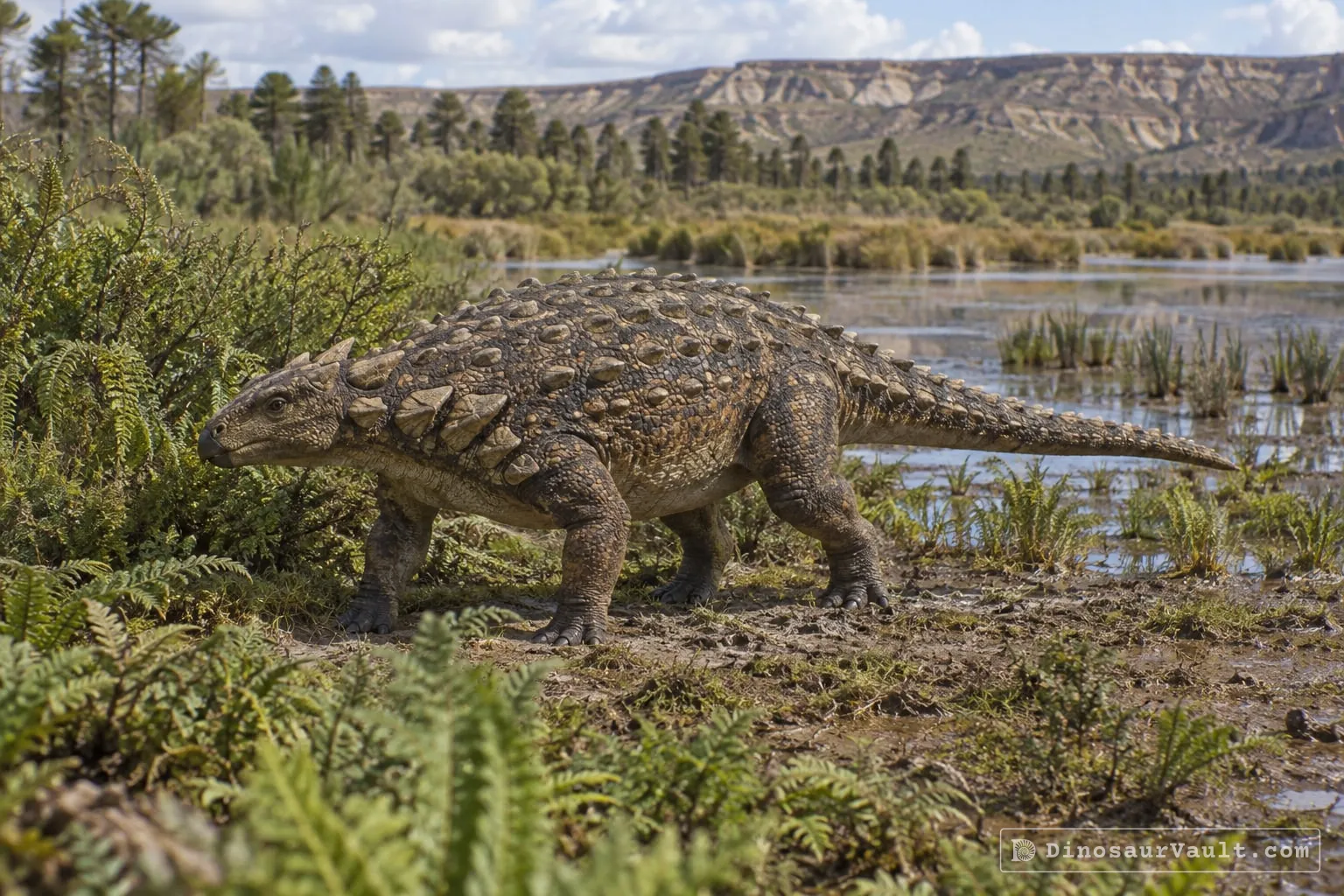
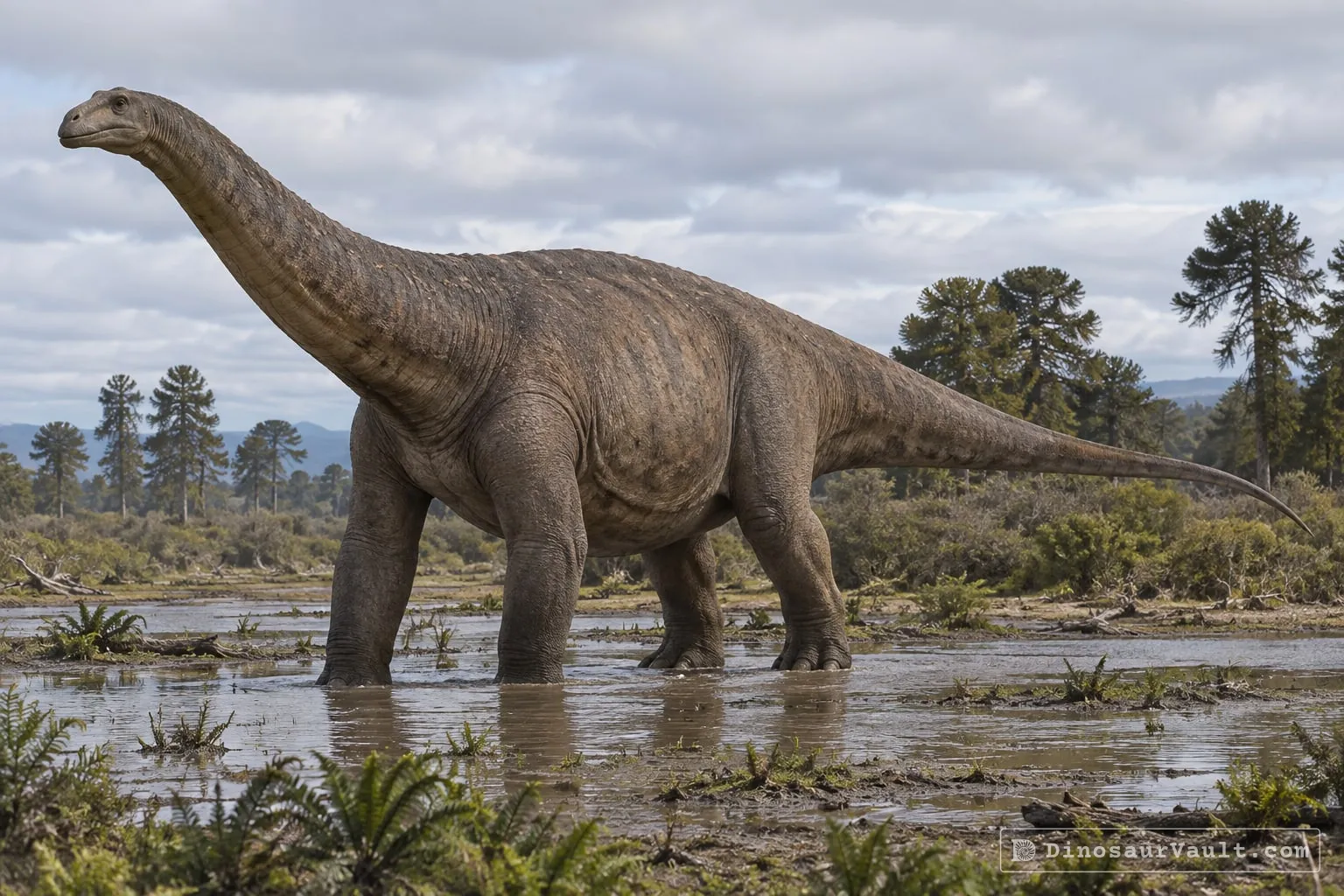


A rock formation can hold fossils laid down millions of years apart, so not every animal here met Lapampasaurus.
The evidence
The science behind Lapampasaurus
Which parts of the picture come from its own bones, and which come from its relatives.
From its own fossils
- The type is a partial skeleton found scattered, with vertebrae from the neck, back, hips and tail, part of the left shoulder girdle, a piece of the hip, the lower end of the right thigh bone, and a toe bone and claw bone from the left foot. No skull or hand bones were recovered.
- Its shoulder blade is sturdy, with a prominent, sharp-edged ridge. A hoof-shaped claw bone from the second or fourth toe is longer than it is wide.
- The lower end of the thigh bone is badly crushed, and only a fragment of the hip survives.
Borrowed from relatives
- The missing head is restored from Edmontosaurus, a well-known duckbill.
- The general shape of the neck, chest, belly, upper arms and thighs follows Eolambia, an earlier relative of the duckbills.
Still unknown
- The shape of its skull and whether it had a crest.
- Its closest relatives within the duckbill family. One later family-tree study left it out because so little of its skeleton could be compared.
- Its body proportions, skin covering and color.
Discovery timeline
- 2012Named itCoria, Riga & Casadío
- 2017Same rocksCruzado-Caballero & Powell
- 2017Close relativeXing, Mallon & Currie
- 2021Close relativeRozadilla et al.
Key papers
The research behind what we know of Lapampasaurus
Named it
Recognized a distinct duckbill from features of its neck vertebrae, shoulder blade and hoof-shaped foot claw.
Un Nuevo Hadrosáurido (Dinosauria, Ornithopoda) de la Formación Allen, Provincia de la Pampa, Argentina. Ameghiniana 49: 552-572
Read the paper : Un Nuevo Hadrosáurido (Dinosauria, Ornithopoda) de la Formación Allen, Provincia de la Pampa, Argentina (opens in a new tab)Same rocks
Named Bonapartesaurus from a skeleton with tall vertebral spines and distinctive hip and leg bones, documenting another duckbill from the same formation.
Bonapartesaurus rionegrensis, a new hadrosaurine dinosaur from South America: implications for phylogenetic and biogeographic relations with North America. Journal of Vertebrate Paleontology 37: e1289381
Read the paper : Bonapartesaurus rionegrensis, a new hadrosaurine dinosaur from South America: implications for phylogenetic and biogeographic relations with North America (opens in a new tab)Close relative
Added detail to the skull bones of the original Edmontosaurus regalis specimens, from the beak and jaws to the skull roof.
Supplementary cranial description of the types of Edmontosaurus regalis (Ornithischia: Hadrosauridae), with comments on the phylogenetics and biogeography of Hadrosaurinae. PLOS ONE 12: e0175253
Read the paper : Supplementary cranial description of the types of Edmontosaurus regalis (Ornithischia: Hadrosauridae), with comments on the phylogenetics and biogeography of Hadrosaurinae (opens in a new tab)Close relative
Named Kelumapusaura and distinguished it from Lapampasaurus through differences in vertebrae and the ridge on the shoulder blade.
A new hadrosaurid (Dinosauria: Ornithischia) from the Late Cretaceous of northern Patagonia and the radiation of South American hadrosaurids. Journal of Systematic Palaeontology 19: 1207-1235
Read the paper : A new hadrosaurid (Dinosauria: Ornithischia) from the Late Cretaceous of northern Patagonia and the radiation of South American hadrosaurids (opens in a new tab)
Close relatives
Other members of Hadrosauridae


Sources: Wikidata