Aeolosaurus
ee-OH-loh-SORE-us
"Aeolus's lizard"
Type species Aeolosaurus rionegrinus
- Lived
- 84 to 66 million years ago, Late Cretaceous
- Diet
- Herbivore
- Group
- Sauropods
- Found in
- Argentina, Brazil and Uruguay
- Named by
- Powell 1987
Where its fossils were found
The evidence
Today

75 million years ago
Habitat
River plains and lowlands near the coast in Late Cretaceous South America. The Allen Formation also preserves Austroraptor, Neuquensaurus and Secernosaurus.
Field notes
About Aeolosaurus
What it was like
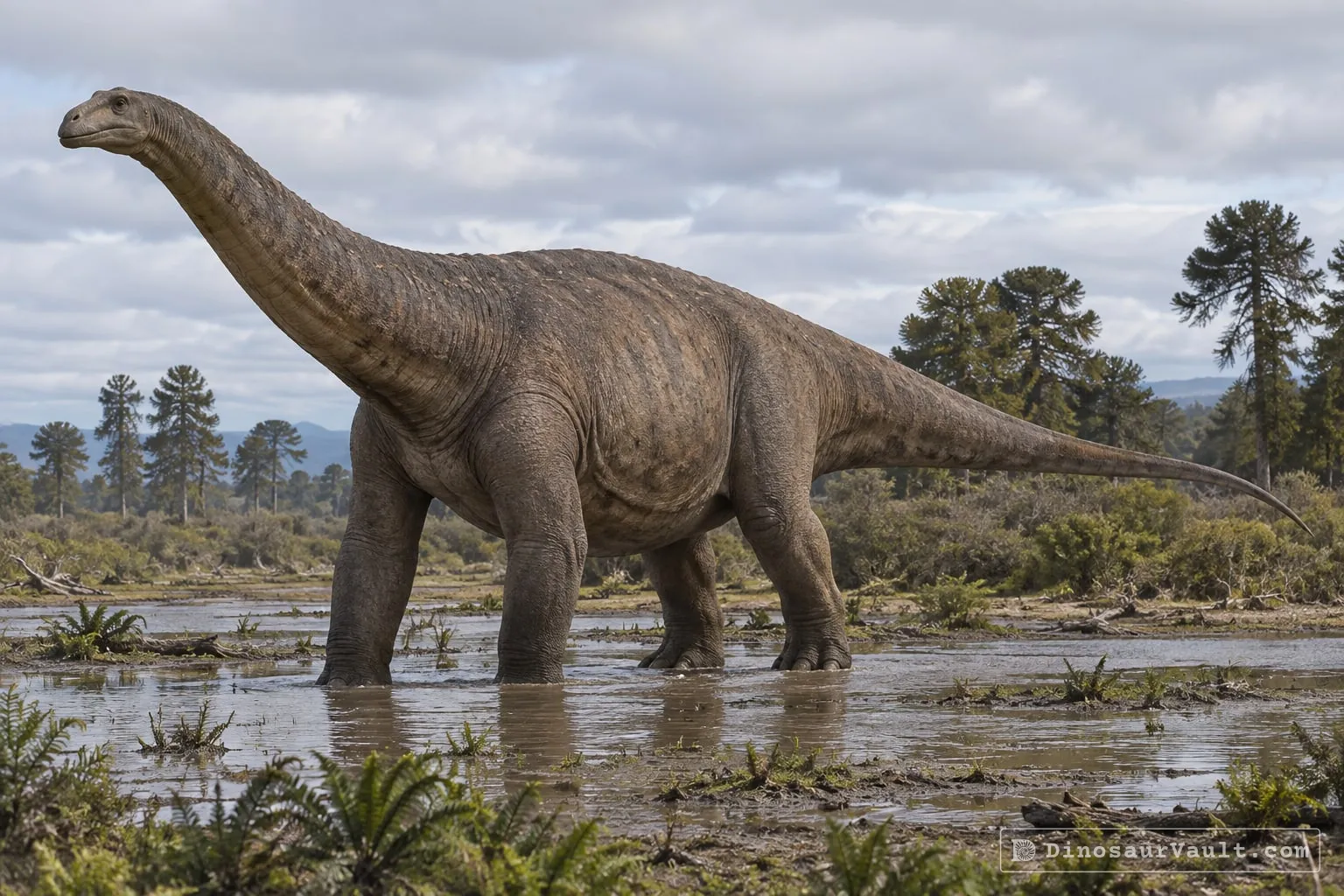
Aeolosaurus was a titanosaur, a long-necked plant eater from the southern continents. The spines on its tail bones leaned forward, a feature that may have helped support strong tail muscles. No skull has been found, so its head is still unknown.
Its world
It lived in the Late Cretaceous in what is now Argentina and Brazil, and it has also been reported from Uruguay. Its bones come from several rock layers, including the Angostura Colorada and Allen formations. In the Allen Formation it lived near the raptor Austroraptor.
How it was found
Powell named Aeolosaurus in 1987. The type species is Aeolosaurus rionegrinus. Bones of several individuals have been found, and more than one species has been named, which makes it one of the better known titanosaurs.
Field gallery
More views of Aeolosaurus
Scenes reconstructed from the available fossil evidence.
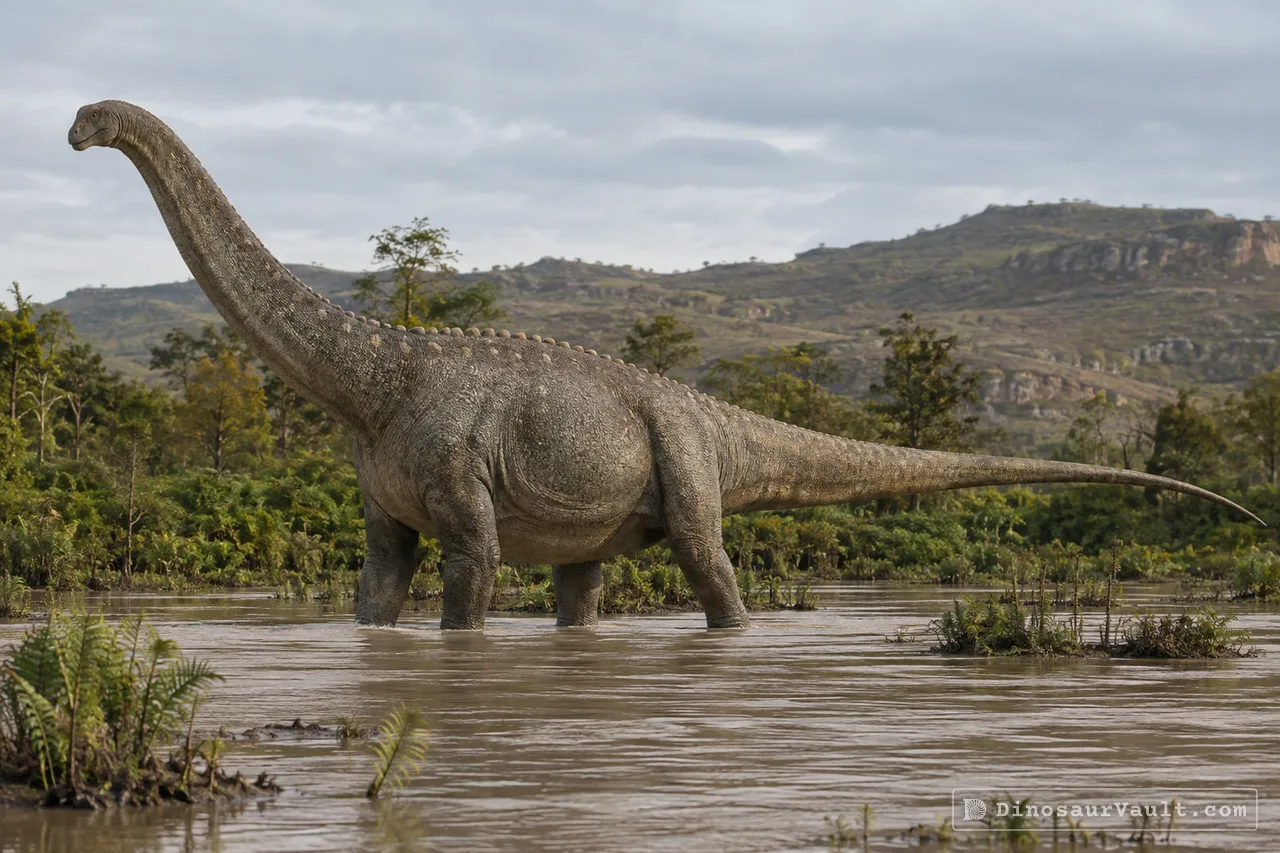
1 of 3
Lived alongside
Found in the same rock formations
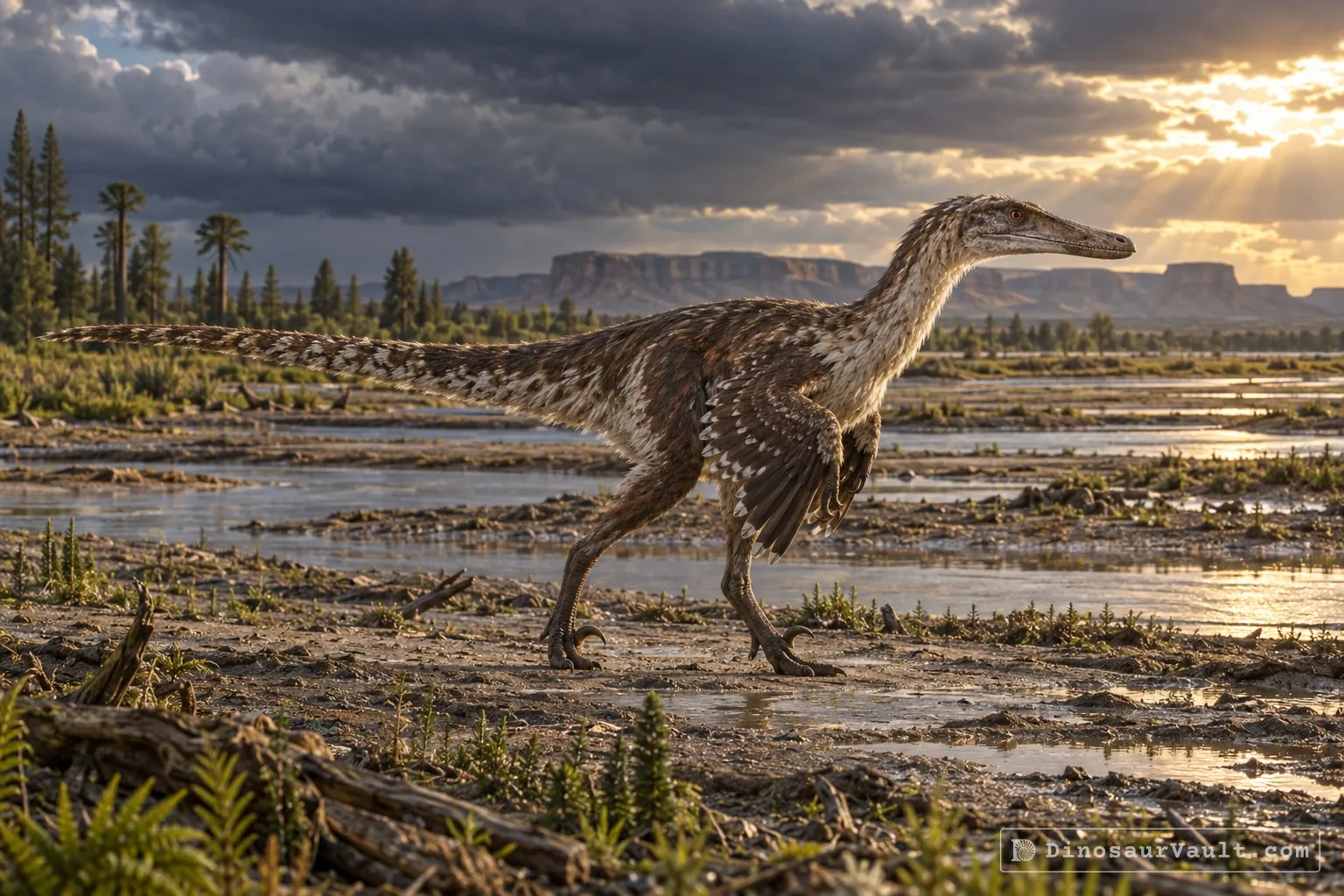
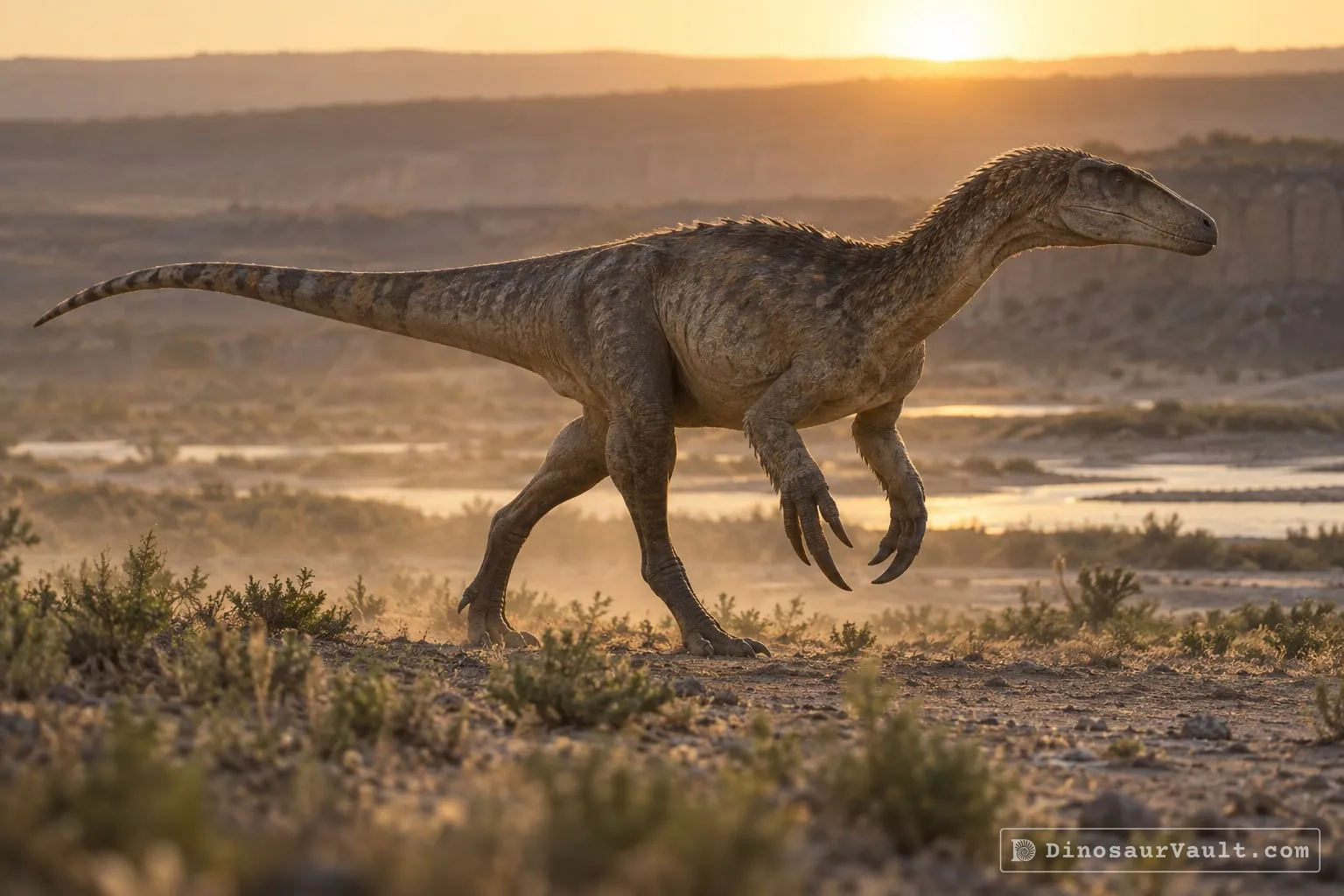
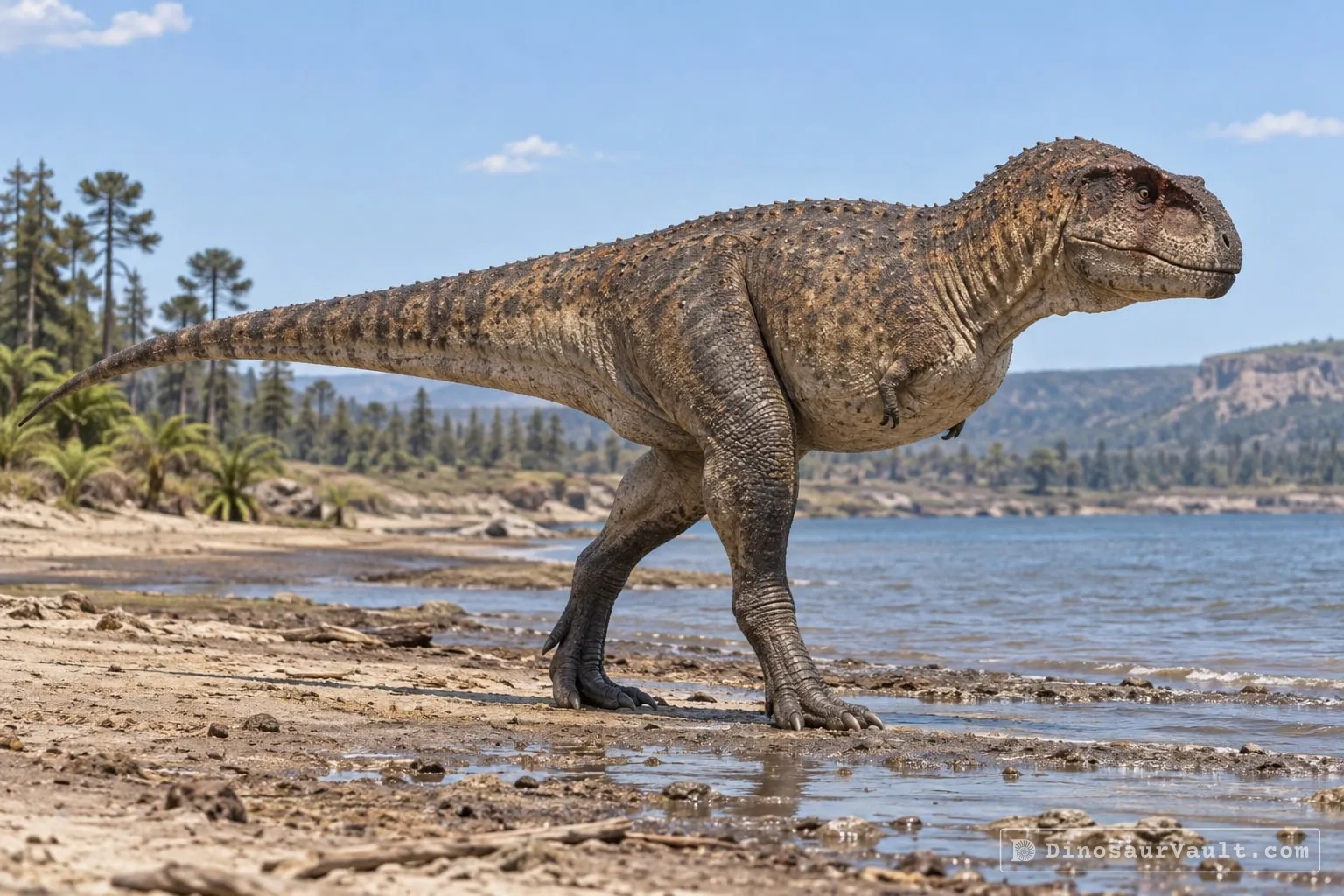
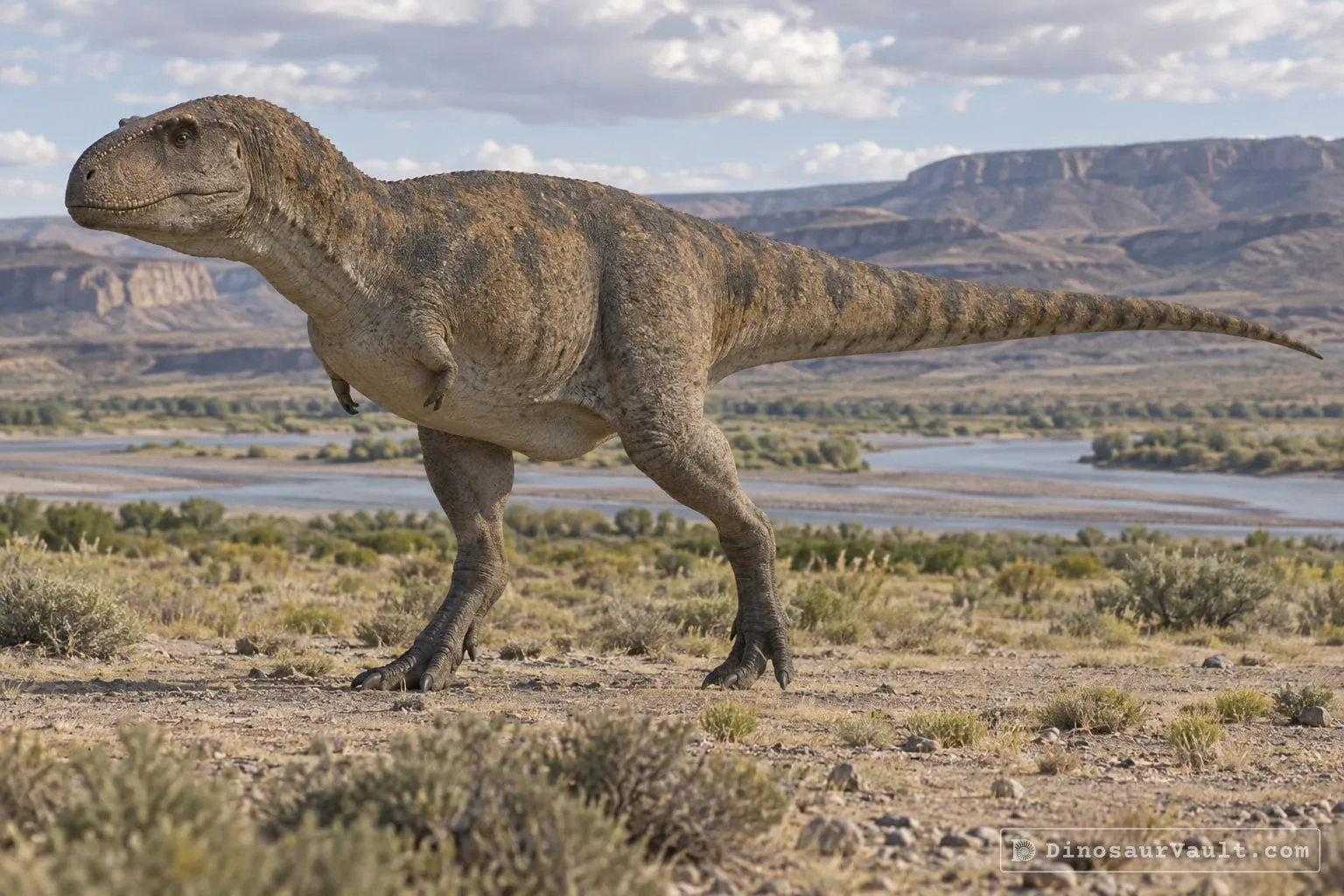
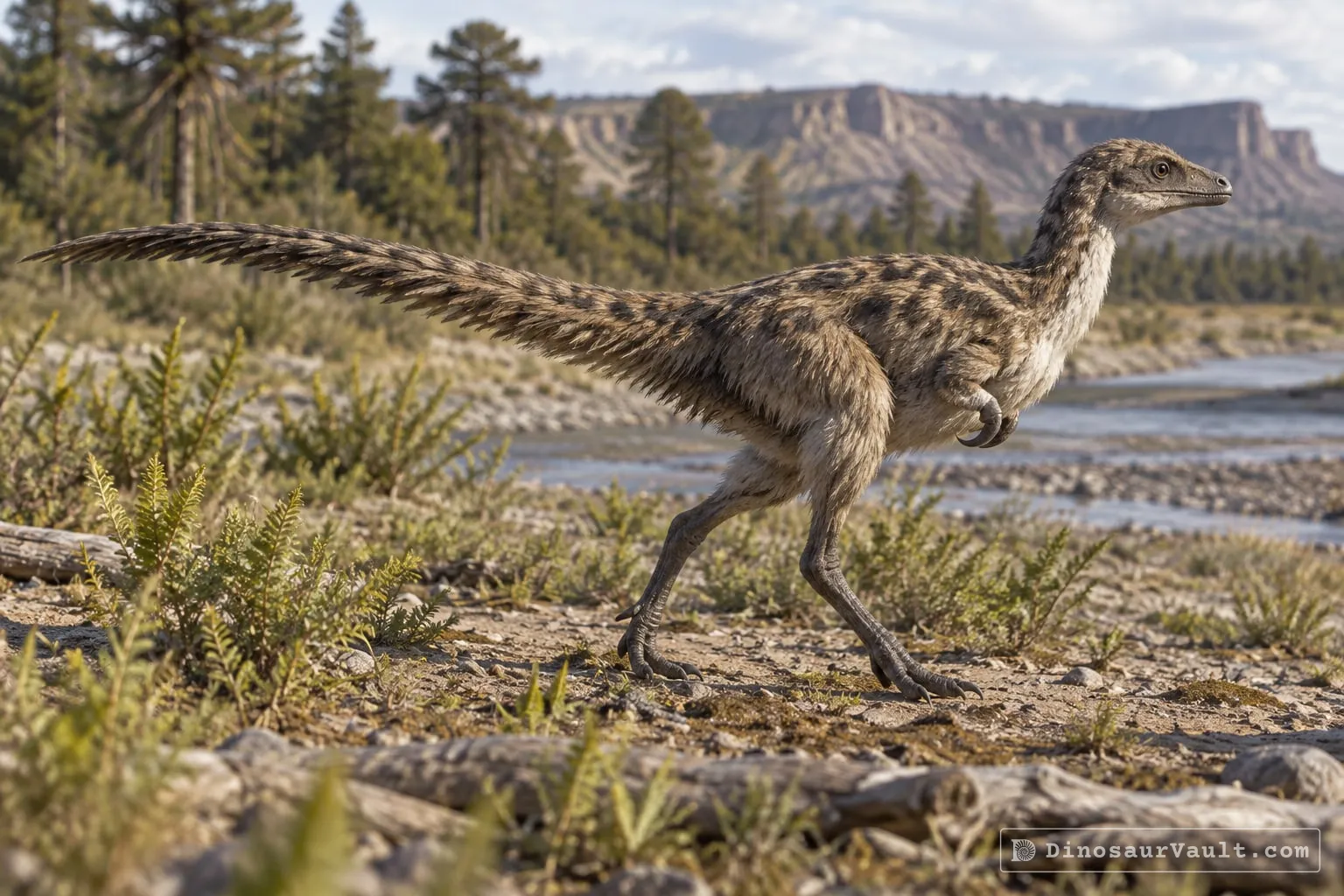
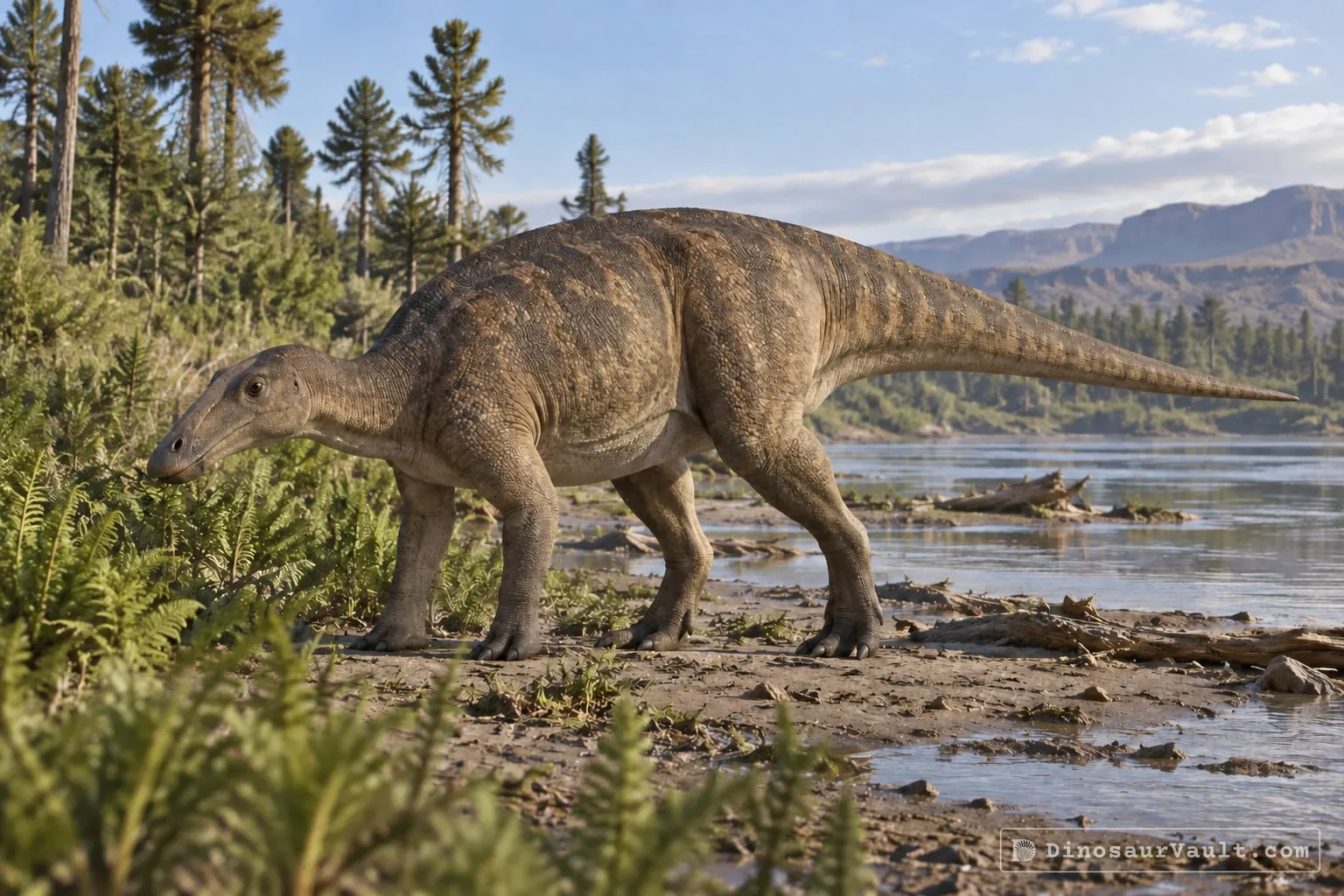


A rock formation can hold fossils laid down millions of years apart, so not every animal here met Aeolosaurus.
The evidence
The science behind Aeolosaurus
Which parts of the picture come from its own bones, and which come from its relatives.
From its own fossils
- Tail vertebrae have bony spines that lean forward.
- The original skeleton also preserves shoulder, forelimb, pelvis and lower hindlimb bones.
Borrowed from relatives
- The missing head and neck are restored using titanosaurs such as Tapuiasaurus.
- Compact front feet and padded hindfeet follow other titanosaurs, including comparisons with Notocolossus.
Still unknown
- Its skull shape and the full proportions of its neck and tail.
- Its exact toe and claw arrangement.
- Its color and whether it lived in herds.
Discovery timeline
- 1987Named itPowell
- 2011Fossil sitesMartinelli, Riff & Lopes
- 2011Close relativeZaher et al.
- 2022Family treeSilva Junior et al.
Key papers
The research behind what we know of Aeolosaurus
Named it
Named Aeolosaurus from a partial skeleton with distinctive tail vertebrae.
The Late Cretaceous fauna of Los Alamitos, Patagonia, Argentina part VI—the titanosaurids. Revista del Museo Argentina de Ciencias Naturales "Bernardino Rivadavia" e Instituto Nacional de Investigacion de las Ciencias Naturales: Paleontología 3: 147-153
No link available
Fossil sites
Reassessed Brazilian bones attributed to Aeolosaurus and argued that several belonged to other titanosaurs.
Discussion about the occurrence of the genus Aeolosaurus Powell 1987 (Dinosauria, Titanosauria) in the Upper Cretaceous of Brazil. Gaea - Journal of Geoscience 7: 34-40
Read the paper : Discussion about the occurrence of the genus Aeolosaurus Powell 1987 (Dinosauria, Titanosauria) in the Upper Cretaceous of Brazil (opens in a new tab)Close relative
Described the elongated skull of Tapuiasaurus, providing a comparison for the missing head of Aeolosaurus.
A Complete Skull of an Early Cretaceous Sauropod and the Evolution of Advanced Titanosaurians. PLoS ONE 6: e16663
Read the paper : A Complete Skull of an Early Cretaceous Sauropod and the Evolution of Advanced Titanosaurians (opens in a new tab)Family tree
Moved the species formerly called Aeolosaurus maximus into a separate genus, Arrudatitan.
Reassessment of Aeolosaurus maximus, a titanosaur dinosaur from the Late Cretaceous of Southeastern Brazil. Historical Biology 34: 403-411
Read the paper : Reassessment of Aeolosaurus maximus, a titanosaur dinosaur from the Late Cretaceous of Southeastern Brazil (opens in a new tab)
Close relatives
Other members of Aeolosaurini


Sources: Wikidata