Jingshanosaurus
- Lived
- 201 to 200 million years ago, Early Jurassic
- Length
- about 5 m (16 ft)
- Found in
- China
- Named by
- Zhang and Yang 1995
Size comparison
To scale


Scale in metersOutline: typical early sauropodomorph shape
Where its fossils were found
The evidence
Today

200 million years ago
Habitat
The Lufeng Formation records low plains, rivers and shallow lakes in what is now China. Its dinosaur community included Lufengosaurus, Yunnanosaurus and Sinosaurus.
Field notes
About Jingshanosaurus
What it was like
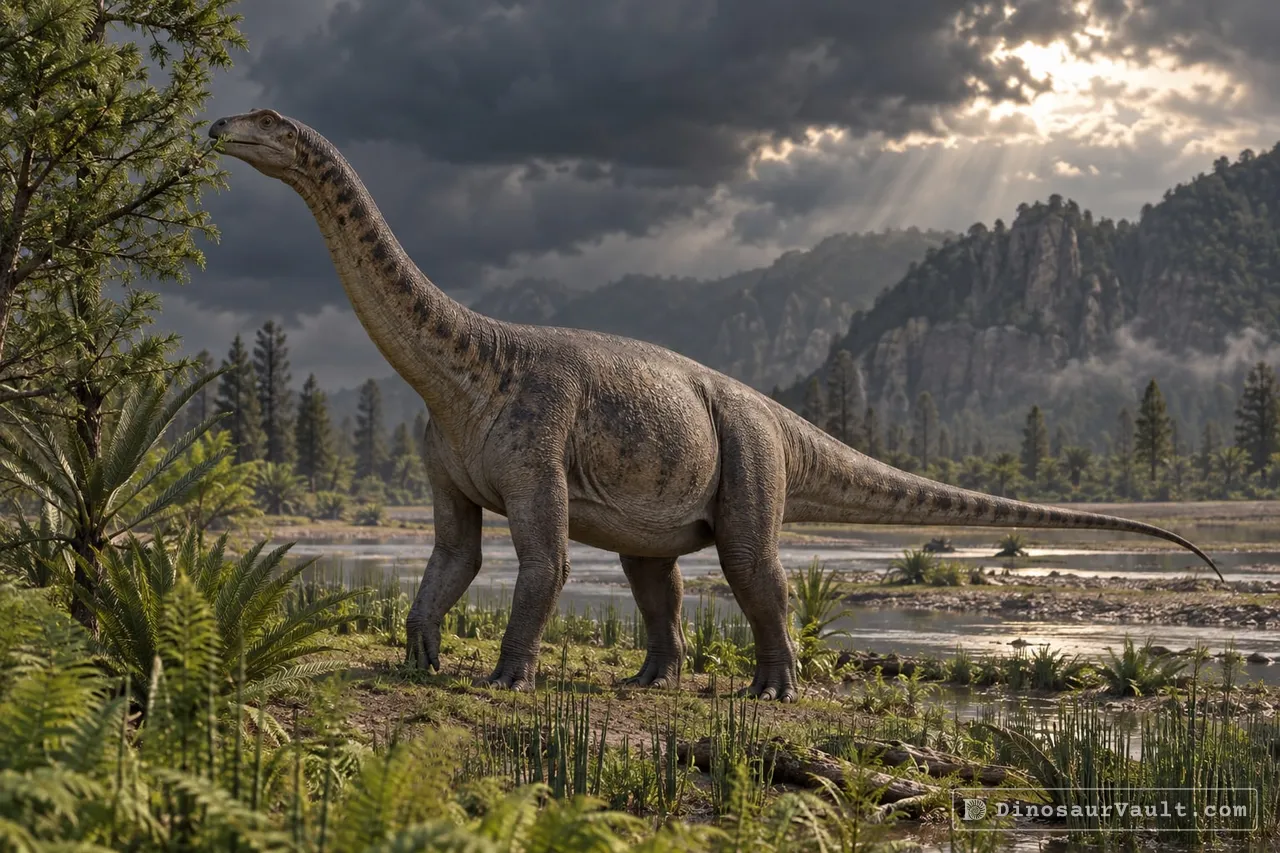
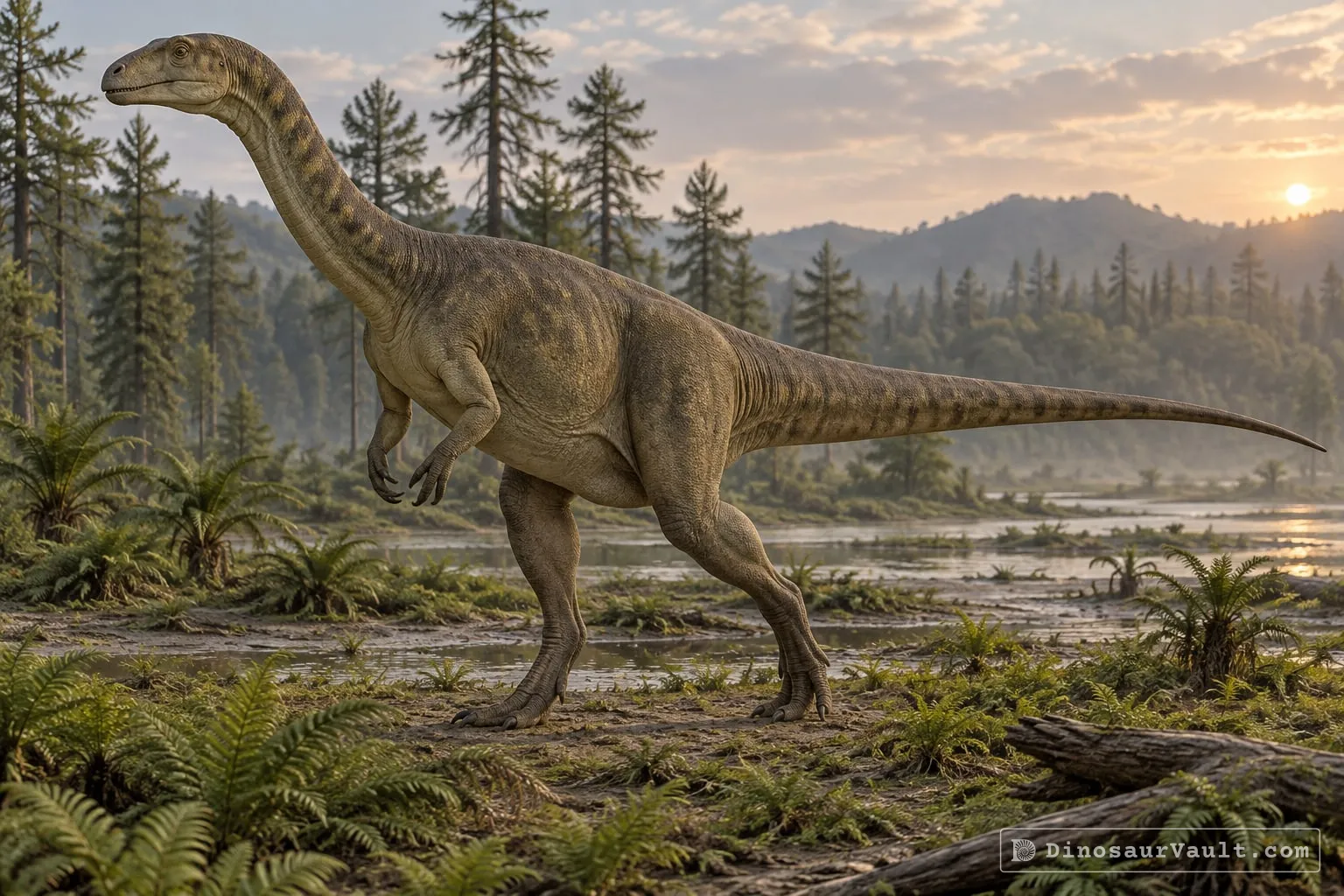
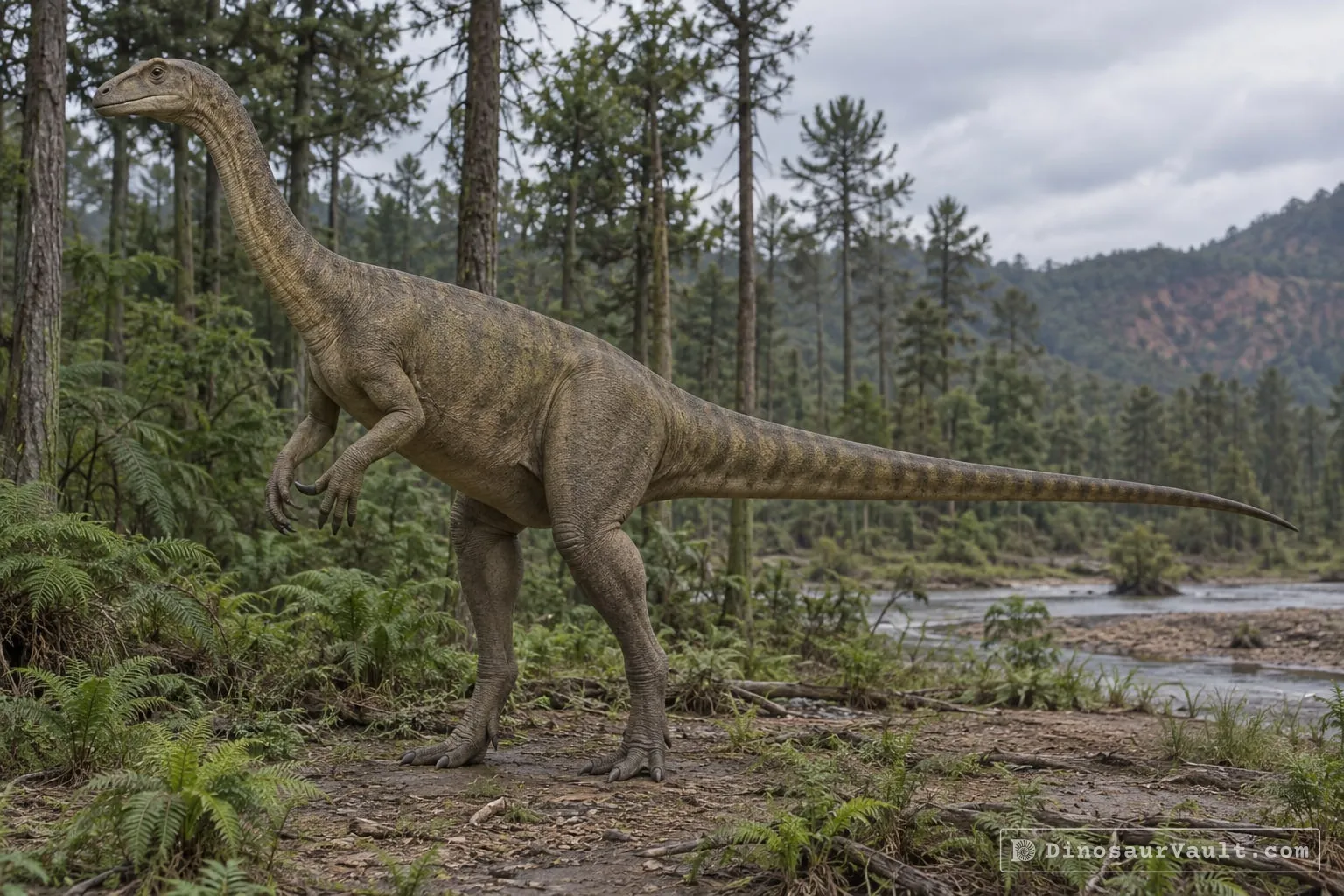
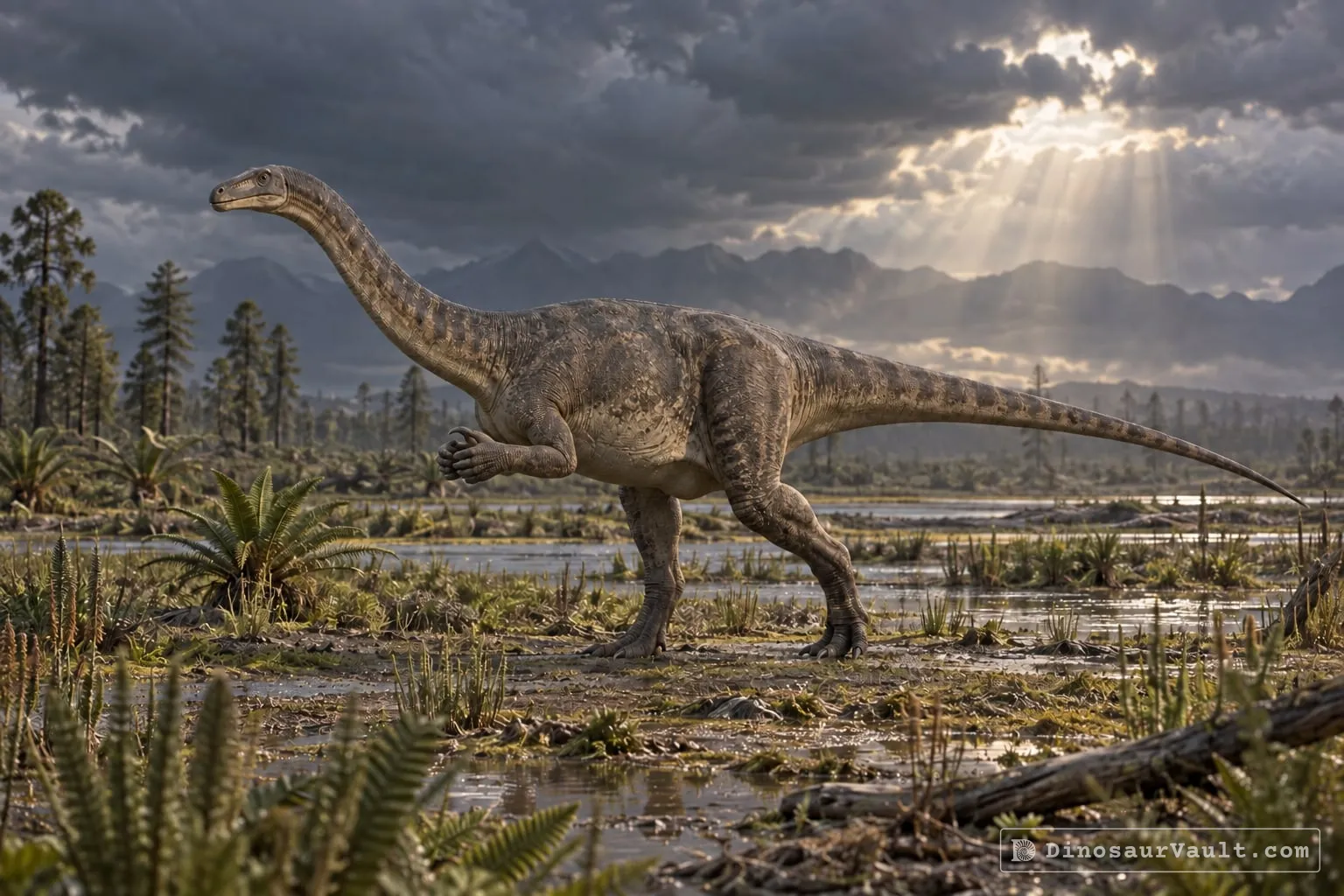
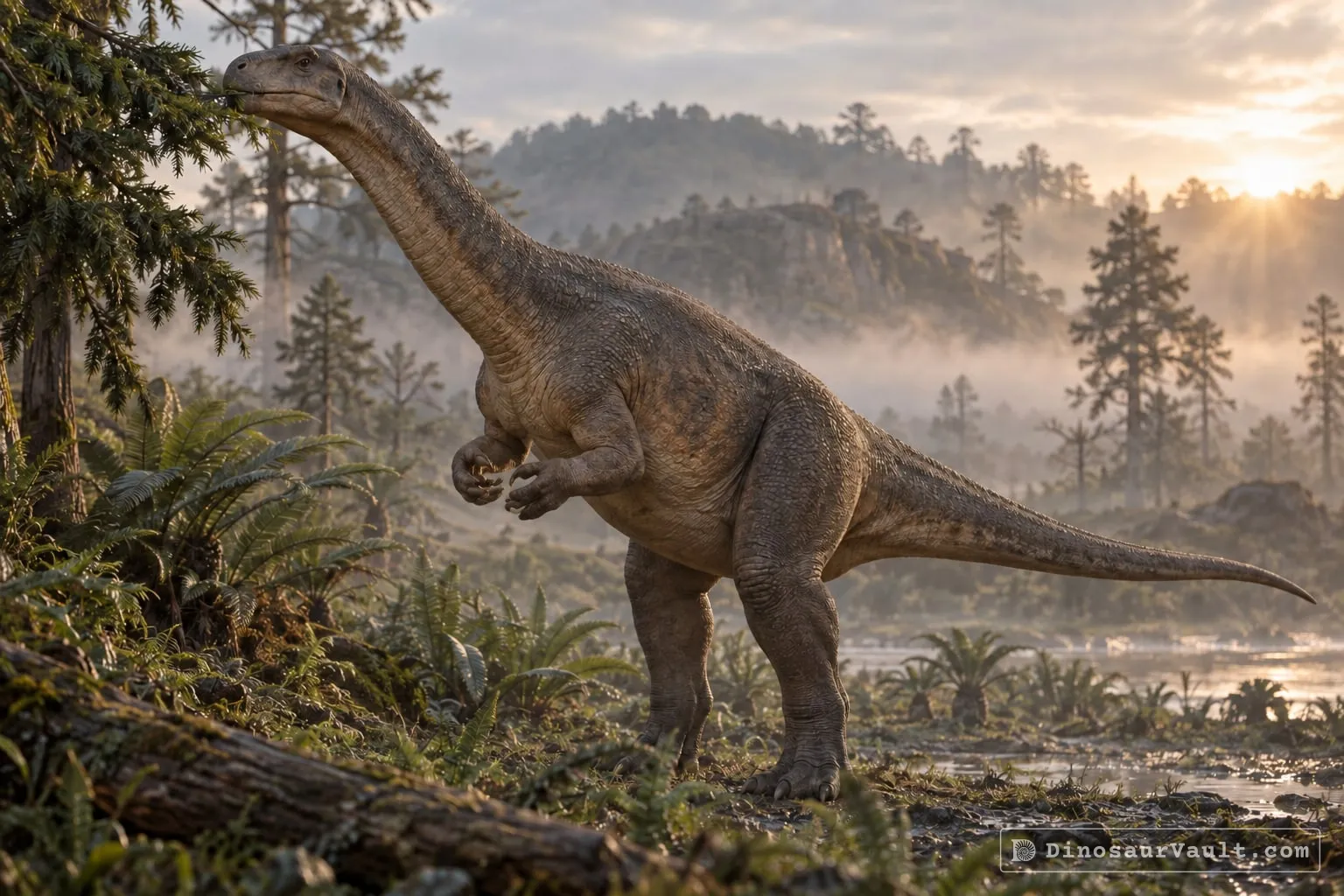
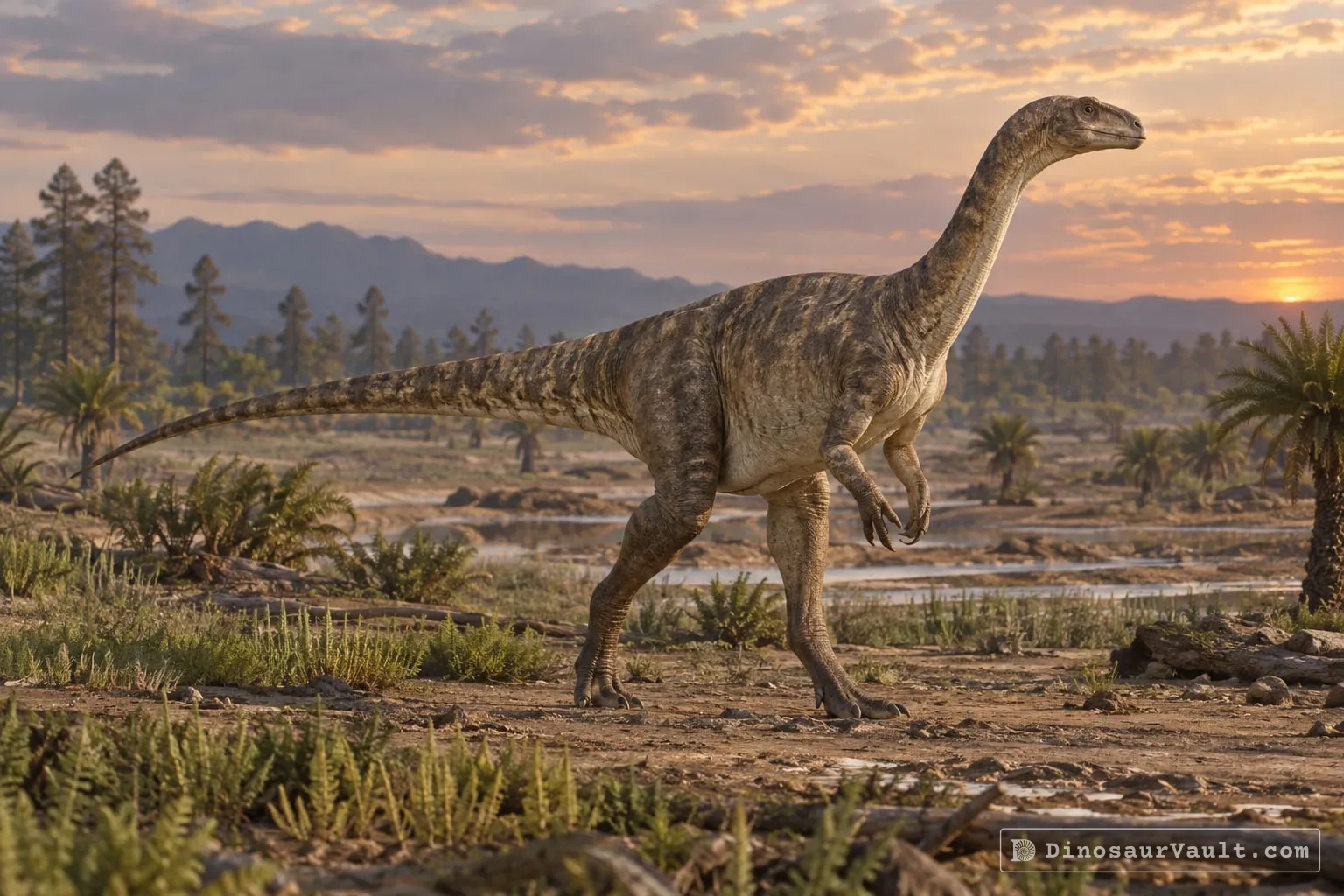
Jingshanosaurus was an early relative of the giant sauropods, a plant eater about 5 meters (16 feet) long. It had a long neck, a small head and strong hands with large thumb claws. It is known from a nearly complete skeleton with a skull.
Its world
It lived in the Early Jurassic in what is now southern China. Its bones come from the Lufeng Formation, a rich site shared with Lufengosaurus, Yunnanosaurus and the crested predator Sinosaurus.
How it was found
Zhang and Yang named it in 1995. It is named after a hill near where it was found.
Field gallery
More views of Jingshanosaurus
Scenes reconstructed from the available fossil evidence.
1 of 3
Lived alongside
Found in the same rock formations
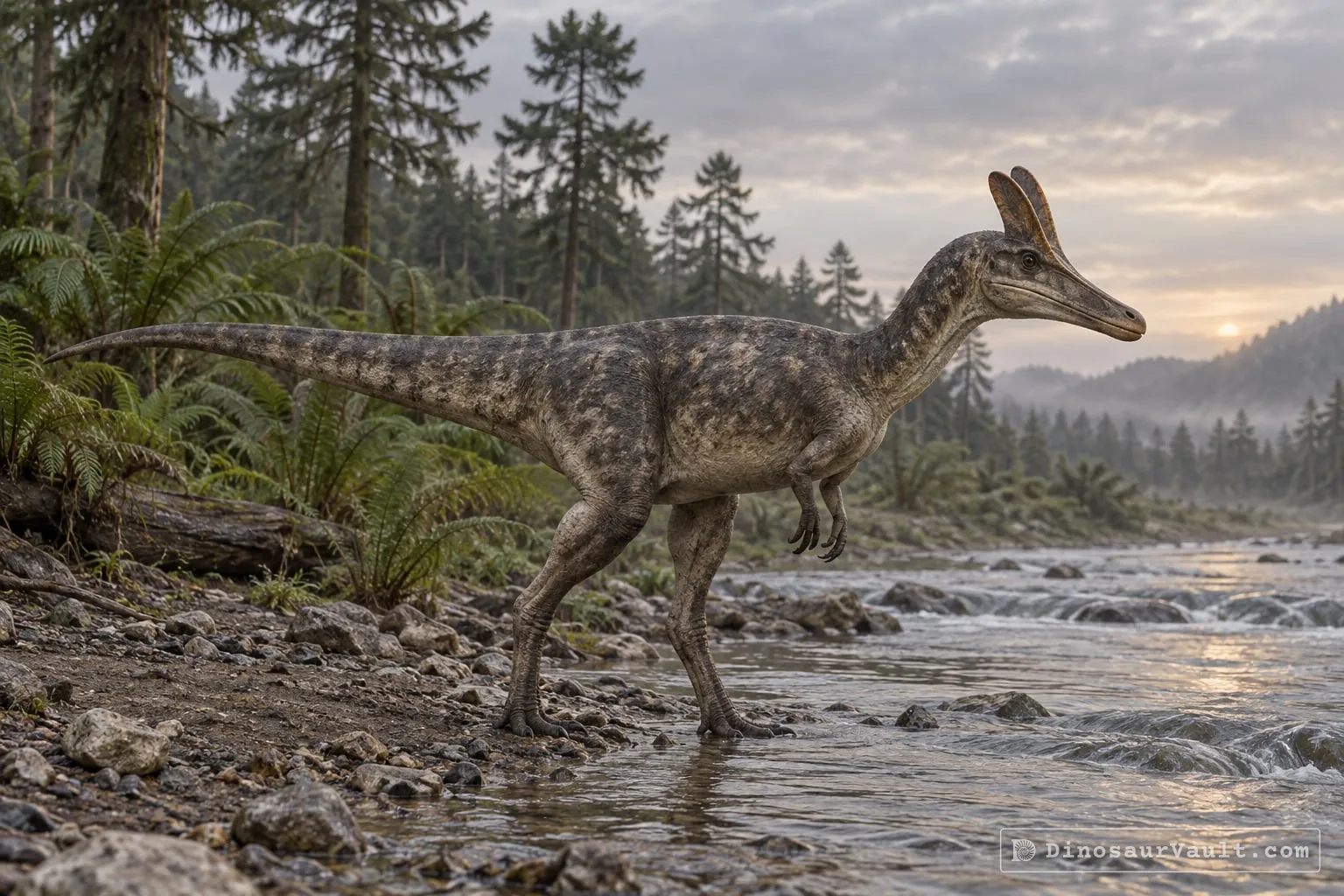
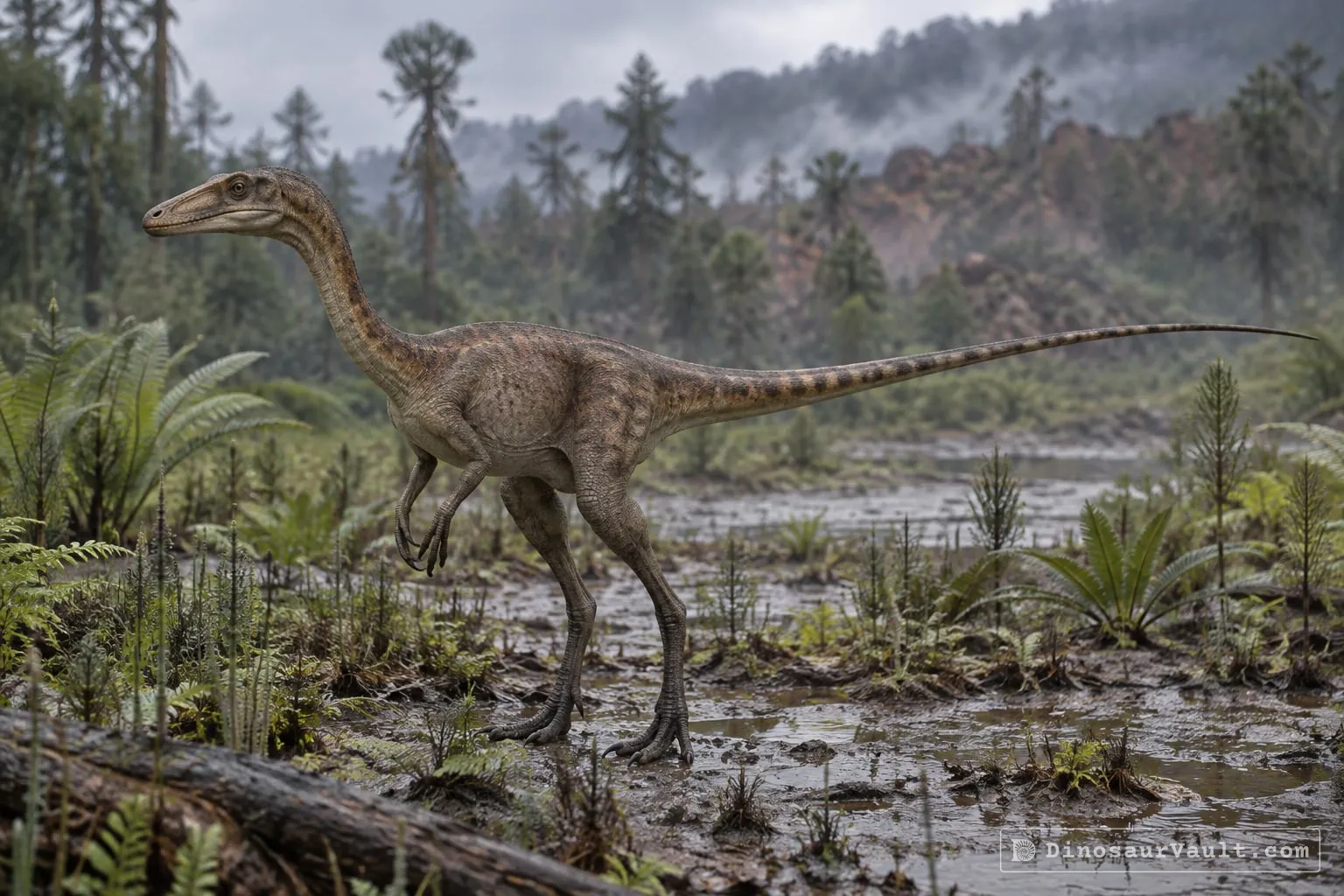
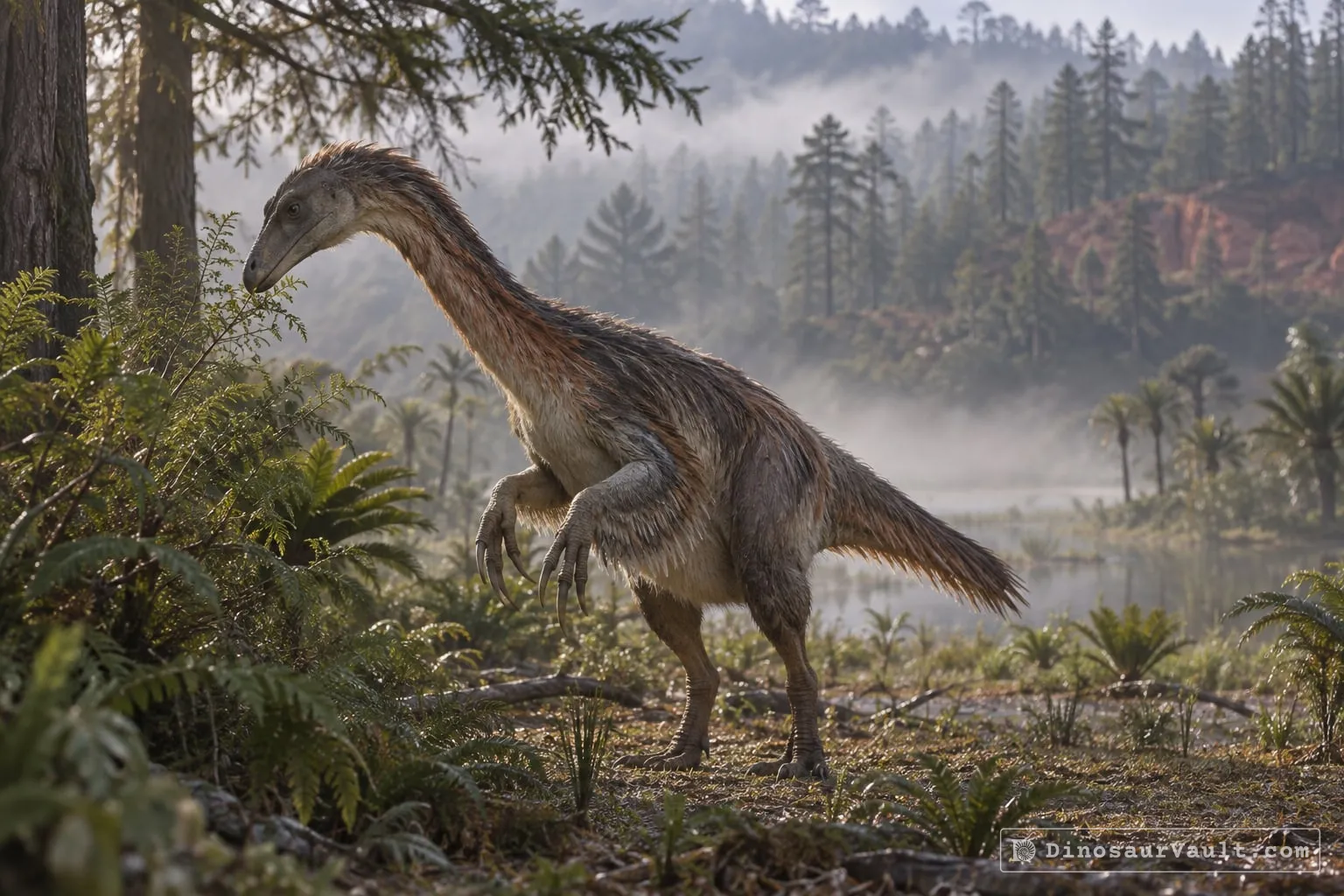


A rock formation can hold fossils laid down millions of years apart, so not every animal here met Jingshanosaurus.
The evidence
The science behind Jingshanosaurus
Which parts of the picture come from its own bones, and which come from its relatives.
From its own fossils
- A nearly complete skeleton preserves the skull, lower jaws, much of the backbone and most of the limbs.
- Its skull has deep lower jaws and eye sockets that narrow toward the bottom.
- The front teeth curve backward near their tips.
Borrowed from relatives
- Most of the skeleton is known from its own bones; missing neck bones are restored by comparison with early sauropodomorphs such as Yunnanosaurus.
Still unknown
- Its color and skin texture.
- Exactly which plants it ate.
- Whether it cared for its young.
Discovery timeline
- 1995Named itZhang & Yang
- 2017Family treeWang, You & Wang
- 2019SkullZhang et al.
Key papers
The research behind what we know of Jingshanosaurus
Named it
Named Jingshanosaurus and described its nearly complete skeleton from the Lufeng Formation.
A new complete osteology of Prosauropoda in Lufeng Basin, Yunnan, China. Yunnan Publishing House of Science and Technology, Kunming, China.
No link available
Family tree
Named Xingxiulong and placed it, Jingshanosaurus and Yunnanosaurus near the base of the group leading toward sauropods.
A new basal sauropodiform dinosaur from the Lower Jurassic of Yunnan Province, China. Scientific Reports 7
Read the paper : A new basal sauropodiform dinosaur from the Lower Jurassic of Yunnan Province, China (opens in a new tab)Skull
Restudied the skull, clarified its distinctive features and placed Jingshanosaurus among the earliest branches leading toward sauropods.
Redescription of the Cranium of Jingshanosaurus xinwaensis (Dinosauria: Sauropodomorpha) from the Lower Jurassic Lufeng Formation of Yunnan Province, China. The Anatomical Record 303: 759-771
Read the paper : Redescription of the Cranium of Jingshanosaurus xinwaensis (Dinosauria: Sauropodomorpha) from the Lower Jurassic Lufeng Formation of Yunnan Province, China (opens in a new tab)
Close relatives
Other members of Sauropodiformes


Sources: Wikidata