Gobivenator
"Gobi hunter"
- Lived
- 84 to 72 million years ago, Late Cretaceous
- Diet
- Omnivore
- Group
- Theropods, Troodontidae
- Found in
- Mongolia
- Named by
- Tsuihiji et al. 2014
Where its fossils were found
The evidence
Today

80 million years ago
Habitat
It lived among sand dunes, with temporary streams and ponds, in what is now Mongolia. Velociraptor, Protoceratops and Oviraptor inhabited the Djadokhta landscape.
Field notes
About Gobivenator
What it was like
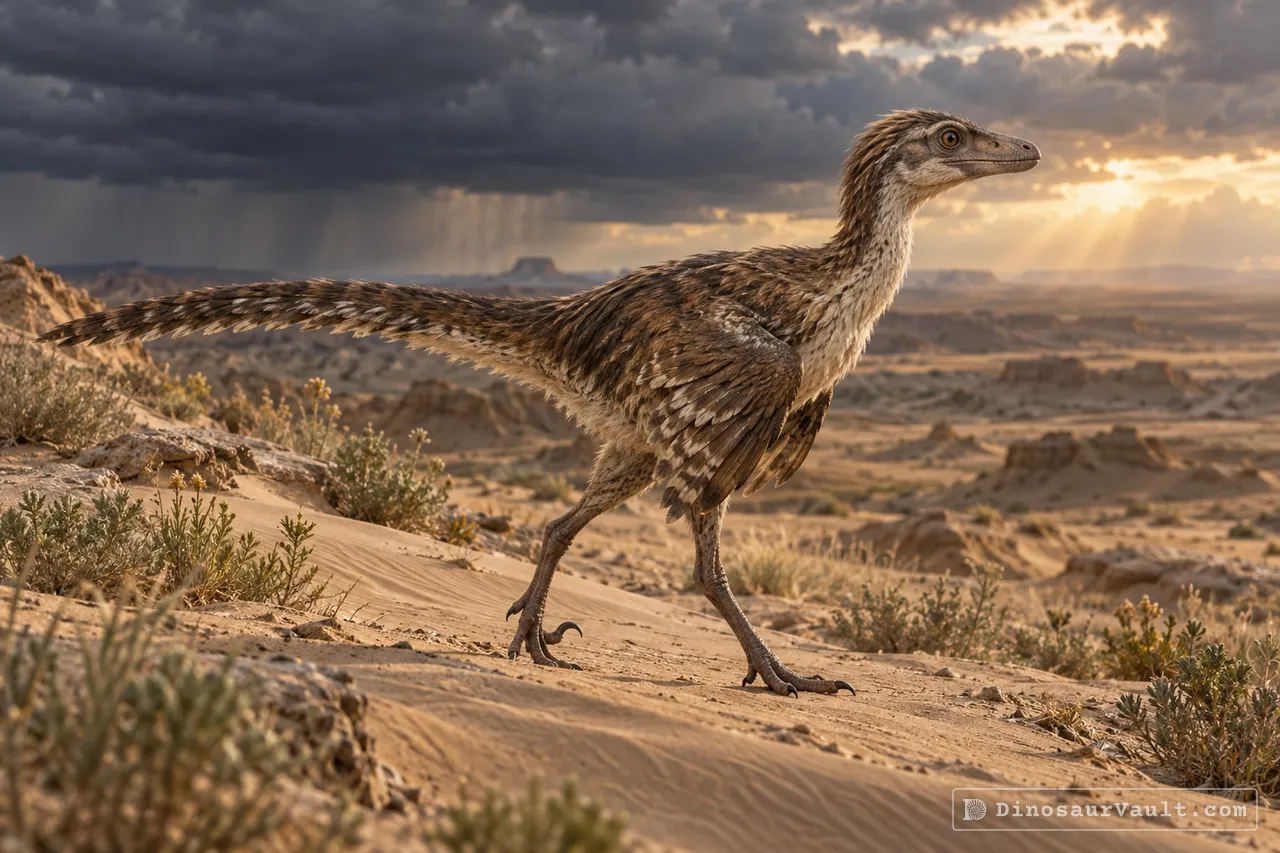
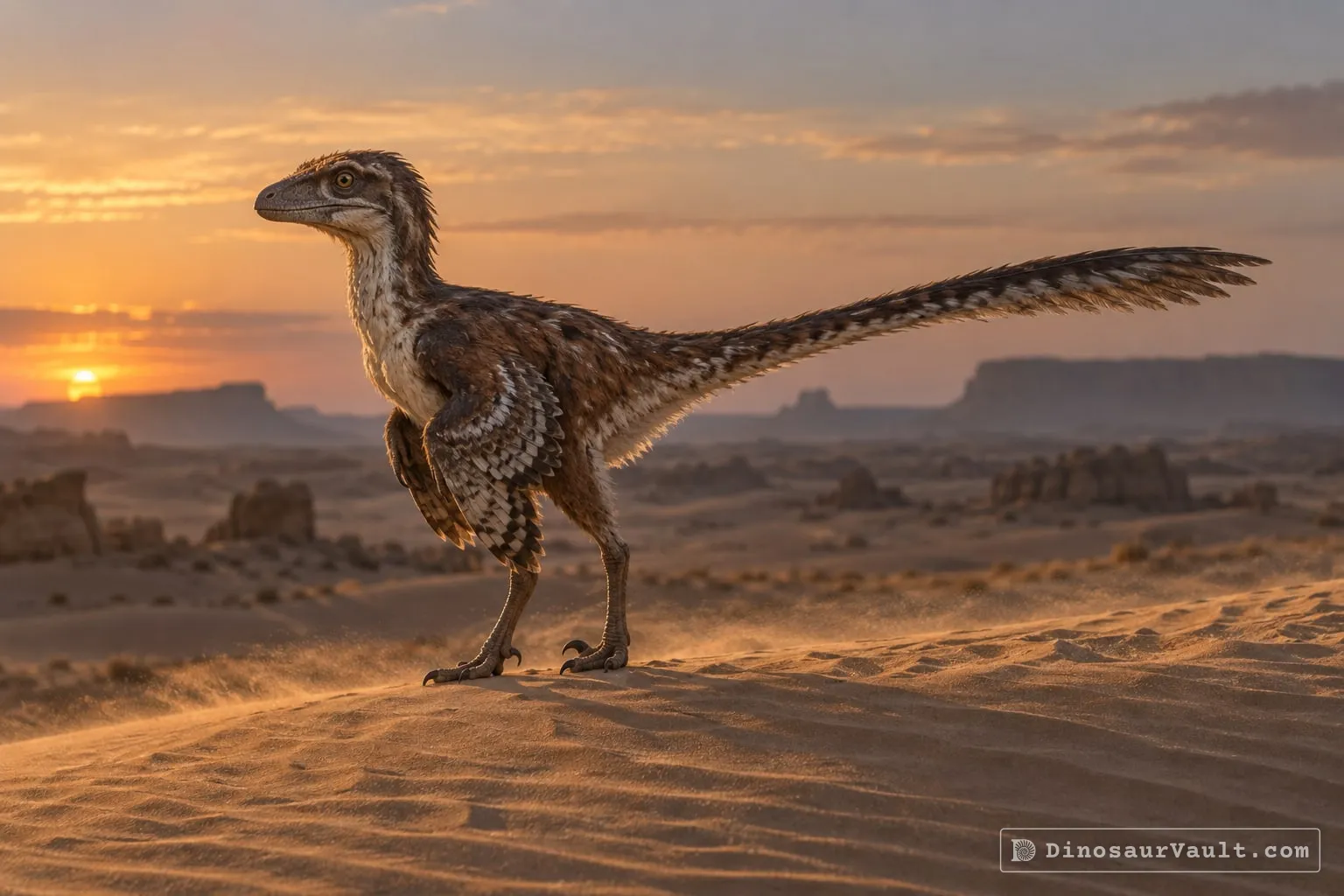
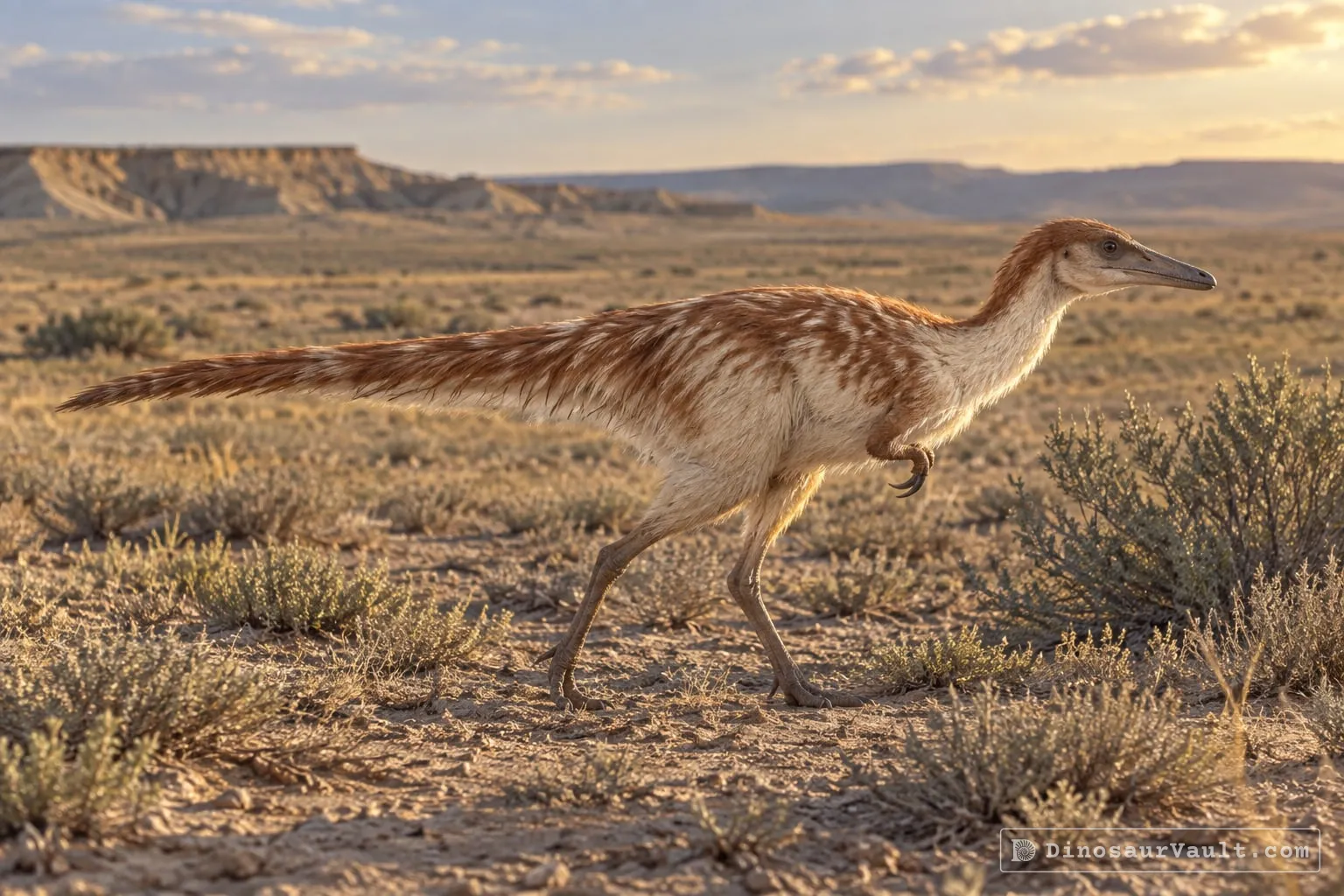
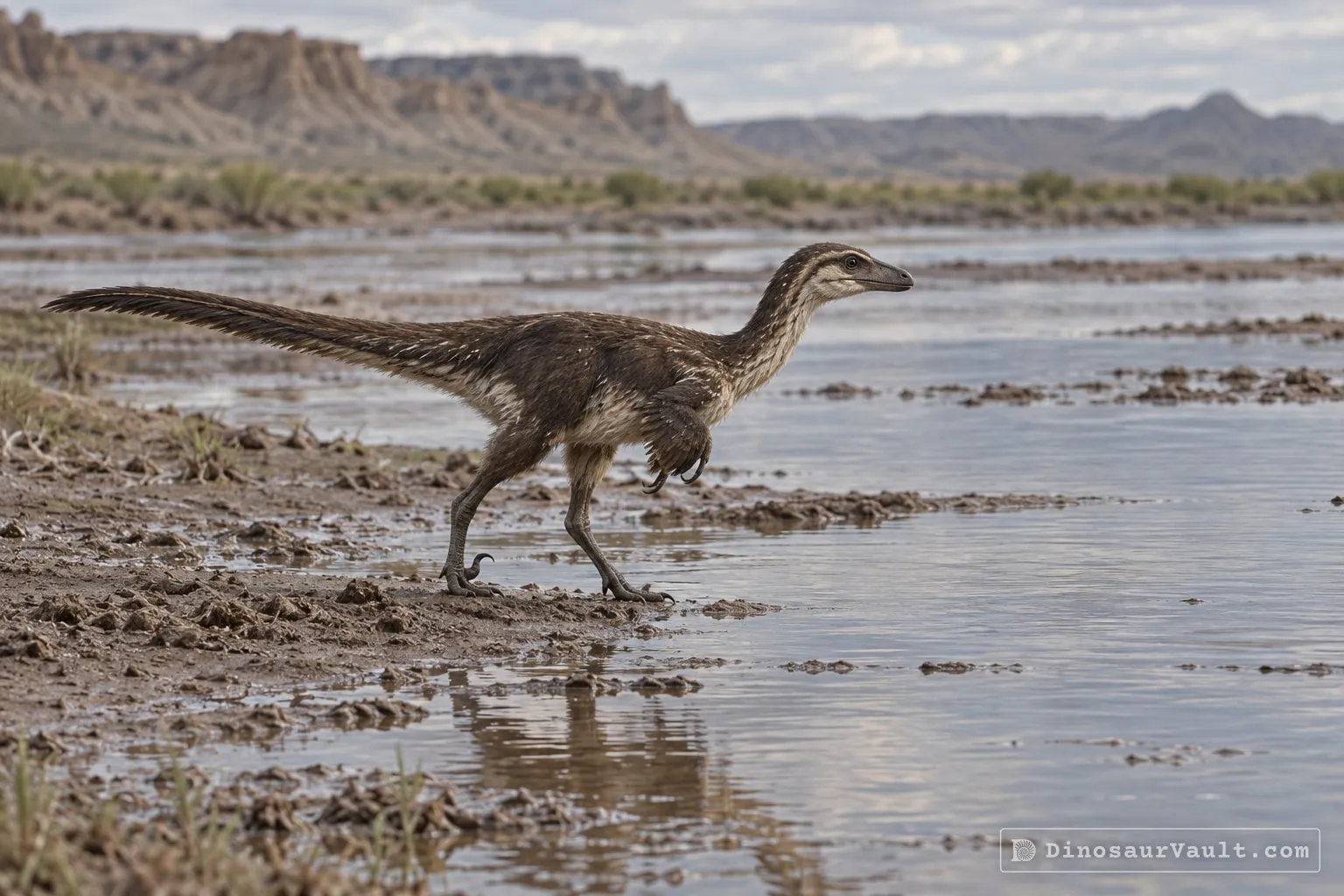
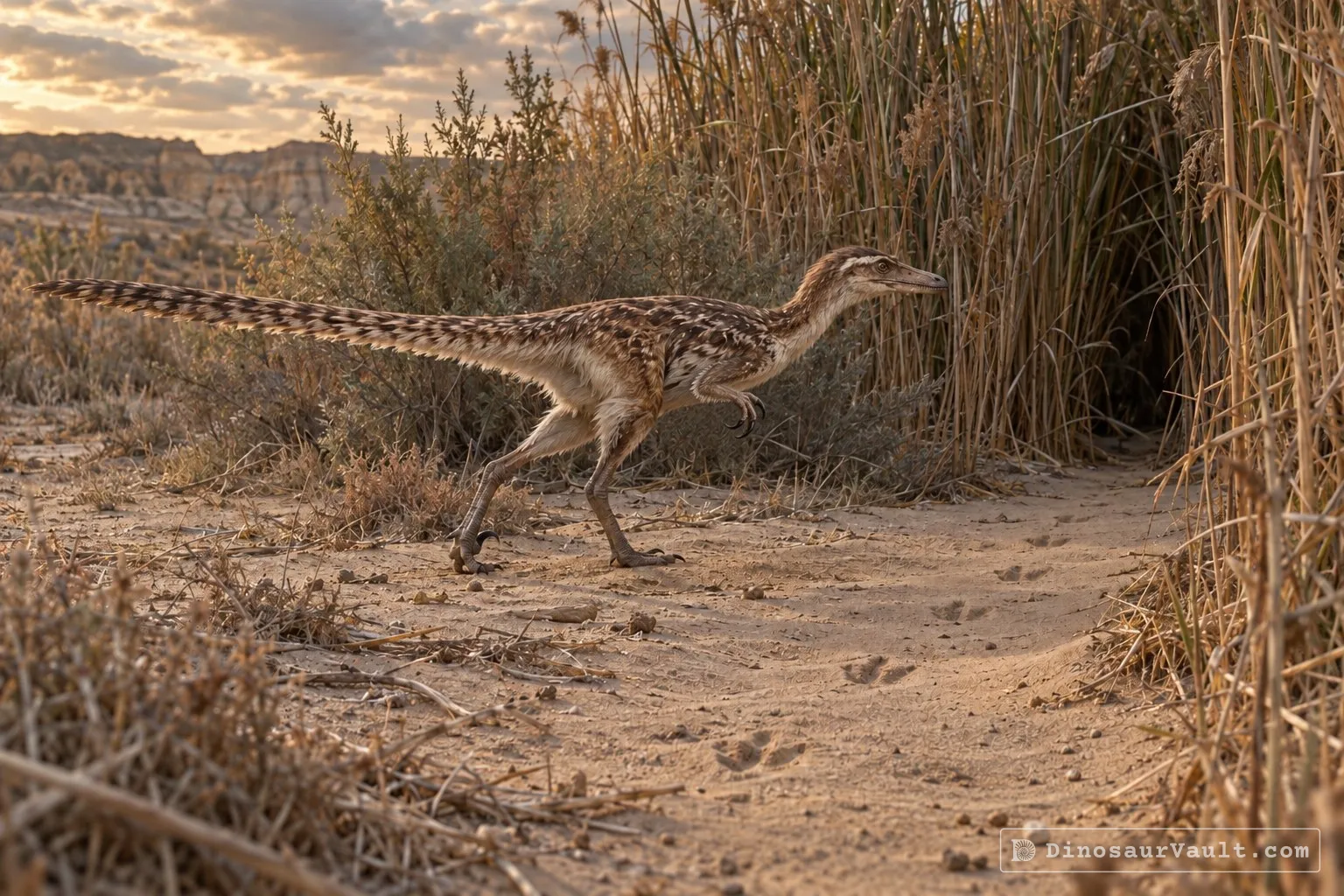
Gobivenator was a small troodontid that probably had feathers. It is known from one of the most complete skeletons of its family, with a nearly whole skull. It had an elongated snout, large eyes and long legs.
Its skull shows features that link troodontids closely to birds.
Its world
It lived in the Late Cretaceous in what is now Mongolia. Its bones come from the Djadokhta Formation, where it shared the land with Velociraptor, Protoceratops, Oviraptor and the small alvarezsaur Mononykus.
How it was found
Tsuihiji and colleagues named Gobivenator in 2014, from a single find.
Field gallery
More views of Gobivenator
Scenes reconstructed from the available fossil evidence.
1 of 3
Lived alongside
Found in the same rock formations
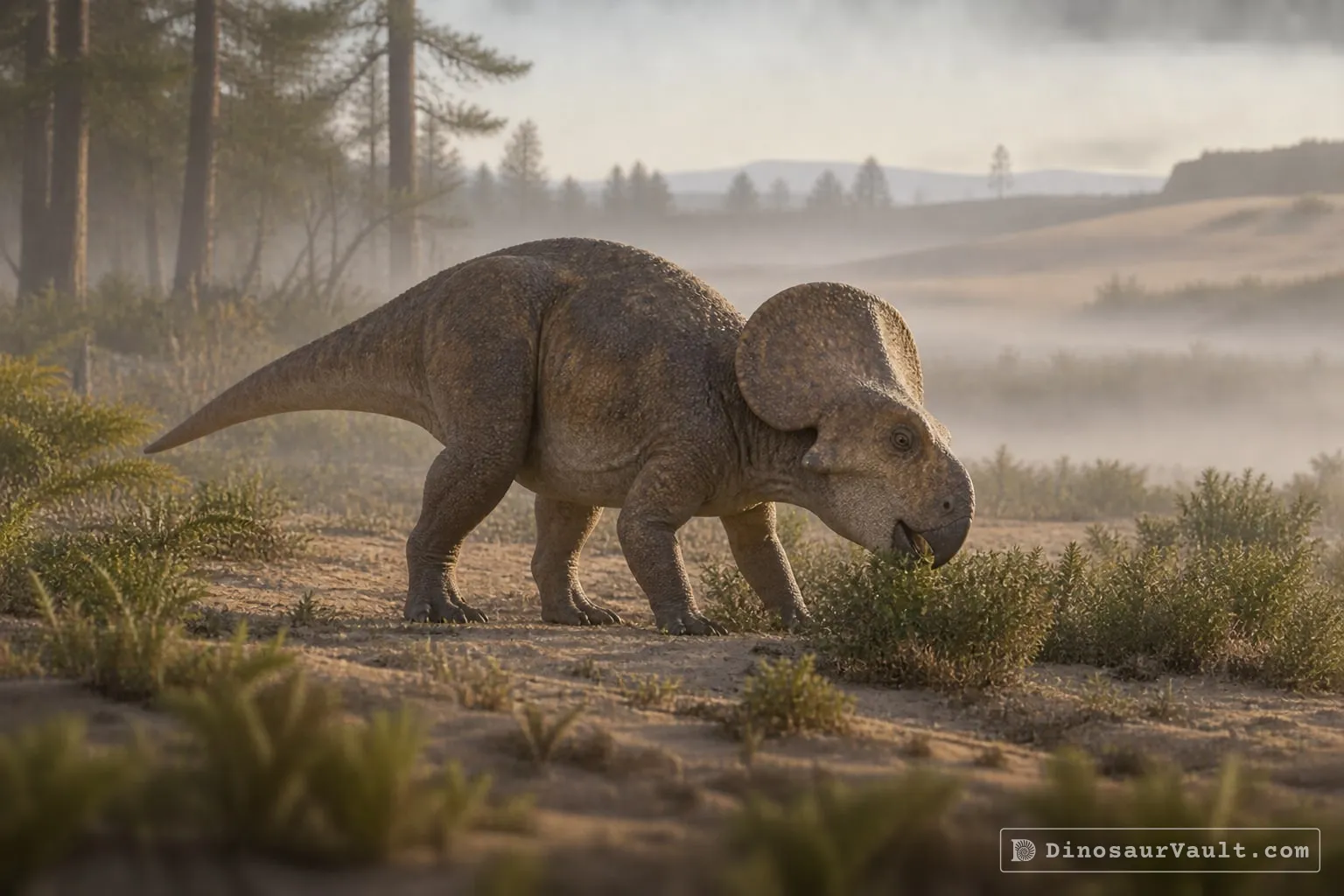
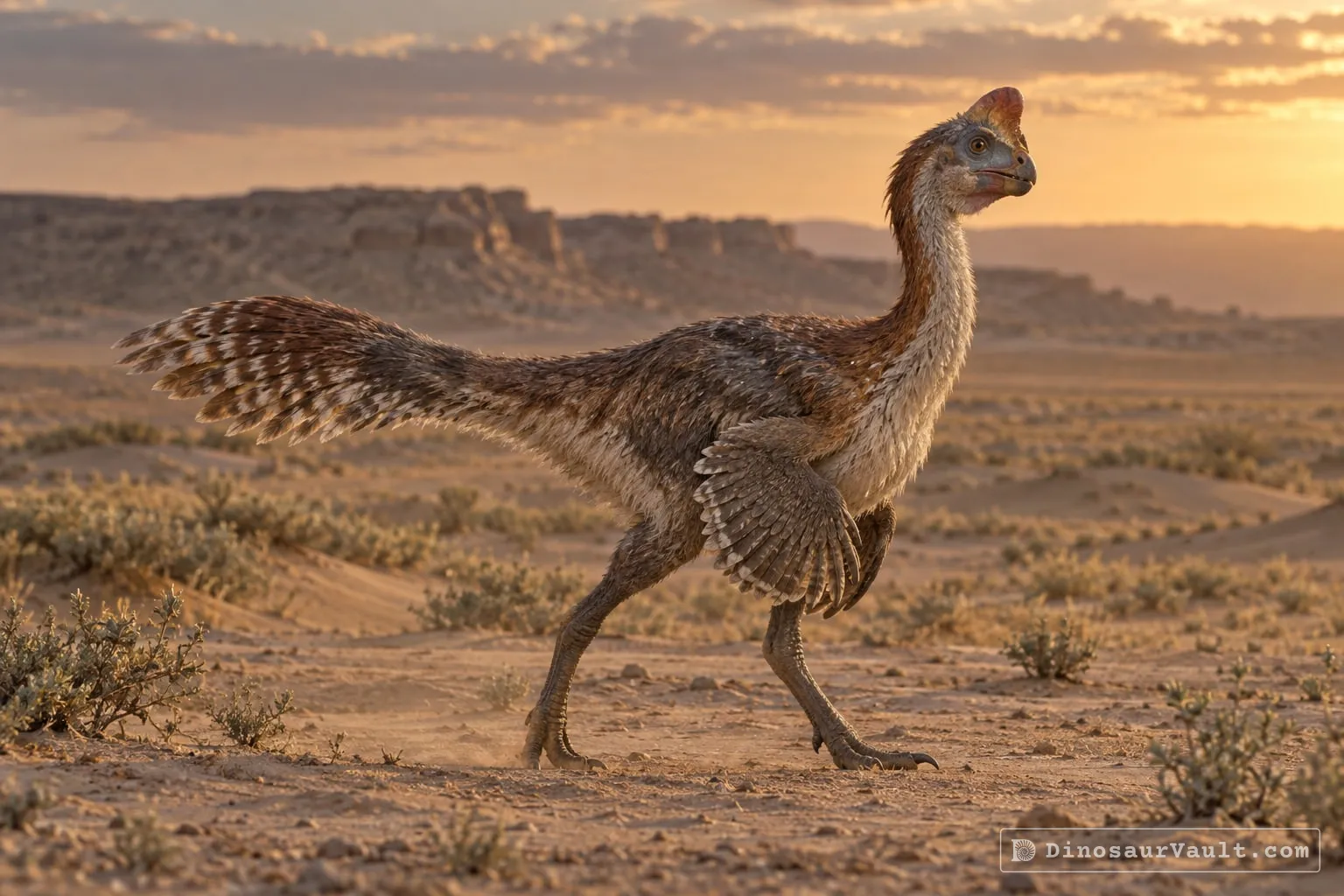
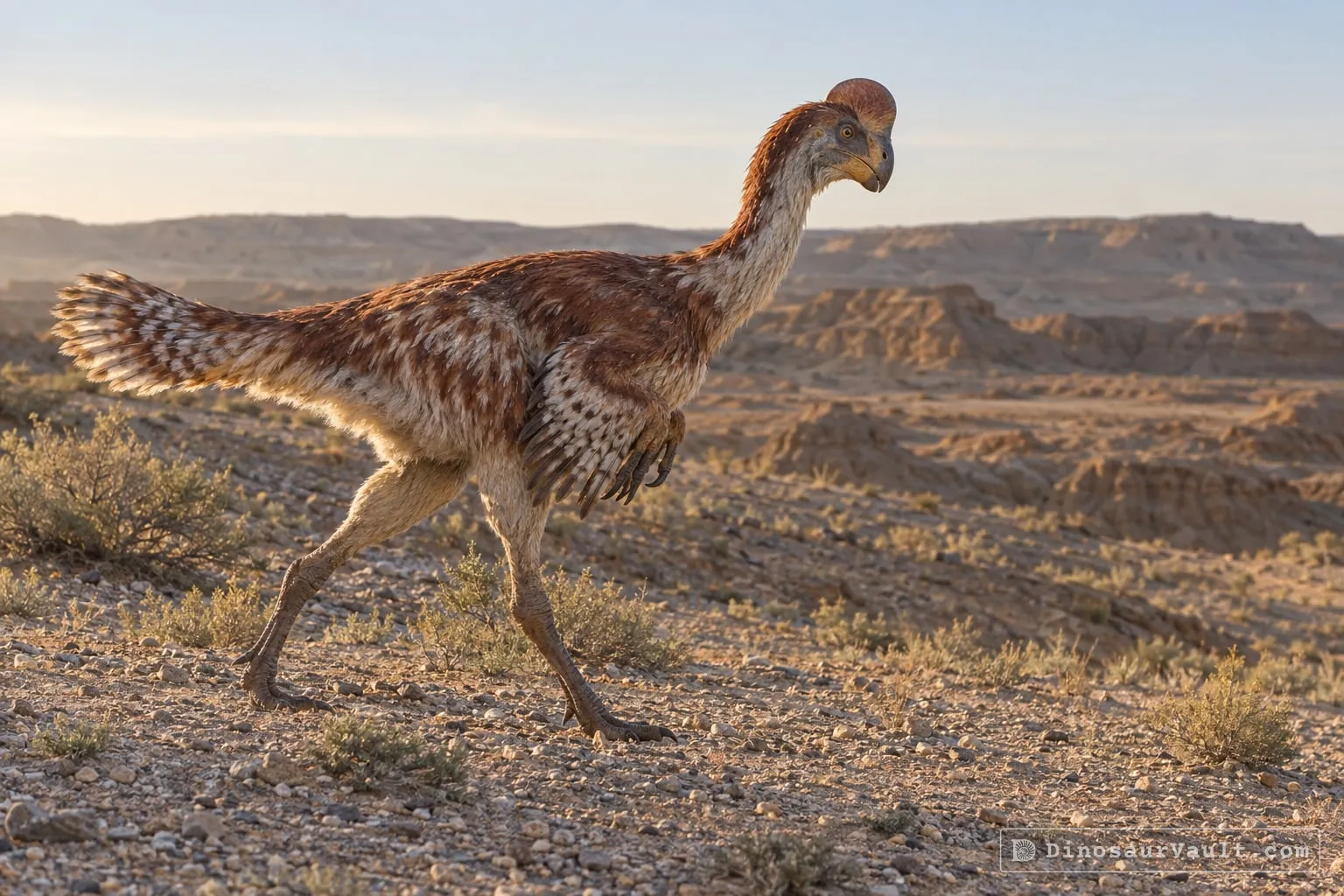
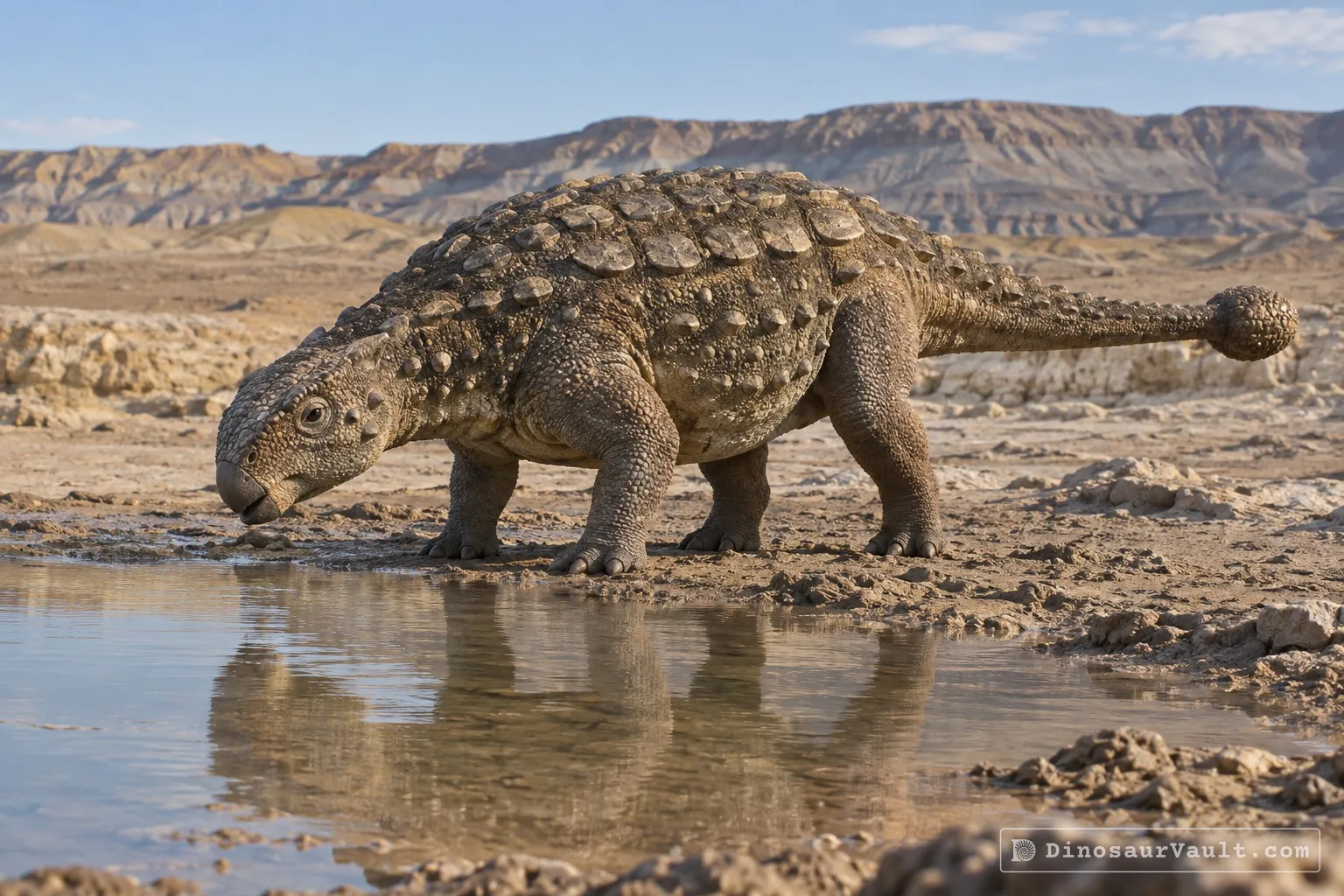


A rock formation can hold fossils laid down millions of years apart, so not every animal here met Gobivenator.
The evidence
The science behind Gobivenator
Which parts of the picture come from its own bones, and which come from its relatives.
From its own fossils
- A nearly complete skeleton includes a skull preserved in three dimensions. Its snout is elongated, with a low ridge along the middle of the skull roof.
- The roof of the mouth has bones arranged much like those of early birds and dromaeosaurids.
- A pointed front edge on the fused skull-roof bones and a depression in the lower jaw help distinguish it from other troodontids.
Borrowed from relatives
- Most of the skeleton and skull were recovered, though the front of the lower jaw is not preserved.
- Feathers on the forearms and tail are inferred by comparison with Jianianhualong.
Still unknown
- Its feather color and markings.
- The exact length and arrangement of its feathers.
- What it ate most often, the shape of the missing front of its lower jaw, and which troodontids were its closest relatives.
Discovery timeline
- 2001SkullsCurrie & Zhiming
- 2009SkinHu et al.
- 2014Named itTsuihiji et al.
Key papers
The research behind what we know of Gobivenator
Skulls
Detailed the skull and skeleton of Sinornithoides and compared troodontid jaws, teeth and limbs, providing context for Gobivenator anatomy.
New information on Cretaceous troodontids (Dinosauria, Theropoda) from the People's Republic of China. Canadian Journal of Earth Sciences 38: 1753-1766
Read the paper : New information on Cretaceous troodontids (Dinosauria, Theropoda) from the People's Republic of China (opens in a new tab)Skin
Described long feathers on the limbs of Anchiornis, supporting feathered reconstructions of related small theropods.
A pre-Archaeopteryx troodontid theropod from China with long feathers on the metatarsus. Nature 461: 640-643
Read the paper : A pre-Archaeopteryx troodontid theropod from China with long feathers on the metatarsus (opens in a new tab)Named it
Described a nearly complete troodontid and traced similarities between its roof-of-mouth bones and those of early birds.
An exquisitely preserved troodontid theropod with new information on the palatal structure from the Upper Cretaceous of Mongolia. Naturwissenschaften 101: 131-142
Read the paper : An exquisitely preserved troodontid theropod with new information on the palatal structure from the Upper Cretaceous of Mongolia (opens in a new tab)
Close relatives
Other members of Troodontidae


Sources: Wikidata