Foraminacephale
Type species Foraminacephale brevis
- Lived
- 84 to 72 million years ago, Late Cretaceous
- Diet
- Herbivore
- Length
- about 1.5 m (5 ft)
- Group
- Pachycephalosaurs, Pachycephalosauridae
- Found in
- Canada
- Named by
- Schott and Evans 2017
Size comparison
To scale

Scale in metersOutline: typical pachycephalosaur shape
Where its fossils were found
The evidence
Today

80 million years ago
Habitat
A low coastal plain crossed by rivers in what is now Alberta. Its Dinosaur Park Formation world included Gorgosaurus, Styracosaurus and Parasaurolophus.
Field notes
About Foraminacephale
What it was like
Foraminacephale was a small pachycephalosaur about 1.5 meters (5 feet) long, a plant eater with a thick bony dome. Its skull had many small holes and a low, rounded dome.
Its world
It lived in the Late Cretaceous, in what is now Alberta, Canada. It comes from the Dinosaur Park Formation, where it shared the land with the tyrannosaur Gorgosaurus, the horned Styracosaurus and the crested duckbill Parasaurolophus.
How it was found
Schott and Evans named Foraminacephale in 2017, for a species first placed in Stegoceras. The type species is Foraminacephale brevis.
Field gallery
More views of Foraminacephale
Scenes reconstructed from the available fossil evidence.
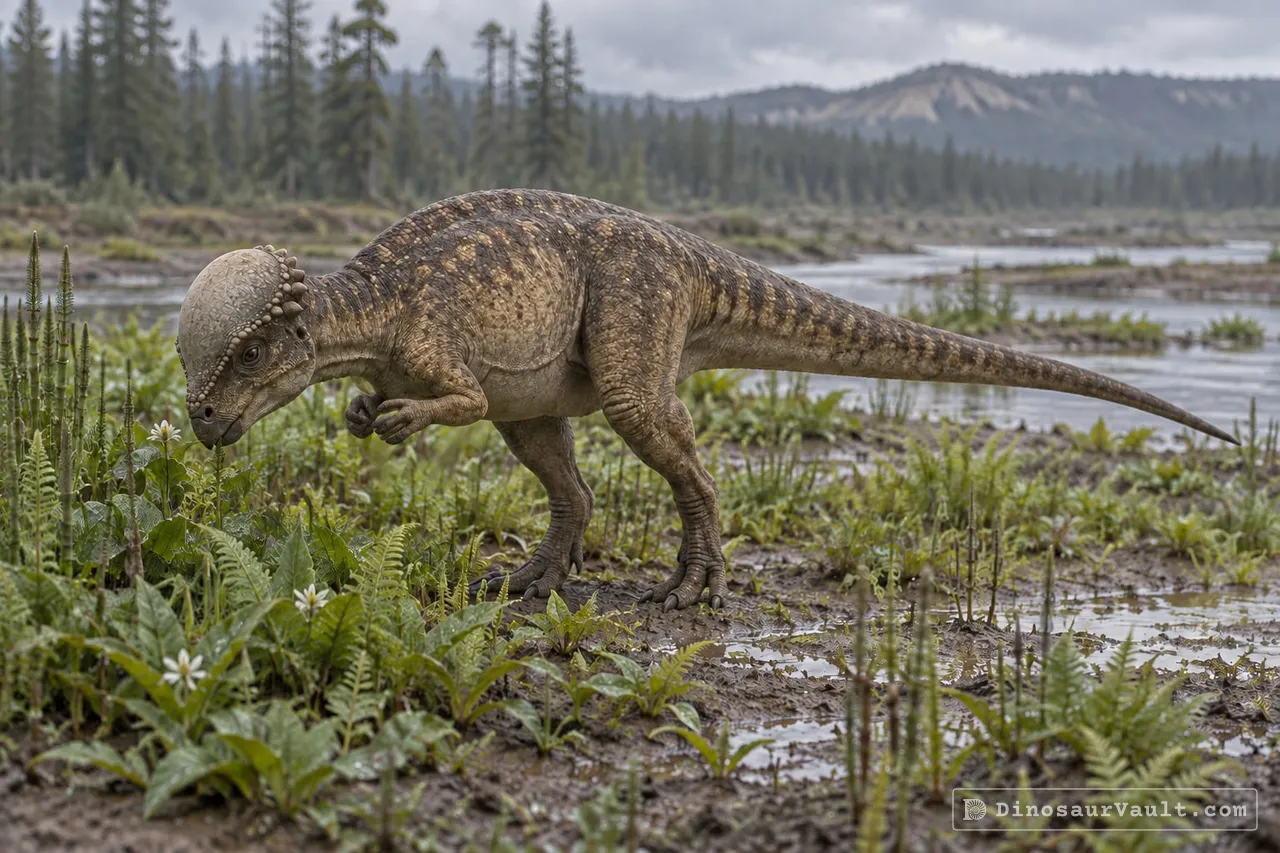
1 of 3
Lived alongside
Found in the same rock formations
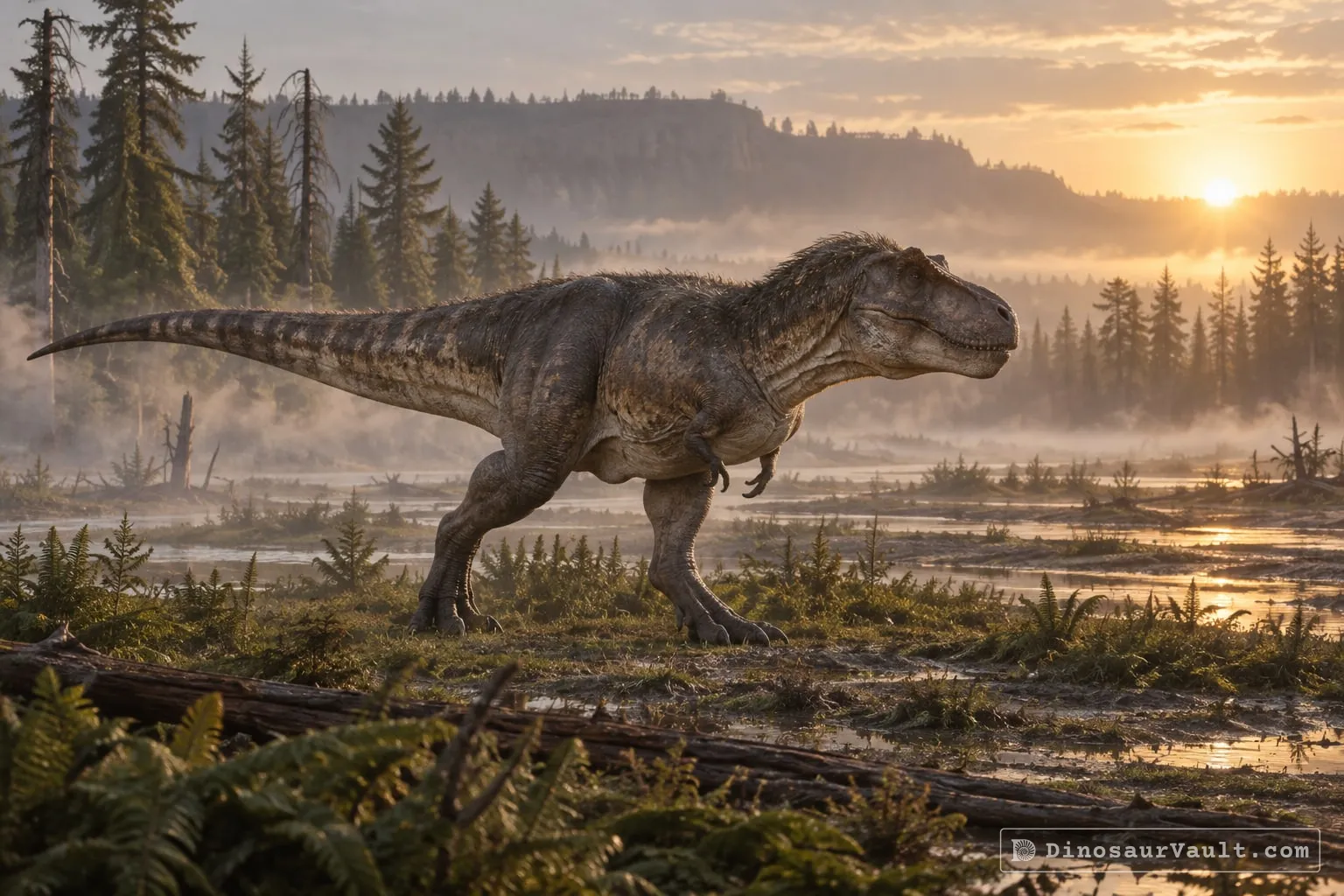
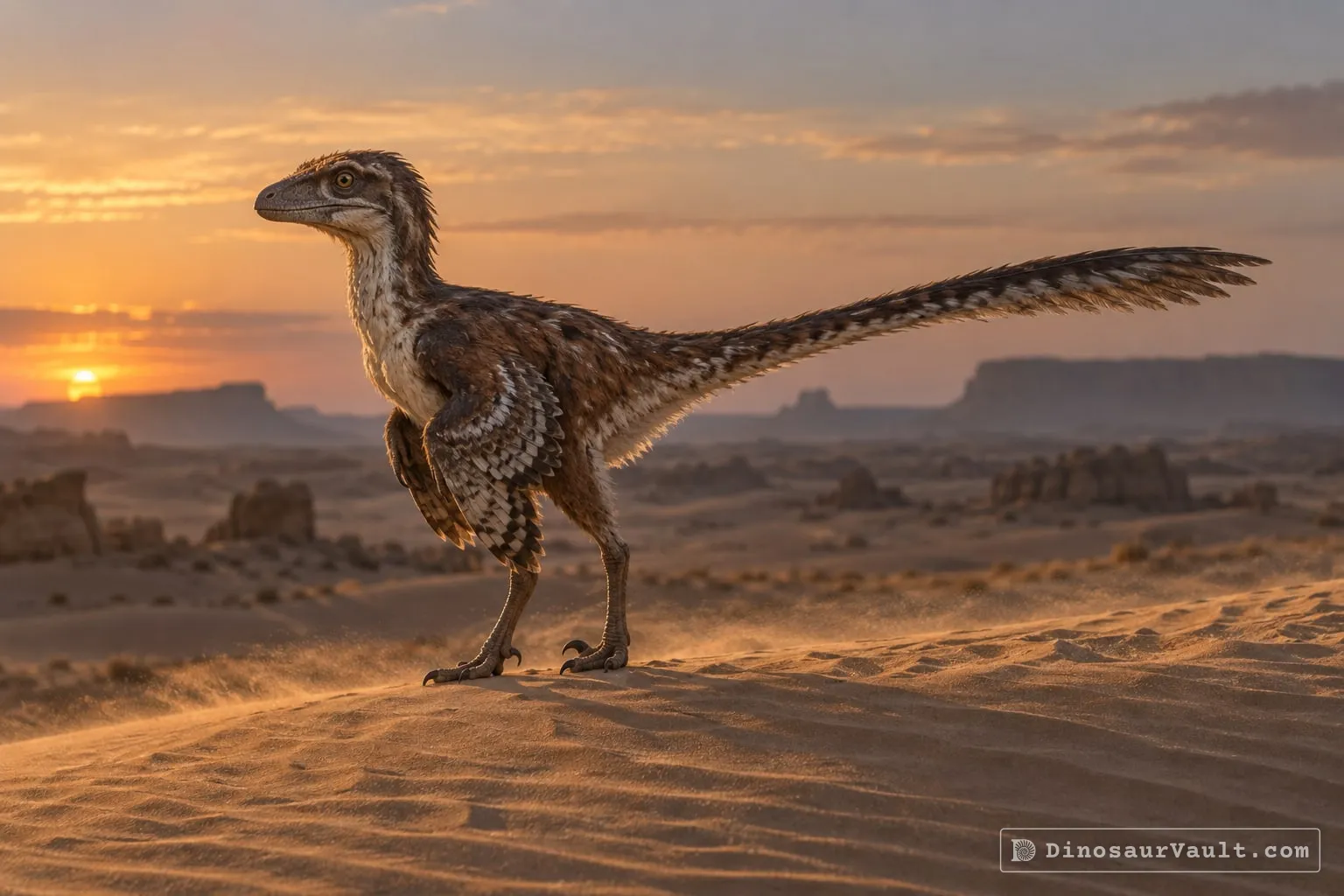
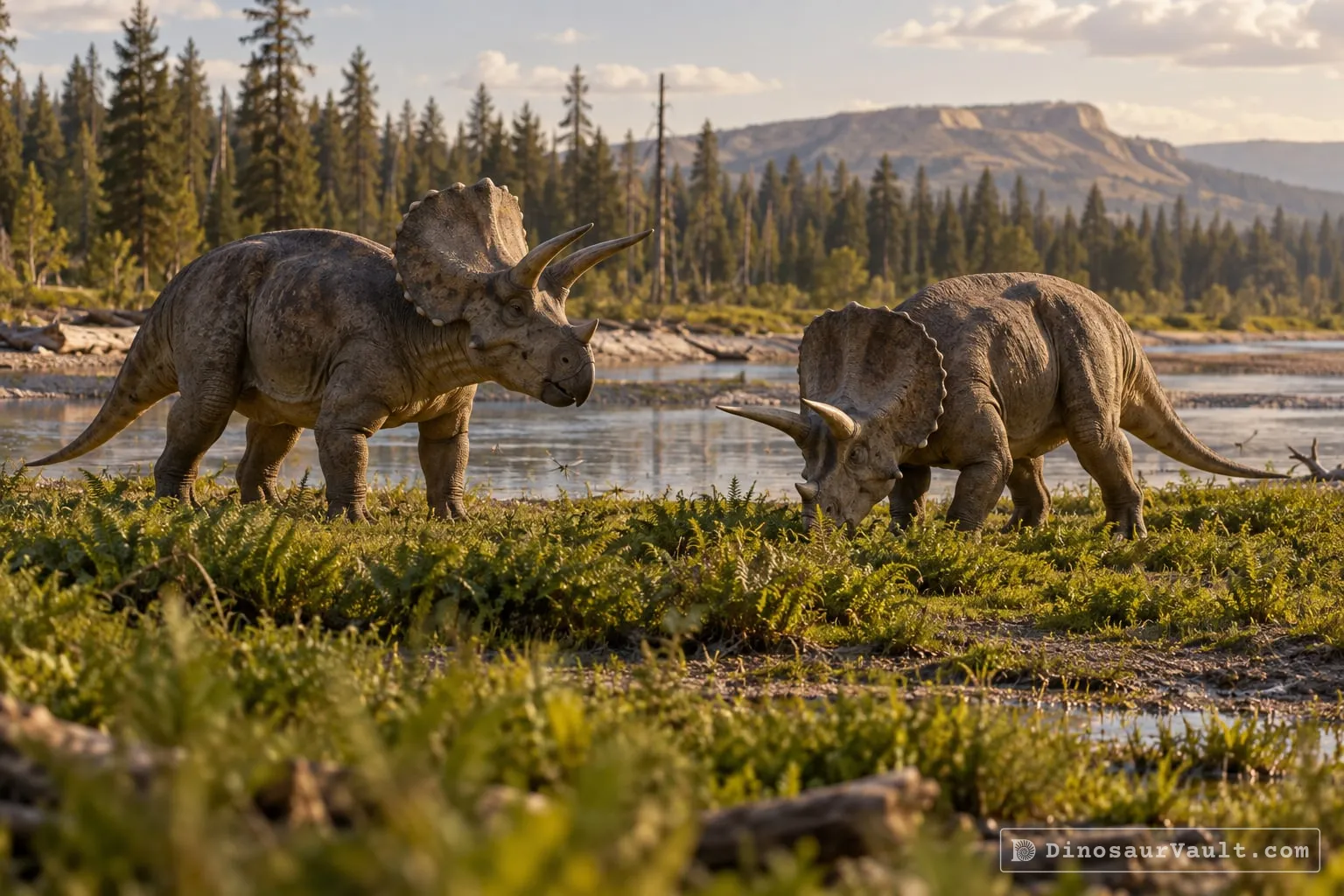
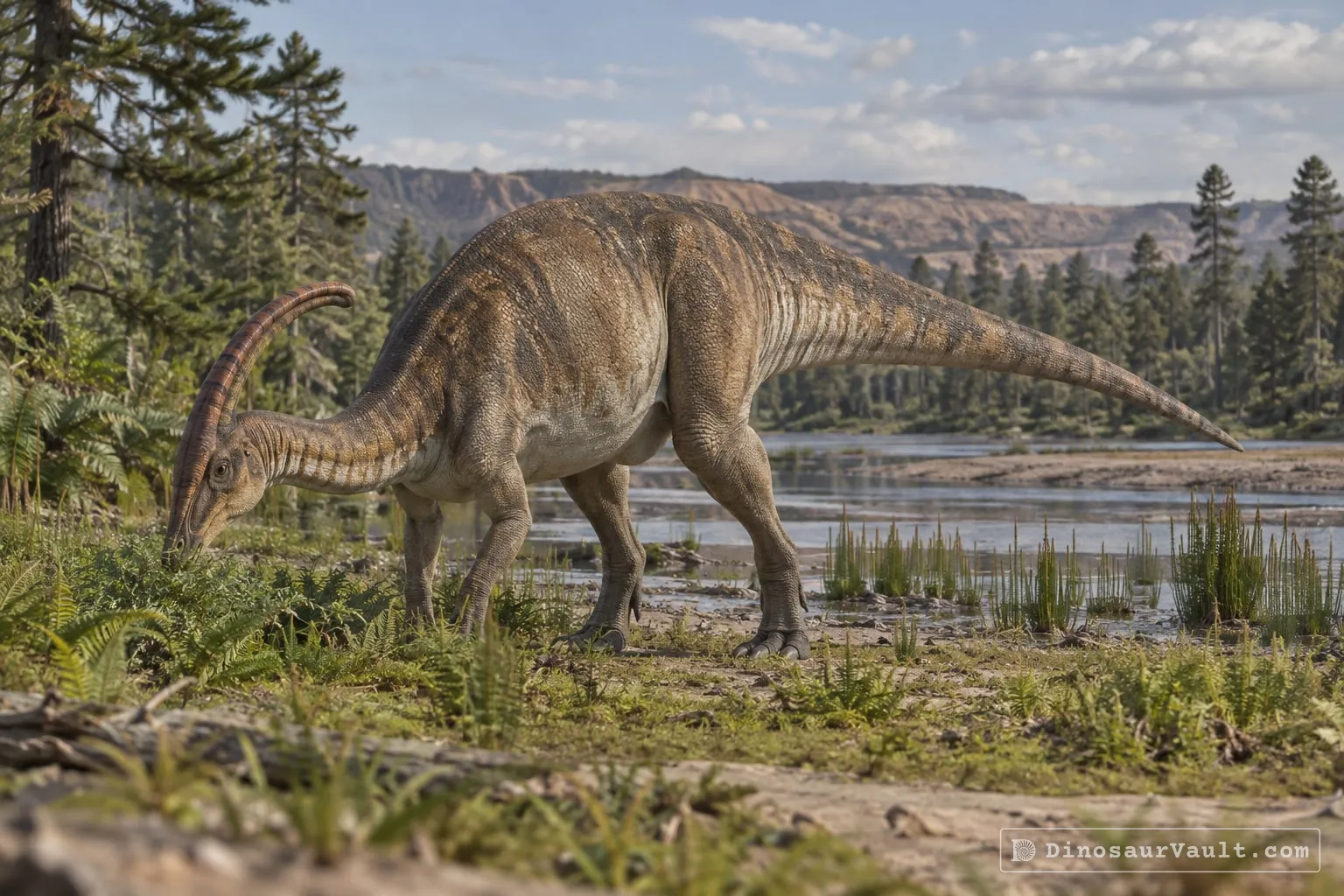
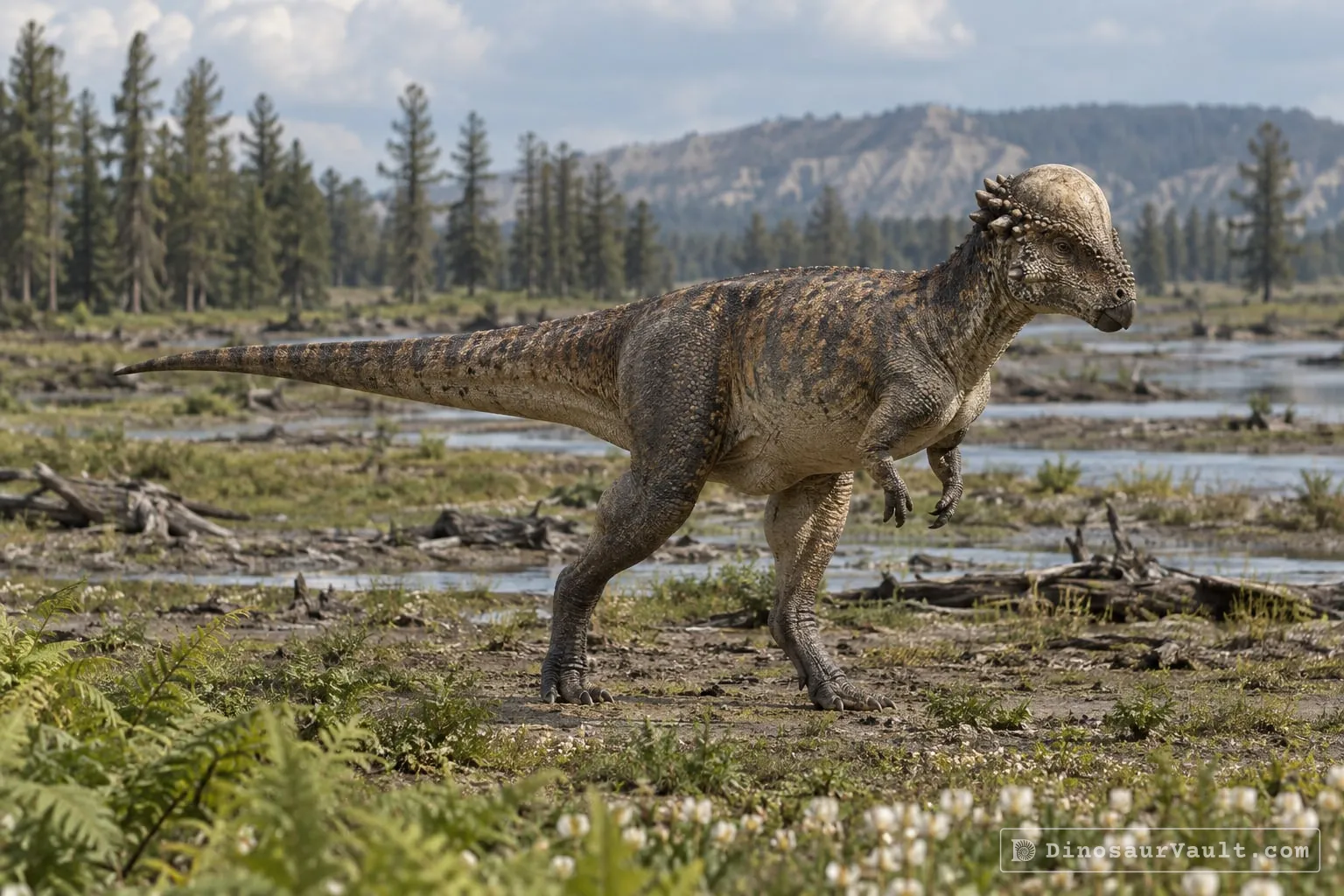
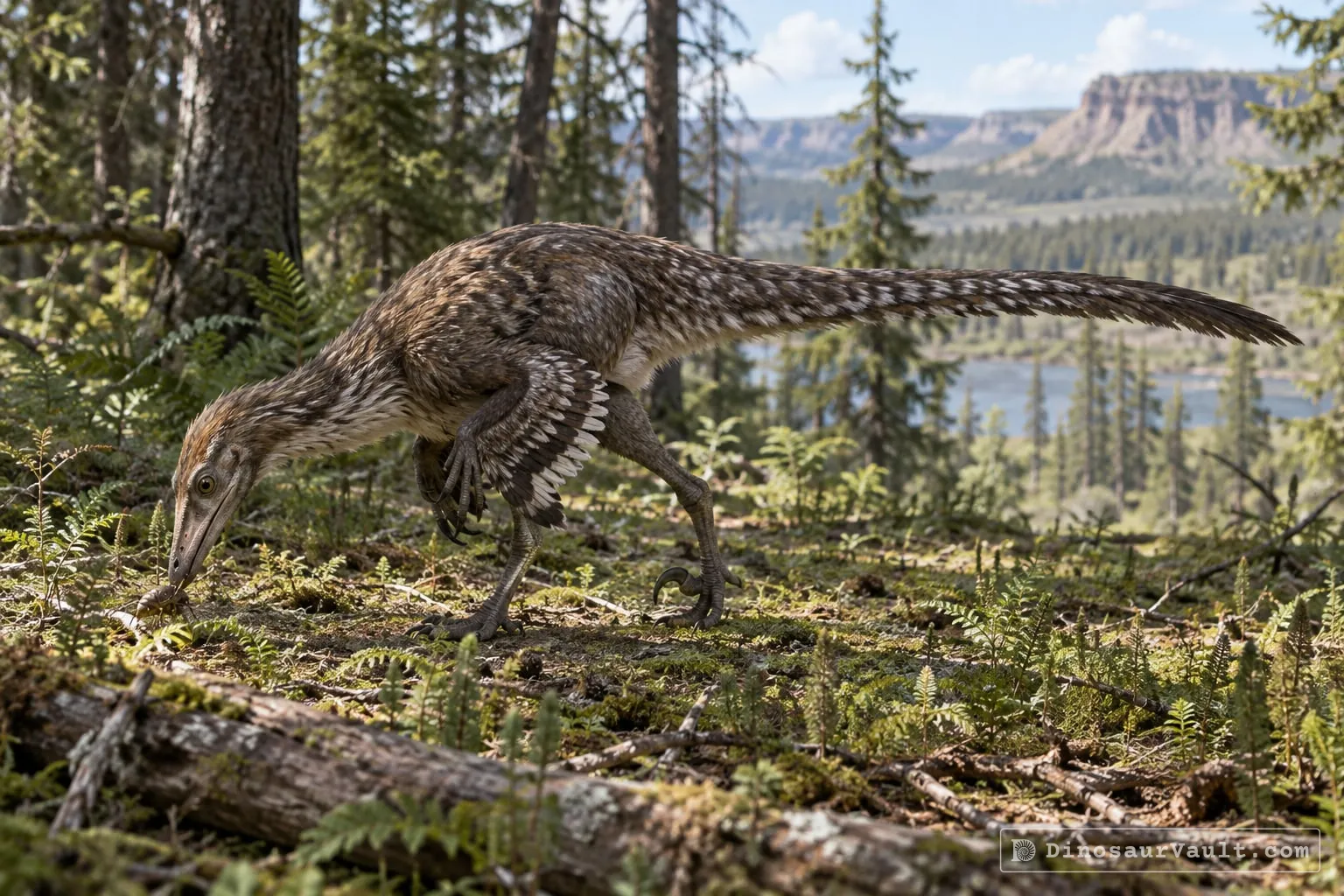
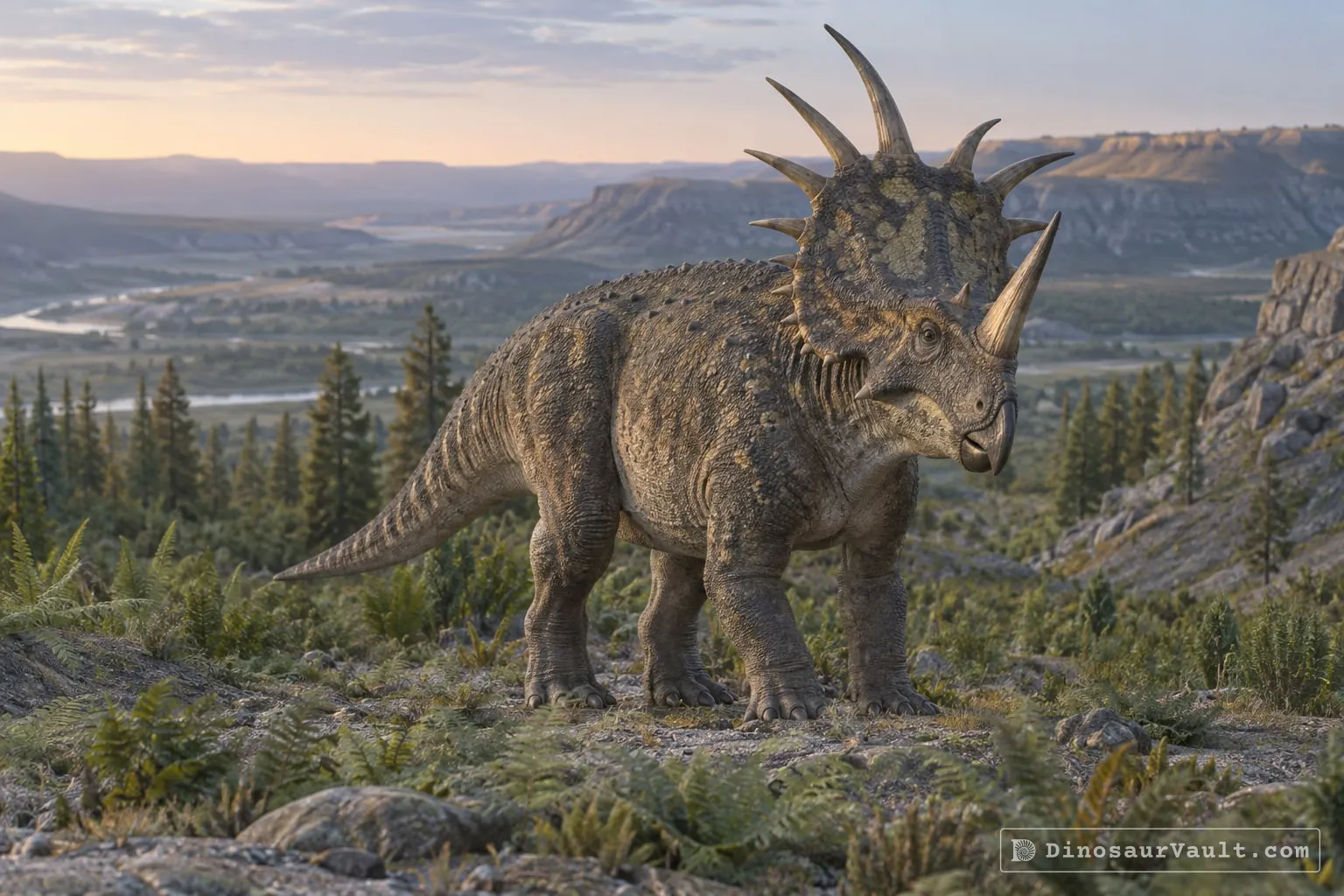


A rock formation can hold fossils laid down millions of years apart, so not every animal here met Foraminacephale.
The evidence
The science behind Foraminacephale
Which parts of the picture come from its own bones, and which come from its relatives.
From its own fossils
- The type specimen is a domed skull roof missing its front end. The many small holes across it are openings for blood vessels in the bone.
- A separate squamosal from the back of the head, assigned to it, is a tall, smooth bar with a single row of knobs along its rear edge and a smaller knob at the corner.
- Skull bones from young and adult animals show how the dome changed during growth. A more mature roof has a more swollen front boss and fewer holes, mostly near its edges.
Borrowed from relatives
- The missing face and beak are restored after Prenocephale.
- The two-legged body, limbs, tail and feet follow Goyocephale, another pachycephalosaur known from more of its skeleton.
Still unknown
- Its face, jaws and body. Only bones of the skull roof are known.
- Its skin covering and color.
- How it used its dome in life.
Discovery timeline
- 2011Close relativeSchott et al.
- 2017Named itSchott & Evans
- 2023Family treeDyer, Powers & Currie
Key papers
The research behind what we know of Foraminacephale
Close relative
Showed that the skull dome of Stegoceras thickened during growth, providing a comparison for growth in Foraminacephale.
Cranial Ontogeny in Stegoceras validum (Dinosauria: Pachycephalosauria): A Quantitative Model of Pachycephalosaur Dome Growth and Variation. PLoS ONE 6: e21092
Read the paper : Cranial Ontogeny in Stegoceras validum (Dinosauria: Pachycephalosauria): A Quantitative Model of Pachycephalosaur Dome Growth and Variation (opens in a new tab)Named it
Compared skulls across growth stages and recognized Foraminacephale as a separate genus from Stegoceras and Prenocephale.
Cranial variation and systematics ofForaminacephale brevisgen. nov. and the diversity of pachycephalosaurid dinosaurs (Ornithischia: Cerapoda) in the Belly River Group of Alberta, Canada. Zoological Journal of the Linnean Society
Read the paper : Cranial variation and systematics ofForaminacephale brevisgen. nov. and the diversity of pachycephalosaurid dinosaurs (Ornithischia: Cerapoda) in the Belly River Group of Alberta, Canada (opens in a new tab)Family tree
Revised local pachycephalosaur diversity and retained Foraminacephale as distinct from Stegoceras.
Problematic putative pachycephalosaurids: Synchrotron µCT imaging shines new light on the anatomy and taxonomic validity of Gravitholus albertae from the Belly River Group (Campanian) of Alberta, Canada. Vertebrate Anatomy Morphology Palaeontology 10
Read the paper : Problematic putative pachycephalosaurids: Synchrotron µCT imaging shines new light on the anatomy and taxonomic validity of Gravitholus albertae from the Belly River Group (Campanian) of Alberta, Canada (opens in a new tab)
Close relatives
Other members of Pachycephalosauridae


Sources: Wikidata