Brontotholus
"thunder dome"
Type species Brontotholus harmoni
- Lived
- 84 to 72 million years ago, Late Cretaceous
- Diet
- Herbivore
- Group
- Pachycephalosaurs, Pachycephalosauridae
- Found in
- United States and Canada
- Named by
- Woodruff et al. 2025
Where its fossils were found
The evidence
Today

80 million years ago
Habitat
It lived on the western side of the Western Interior Seaway, in upland and lowland landscapes. Daspletosaurus and Hypacrosaurus were among its neighbors.
Field notes
About Brontotholus
What it was like
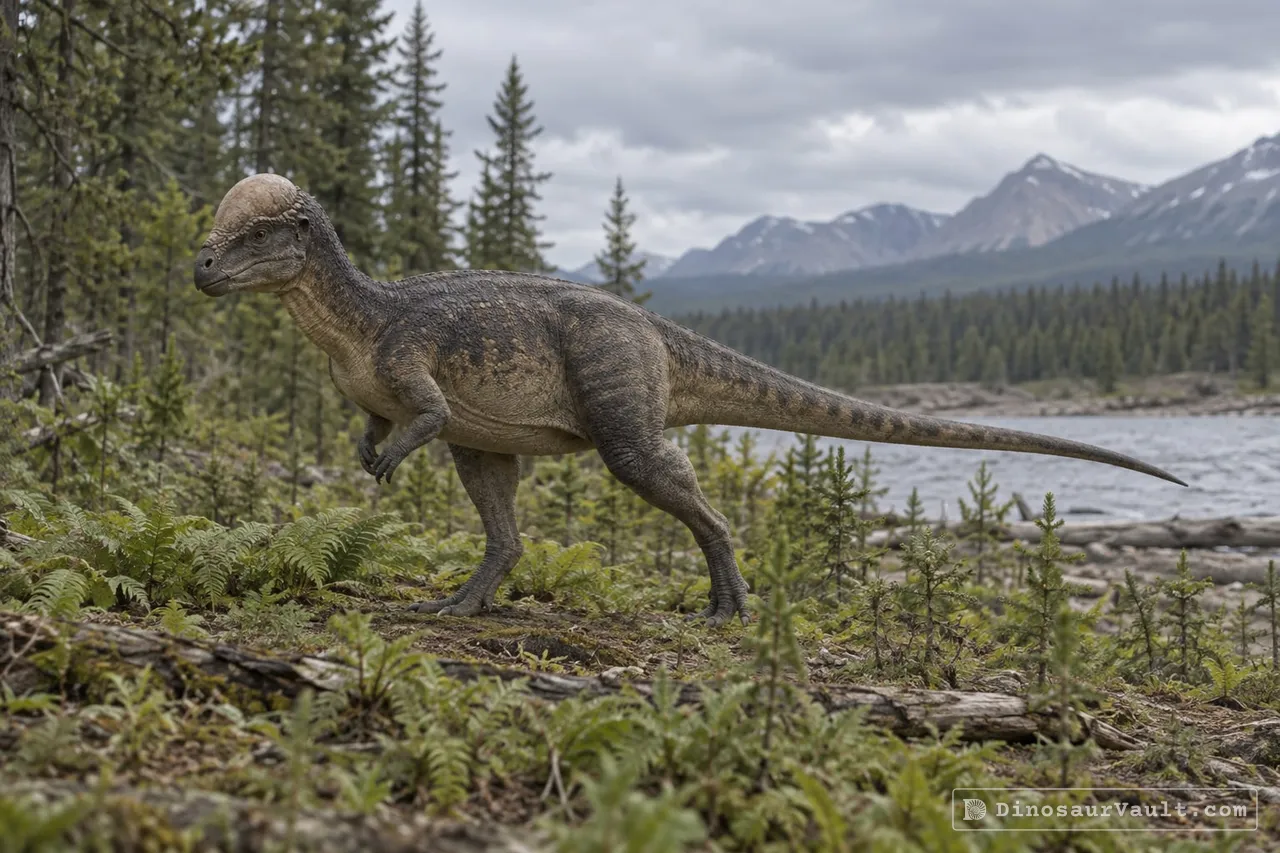
Brontotholus was a pachycephalosaur, a plant eater that walked on two legs and had a thick, rounded dome of bone on top of its skull. It is known from several domes, which were larger than those of most of its relatives.
Its world
It lived in the Late Cretaceous, in what is now Montana and Alberta. It comes from the Two Medicine and Oldman formations, where it shared the land with the tyrannosaur Daspletosaurus, the duckbills Corythosaurus and Hypacrosaurus, and the armored Euoplocephalus.
How it was found
Woodruff and colleagues named Brontotholus in 2025. The type species is Brontotholus harmoni.
Field gallery
More views of Brontotholus
Scenes reconstructed from the available fossil evidence.
1 of 3
Lived alongside
Found in the same rock formations
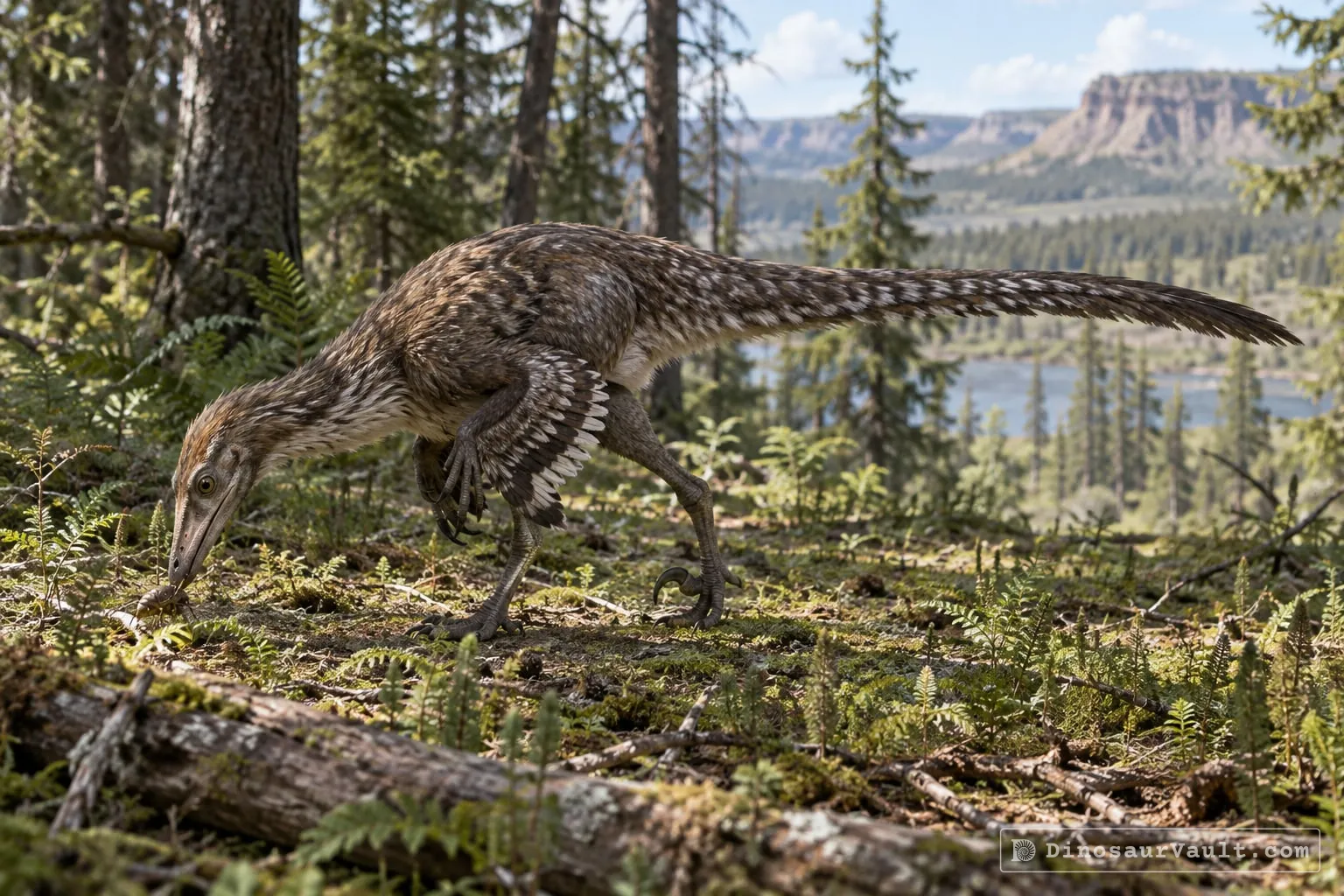
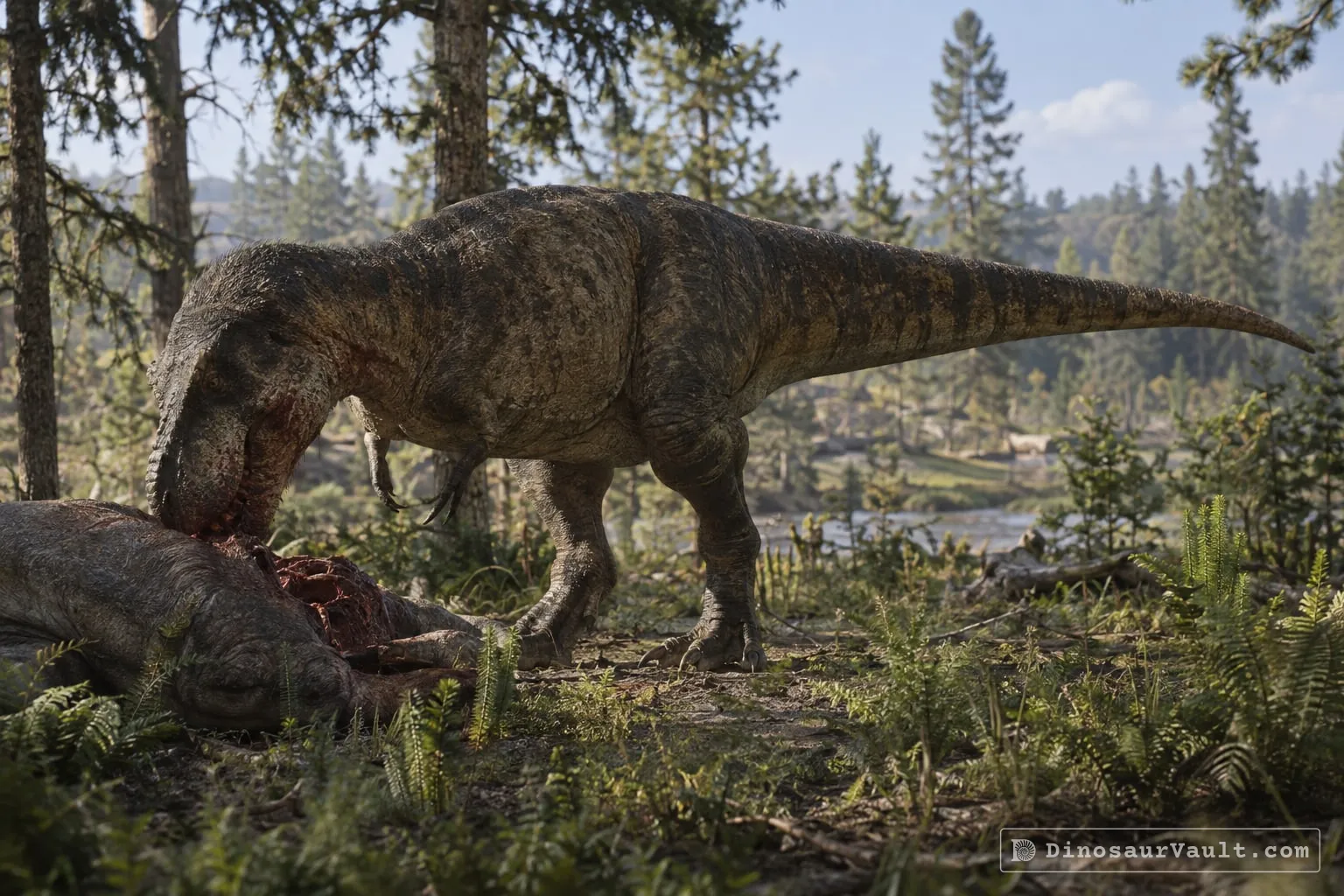
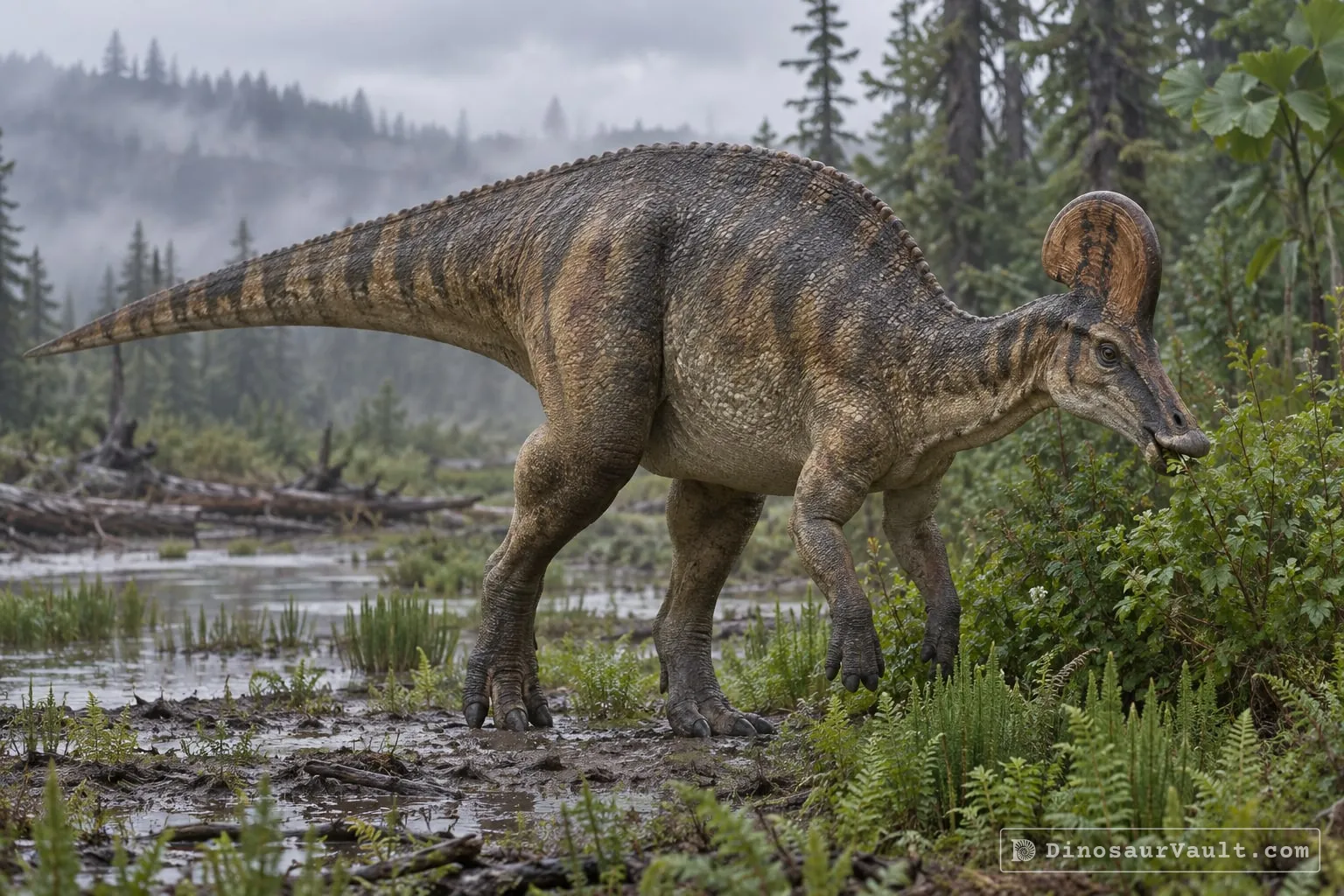
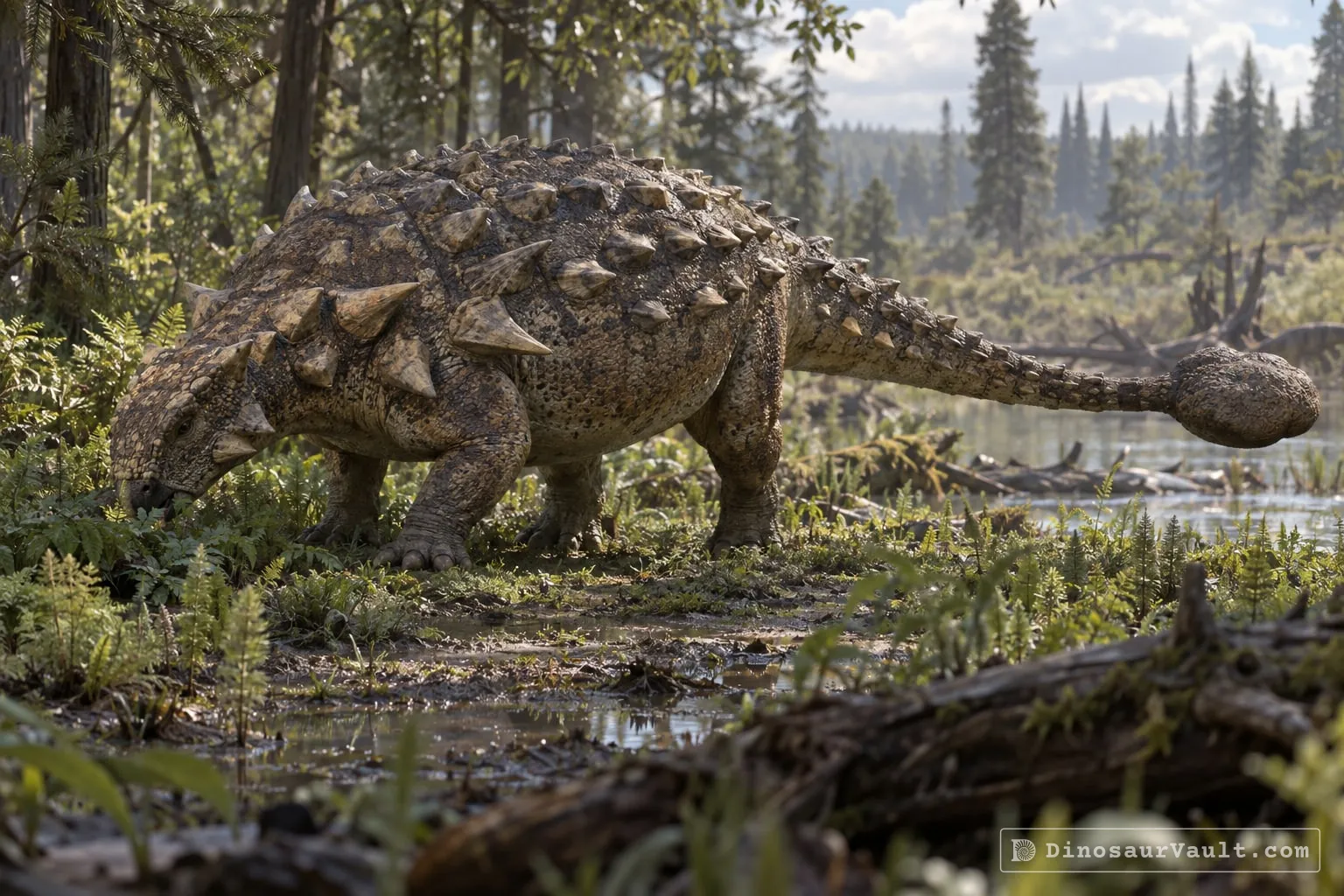
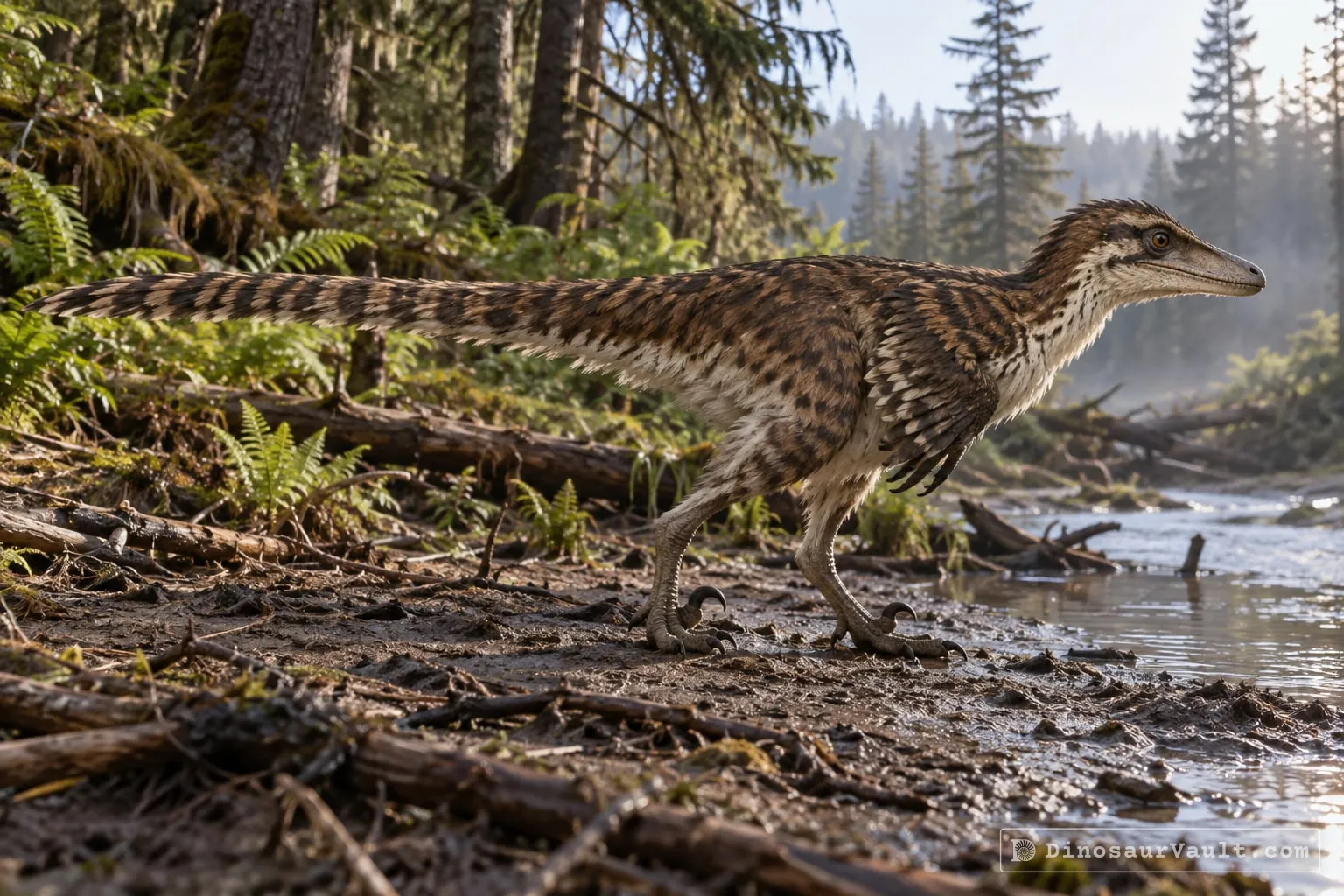
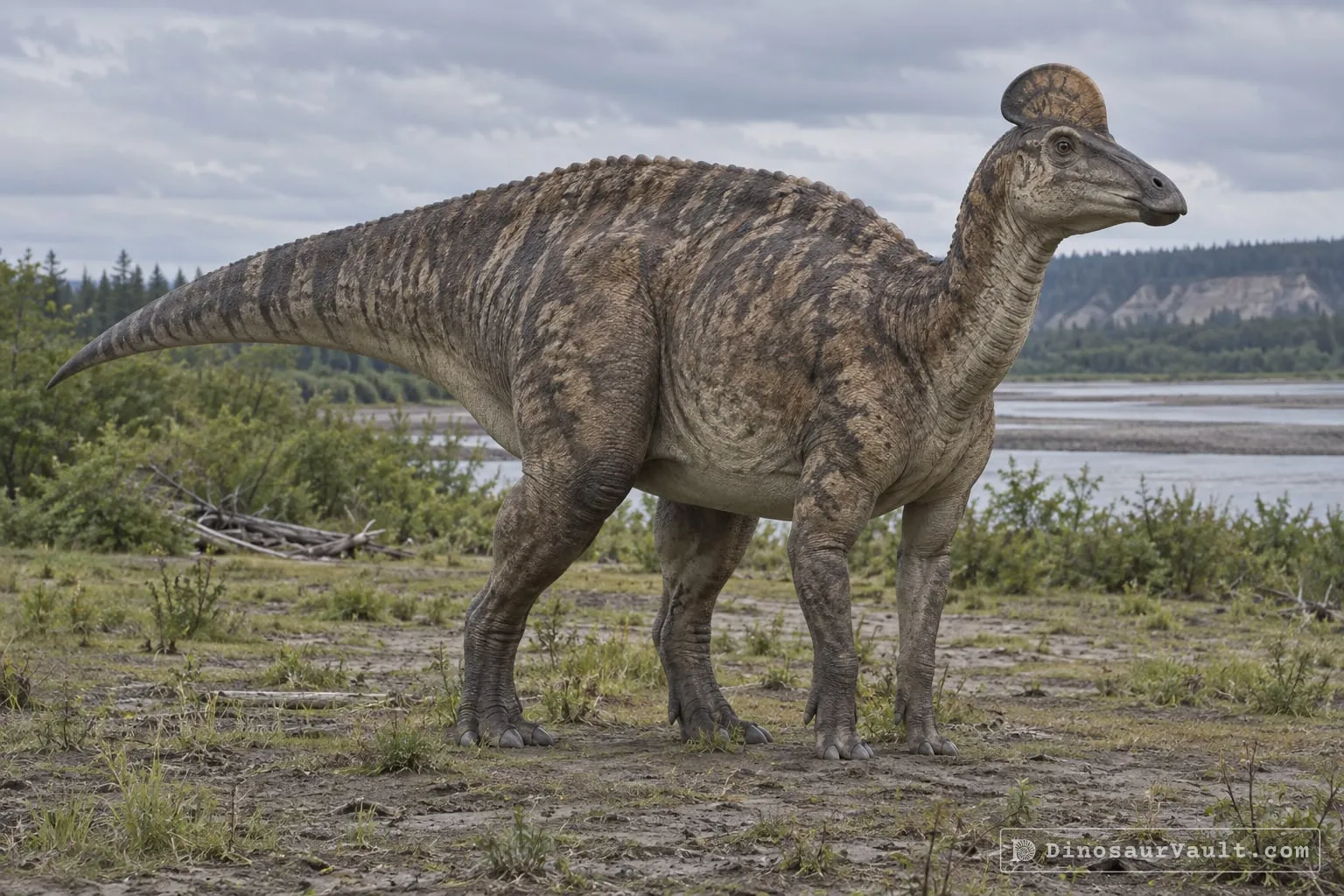
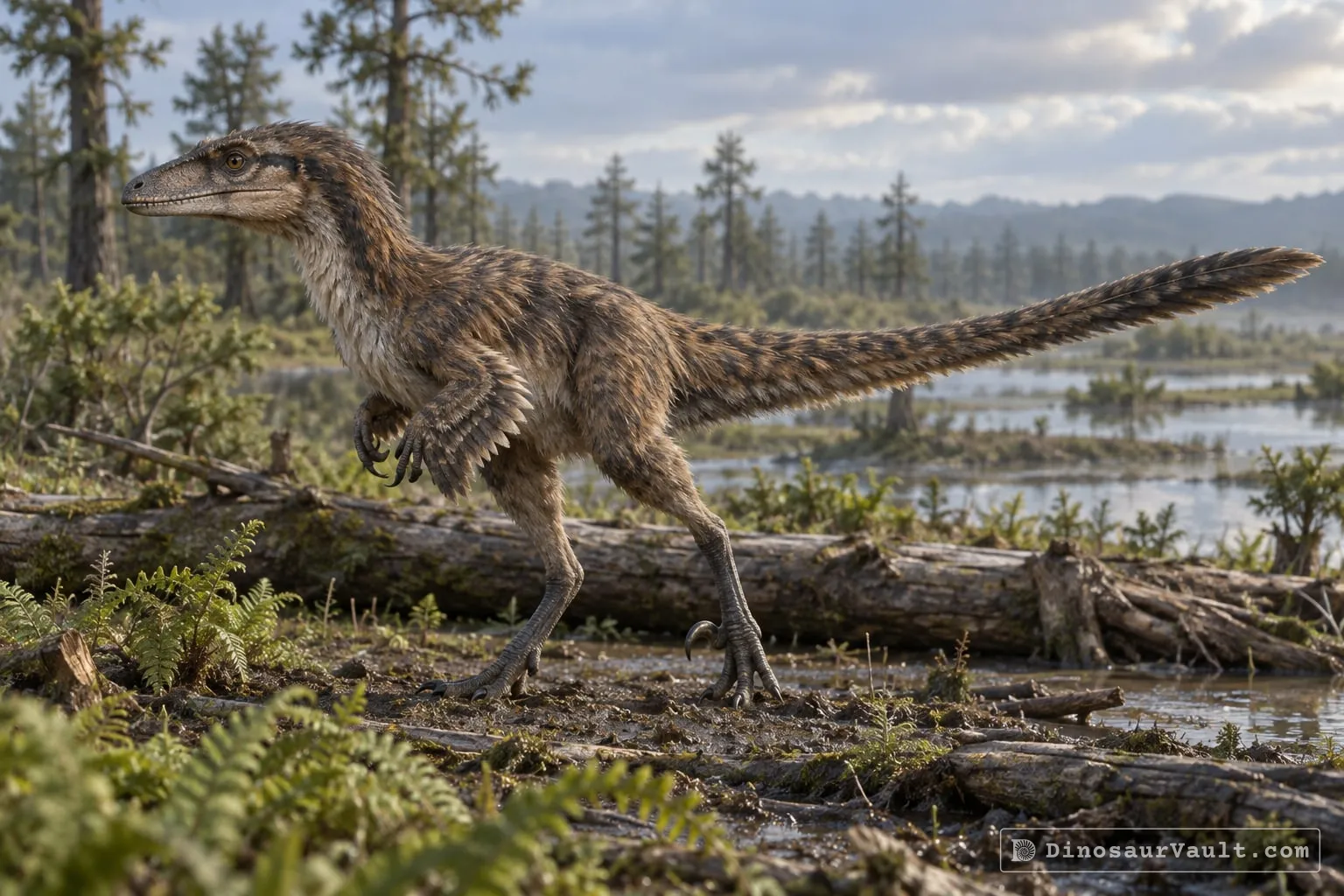


A rock formation can hold fossils laid down millions of years apart, so not every animal here met Brontotholus.
The evidence
The science behind Brontotholus
Which parts of the picture come from its own bones, and which come from its relatives.
From its own fossils
- Several partial skull domes have been assigned to Brontotholus.
- The larger domes have a broad, low profile and a smoothly curved top.
Borrowed from relatives
- The body is restored from better-known pachycephalosaurs such as Stegoceras, with short arms, strong hind legs and a long tail.
Still unknown
- The shape of its face and the bones around the dome.
- What it used its dome for.
- Its color.
Discovery timeline
- 1992Its worldHorner, Varricchio & Goodwin
- 2003Family treeSullivan
- 2025Named itWoodruff et al.
Key papers
The research behind what we know of Brontotholus
Its world
Proposed that changing sea levels and coastal plain area drove evolutionary changes in dinosaurs from Montana.
Marine transgressions and the evolution of Cretaceous dinosaurs. Nature 358: 59-61
Read the paper : Marine transgressions and the evolution of Cretaceous dinosaurs (opens in a new tab)Family tree
Revised dome-headed dinosaur names and grouped some skull domes later assigned to Brontotholus with Hanssuesia.
Revision of the dinosaurStegocerasLambe (Ornithischia, Pachycephalosauridae). Journal of Vertebrate Paleontology 23: 181-207
Read the paper : Revision of the dinosaurStegocerasLambe (Ornithischia, Pachycephalosauridae) (opens in a new tab)Named it
Named Brontotholus from skull domes and rejected the idea that these fossils formed a direct evolutionary link between Stegoceras and Pachycephalosaurus.
The first pachycephalosaurid from the Late Cretaceous Two Medicine Formation: effects of the Western Interior Seaway on North American pachycephalosaurid evolution. Zoological Journal of the Linnean Society 205
Read the paper : The first pachycephalosaurid from the Late Cretaceous Two Medicine Formation: effects of the Western Interior Seaway on North American pachycephalosaurid evolution (opens in a new tab)
Close relatives
Other members of Pachycephalosauridae


Sources: Wikidata