Outline: a typical theropod
Eustreptospondylus
yoo-STREP-toh-SPON-dih-lus
"well-curved vertebrae"
- Lived
- 165 to 162 million years ago, Middle Jurassic
- Diet
- Carnivore
- Length
- about 7 m (23 ft)
- Group
- Theropods, Megalosauridae
- Found in
- United Kingdom
- Named by
- Walker 1964
Size comparison
To scale

Scale in metersOutline: typical theropod shape
Where its fossils were found
The evidence
Today
165 million years ago
Field notes
About Eustreptospondylus
What it was like
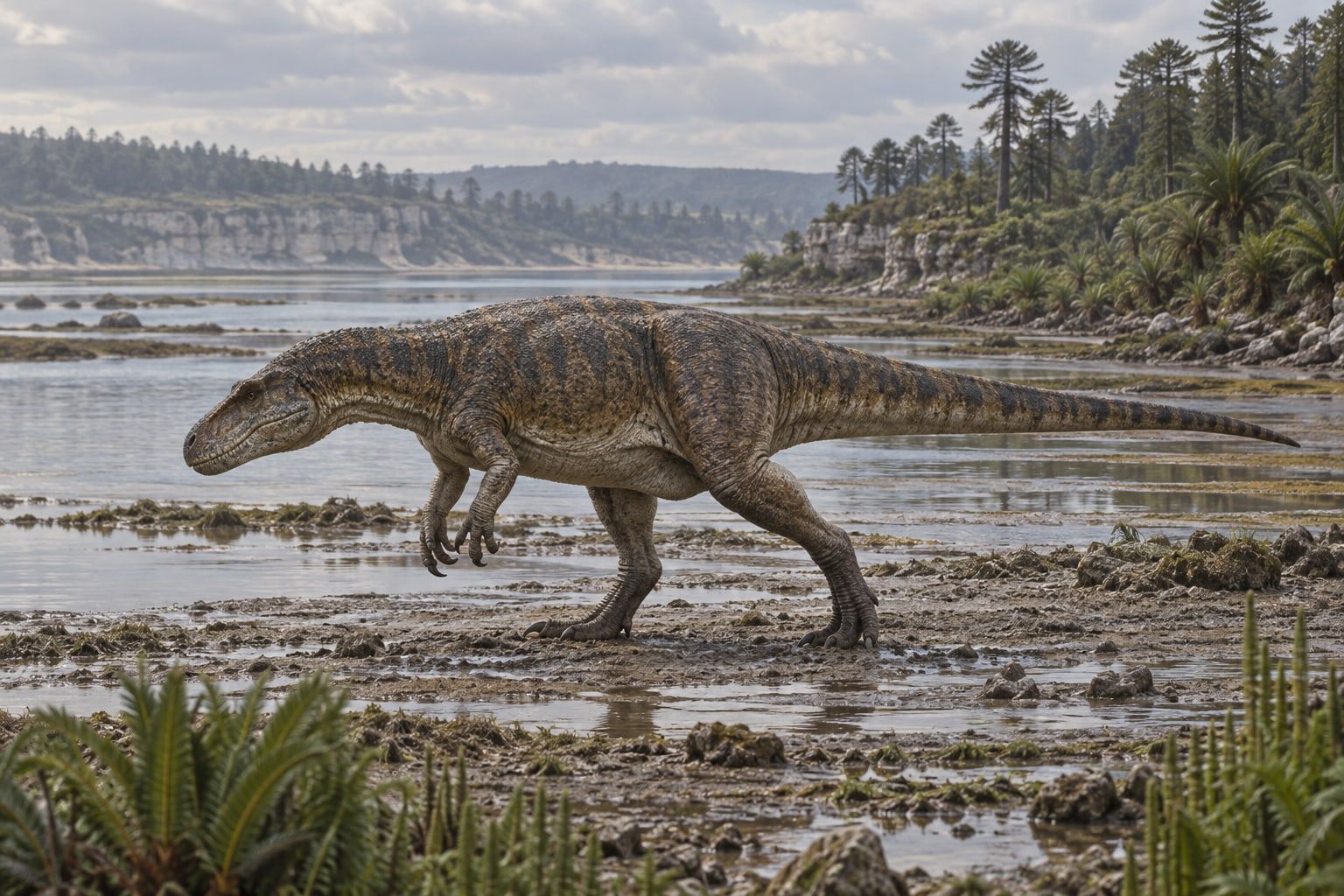
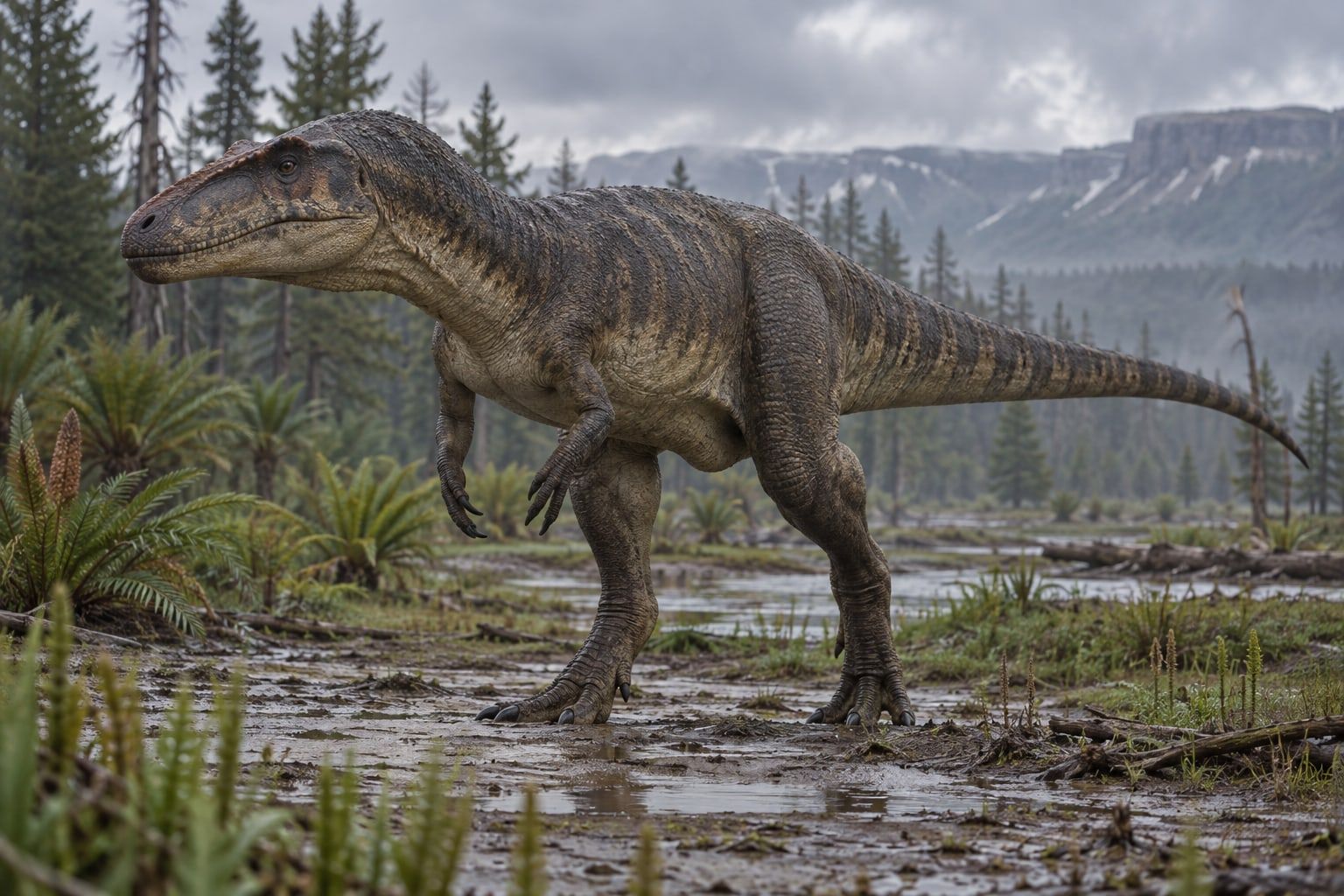
Eustreptospondylus was a two-legged meat eater about 7 meters (23 feet) long, a relative of Megalosaurus. The known skeleton seems to be a young animal, so adults were probably larger.
It had a long skull with sharp, curved teeth, short strong arms and a long tail.
Its world
It lived in the Middle Jurassic, about 165 to 162 million years ago, in what is now England. Europe was then a scatter of islands in a warm, shallow sea.
Its skeleton comes from the Oxford Clay, a rock laid down in that sea, so the animal probably washed out from a nearby shore. It shared its world with the stegosaur Loricatosaurus and the sauropod Cetiosauriscus.
How it was found
Walker named Eustreptospondylus in 1964, though the skeleton had been dug up long before and first placed in Megalosaurus. It is one of the most complete large meat eaters from Europe.
Lived alongside
Found in the same rock formations
Close relatives
Other members of Megalosauridae
Sources: WikidataNamed in: A. D. Walker. 1964. Triassic reptiles from the Elgin area: Ornithosuchus and the origin of carnosaurs. Philosophical Transactions of the Royal Society of London, Series B, Biological Sciences 248:53-134