Megalosaurus
MEG-uh-luh-SORE-us
"great lizard"
- Lived
- 168 to 166 million years ago, Middle Jurassic
- Diet
- Carnivore
- Length
- about 6 m (20 ft)
- Group
- Theropods, Megalosauridae
- Found in
- United Kingdom and France
- Named by
- Parkinson 1822
Size comparison
To scale
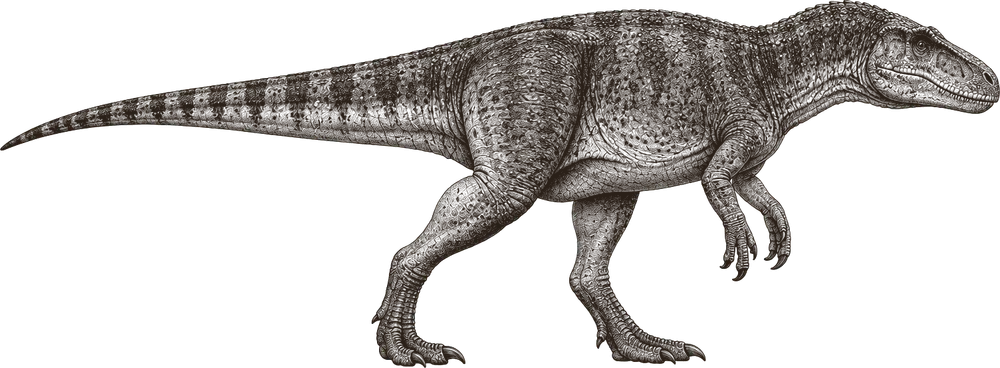

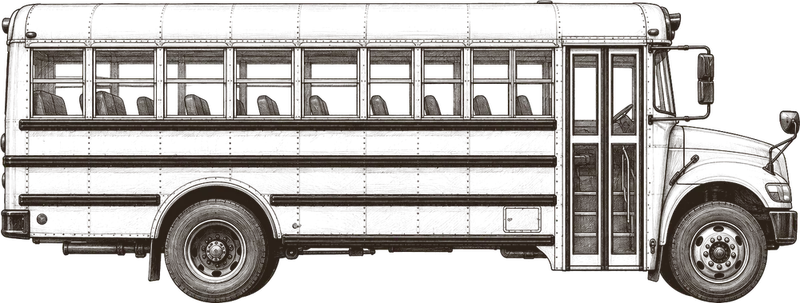
Scale in meters
Where its fossils were found
The evidence
Today

165 million years ago
Also reported from China.
Habitat
It probably lived on island land beside shallow coastal waters, where its bones were buried. Cetiosaurus and Cardiodon were plant eaters in the wider region.
Field notes
About Megalosaurus
A predator at the top
Megalosaurus was a large, meat-eating theropod that walked on two stout hindlimbs, balancing a long tail against a mostly horizontal body. It reached roughly 6 meters, or about 20 feet, in length. Its forelimbs were short but robust, and its head was large, armed with long, curved, blade-like teeth suited to a predator at the top of its food chain. No complete skeleton of Megalosaurus has ever been found, so parts of its build are still pieced together from partial remains.
Its world
Megalosaurus lived in the Middle Jurassic, about 168 to 166 million years ago, in what is now southern England and northern France. Its fossils come from rock layers including the Cotswold Slate, the Forest Marble, the Chipping Norton Limestone and the Taynton Limestone. It shared this world with the long-necked sauropod Cetiosaurus. For more than a century, fossils of many other big meat-eaters from other times and places were also filed under Megalosaurus. Most of them have since been moved to other genera, and only the Middle Jurassic material from England is thought to belong to it.
How it was found
Parkinson named Megalosaurus in 1822, years before the word dinosaur was even coined. Because no complete skeleton of Megalosaurus has been found, later scientists have had to build up a picture of it from teeth, jaw fragments, and isolated bones collected over time. Its closest relatives include Torvosaurus, Eustreptospondylus, and Afrovenator, part of the wider family Megalosauridae, which helps fill some of the gaps left by its own incomplete fossils.
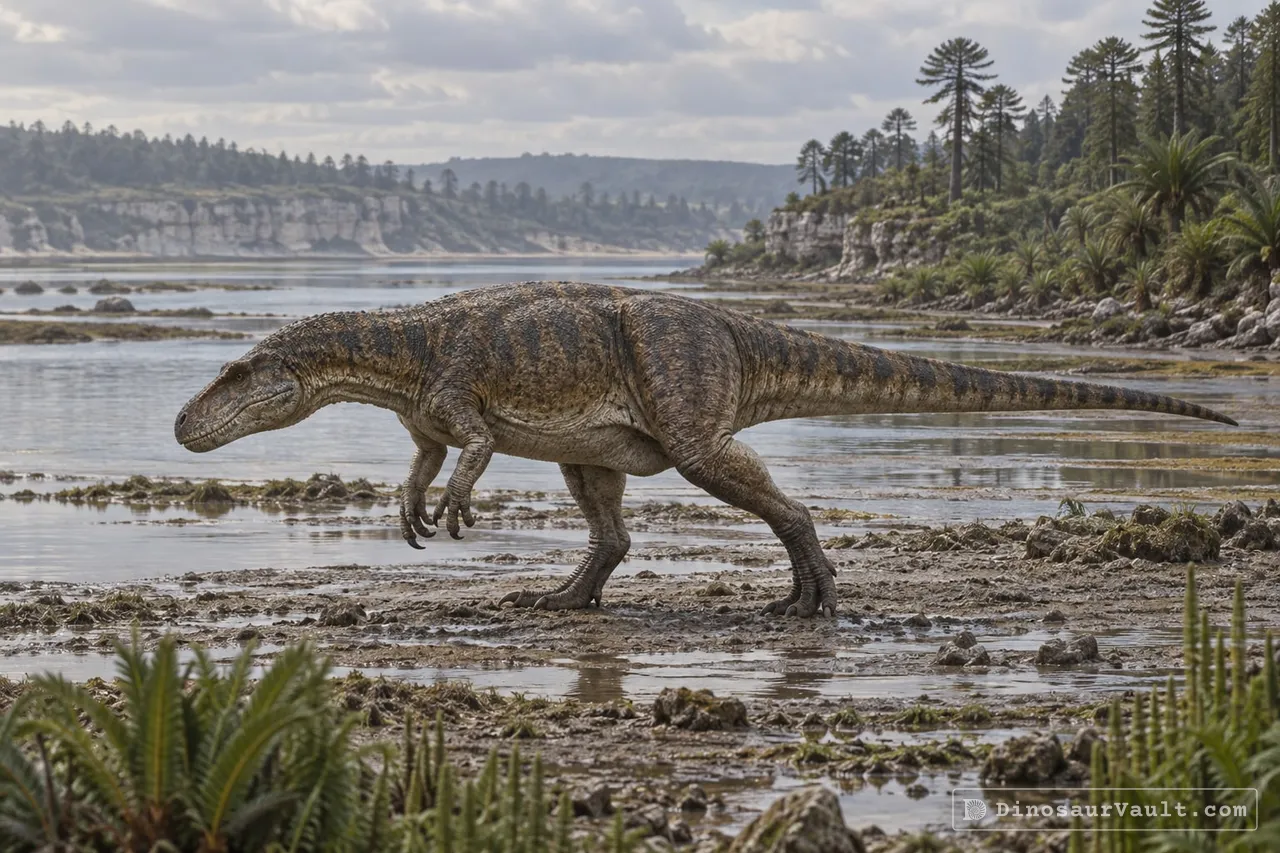
Field gallery
More views of Megalosaurus
Scenes reconstructed from the available fossil evidence.
1 of 7
Lived alongside
Found in the same rock formations


A rock formation can hold fossils laid down millions of years apart, so not every animal here met Megalosaurus.
The evidence
The science behind Megalosaurus
Which parts of the picture come from its own bones, and which come from its relatives.
From its own fossils
- A lower jaw has a distinctive groove along its outer surface and a narrow opening on the inside.
- Teeth and separate bones from the spine, hips and limbs show a large, strongly built meat eater.
Borrowed from relatives
- Torvosaurus and Eustreptospondylus help fill gaps in the skull and body outline.
- Its inward-facing hands and probable lips are restored by comparison with other theropods.
Still unknown
- The complete shape of its skull and body.
- Its skin covering and color.
- How it grew and whether it lived in groups.
Often drawn wrong
- Older pictures put it on all fours; it walked on its hindlegs with its tail held above the ground.
- Giving it the deep head and tiny, two-fingered arms of Tyrannosaurus replaces its megalosaur build with a different animal's anatomy.
Discovery timeline
- 1822Named itParkinson
- 2008SkullBENSON et al.
- 2010Full descriptionBENSON
- 2012Family treeCarrano, Benson & Sampson
- 2023Close relativeCullen et al.
Key papers
The research behind what we know of Megalosaurus
Named it
Used the name Megalosaurus in an early book about fossils.
Outlines of Oryctology. An Introduction to the Study of Fossil Organic Remains; Especially of Those Found in the British Strata: Intended to Aid the Student in His Inquiries Respecting the Nature of Fossils.
No link available
Skull
Identified distinctive features in the original lower jaw, establishing that Megalosaurus could be recognized as a separate dinosaur.
THE TAXONOMIC STATUS OF MEGALOSAURUS BUCKLANDII (DINOSAURIA, THEROPODA) FROM THE MIDDLE JURASSIC OF OXFORDSHIRE, UK. Palaeontology 51: 419-424
Read the paper : THE TAXONOMIC STATUS OF MEGALOSAURUS BUCKLANDII (DINOSAURIA, THEROPODA) FROM THE MIDDLE JURASSIC OF OXFORDSHIRE, UK (opens in a new tab)Full description
Reexamined the jaws and scattered body bones, clarifying its anatomy and relationships with other large meat eaters.
A description ofMegalosaurus bucklandii(Dinosauria: Theropoda) from the Bathonian of the UK and the relationships of Middle Jurassic theropods. Zoological Journal of the Linnean Society 158: 882-935
Read the paper : A description ofMegalosaurus bucklandii(Dinosauria: Theropoda) from the Bathonian of the UK and the relationships of Middle Jurassic theropods (opens in a new tab)Family tree
Placed Megalosaurus in a distinct family of large predators that includes Torvosaurus.
The phylogeny of Tetanurae (Dinosauria: Theropoda). Journal of Systematic Palaeontology 10: 211-300
Read the paper : The phylogeny of Tetanurae (Dinosauria: Theropoda) (opens in a new tab)Close relative
Comparisons of theropod teeth and living reptiles support lips covering the teeth when the mouth closed.
Theropod dinosaur facial reconstruction and the importance of soft tissues in paleobiology. Science 379: 1348-1352
Read the paper : Theropod dinosaur facial reconstruction and the importance of soft tissues in paleobiology (opens in a new tab)
Close relatives
Other members of Megalosauridae


Sources: Wikidata