Cetiosauriscus
SEE-tee-oh-SORE-iss-kus
"like Cetiosaurus"
- Lived
- 165 to 162 million years ago, Middle Jurassic
- Diet
- Herbivore
- Length
- about 15 m (49 ft)
- Group
- Sauropods
- Found in
- United Kingdom
- Named by
- Huene 1927
Size comparison
To scale

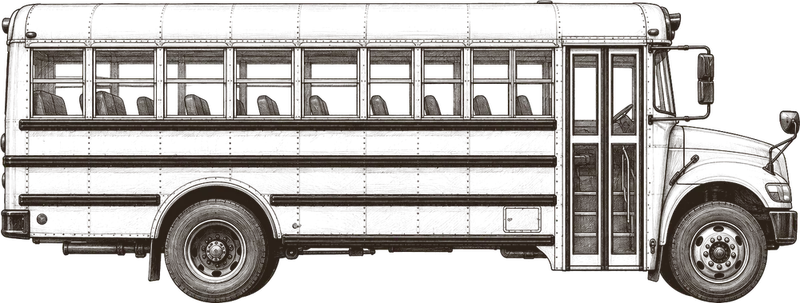
Scale in metersOutline: typical sauropod shape
Where its fossils were found
The evidence
Today

165 million years ago
Habitat
It lived on land near a shallow sea in what is now England. The Oxford Clay also preserves Eustreptospondylus and Loricatosaurus.
Field notes
About Cetiosauriscus
What it was like
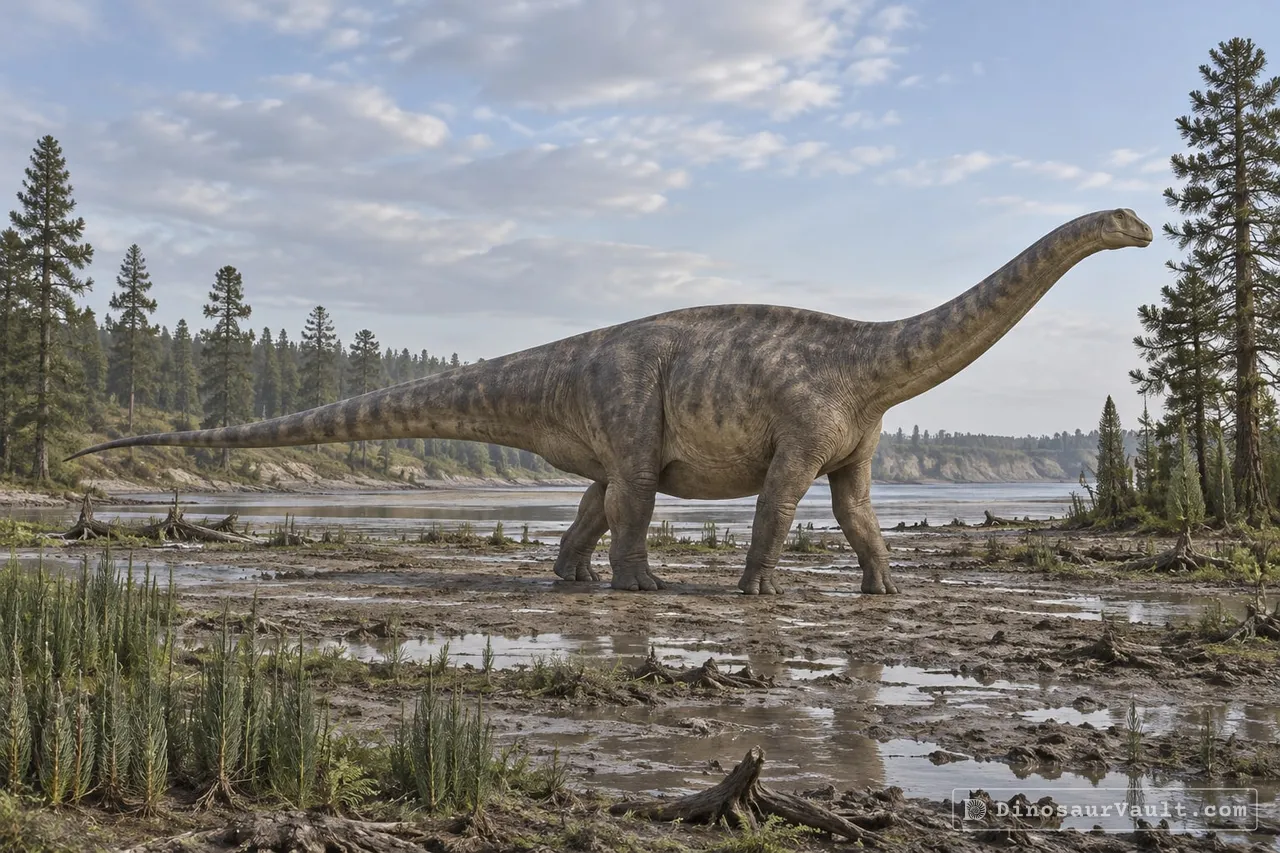
Cetiosauriscus was a long-necked sauropod about 15 meters (49 feet) long. It is known from a partial skeleton, mainly the back half of the body, with the tail, hips and legs.
Its world
It lived about 165 million years ago, in the Middle Jurassic, in what is now England. Its bones come from the Oxford Clay, laid down in a shallow sea near land. The predator Eustreptospondylus and the stegosaur Loricatosaurus come from the same rocks.
How it was found
Huene named Cetiosauriscus. Its relationships have long been debated, and other bones once placed in the genus are now thought to belong to other animals.
Field gallery
More views of Cetiosauriscus
Scenes reconstructed from the available fossil evidence.
Lived alongside
Found in the same rock formations
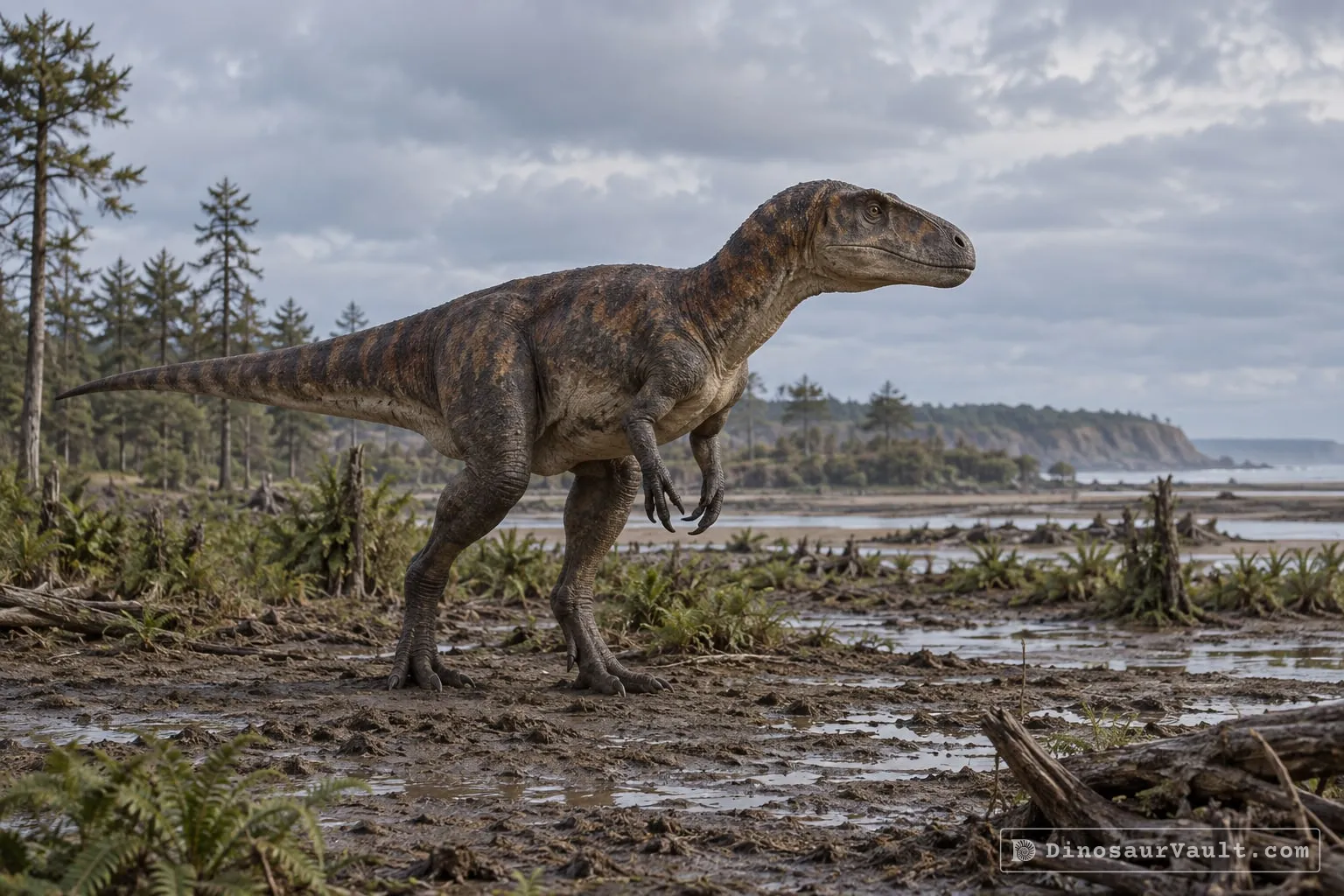
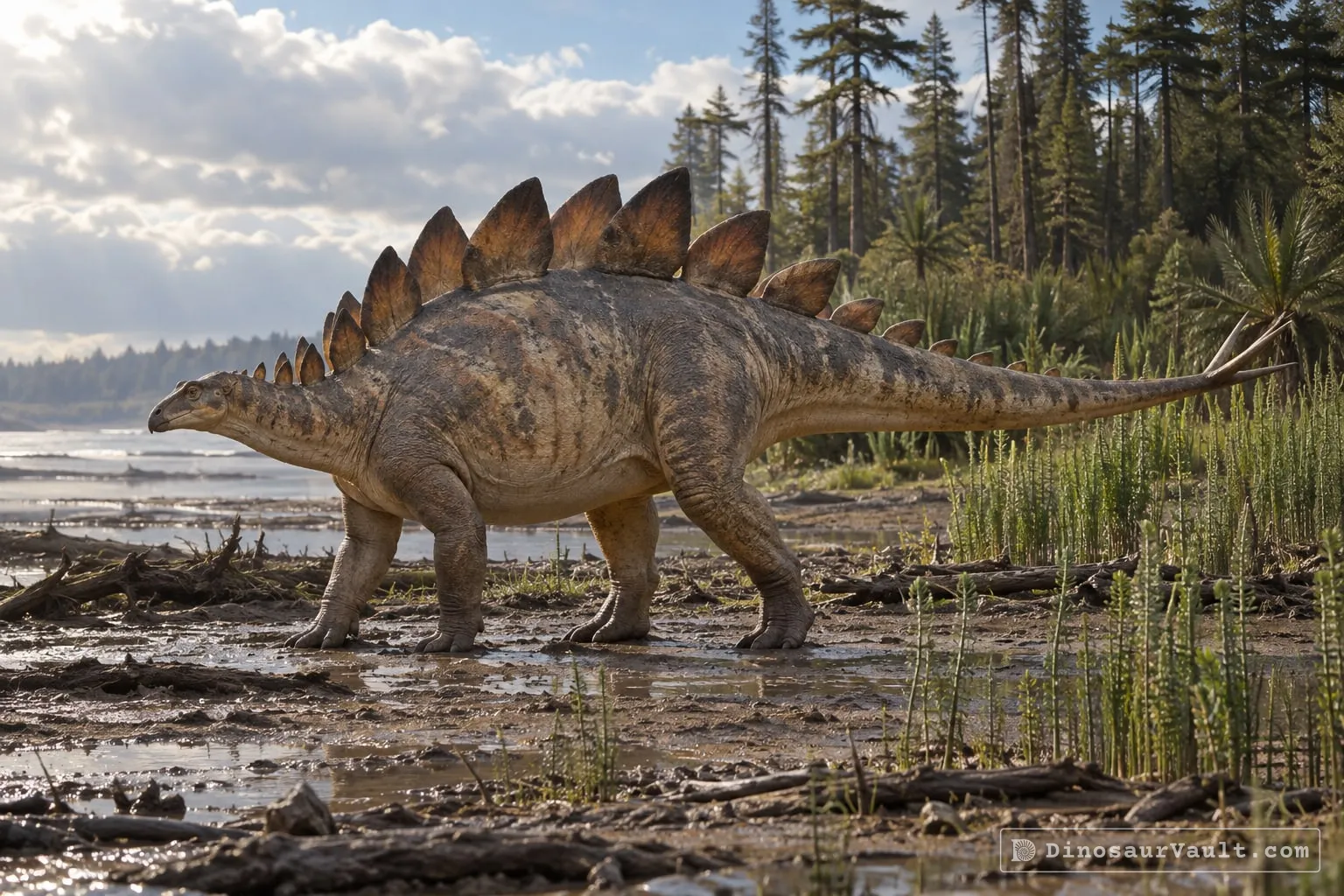
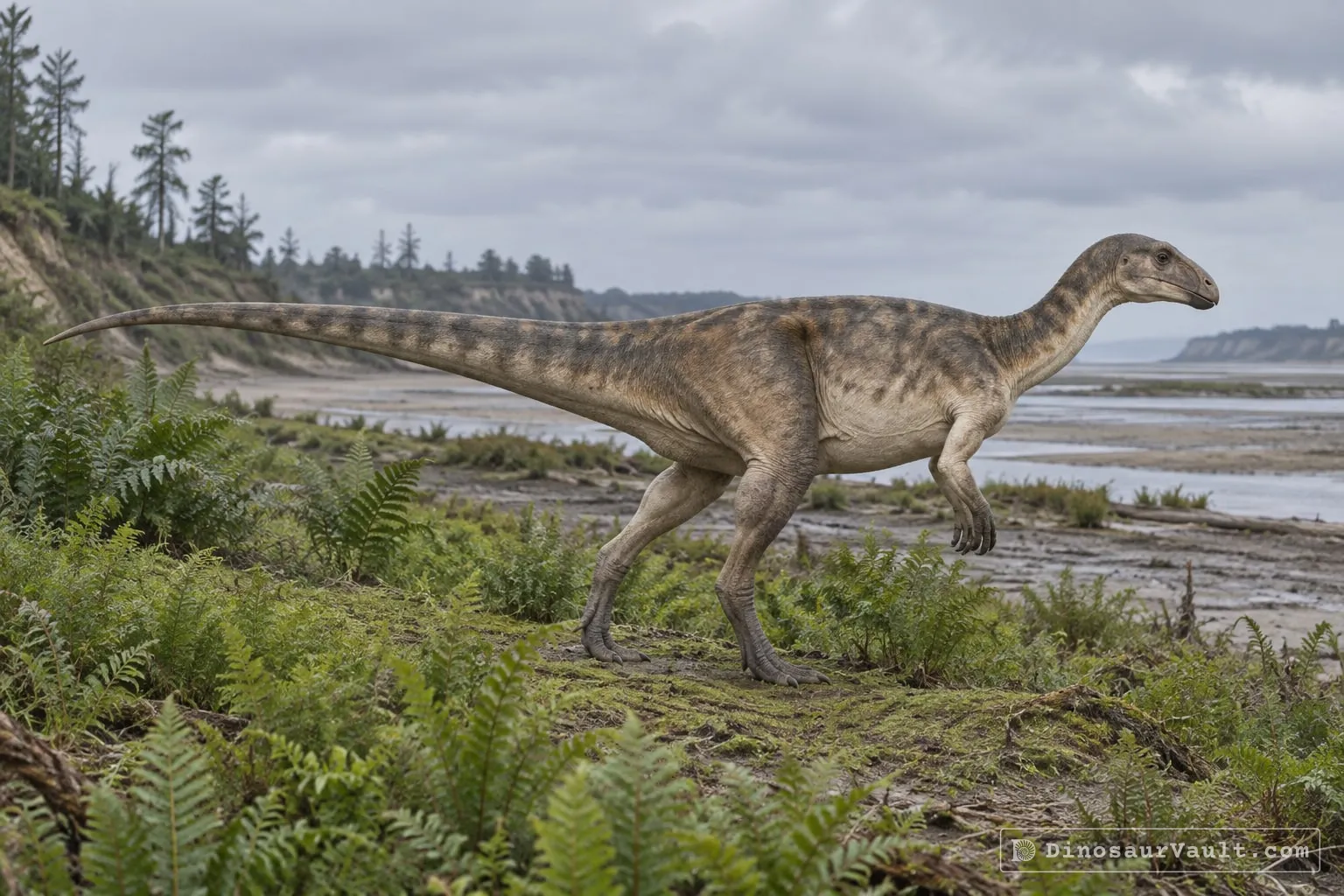
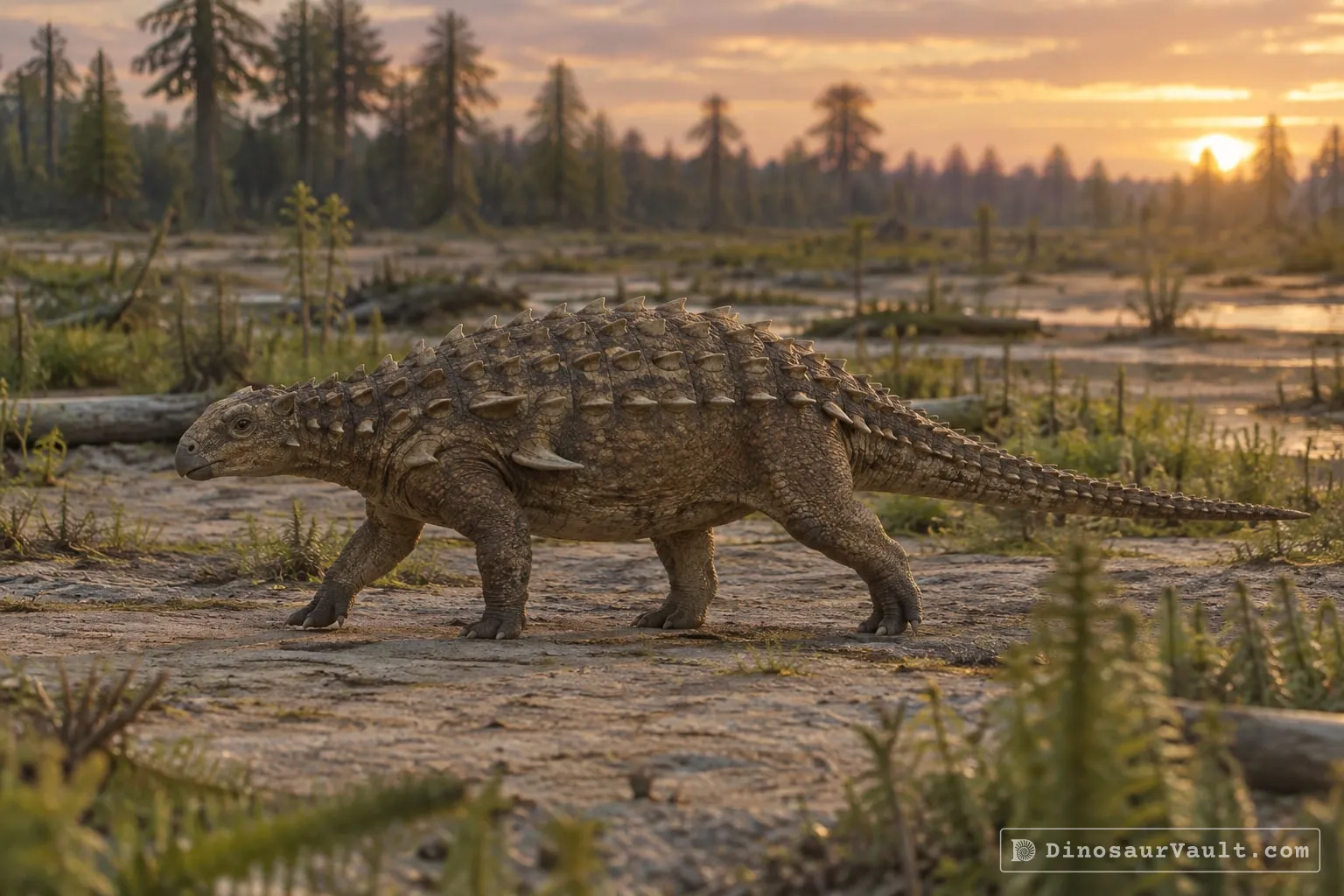
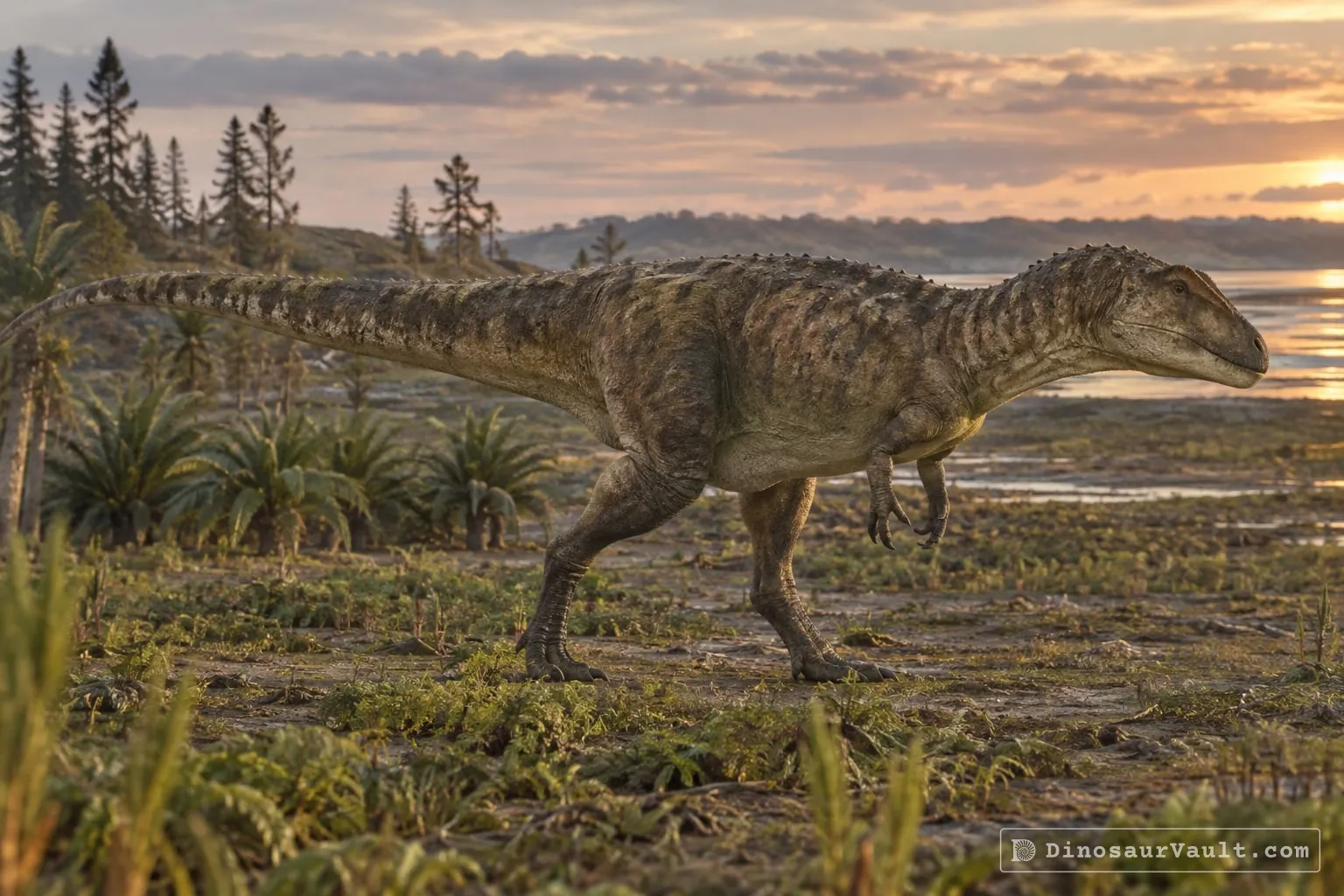


A rock formation can hold fossils laid down millions of years apart, so not every animal here met Cetiosauriscus.
The evidence
The science behind Cetiosauriscus
Which parts of the picture come from its own bones, and which come from its relatives.
From its own fossils
- An associated partial skeleton preserves back and tail vertebrae, shoulder and arm bones, parts of the hips and a hind leg.
- Its limb bones show relatively short forelimbs and a slender thigh bone.
Borrowed from relatives
- The missing neck is restored using long-necked sauropods such as Mamenchisaurus.
- Euhelopus provides a comparison for the missing head.
- The missing hand details follow broader sauropod comparisons, including Apatosaurus and Brachiosaurus.
Still unknown
- Its exact place in the sauropod family tree.
- The shape of its head and the length of its neck.
- The complete length and shape of its tail.
Discovery timeline
- 1927Named itHuene
- 2007Family treeNaish & Martill
- 2020RedescriptionSchwarz et al.
Key papers
The research behind what we know of Cetiosauriscus
Named it
Established Cetiosauriscus as a separate genus for sauropod material previously assigned to other genera.
Sichtung der Grundlagen der jetzigen Kenntnis der Sauropoden [Sorting through the basis of the current knowledge of sauropods]. Eclogae Geologica Helveticae 20: 444-470
No link available
Family tree
Reviewed the British skeleton, questioned its usual family placement and rejected a reliable association with a separately found tail tip.
Dinosaurs of Great Britain and the role of the Geological Society of London in their discovery: basal Dinosauria and Saurischia. Journal of the Geological Society 164: 493-510
Read the paper : Dinosaurs of Great Britain and the role of the Geological Society of London in their discovery: basal Dinosauria and Saurischia (opens in a new tab)Redescription
Separated the species from Switzerland as Amanzia after comparing its tail and limb bones with the British Cetiosauriscus skeleton.
Re-description of the sauropod dinosaur Amanzia (“Ornithopsis/Cetiosauriscus”) greppini n. gen. and other vertebrate remains from the Kimmeridgian (Late Jurassic) Reuchenette Formation of Moutier, Switzerland. Swiss Journal of Geosciences 113
Read the paper : Re-description of the sauropod dinosaur Amanzia (“Ornithopsis/Cetiosauriscus”) greppini n. gen. and other vertebrate remains from the Kimmeridgian (Late Jurassic) Reuchenette Formation of Moutier, Switzerland (opens in a new tab)
Close relatives
Other members of Flagellicaudata

Sources: Wikidata