Sarcolestes
"flesh robber"
- Lived
- 165 to 162 million years ago, Middle Jurassic
- Diet
- Herbivore
- Group
- Ankylosaurs
- Found in
- United Kingdom
- Named by
- Lydekker 1893
Where its fossils were found
The evidence
Today

165 million years ago
Habitat
It lived on land in what is now England, beside seas where the Oxford Clay accumulated. Other dinosaurs from these rocks include Eustreptospondylus, Loricatosaurus and Cetiosauriscus.
Field notes
About Sarcolestes
What it was like
Sarcolestes is known from a partial lower jaw with teeth and armor stuck to its side. It was an early ankylosaur, a plant eater, even though its name means flesh robber: the first describer thought it was a meat eater.
Its world
It lived in the Middle Jurassic, in what is now England. It comes from the Oxford Clay, rocks laid down in the sea, which also hold the predator Eustreptospondylus and the stegosaur Loricatosaurus.
How it was found
Lydekker named Sarcolestes in 1893. It is one of the oldest known ankylosaurs.
Field gallery
More views of Sarcolestes
Scenes reconstructed from the available fossil evidence.
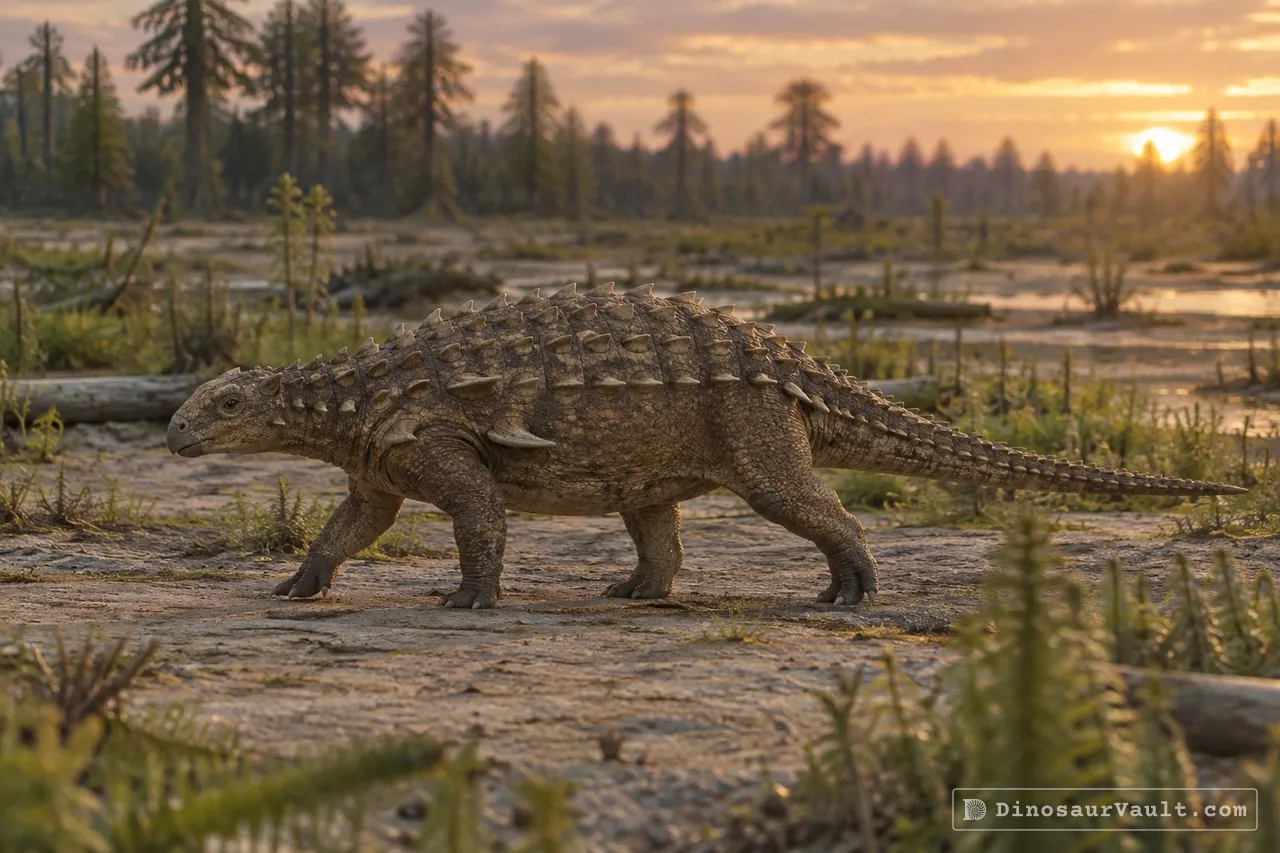
1 of 3
Lived alongside
Found in the same rock formations
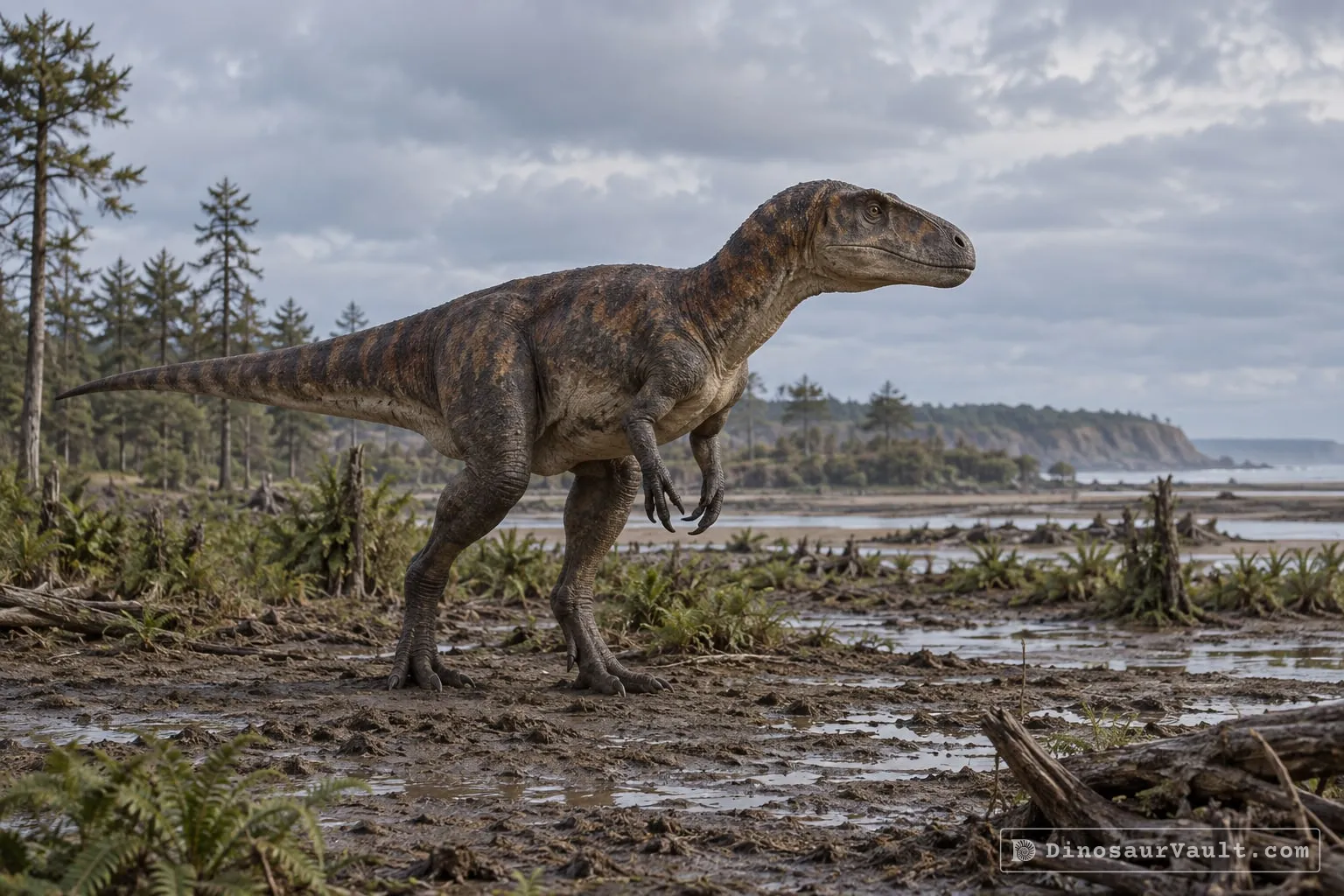
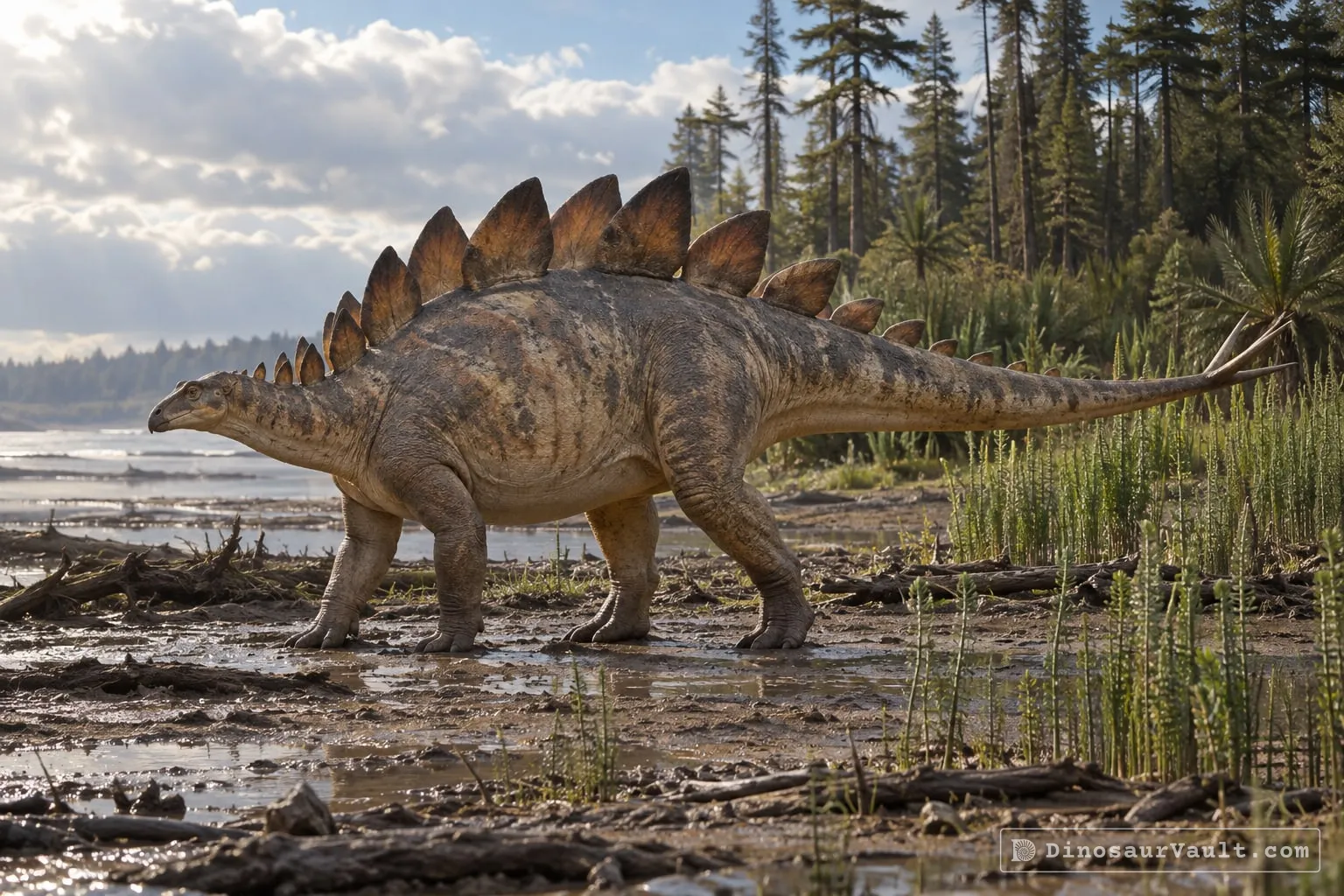
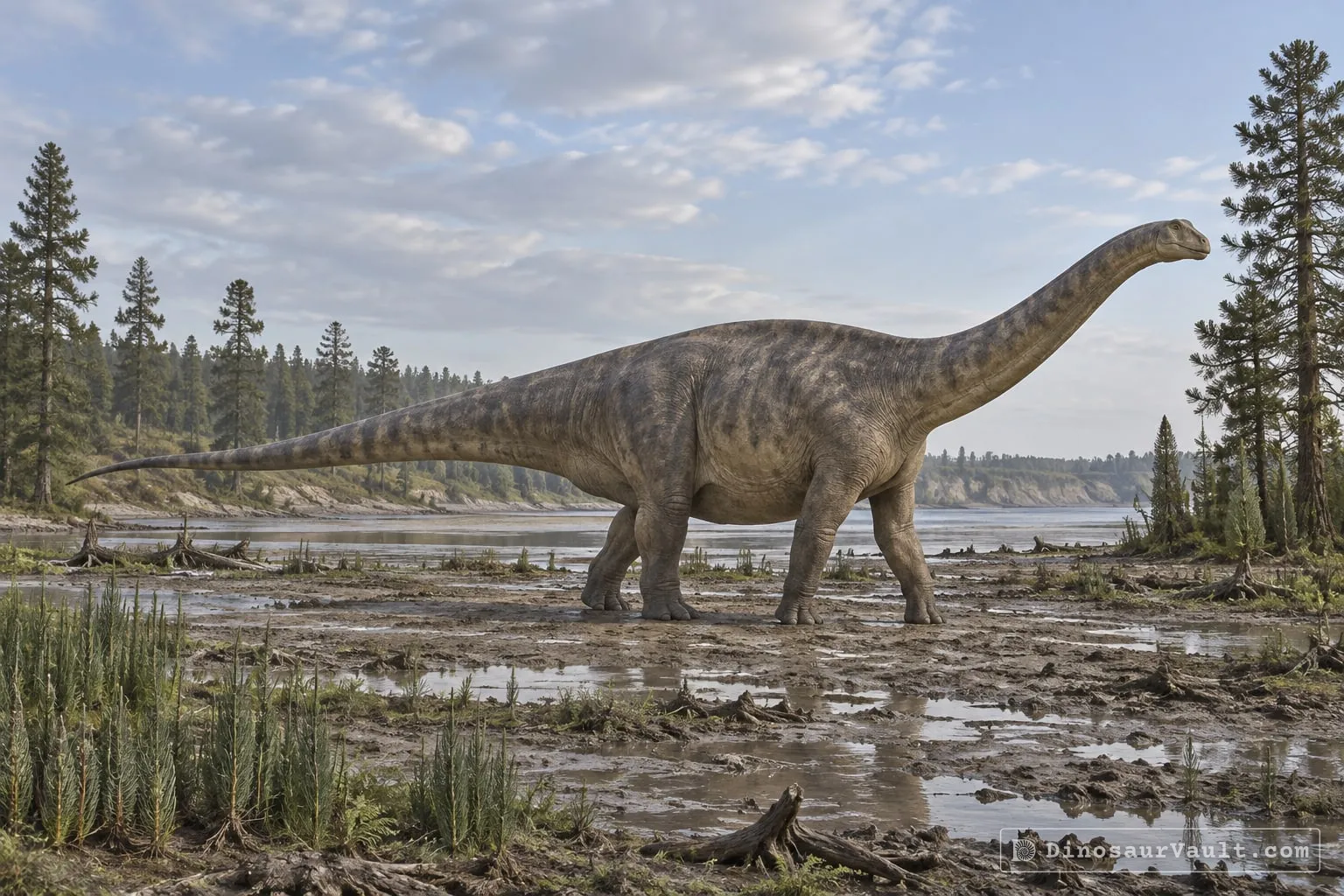
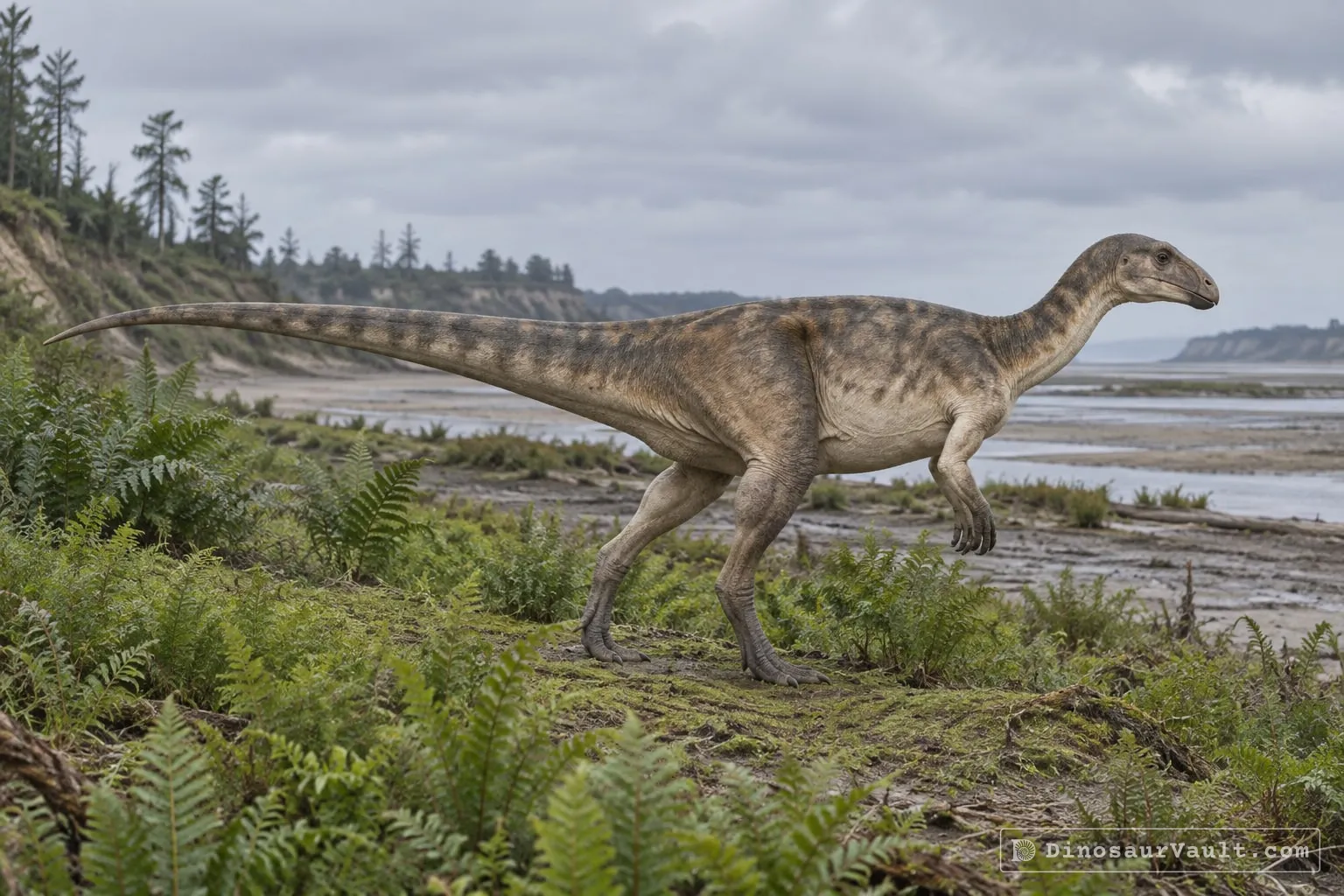
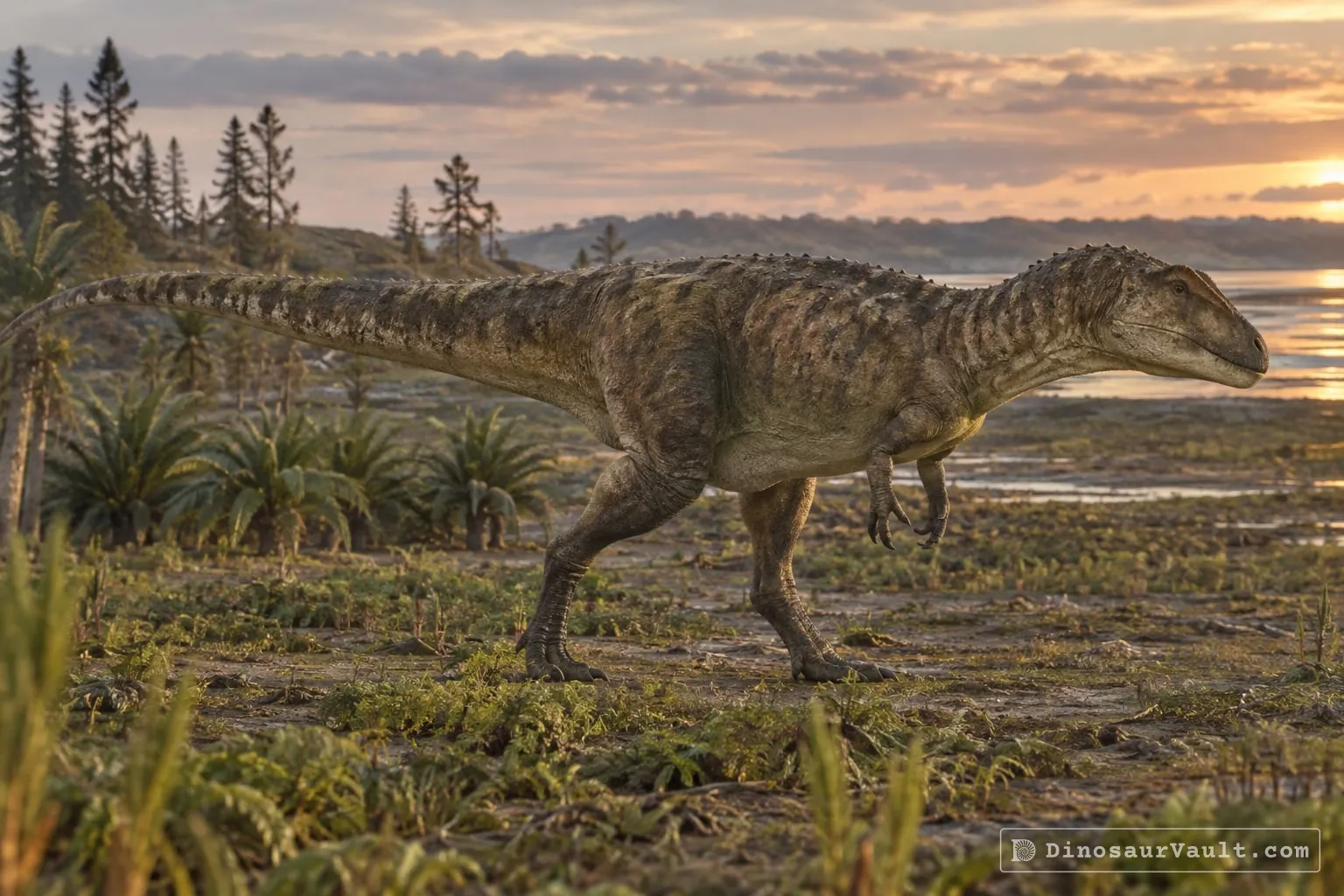


A rock formation can hold fossils laid down millions of years apart, so not every animal here met Sarcolestes.
The evidence
The science behind Sarcolestes
Which parts of the picture come from its own bones, and which come from its relatives.
From its own fossils
- Sarcolestes is known from a partial left lower jaw with replacement teeth and a large armor plate fused to its outer rear surface.
- Its small tooth crowns have many fine serrations along their edges.
- The front of its lower jaw bends downward.
Borrowed from relatives
- Its missing body, limbs and tail are compared with Sauropelta, and its missing upper skull with Gargoyleosaurus.
Still unknown
- The shape and arrangement of its body armor.
- Its full skull shape and body size.
- Experts disagree about whether it is a distinct genus, and its place among ankylosaurs is unsettled.
Discovery timeline
- 1893Named itLydekker
- 1983Full descriptionGalton
- 2013SkullsBlows & Honeysett
- 2023Family treeRaven et al.
Key papers
The research behind what we know of Sarcolestes
Named it
Named Sarcolestes from an incomplete lower jaw, initially interpreting it as a meat-eating dinosaur.
On the Jaw of a New Carnivorous Dinosaur from the Oxford Clay of Peterborough. Quarterly Journal of the Geological Society of London 49: 284-287
Read the paper : On the Jaw of a New Carnivorous Dinosaur from the Oxford Clay of Peterborough (opens in a new tab)Full description
Restudied the jaw and recognized Sarcolestes as an ankylosaur rather than a meat-eating theropod.
Sarcolestes leedsi Lydekker, an ankylosaurian dinosaur from the Middle Jurassic of England. Neues Jahrbuch für Geologie und Paläontologie - Monatshefte 1983: 141-155
Read the paper : Sarcolestes leedsi Lydekker, an ankylosaurian dinosaur from the Middle Jurassic of England (opens in a new tab)Skulls
Compared Sarcolestes replacement teeth with later ankylosaur teeth, finding similar crowns with small serrations along their edges.
New teeth of nodosaurid ankylosaur from the Lower Cretaceous of Southern England. Acta Palaeontologica Polonica
Read the paper : New teeth of nodosaurid ankylosaur from the Lower Cretaceous of Southern England (opens in a new tab)Family tree
Treated Sarcolestes as a valid genus, while noting that its fragmentary remains could explain its early position in the family tree.
The phylogenetic relationships and evolutionary history of the armoured dinosaurs (Ornithischia: Thyreophora). Journal of Systematic Palaeontology 21
Read the paper : The phylogenetic relationships and evolutionary history of the armoured dinosaurs (Ornithischia: Thyreophora) (opens in a new tab)
Close relatives
Other members of Ankylosauria


Sources: Wikidata