Outline: a typical theropod
Taurovenator
"bull hunter"
Type species Taurovenator violantei
- Lived
- 97 to 94 million years ago, Late Cretaceous
- Diet
- Carnivore
- Group
- Theropods, Carcharodontosauridae
- Found in
- Argentina
- Named by
- Motta et al. 2016
Where its fossils were found
The evidence
Today

95 million years ago
Field notes
About Taurovenator
What it was like
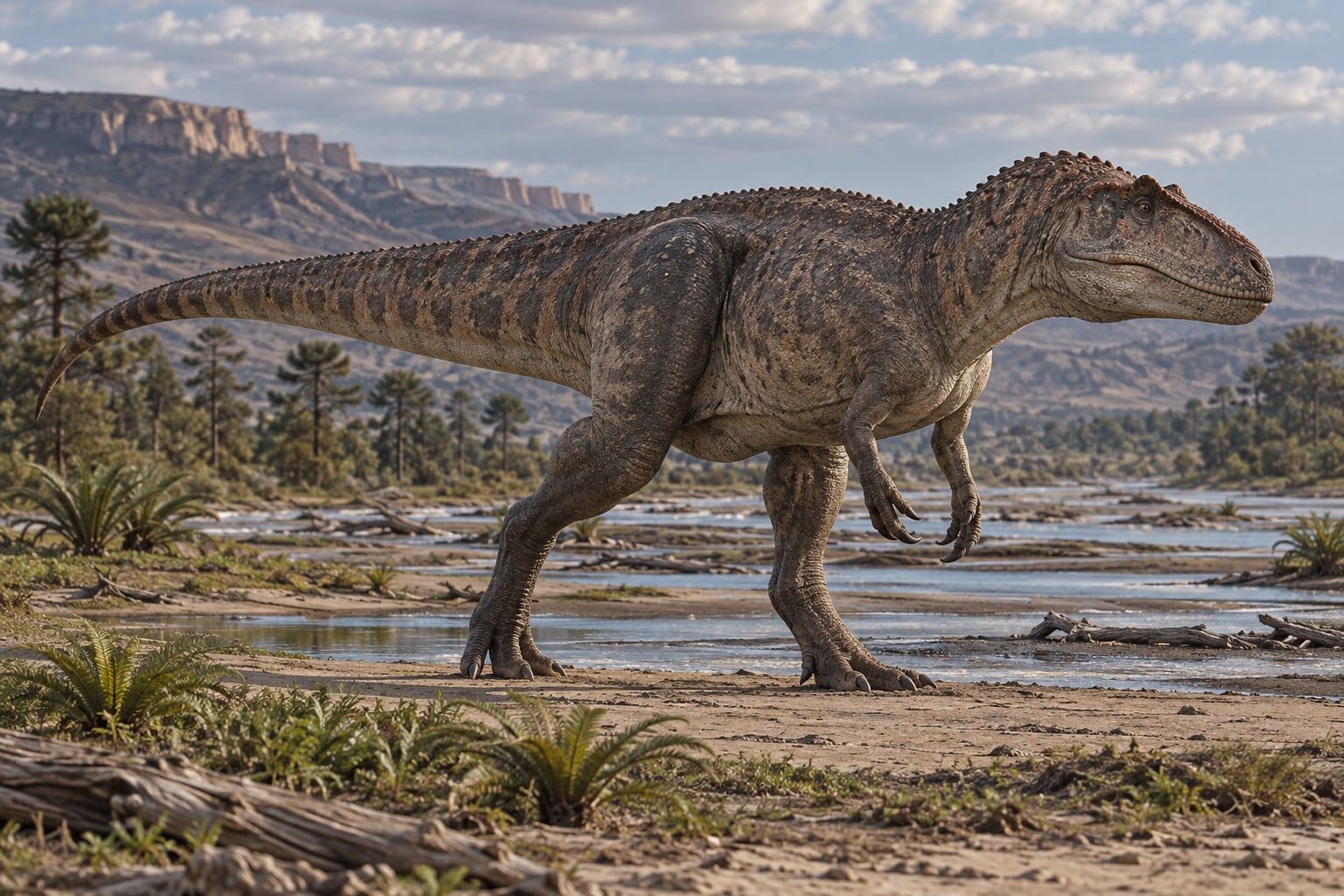
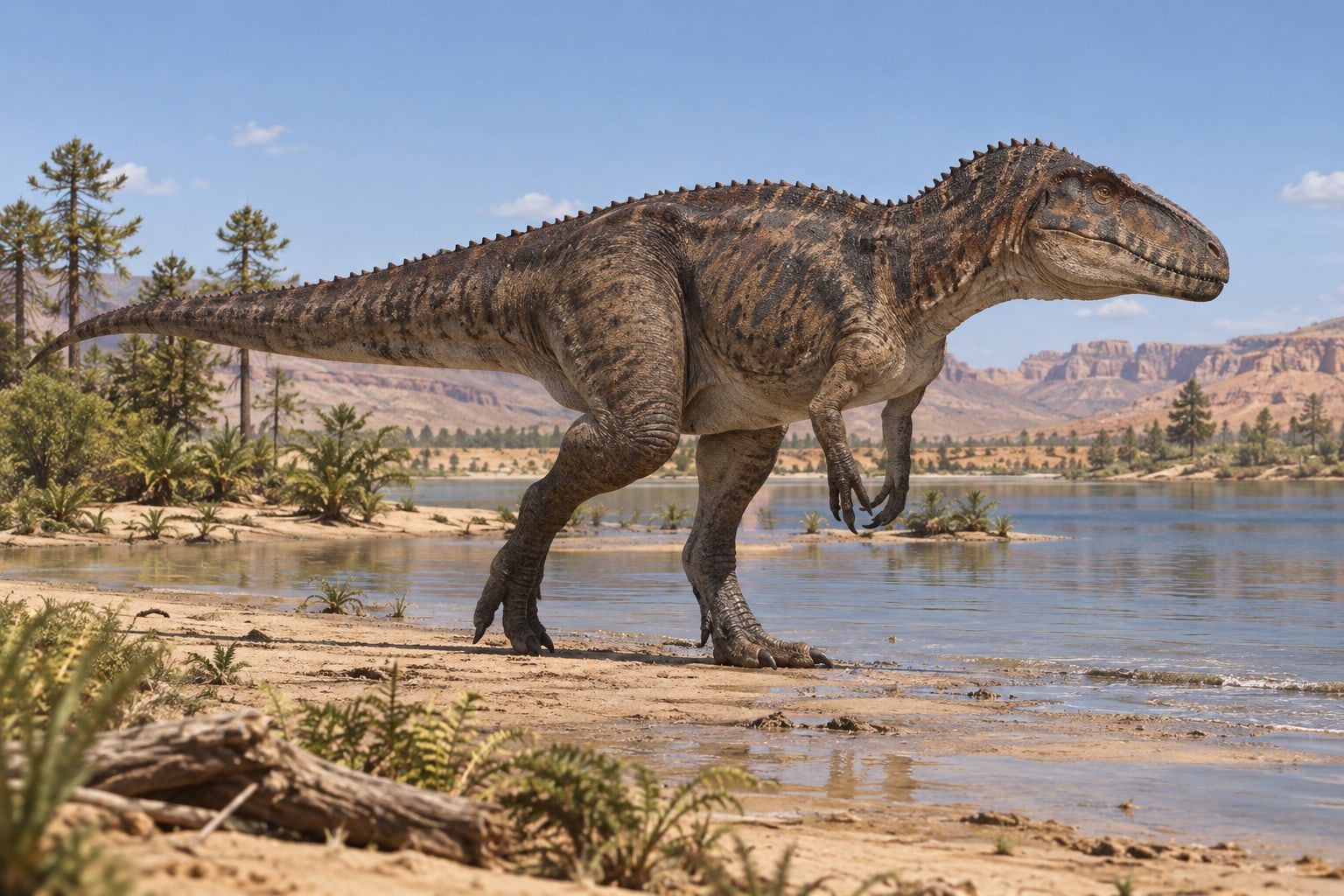
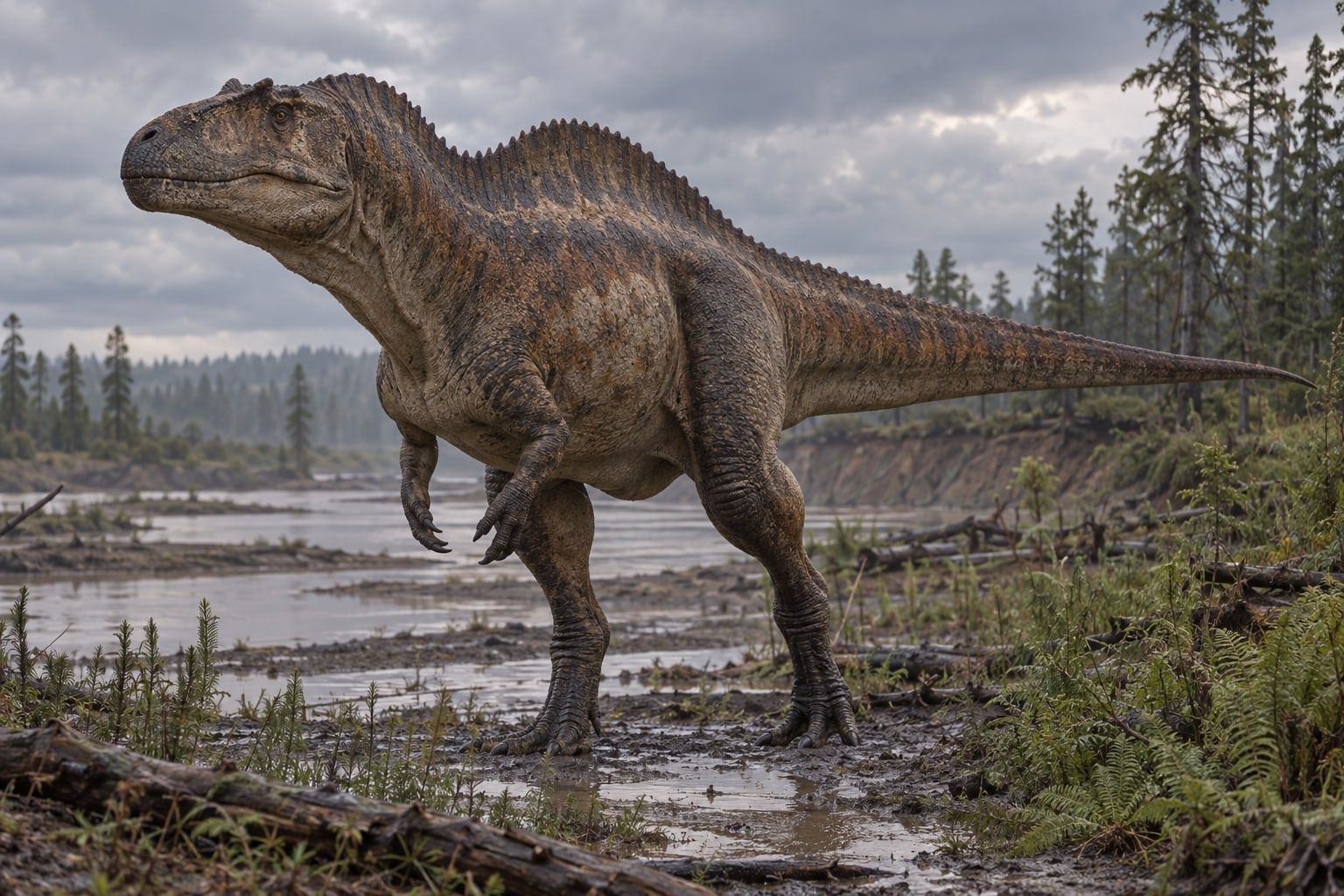
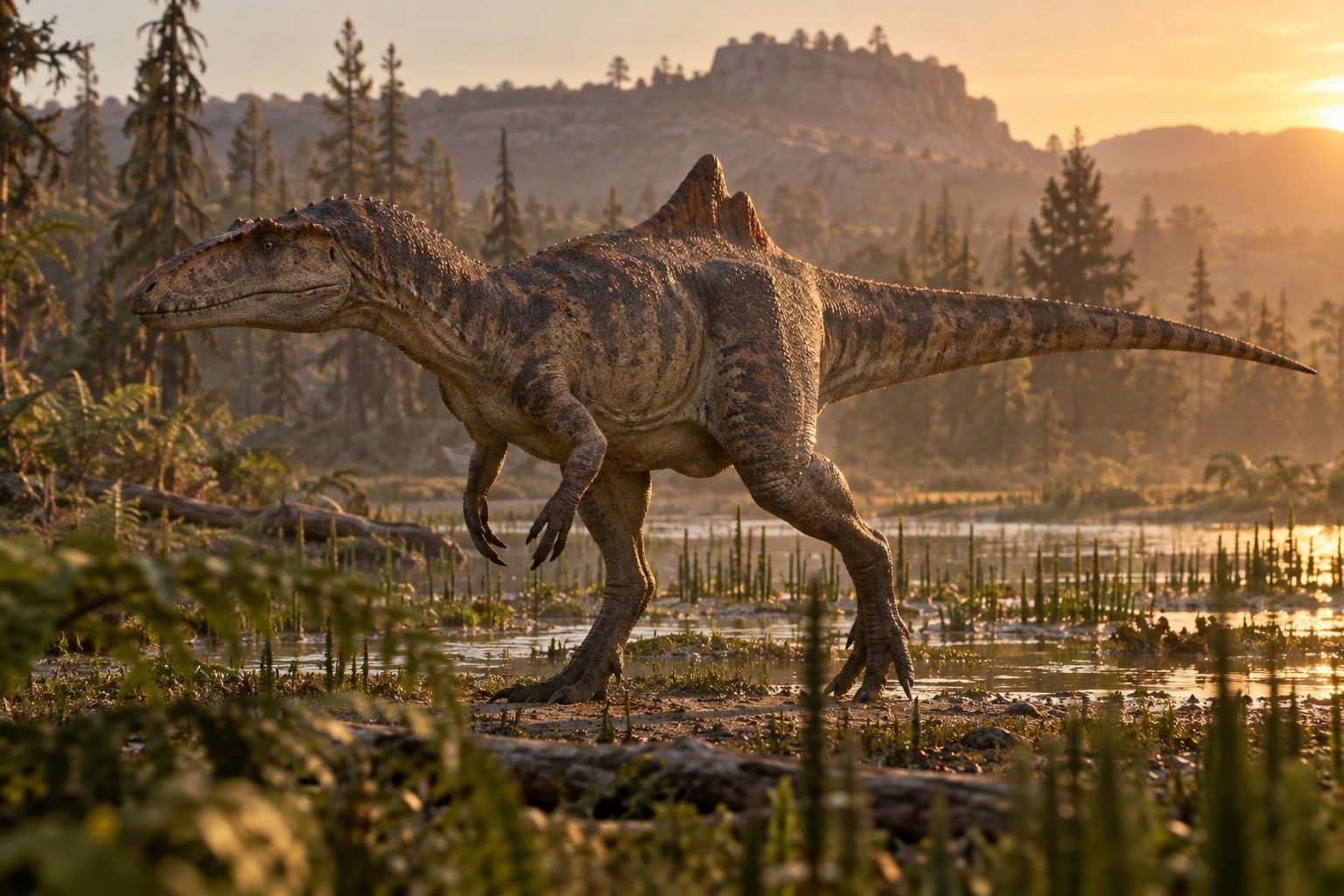
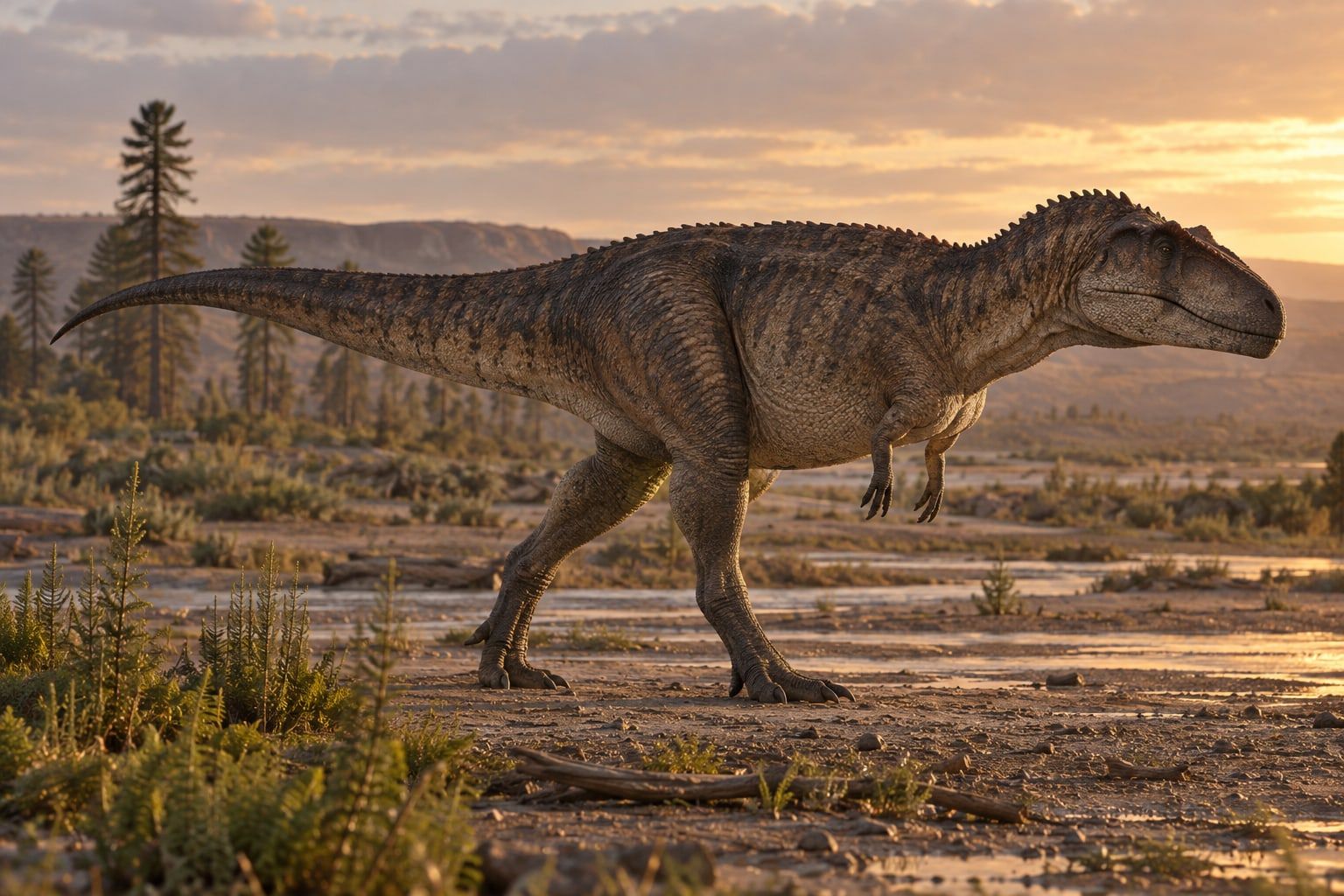
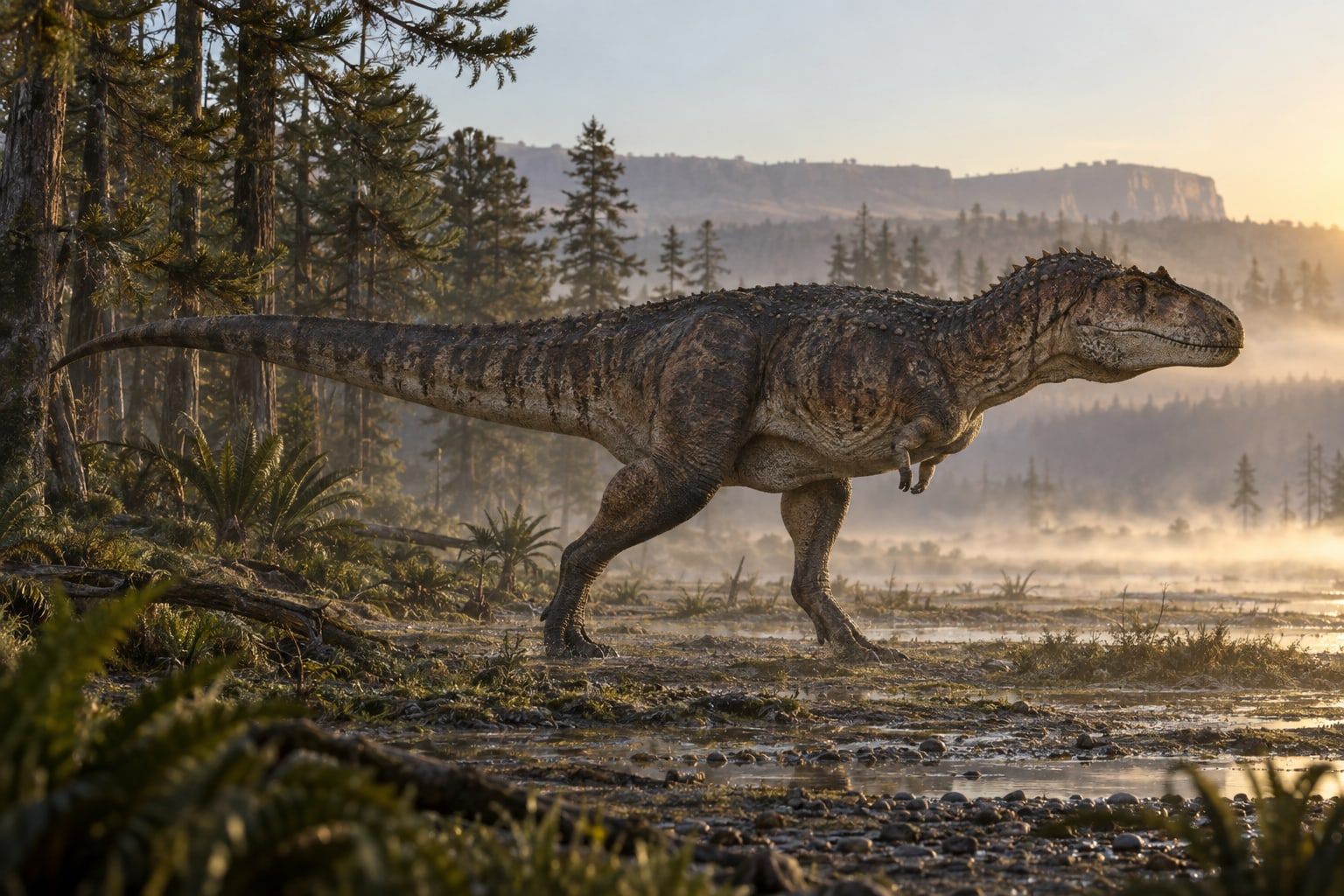
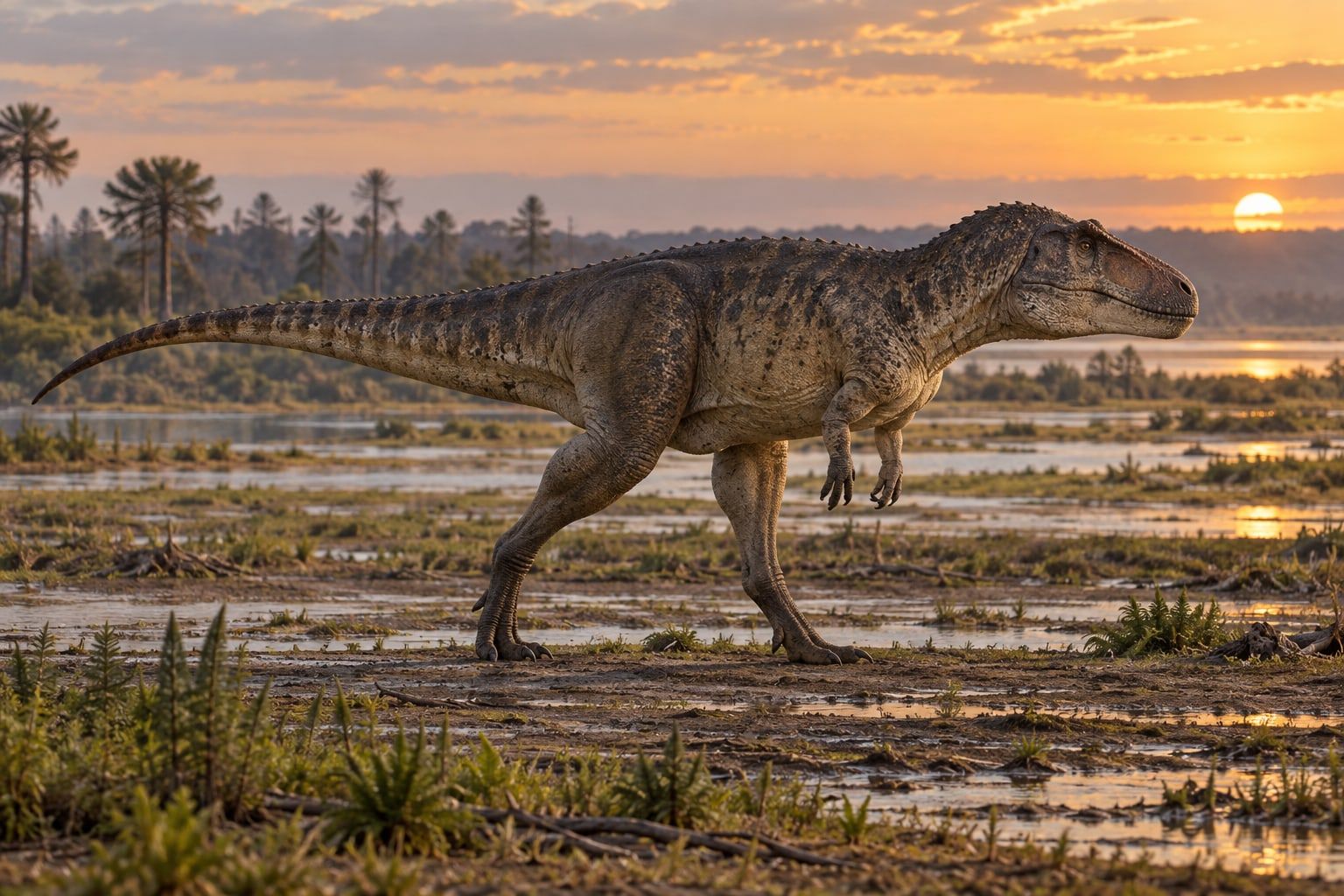
Taurovenator was a large meat eater from the same family as Giganotosaurus and Carcharodontosaurus, big predators with long skulls and blade-like teeth. For years it was known only from a single bone from above the eye, which carried a rough, swollen ridge.
Its world
It lived in the Cretaceous in what is now Argentina, in the rocks of the Huincul Formation. The same formation has produced the giant plant eater Argentinosaurus and the hunters Mapusaurus, Meraxes and Skorpiovenator.
How it was found
Motta and colleagues named Taurovenator in 2016. Because the first find was so small, some scientists thought it might belong to Mapusaurus instead. A second, more complete find has since added more of the skull and skeleton and made the case for a separate genus stronger.
Lived alongside
Found in the same rock formations
Close relatives
Other members of Carcharodontosauridae
Sources: WikidataNamed in: M. J. Motta, A. M. Aranciaga Rolando, and S. Rozadilla, F. L. Agnolin, N. R. Chimento, F. Brissón Egli, F. E. Novas. 2016. New theropod fauna from the Upper Cretaceous (Huincul Formation) of northwestern Patagonia, Argentina. Cretaceous Period: Biotic Diversity and Biogeography. New Mexico Museum of Natural History and Science Bulletin 71:231-253