Australodocus
"southern beam"
Type species Australodocus bohetii
- Lived
- 149 to 143 million years ago, Late Jurassic
- Diet
- Herbivore
- Group
- Sauropods
- Found in
- Tanzania
- Named by
- Remes 2007
Where its fossils were found
The evidence
Today

145 million years ago
Habitat
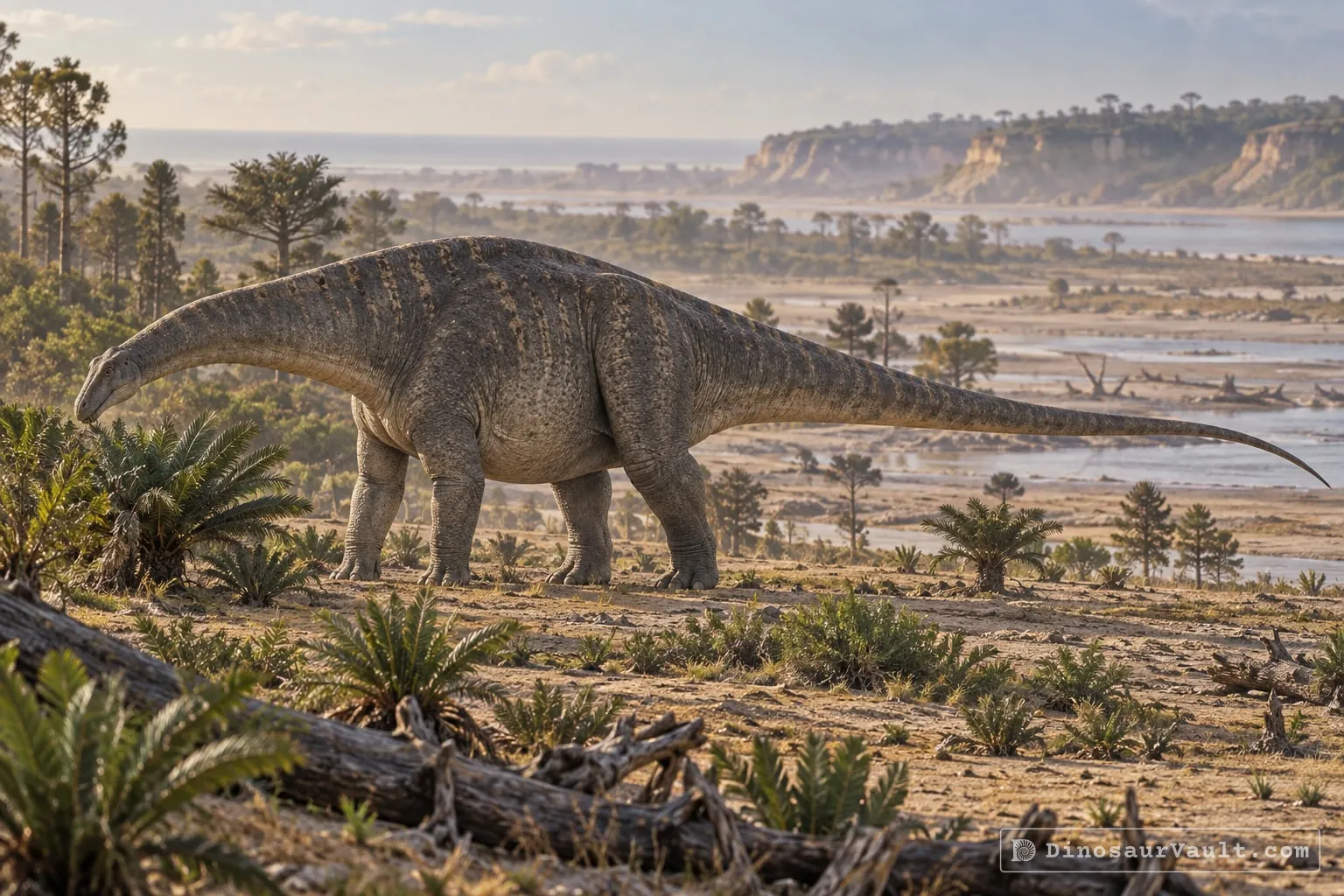
A warm coastal landscape with tidal flats, lagoons and vegetation farther inland, under a strongly seasonal climate. Conifers grew here, alongside dinosaurs such as Giraffatitan, Dicraeosaurus and Kentrosaurus.
Field notes
About Australodocus
What it was like
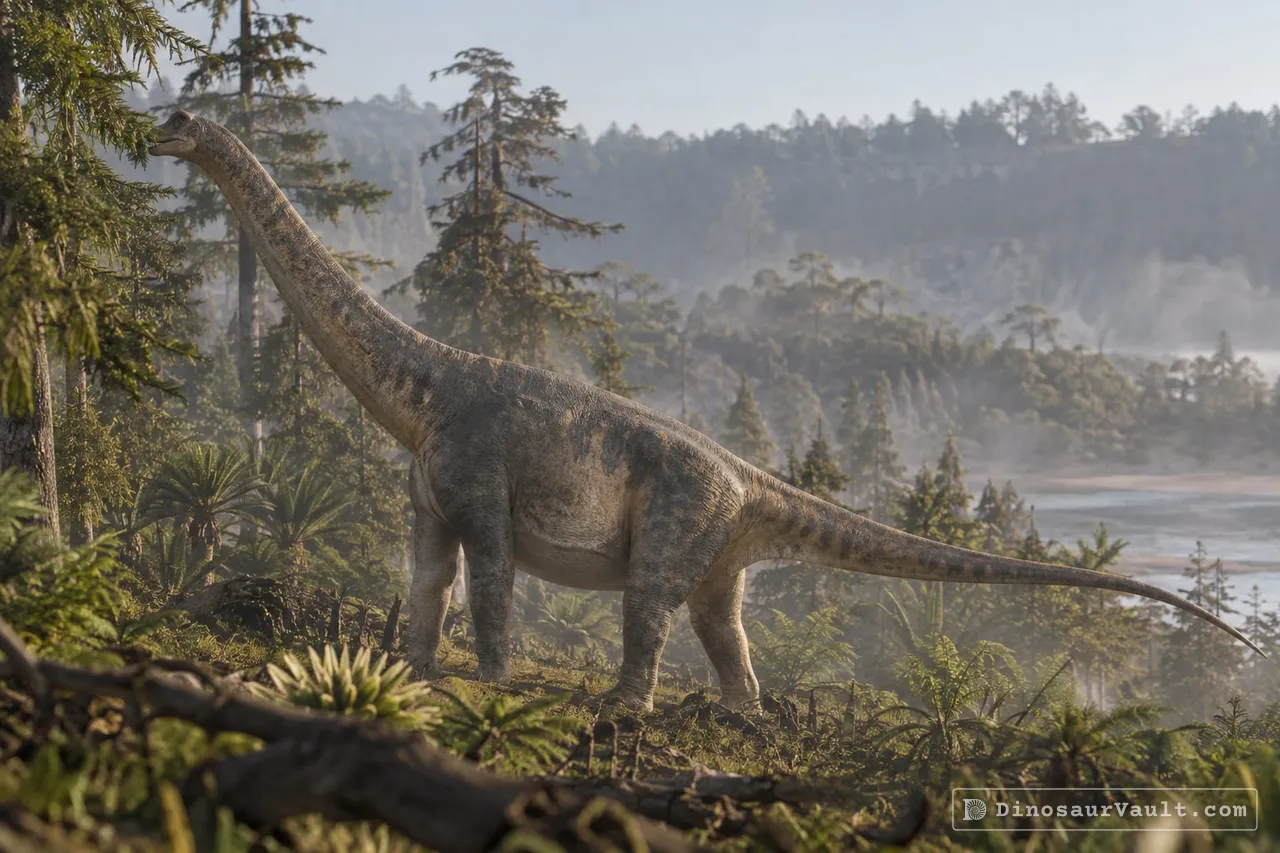
Australodocus was a long-necked sauropod known from a few neck bones. It was first thought to be a relative of Diplodocus, but later studies suggest it was closer to the titanosaurs.
Its world
It lived in the Late Jurassic in what is now Tanzania. Its bones come from the Tendaguru Formation, a rich site shared with the giant Giraffatitan, the short-necked Dicraeosaurus and the spiked Kentrosaurus.
How it was found
Remes named it in 2007. The type species is Australodocus bohetii.
Field gallery
More views of Australodocus
Scenes reconstructed from the available fossil evidence.
Lived alongside
Found in the same rock formations
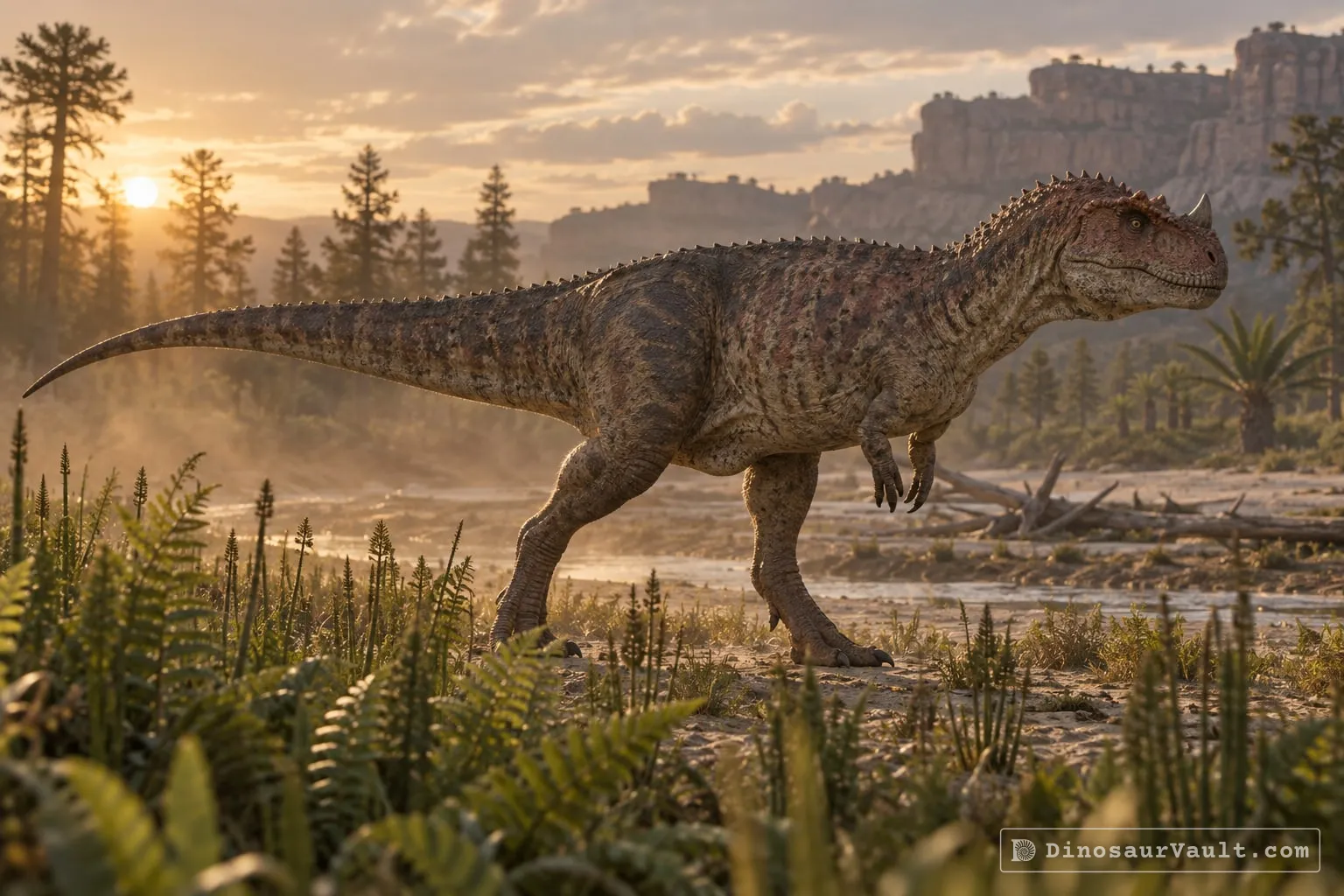
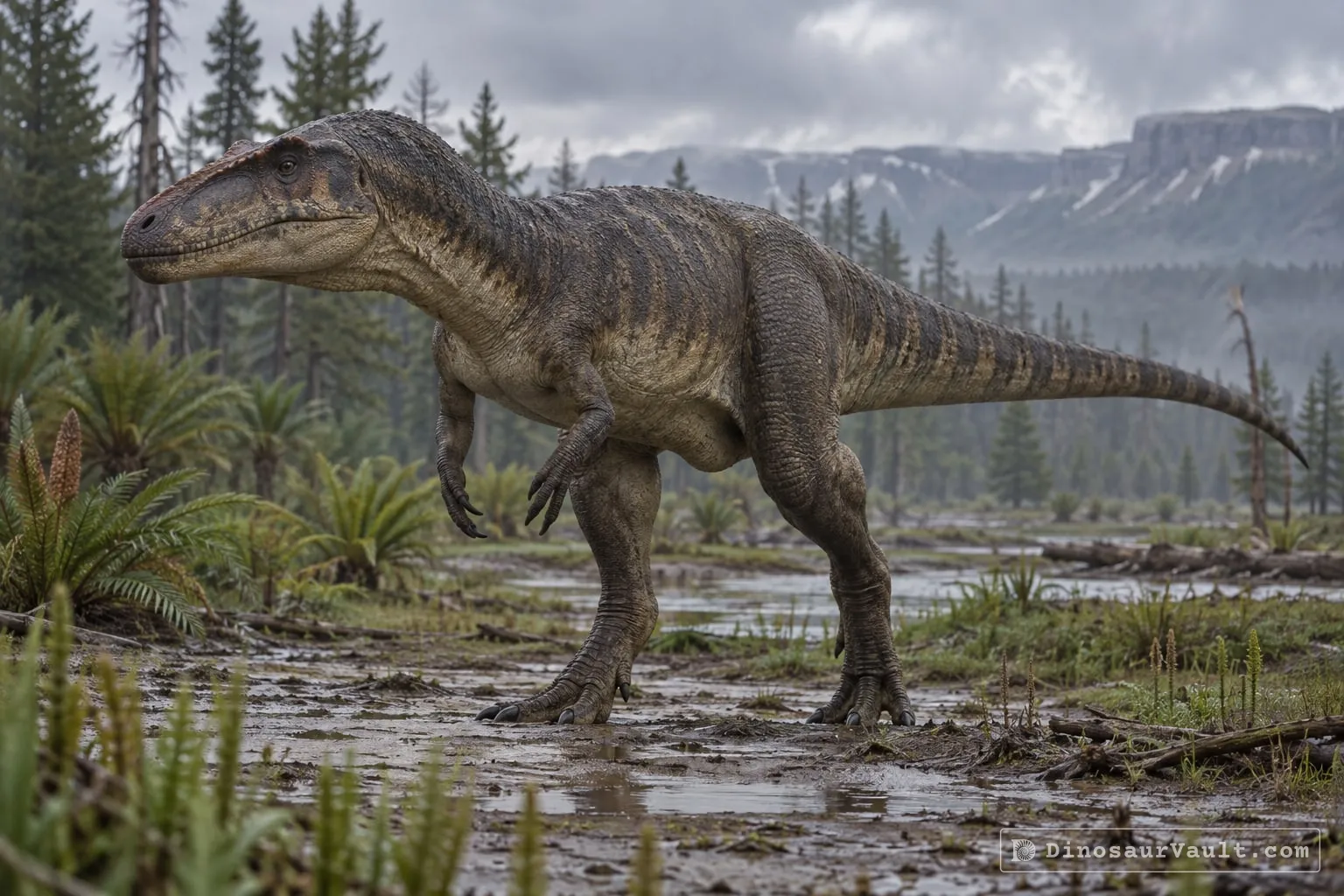
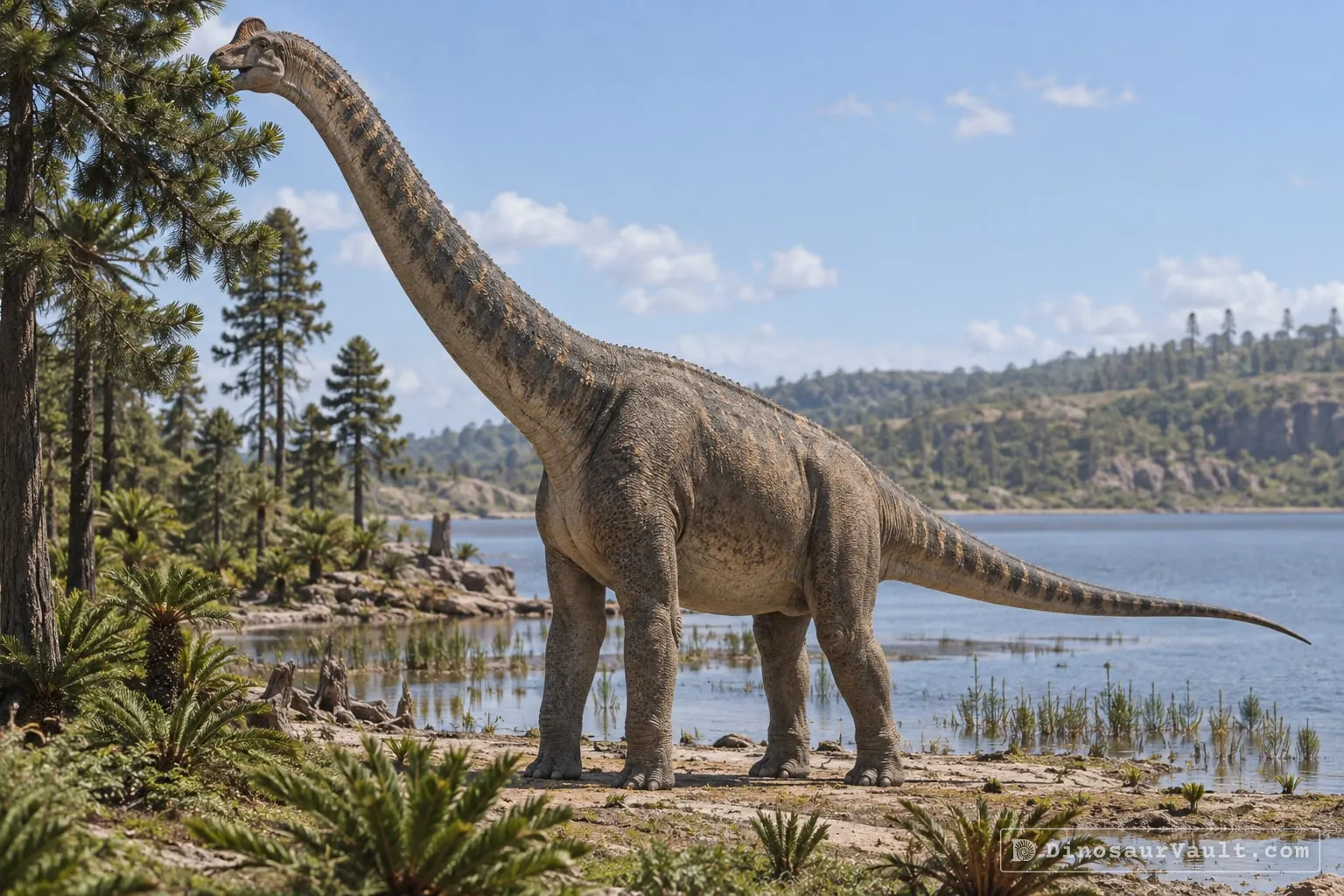
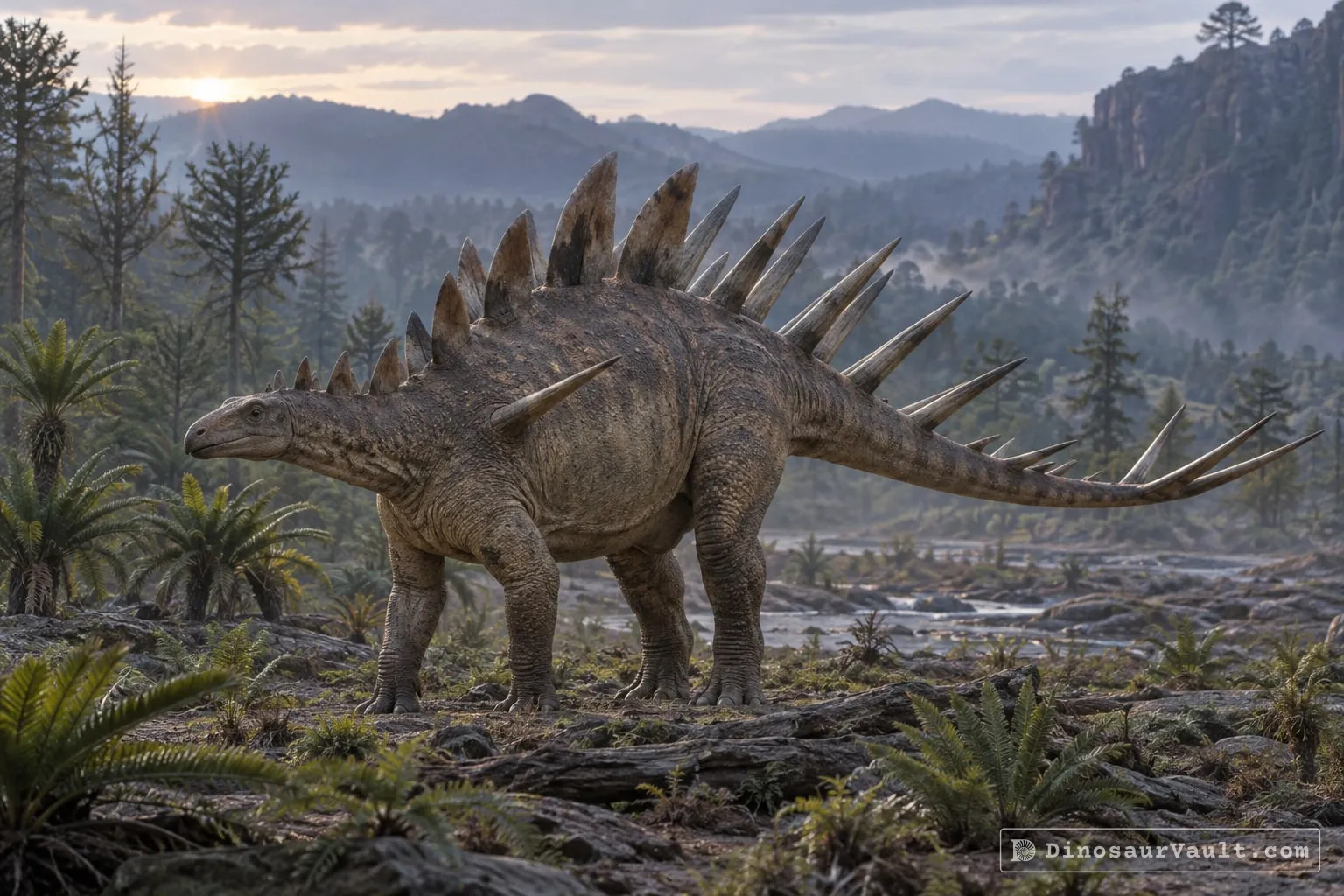
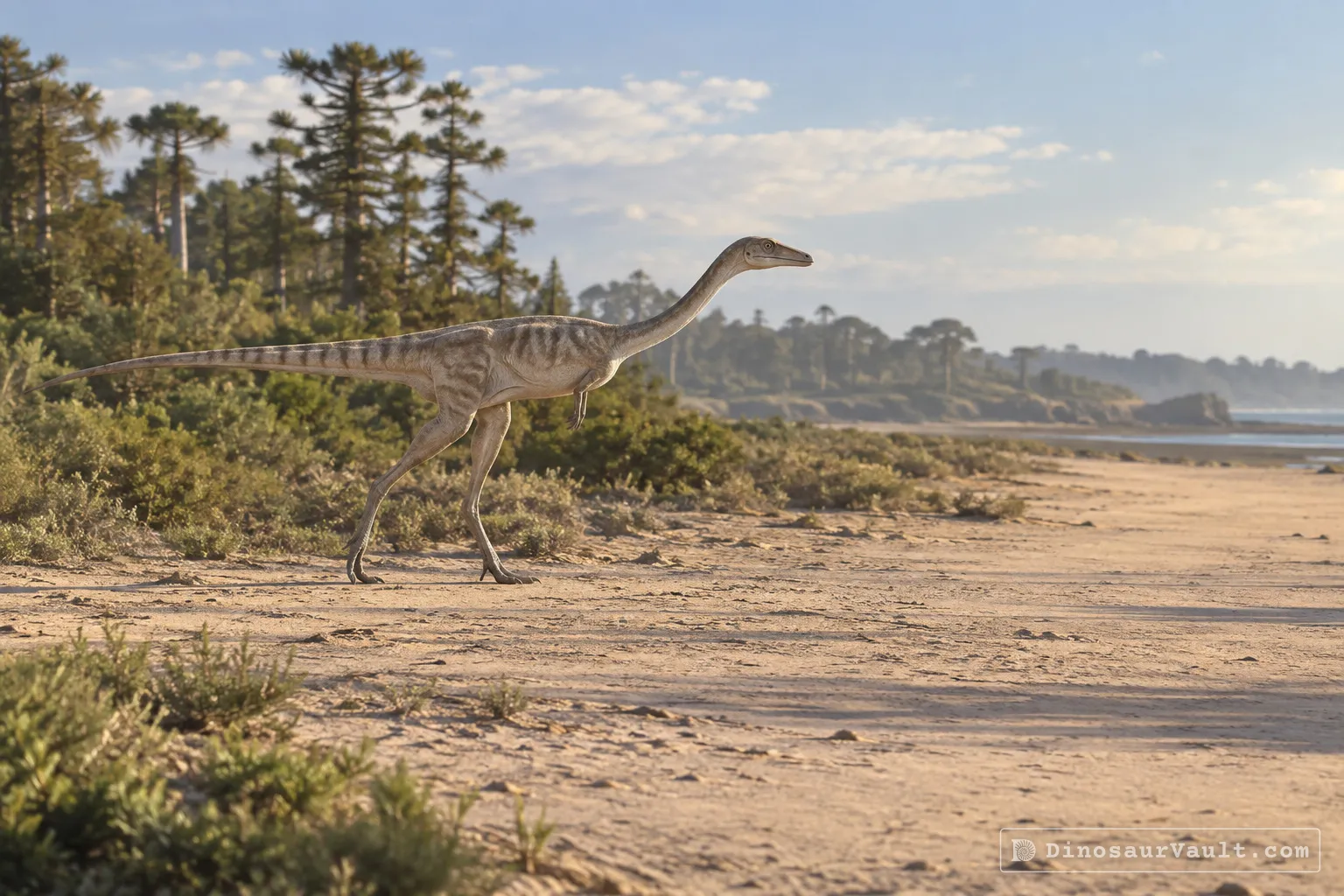
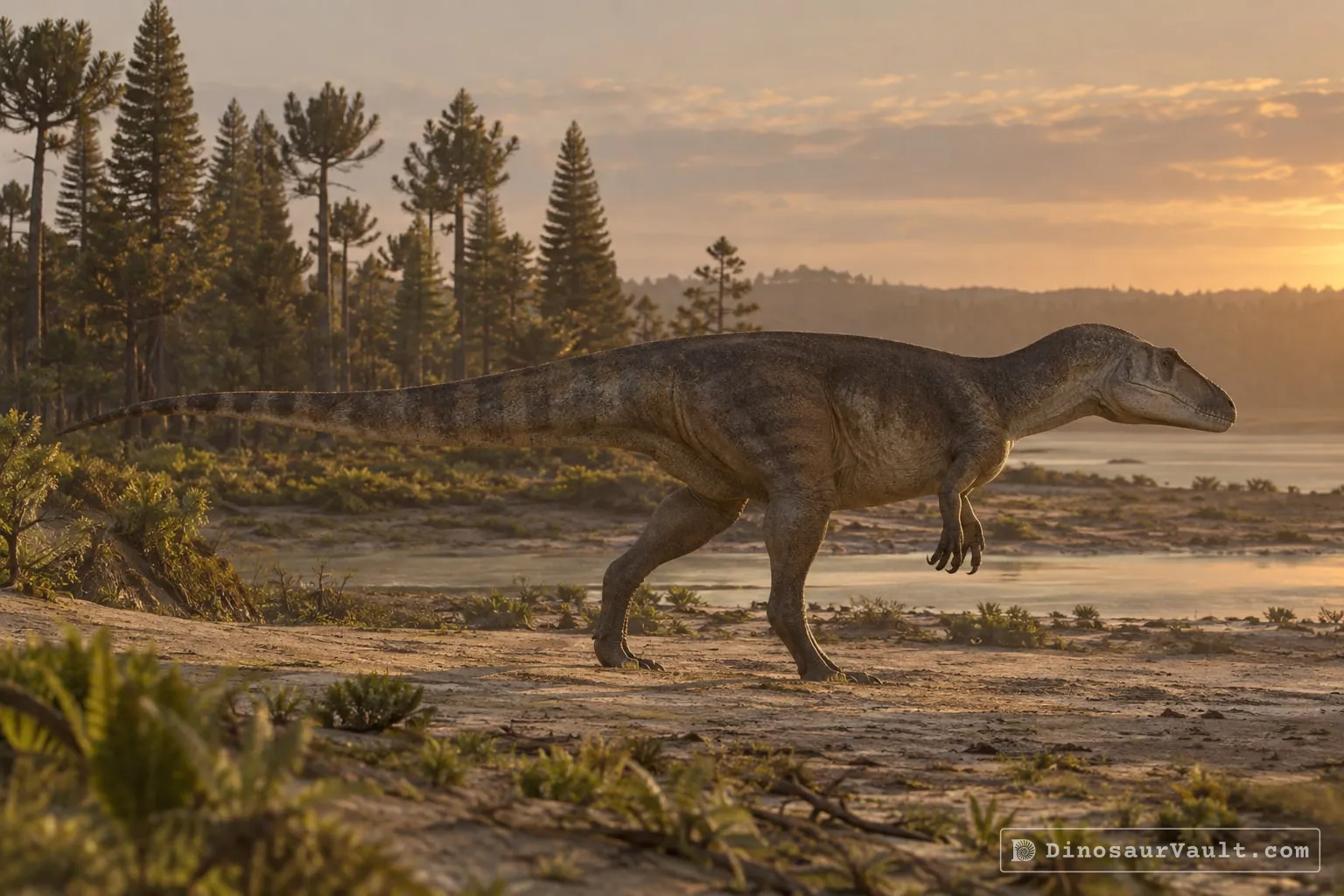


A rock formation can hold fossils laid down millions of years apart, so not every animal here met Australodocus.
The evidence
The science behind Australodocus
Which parts of the picture come from its own bones, and which come from its relatives.
From its own fossils
- The surviving type bones are a pair of neighboring vertebrae from the middle of the neck, found joined together and probably from one animal.
- The vertebrae are moderately long, with tall arches topped by low, split spines.
- Scans show many small internal air spaces running through the bodies, arches and split spines of the vertebrae.
Borrowed from relatives
- The missing head and jaws are restored by comparison with Euhelopus.
Still unknown
- The shape of its head and teeth, and its body, legs and tail.
- Its full body size and neck length.
- Its exact place among long-necked sauropods. It was first classed with Diplodocus, while later studies place it among titanosauriforms, probably close to but outside the titanosaurs.
Discovery timeline
- 2007Named itREMES
- 2011Family treeWhitlock
- 2019RedescriptionMannion et al.
Key papers
The research behind what we know of Australodocus
Named it
Named Australodocus from distinctive neck vertebrae, initially interpreting it as a relative of Diplodocus.
A SECOND GONDWANAN DIPLODOCID DINOSAUR FROM THE UPPER JURASSIC TENDAGURU BEDS OF TANZANIA, EAST AFRICA. Palaeontology 50: 653-667
Read the paper : A SECOND GONDWANAN DIPLODOCID DINOSAUR FROM THE UPPER JURASSIC TENDAGURU BEDS OF TANZANIA, EAST AFRICA (opens in a new tab)Family tree
Reexamined the neck bones and placed Australodocus among titanosauriforms rather than relatives of Diplodocus.
Re-evaluation of Australodocus bohetii, a putative diplodocoid sauropod from the Tendaguru Formation of Tanzania, with comment on Late Jurassic sauropod faunal diversity and palaeoecology. Palaeogeography, Palaeoclimatology, Palaeoecology 309: 333-341
Read the paper : Re-evaluation of Australodocus bohetii, a putative diplodocoid sauropod from the Tendaguru Formation of Tanzania, with comment on Late Jurassic sauropod faunal diversity and palaeoecology (opens in a new tab)Redescription
Scans of the neck bones and a broad family tree tentatively favored a position close to titanosaurs, outside the titanosaur group itself.
Taxonomic affinities of the putative titanosaurs from the Late Jurassic Tendaguru Formation of Tanzania: phylogenetic and biogeographic implications for eusauropod dinosaur evolution. Zoological Journal of the Linnean Society 185: 784-909
Read the paper : Taxonomic affinities of the putative titanosaurs from the Late Jurassic Tendaguru Formation of Tanzania: phylogenetic and biogeographic implications for eusauropod dinosaur evolution (opens in a new tab)
Close relatives
Other members of Somphospondyli


Sources: Wikidata