Ischioceratops
"hip horned face"
Type species Ischioceratops zhuchengensis
- Lived
- 84 to 72 million years ago, Late Cretaceous
- Diet
- Herbivore
- Group
- Ceratopsians, Leptoceratopsidae
- Found in
- China
- Named by
- He et al. 2015
Where its fossils were found
The evidence
Today

80 million years ago
Habitat
Rivers and floodplains covered parts of this Late Cretaceous landscape in China. Its neighbors included Shantungosaurus, Sinoceratops and the predator Zhuchengtyrannus.
Field notes
About Ischioceratops
What it was like
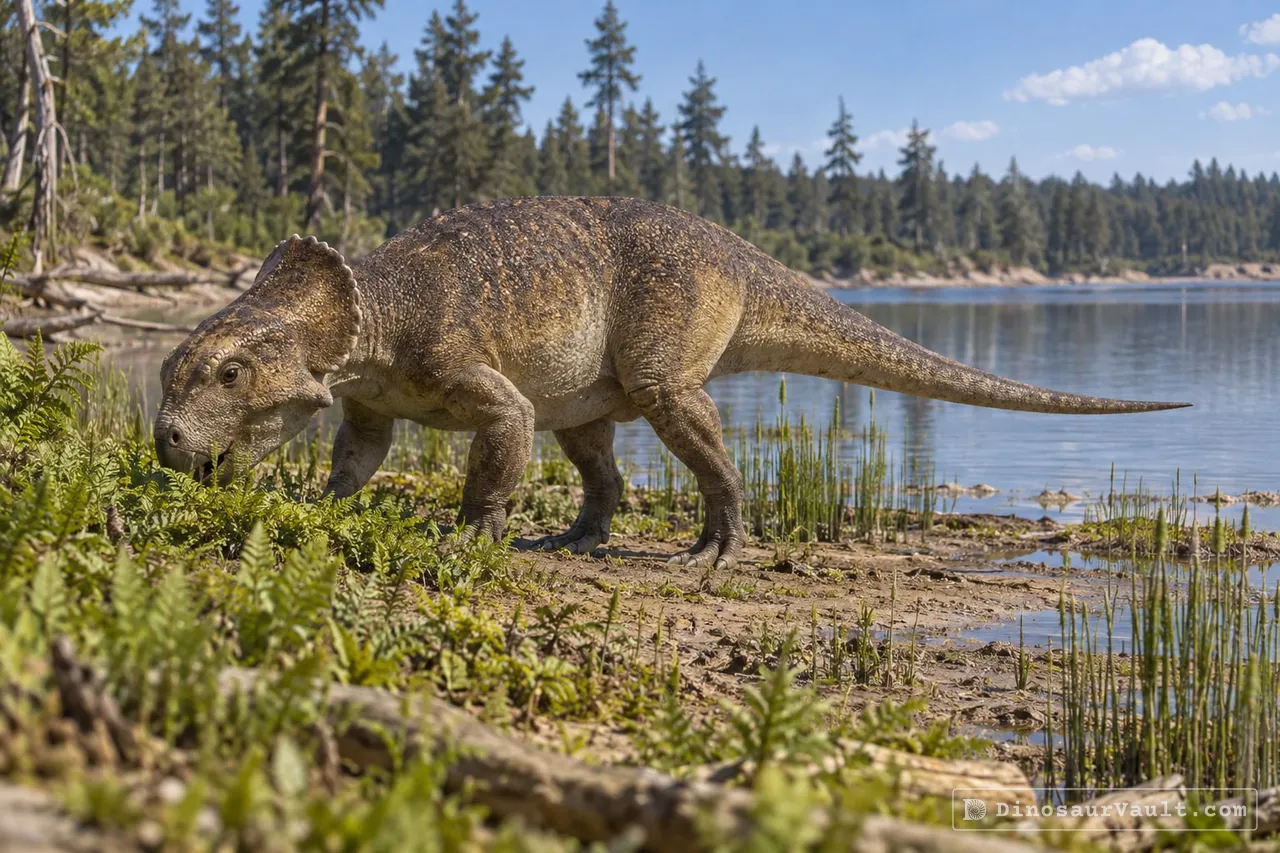
Ischioceratops was a small leptoceratopsid, a simple horned dinosaur. It is known from a partial skeleton. One of its hip bones had an unusual oval opening, which gave it its name.
Its world
It lived in the Late Cretaceous, in what is now China. It comes from the Hongtuya Formation, where it shared the land with the giant duckbill Shantungosaurus, the tyrannosaur Zhuchengtyrannus and the horned Sinoceratops.
How it was found
He and colleagues named Ischioceratops in 2015. The type species is Ischioceratops zhuchengensis.
Field gallery
More views of Ischioceratops
Scenes reconstructed from the available fossil evidence.
1 of 3
Lived alongside
Found in the same rock formations
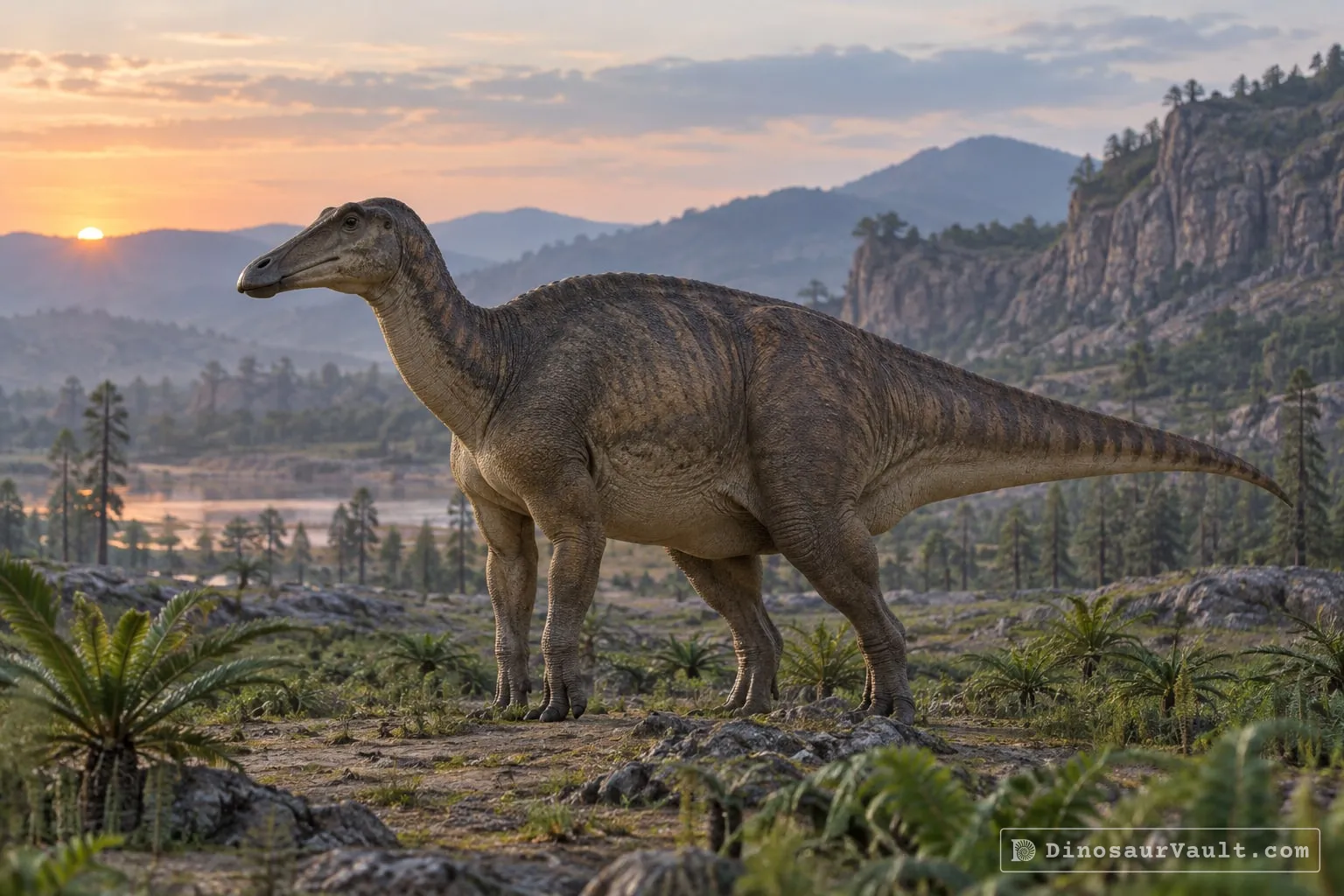
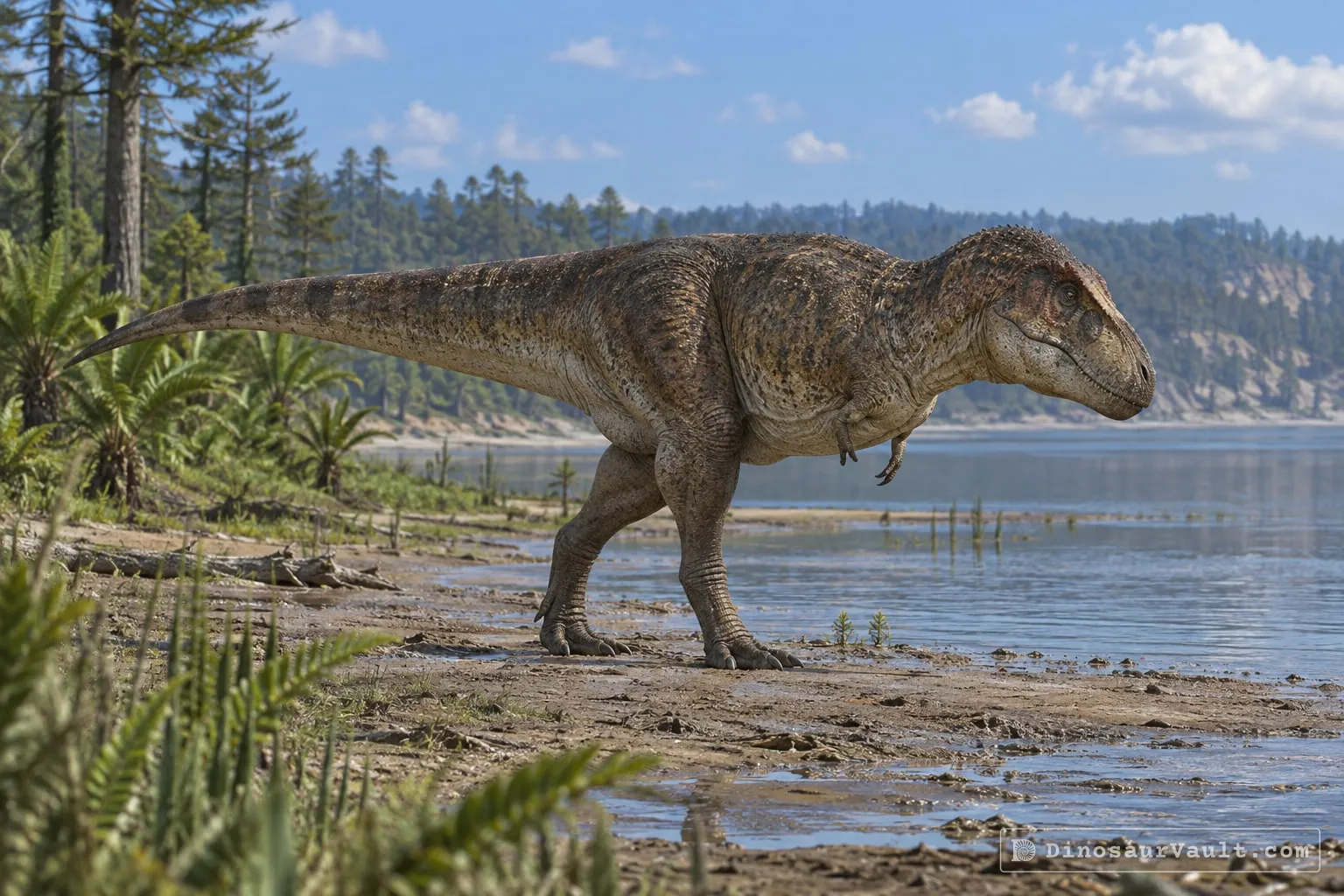
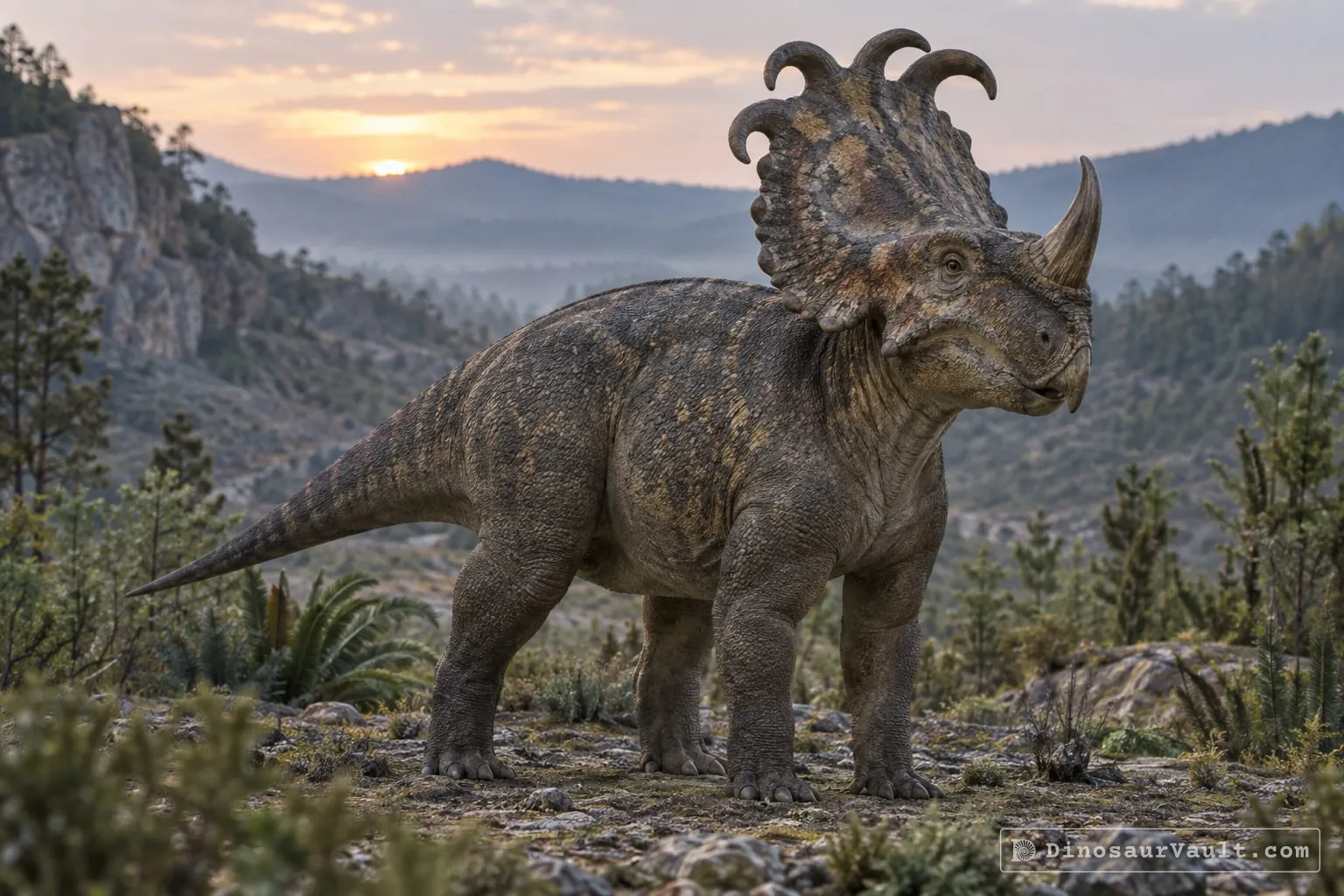
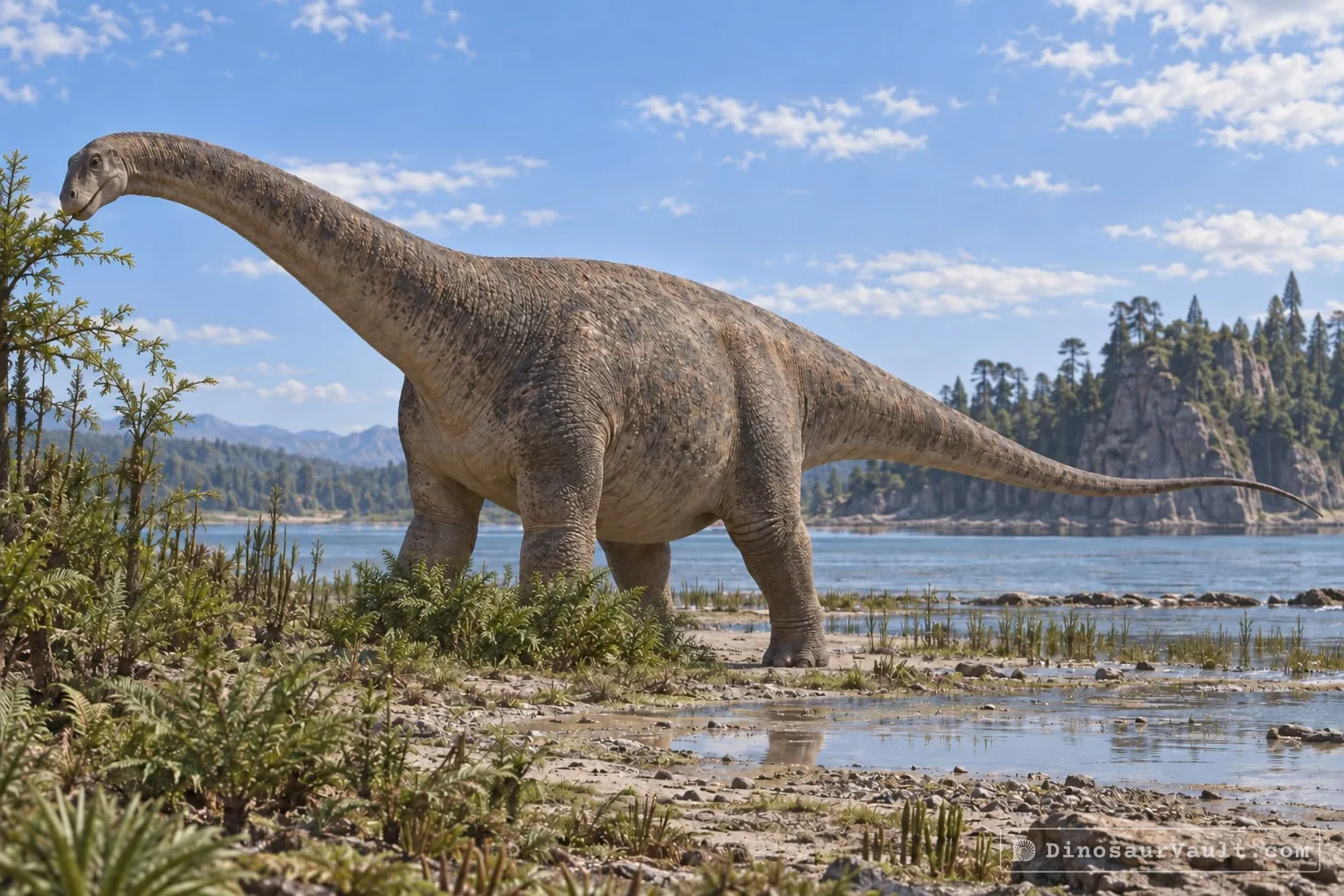
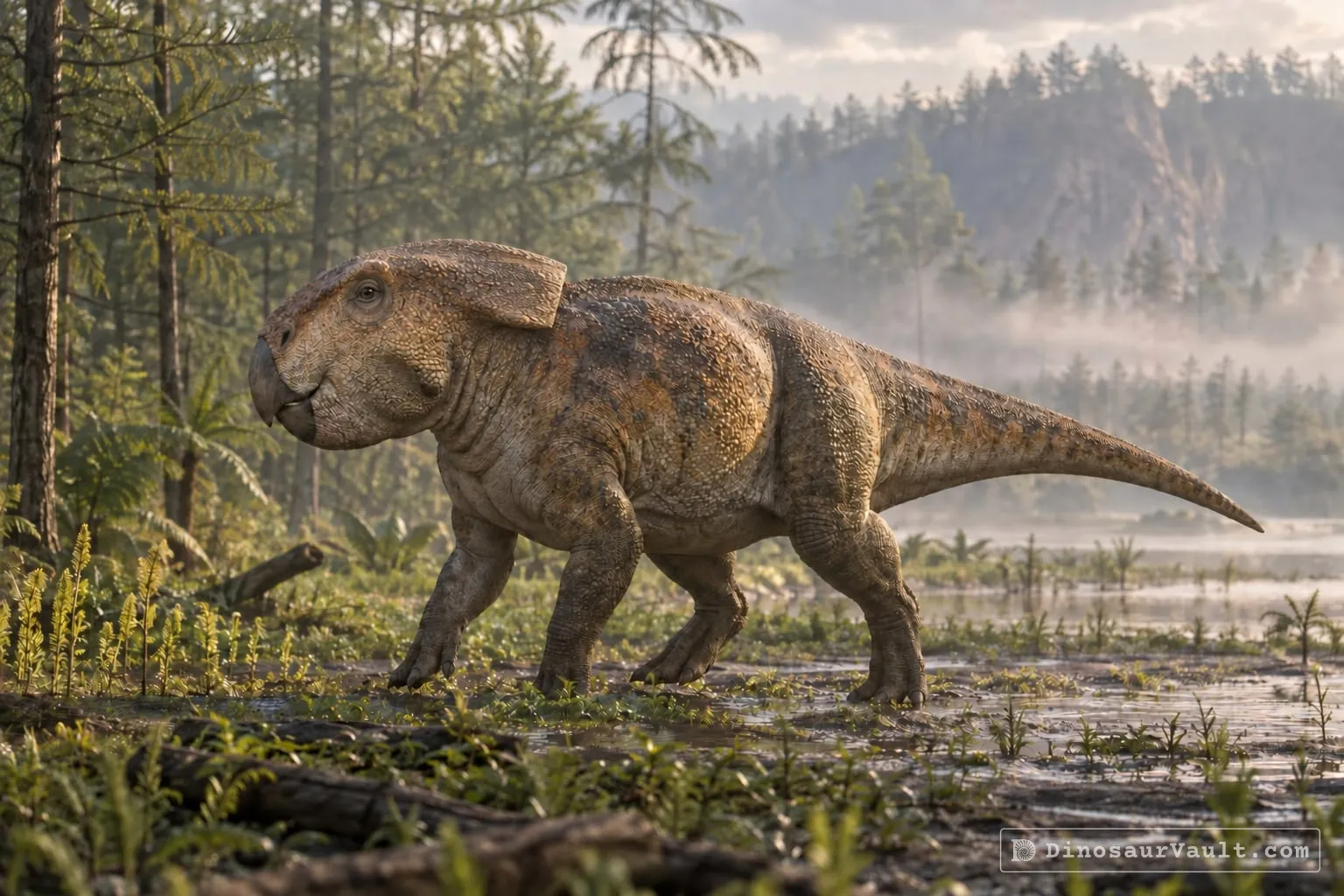
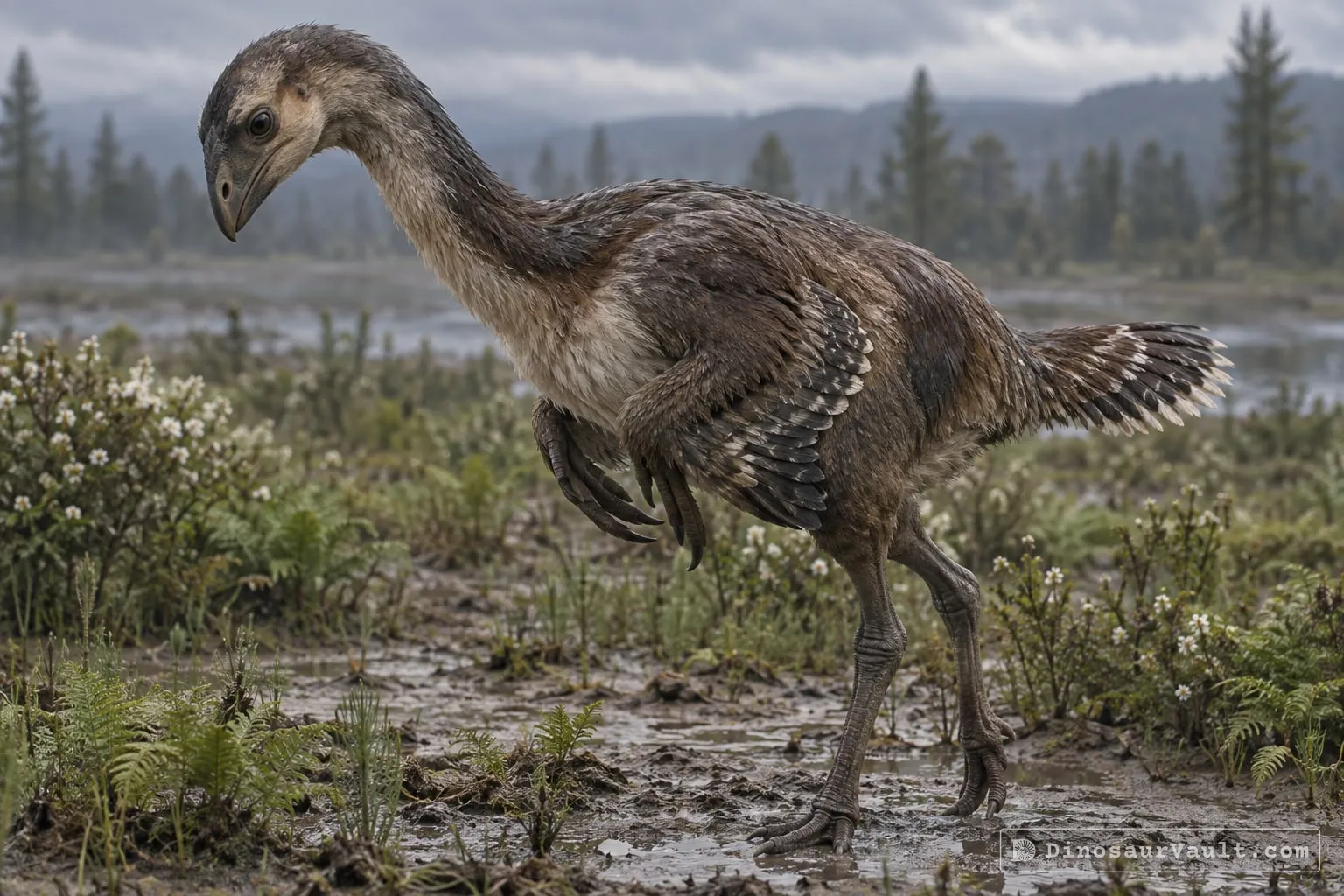
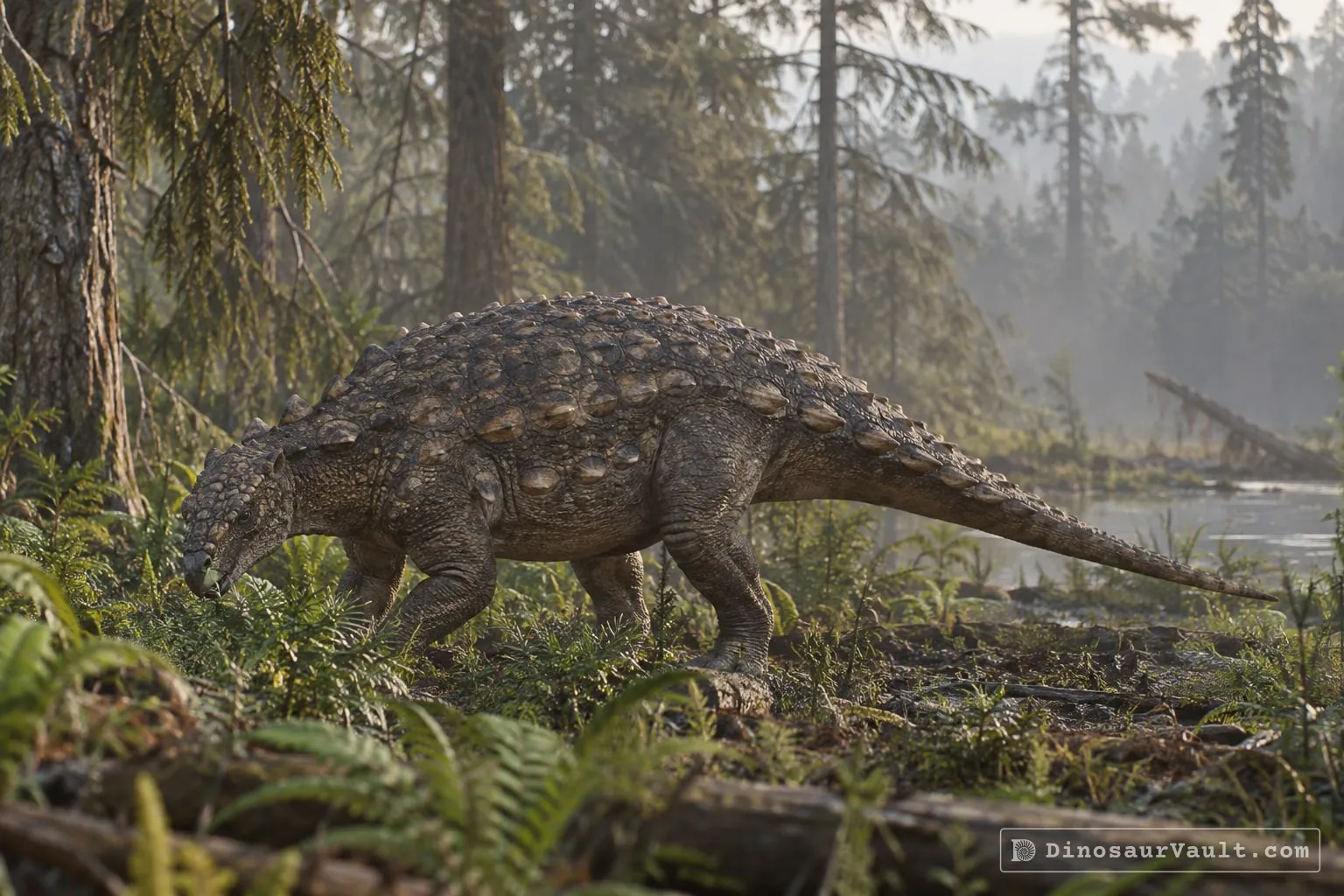


A rock formation can hold fossils laid down millions of years apart, so not every animal here met Ischioceratops.
The evidence
The science behind Ischioceratops
Which parts of the picture come from its own bones, and which come from its relatives.
From its own fossils
- The partial skeleton preserves the pelvis, fused hip vertebrae, bony tendons, the front of the tail and much of a hind leg, with a straight thigh bone and a rod-like fibula.
- The paired lower hip bones are bowed, each with an oval opening in a widened middle section and an expanded lower end, a feature that sets Ischioceratops apart. Both sides match and the openings have finished edges, so its describers do not think they were caused by injury or disease.
- The spines on the front tail vertebrae are tall, growing taller along the preserved part of the tail.
Borrowed from relatives
- The missing head, with a plant-cropping beak and a short, solid frill, is restored by comparison with Leptoceratops.
- The neck, chest and front legs follow Cerasinops and Leptoceratops.
Still unknown
- The shape of its skull and frill.
- What the openings in its hip bones did.
- Whether Ischioceratops and Zhuchengceratops, from the same quarry, could be the same animal. Their skeletons share no bones to compare, and its describers found either Zhuchengceratops or Montanoceratops as its closest relative.
Discovery timeline
- 2010Close relativeXu et al.
- 2011Same rocksHone et al.
- 2015Named itHe et al.
Key papers
The research behind what we know of Ischioceratops
Close relative
Described Zhuchengceratops, a leptoceratopsid from the same quarry with an unusually deep, narrow lower jaw.
A New Leptoceratopsid (Ornithischia: Ceratopsia) from the Upper Cretaceous of Shandong, China and Its Implications for Neoceratopsian Evolution. PLoS ONE 5: e13835
Read the paper : A New Leptoceratopsid (Ornithischia: Ceratopsia) from the Upper Cretaceous of Shandong, China and Its Implications for Neoceratopsian Evolution (opens in a new tab)Same rocks
Named Zhuchengtyrannus from large jaw bones, documenting a giant predator in the same regional dinosaur community.
A new, large tyrannosaurine theropod from the Upper Cretaceous of China. Cretaceous Research 32: 495-503
Read the paper : A new, large tyrannosaurine theropod from the Upper Cretaceous of China (opens in a new tab)Named it
Named Ischioceratops from a partial skeleton with oval openings in its hip bones and placed it among leptoceratopsids.
A New Leptoceratopsid (Ornithischia, Ceratopsia) with a Unique Ischium from the Upper Cretaceous of Shandong Province, China. PLOS ONE 10: e0144148
Read the paper : A New Leptoceratopsid (Ornithischia, Ceratopsia) with a Unique Ischium from the Upper Cretaceous of Shandong Province, China (opens in a new tab)
Close relatives
Other members of Leptoceratopsidae


Sources: Wikidata