Yuzhoulong
"Yuzhou dragon"
Type species Yuzhoulong qurenensis
- Lived
- 168 to 162 million years ago, Middle Jurassic
- Diet
- Herbivore
- Group
- Sauropods
- Found in
- China
- Named by
- Dai et al. 2022
Where its fossils were found
The evidence
Today

165 million years ago
Habitat
The Shaximiao Formation records river plains and lakes that changed with wet and dry seasons. Shunosaurus and Huayangosaurus also lived in this region of China.
Field notes
About Yuzhoulong
What it was like
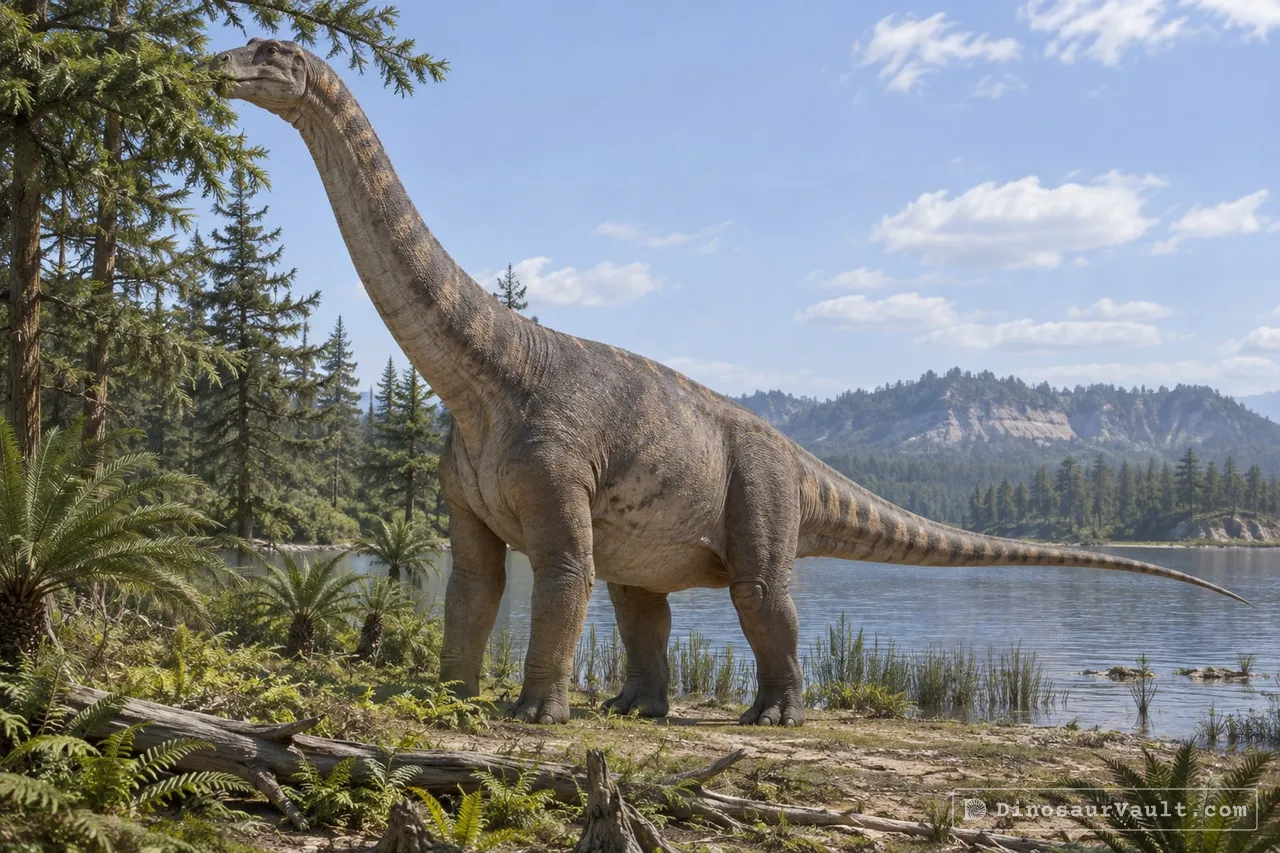
Yuzhoulong was a long-necked sauropod known from a partial skeleton of a young animal, including skull bones. It may be one of the oldest macronarians, the line that later led to Brachiosaurus and the titanosaurs.
Its world
It lived in the Middle Jurassic in what is now China. Its bones come from the Shaximiao Formation, where it shared the land with the long-necked Shunosaurus and the early stegosaur Huayangosaurus.
How it was found
Dai and colleagues named it in 2022. The type species is Yuzhoulong qurenensis. It is named after an old name for the region.
Field gallery
More views of Yuzhoulong
Scenes reconstructed from the available fossil evidence.
Lived alongside
Found in the same rock formations
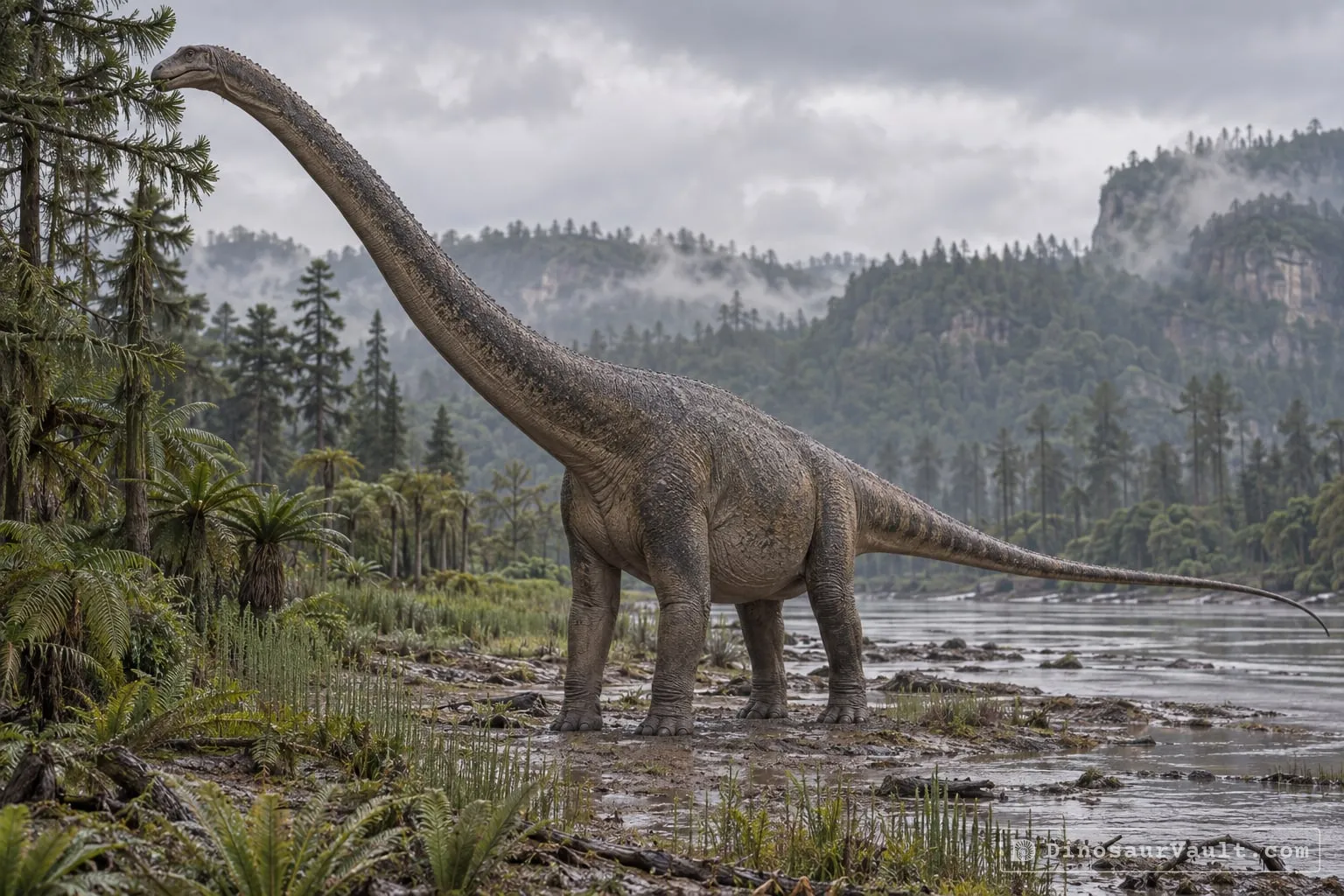
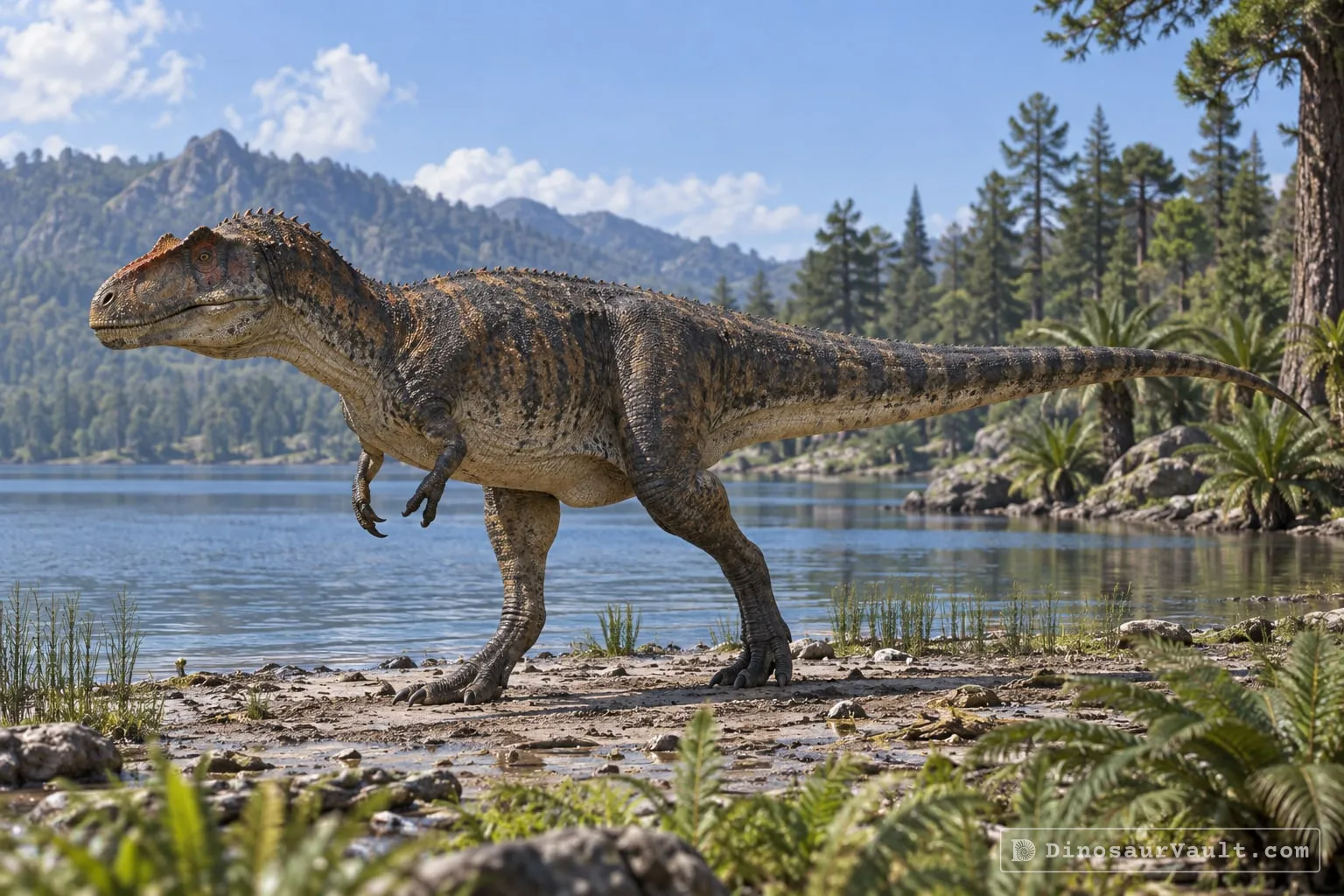
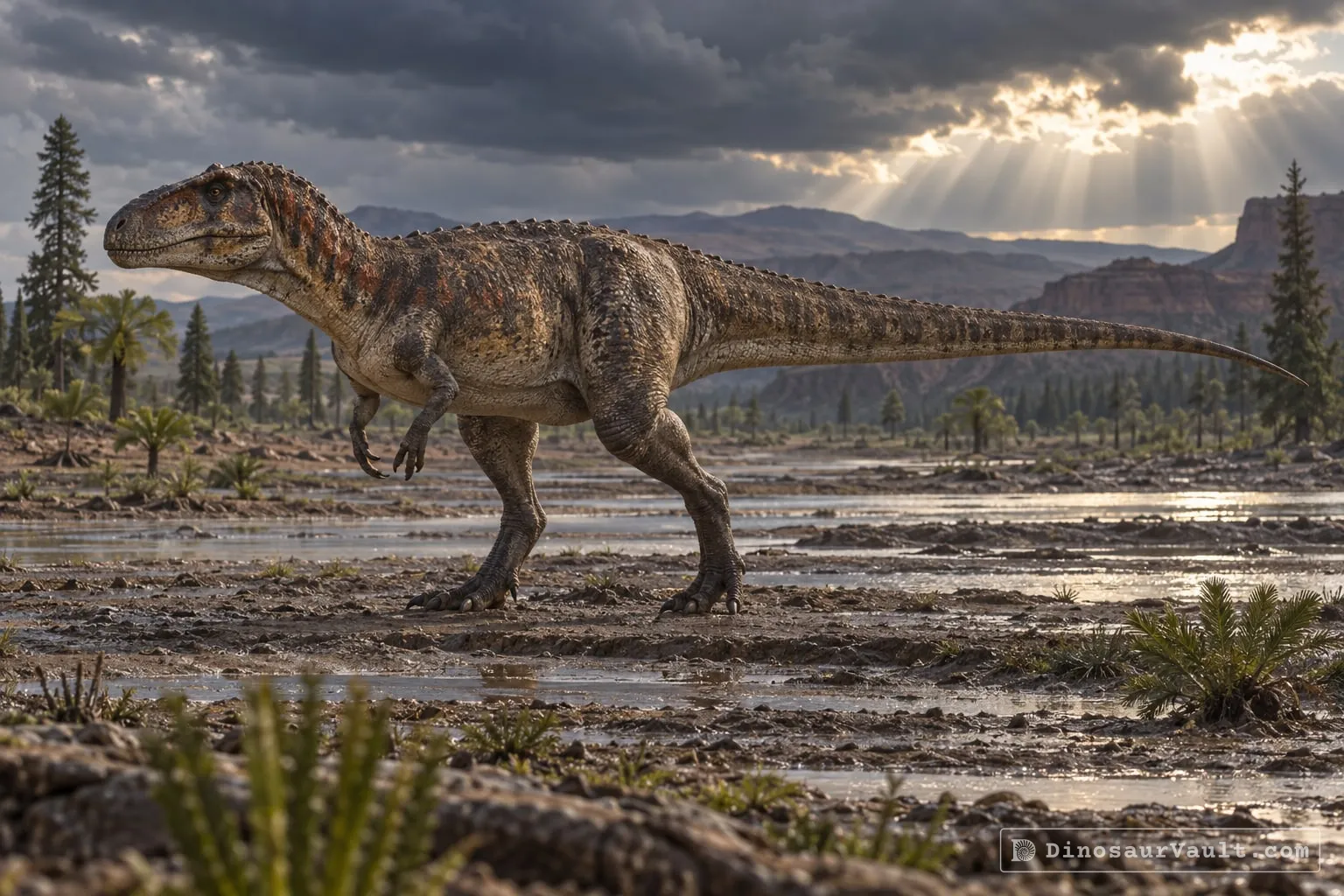
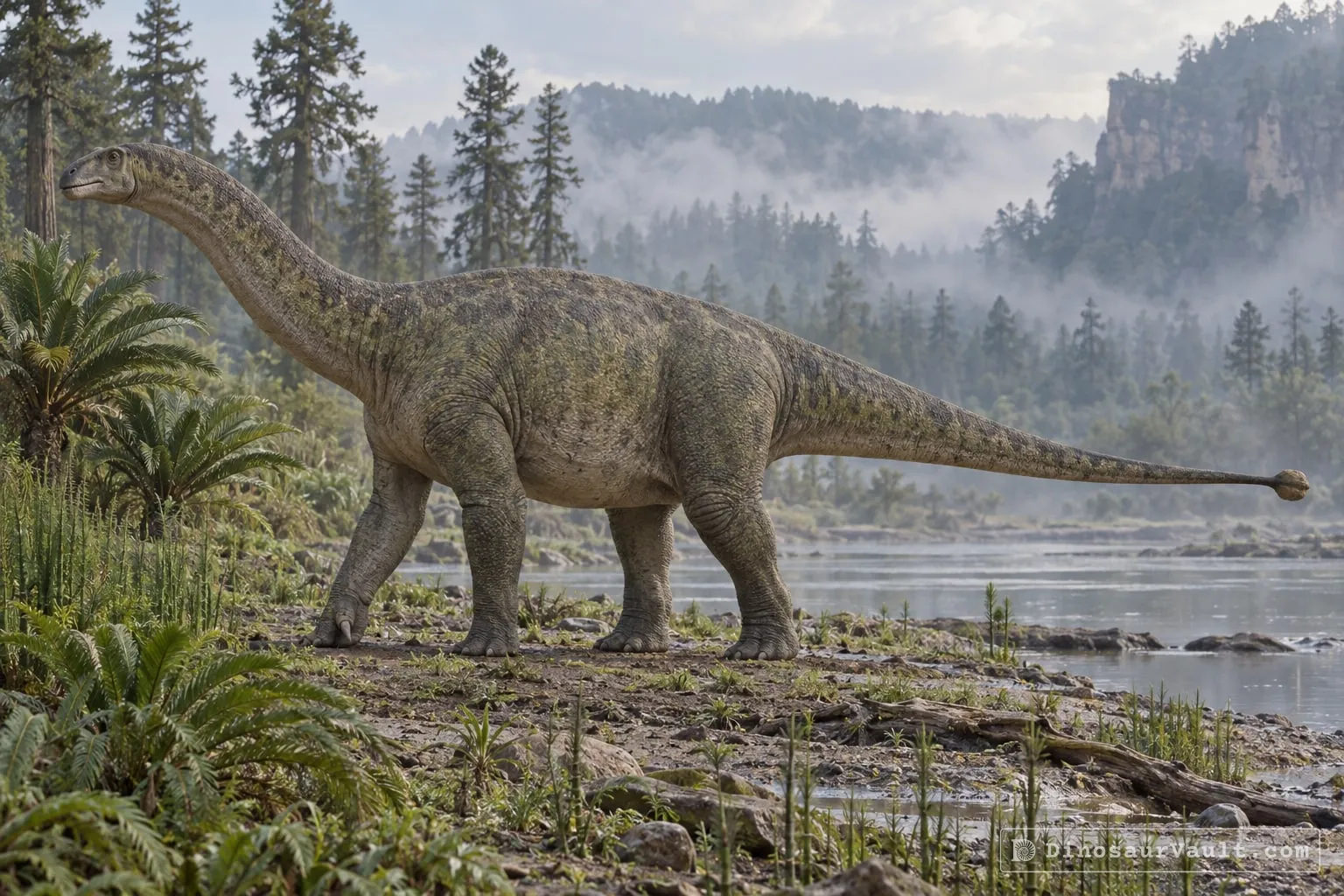
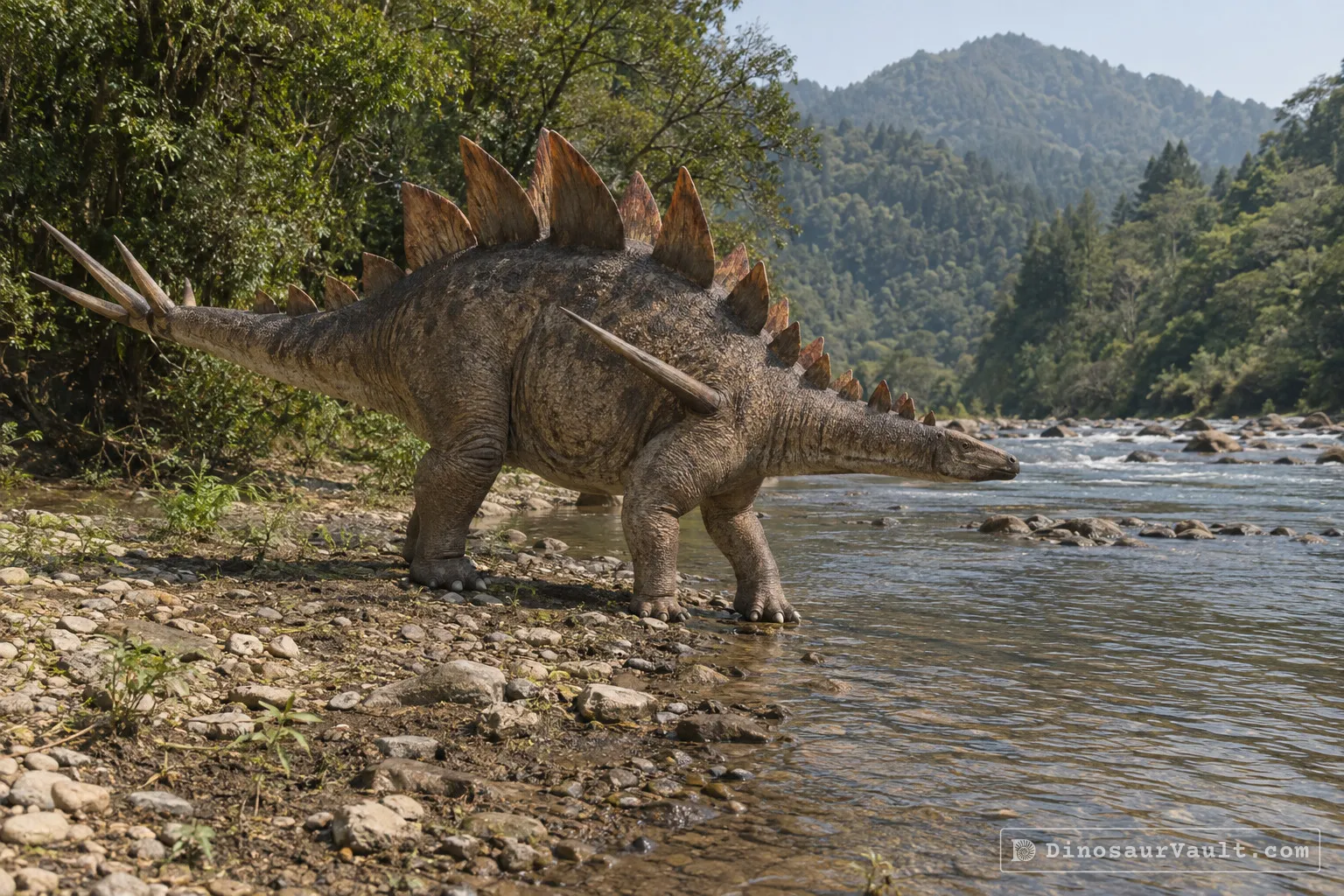
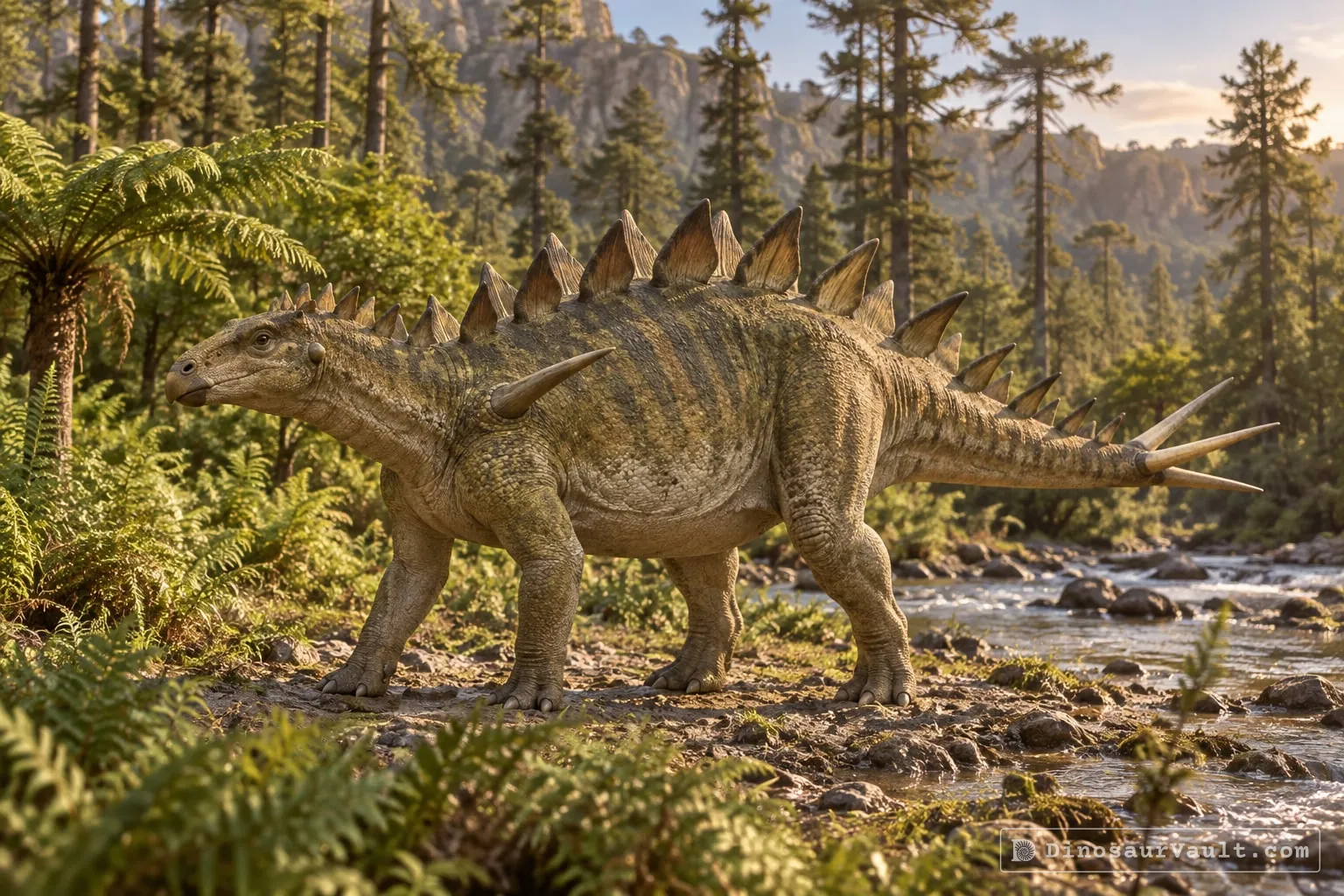
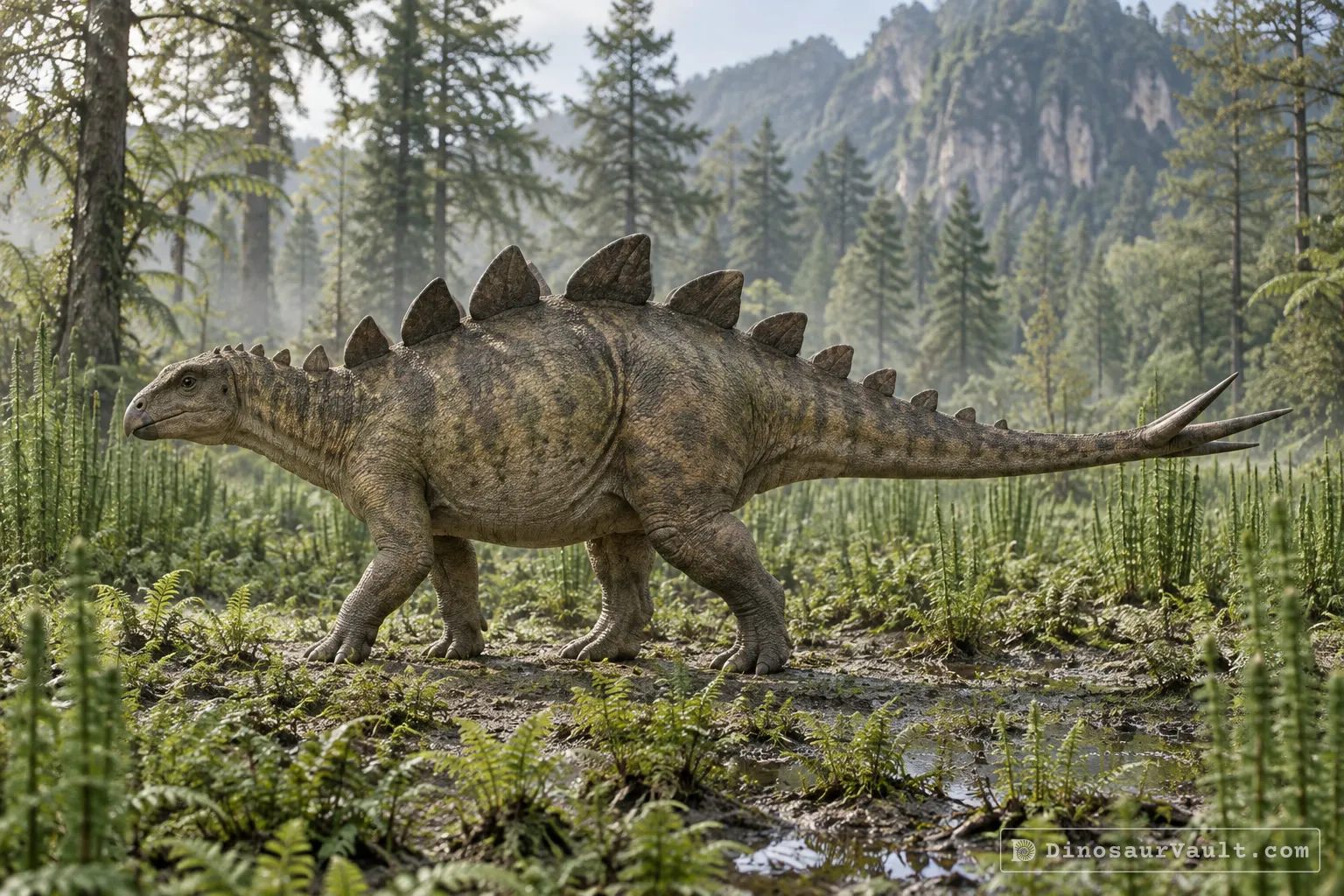


A rock formation can hold fossils laid down millions of years apart, so not every animal here met Yuzhoulong.
The evidence
The science behind Yuzhoulong
Which parts of the picture come from its own bones, and which come from its relatives.
From its own fossils
- A partial skeleton includes the braincase, a right lower jaw without its back end or teeth, back, hip and tail vertebrae, the shoulders and hips, the major bones of both arms and legs, and three hand bones. Another sauropod from the same quarry is kept separate.
- Extra hollows on the backs of the rib-supporting projections distinguish some of its back vertebrae.
- The front of its hip blade is twisted, and only the first back vertebra has a split spine.
Borrowed from relatives
- Its missing upper skull and neck are restored after Camarasaurus, and its hands and feet after articulated Camarasaurus hands and feet.
- Its body and tail are restored after Mnyamawamtuka, a more distant relative.
- Its describers compared it with Camarasaurus and Bellusaurus.
Still unknown
- Its full neck length, adult size and skin covering.
- Its closest relatives. It is placed near the base of the macronarian branch, but the details vary between analyses.
- Whether adults lived in groups or cared for their young.
Discovery timeline
- 2022Named itDai et al.
- 2022Close relativeRen et al.
- 2023Family treeRen et al.
Key papers
The research behind what we know of Yuzhoulong
Named it
Described a growing sauropod with skull bones and placed it near the beginning of the macronarian branch.
New macronarian from the Middle Jurassic of Chongqing, China: phylogenetic and biogeographic implications for neosauropod dinosaur evolution. Royal Society Open Science 9
Read the paper : New macronarian from the Middle Jurassic of Chongqing, China: phylogenetic and biogeographic implications for neosauropod dinosaur evolution (opens in a new tab)Close relative
Described Dashanpusaurus in detail and identified it as another early macronarian from the same formation.
Osteology of Dashanpusaurus dongi (Sauropoda: Macronaria) and new evolutionary evidence from Middle Jurassic Chinese sauropods. Journal of Systematic Palaeontology 20: 1-72
Read the paper : Osteology of Dashanpusaurus dongi (Sauropoda: Macronaria) and new evolutionary evidence from Middle Jurassic Chinese sauropods (opens in a new tab)Family tree
Used Dashanpusaurus and geographic evidence to argue that neosauropods had spread widely while Pangaea was still joined.
Re-examination of Dashanpusaurus dongi (Sauropoda: Macronaria) supports an early Middle Jurassic global distribution of neosauropod dinosaurs. Palaeogeography, Palaeoclimatology, Palaeoecology 610: 111318
Read the paper : Re-examination of Dashanpusaurus dongi (Sauropoda: Macronaria) supports an early Middle Jurassic global distribution of neosauropod dinosaurs (opens in a new tab)
Close relatives
Other members of Macronaria


Sources: Wikidata