Dashanpusaurus
"Dashanpu lizard"
Type species Dashanpusaurus dongi
- Lived
- 171 to 155 million years ago, Middle Jurassic to Late Jurassic
- Diet
- Herbivore
- Group
- Sauropods
- Found in
- China
- Named by
- Peng et al. 2005
Where its fossils were found
The evidence
Today

165 million years ago
Habitat
Rivers and lakes shaped the landscape recorded in the lower Shaximiao Formation. Its neighbors included the sauropod Shunosaurus, the stegosaur Huayangosaurus and the small plant eater Agilisaurus.
Field notes
About Dashanpusaurus
What it was like
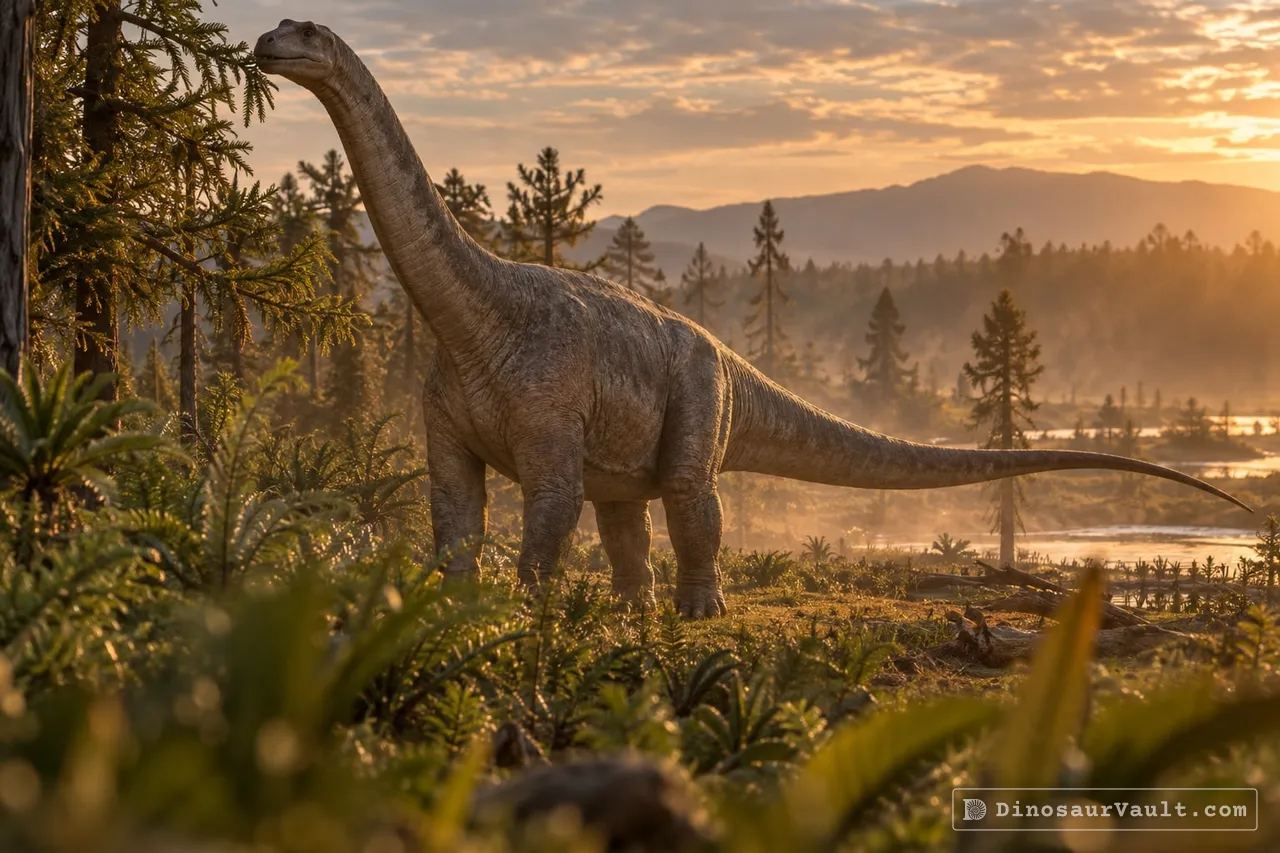
Dashanpusaurus was a sauropod, a long-necked plant eater. It is known from part of the skeleton. It may be one of the earliest macronarians, the group that includes Camarasaurus and Brachiosaurus.
Its world
It lived in the Jurassic, in what is now China. It comes from the Shaximiao Formation, home to the sauropods Shunosaurus and Mamenchisaurus, the stegosaur Huayangosaurus and the predator Gasosaurus.
How it was found
Peng and colleagues named Dashanpusaurus in 2005. The type species is Dashanpusaurus dongi.
Field gallery
More views of Dashanpusaurus
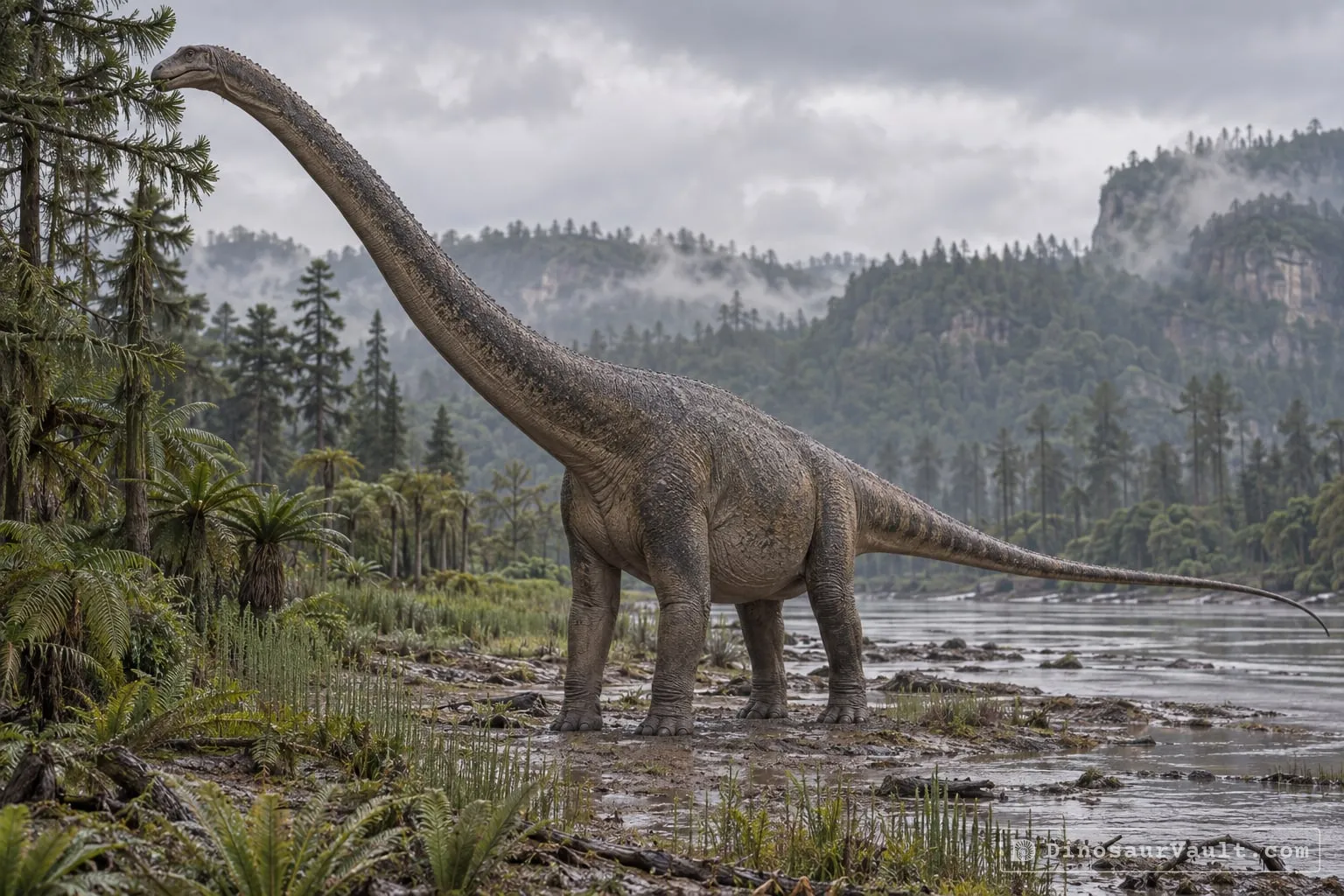
Scenes reconstructed from the available fossil evidence.
1 of 3
Lived alongside
Found in the same rock formations
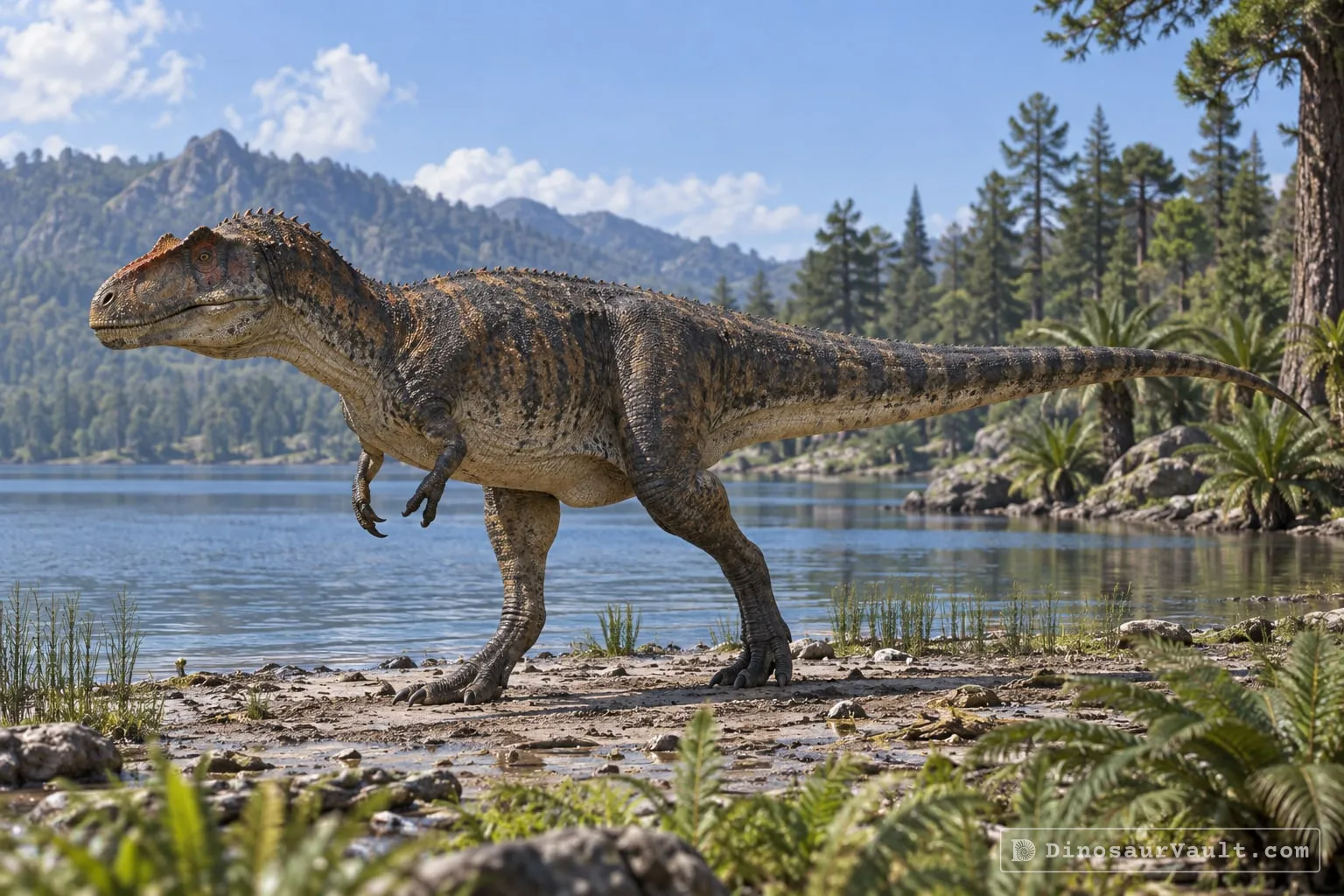
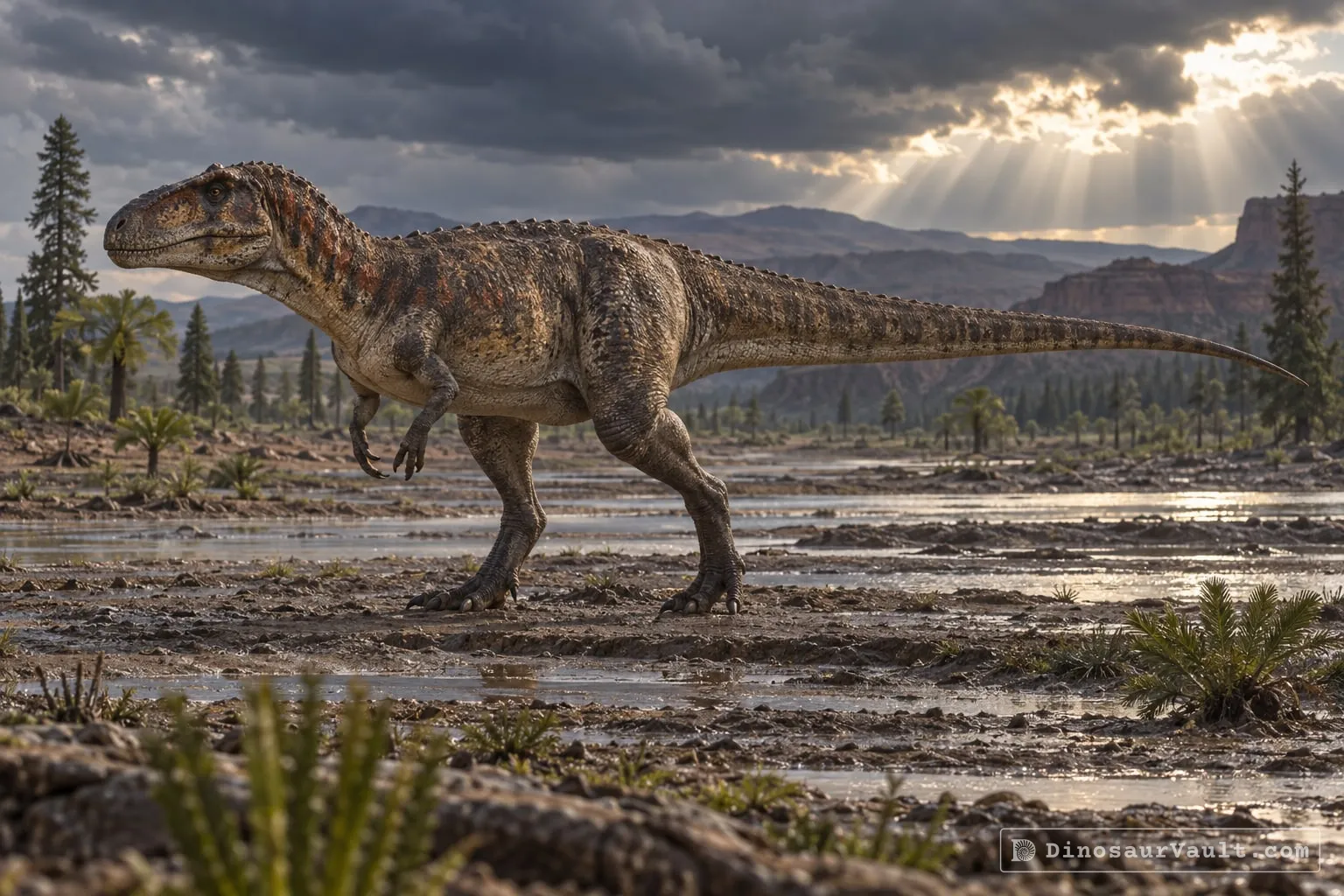
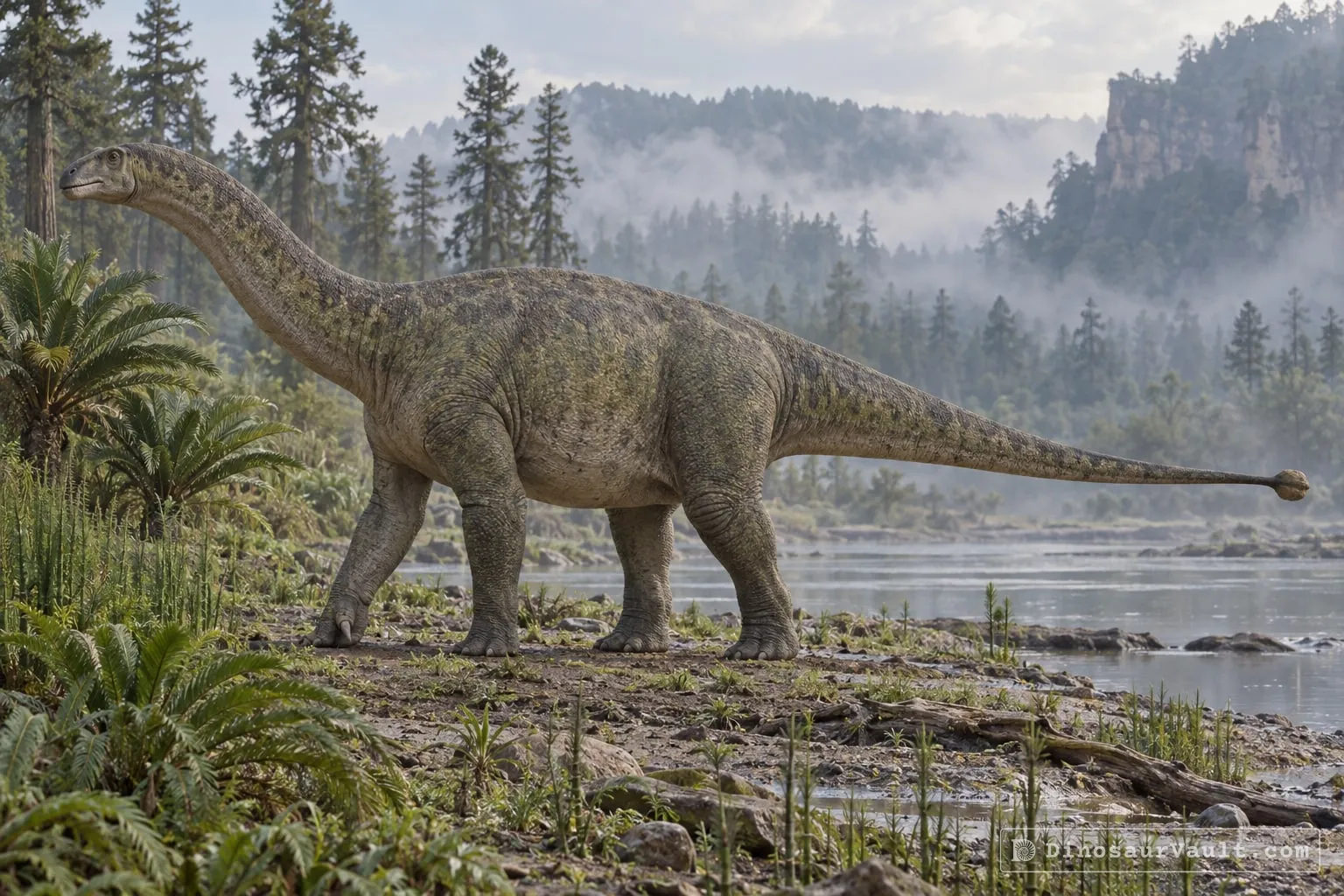
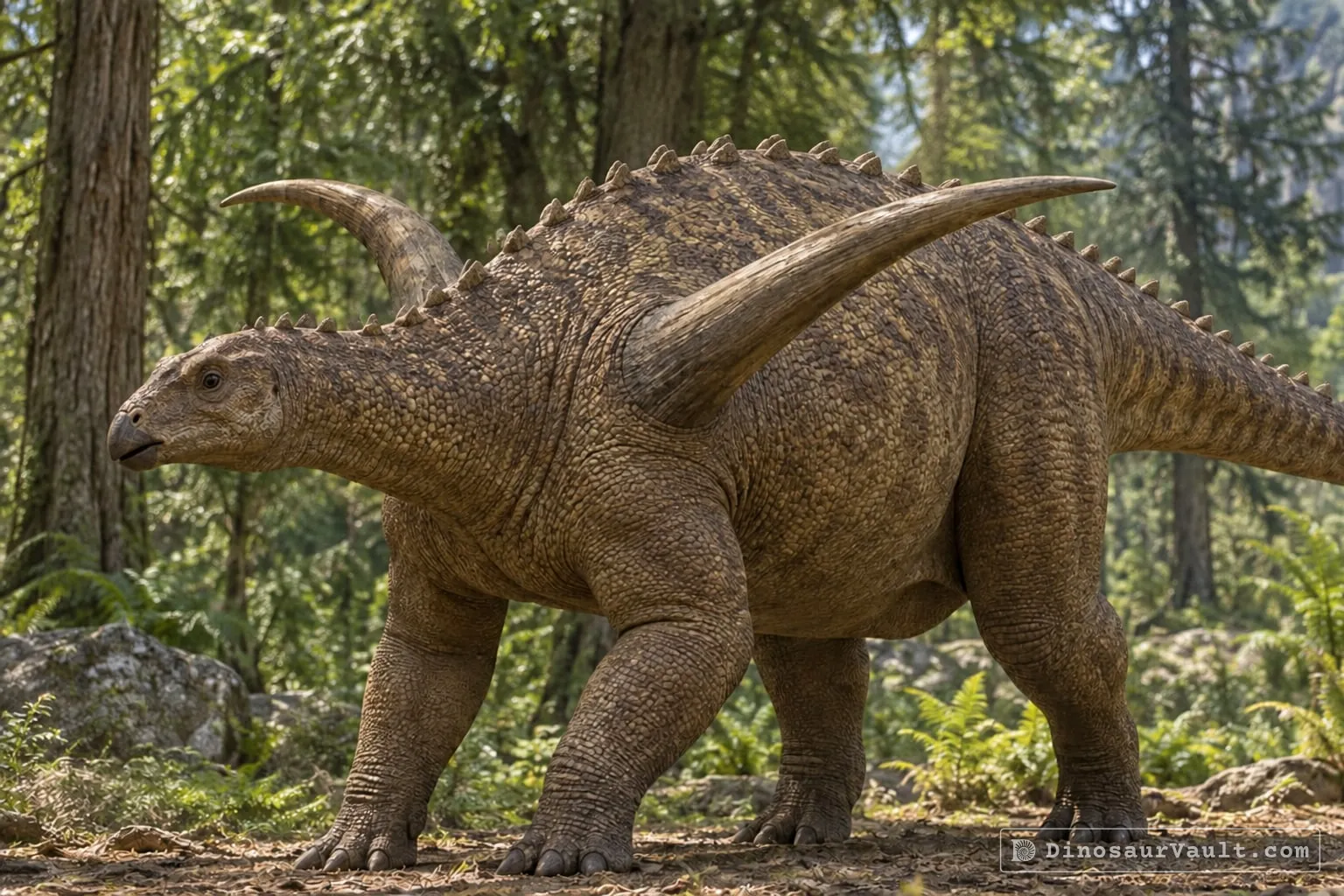
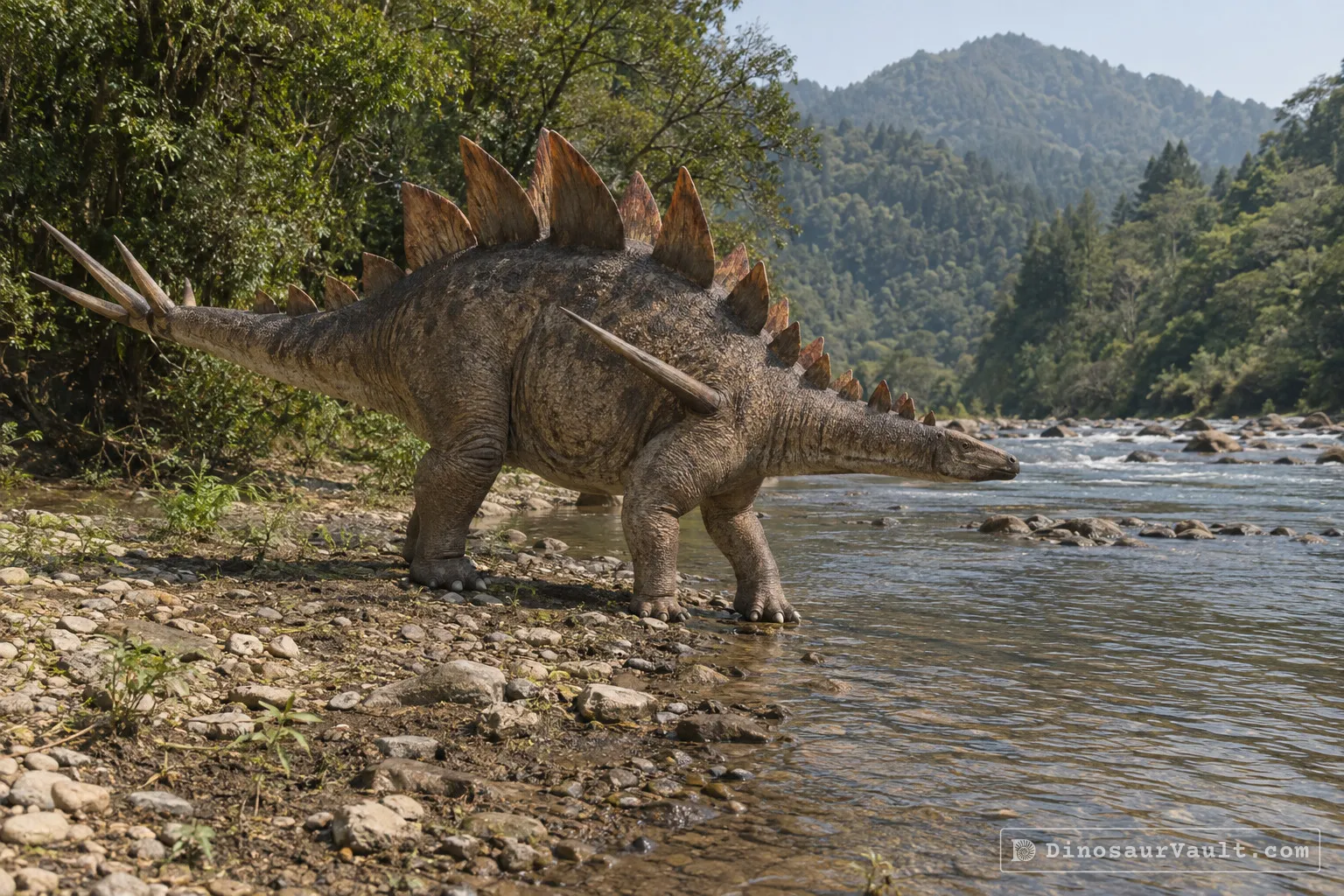
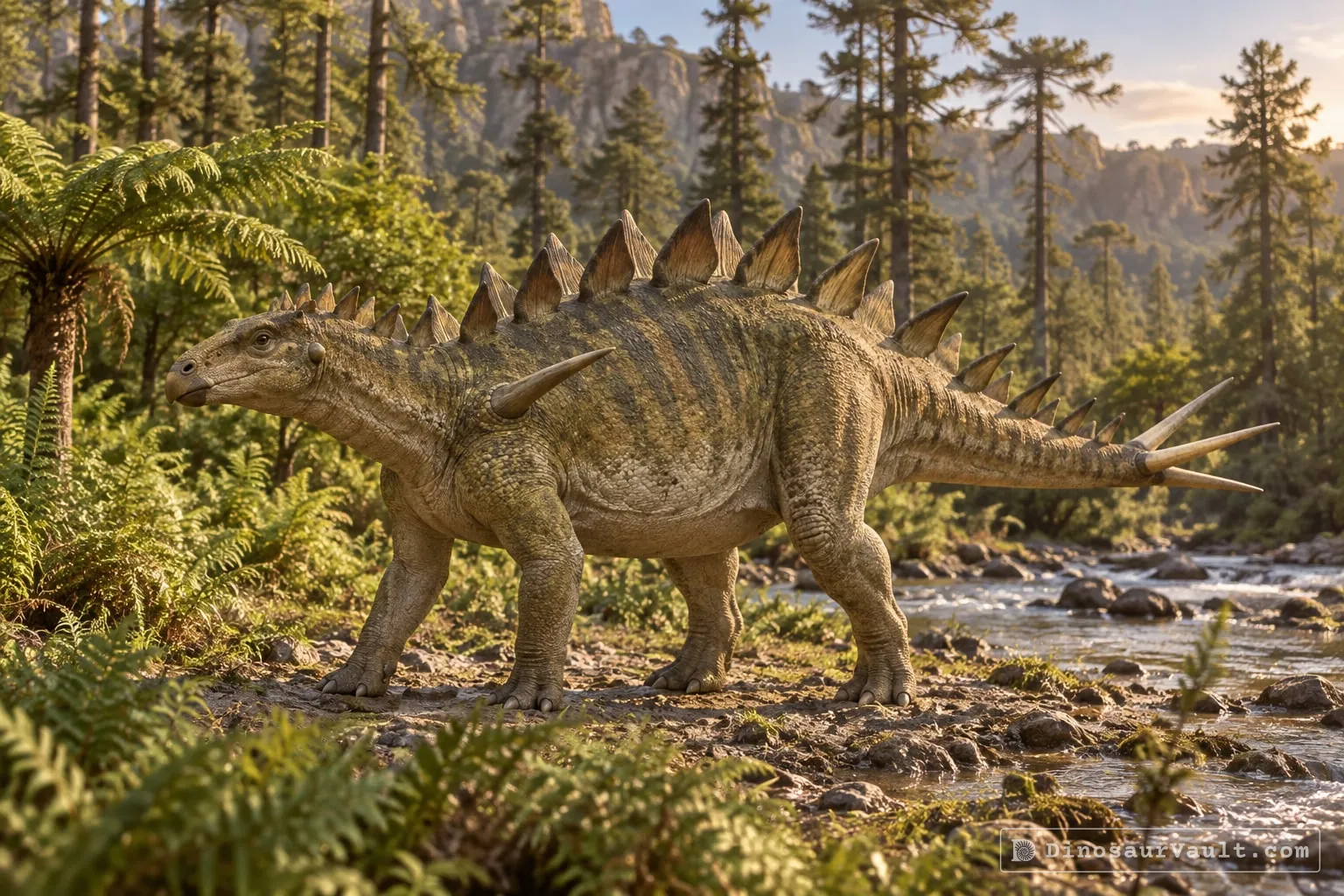
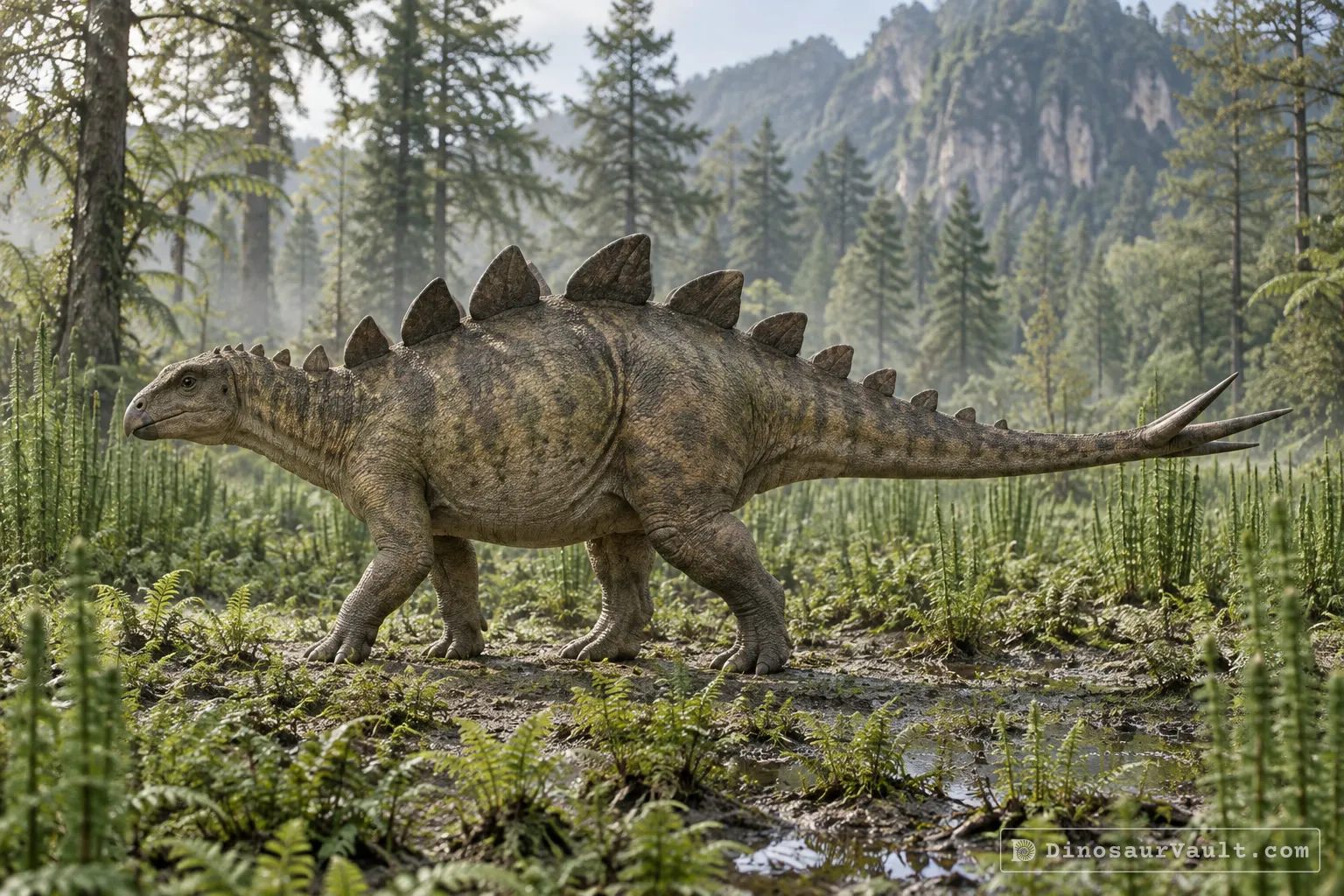


A rock formation can hold fossils laid down millions of years apart, so not every animal here met Dashanpusaurus.
The evidence
The science behind Dashanpusaurus
Which parts of the picture come from its own bones, and which come from its relatives.
From its own fossils
- The type skeleton preserves vertebrae from the middle of the neck to the rear of the tail, a forearm bone, the hips, a thigh bone and a shin bone. A second partial skeleton from the same site includes vertebrae from the front of the neck.
- Some front back vertebrae have nearly square openings for the spinal cord. The lower end of the upper arm bone bears distinctive ridges at the front, and the shoulder blade widens toward its far end.
- The front blade of its hip bone is narrower and sticks out less to the side than in Yuzhoulong, and the thigh bone has a bulge on its outer side and two ridges at the front.
Borrowed from relatives
- The missing skull is restored by comparison with early macronarians such as Camarasaurus.
Still unknown
- The shape of its skull and teeth.
- Its skin texture and color.
- How its body proportions changed as it grew.
Discovery timeline
- 2005Named itPeng et al.
- 2021Same rocksMa et al.
- 2022RedescriptionRen et al.
- 2022Close relativeDai et al.
- 2023Family treeRen et al.
Key papers
The research behind what we know of Dashanpusaurus
Named it
Named Dashanpusaurus from partial sauropod skeletons found in the Shaximiao Formation.
Zìgòng dìqū zhū luó jì kǒnglóng dòngwù qún [Jurassic Dinosaur Faunas in Zigong].
No link available
Same rocks
Described new Shunosaurus bones from the same rock unit and compared their shoulder blade and back vertebrae with those of Dashanpusaurus.
New Shunosaurus (Dinosauria: Sauropoda) material from the middle Jurassic lower Shaximiao Formation of Yunyang, Chongqing, China. Historical Biology 34: 1085-1099
Read the paper : New Shunosaurus (Dinosauria: Sauropoda) material from the middle Jurassic lower Shaximiao Formation of Yunyang, Chongqing, China (opens in a new tab)Redescription
Redescribed its bones, identified distinctive features in the back vertebrae and upper arm, and placed it among macronarians.
Osteology of Dashanpusaurus dongi (Sauropoda: Macronaria) and new evolutionary evidence from Middle Jurassic Chinese sauropods. Journal of Systematic Palaeontology 20: 1-72
Read the paper : Osteology of Dashanpusaurus dongi (Sauropoda: Macronaria) and new evolutionary evidence from Middle Jurassic Chinese sauropods (opens in a new tab)Close relative
Named Yuzhoulong and compared its shoulder, hip and leg bones with those of Dashanpusaurus.
New macronarian from the Middle Jurassic of Chongqing, China: phylogenetic and biogeographic implications for neosauropod dinosaur evolution. Royal Society Open Science 9
Read the paper : New macronarian from the Middle Jurassic of Chongqing, China: phylogenetic and biogeographic implications for neosauropod dinosaur evolution (opens in a new tab)Family tree
Placed Dashanpusaurus among early macronarians and argued that advanced sauropods spread widely while Pangaea was still joined.
Re-examination of Dashanpusaurus dongi (Sauropoda: Macronaria) supports an early Middle Jurassic global distribution of neosauropod dinosaurs. Palaeogeography, Palaeoclimatology, Palaeoecology 610: 111318
Read the paper : Re-examination of Dashanpusaurus dongi (Sauropoda: Macronaria) supports an early Middle Jurassic global distribution of neosauropod dinosaurs (opens in a new tab)
Close relatives
Other members of Macronaria


Sources: Wikidata