Bicharracosaurus
Type species Bicharracosaurus dionidei
- Lived
- 162 to 149 million years ago, Late Jurassic
- Diet
- Herbivore
- Length
- about 15 m (49 ft)
- Group
- Sauropods
- Found in
- Argentina
- Named by
- Reutter et al. 2026
Size comparison
To scale
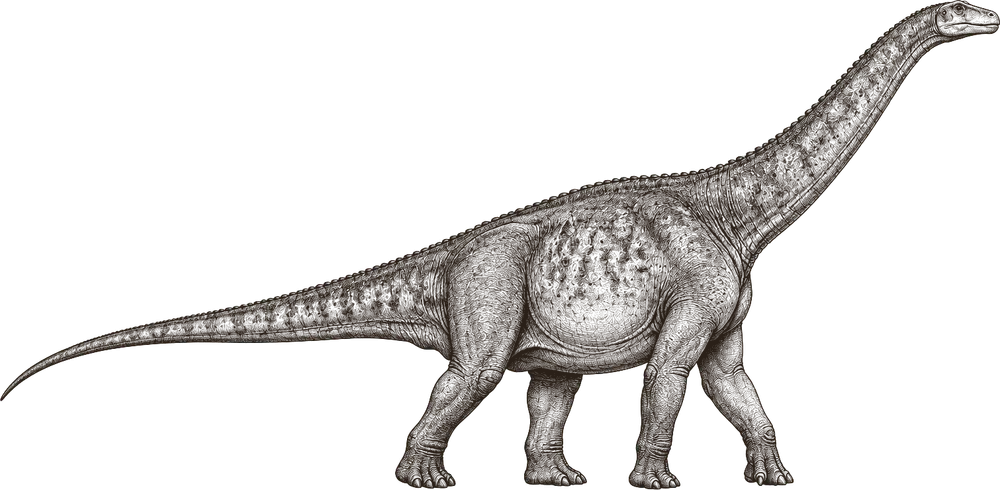


Scale in meters
Where its fossils were found
The evidence
Today

155 million years ago
Habitat
River deposits point to a landscape crossed by streams in the Late Jurassic of Argentina. Other dinosaurs from these rocks include Tehuelchesaurus, Brachytrachelopan and Pandoravenator.
Field notes
About Bicharracosaurus
What it was like
Bicharracosaurus was a plant-eating sauropod belonging to Macronaria, the group of long-necked dinosaurs that includes some of the largest land animals ever known. So far it is known from only two fossil finds, so its full body size and proportions are still poorly understood. Its closest relatives, including Aragosaurus, Galveosaurus, and Atlasaurus, suggest it had the typical macronarian build: a long neck, a relatively short tail, and thick, column-like legs to support its weight.
Its world
Bicharracosaurus lived in what is now Argentina during the Late Jurassic, between about 162 and 149 million years ago. Its remains come from the Cañadón Calcáreo Formation, where it shared the landscape with other sauropods such as Brachytrachelopan and Tehuelchesaurus, as well as the predator Pandoravenator.
How it was found
Reutter and colleagues named Bicharracosaurus in 2026, making it one of the more recently described sauropods from South America. The genus contains a single species, Bicharracosaurus dionidei. With only two fossil finds recovered so far, much about its size, appearance, and exact place among the macronarian sauropods remains unknown.
Field gallery
More views of Bicharracosaurus
Scenes reconstructed from the available fossil evidence.
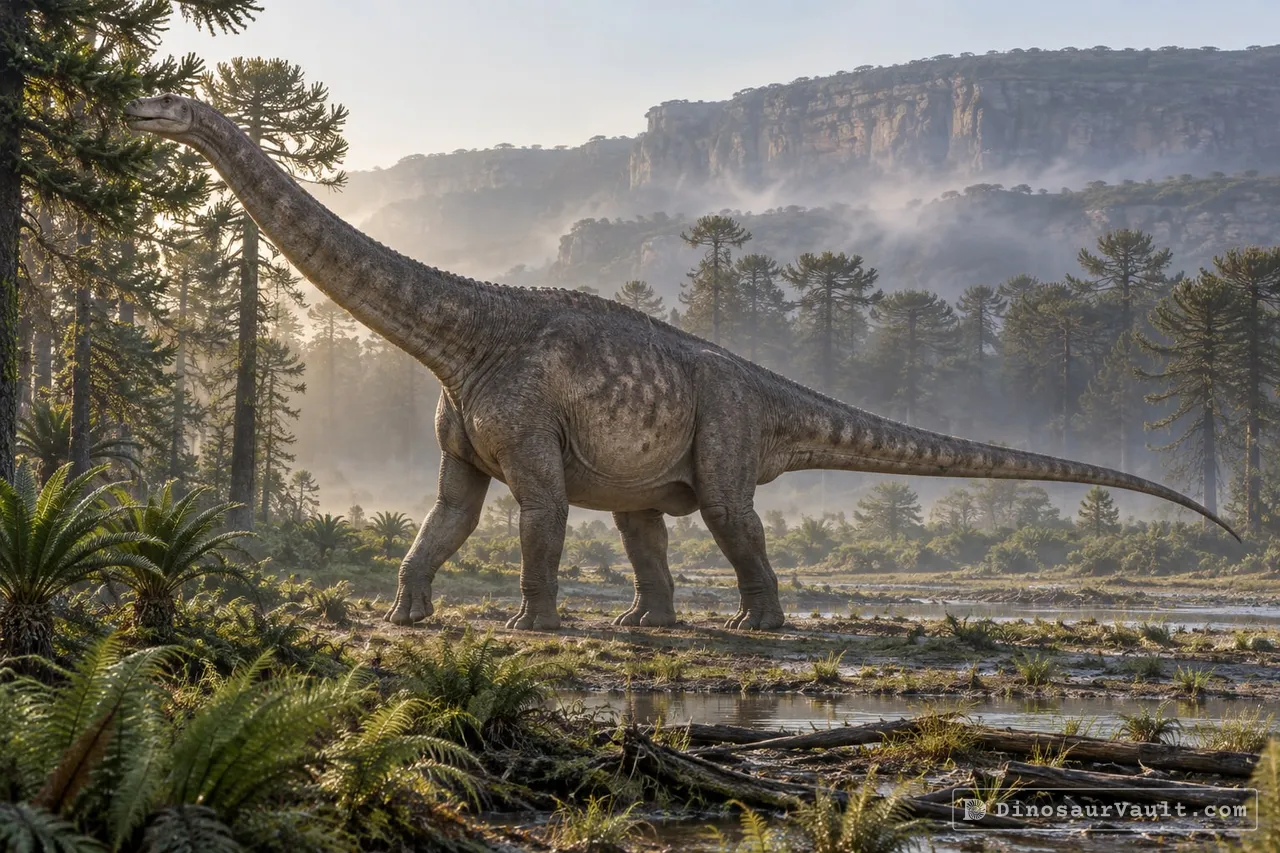
1 of 7
Lived alongside
Found in the same rock formations


A rock formation can hold fossils laid down millions of years apart, so not every animal here met Bicharracosaurus.
The evidence
The science behind Bicharracosaurus
Which parts of the picture come from its own bones, and which come from its relatives.
From its own fossils
- The partial skeleton preserves neck, back, hip and tail vertebrae, along with ribs and part of the pelvis.
- Distinctive ridges and hollows in the vertebrae help separate it from other sauropods.
Borrowed from relatives
- The missing skull and feet are restored from other macronarian sauropods, such as Tehuelchesaurus.
- Column-like legs follow other macronarians; taller front legs would depend on a possible relationship with brachiosaurids.
Still unknown
- Its skull shape, total length and exact limb proportions.
- Whether it belongs within the brachiosaurid family.
- The appearance of its young.
Often drawn wrong
- A strongly sloping, giraffe-like back assumes tall front legs that have not been found.
Discovery timeline
- 2011Close relativeCARBALLIDO et al.
- 2015Same rocksRauhut, Carballido & Pol
- 2026Named itReutter et al.
Key papers
The research behind what we know of Bicharracosaurus
Close relative
Redescribed Tehuelchesaurus from the same rocks and placed it among early macronarian sauropods.
Osteology and phylogenetic relationships of Tehuelchesaurus benitezii (Dinosauria, Sauropoda) from the Upper Jurassic of Patagonia. Zoological Journal of the Linnean Society 163: 605-662
Read the paper : Osteology and phylogenetic relationships of Tehuelchesaurus benitezii (Dinosauria, Sauropoda) from the Upper Jurassic of Patagonia (opens in a new tab)Same rocks
Identified a diplodocid in the same formation, showing that several different sauropod groups lived in the region.
A diplodocid sauropod dinosaur from the Late Jurassic Cañadón Calcáreo Formation of Chubut, Argentina. Journal of Vertebrate Paleontology 35: e982798
Read the paper : A diplodocid sauropod dinosaur from the Late Jurassic Cañadón Calcáreo Formation of Chubut, Argentina (opens in a new tab)Named it
Named a new macronarian sauropod from a partial skeleton and tested its place among early members of the group.
Bicharracosaurus dionidei, gen. et sp. nov., a new macronarian (Dinosauria, Sauropoda) from the Late Jurassic Cañadón Calcáreo Formation of Argentina and the problematic early evolution of macronarians. PeerJ 14: e20945
Read the paper : Bicharracosaurus dionidei, gen. et sp. nov., a new macronarian (Dinosauria, Sauropoda) from the Late Jurassic Cañadón Calcáreo Formation of Argentina and the problematic early evolution of macronarians (opens in a new tab)
Close relatives
Other members of Macronaria


Sources: Wikidata