Xixianykus
"Xixia claw"
Type species Xixianykus zhangi
- Lived
- 90 to 84 million years ago, Late Cretaceous
- Diet
- Carnivore
- Group
- Theropods, Alvarezsauridae
- Found in
- China
- Named by
- Xu et al. 2010
Where its fossils were found
The evidence
Today

90 million years ago
Habitat
Winding rivers and floodplains shaped the landscape recorded in the Majiacun Formation in China. Xixiasaurus and the plant eater Zhanghenglong lived in the same region.
Field notes
About Xixianykus
What it was like
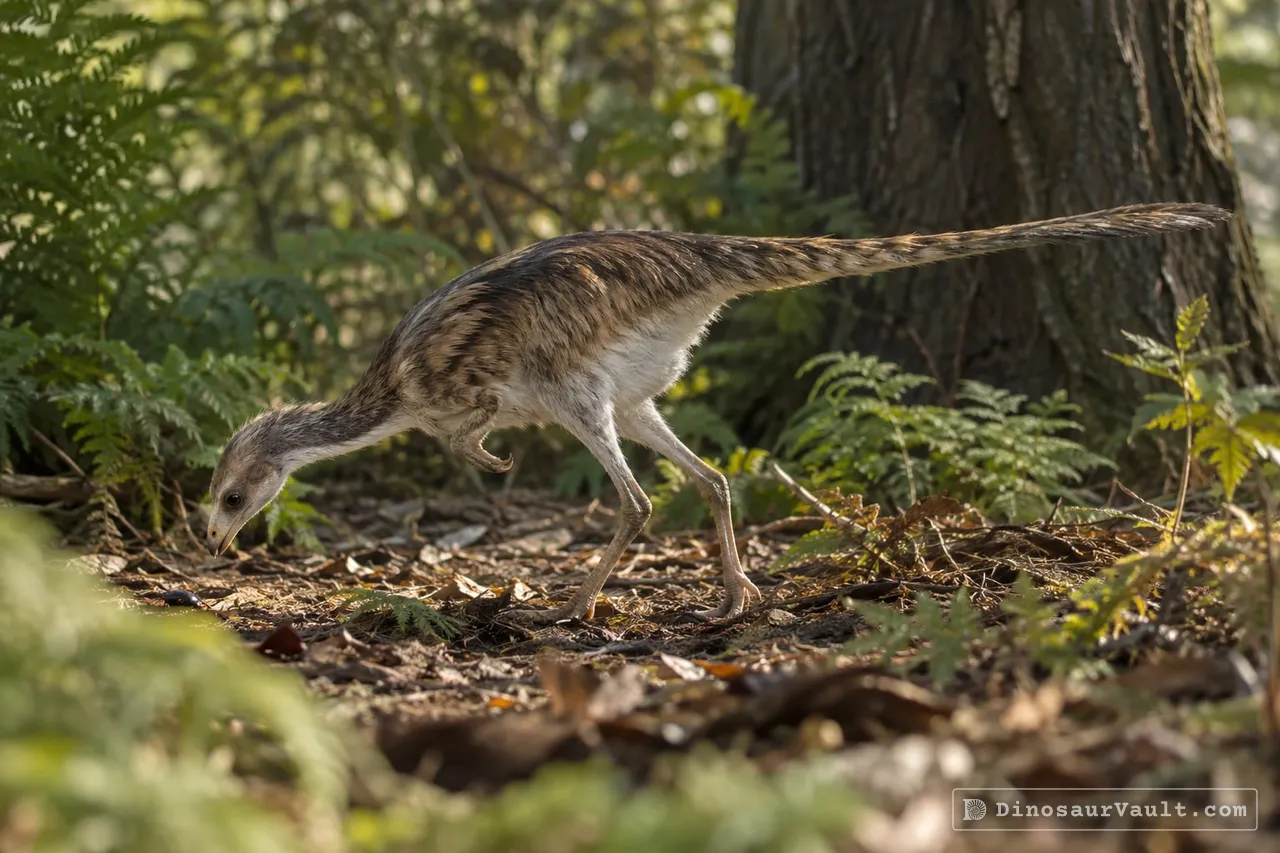
Xixianykus was a small alvarezsaur, a bird-like dinosaur with very long legs. Its arms are unknown, though they were probably short like those of its relatives. Its legs were built for running fast, and it may have been one of the best runners of all dinosaurs for its size.
Its world
It lived in the Late Cretaceous in what is now central China. Its bones come from the Majiacun Formation, where it shared the land with the troodontid Xixiasaurus and the plant eater Zhanghenglong.
How it was found
Xu and colleagues named Xixianykus in 2010, from a single find.
Field gallery
More views of Xixianykus
Scenes reconstructed from the available fossil evidence.
1 of 3
Lived alongside
Found in the same rock formations


A rock formation can hold fossils laid down millions of years apart, so not every animal here met Xixianykus.
The evidence
The science behind Xixianykus
Which parts of the picture come from its own bones, and which come from its relatives.
From its own fossils
- A partial skeleton preserves the rear back vertebrae, the complete hip vertebrae, front tail vertebrae, some ribs and belly ribs, both hip blades, other hip bones from the right side and most of the right hind leg.
- Long lower legs and fused ankle and foot bones gave it a limb structure suited to running.
- The foot bones are slender, and the calf bone thins toward the ankle.
Borrowed from relatives
- The missing head, neck and arms are restored by comparison with Jaculinykus, a relative known from a skull, a nearly complete neck and short, stout arms.
Still unknown
- The shape of its head, and how many working fingers its hands had. Its relatives differ a lot in their hands.
- Its exact place among the alvarezsaurs. One recent study left it out of its final family tree because its position kept shifting.
- Its top running speed.
Discovery timeline
- 2010Named itXU et al.
- 2014Same rocksXing et al.
- 2021Growing upQin et al.
- 2023Close relativeKubo et al.
- 2024Family treeMeso et al.
Key papers
The research behind what we know of Xixianykus
Named it
Described Xixianykus and identified features of its spine and hind legs suited to fast, efficient running.
A basal parvicursorine (Theropoda: Alvarezsauridae) from the Upper Cretaceous of China. Zootaxa 2413
Read the paper : A basal parvicursorine (Theropoda: Alvarezsauridae) from the Upper Cretaceous of China (opens in a new tab)Same rocks
Named Zhanghenglong from the Majiacun Formation and described the river and floodplain deposits that also preserve Xixianykus.
A New Basal Hadrosauroid Dinosaur (Dinosauria: Ornithopoda) with Transitional Features from the Late Cretaceous of Henan Province, China. PLoS ONE 9: e98821
Read the paper : A New Basal Hadrosauroid Dinosaur (Dinosauria: Ornithopoda) with Transitional Features from the Late Cretaceous of Henan Province, China (opens in a new tab)Growing up
Confirmed that the small Xixianykus skeleton was an adult and found different growth patterns among closely related small alvarezsaurs.
Growth and miniaturization among alvarezsauroid dinosaurs. Current Biology 31: 3687-3693.e5
Read the paper : Growth and miniaturization among alvarezsauroid dinosaurs (opens in a new tab)Close relative
Described Jaculinykus, a related alvarezsaur with a skull, a nearly complete neck and arms, and showed how much hands vary within the group.
A new alvarezsaurid dinosaur (Theropoda, Alvarezsauria) from the Upper Cretaceous Baruungoyot Formation of Mongolia provides insights for bird-like sleeping behavior in non-avian dinosaurs. PLOS ONE 18: e0293801
Read the paper : A new alvarezsaurid dinosaur (Theropoda, Alvarezsauria) from the Upper Cretaceous Baruungoyot Formation of Mongolia provides insights for bird-like sleeping behavior in non-avian dinosaurs (opens in a new tab)Family tree
A large alvarezsaur family tree that included Xixianykus, which had to be left out of the summary tree because its position was unstable.
Body size and evolutionary rate analyses reveal complex evolutionary history of Alvarezsauria. Cladistics 41: 135-155
Read the paper : Body size and evolutionary rate analyses reveal complex evolutionary history of Alvarezsauria (opens in a new tab)
Close relatives
Other members of Alvarezsauridae


Sources: Wikidata